




Chasing the sun during winter: Top destinations for a sunny holiday
Where should you go during a half-term holiday — a mid-year school break — especially if you’re after destinations where you can catch the last rays of sunshine this year? You have plenty of options to choose from, including destinations that have become a staple for many of the European holidaymakers during the colder months of the year. We explore the top destinations you should visit on your half-term holiday if you’re looking for sunny skies and beaches when it’s cloudy and raining back home.

Table of Contents
Dubai, the United Arab Emirates
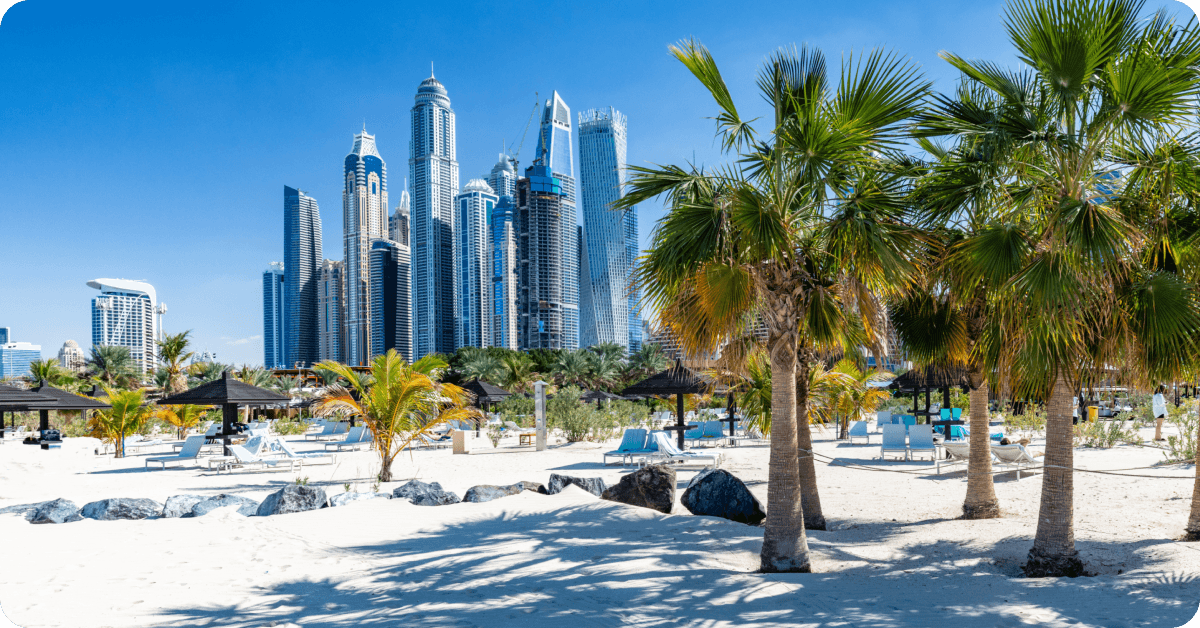
One of the destinations where you can bet that the skies will be sunny is Dubai, the United Arab Emirates (UAE). While the city’s tourism sector declined after the hostilities in the region broke out in February 2026, Dubai’s tourist flows have begun to recover as the conflict has subsided.
If you’re asking yourself what you can do in Dubai, start by going to one of the city’s beaches and enjoying the sunshine. The city also has numerous attractions for families, like desert safaris, the Aquaventure World water park, or even an indoor skiing resort, Ski Dubai. For shopping, check out the Dubai Mall. You won’t go hungry when exploring the city’s sites — Dubai’s food scene includes dozens of Michelin Guide or Michelin Bib Gourmand restaurants.
During the colder months in Dubai, the mean daily temperature ranges from 17 °C (62.6 °F) in January to 28 °C (82.4 °F) in October. You can expect some rain during the winter months in the city, but overall, Dubai averages no more than six rainy days per month. Knowing that the heat is not as intense this time of the year, late fall and winter might be just the best time to visit Dubai.
Traveling to Dubai is usually straightforward. The city has one of the most connected international airports in the world, Dubai International Airport (DXB), where Emirates and other airlines offer flights to almost every corner of the world.
Sharm El Sheik, Egypt
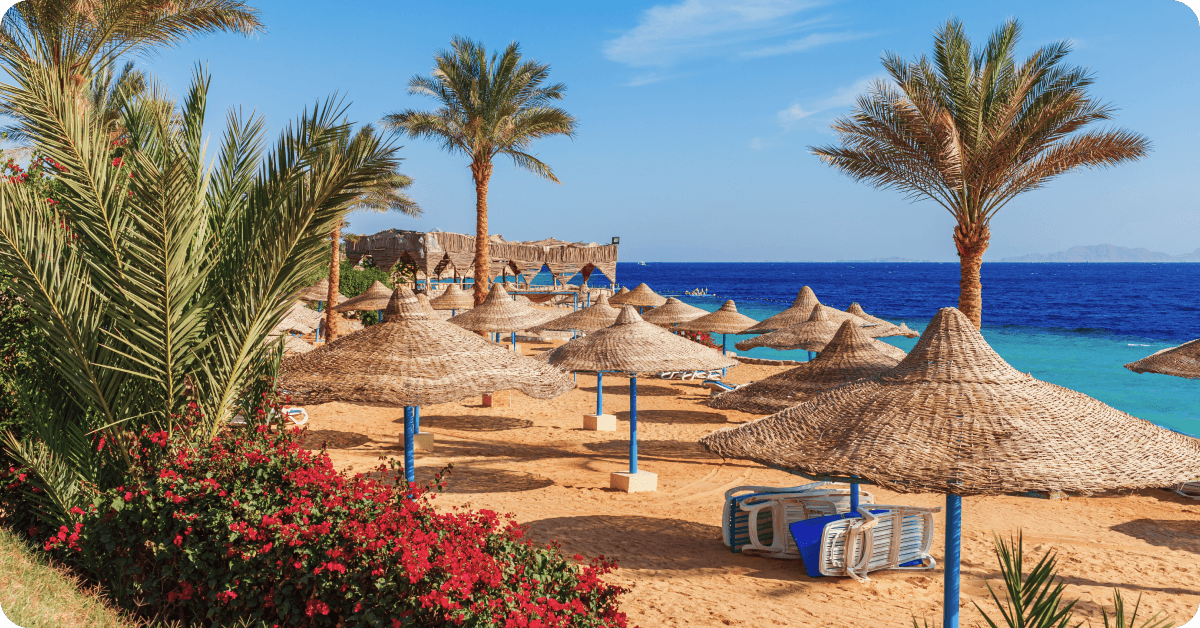
Sharm El Sheik is another sun-soaked option for October, when the weather back in Europe turns gray. Sharm El Sheik is known for the resorts dotted along the Red Sea’s shores — a great place to stay with your family without having to worry about anything else apart from what’s for breakfast and which chaise lounge to lie on next to the pool.
You can also step out of your hotel and explore the city and its surroundings. One of the most popular activities in Sharm El Sheik is snorkeling and scuba diving in the Red Sea, where you can witness some of the most stunning marine life and coral reefs. But if snorkeling is not your thing, give the city’s old market a try, where the Al Sahaba Mosque is the centerpiece of the destination. At the market, you’ll come across many vendors and food stalls, which come to life when the sun goes down and locals and tourists alike come for food and drinks.
Sharm El Sheik has cheaper hotels, luxury resorts, and options in between. If you don’t want to bother with finding flights and hotels, plenty of travel agents, including those that operate their own flights, such as Jet2holidays or TUI, offer package deals to Sharm El Sheik.
Just remember that not every Wi-Fi network, including the one provided by your hotel, is safe. With a Saily eSIM data plan for Egypt, you can use your own mobile data instead of unsecured hotel Wi-Fi.
Marrakesh, Morocco
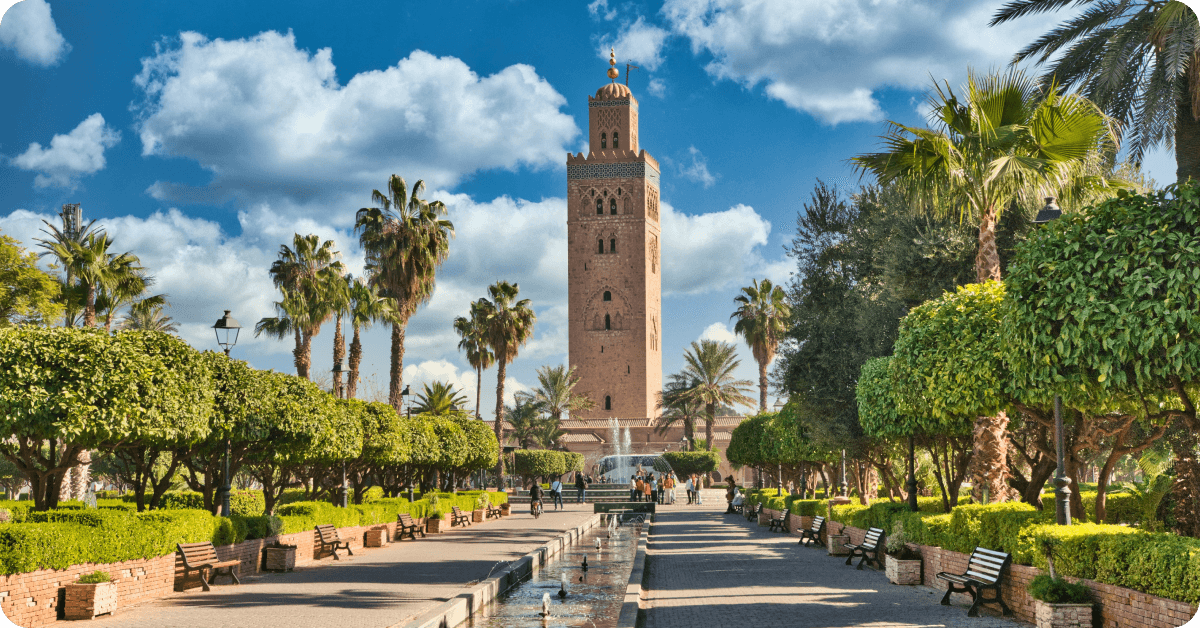
Nicknamed the Red City for the red walls surrounding the perimeter of the city, Marrakesh is one of the imperial capitals of Morocco. While it is only the country’s fourth largest city, Marrakesh has become a hotspot for tourism in part because of its weather, which is warm year-round. The summers are scorchingly hot in Marrakesh, but the much milder climate in winter is the very reason we recommend going there during the colder months of the year.
What you’ll discover once you land in Marrakesh is a city that’s almost a thousand years old and as vibrant as ever. It was once the central trading hub of the Maghreb, the western part of North Africa. You can still see Marrakesh’s trading roots at markets at either the Jemaa el-Fna square or the Souks of Medina. Marrakesh’s souks host hundreds of merchants and artisans, and while the market might seem a bit too large at first, getting lost is only part of the charm.
Beyond the markets, Marrakesh has numerous historic buildings and destinations that you can explore — the Jardin Majorelle gardens, the Bahia Palace, Koutoubia Mosque, and the Dar el Bacha, which currently houses the Museum of Confluences, just to name a few.
Marrakesh’s main airport is the country’s second busiest in terms of weekly flights, meaning that connections from all over Europe are plentiful. Marrakesh Menara Airport (RAK) currently even has flights across the Atlantic Ocean to Atlanta, New York, and Montreal.
Tenerife, Spain
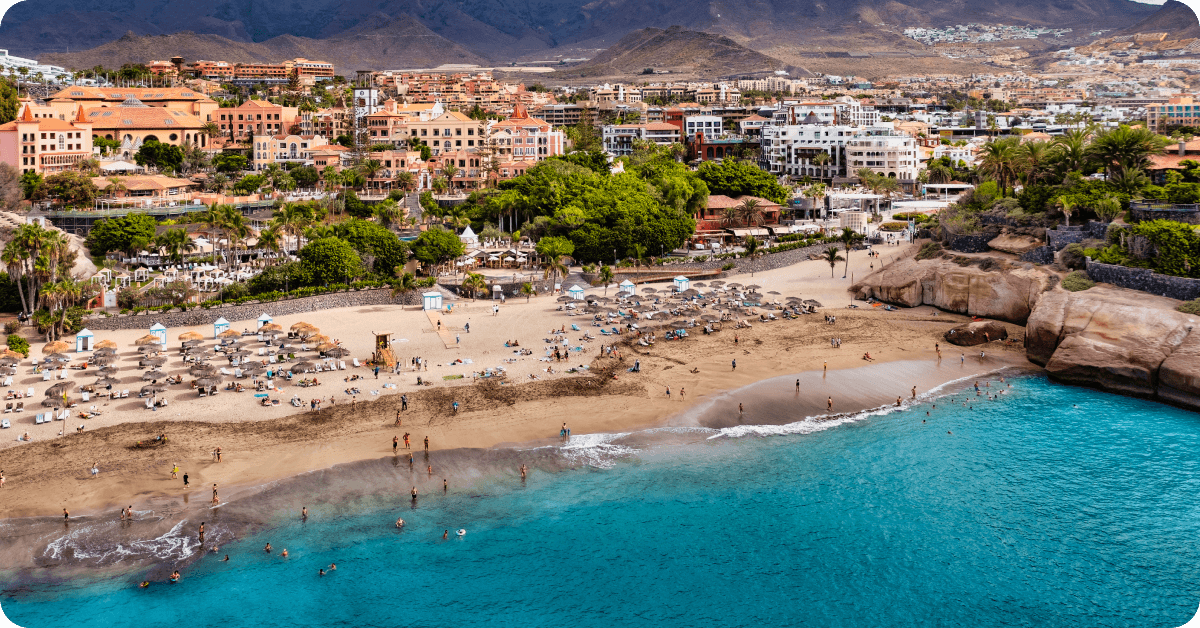
Tenerife is the largest island of the Canary Islands, an archipelago off the coast of Africa that is an autonomous community of Spain. But it isn’t like the cities we mentioned before — the island’s daily mean temperature remains relatively stable throughout the calendar year, hovering around 20 °C (68 °F).
Tenerife is a great destination if you want to explore nature by hiking or are into water sports like surfing or kiting. The island’s tourism infrastructure still allows you to relax at one of the many hotels and beaches scattered along Tenerife’s coastline.
One of the must-visit locations is Mount Teide, where the views of the whole island and even the lava rivers left by volcanic eruptions can be seen in one place. Not much of a hiker? The volcano’s cable car takes you nearly to the top of Mount Teide, allowing you to enjoy the views without breaking too much of a sweat.
One of the easiest ways to explore the island is to rent a car, allowing you to maintain your own schedule and itinerary on your holiday. If you don’t want to drive around too much or don’t have a driver’s license, tour companies still offer one-day trips and guided tours to many of the island’s sites.
All of the destinations we’ve listed so far have one thing in common — their airports are well-connected to the rest of the world. Tenerife is no exception to that fact, and the island even has two airports — Tenerife North (TFN) and Tenerife South (TFS). The busier airport is Tenerife South, which, as the name suggests, is found in the southern part of the island. Due to its popularity in late fall and winter, airlines still offer plenty of flights to TFS, making it easy to reach Tenerife any time of the year.
Antalya, Turkey
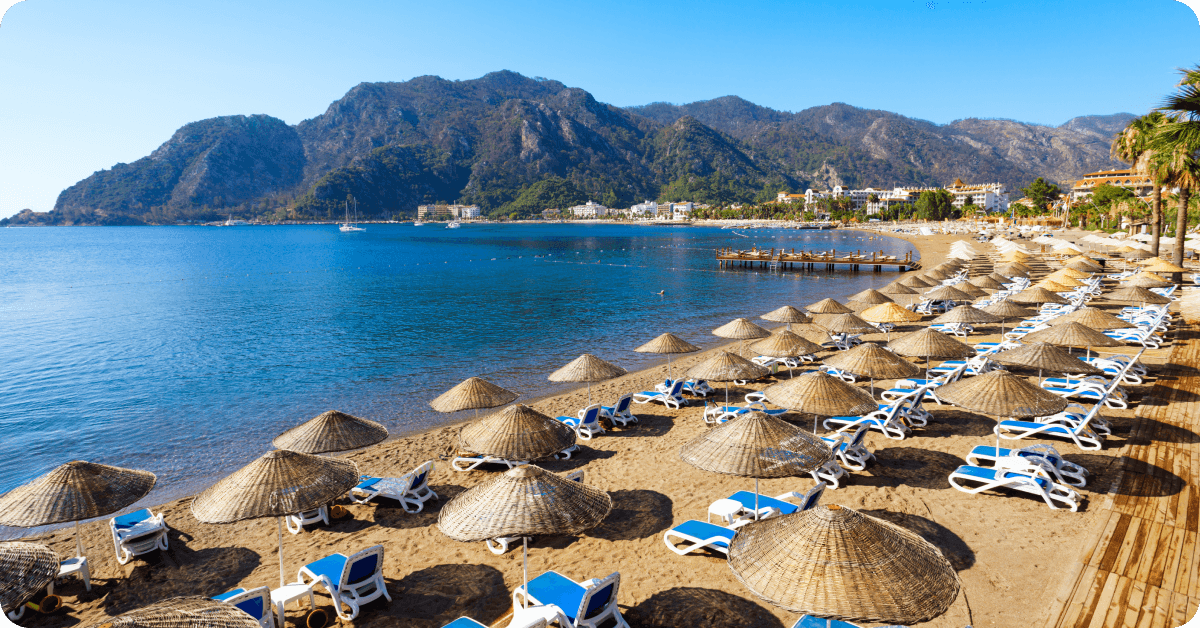
Nestled at the foot of the Taurus Mountains, Antalya is known as the tourism capital of Turkey — a destination in itself and a hub to travel to many of the resorts scattered along the southern Turkish coast of the Mediterranean Sea.
One thing to consider before traveling to Antalya is that, due to its geographical position of being surrounded by the Taurus Mountains, it does rain there quite a lot during the winter months, especially December and January. The best time to go to Turkey and Antalya is late fall, including October, or late spring, when the weather is still quite warm, and the city’s rain gauges aren’t overflowing.
Antalya is over two thousand years old and home to plenty of historical sites. The city’s historical destinations include Kaleiçi, the ancient city center, and Hadrian’s Gate, Antalya’s only remaining entrance gate. The city’s main historical museum is the Antalya Museum, which should reopen at the end of 2026.
Flying to Antalya can take a bit of planning. Yes, it has flights to major airports throughout Europe, but most of Turkey’s connectivity goes through Istanbul Airport (IST), which is the main hub of Turkish Airlines. The good news is that Turkish Airlines has 13 daily flights between Istanbul and Antalya, not to mention the low-cost carriers — AJet and Pegasus Airlines — flying between Antalya and Istanbul’s second airport, Sabiha Gökçen International Airport (SAW). European airlines mostly focus on IST, but they also run a fair share of flights to Antalya Airport (AYT).
Travel tips to ensure a smooth holiday
When you’re booking trips for the shoulder seasons — late September to late October and late February to late April — or the winter months, the travel market is a bit different than buying tickets for a holiday during the summer. Some things you should keep in mind:
Don’t be afraid to book late. Travel agencies, airlines, and hotels earn less during the shoulder and winter seasons. As a result, you can get cheaper last-minute deals for flights or hotels, even if families are booking short holidays during a half-term.
Explore flights to less popular destinations. Beyond the five destinations we’ve just listed, you can also get direct flights to many other cities and resorts where fewer tourists stay during the shoulder seasons. Think Lanzarote, Sicily, or such Greek islands as Crete or Corfu.
Be prepared for the weather. While cities like Dubai, Marrakesh, and Antalya see sunshine year-round, winter does sometimes bring colder and rainier days. Bring some warmer clothes and a rain poncho or jacket.
Secure mobile data for your holidays. If your mobile plan is from the EU or the UK, you will be facing roaming fees when using mobile data in countries such as Morocco, Turkey, or the UAE. To avoid bill shock once you return, buy an eSIM plan from Saily. When you buy a Saily eSIM data plan, you’ll know exactly how much you’ll be spending on mobile data.
Stay vigilant about your data. Hotels, restaurants, and other locations on your trip offer free Wi-Fi. However, most free Wi-Fi networks aren’t protected with a password, potentially leaving your data exposed to cybercriminals. The Saily app comes with three integrated security features — an ad blocker, virtual location, and web protection — that help keep your browsing safer.

Stay connected with the Saily eSIM app
Affordable mobile data plans for every journey.

Always connected, always on course
Connect instantly with a Saily eSIM and enjoy effortless internet access.

Related articles