





Désolés, mais cet article n’est pas encore disponible dans la langue de votre choix.
The recipe for an American’s dream vacation: Nature, flavors, and a dash of adventure
Every dream trip starts with an image. For some, it’s a silent morning trail cutting through untouched wilderness. For others, it’s a night market in Bangkok where smoke rises from the grill and strangers lean shoulder to shoulder over bowls. To see what makes the “perfect getaway” in 2025, Saily surveyed 1,010 U.S. residents between May 9 and 17, 2025. Their answers revealed a dream vacation recipe simpler than anyone would have expected.

Sommaire
What Americans picture when they dream of a vacation
When asked to describe their dream trip, most people didn't mention yachts or bucket lists. They talked about nature instead. Tasty meals they'd still reminisce on years later. Afternoons when time moved like honey. The thrill of doing one thing they've never done before.
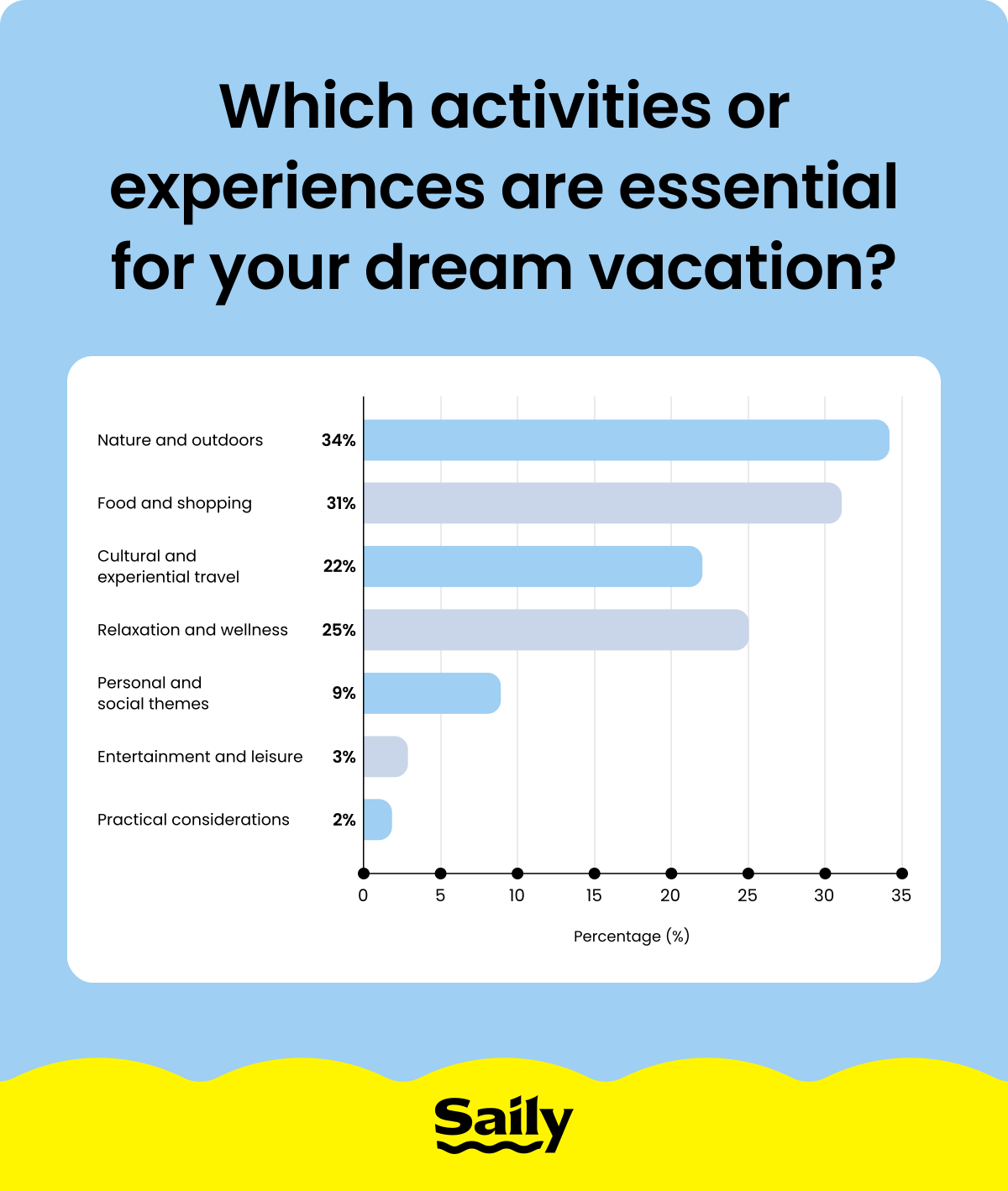
Here’s what people chose most often when asked, in their own words, what a dream vacation looks like:
Nature and outdoors — 34%. The outdoors led all categories. Respondents mentioned hiking, water, scenery, and the desire to be surrounded by nature.
Food and shopping — 31%. Food was the second-strongest theme. People described meals, dining, and food experiences as central to their dreams. Shopping appeared alongside it in many responses.
Relaxation and wellness — 25%. A quarter of respondents emphasized rest, wellness, and downtime as essential parts of their ideal trip.
Cultural and experiential travel — 22%. One in five wanted cultural activities or hands-on experiences, from museums and performances to tours and workshops.
Personal or social themes — 9%. A smaller share imagined vacations tied to milestones, reunions, or family connections.
Entertainment and leisure — 3%. A small group mentioned entertainment-focused trips, such as concerts or events.
Practical considerations — 2%. A few emphasized practical aspects like budgeting, logistics, or convenience.
These results reveal that Americans' dream vacations aren't defined by extravagance. They're rooted in being outdoors, eating authentically, resting completely, and connecting to local culture. The smaller categories show that while people dream big, they don't entirely abandon real-world considerations. The recipe is surprisingly straightforward: nature first, flavor close behind, and enough wellness and culture to make the journey transformative.
Nature and outdoors: The foundation
The outdoors dominated responses, but not through breathless travel-blog language. People use grounded descriptions: hiking, swimming, “being surrounded by trees,” “away from the noise.” People want to feel the distance. The kind you measure in fresh air and horizon lines rather than Instagram likes. That explains why destinations like Glacier, Yellowstone, and the Grand Canyon top the lists of dream destinations in the U.S.
But the outdoor adventure element varies significantly by traveler type:
Younger travelers lean toward active travel: They want hiking, water sports and beach breaks that require local knowledge, and multi-day trips that end with a view.
Older travelers pair their landscapes with comfort: They picture scenic drives with hiking breaks, wine tastings after mountain walks, and cozy lodges with fireplaces following active days.
Families want places where the kids can run and explore, and everyone sleeps well at the end of the day. Parks and beaches stand out as crowd-pleasers.
Nature works for everyone because it adapts. It offers heart-pounding thrills for the young, manageable challenges for the experienced, and wonder for families traveling together.
Food and shopping: The cultural bridge
Food transforms simple sightseeing into something more visceral. It stitches days together, provides cultural context, and creates stories that outlast sunburns. More than 30% of respondents made food central to their dream vacation.
Sometimes the dream involved wine tastings in sun-soaked valleys. Other times it meant discovering family-run restaurants with handwritten menus and two wobbly tables. What mattered was that it tasted like being there.
Shopping appeared alongside dining, but people weren't dreaming of malls. They wanted to visit local markets, order in street stalls where you point and hope for the best, and find places where buying something doesn’t feel so commercial.
Relaxation and wellness: The essential counterbalance
A quarter of respondents (25%) highlighted rest and wellness as essential to their ideal trip. Not all dreams are busy. Most pictured hotels and resorts that asked nothing of them. Some imagined structured wellness (yoga, spas, or treatments), while others just wanted downtime without a schedule.
This emphasis on recovery reflects broader cultural awareness of burnout that extends far beyond vacation planning. Wellness doesn't compete with adventure or cultural exploration. Instead, it complements both by creating mental space to process experiences rather than just accumulate them.
Cultural and experiential travel: The depth of flavor
Culture was chosen by 22% of respondents. People highlighted activities that connect them to a place: museums, performances, tours, and workshops. This was the chance to go beyond surface impressions and experience something rooted in the life of the destination.
Seasoned travelers tended to lean into this category more strongly, seeing cultural immersion as the hallmark of a complete trip. Younger travelers were more likely to connect through active experiences, while families gravitated toward interactive or hands-on options.
Where Americans actually went
Among international travelers in our survey sample (of which there were 269), the most popular destinations in the past 12 months were:
Europe — 39%
Mexico — 35%
Canada — 31%
The Caribbean — 27%
Japan — 16%
Brazil — 10%
South Korea — 7%
The Philippines — 6%
Vietnam — 5%
India — 4%
Smaller shares visited South America, Eastern Asia, Australia/New Zealand, Africa, or Central America (1–2% each).
This destination list validates the dream recipe in practice. Europe delivered exceptional food and deep cultural experiences. Mexico and the Caribbean provided relaxation and family accessibility. Canada offered pristine wilderness adventures. Japan emerged as the perfect synthesis, combining outstanding cuisine, rich culture, natural beauty, and wellness traditions in one destination.
In terms of scale, most international travelers in the past year visited one country (42%) or two countries (29%), with smaller shares going to three or more. Looking at everyone surveyed, half stayed local (51%), while 23% traveled overseas, 4% crossed over to Canada or Mexico, and 22% didn’t travel at all.
Key insights that shape the future
Looking across all answers, a few patterns stood out:
Food travel signals cultural sophistication. Older, more affluent travelers treat dining and wine regions as important parts of their dream vacation. For this demographic, food becomes proof of cultural capital rather than simple sustenance.
Cultural tourism is stronger among seasoned, global travelers. The more people traveled internationally, the more they named cultural immersion as a dream ingredient.
Wellness has achieved permanent status. This isn't a temporary post-pandemic trend. Relaxation and recovery held consistent importance across all demographics and income levels. Modern travelers view rest as essential, not indulgent.
Cross-border travelers were less focused on “dream” aspects. Respondents who primarily visited Canada or Mexico described these trips as convenient escapes rather than dream experiences. Geographic accessibility doesn't automatically generate emotional resonance.
These insights reveal not just current preferences, but where travel demand will shift as different generations mature and global access expands.
The end of the bucket list
A dream vacation in 2025 is more about balance than excess. People want coastlines that spray salty water on their feet, meals that feel like memories, nights where the stars outnumber their thoughts, and days that demand nothing except presence.
For younger travelers, adventure and water will keep driving demand. For seasoned travelers, the pull will be food, culture, and rest. For families, comfort and shared fun will remain non-negotiable. Wellness will continue to shape how trips are planned. And for destinations, the message is this: The winners will be those that combine ingredients rather than serve only one.
The recipe sounds simple, but its implications can run deep — America’s dream is no longer about checking boxes.

Say goodbye to roaming fees with a travel eSIM
Affordable mobile data plans for every journey.


Sur le même sujet