





21 min de lectura
Recomienda a un amigo
Comparte Saily con tus amigos y gana recompensas.
Beneficios de viaje
Reserva beneficios para tu viaje con puntos Saily.
Descuento para estudiantes
Ahorra más con precios especiales para estudiantes.
Saily para organizaciones sin fines de lucro
Aplica para obtener planes de datos eSIM con descuento para organizaciones sin fines de lucro.
Bali is much more than just a tropical paradise. The combination of spirituality, surfing, terraced rice fields, temples, and gorgeous beaches makes the so-called Island of the Gods a truly unique place. Think portions of nasi jinggo served in a banana leaf, a bottle of cold Bintang beer, and villas with private swimming pools overlooking the Balinese jungle. This Bali travel guide is designed for first-time visitors who want to learn more about the island. It covers Bali areas suitable for different travel styles, ways to get around efficiently, things to do across the island, where and what to eat, and the best time to visit.
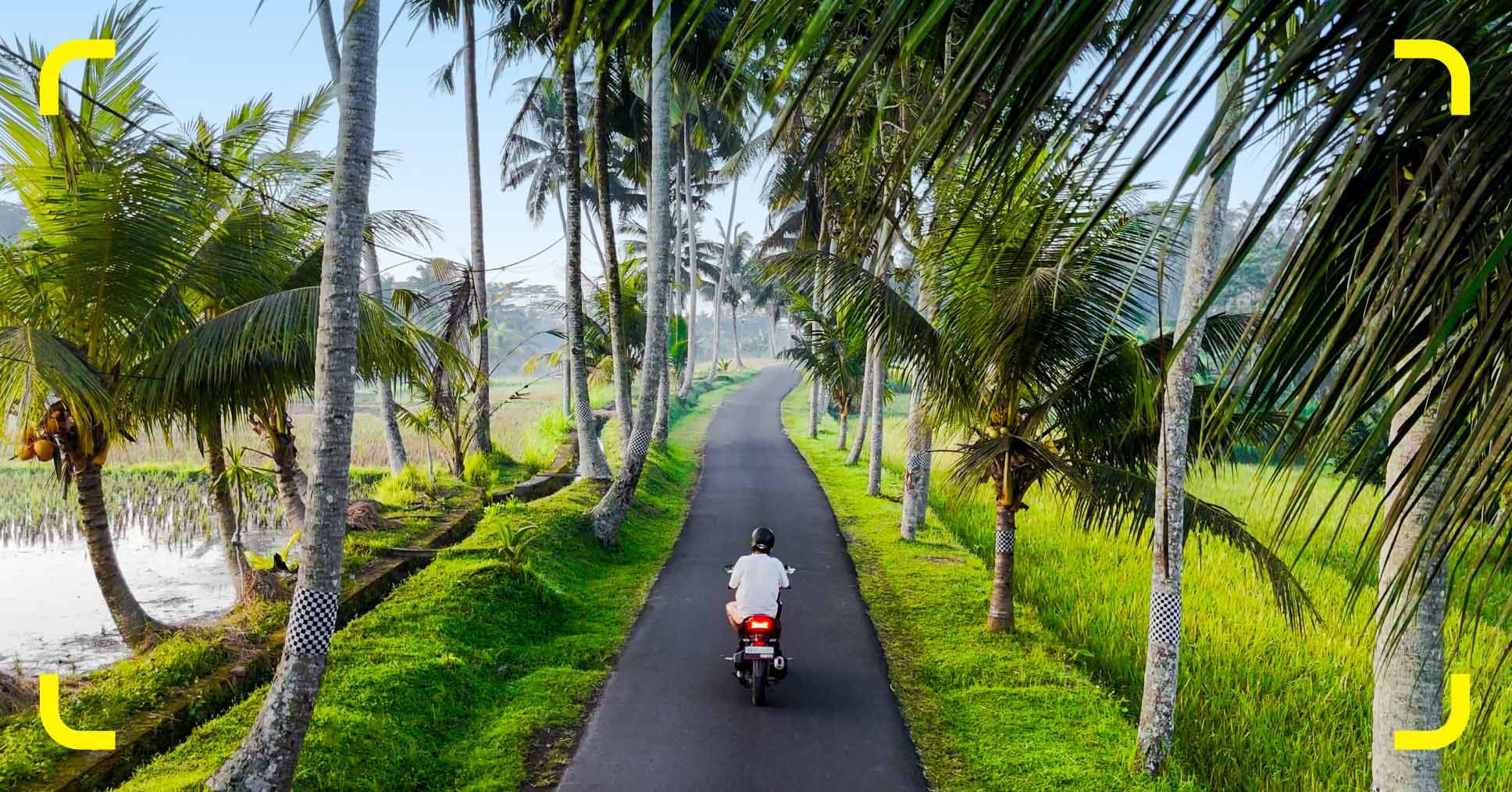
Tabla de contenidos
Bali is an island in Southeast Asia, celebrated for its Hindu traditions and artistic spirit.
The main languages are Indonesian, Balinese, and English, and most locals speak two or three of them fluently. In tourist areas, you’ll rarely run into a language barrier if you speak English.
The official currency is the Indonesian rupiah (IDR), and local people still widely use cash. ATMs are easy to find across the island, especially in popular spots like Canggu and Ubud, so getting cash won’t be a hassle.
As for weather, Bali has a tropical climate with two distinct seasons. The dry season runs from April to October, while November through March brings rain, usually in short, heavy bursts rather than all-day downpours.
Choosing where to stay in Bali truly matters. Although it’s a relatively small island, the towns and villages are diverse.
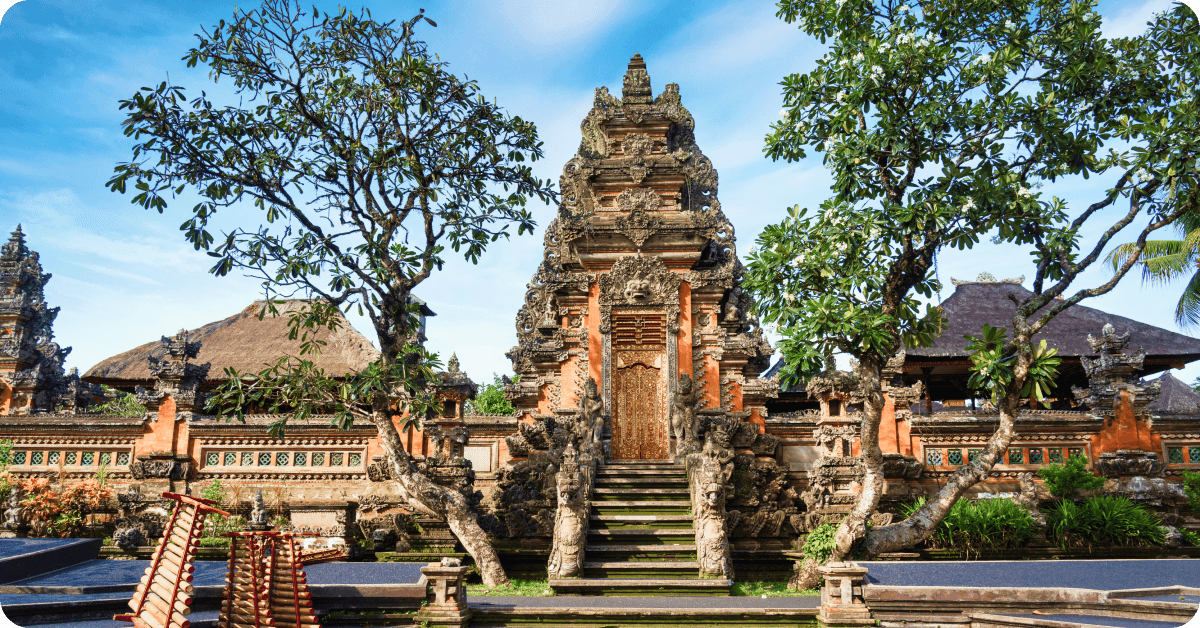
Ubud is Bali’s cultural and nature hub, a place where temples sit alongside yoga studios and rice terraces stretch out behind rows of artisan shops.
The town center is loud and lively. Streets are lined with cafes, restaurants, and boutiques, while open-air studios sell Balinese paintings, woodcarvings, and handmade jewelry. If you’re drawn to Balinese temple architecture, Saraswati Lotus Temple is within easy reach. Yoga practitioners should look into The Yoga Barn, which comes highly recommended by fellow yogis.
Step beyond the center, and you’ll quickly find yourself surrounded by green valleys and quiet trails. If you’re feeling active, the nearby Campuhan Ridge Walk is a scenic two-kilometer trail through the valley that takes about 30 to 45 minutes to complete.
At the southern end of town, the Ubud Monkey Forest is a natural sanctuary home to over 1,000 Balinese long-tailed monkeys. It’s chaotic but definitely charming. Heading slightly further south, you can visit the Tegenungan Waterfall, about 30 minutes from town and well worth the drive.
One of the biggest draws in the Ubud area is the Tegallalang Rice Terrace, a working agricultural landscape about 20 minutes north of the center. The layered green paddies make for a stunning visit, though it does get crowded. Arriving early in the morning is the best way to enjoy it without the rush.
For a full day trip, Pura Tirta Empul (a water temple) and Besakih Temple are both reachable from Ubud and worth the drive if you want to explore Bali’s spiritual side beyond the town.
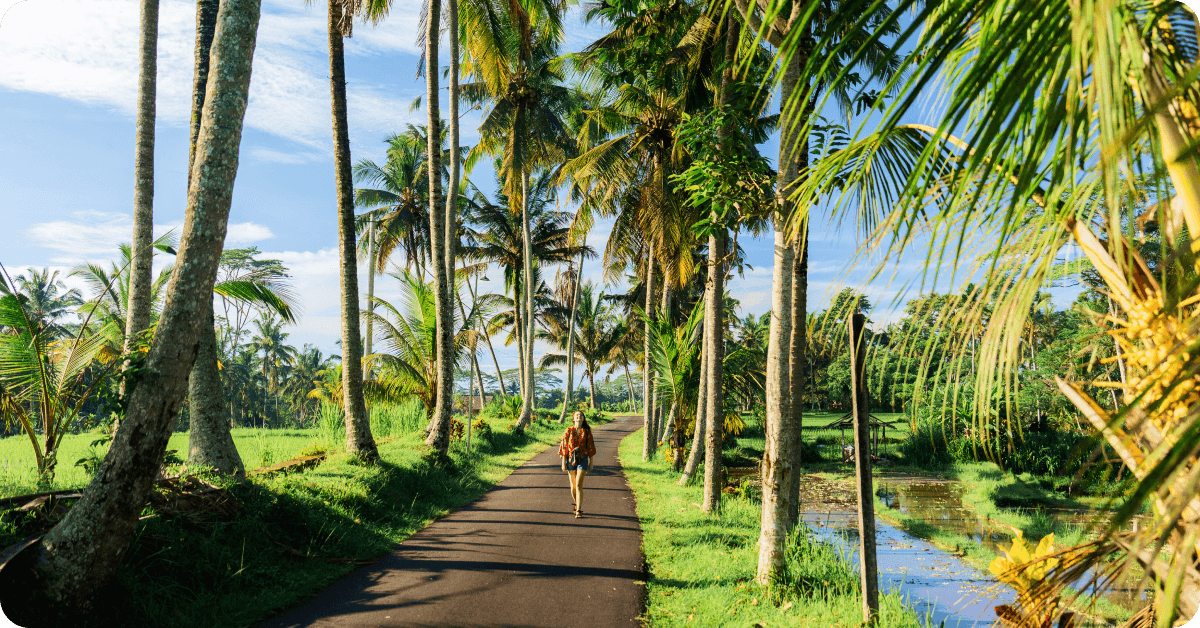
What used to be a sleepy fishing village is now one of Bali’s most popular destinations, drawing surfers, digital nomads, foodies, and yoga lovers who share sunset cocktails in beachfront cafes. From Denpasar airport, it’s about a 45- to 90-minute drive.
Bali offers world-class surfing all over the island, but Canggu is definitely the best place for this thrilling water activity. Old Man’s and Batu Bolong Beach are great for beginners, while Berawa and Echo Beach attract more experienced surfers. It’s worth noting that the beaches are better for surfing than swimming, because the waves hit hard.
Beyond the surf, the area is packed with trendy cafes, co-working spaces, and beach clubs. La Brisa is known to be tourists’ favorite for watching the absolutely breathtaking sunset with a drink in hand. And if you need to recharge, Goldust Beauty Lounge and Tugu Spa are solid picks for wellness treatments.
You’ll love Canggu if you like being social and on the move. But if you’re after peace and quiet, you’ll probably want to look elsewhere.

Secluded, beautiful beaches hidden by cliffs, a raw coastline, and luxury villas make Uluwatu one of the most striking areas in Bali.
The top tourist attraction is Pura Luhur, a world-famous temple perched on a dramatic cliff about 70 meters above the ocean. At sunset, the temple grounds come alive with the Kecak Fire Dance, a cultural performance of rhythmic chanting and choreography set against the open sky.
The Uluwatu beaches are just as memorable. Suluban Beach is known for its rock formations, caves, and secret lagoons that reveal themselves at low tide. Bingin Beach offers a laid-back feel, with rustic beachfront cafes and a chilled-out atmosphere. Both are great for sunbathing and swimming.
The area is a magnet for surfers too. Dreamland Beach works well for beginners, while Uluwatu Surf Break and Padang Padang draw more experienced riders.
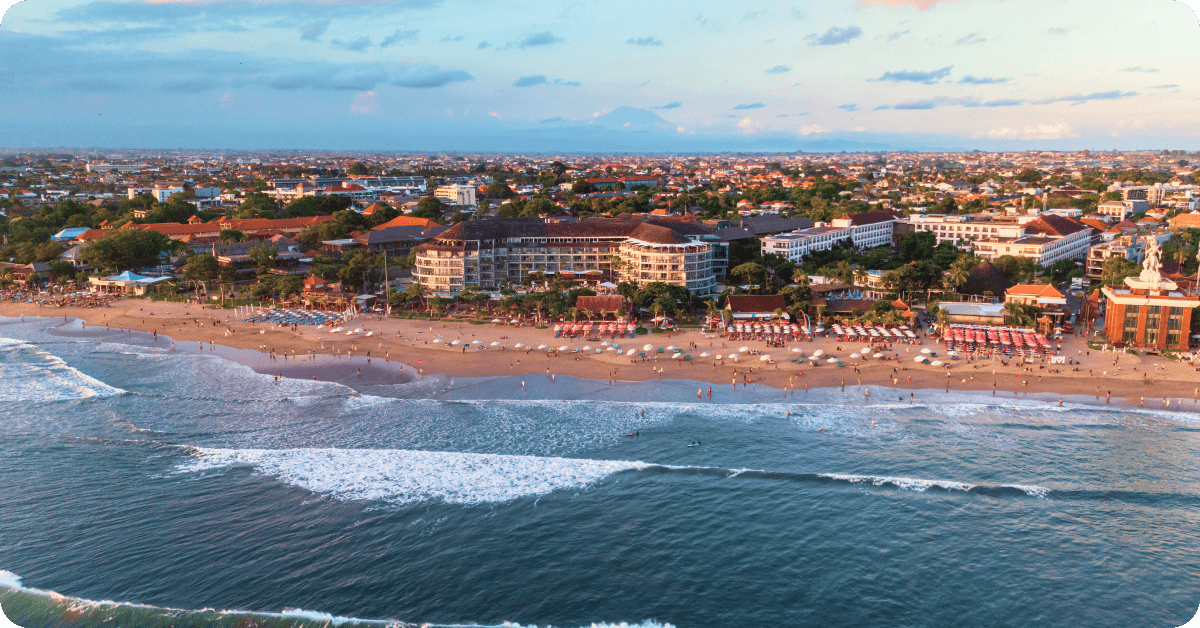
With its upscale restaurants and beach clubs, Seminyak is probably the trendiest area on the island. Lively and polished, it seems to attract all types of travelers, from families with young children and newlyweds to backpackers and older couples. And it’s just 10 kilometers from the international airport in Denpasar.
The area is full of luxurious hotels, local spas, quaint cafes, and art galleries. Prana Spa and Bodyworks are popular picks for a spa day. For shopping, Jalan Kayu Aya (Oberoi Road) is the main street lined with boutiques and local stores, with popular venues like La Favela and Motel Mexicola conveniently located just steps away from each other in the same neighborhood.
When the sun starts to drop, the beach clubs come alive. It’s one of the best spots on the island to watch the beautiful sunset with a cocktail in hand.
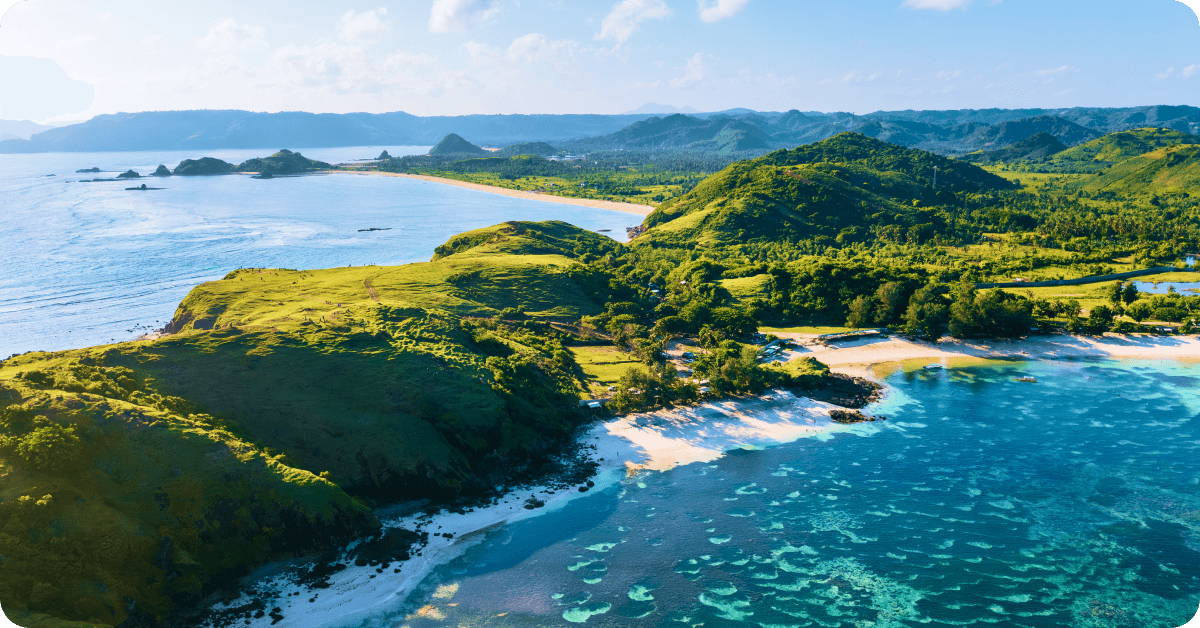
Ubud, Canggu, Uluwatu, and Seminyak are the main areas in Bali, but many other tourist hubs are worth exploring. Some of these spots focus on beaches and surfing, while others are more about nature and the rich Balinese culture.
Kuta. One of the oldest tourist districts in Bali, Kuta is a good fit if you want wide sandy beaches, surfing, busy shopping streets, and easy access to the airport. Accommodations in Kuta are reasonably priced too, making it a solid option for budget travelers.
Nusa Dua. If you’re after comfort and convenience, Nusa Dua might be your favorite place to stay in Bali. The area is well laid out and easy to get around, with large resorts, private beaches, and calm water that’s great for swimming. It’s popular among honeymooners and families looking for a quiet, relaxing stay.
Amed. Sitting on Bali’s quieter northeastern coastline, Amed is a world away from the crowds in the south. This fishing village has black sand beaches where coral reefs are accessible directly from the shore, making it one of the best spots on the island for shore diving. The nearby Japanese Shipwreck in Banyuning is a standout dive site. Evenings in Amed are low key, but the sunset views of Mount Agung more than make up for it.
Sidemen. Many travelers describe Sidemen as a quieter alternative to busy Ubud. Located in eastern Bali, the area is surrounded by hills, villages, and rice terraces. Infrastructure and traffic are minimal, which is part of the appeal. The gorgeous Gembleng Waterfall is a must-see, and the local artisans are renowned for their traditional textile weaving and handmade jewelry.
Jimbaran. This fishing village on the southwestern coast is one of Bali’s more laid-back spots. Restaurants place their tables right on the sand, serving fresh seafood and grilled fish as the sun goes down. A natural bay keeps the water calm, making the beach great for swimming.
Candidasa. For traditional Balinese charm, head to this coastal village on Bali’s eastern side. It’s a single-street settlement with rocky coves and black volcanic sand, where the pace feels genuinely unhurried. The water is great for diving and snorkeling, and on shore, the Lotus Lagoon and Pura Candi Dasa temple are both worth a stop. Accommodation tends to be more affordable than in southern Bali, which is a nice bonus.
Munduk. Tired of coastal Bali? This small mountain village in the north might be exactly what you need. The area is perfect for exploring jungle trails, visiting coffee plantations, and discovering hidden waterfalls. Travelers looking for nightlife will probably find it too quiet, but for nature lovers, it’s one of Bali’s most rewarding areas.
Lovina. If you like black sand beaches, dolphin tours, and unhurried coastal villages, Lovina on Bali’s northern coast is where you want to go. It’s one of the least commercialized parts of the island, so don’t expect polished tourist infrastructure, but that’s part of the charm. For world-class diving, book a day trip to nearby Menjangan Island.
Bangli. Probably one of the least visited areas in Bali, this landlocked regency is great for a day-long trip. Tourism is less developed here, but the mountain scenery is breathtaking. To see beautifully preserved Balinese architecture, stop by Penglipuran Village and Kehen Temple.
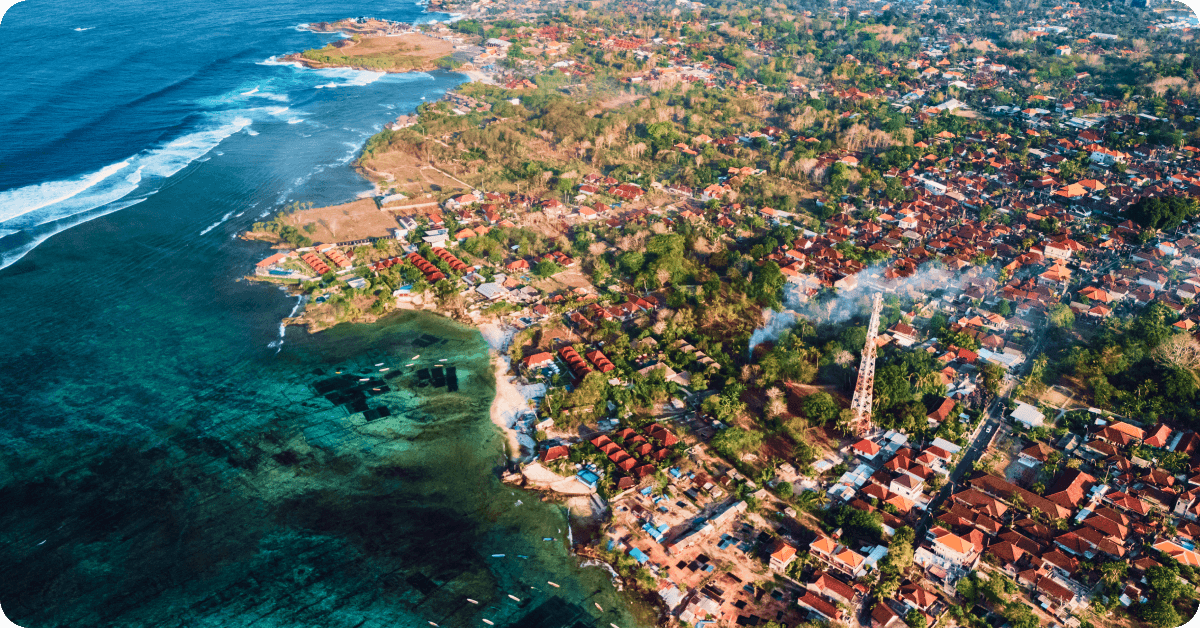
A few smaller islands just off Bali’s coast are well worth a day trip or short stay.
Nusa Penida Island. Kelingking Beach, with its famous T-Rex-shaped cliff, and Diamond Beach are the most visited spots on the island, and for good reason — the limestone coastline is stunning. Getting there takes roughly 45 minutes by speedboat from Sanur Port. This island is also the primary hub for snorkeling with giant manta rays at Manta Point and visiting the crystal-clear waters of Crystal Bay.
Nusa Lembongan. Smaller and easier to get around than Nusa Penida, this car-free island runs on scooters and good vibes. It’s a great spot for snorkeling, surfing, and chilling in a beachfront café with a drink or two. From here, you can easily charter a boat for a short 15-minute hop to the famous snorkeling sites off the coast of neighboring Nusa Penida.
Nusa Ceningan. Connected to Lembongan by the Yellow Bridge, this tiny tropical island is less developed and much quieter. Must-visit spots include the Nusa Ceningan Blue Lagoon and Secret Point Beach.
Lombok. Bali’s larger neighbor to the east, Lombok has excellent surf spots, quiet beaches, and challenging volcano hikes up Mount Rinjani. The island is home to the breathtaking Sendang Gile and Tiu Kelep waterfalls, both located in the lush northern foothills. For a beach day, Selong Belanak is hard to beat, and a stop at a traditional Sasak village gives you a look at local culture that feels untouched by tourism.
Gili Islands. Three small islands off Lombok’s northwest coast, each with a different personality. Gili Trawangan is the liveliest, with beach parties, plenty of dining options, and big markets. Gili Meno is the opposite — quiet, secluded, and popular with honeymooners. Gili Air sits somewhere in between, with a relaxed pace and enough restaurants and bars to keep you entertained.
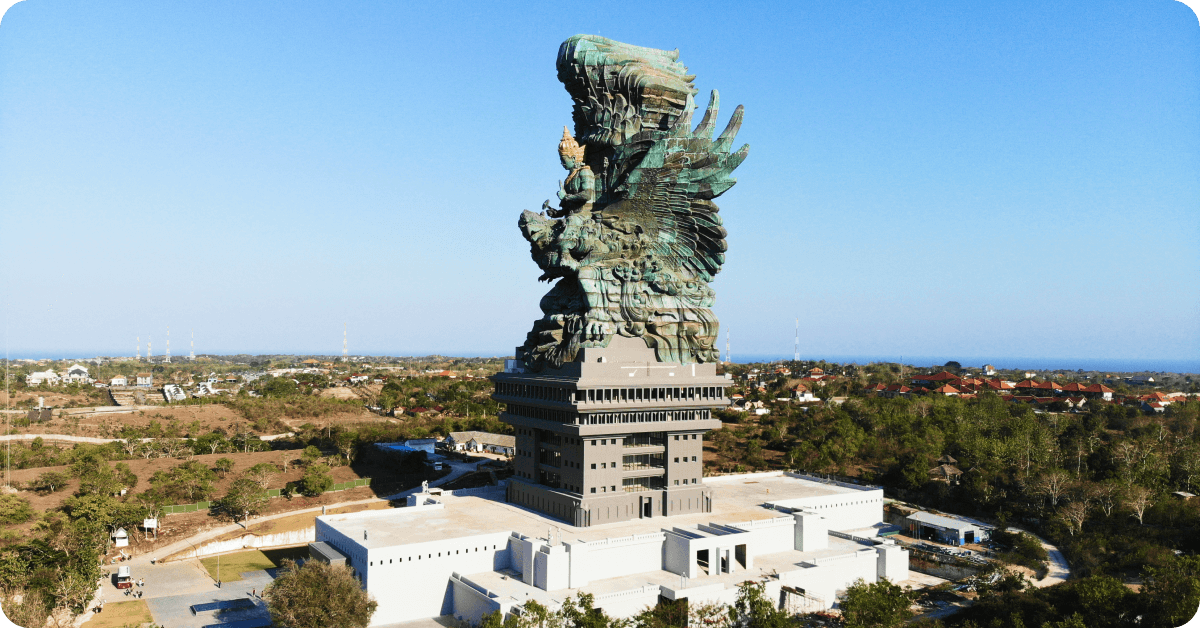
Bali has activities and attractions for travelers of any type. Here’s what’s worth your time.
Visit temples. Bali has more than 20,000 temples, and you’ll notice them in all parts of the island, from cliff tops and lakesides to quiet village corners. They’re a living part of daily life, not just tourist stops. Tanah Lot, set on a rocky outcrop in the sea, is one of the most photographed.
Explore beaches. The characteristics of Bali’s coastline depends on where you are. Canggu and Uluwatu have powerful waves and attract surfers from around the world. Nusa Dua is calmer and better suited for swimming. Off the beaten path, Amed’s black sand shores and Jimbaran’s sheltered bay offer a completely different feel.
Admire waterfalls. Most of Bali’s best waterfalls are found inland. Tegenungan is easy to reach, which is exactly why it draws big crowds. For a quieter experience, head to Sidemen, where Gembleng Waterfall is well worth the trip. If you’re traveling through central Bali, Leke Leke Waterfall in Tabanan is a standout — a guided 20-minute hike through the jungle brings you straight to it.
Book spa treatments. Bali has thousands of spas, and prices are low enough that you can treat yourself without thinking twice. Mekar Spa in Ubud, Maja Spa in Canggu, and Cloud Spa in Seseh are all highly rated picks. Packages range from quick one-hour sessions to full-day retreats, and many spas use traditional Balinese techniques and locally sourced ingredients.
Walk the rice terraces. Bali’s rice terraces are some of the island’s most recognizable landscapes, and they’re still an important part of local agriculture.
Try surfing. Batu Bolong and Kuta are ideal for beginners, with plenty of surf schools and board rentals along the beach. Padang Padang and the Uluwatu breaks are better suited for experienced surfers who can handle bigger waves.
Take a yoga class. Ubud is probably the world’s most famous yoga and wellness destination, with options ranging from small local studios to full-on wellness resorts.
Hike Mount Batur. If sunrise hikes are your thing, Mount Batur should be at the top of your list. Tours typically start around 2 or 3 in the morning and require a basic level of fitness. The reward is worth the early alarm — watching the sun come up over the volcanic crater with the clouds sitting below you is one of Bali’s most unforgettable experiences.
Spend a day at a beach club. Bali’s beach clubs go well beyond a pool and a playlist. In Uluwatu, One Eighty stands out with its glass-bottom sky pool perched over the cliffs. In Seminyak, Potato Head is hard to miss, with its amphitheater façade, oceanfront infinity pool with a swim-up bar, and several on-site restaurants.
Enjoy sunset views. Half the fun of Bali is finding the right spot to end the day. The Lawn in Canggu pairs golden-hour stunning views with Balinese food right on the beach. Sundara Beach Club in Jimbaran offers a more relaxed setting. In Uluwatu, El Kabron is a cliff-front option with sweeping ocean views.
Entry requirements for Bali are straightforward, and the process is now almost entirely digital. Ensure you complete these steps before heading to the airport to avoid being denied boarding or facing long queues.
Passport validity. Make sure your passport is valid for at least six months beyond your arrival date and has at least one blank page for stamps.
Visas. Check your eligibility well in advance. Most tourists use the e-Visa on Arrival (e-VoA), which costs IDR 500,000 and is valid for 30 days. It’s highly recommended to apply and pay for this online before you fly to skip the payment line at the airport.
Bali Tourist Levy. Every international visitor must pay a mandatory IDR 150,000 (approx. US$10) tourism tax. This should be paid via the official Love Bali website or app before you arrive.
Digital declarations. You’ll need to fill out a couple of digital forms within 72 hours before you arrive. First is the Electronic Customs Declaration (e-CD), which gives you a QR code for customs clearance. Depending on current health protocols, you might also need to complete the SATUSEHAT Health Pass on the Ministry of Health portal, which generates its own separate QR code.
Return ticket. Immigration officers may ask for proof of a return or onward flight out of Indonesia. Arriving without one can lead to denied entry, so ensure your travel plans are documented.
Bali is a culturally rich island, and following a few basic rules makes a big difference. Here's what to keep in mind before you go.
Nyepi Day. Nyepi, known as the Day of Silence, marks the start of the Balinese New Year. It follows the Balinese Saka calendar and typically falls between March and April, with the exact date shifting each year based on the lunar cycle. On this sacred day, everything shuts down — traffic, flights, and even the lights are kept low in the evening. Tourists aren’t allowed to leave their accommodation. Mobile internet and cellular networks are shut off island-wide for 24 hours to encourage reflection, though Wi-Fi in hotels usually stays on.
Galungan and Kuningan. Both of these religious periods are marked by ceremonies and decorations across the island. You’ll notice tall bamboo poles lining the streets, bent with offerings, giving the roads a festive, ceremonial feel.
Temple etiquette. Visitors must cover their shoulders and knees when entering temples. Additionally, everyone is required to wear a waist sash, even if wearing long pants, to symbolically separate the upper and lower body. Many temples provide sarongs and sashes, but bringing your own is a safer bet. Please note that according to strict Balinese Hindu tradition, women who are menstruating or have recently given birth, as well as anyone with an open wound, are not permitted to enter temple grounds.
Offerings. Small handmade offerings called canang sari are placed on the ground as part of daily rituals across Bali. Be careful not to step on or move them, and don’t step directly over them if people are actively praying or lighting incense.
General behavior. Balinese customs place a high value on respect and composure. Keep your voice down in public spaces, avoid public displays of anger, and be mindful of how your behavior might come across in a community that values calm and courtesy.
For the best weather, plan your trip between April and October. This is Bali’s dry season, which means you can expect sunny days, low humidity, and ideal conditions for island hopping, surfing, diving, and volcano hikes.
Within that window, July and August are the busiest tourist months, especially in popular areas like Canggu, Ubud, and Seminyak. Hotel prices climb, beach clubs fill up, and road traffic gets heavy. On the flip side, the weather during these two months is hard to beat.
The rainy season runs from November to March. Showers tend to come and go, usually in the afternoon or evening, so it’s far from a washout. Boat trips to nearby islands can get cancelled due to rough seas, and prevailing winds during these months often wash marine debris and plastic onto popular western beaches like Kuta, Seminyak, and Canggu.
If you travel in November, February, or March, the tradeoff for the occasional rainstorm is fewer tourists and much better deals on accommodation. However, keep in mind that the mid-December to early January holiday stretch is a massive exception — despite being in the rainy season, this period brings absolute peak crowds, heavy traffic, and premium hotel rates. If you avoid the holiday rush and don’t mind the rain, the wet season can still be a surprisingly good time to visit.
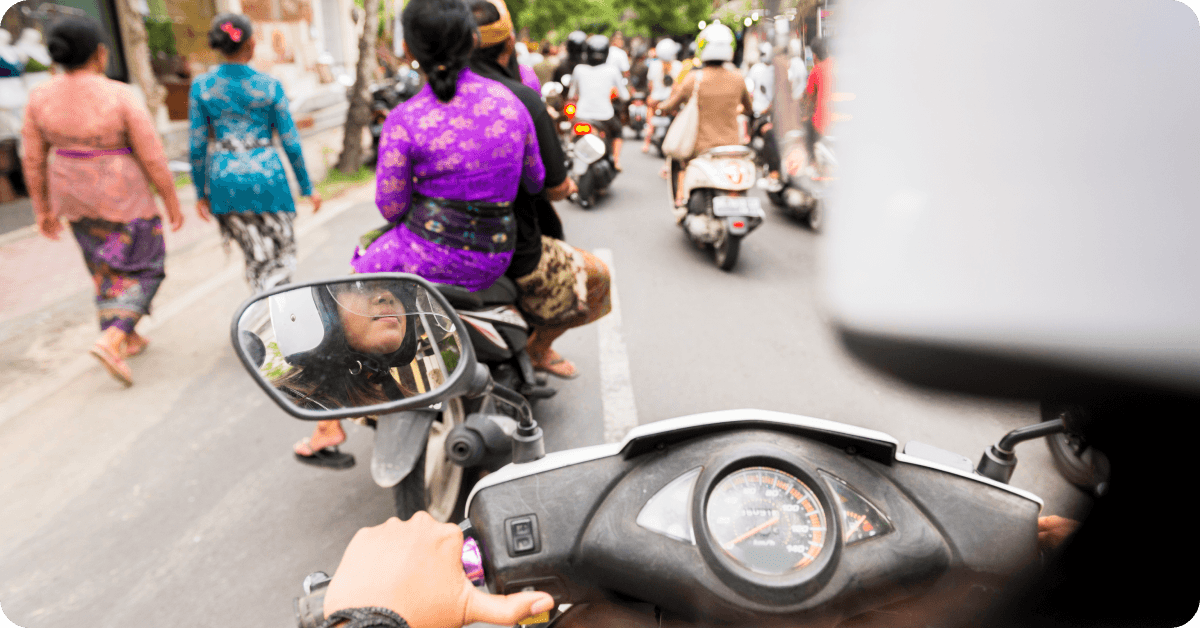
The main ways to get around Bali are scooters, ride-hailing apps, taxis, and private drivers.
Scooters. Renting a scooter is the most flexible and cheapest option, with both rentals and fuel costing very little. That said, traffic can be chaotic, and road rules aren’t always followed. What is more, you’re required to carry your valid home-country driving license along with an International Driving Permit (IDP), both showing a motorcycle endorsement.
Ride-hailing apps. If riding your own scooter isn’t for you, apps like Grab and Gojek work exactly like Uber (which no longer operates in Bali). These apps offer both car rides and scooter taxis (where you hop on the back and are provided a helmet). They are affordable, offer upfront fixed pricing, and are easy to use. However, be aware of “red zones” — certain local villages and tourist sites ban ride-hailing pickups to protect local taxi monopolies.
Taxis. Taxies are a pricier option, but still very affordable by international standards. Blue Bird is the most trusted local taxi company, known for always using a meter. However, watch out for counterfeit Blue Bird taxis — many independent drivers paint their cars the same shade of blue and use fake bird logos to trick tourists into unmetered rides. Always look for “Blue Bird Group” printed on the windshield, a visible driver ID badge, the driver’s formal blue batik uniform, and a specific alphanumeric fleet code on the side and rear of the vehicle.
Private drivers. Hiring a driver for the day is a great option if you want to visit multiple attractions without worrying about navigation or parking. Many drivers double as informal guides and know the best routes to avoid traffic.
Airport transport. Navigating the swarm of aggressive, independent taxi touts at the arrivals gate of Ngurah Rai International Airport can be overwhelming for first-timers. Pre-booking an airport transfer directly through your hotel or via platforms like Klook is highly recommended for complete peace of mind upon landing.
No one wants to spend their vacation days in a hospital, and basic precautions can prevent the most common issues.
Tap water. Stick to bottled or filtered water, and skip ice unless you’re sure it’s purified because tap water in Bali isn’t safe to drink.
Food hygiene. Eat where the locals eat. Busy spots with high turnover tend to have fresher food and better standards.
Sun protection. The sun in Bali is strong, even on cloudy days. Wear sunscreen daily, especially between 10 am and 3 pm.
Mosquito protection. Dengue fever is a real risk in Bali, spread by mosquitoes that bite during the day. Pack a DEET-based repellent and apply it throughout the day. Long sleeves and pants help too, especially in inland areas.
Rabies risk. Bali has dealt with an ongoing rabies problem. Avoid approaching stray dogs, cats, and monkeys. If you’re bitten or scratched, seek medical attention immediately. Getting vaccinated before your trip is a smart precaution.
Medical facilities. BIMC Hospital (Nusa Dua, Kuta, Ubud), SOS Medika, and Bali International Hospital in Sanur all have English-speaking staff and direct billing with major insurance providers.
Travel insurance. Medical care in Bali is reliable, but costs add up fast without coverage. Emergency evacuations can run over US$50,000. If you plan to rent a scooter, make sure your policy covers motorcycle accidents and that you hold a valid license and IDP. Most standard policies won’t cover scooter injuries without proper licensing.
If you wish to avoid common issues and make your visit to Bali a stress-free experience, these Bali travel tips can come in handy.
Most restaurants, hotels, and larger businesses accept cards. Cash is commonly used and expected in Bali, though, especially at warungs, local shops, and market stalls. ATMs are easy to find across the island, but stick to machines attached to banks to avoid skimming scams.
Wi-Fi is available in most hotels, cafes, and restaurants, but it's not always reliable. Since you’ll need the internet for navigation, ride-hailing apps, and bookings, having mobile data is close to a necessity.
Instead of paying steep roaming fees, get a SIM card for Bali or an eSIM for Bali before you go. With Saily, for example, you can buy a data plan in the app and connect automatically as soon as you land. If you’re planning to island-hop beyond Bali, you can get an eSIM for Indonesia, which covers the wider region so you stay connected wherever you go.
Bali is a safe destination for the most part, but a few common-sense habits go a long way.
Theft. Violent crime is rare, but drive-by bag and phone snatchings happen in areas like Seminyak and Canggu. Keep your phone out of sight near traffic and wear bags across your chest, away from the road.
Money and ATMs. ATM skimming is common, so stick to machines inside bank branches or guarded convenience stores. For currency exchange, skip the streetside kiosks offering suspiciously high rates. Use authorized chains like PT Dirgahayu Valuta Prima, BMC, or Central Kuta.
Alcohol safety. Cheap local spirits (Arak) and heavily discounted cocktails carry a real risk of methanol poisoning, which can be fatal. Stick to bottled beer or order spirits only at reputable, well-known venues.
Pack light, but keep the climate in mind. Breathable clothing, sunscreen, and DEET-based insect repellent are the basics. Don’t forget a Type C or Type F power adapter (the standard European two-round-pin plug) to charge your electronics. Comfortable shoes are a must if you’re planning any volcano hikes, and a light jacket comes in handy in cooler, elevated areas like Munduk or during a Mount Batur sunrise trek. Finally, consider packing a dry bag if you plan on taking fast boats to the neighboring islands or visiting waterfalls.
Bali’s food scene has two sides. On one side, you have warungs, small local eateries serving authentic Balinese dishes at surprisingly low prices. On the other hand, there’s a strong international dining scene, especially in areas like Canggu and Seminyak.
Balinese food leans more on fragrance than heat, with ingredients like kaffir lime, lemongrass, and galangal doing most of the heavy lifting. A few dishes worth trying: nasi goreng (fried rice), ayam betutu (slow-baked chicken wrapped in banana leaves), satay (grilled skewers), and dadar gulung, a Balinese take on pancakes.
If Western food is more your speed, you won’t have any trouble finding it. Canggu and Seminyak are packed with international restaurants and trendy cafes.
Bali is affordable, but how much you spend depends on your travel style. Airfare and accommodation make up the biggest costs. Food, transport, and activities can be very cheap. Here’s a rough daily breakdown:
Type of travel | Budget per day | Covers |
|---|---|---|
Budget | US$40-70 | basic accommodation, local street food |
Mid-range | US$80-150 | nicer hotels, mixed dining |
Luxury | US$200+ | villas, private drivers, fine dining |
A few apps that make daily logistics easier:
WhatsApp: The absolute king of communication in Bali. Every driver, villa host, restaurant, and spa uses it. You’ll need it to make bookings and coordinate pickups.
Google Maps: Your go-to for navigation across the island. A quick warning: If you are driving a car, stick to the main roads. The app frequently tries to route cars down narrow, scooter-only alleyways, which can leave you completely stuck.
Grab: Covers transport and food delivery.
Gojek: A local alternative to Grab with similar features.
Booking.com or Agoda: The most popular platforms for finding accommodation in Southeast Asia.
XE Currency: Handy for checking real-time exchange rates before you hand over your cash at a money changer.
Saily: For exploring the island without the hassle of physical SIM cards. The Saily app provides a global eSIM — a digital SIM card that lets you activate a cellular data plan instantly without swapping out your physical chip.
Ready to explore Bali? Keep these key points in mind as you plan your trip.
Choosing the right base matters. Go to Ubud for wellness, culture, and nature, stay in Uluwatu for surfing and beaches, and choose Seminyak for convenience and comfort.
The dry season is excellent for island trips and beach days, while the rainy season offers thinner crowds and cheaper accommodation.
Remember to respect temple etiquette, carry cash for small shops, and plan transport in advance.
Having access to reliable mobile data is also very important. Download an eSIM app before the trip to stay connected. It is easy to set up and has a bunch of affordable data plans to choose from with zero roaming fees — plus you get built-in security features.
Need data in Indonesia? Get an eSIM!

1 GB
7 días
3 GB
30 días
5 GB
30 días
Yes, you can. While tipping is not required like in the US, it is appreciated by local businesses trying to make a living. If the service was good, rounding up the bill is a polite gesture.
Yes. This amount of cash should easily cover a mid-range vacation for one person minus flights, including accommodation, food, transportation, and basic activities.
Yes, it most definitely is. Bali has a well-developed tourism infrastructure, and English is widely spoken across the island.
Balinese restaurants offer many options to choose from. For cheap eats, go to warungs. If you are craving international cuisine, many restaurants serve dishes from all over the world.

Siempre conectados, siempre en movimiento
Conéctate al instante con una eSIM de Saily y disfruta de internet sin complicaciones.

Artículos relacionados
21 min de lectura

25 min de lectura