






Best time to visit Thailand: Weather guide and travel tips
Meandering around golden temples in Chiang Mai, feasting at a night market in Bangkok, or basking in Koh Samui’s seabreeze and golden sunlight — your trip to Thailand may differ greatly from another traveler’s. The country sits right above the equator, making it prone to extremely hot periods and, famously, its monsoon season. And when the weather’s right, tourists flood in. So when’s the best time to book your trip to Thailand? We’ll cover the best time to visit Thailand based on weather and climate, the cheapest time to visit, high and low tourist seasons, as well as festivals and other unmissable cultural events.
Table of Contents
- What’s the best time to visit Thailand based on the weather?
- The best month to visit Thailand: Temperatures, events, and activities to expect for every month
- January in Thailand: Best for cooler temperatures and beach vacations
- February in Thailand: Best for trekking in Northern Thailand and beachtime
- March in Thailand: Best for island hopping
- April in Thailand: Best for Songkran and tropical fruit
- May in Thailand: Best for budget travel and fewer crowds
- June in Thailand: Best for exploring rice paddies
- July in Thailand: Best for chasing waterfalls and exploring the Gulf islands
- August in Thailand: Best for lush greenery
- September in Thailand: Best for museum hopping
- October in Thailand: Best for budget travel and vegetarian food festivals
- November in Thailand: Best for weather and Loy Krathong
- December in Thailand: Best for every possible activity
- Cheapest and least crowded times to visit Thailand
- When to visit Thailand for events and festivals
- When to avoid visiting Thailand
- Thailand travel tips for 2026
- The best time of the year to visit Thailand: Quick recap
What’s the best time to visit Thailand based on the weather?

The best time to visit Thailand is from November to February (the cool season) if you’re looking for relatively comfortable daytime temperatures between 77°F and 90°F (25°C and 32°C), low humidity, and no expected monsoons. These months should be your target if you’re not keen on extreme heat and humidity or would prefer not to spend your vacation fighting torrential rain. However, islands in the Gulf of Thailand (Koh Samui, Koh Tao, and Koh Phangan) experience monsoon season from October to December — slightly later than other regions of the country. Aim for late December to February if you want dry, cooler weather for your Andaman Sea beach vacation.
But let’s get one thing clear about the weather in Thailand — it’s always hot. The three official seasons are the cool season, hot season, and monsoon season, but the running joke is that it’s more like hot season, extremely hot season, and hot-and-humid season. The cool season actually allows you to pleasantly soak up the sunshine for a larger portion of the day without your body urging you to hide from scorching temperatures. So really, chasing the best weather in Thailand comes down to picking the most bearably hot months.
All that said, the real best time of the year to visit Thailand is any time at all. No matter whether you choose to brave knee-deep floods or endure humidity so thick you’ll feel drenched in under a minute of stepping outside, Thailand remains one of the most popular tourist destinations year round. Thailand’s hot season and monsoon season combined make up two-thirds of the year, but you’ll still find tourists slurping noodles at roadside stalls for all 365 days.
Here’s a detailed breakdown of which months fall into each season in Thailand and which regions are affected most:
Season | Months | What to keep in mind |
|---|---|---|
😎 Cool, dry season in Thailand | November to February for Central and Northern Thailand (Bangkok, Ayutthaya, Pattaya, Chiang Mai, and Chiang Rai) and the Andaman Coast (Phuket and Krabi). Late December to February for islands on the Gulf of Thailand (Koh Samui, Koh Tao, and Koh Phangan). | This timeframe is considered the best season to visit Thailand by the majority of travelers. |
🥵 Hot season in Thailand | March to May | These months are extremely hot but not as humid as the rainy season. If you’d prefer to feel like you’re in a tanning bed over a steambath, then this stretch of the year might suit you. |
🔥 Burning season in Northern and Central Thailand | February to April | The burning season occurs due to farmers intentionally setting agricultural fires. During the burning season, expect poor air quality that can leave you coughing and teary-eyed as well as obstruct your view of the mountains up north. Chiang Mai is especially affected by the burning season. |
🌧 Rainy season in Thailand | Mid-June to October for Central and Northern Thailand (Bangkok, Ayutthaya, Pattaya, Chiang Mai, and Chiang Rai) and the Andaman Coast (Phuket and Krabi). October to early December for islands on the Gulf of Thailand (Koh Samui, Koh Tao, and Koh Phangan). | During Thailand’s monsoon season, showers are most common in the afternoons and early evenings. According to a study in the Journal of Water and Climate Change, flooding has worsened during Thailand's rainy season — especially in Bangkok. Beware of hidden, sharp debris in puddles and live overhead wires. When it’s not raining, the humidity is extremely high during the day. Just because it’s the rainy season doesn’t mean rain is guaranteed every day. |

Avoid roaming fees on your trip to Thailand
Enjoy affordable mobile data in Thailand with the Saily eSIM app!
Now let’s take a look at a more detailed breakdown of what to expect from each month in Thailand.
The best month to visit Thailand: Temperatures, events, and activities to expect for every month

Figuring out the best month to visit Thailand depends on your budget, your tolerance for heat and humidity, whether you’re okay with traversing dense crowds, and what activities you absolutely don’t want to miss. The good news is that Thailand offers exciting experiences to add to your itinerary during each and every month. If your main concern is weather, read on for a detailed breakdown of temperatures for each month in Central Thailand, Northern Thailand, the Andaman Coast, and the islands in the Gulf of Thailand so you can determine when to visit Thailand without feeling unreasonably uncomfortable.
January in Thailand: Best for cooler temperatures and beach vacations
January is an excellent time to visit Thailand as it falls right in the middle of the country’s cool season (though Thailand is hot year round), offering dry, sunny weather, low humidity, and cooler temperatures compared to other months. January is also considered by many as one of the best times to visit Thailand’s beaches in Phuket, Krabi, and islands in the Gulf of Thailand (Koh Samui, Koh Tao, and Koh Phangan). If you’re headed to Thailand in January, take the opportunity to explore the country’s southern islands and beaches, and partake in water-based activities like scuba diving, snorkeling, and swimming. Just keep in mind that January is high tourist season for Thailand, so expect higher prices for flights and accommodations as well as larger crowds.
January temperatures in Thailand:
Central Thailand (Bangkok, Ayutthaya): Average daytime temperatures in January are between 89.6°F and 91.4°F (32°C and 33°C), with nighttime temperatures dipping to 71.6°F to 75.2°F (22°C to 24°C).
Northern Thailand (Chiang Mai, Chiang Rai): This region gets slightly lower daytime and nighttime temperatures in January compared to other regions of the country, with average daytime temperatures between 82.4°F and 84.2°F (28°C and 29°C) and cool nighttime temperatures between 55.4°F and 59°F (13°C and 15°C).
The Andaman Coast (Phuket, Krabi): Average daytime temperatures in January are between 89.6°F and 91.4°F (32°C and 33°C), with nighttime temperatures dipping to 71.6°F to 75.2°F (22°C to 24°C).
The Southern Gulf Coast (Koh Samui, Koh Tao): Average daytime temperatures in January are between 84.2°F and 87.8°F (29°C and 31°C), and nighttime temperatures sit between 75.2°F and 77°F (24°C and 25°C).
February in Thailand: Best for trekking in Northern Thailand and beachtime

February marks the end of Thailand’s cool, dry season, making it a popular time to visit the country. You can expect dry, sunny days, low humidity, and cooler temperatures relative to other months in the year, making February an ideal time for beach vacations. Specifically, Chiang Mai gets relatively comfortable daytime and nighttime temperatures during February, which makes it a great month for exploring the region’s jungle-draped mountains. Just keep in mind that if you visit in late February, your view might be obstructed by smoke due to slash-and-burn farming practices (aka Thailand’s burning season). It should technically start in March, but it might be wiser to head to the North in early February. Since February is still the cool season, take your chance to experience comfortable temperatures on beaches along the crystalline Gulf of Thailand.
February temperatures in Thailand:
Central Thailand (Bangkok, Ayutthaya): Average daytime temperatures in February range from 89.6°F to 91.4°F (32°C to 33°C), with nighttime temperatures dipping to approximately 69.8°F to 75.2°F (21°C to 24°C).
Northern Thailand (Chiang Mai, Chiang Rai): This region sees slightly cooler conditions, with average daytime temperatures between 82.4°F and 84.2°F (28°C and 29°C) and nighttime temperatures ranging from about 55.4°F to 64.4°F (13°C to 18°C).
The Andaman Coast (Phuket, Krabi): Average daytime temperatures in February are 89.6°F to 91.4°F (32°C to 33°C), while nighttime temperatures fall to around 69.8°F to 75.2°F (21°C to 24°C).
The Southern Gulf Coast (Koh Samui, Koh Tao): Average daytime temperatures range between 84.2°F and 87.8°F (29°C and 31°C), with nighttime temperatures hovering near 73.4°F to 77°F (23°C to 25°C).
March in Thailand: Best for island hopping
March marks the beginning of Thailand’s hot season, offering extremely hot, dry temperatures across the country, but especially in Central and Northern Thailand. March is a great time to go island hopping in the south of Thailand, but it’s best to avoid Northern Thailand due to the poor air quality from the country’s “burning season” (where farmers practice slash-and-burn agriculture). Not only will the burning season impact your lungs, but it’ll also obstruct your view of the mountains. Avoiding Central Thailand might be a good call in March as well due to extremely high daytime temperatures, where heat stroke becomes a serious concern.
March temperatures in Thailand:
Central Thailand (Bangkok, Ayutthaya): Average daytime temperatures in March range from 93°F to 97°F (34°C to 36°C), with nighttime temperatures dipping to around 75°F to 77°F (24°C to 25°C).
Northern Thailand (Chiang Mai, Chiang Rai): This region sees very warm conditions, with average daytime temperatures between 91°F and 99°F (33°C and 37°C) and cooler nighttime temperatures around 66°F to 68°F (19°C to 20°C).
The Andaman Coast (Phuket, Krabi): Average daytime temperatures in March are 90°F to 93°F (32°C to 34°C), while nighttime temperatures fall to about 75°F to 77°F (24°C to 25°C).
The Southern Gulf Coast (Koh Samui, Koh Tao): Average daytime temperatures range between 88°F and 90°F (31°C and 32°C), with nighttime temperatures near 75°F to 77°F (24°C to 25°C).
April in Thailand: Best for Songkran and tropical fruit

April is the hottest month of the year in Thailand, with daytime temperatures skyrocketing to 95°F to 99°F (35°C to 37°C) in Bangkok. April is also famously the month of Songkran, the Thai New Year, where locals and tourists alike fill the streets to cool each other off with water gun fights. If you don’t want to miss this once-in-a-lifetime cultural event, book your trip in April. Make sure to get your share of tropical fruit during this month — head to a market to sample lychee, rambutan, longan, and mangosteen.
April temperatures in Thailand:
Central Thailand (Bangkok, Ayutthaya): Average daytime temperatures in April soar to 95°F to 99°F (35°C to 37°C), with nighttime temperatures offering little relief at around 81°F to 82°F (27°C to 28°C).
Northern Thailand (Chiang Mai, Chiang Rai): This region experiences some of the country’s highest heat, with daytime temperatures between 97°F and 102°F (36°C and 39°C) and warm nighttime temperatures around 73°F to 77°F (23°C to 25°C).
The Andaman Coast (Phuket, Krabi): Average daytime temperatures in April range from 91°F to 93°F (33°C to 34°C), while nighttime temperatures fall to about 75°F to 79°F (24°C to 26°C).
The Southern Gulf Coast (Koh Samui, Koh Tao): Average daytime temperatures stay between 88°F and 91°F (31°C and 33°C), with nighttime temperatures hovering around 79°F to 81°F (26°C to 27°C).
May in Thailand: Best for budget travel and fewer crowds
May is a transitional month from Thailand’s hot season into the monsoon season. May will feel simultaneously hot and muggy, but the upside is that it’s in the low tourist season, where you can enjoy lower flight and accommodation prices and fewer crowds. Plus, afternoon showers will offer much-needed respite from the daytime heat and saturate Northern Thai jungles with a vibrant shade of green. In case you’re planning a beach vacation, the islands in the Gulf of Thailand (Koh Samui, Koh Tao, and Koh Phangan) are generally much drier in May than the Andaman Coast (Phuket, Krabi).
May temperatures in Thailand:
Central Thailand (Bangkok, Ayutthaya): Average daytime temperatures in May range from 91°F to 95°F (33°C to 35°C), with nighttime temperatures falling to approximately 73°F to 81°F (23°C to 27°C).
Northern Thailand (Chiang Mai, Chiang Rai): Average daytime temperatures sit between 91°F and 93°F (33°C and 34°C), while nighttime temperatures cool to around 68°F to 73°F (20°C to 23°C).
The Andaman Coast (Phuket, Krabi): Average daytime temperatures in May are 88°F to 91°F (31°C to 33°C), with nighttime temperatures dipping to about 73°F to 77°F (23°C to 25°C).
The Southern Gulf Coast (Koh Samui, Koh Tao): Average daytime temperatures range between 88°F and 90°F (31°C and 32°C), while nighttime temperatures hover near 72°F to 73°F (22°C to 23°C).
June in Thailand: Best for exploring rice paddies

June marks the early stages of Thailand’s wet (monsoon) season, so you should expect hot, humid weather with frequent afternoon downpours. The perks, however, include lower flight and accommodation prices, fewer crowds, and superbly lush jungle flora. June is a great time to explore vibrant green rice paddies in the Northeastern plateau (Udon Thani, Phimai, Sakhon Nakhon) and the Central to Upper plains (Lopburi, Kamphaeng Phet).
June temperatures in Thailand:
Central Thailand (Bangkok, Ayutthaya): Average daytime temperatures in June range from 91°F to 95°F (33°C to 35°C), with nighttime temperatures dipping to around 78°F to 79°F (26°C to 26.5°C).
Northern Thailand (Chiang Mai, Chiang Rai): Average daytime temperatures sit between 90°F and 93°F (32°C and 34°C), while nighttime temperatures cool to approximately 73°F to 75°F (23°C to 24°C).
The Andaman Coast (Phuket, Krabi): Average daytime temperatures in June are 86°F to 90°F (30°C to 32°C), with nighttime temperatures falling to about 73°F to 77°F (23°C to 25°C).
The Southern Gulf Coast (Koh Samui, Koh Tao): Average daytime temperatures range between 88°F and 90°F (31°C and 32°C), with nighttime temperatures hovering near 73°F to 75°F (23°C to 24°C).
July in Thailand: Best for chasing waterfalls and exploring the Gulf islands
July falls right in the middle of Thailand’s rainy (monsoon) season, where frequent, short bursts of rain are common throughout most of the country, especially the Andaman Coast (Phuket, Krabi), as well as high temperatures and humidity before the rain arrives. If you want drier weather, head to the islands on the Gulf of Thailand, where the rainy season begins later in the year. More rain does mean that waterfalls in Northern Thailand will be powerful sites worth a visit.
July temperatures in Thailand:
Central Thailand (Bangkok, Ayutthaya): Average daytime temperatures in July range from 91°F to 93°F (33°C to 34°C), with nighttime temperatures dipping to around 78°F to 79°F (26°C to 26.5°C).
Northern Thailand (Chiang Mai, Chiang Rai): Average daytime temperatures sit between 88°F and 90°F (31°C and 32°C), while nighttime temperatures cool to approximately 75°F (24°C).
The Andaman Coast (Phuket, Krabi): Average daytime temperatures in July are 86°F to 88°F (30°C to 31°C), with nighttime temperatures falling to about 75°F to 77°F (24°C to 25°C).
The Southern Gulf Coast (Koh Samui, Koh Tao): Average daytime temperatures range between 88°F and 90°F (31°C and 32°C), with nighttime temperatures hovering near 73°F to 75°F (23°C to 24°C).
August in Thailand: Best for lush greenery

Thailand’s monsoon season continues in August, offering frequent, heavy showers and extreme humidity. If you want to visit Thailand for its beaches, avoid the Andaman Coast (Phuket, Krabi) in August and opt for islands in the Gulf of Thailand instead. If you can bear the warm rain, you’ll get to enjoy the most gorgeous views imaginable of Northern Thailand’s foothills of the Himalayas, which will exude a vibrant green hue. If you’re landing in Bangkok, savor the air-conditioned airport while you can — the moment you step outside, you’ll be hit with a gust of hot wind comparable to standing in front of a hair dryer.
August temperatures in Thailand:
Central Thailand (Bangkok, Ayutthaya): Average daytime temperatures in August range from 91°F to 93°F (33°C to 34°C), with nighttime temperatures dipping to around 78°F to 79°F (26°C to 26.5°C).
Northern Thailand (Chiang Mai, Chiang Rai): Average daytime temperatures sit between 88°F and 90°F (31°C and 32°C), while nighttime temperatures cool to approximately 75°F (24°C).
The Andaman Coast (Phuket, Krabi): Average daytime temperatures in August are 86°F to 88°F (30°C to 31°C), with nighttime temperatures falling to about 75°F to 77°F (24°C to 25°C).
The Southern Gulf Coast (Koh Samui, Koh Tao): Average daytime temperatures range between 88°F and 90°F (31°C and 32°C), with nighttime temperatures hovering near 73°F to 75°F (23°C to 24°C).
September in Thailand: Best for museum hopping
September is the peak of Thailand’s rainy season — expect tons of rainfall, high temperatures, and extremely high humidity. Be prepared to amend your itinerary a bit to include more indoor activities — take the opportunity to explore Thailand’s incredible museums, like the Museum of Contemporary Art (MOCA) in Bangkok. That said, it won’t rain all day, but intense, flash thunderstorms are expected in the afternoons and early evenings. As you may expect, these weather conditions make September a great time for budget travel, with lower flight and accommodation costs and fewer crowds. Skip the Andaman Coast (Phuket, Krabi) in September as this region gets hit the hardest by monsoons.
September temperatures in Thailand:
Central Thailand (Bangkok, Ayutthaya): Average daytime temperatures in September range from 90°F to 91°F (32°C to 33°C), with nighttime temperatures dipping to around 75.2°F to 77°F (24°C to 25°C).
Northern Thailand (Chiang Mai, Chiang Rai): Average daytime temperatures sit between 88°F and 90°F (31°C and 32°C), while nighttime temperatures cool to approximately 69.8°F to 71.6°F (21°C to 22°C).
The Andaman Coast (Phuket, Krabi): Average daytime temperatures in September are 86°F to 88°F (30°C to 31°C), with nighttime temperatures falling to about 73.4°F to 75.2°F (23°C to 24°C).
The Southern Gulf Coast (Koh Samui, Koh Tao): Average daytime temperatures range between 88°F and 90°F (31°C and 32°C), with nighttime temperatures hovering near 75.2°F to 77°F (24°C to 25°C).
October in Thailand: Best for budget travel and vegetarian food festivals
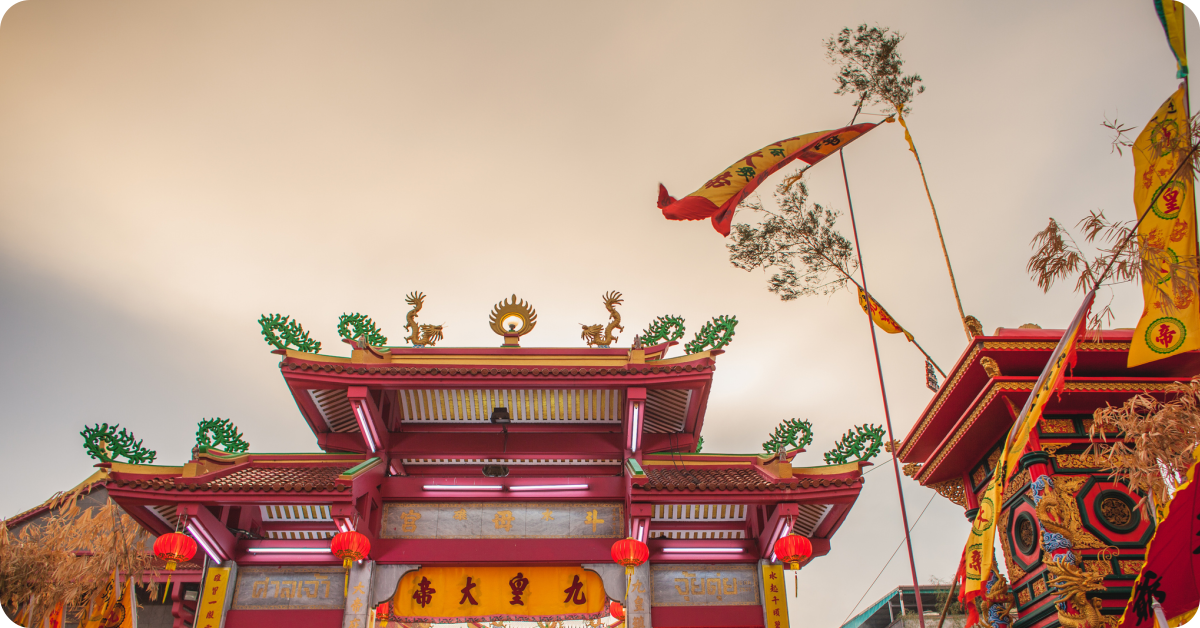
October is a transitional period, where Thailand’s rainy season comes to an end and the dry, cool season begins — especially in Northern Thailand (Chiang Mai, Chiang Rai). You’ll get a mix of sun and rain, but showers are most common in the afternoon, not morning. October is also the cheapest time to visit Thailand, where flights and accommodation prices are at their lowest. While the Andaman Coast (Phuket, Krabi) is on the rainier side in October, non-meat eaters might want to head to Phuket anyway for an immensely popular Vegetarian Festival (though festivals are held across the country).
October temperatures in Thailand:
Central Thailand (Bangkok, Ayutthaya): Average daytime temperatures in October range from 90°F to 91°F (32°C to 33°C), with nighttime temperatures dipping to around 73°F to 75°F (23°C to 24°C).
Northern Thailand (Chiang Mai, Chiang Rai): Average daytime temperatures sit between 84°F and 88°F (29°C and 31°C), while nighttime temperatures cool noticeably to approximately 66°F (19°C).
The Andaman Coast (Phuket, Krabi): Average daytime temperatures in October are 88°F to 90°F (31°C to 32°C), with nighttime temperatures falling to about 72°F to 73°F (22°C to 23°C).
The Southern Gulf Coast (Koh Samui, Koh Tao): Average daytime temperatures range between 84°F and 88°F (29°C and 31°C), with nighttime temperatures hovering near 75°F (24°C).
November in Thailand: Best for weather and Loy Krathong
November is considered amongst the best times to visit Thailand, especially its central and northern parts, thanks to cool, dry weather with comfortable daytime and nighttime temperatures. Thailand’s peak tourist season begins in November, and with it, you can expect more crowds and higher flight and accommodation prices. Don’t miss the enchanting Loy Krathong festival, where you can witness thousands of krathongs — small baskets made of banana leaves, flowers, candles, and incense — floating on rivers, lakes, and canals.
November temperatures in Thailand:
Central Thailand (Bangkok, Ayutthaya): Average daytime temperatures in November range from 91°F to 93°F (33°C to 34°C), with nighttime temperatures dipping to around 77°F (25°C).
Northern Thailand (Chiang Mai, Chiang Rai): Average daytime temperatures sit between 84°F and 88°F (29°C and 31°C), while nighttime temperatures cool significantly to approximately 59°F to 64°F (15°C to 18°C).
The Andaman Coast (Phuket, Krabi): Average daytime temperatures in November are 88°F to 90°F (31°C to 32°C), with nighttime temperatures falling to about 77°F to 79°F (25°C to 26°C).
The Southern Gulf Coast (Koh Samui, Koh Tao): Average daytime temperatures range between 84°F and 88°F (29°C and 31°C), with nighttime temperatures hovering near 77°F (25°C).
December in Thailand: Best for every possible activity

December is yet another one of the best times to visit Thailand for weather because it’s in the cool, dry season, offering ideal temperatures and low humidity across the country (though islands in the Gulf of Thailand might experience a bit of rain at the beginning of December). December is the absolute peak travel season in Thailand. Prices are high, and crowds are immense, but for good reason — December is a fantastic time for scuba diving, snorkeling, island hopping, and trekking mountains in the north.
December temperatures in Thailand:
Central Thailand (Bangkok, Ayutthaya): Average daytime temperatures in December range from 88°F to 90°F (31°C to 32°C), with nighttime temperatures dipping to around 71°F to 75°F (22°C to 24°C).
Northern Thailand (Chiang Mai, Chiang Rai): Average daytime temperatures sit between 82°F and 86°F (28°C and 30°C), while nighttime temperatures cool significantly to approximately 59°F to 64°F (15°C to 18°C).
The Andaman Coast (Phuket, Krabi): Average daytime temperatures in December range from 88°F to 91°F (31°C to 33°C), with nighttime temperatures falling to about 78°F to 79°F (26°C to 26.5°C).
The Southern Gulf Coast (Koh Samui, Koh Tao): Average daytime temperatures range between 84°F and 88°F (29°C and 31°C), with nighttime temperatures hovering near 77°F (25°C).
Cheapest and least crowded times to visit Thailand
The cheapest time to visit Thailand is during the country’s low tourist season (May to October), which mostly coincides with the monsoon season in Thailand. Overall, October seems to be the cheapest month for combined flight prices and accommodation costs, followed by May and April. With lower prices, you’ll also get fewer crowds because beach vacations are a huge appeal for many visitors. If you don’t mind a bit (okay, maybe a lot) of rain, take the opportunity to bask in Northern Thailand’s lush landscapes, which are as green as ever during monsoon season. On the other hand, data from the Bank of Thailand suggests that peak tourist season is from November to February (Thailand’s cool season), where travelers take advantage of the country’s dry, cool temperatures and low humidity. Shoulder season in Thailand (the months where crowds are neither at their highest nor lowest) runs from March to April, during Thailand’s hot season, and from September to October.
Take a look at this chart covering average flight prices from LAX (the most common US airport passengers fly from to get to Thailand) and costs of a night in a 4-star hotel in Bangkok to determine the cheapest time to travel to Thailand:
Month | Average cost per night in a 4-star hotel in Bangkok | Average round-trip flight cost from LAX to BKK |
|---|---|---|
January | US$95 | US$900 |
February | US$100 | US$850 |
March | US$80 | US$800 |
April | US$75 | US$780 |
May | US$65 | US$760 |
June | US$60 | US$980 |
July | US$60 | US$950 |
August | US$65 | US$900 |
September | US$70 | US$820 |
October | US$61 | US$716 |
November | US$85 | US$880 |
December | US$110 | US$1102 |
Based on data from KAYAK and American Airlines.
When to visit Thailand for events and festivals
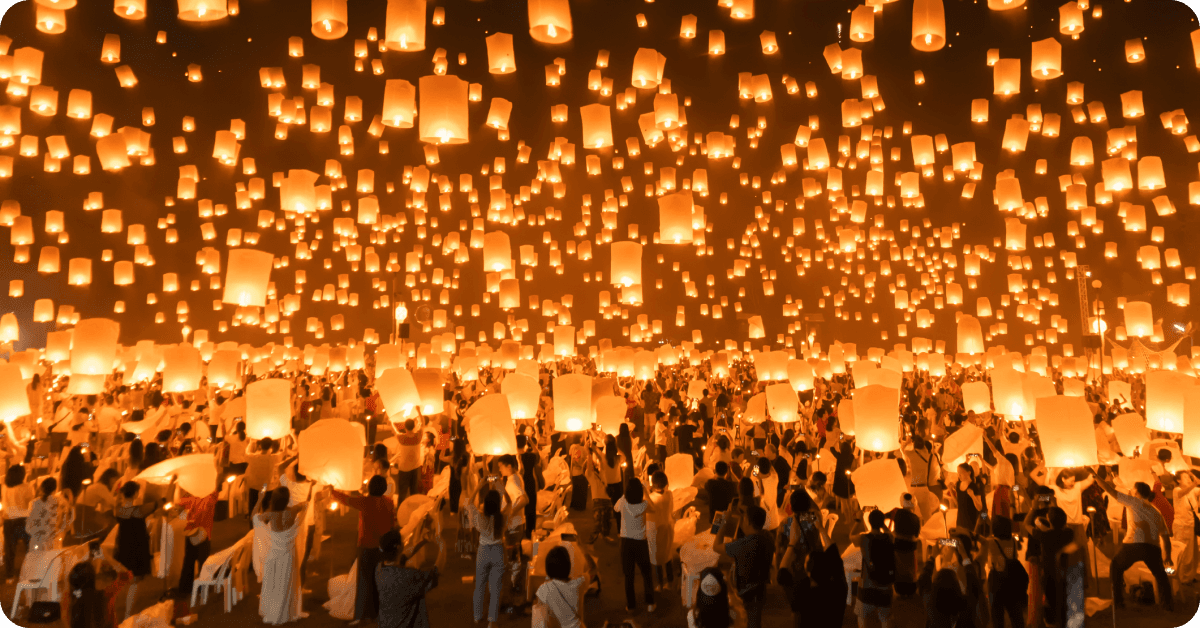
Thailand is home to a variety of cultural festivals and national holidays throughout the year. Timing your visit to coincide with major events like Songkran and Loy Krathong will allow you to experience once-in-a-lifetime traditional ceremonies, temple rituals, parades, and unique local celebrations. Here are some of the best festivals in Thailand you won’t want to miss:
Magha Puja. A serene holiday where candlelit processions swirl around temples at dusk, creating a peaceful glow that feels like stepping into a living postcard. The holiday takes place on the full moon of the third lunar month (usually February or early March). Bangkok and Chiang Mai host particularly spectacular celebrations, but head to any major temple town for atmospheric evening processions.
Chakri Memorial Day. A respectful day honoring the founding of the Chakri Dynasty, celebrated with ceremonies, flags, and historical tributes on April 6. The best city to visit for Chakri Memorial Day is Bangkok, especially around the Grand Palace.
Songkran. Thailand’s world-famous water festival, marking the Thai New Year, where streets transform into a nationwide water-gun fight from April 13-15 (a much-needed respite during this month’s sweltering heat). Chiang Mai is the water-gun fight capital of Songkran, but Bangkok, Phuket, and Pattaya are also popular choices.
Visakha Bucha Day. A major Buddhist holiday marking the Buddha’s birth, enlightenment, and passing. The day is celebrated with meditative temple visits and glowing candle walks. It takes place on the full moon of the sixth lunar month (usually in May).
Phuket Vegetarian Festival. An obvious bucket-list festival for vegetarians around the world, this Taoist festival features colorful parades, firewalking spectacles, and plenty of veggie dishes to try. It takes place on the first nine days of the ninth lunar month (usually late September to early October).
Loy Krathong. Often called the most beautiful festival in Thailand, Loy Krathong is marked by thousands of people releasing krathongs — floating baskets made of banana leaves, flowers, candles, and incense — onto rivers, lakes, and canals. The event takes place on the full moon of the 12th lunar month (usually in November). Chiang Mai is one of the most popular places to witness Loy Krathong, but Sukhothai Historical Park and Bangkok’s riverside areas are great options as well.
Yi Peng. Celebrated mainly in Chiang Mai, this lantern festival sends thousands of glowing sky lanterns into the night, making it undoubtedly one of the most picturesque, whimsical experiences in the country. The event coincides with Loy Krathong and is usually held in November.
Full Moon Party. Thailand’s legendary all-night beach rave, where thousands of travelers gather under the glow of the lunar cycle to celebrate until sunrise. This event takes place every month on the night of the full moon, transforming the shoreline of Koh Phangan into a glowing mosaic of body paint and fire shows.
💡 Pro tip: If you’re visiting multiple Asian countries for the Buddhist New Year, you can get an eSIM for Asia instead of just an eSIM for Thailand!
When to avoid visiting Thailand
The so-called worst time to visit Thailand is during the country’s hot season — March and April — where temperatures reach abysmal highs (up to 98.6°F/37°C) with little respite from the heat even at night. Many would also argue that Thailand’s monsoon season (mid-June to October) should be avoided because beach vacations can be interrupted with intense, frequent afternoon storms. However, the rainy season is also Thailand’s low tourist season, meaning you’ll get to enjoy lower accommodation and flight prices and fewer crowds, as well as gorgeous jungle landscapes in the north. The worst time to visit Chiang Mai (and generally, Northern Thailand) is during the burning season — from late February to April — where slash-and-burn farming practices will leave you coughing, teary-eyed, and unable to catch the region’s beautiful mountain views.
The truth is that Thailand is a year-round destination despite its year-round heat. Deciding when to visit Thailand is up to your priorities.
Thailand travel tips for 2026

If Thailand seems like a bit of a daunting destination, we promise that a bit of preparation will make for a much smoother and more enjoyable trip. These essential tips are worth keeping in mind if you’re traveling to Thailand in 2026:
You must fill out a Thailand Digital Arrival Card (TDAC) three days before arrival. As of May 1, 2025, all tourists, business travelers, work permit holders, and digital nomads must fill out a TDAC through the official immigration portal three days (72 hours) before arriving in Thailand.
Prepare to pay a small tourist tax by mid-2026. A new tourist tax of 300 THB (US$9.55) is projected to roll out by mid-2026 to boost Thailand's infrastructure and provide basic insurance for tourists.
Be conscious of Thailand’s mourning period. On October 24, 2025, Her Majesty Queen Sirikit, the Queen Mother, passed away at the age of 93. She was highly respected by the nation, and as such, Thailand will observe a mourning period until October 2026. Members of the public are encouraged to wear black for the first 90 days as a sign of respect.
Get a Rabbit Card for the SkyTrain. Bangkok’s BTS SkyTrain is the fastest and most convenient way to get across the city. With a refillable Rabbit Card, you won’t have to purchase a single ticket each time.
Beware of scams. Common scams include being overcharged for tuk-tuks, “free” tours that lead to pressured sales, or attempts at being upsold for massages that you didn’t ask for (usually by taxi or tuk-tuk drivers).
Consider getting vaccinated. Recommended vaccinations include Hepatitis A and B and typhoid, especially if you’ll eat street food or travel to rural areas.
Know Thailand’s emergency numbers. Thailand’s main emergency numbers are 191 for police and 1669 for medical emergencies. Keep them saved in your phone.
Dress modestly for temples. Cover your shoulders and knees and remove your shoes before entering. Some temples provide wraps if you’re not prepared.
Follow basic customs. Don’t point at people or objects with your feet, avoid public displays of affection, and always show respect to monks and elders.
Bring the right charging adaptor. Your Thailand packing list should include an adaptor for charging your electronics. Thailand uses types A, B, C, F, and O plugs, and the standard voltage is 220V.
Learn “hello” and “thank you” in Thai. Knowing how to say “hello” (sawasdee ka/krap) and “thank you” (khop khun ka/krap) goes a long way in showing respect to locals.
Get travel insurance. This is especially important if you plan to hike, drive scooters, or visit remote areas. Medical care can be costly for tourists without insurance.
Download useful apps. Offline maps, translation tools, transport apps, and currency converters can save time and hassle. Check our list of the 30 best travel apps for Thailand.
Use an eSIM for international travel. Stay online throughout your trip without incurring roaming fees with an eSIM plan for Thailand. Getting an eSIM is also a great alternative to relying on the Bangkok Airport Wi-Fi if you have a long layover.
Need data in Thailand? Get an eSIM!

1 GB
7 days
US$2.99
3 GB
30 days
US$5.99
5 GB
30 days
US$7.99
The best time of the year to visit Thailand: Quick recap
Thailand is a year-round destination that offers exciting excursions, cultural activities, and natural sites whenever you decide to visit — but determining when to book a trip to Thailand can make a difference for the weather, crowds, and costs.
The best time to visit Thailand for weather is from November to February, during the country’s dry, cool season, where you’ll get consistently sunny days, low humidity, and a low chance of rainfall. However, this is also Thailand’s peak tourist season, bringing in higher flight and accommodation prices.
The cheapest month to visit Thailand is October, though you may encounter some rain. May also offers budget-friendly prices.
The worst time to visit Thailand is arguably during the hot season — March and April — when outdoor sightseeing can be uncomfortable.
Month | Weather | Prices | Best for |
|---|---|---|---|
January | Cool, dry | $$$ | Cooler temperatures, beach vacations, snorkeling, scuba diving, swimming |
February | Cool, dry | $$$ | Trekking in Northern Thailand (early February), beach vacations |
March | Hot | $$ | Island hopping in southern Thailand |
April | Extremely hot | $$ | Songkran festival, sampling tropical fruit |
May | Hot, humid, rainy | $ | Budget travel, fewer crowds, enjoying green Northern jungles, beach vacations in the Gulf islands |
June | Hot, humid, rainy | $$ | Exploring rice paddies and lush green landscapes |
July | Hot, humid, rainy | $$ | Waterfalls, exploring the Gulf islands |
August | Hot, humid, rainy | $$ | Lush greenery |
September | Hot, humid, extremely rainy | $$ | Museum hopping and indoor activities, budget travel |
October | Warm, humid | $ | Budget travel, vegetarian festivals |
November | Cool, dry | $$$ | Comfortable weather, Loy Krathong festival, sightseeing in Central and Northern Thailand |
December | Cool, dry | $$$$ | Ideal weather for all activities (scuba diving, snorkeling, island hopping, trekking) |

Stay connected with the Saily eSIM app
Affordable mobile data plans for every journey.