






Désolés, mais cet article n’est pas encore disponible dans la langue de votre choix.
Best time to visit the USA: Weather and travel tips
The United States is massive, spanning multiple time zones and biomes. Choosing the right month to visit can make or break your trip. Tourist attractions, hotel prices, dining options, and photo opportunities are shaped by the changing seasons. In this guide we’ll take you through every month of the year and help you find the right time to visit the USA.
Sommaire
- A quick overview: When to visit the USA
- Month-by-month overview: When to visit the USA
- January in the USA
- February in the USA
- March in the USA
- April in the USA
- May in the USA
- June in the USA
- July in the USA
- August in the USA
- September in the USA
- October in the USA
- November in the USA
- December in the USA
- Cheapest time to visit the USA
- Best time for events, festivals, and seasonal activities
- Spring
- Summer
- Fall
- Winter
- When to avoid visiting USA
- Tips for traveling to USA
- The best times to explore the USA
A quick overview: When to visit the USA
For most tourists, the best time to visit America is from late spring to early fall (roughly, May to September). During this five-month window, you can expect warm weather, longer daylight hours, and open attractions nationwide.
Traveling throughout summer comes with downsides though — flights and accommodation are more expensive and the heat gets intense across the country. You can steer clear of hotspots like Death Valley and the sweltering Sonoran Desert, but you’re still in for a scorching.
While May through September is the best fit for most people, it won’t be right for everyone. You should take the time to find the perfect moment for your trip, based on the state you're visiting and the activities on your itinerary.
Month-by-month overview: When to visit the USA
The United States has four distinct seasons, but they hit different regions with varying intensity. The best time to travel in the USA will depend a lot on where you’re going. The country stretches from tropical Hawaii to arctic Alaska, after all. Let’s take it month-by-month.
January in the USA
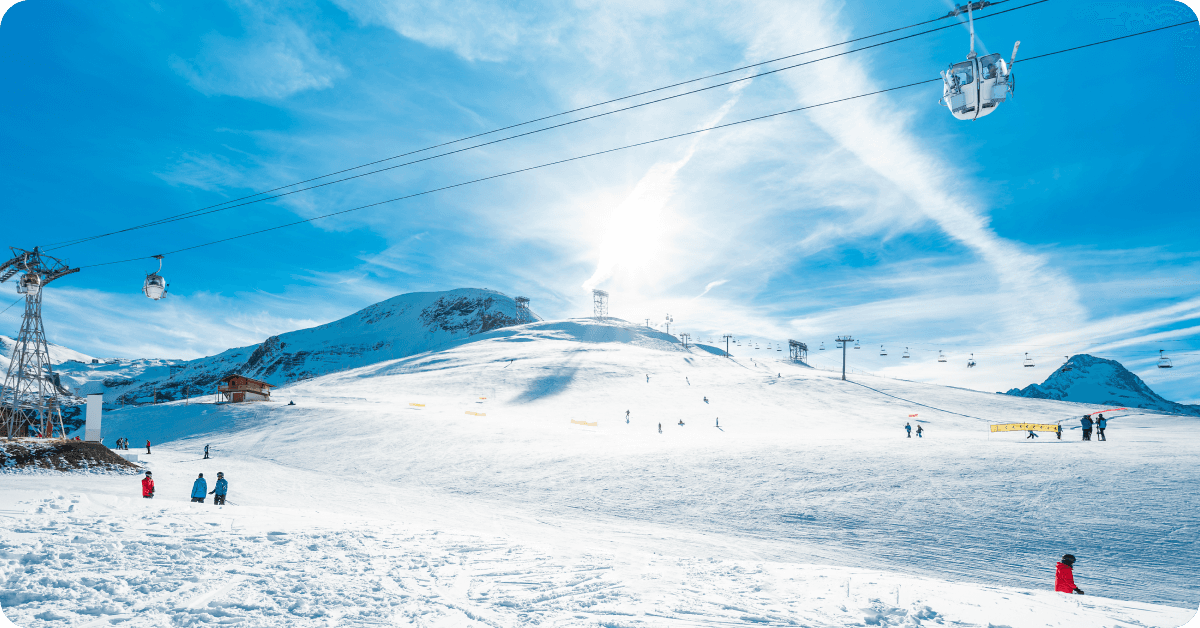
For the USA’s northern regions, January is often the coldest month of the year. If you’re looking for snow-capped peaks and winter sports, head for the slopes of Colorado, Utah, or Vermont. The Rocky Mountains, which span eight states to form the country’s central spine, are a great choice for fans of skiing, snowboarding, and competitive snowball fights (which are real, by the way — we checked).
Not looking for a winter wonderland? California is one of the best places to visit in the USA for first-time tourists and can be a great West Coast getaway. January falls into the state’s rainy season, so the northern forests are lush and green. Don’t worry too much about the wet and windy weather, though — San Francisco is full of museums, from the science-focused Exploratorium to the Musée Mécanique, where you can pass a misty afternoon playing historical arcade games.
Across most of the US, January is an affordable time to travel. Lines are shorter and hotels and restaurants less likely to be booked up. You might have to deal with fog and, if you’re going north, heavy rain, but this is a great month for a cost-effective adventure.
February in the USA
February in the USA is very similar to January in most respects — the north is cold and the south is warm(er). Winter sports are still on the agenda for anyone traveling to states like Colorado and Montana but with the added bonus of the increasingly visible Northern Lights (though that particular spectacle really peaks in March).
If you don’t want to brave the wintery northern states, try heading for Florida. In Miami, average temperatures in February hover between 68°F (20°C) and 81°F (27°C). Even upstate, where the weather is colder, you don’t have to worry about snow or ice.
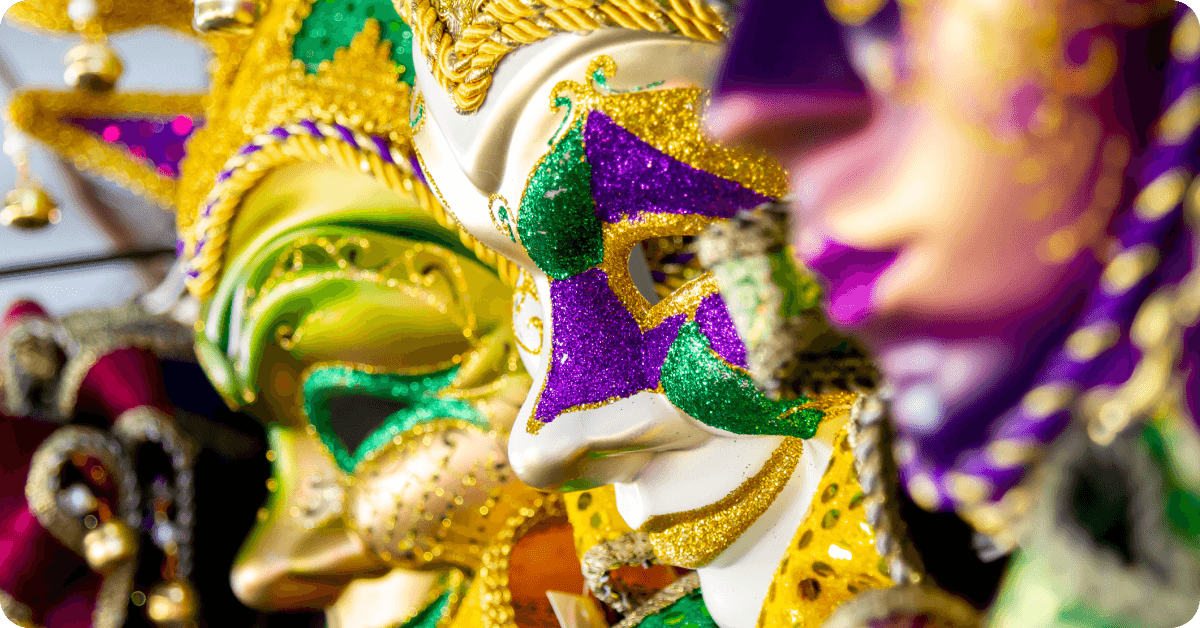
Flights and accommodation stay pretty cheap throughout the month, but this can change around the third week of February. In February, New Orleans, Louisiana kicks off its Mardi Gras celebrations. Live music, dancers, and incredible local cuisine combine to make this giant, city-wide festival a huge draw for people across the US and beyond. The next day (February 17) is Presidents’ Day, a major US holiday when many Americans travel within the country.
If you’re focused on avoiding high prices and dodging crowds, try to travel early in February, or towards the very end of the month.
March in the USA
The USA’s spring months officially start in March, bringing milder, drier weather to southern regions. The Northeast might still see snow, but in places like coastal California and Texas, you can enjoy warm, comfortable temperatures. Check out our article on the best things to do in Dallas if you’re planning a springtime trip to the Lone Star State.
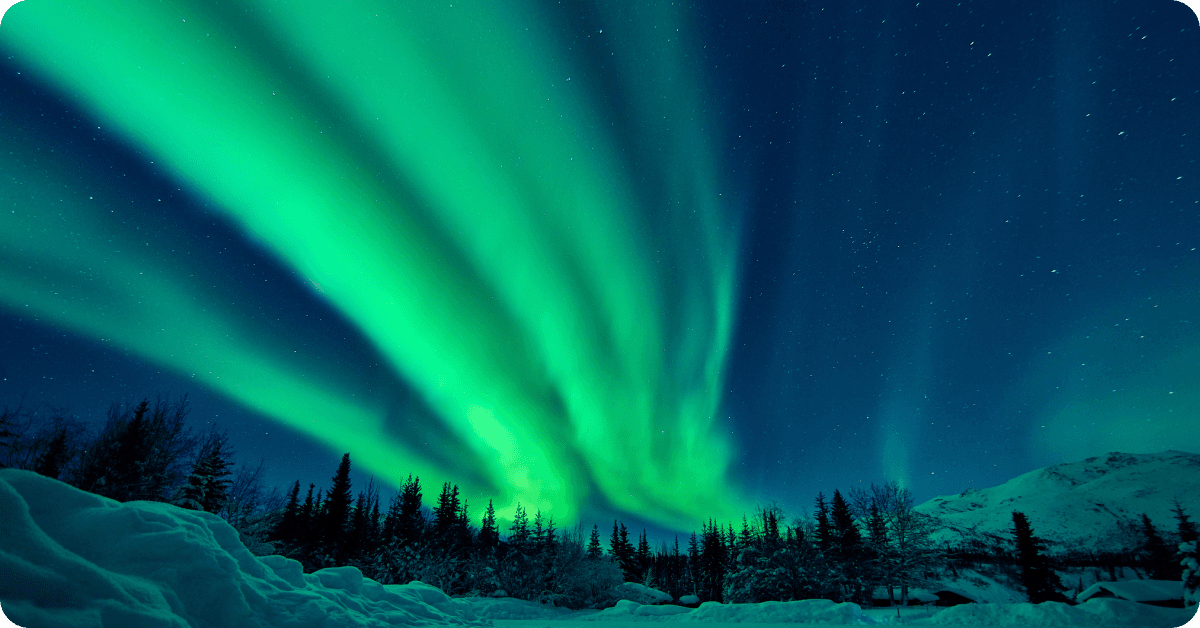
Snow starts to melt in the northern US, and speaking of the north — this is the perfect time of year to see the flickering green lights of the aurora borealis. For the best views, head to Alaska.
When March ends, prices rise with temperatures. Expect the cost of flights and accommodation to increase steadily as the year goes on, at least until August and September.
The good news is that March is still in the shoulder season, and the summer crowds haven’t arrived yet. If you want a mild, low-cost trip, this might be the best time to do it. The other big benefit of this period is that most national parks, some of which close over winter, are now open again.
April in the USA
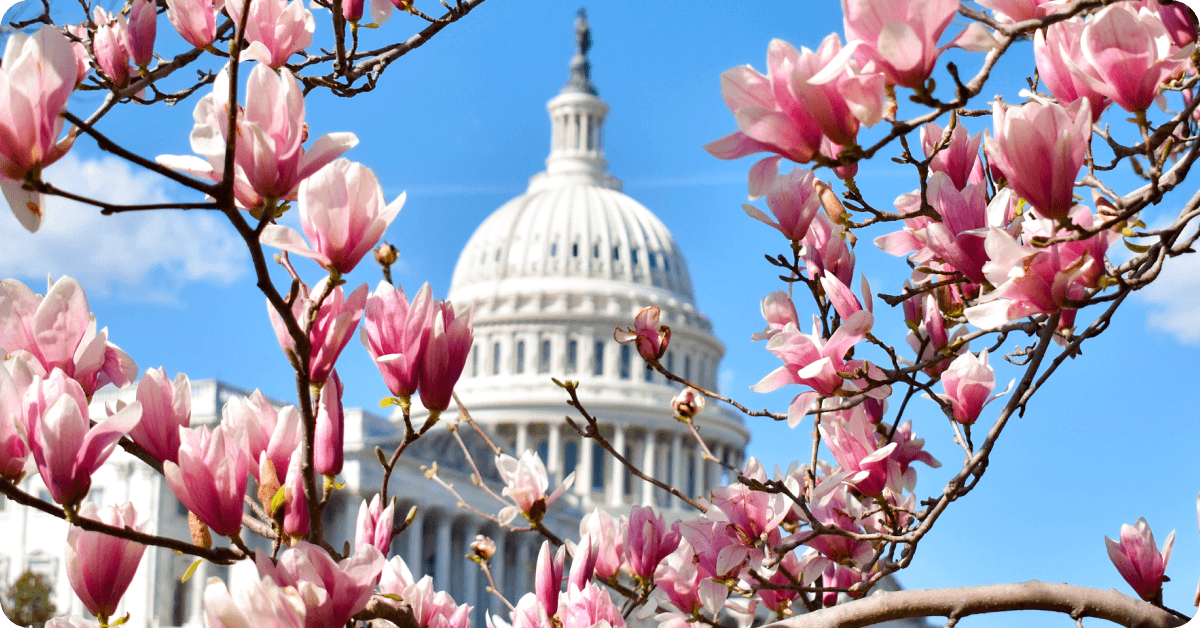
April is when America really starts to wake up from hibernation. It’s a great chance to enjoy the beautiful natural scenery of the USA’s many national parks before they’re swarming with tourists.
Fancy something a little more urban? Head to the nation’s capital — the Washington, D.C., pink blossom season is in full swing. The city’s worth a visit at any time of the year, with its multiple Smithsonian Museums and government landmarks, but from late March until early April, the streets are lined with bright Sakura trees. The reason we’re listing it for April rather than March is that, at the end of the season, the blossoms detach from the trees and swirl in the wind — a magical sight!
For music fans, April is dominated by the Coachella Music Festival. This event takes place across multiple days near the city of Indio, California, and features headline artists like Kendrick Lamar, Olivia Rodrigo, and Lorde. Just remember that prices and crowds will intensify in California around this time.
May in the USA
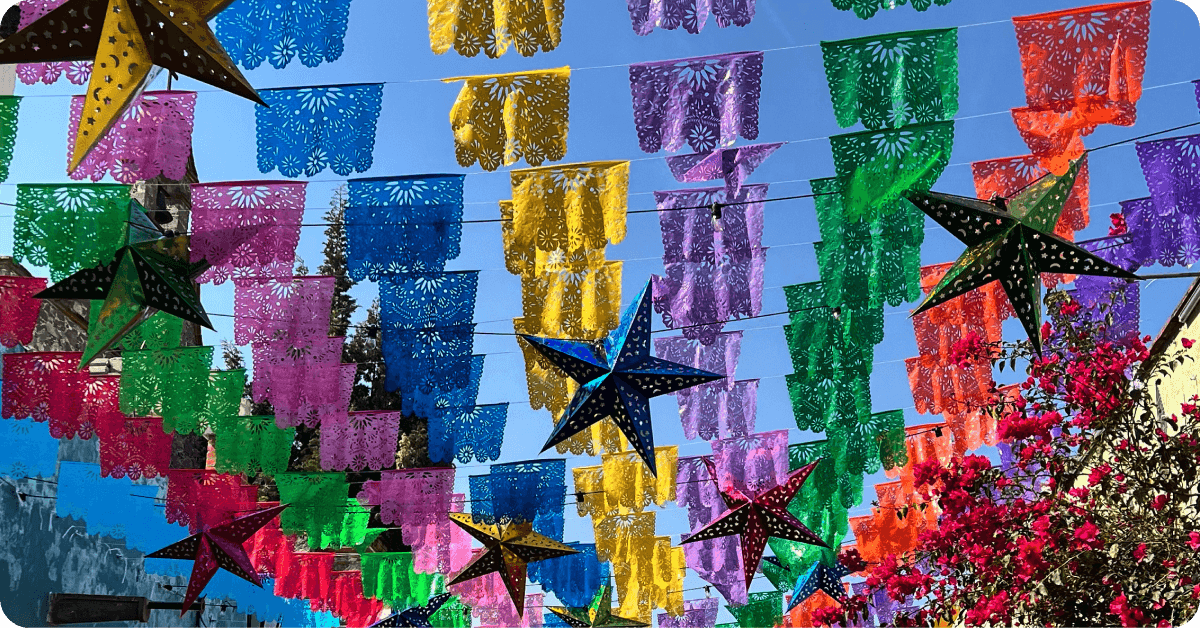
May is a great month to visit the USA and heralds the start of the country’s true peak season. Prices are up, but the sun is out, and wherever you go in the USA, you’ll have a good time. Crucially, the extreme heat of July and August is still to come, so visitors from cooler climates are usually more comfortable, even in the south.
One big draw for this month is Cinco de Mayo (May 5), a day of celebration for America’s Mexican community. History buffs know Cinco de Mayo as a celebration of Mexico’s 1862 victory against an invading French army. Everyone else knows it as a really good time — expect street parties, Mexican folk music, and some of the best food in the country.
Later in May, a more somber public holiday comes with Memorial Day, when the US commemorates its fallen soldiers. If you plan a vacation during this month, bear in mind that stores and public attractions might be closed on May 26 and across the whole Memorial Day weekend.
June in the USA

With June, summer lands in the United States. Towns and cities buzz with tourists, outdoor attractions are open, and daylight stretches well into the evening. Barbecues on the beaches around LA, hikes through the Upper Midwest, long afternoons in New York’s Central Park — whatever you have planned, June is an excellent time to be in the USA.
This is where the events calendar really starts to fill up. Bonnaroo takes place across four days in Tennessee. Not to be outdone, New York hosts the Governors Ball Music Festival. Fans of country, folk, and bluegrass are spoiled for choice with open-air festivals in Colorado, Kansas, and South Carolina.
Pride Month is celebrated across the states in June, with particularly spectacular events held in New York City and San Francisco. Juneteenth (June 19) commemorates the end of slavery and brings a spotlight to the challenges faced by Black communities in America, but it’s also a moment of celebration and joy, with parades, festivals, and historical commemorations.
A word of caution, though — while the weather is mostly warm and comfortable, summer storms can sweep through the southeast, and some regions experience sudden heatwaves.
July in the USA
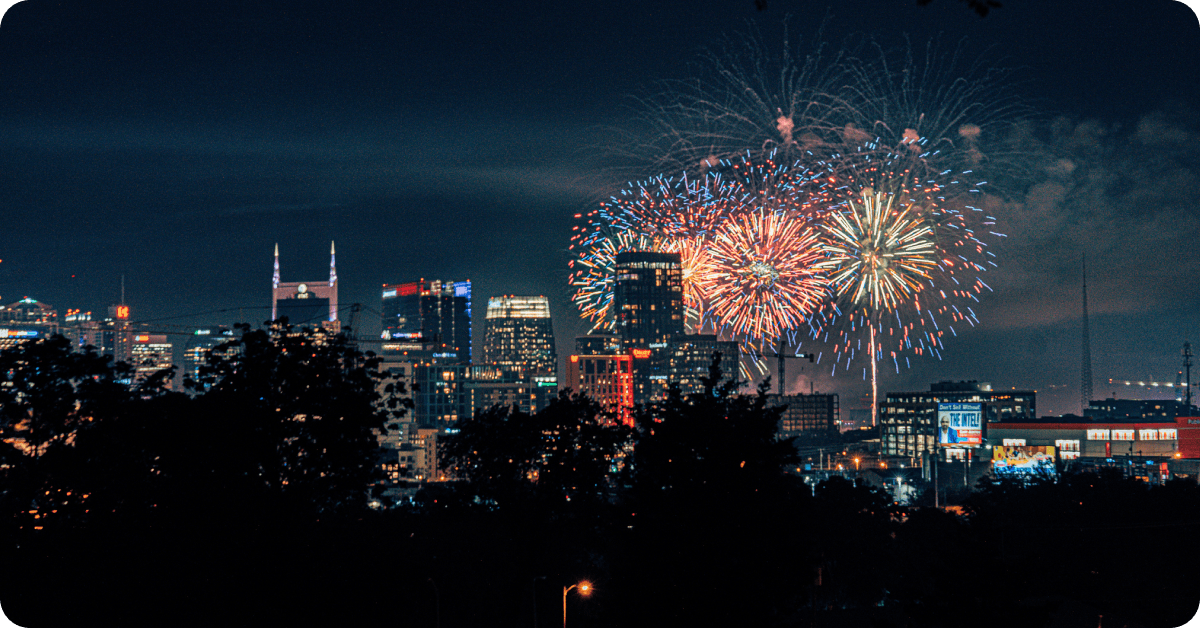
School’s out, graduation’s over, and the days are hot from coast to coast — welcome to July in the USA! Beaches, national parks, and city centers bustle with life and energy as Americans and overseas visitors go on vacation. Hotels and attractions are at their busiest — and their most expensive.
The Fourth of July is the centerpiece of the month. Commemorating the country’s independence, the event is marked with fireworks, parades, and street parties. Even in small, rural communities, the festivities are front and center. If you want to blend in, pick up some stars-and-stripes flags, hats, or bathing suits from the nearest mall and you’ll be right at home.
Heat and humidity increase in July, especially in the South, Midwest, and eastern cities like New York and Chicago. Occasional storms or wildfires can affect travel plans in certain regions, so it’s wise to pack for changing weather and keep an eye on local forecasts.
August in the USA
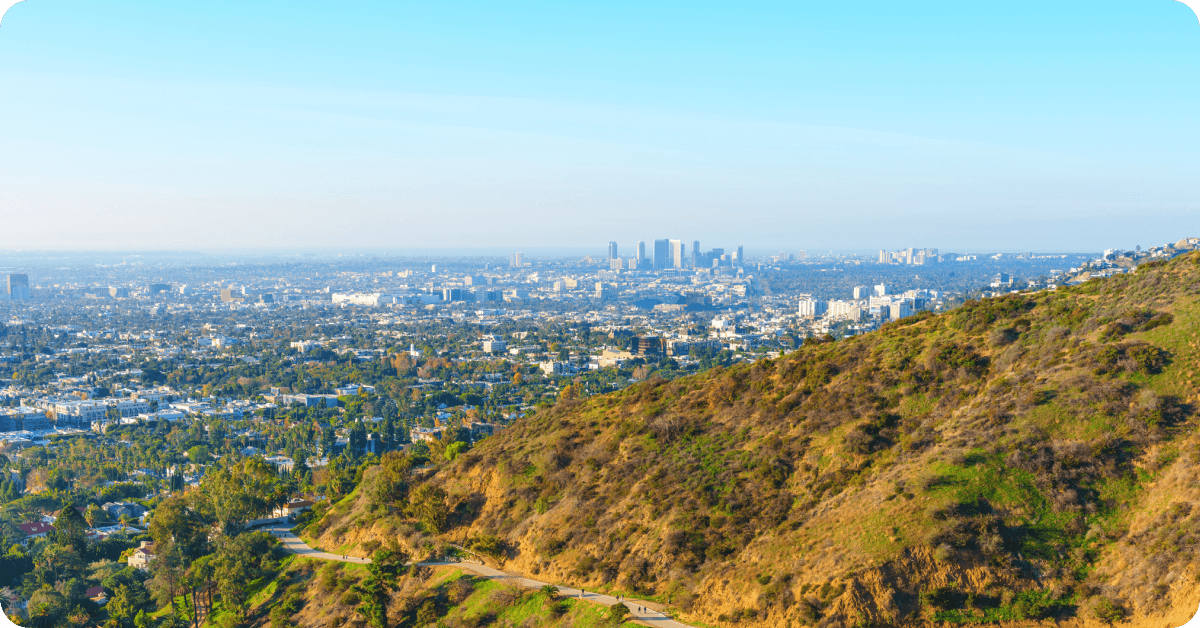
The heat is no joke in August. It’s around this time of year that you start to see headlines about record-breaking temperatures in Death Valley National Park. Wildfires become more common, rivers and lakes start to shrink, and cold beer sales go through the roof (hopefully leaving enough of a hole for a nice breeze to get in).
Everything is busy in August because many families take final vacations before schools resume. Don’t expect to get national parks or beaches to yourself. If you want to avoid the worst of the heat, look to the mountains of the northwestern states, or stick close to the ocean on the upper East Coast.
August features a lot of open-air festivities, including the iconic Iowa State Fair and Minnesota State Fair, both running in the latter half of the month. These events are all about local food traditions, agricultural exhibits, live music, and charming Midwestern Americana. Then, if you want to see some of the world’s biggest musical artists performing live, take a trip to Illinois for Lollapalooza. Cooler than everyone else you know? Head to Bumbershoot Festival in Washington — we get it, you listened to the headliners when they were still on Bandcamp.
As summer winds to a close, hurricane season peaks on the Atlantic and Gulf coasts, and the possibility of wildfires remains extremely high in parts of the West. For most tourists, the odds of a major weather event disrupting their vacation are low, but it’s still something to bear in mind when you’re planning (and picking your travel insurance).
September in the USA

September is one of the best times of year to visit the United States. The worst of the summer heat has passed, but the days are still long, the evenings are pleasantly cool, and prices start to dip after the school holidays wrap up. For travelers, this means fewer crowds at national parks, beaches, and cities that were packed just a few weeks earlier.
This is also when fall begins to creep into northern states. Places like Vermont, Maine, and upstate New York slowly start their famous transformation, with the first hints of red and gold in the trees. It’s not yet peak foliage season (that comes in October), but you’ll get the beauty of the changing seasons without the peak-season traffic. If you want to get in the mood for fall, try apple picking — Washington in the Pacific Northwest is the best place for that, but Michigan and California come in close behind.
Fall isn’t the only thing kicking off in September, though. This month also marks the start of the NFL season (that’s American football, for the uninitiated). The season starts on the weekend after the first Monday of September and continues all the way through to January.
Down south, hurricane season is still in full swing, especially in Florida and along the Gulf Coast. That doesn’t mean you need to avoid these areas entirely — again, most visitors are unaffected — but keep an eye on forecasts and make sure your travel insurance covers weather-related disruptions.
October in the USA
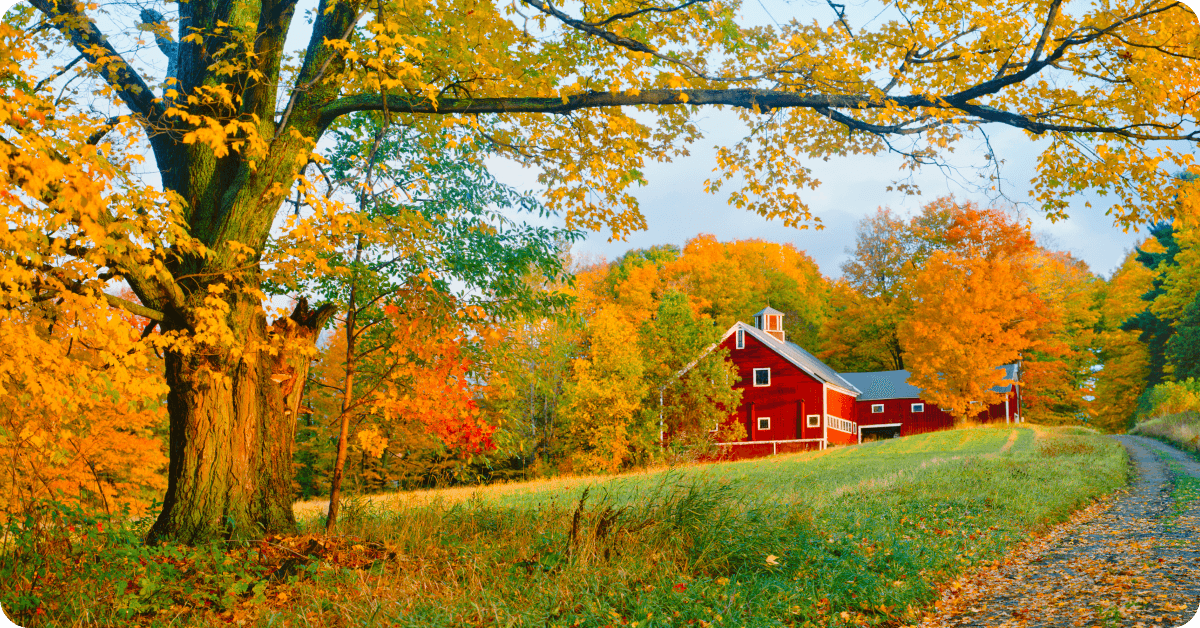
October might be one of the most atmospheric moments to visit the USA, especially if you’re a sucker for Halloween, fall colors, and lattes that (allegedly) taste like pumpkins. The Northeast and Midwest are bursting into color, drawing “leaf peepers” from across the country. Road trips through New England, the Great Lakes, and the Appalachian Mountains are at their most scenic, with crisp, clear air and photogenic landscapes.
The month builds up towards Halloween, a huge cultural event in the USA — the country practically invented the holiday in its current form. You don’t have to be in Salem, Massachusetts, to see something spooky, either. Every town and village in the country is festooned with pumpkins, webs, and garden tombstones. If you’re in New York, you have to get down to the Village Halloween Parade. It’s one of the largest Halloween celebrations in the world, with thousands of participants in elaborate costumes marching through the city.
November in the USA

November in the USA is a month of transition — the hinge between fall and winter. Early in the month, autumnal colors linger in the southern states, but cold weather starts to arrive in the north. By the end of November, as snow dusts the country’s mountainous regions, ski resorts open in Colorado and Montana, and the festive season begins.
The biggest event of the month is Thanksgiving, which falls on the fourth Thursday of November. It’s one of the most important holidays in the US, centered on family gatherings, big meals, and parades (the Macy’s Thanksgiving Day Parade in New York is world-famous). If you’re lucky enough to be invited to a Thanksgiving dinner, you can enjoy classic dishes like turkey, roast stuffing, cranberry sauce, and casserole made from sweet potatoes and marshmallows. The last one isn’t a joke — it’s very real and very tasty.
For travelers, it’s important to note that Thanksgiving is also one of the busiest travel periods of the year. Airports are crowded, highways jammed, and prices spike around the holiday. If you want to get away from the bustle, try visiting national parks in the Southwest, like Arizona’s Grand Canyon and the Arches or Zion parks in Utah. The weather in November is cold enough to dispel crowds at these attractions, but not so cold that outdoor excursions aren’t an option.
December in the USA
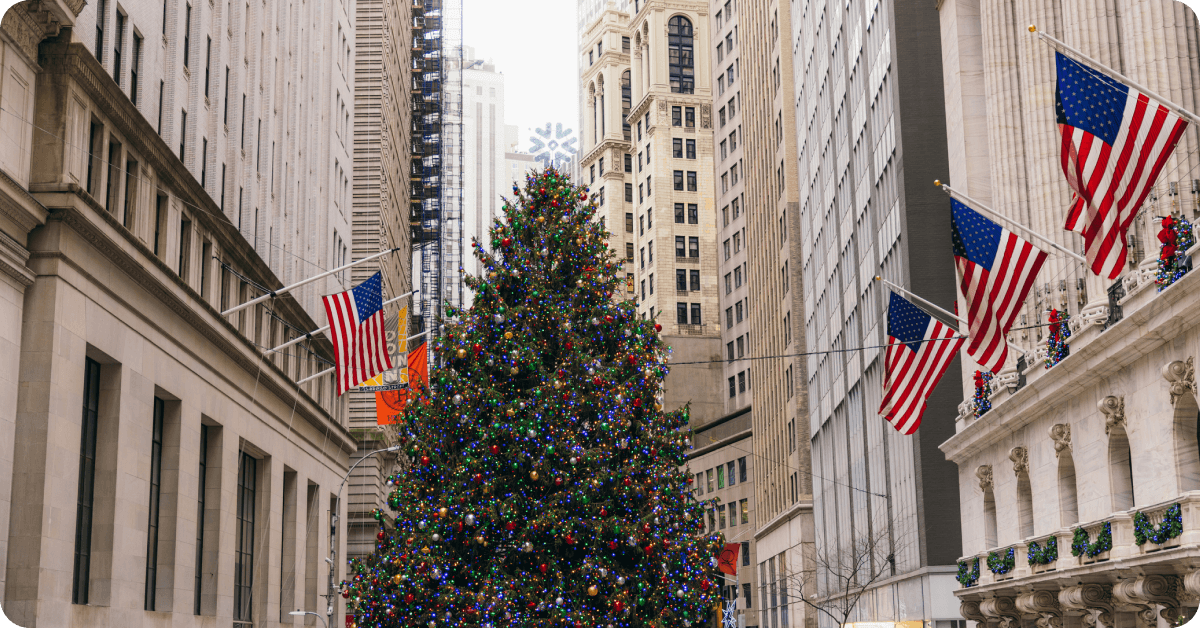
Christmas shapes much of December in the USA. In northern regions, snow becomes a regular feature, cities are strung with lights, and holiday markets are a regular occurrence in cities from Chicago to Philadelphia. It’s a magical — and expensive — time to visit the country.
December is a good moment to head for New York City. Thanks to the giant Rockefeller Center Christmas tree, the Manhattan storefront displays, and the Times Square New Year’s Eve ball drop. Smaller towns also shine in December. Leavenworth in Washington State and Frankenmuth in Michigan, for example, are known for their storybook-style Christmas traditions.
Christmas isn’t the only cultural event in December, though. If you visit during this season, you’ll be in the USA for the Jewish festival of Hanukkah, and for Kwanzaa, a celebration of African-American culture across six days at the end of the month.
In the southern states, December offers milder weather, making Florida, Arizona, and California popular escapes for travelers who want sun without the summer heat. Just keep in mind that December is one of the most expensive months to travel in the US because both domestic and international visitors crowd in for the end-of-year holidays.
Cheapest time to visit the USA
The most affordable months to travel to America are January through March, when winter weather keeps crowds away and prices at their lowest.
Here's the trade-off — you'll be dealing with cold weather, shorter daylight hours, and potential travel disruptions from bad weather. Some attractions close for the season, and outdoor activities become pretty limited in northern areas.
Here's what you can expect to pay during different seasons. Bear in mind that the information below is based on our own rough estimates.
Season (Months) | Avg. hotel cost | Avg. flight cost | Notes |
|---|---|---|---|
January – March | US$80 – 150 | US$200 – 400 | Cheapest season overall |
April – May | US$120 – 200 | US$300 – 500 | Shoulder season pricing |
June – August | US$180 – 350 | US$400 – 700 | Peak summer |
September – November | US$100 – 180 | US$250 – 450 | Fall shoulder season |
While the cheapest time to travel to the USA typically falls in late January through February, when the post-holiday blues pushes down demand, ski destinations are the exception. When there’s snow, ski resorts and the surrounding towns are expensive.
Best time for events, festivals, and seasonal activities
Every season in the USA has something to delight visitors — music festivals, county fairs, and unique cultural events are all on offer.
Spring
Spring and early summer, from March through June, are excellent months for cultural celebrations and outdoor gatherings. April and May bring major music festivals like Coachella in California, and the pink blossom season in Washington, D.C., provides one of the country’s most photogenic urban experiences. Early summer offers Pride Month parades, Juneteenth commemorations, and long, sun-filled days perfect for outdoor adventures.
Summer
Peak festival season is June through August across the country. Expect outdoor concerts, state fairs, and beach parties. Fourth of July celebrations are a high point of the season, with fireworks, parades, and community events that fill both city streets and rural towns. August continues the festival trend, from iconic music festivals like Lollapalooza in Chicago as well as local agricultural fairs that showcase regional foods, crafts, and folk traditions.
Fall
In fall (and especially September and October) leaf-peeping is a popular activity in New England and the Midwest. You can take group tours around the colorful forests of the East Coast or just strike out on your own to enjoy the colors. You can find your beer-loving German side at Oktoberfests or cut loose at Texas’s Austin City Limits music festival. When Halloween rolls around, channel your inner Wednesday Addams at New York's Village Halloween Parade (or one of the many other regional spookfests). Small towns and big cities alike embrace seasonal traditions, like visiting pumpkin patches and or enjoying winery harvest tours in Napa Valley.
Winter
November through February is ideal if you want seasonal holiday experiences or winter sports. Thanksgiving in late November draws travelers for parades, feasts, and family gatherings, while December brings winter markets, ice skating, and the chance to visit Christmas tree farms. For snow sports, January and February are perfect for skiing and snowboarding in Colorado, Utah, and Vermont. One of the biggest cultural highlights from this season comes at the end, with New Orleans’ Mardi Gras carnival.
When to avoid visiting USA
While the United States offers something for every traveler year-round, certain times of the year are best avoided if you want to dodge extreme weather, heavy crowds, or high prices. The peak summer months of July and August are notorious for heat, humidity, and inflated costs. Cities in the South, Midwest, and major urban centers like New York and Chicago can become stifling, while beaches and national parks are packed with tourists, making reservations and parking a challenge.
Hurricane season, running from June through November with a peak in August and September, is another factor to consider. The Gulf Coast, Florida, and the Eastern Seaboard are most at risk for storms, which can disrupt travel plans and create safety concerns. While most trips go off without incident, travelers who want complete peace of mind may choose to avoid these areas during the height of hurricane season.
The winter months, especially December around the holidays and January in the northern states, can also pose challenges. Northern cities experience heavy snowfall, icy roads, and freezing temperatures that may complicate travel, while accommodations and flights surge in price during the Christmas and New Year’s period. Popular ski resorts remain crowded, and urban destinations can feel hectic with holiday crowds.
Finally, major public holidays and events can create unexpected congestion. Thanksgiving in late November, Fourth of July in July, and large festivals like Mardi Gras in February draw both domestic and international travelers, often resulting in booked-out hotels, crowded airports, and long wait times at attractions. Planning your trip around these dates, or being prepared for the crowds, is essential to avoid frustration.
Tips for traveling to USA
Traveling to the USA for the first time? From dodging the crowds to tipping your server, these tips should keep you on track.
Stay on top of entry requirements: The USA has strict rules around who can come into the country, so check the current entry requirements in the lead-up to your trip and make sure your documents are up-to-date. Do you need a visa, or is your country in the ESTA program, allowing for visa-free entry? These are questions that should be answered long before you ever step foot on a plane to the USA.
Plan around holidays: Thanksgiving, Christmas, and New Year’s are among the busiest travel times in the USA. You can also expect a lot of movement around Memorial Day, the Fourth of July, and Labor Day. That doesn’t mean you can’t be in the USA around these dates, but make sure you book hotels and tickets far in advance.
Know your transport options: Big cities have great public transit — think New York’s subway, San Francisco’s BART, or D.C.’s Metro. Ride-sharing apps like Uber and Lyft operate nationwide. In rural areas and national parks, a rental car is essential.
Get your internet set up: Know before you travel how you’ll get online in the USA. Data roaming can be expensive, so consider other options. You can always use a prepaid SIM card, but these can be inconvenient to procure and activate. For an easier, cheaper experience, use an eSIM for the USA. With an eSIM, you won’t need to buy and swap physical cards, and your data plan activates as soon as you land.
Carry some cash: Credit cards work almost everywhere, but food trucks, small stores, and some rural businesses prefer cash. Contactless payments are widely accepted in cities, but cash is popular in smaller villages and remote areas.
Be prepared to tip: Tipping is very common in the USA and, in some states, serving staff rely on these extra payments to top up their wages. As a general rule, it’s polite to tip in restaurants and bars, but less so outside of hospitality spaces. Stores like Target may ask you to tip, but no one will be scandalized if you don’t.
Get travel insurance: Medical costs in the USA can be very high. Even minor injuries or illnesses may lead to huge bills. No matter how low-risk and relaxed you think your trip will be, insurance is never a bad idea. Most plans cover medical emergencies, flight delays, and lost luggage.
The best times to explore the USA
Really, you won’t find a “bad” time to visit the USA — it just depends on what you want and where you’re going.
If you’re chasing warm weather and long, sunny days, aim for May through September. Late spring and early fall are great if you don’t like the heat and want to keep costs down. On a strict budget? Aim a little earlier — January through March — when hotels and flights are at their cheapest.
For a cozier experience, you can travel in September or October, as the leaves start to turn and the first Christmas decorations appear inexplicably early in Walmart. A few months later, Christmas hits the USA like a runaway sled — that’s the perfect season for a city break in New York or a ski trip in the Rockies.
The USA spans the width of a continent. Whenever you go, you can find a corner of the country to suit your specific needs. Pick your price point, find a state you want to visit, and decide what kind of memories you want to take home with you. The USA will do the rest.
Need data in États-Unis? Get an eSIM!

1 Go
7 jours
US$3,99
3 Go
30 jours
US$8,99
5 Go
30 jours
US$13,99
FAQ


Sur le même sujet