


Your ultimate France packing list for every season
Bonjour! Right now you’re picturing lavender fields and the smell of warm pastry drifting out of a bakery. That daydream lasts until you open your suitcase on the bed and face the pile of clothes beside it, none of which will fit inside. France is a hard country to pack for, with Alpine snow at one end, a riviera warm enough for January sunshine at the other, and an Atlantic wind that blows in over the cobblestones in between. One generic bag won’t cover that range. Our packing list will help you solve that packing puzzle season by season and region by region, until the only decision left is where to get your croissant.
Table of Contents
- What to pack for France: The essentials you’ll need year-round
- Travel documents and money checklist
- Tech and connectivity essentials
- Packing list for France in summer
- Women’s summer capsule wardrobe for France
- Men's summer capsule wardrobe for France
- Packing list for France in August
- Packing list for France in October
- Packing list for France in winter
- Cold-weather clothing and layering strategy
- What to pack for a south of France winter trip
- Packing list for a France cruise
- What to wear in France: Style tips and cultural notes
- Smart packing rules to fit everything in your suitcase
- Tips for planning your France packing list
What to pack for France: The essentials you’ll need year-round
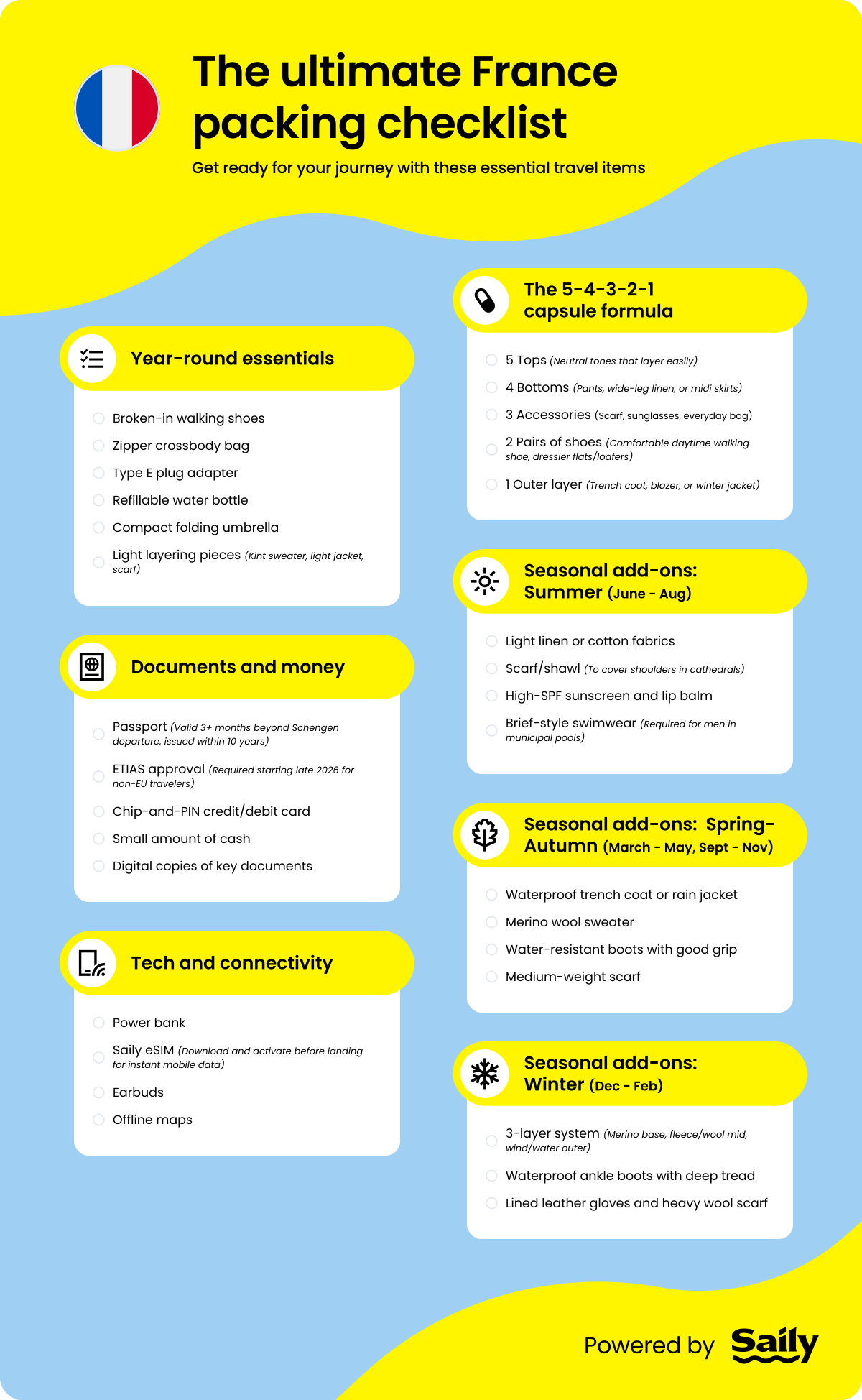
Some of what you pack changes with the season and the region. The rest stays the same all year. Whatever month you’re flying and wherever you’re going, French travel involves long days on foot, unpredictable rain, and a plug socket that won’t take your charger — so start with these.
Layers that work well together. A knit sweater, a light jacket, a scarf: these three will cover most of the French year. Pick them in three or four neutral colors and make sure every piece goes with every other piece (for style points!).
Shoes you’ve already broken in. Paris alone has around 1,000 miles of street, and you may well cover seven or eight miles of it on foot. Bring the pair your feet already know rather than something new you haven’t worn in yet.
A zippered crossbody bag. Crowded metro carriages and long museum lines are no place for an open tote. A small bag that zips shut and rests against your body can help keep your passport and phone safe.
A Type E plug adapter. France uses Type E sockets at 230 volts, so plugs from the US, the UK, and Australia won’t fit. Buy the adapter before you fly, when it costs a few dollars rather than airport prices.
A refillable water bottle. The tap water is safe to drink, and Paris keeps around 1,200 public fountains flowing. Some of them are the green cast-iron Wallace fountains, which have been pouring since the 1870s.
A compact umbrella. French rain turns up without warning in any month of the year, and the forecast rarely sees it coming. Pack the small folding kind and forget about it until you need it.
One essential is easy to overlook: mobile data. Maps, restaurant bookings made from a park bench, a menu translated before you commit to something you can’t pronounce — none of it works without a connection. The Saily eSIM app offers affordable data plans covering France and 200+ other destinations, activated from your phone before you board. Download the Saily eSIM app, pick a plan, and get mobile data the moment you land.
A quick word on style before the seasonal lists. The French dress neatly, not fancily. Well-fitted jeans and clean shoes can help you blend in. Athletic gear worn as everyday clothing, oversized logos, flashy tourist gear, flip-flops — those mark you out from a block away.
Travel documents and money checklist
Paperwork is the one part of the bag with no room for improvisation, and the rules for entering France changed in 2026.
Passport. Non-EU travelers need a passport issued within the last ten years and valid at least three months beyond the day you leave the Schengen Area. Check the issue date as well as the expiry date, since an older passport can still be in date and out of use.
ETIAS (from late 2026). The EU’s travel authorization is expected to go live in the final quarter of this year. It costs about US$23 (€20), lasts three years, and comes free if you’re under 18 or over 70. A transition period follows the launch, so check the official EU portal before you fly.
A card with a PIN. Contactless payments work nearly everywhere, but train ticket machines often require a chip-and-PIN card.
Cash, but not much. Take out €50-100 (about US$55-115) — enough for market stalls and the village boulangerie that has never heard of Apple Pay.
Digital copies of everything. Photograph your passport, insurance, and bookings, then save them to your phone and back them up somewhere that isn’t your phone.
Since April 2026, the Entry/Exit System (EES) has replaced the passport stamp with fingerprints and a face scan on a first entry into the Schengen Area. There’s nothing extra to pack for it, but allow more time at the airport than you needed on your last trip.
Tech and connectivity essentials
You’ll use your phone for tickets, maps, museum bookings, and every restaurant you stumble across by accident. Pack these three items to keep it charged, connected, and usable all day.
Power bank. Go for a power bank with a capacity of 10,000 mAh or more. A day of maps, photos, and timetable-checking will chew through a phone battery by four in the afternoon.
Earbuds. Useful on a long ride, essential in the departure hall.
An eSIM. The fastest way to get online when you land, with no carrier shop and no SIM card to swap. More on setting one up near the end of this guide.
Download offline maps as a backup, too. An offline map won’t warn your train is suspended, and it won’t translate a menu before you order, but it’s worth having if the signal drops. Our roundup of the best travel apps covers what else to install before you go.
Packing list for France in summer
From June through August you get long evenings, packed terraces, and peak prices. Daytime temperatures in Paris tend to reach about 77°F (25°C), while Provence and the Riviera can hit 95°F (35°C) in a heat wave.
Stick to light, breathable fabrics — linen, cotton, light knits — in a handful of neutral shades that mix freely. Many churches, Notre-Dame and Sacré-Cœur among them, ask visitors to cover their shoulders and knees. Keep a scarf in your day bag and you can drape it over your shoulders before you step inside.
Women’s summer capsule wardrobe for France
A week in France needs fewer clothes than you think, as long as the pieces work with each other. The list below covers museum mornings, long lunches, and a dinner you didn’t plan for, out of one carry-on.
Three or four tops — mostly cotton tees, plus one silk or linen blouse for the evenings you want to look a bit more put together
Two bottoms, ideally wide linen trousers and a midi skirt, which between them will handle a cathedral and a beach bar
One dress that comes out of the suitcase unwrinkled (test it at home, not in Nice)
A light cardigan or an unstructured blazer for when the sun drops behind the rooftops
Comfortable walking shoes for the day, leather sandals for the heat, and flats for dinner
A wide-brim hat, sunglasses, and SPF (small enough to keep in your day bag rather than back at the hotel)
Solid colors, no branding, one good accessory instead of five — more or less what the line attributed to Coco Chanel has told the country for a century.
Men's summer capsule wardrobe for France
The men’s list runs shorter, and fit matters more than the count — the right few pieces cover the whole week from one carry-on:
Three or four T-shirts or polos that cut close through the shoulders and body, because fit is the whole game here — a well-cut cheap shirt beats a baggy expensive one in terms of style on any French street
Chinos, plus a pair of tailored shorts that end above the knee — leave the board shorts at home, since they read as beachwear here
A linen button-down for dinners and gallery evenings
Clean leather sneakers or loafers, and a separate pair you can walk in all day
A light unstructured blazer. It weighs nothing, folds flat, and elevates the rest of the outfit from casual to presentable
Dressier restaurants and rooftop bars expect closed toes and a collar. And most French municipal pools ban loose swim shorts on hygiene grounds — brief-style only. Beaches have no such rule, but pools do, and an attendant may turn you away at the entrance if you show up in loose shorts.
Packing list for France in August
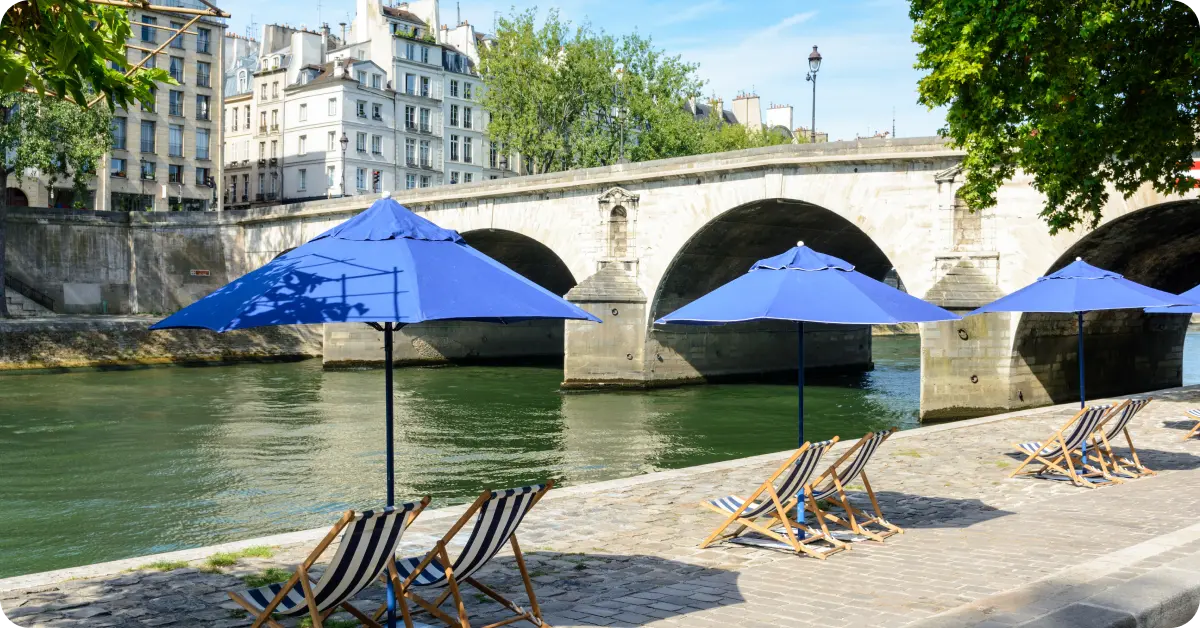
August needs a section of its own because that's when France goes on vacation. Shutters come down across Paris, family-run shops post a handwritten fermeture annuelle sign (annual closure) and close for three weeks, and half the capital heads for the coast. The city gets less crowded and easier to walk around, though the bistro you had in mind may well be shut until September, and with fewer places to duck into, you'll likely spend more time out in the heat than you planned.
For a packing list for France in August, add:
Reef-safe sunscreen and a lip balm with SPF
A cooling towel, or one of those small handheld fans, for museum lines with little shade
A waterproof phone pouch for the beach
A sarong, which will double as a towel, a shoulder cover, and a picnic blanket
One outfit with a bit of flair — summer is festival season across the south, and it’s nice to have something to change into
Air conditioning is far from universal in older French buildings, so check before you book. Top-floor apartments under a zinc roof stay hot long after dark, and in some older buildings closed shutters are the main defense against the heat.
Packing list for France in October
October is the shoulder season people who live in France tend to recommend, some of them half hoping it stays a well-kept secret. It’s quieter and cheaper than summer, without the deep cold of winter. Daytime temperatures in Paris reach about 61°F (16°C) and drop to near 46°F (8°C) after dark, the crowds thin out, and around Bordeaux the last Cabernet Sauvignon grapes come off the vines.
October takes more thought to pack for than midsummer, because you need to dress for temperature swings. Bring layers you can add once the sun goes down:
A waterproof trench or a light rain jacket, ideally one you can stuff into a day bag
A merino sweater to go over a long-sleeve base layer
Water-resistant boots, or sturdy sneakers with grip you can trust on wet stone
A compact umbrella, which you’ll likely use more than once in an October week
A scarf, which most French people carry once the wind picks up
Our guide to the best time to visit Europe has more on how the shoulder seasons compare across the continent.
Packing list for France in winter
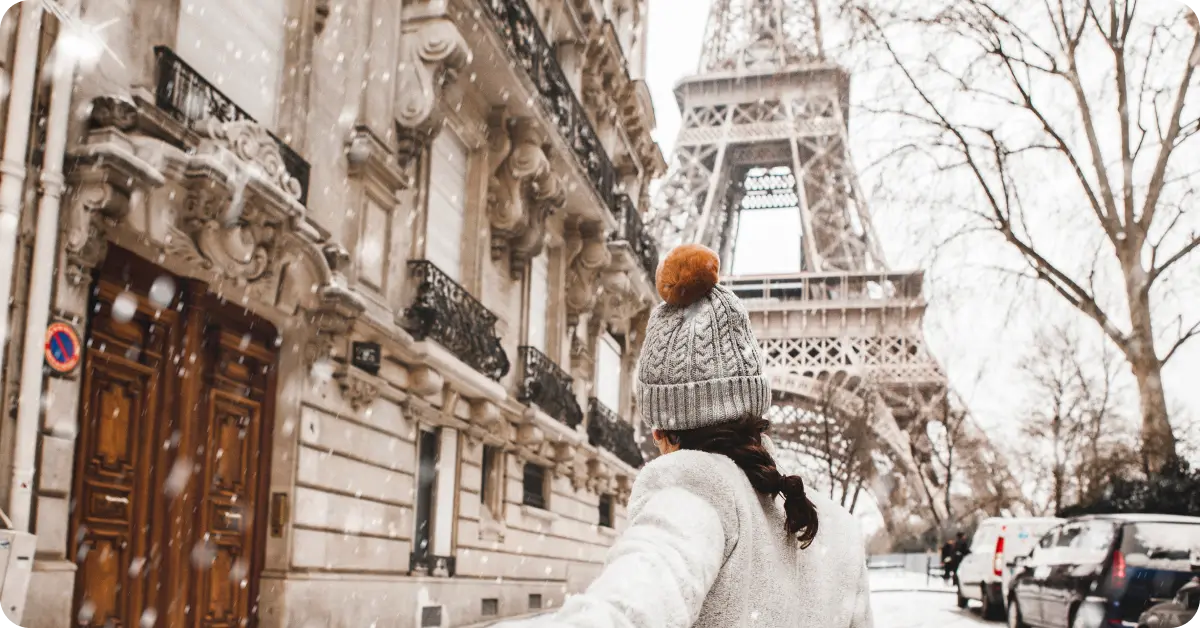
Winter, December through February, means very different temperatures depending on how far south you go. Paris hovers between roughly 37-46°F (3-8°C), the Alps drop well below freezing, and Nice keeps to 54-57°F (12-14°C) in bright winter sunshine, warm enough to eat lunch outdoors.
A winter trip might mean Christmas markets, half-empty museums, a week on the slopes, or mulled wine drunk standing up in the cold, and you would need to pack differently for each one.
Cold-weather clothing and layering strategy
Three layers will keep you warm outside and let you take one off once you step into a heated café or museum. Pack these layers:
Base. A merino or moisture-wicking long-sleeve, worn against the skin.
Mid. A wool sweater or fleece for insulation.
Outer. A shell that blocks wind and water. A wool overcoat blends in better in the city, while a down jacket makes more sense in the mountains than on a Paris boulevard.
Add waterproof ankle boots with a deep rubber tread, because wet cobblestones get slippery. Lined leather gloves keep hands warm without the bulk of ski mittens, and a large wool scarf doubles as a blanket on a cold TGV. Keep the palette dark, too. Black, navy, camel, and gray are the standard winter colors, and they show road splash far less than a pale coat.
What to pack for a south of France winter trip
A south of France packing list is shorter than the northern version. Winters on the Riviera stay mild, so a trench or a lined denim jacket will keep you warm enough in Nice or Cannes.
That coastal mildness doesn’t hold everywhere, though. Hilltop villages like Èze and Gordes stand higher and colder than the coast, and the mistral — the cold, dry wind that funnels down the Rhône valley — can tear through Provence at speeds reaching 56 mph (90 km/h). Pack sunglasses too — the winter sun off the Mediterranean is bright.
Packing list for a France cruise
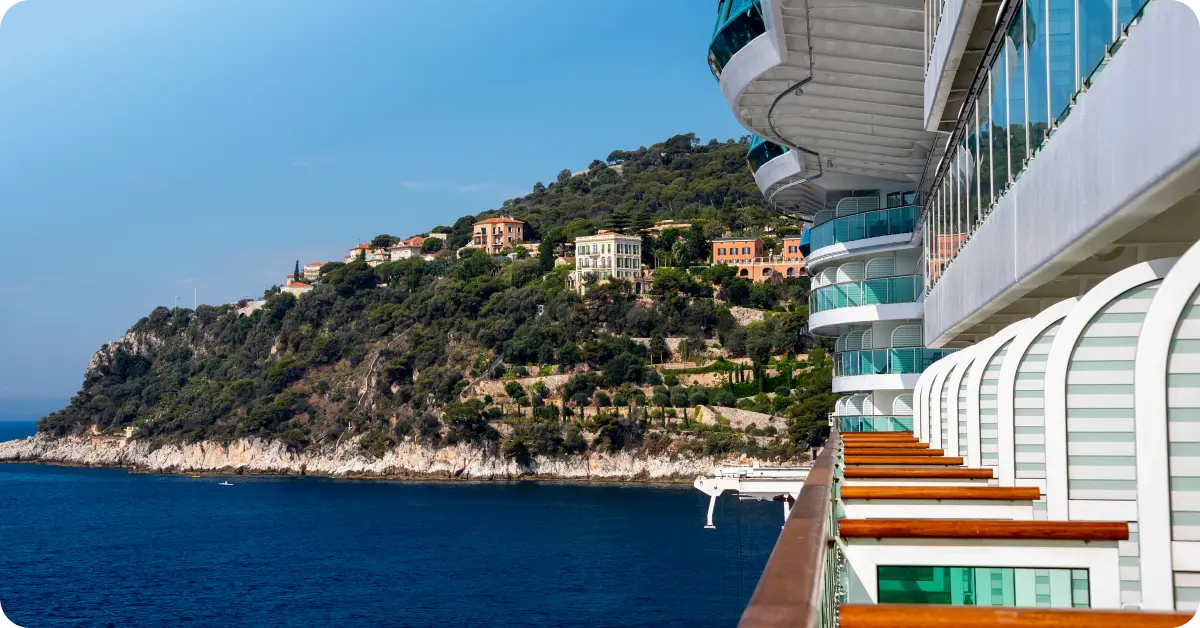
Mediterranean and river cruises call at ports with very different climates, and Marseille on the Mediterranean stays warmer than Le Havre on the Channel coast, so check the forecast for each stop rather than for the ship’s home port. On top of the seasonal lists above, a cruise adds a few specifics:
One smart outfit for formal night — a cocktail dress, or a blazer with dark trousers
A lanyard for the ship card, which you’ll need to show many times a day
A small day bag that folds flat for port excursions
Motion-sickness remedies, taken before you’re convinced you need them, which is the only window in which they work
Reef-safe sunscreen for the Mediterranean swim stops
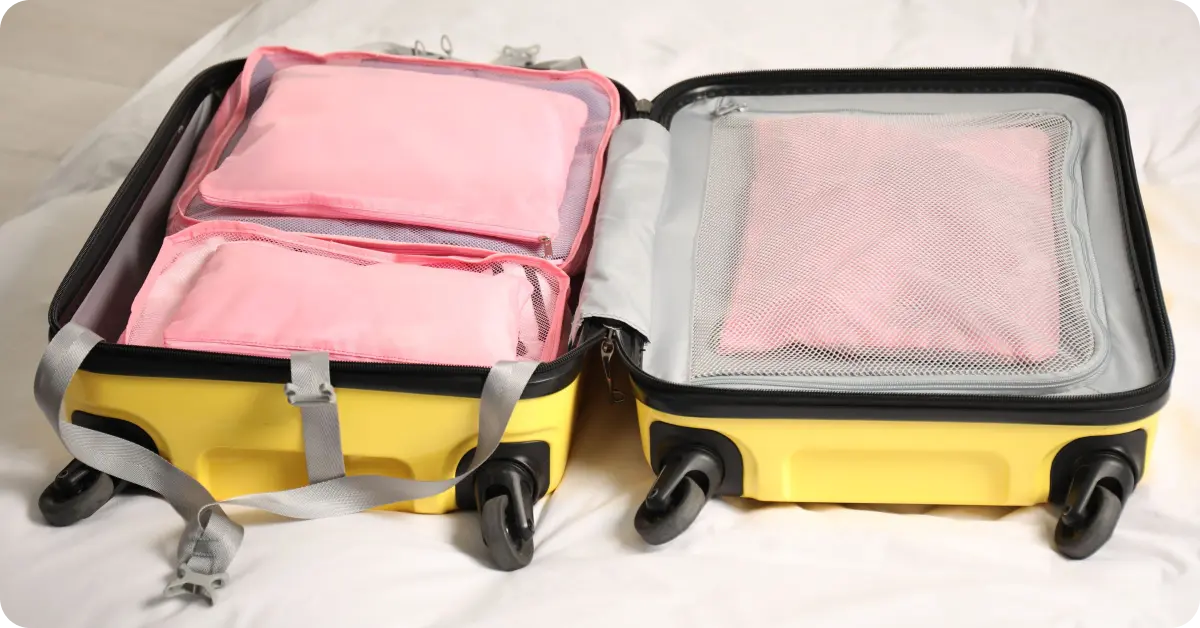
Packing cubes, since cruise cabins are small and the storage inside them is smaller
At sea, onboard Wi-Fi is slower than what you get on land and usually costs extra per day. An eSIM for cruises gives you your own data connection, and often costs less than onboard Wi-Fi packages.
What to wear in France: Style tips and cultural notes
French dressing style follows a few consistent principles. Fewer pieces, better fabric, and clothes cut to your size. Confidence in place of trend-chasing, which is easier to describe than to pick up.
That instinct to dress in a “French way” shows up in the language too, occasionally with a smirk. Take cinq à sept — “five to seven” — the window between the end of the workday and dinner. In Quebec, the phrase means after-work drinks and nothing more. In France, it has been used for the better part of a century to describe something rather more scandalous: the discreet two-hour gap for visiting someone who is not, strictly speaking, your spouse. Agnès Varda borrowed the hours for the title of her 1962 film, Cléo de 5 à 7.
The traveler’s version is far tamer. Those two hours are when France pours a drink, and the apéro, a French pre-dinner ritual of drinks and light snacks, is a cherished national tradition. Pack one outfit that takes you from a day of sightseeing to an early-evening terrace without a detour to the hotel — a blazer and a change of shoes will do it.
Looking the part matters less than being able to walk all day. People in France cover long distances on foot, and they do it in shoes chosen for walking rather than for the photo. Wear sneakers or loafers with cushioned soles — they’ll get you through a museum in the afternoon and a dinner that evening.
Curious about the country beyond its wardrobe? We collected some fun facts about France that make for excellent train conversation.
Smart packing rules to fit everything in your suitcase
Two frameworks take most of the guesswork out of deciding how much to bring, and both come down to the same advice — bring less.
The 5-4-3-2-1 rule. Five tops, four bottoms, three accessories, two pairs of shoes, one hat or outer layer. That covers a week to ten days out of a single carry-on, and it suits France, where people tend to travel with a small, considered wardrobe.
The 3-3-3 rule. Three tops, three bottoms, three pairs of shoes or accessories. A minimalist France packing list for weekenders and carry-on purists — nine pieces, dozens of combinations, and a bag light enough to carry up five flights to an apartment with no elevator, which describes a great many of them in Paris.
Staying longer? A packing list for a man spending three weeks in France doesn’t triple in size. Stick with 5-4-3-2-1, add a laundry kit, and wash mid-trip. Most apartments have a machine, and every neighborhood has a laverie.
Then come the mechanics of fitting it all into the case, plus a few tricks that save space:
Roll the soft things and fold the structured ones.
Use packing cubes, one per category.
Wear the heaviest coat and the biggest shoes on the plane.
Leave a third of the case empty for whatever you buy while you’re there.
These tricks aren’t glamorous, but together they can be the difference between a bag that closes easily and one that needs a knee on the lid.
Tips for planning your France packing list
A little pre-trip planning saves a lot of overpacking regret.
Check the forecast per destination, not per country. Paris and Chamonix in October can feel like two different countries in terms of climate.
Choose three or four neutral colors. When everything coordinates, you can pack less.
Pack a tiny laundry kit. A sink stopper and a few detergent sheets can replace half your clothes.
Don’t pack a pharmacy. French pharmacies (the ones with the green cross above the door) appear on nearly every corner, and the pharmacists give excellent advice. Bring your prescriptions and blister plasters, then buy the rest of the drugs there.
Sort your mobile data before you fly. This is the one item on the list you can set up while on a sofa. An eSIM for France can be installed before you leave and connects the moment you land — no airport kiosk line, no roaming bill waiting at home. If the trip carries on to Spain or Italy, an eSIM for Europe covers the whole route on one plan.
A physical SIM means finding a carrier shop, waiting in line, explaining what you want across a language gap, then swapping out the card that holds your home number. Saily lets you skip all of it: plans start at US$3.99, and you manage everything from the app. Our guide to SIM cards for Europe weighs up the options, and our explainer on EU roaming rules covers what your home plan already gives you across borders.
And if you’re traveling further afield, our Europe packing list covers the multi-country version of this article.
Download our printable France packing checklist (PDF)
Say goodbye to roaming fees with a travel eSIM
Affordable mobile data plans for every journey.
FAQ
“Cinq à sept” defines the hours between 5 p.m. and 7 p.m., a window traditionally reserved for after-work drinks or a discreet romantic rendezvous. French style means dressing for whatever the day throws at you. Pack an outfit that transitions from museum visits to an early-evening terrace without needing a detour back to your hotel room. Add a light sweater for cooler evenings on the patio. Keep at least one pair of stylish flats on hand to navigate cobblestone streets as the sun goes down.
Pack five tops, four bottoms, three accessories, two pairs of comfortable shoes, and one hat or piece of outerwear. This formula helps you pack efficiently because every piece mixes with the others, allowing you to choose from different outfit ideas for your entire trip. During the summer months, prioritize breathable fabrics like linen to handle the warm weather across southern regions. A small capsule wardrobe matches the local aesthetic and prevents you from hauling heavy luggage onto trains.
This minimalist framework requires three tops and three bottoms, plus three accessories to recombine into multiple outfits. Pack layers to get the most out of those nine items. Integrating light layers like a merino wool cardigan helps you adapt to sudden temperature drops. A waterproof shell folds down to the size of an apple and easily covers rainy days in Paris without forcing you to upgrade to a larger suitcase. Adopting this strict carry-on approach for your next trip proves invaluable if you prioritize packing light. Keeping your wardrobe in the cabin lets you bypass the baggage carousel and eliminates the need to file frustrating travel insurance claims for lost checked bags.

Always connected, always on course
Connect instantly with a Saily eSIM and enjoy effortless internet access.
Related articles