




How many days in Rome are enough? A first-timer’s itinerary for 2 to 7 days
An eternity in Rome sounds ideal, but vacation days run out fast. How many days do you actually need to see the highlights without burning out? Well, the honest answer is that it depends. This guide breaks down everything from a tight 2-day visit to a leisurely 7-day stay, so you can build a Roman holiday that works for your schedule and travel style. You’ll also find tips on getting around, eating well, traveling with kids, and staying connected while you’re there.
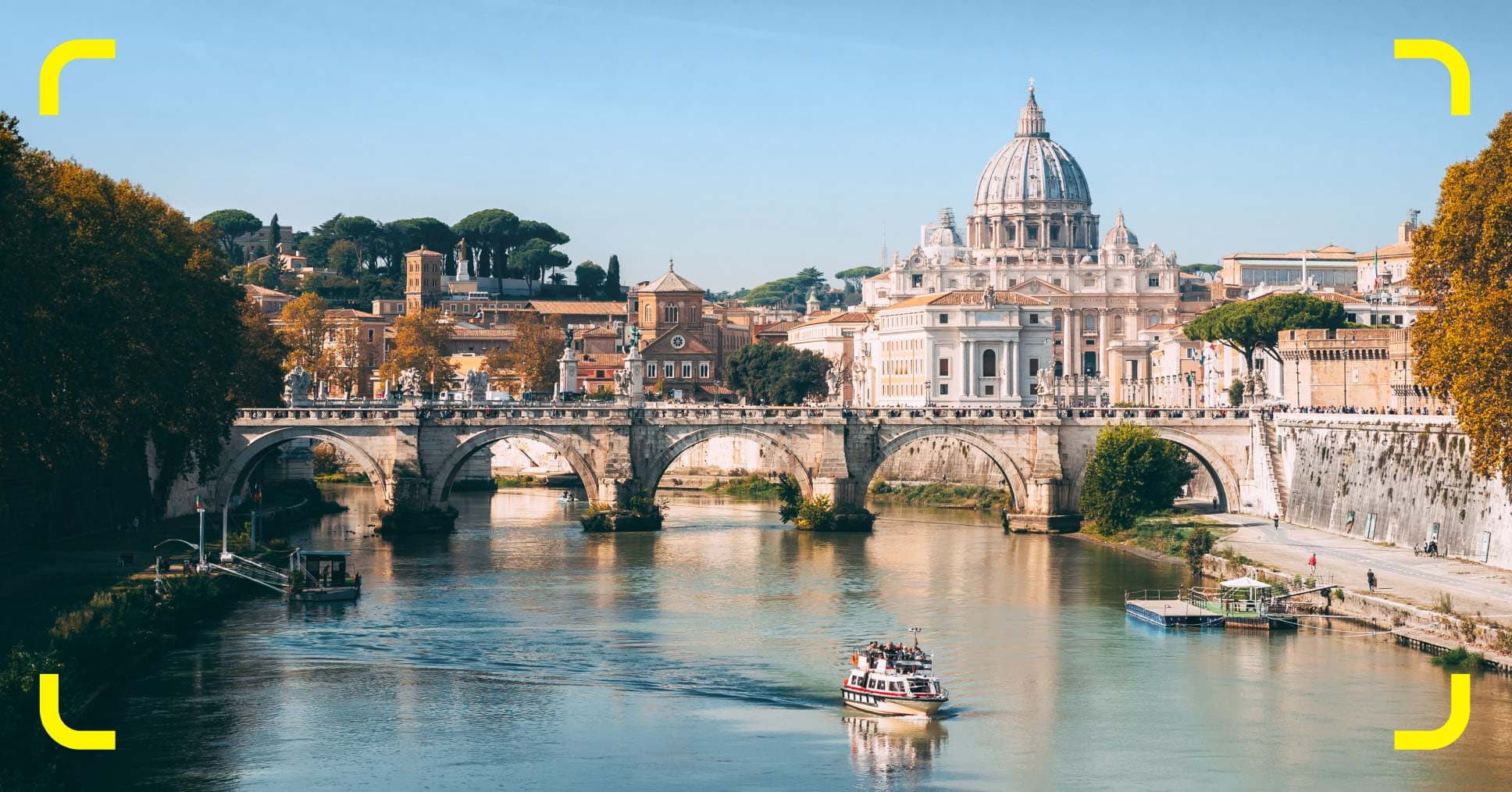
Table of Contents
How many days do you need in Rome?
Could anyone ever have enough time in Rome? Most visitors dream of endless days wandering the ancient streets, but flights home have to be booked at some point. Unless you’re thinking about moving to Italy permanently, you’ll need to make some practical decisions about your time in the Italian capital. Once you’ve decided when to visit — spring is probably the best time to visit Italy, followed by autumn — you’ll need to decide how long you’re going to stay.
If your plan is to see major attractions like the Colosseum, Vatican City, and the Trevi Fountain, 3 days in Rome is usually enough. But 4 to 5 days are ideal if you don’t want to rush and would prefer to enjoy Amatriciana pasta without constantly checking the time.
Your ideal duration really depends on your travel style. History buffs might need extra time to fully appreciate Rome’s ancient sites, while foodies could spend days just sampling different pasta dishes, pizzas, and gelato flavors across various neighborhoods. Families traveling with children might prefer the more relaxed pace of a longer stay, while spontaneous travelers will appreciate having flexibility to linger at places they love.
If you’re planning a grand tour of Italy with Florence, Venice, and the Amalfi Coast already on your Italy itinerary, you might need a shorter, more focused visit to Rome. Many travelers successfully check all of Rome’s main attractions in just 2 to 3 days when it’s part of a broader Italian journey.
Itinerary for your perfect first-time trip to Rome

Rome has enough to fill weeks, but that doesn’t mean you need them. Whether you have two days or a full seven, the itineraries below will help you get the most out of your time. They start with the non-negotiables and move toward the slower, more local experiences that make Rome memorable.
Itinerary for a 2-day trip to Rome
Two days is a sprint, but if you plan it well, it will make your trip a lot better. Focus on two main areas — Ancient Rome and the Vatican — and save everything else for next time.
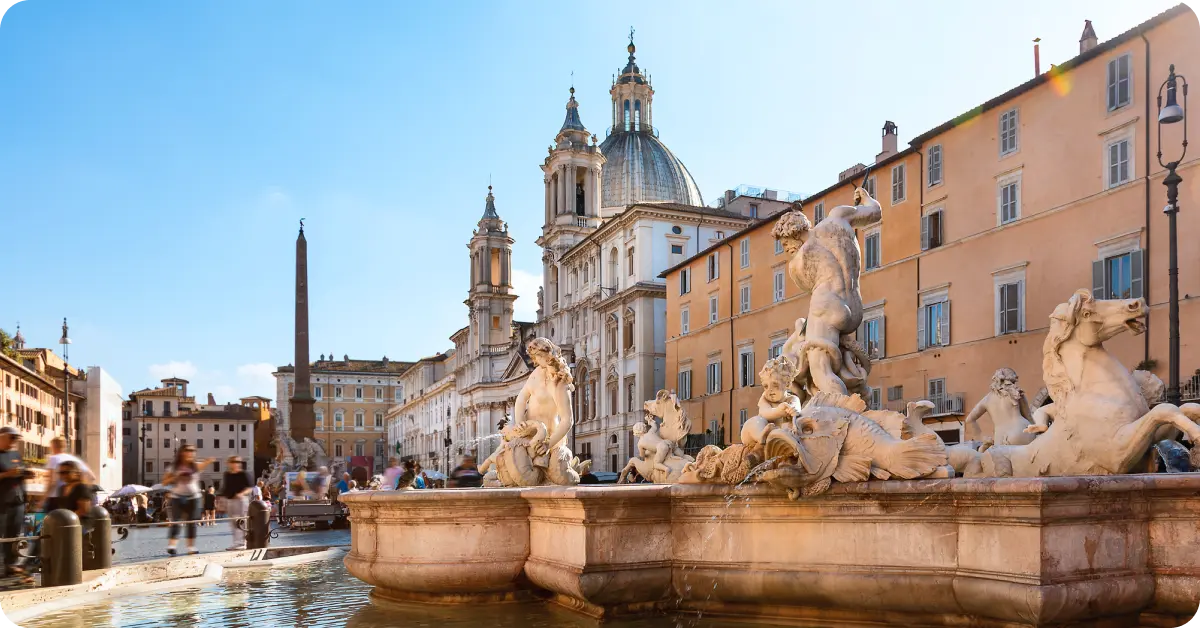
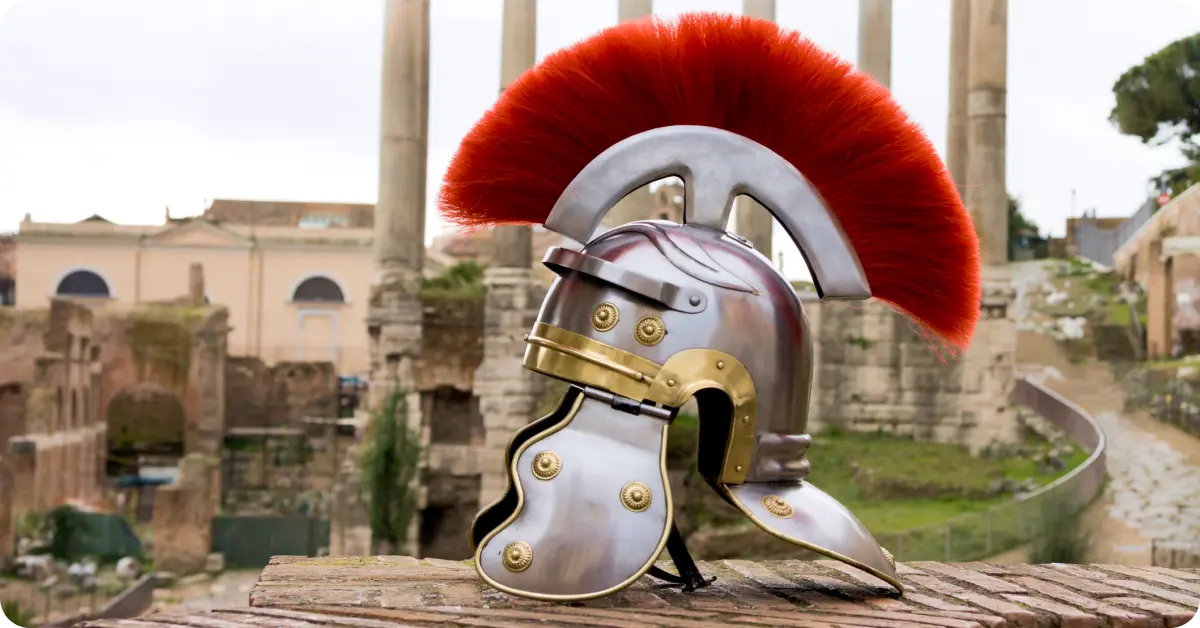
Day 1: Ancient Rome. Visit the Colosseum, Roman Forum, and Palatine Hill, which will take around four to six hours altogether. Book skip-the-line tickets in advance and expect a lot of walking, especially in the summer heat. In the evening, walk to the Pantheon and Piazza Navona to soak up the atmosphere. Both are free and stunning after dark.
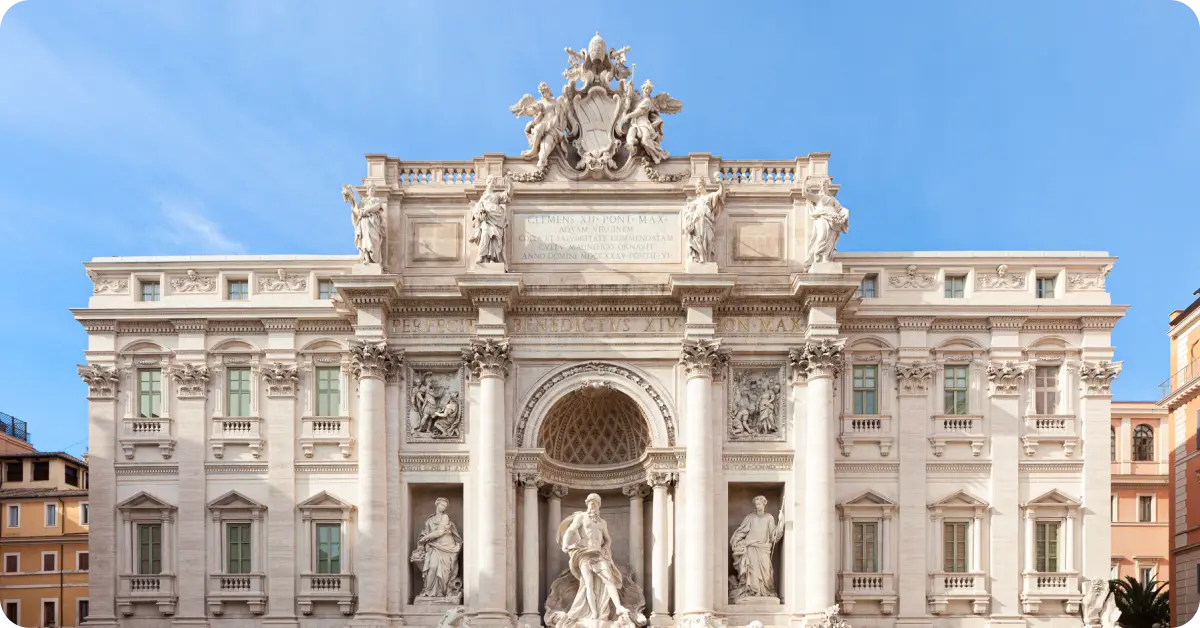
Day 2: The Vatican and historic center. Start at the Vatican Museums at 8 AM to beat the crowds, then head into St. Peter’s Basilica, allowing two to three hours for both. In the afternoon, walk to the Trevi Fountain and the Spanish Steps. End with dinner in the historic center near Campo de’ Fiori, a reliable spot for a first-timer.
Itinerary for a 3-day trip to Rome

Rather than rushing from landmark to landmark, three days in Rome gives you the breathing room to actually enjoy what you’re seeing. You’ll have enough time to wander through two thousand years of history, linger over long meals, and still stumble into the kind of unplanned moments that make a trip memorable.
Day 1: Historic center. Spend your first day getting oriented. Walk from Piazza Navona to the Pantheon, stop for espresso at Sant’Eustachio Il Caffè, and end at Campo de’ Fiori. Cap the evening with a visit to the Altare della Patria (Vittoriano), which is free and looks spectacular when lit up at night.
Day 2: Ancient Rome. Dedicate the full morning to the Colosseum, Roman Forum, and Palatine Hill (4-6 hours). Book tickets online in advance. In the afternoon, walk to Largo di Torre Argentina — the site of Julius Caesar’s assassination. It now doubles as a cat sanctuary. Entry is free.
Day 3: The Vatican. Book an 8 AM entry to the Vatican Museums to avoid shoulder-to-shoulder crowds by midday. Allow at least 3-4 hours for the museums and Sistine Chapel, then cross into St. Peter’s Basilica for free. Climb the dome (551 steps, or take the elevator for the first 231) for some of the best views in Rome.
Itinerary for a 4- to 5-day trip to Rome
Four to five days is really the sweet spot for getting to know Rome on a first visit. You’ll have plenty of time to take in the major landmarks without rushing, but what makes this length special is everything in between. You can linger over a long lunch without watching the clock, wander through quieter neighborhoods like Trastevere in the evening, or spend an afternoon in Villa Borghese just because you feel like it.
Day 1: Historic center. Arrive, check in, and ease into the city. Walk from Piazza Navona to the Pantheon and browse Campo de’ Fiori. End the evening at the Altare della Patria — the white marble glows under the lights and makes for a memorable first night in the city.
Day 2: Ancient Rome. Hit the Colosseum early (before 9 AM) to avoid the heat and the crowds. Book tickets in advance and factor in 2–3 hours. Continue to Palatine Hill for panoramic views over the Forum and Circus Maximus, then finish the afternoon at Largo di Torre Argentina.
Day 3: The Vatican. A full day here is not an exaggeration. Start at 8 AM at the Vatican Museums, spend three to four hours working through to the Sistine Chapel, then visit St. Peter’s Basilica. Grab dinner in the Borgo neighborhood nearby — the area has solid restaurant options ranging from casual to elevated Italian.
Day 4: Trevi Fountain, Spanish Steps, and Castel Sant’Angelo. Arrive at the Trevi Fountain early to beat the tour groups. Walk to the Spanish Steps (remember that sitting on them carries a fine of up to €250 since 2019). In the afternoon, visit Castel Sant’Angelo — originally built as Emperor Hadrian’s mausoleum, it now offers some of Rome’s best rooftop views. End the day with a stroll through Villa Borghese park.
Day 5: Trastevere and Testaccio. Spend your final day in Rome’s most characterful neighborhoods. Start in Trastevere — visit the Basilica of Santa Maria and browse the local market at Piazza di San Cosimato on weekday mornings. In the afternoon, head to Testaccio for some of the city’s best Roman food, such as supplì, cacio e pepe, and carbonara from spots that actually feed locals.
Itinerary for a week in Rome

A full week in Rome is a luxury. The first five days follow the itinerary above — use the extra two to slow down, go deeper, and explore what most first-timers miss entirely.
Day 1: Historic center. Same as the 4–5-day plan. Arrive, orientate, and explore Piazza Navona, the Pantheon, Campo de’ Fiori, and the Altare della Patria at night.
Day 2: Ancient Rome. Colosseum, Roman Forum, and Palatine Hill in the morning. Largo di Torre Argentina in the afternoon. Book all tickets online in advance.
Day 3: The Vatican. Full day at the Vatican Museums and St. Peter’s Basilica, which you should start at 8 AM.
Day 4: Trevi Fountain, Spanish Steps, and Castel Sant’Angelo. Early morning at the fountain, then the Spanish Steps and Castel Sant’Angelo. Wind down with a walk through Villa Borghese.
Day 5: Trastevere and Testaccio. Local markets, the Basilica of Santa Maria in Trastevere, and an afternoon dedicated entirely to eating well in Testaccio.
Day 6: Day trip to Pompeii or Tivoli. With a week in Rome, a day trip becomes realistic. Pompeii is roughly 2.5 hours away by train and gives you a different perspective on ancient Roman life. Tivoli, which is home to the spectacular Villa d’Este gardens and Hadrian’s Villa, is just 30 minutes from the city center and far less crowded.
Day 7: Explore Rome’s quieter neighborhoods. Spend your last day in Pigneto or Prati, two neighborhoods where tourists are rare and local life is unhurried. Browse independent shops, sit in a café without a queue, and take the kind of slow morning that Rome’s pace actually invites. End with an aperitivo at a rooftop bar as the sun sets over the city’s terracotta rooftops.
Tips to make your trip to Rome even better
Your Roman adventure will be infinitely more enjoyable with a bit of strategic planning. Here are the essentials that’ll make your trip smoother:
Book skip-the-line tickets in advance. We’ve mentioned this before, but it’s worth repeating — the infamous lines at the Colosseum and Vatican Museums are no joke. A three-hour wait under the blazing sun can completely ruin your day and could be easily avoided by booking online beforehand.
Master the public transport system. The historic center is perfect for wandering on foot, but when your legs start aching, public transit comes to the rescue. The Roma Pass provides excellent value for transit benefits alone.
Eat like a Roman. Avoid places with picture menus or aggressive tourist solicitation. Look for restaurants filled with animated locals instead. Romans eat lunch around 1:00 to 3:00 PM and don’t even think about dinner until after 8:00 PM. Stay wary of central Rome, which is generally very touristy with higher prices and lower quality.
Learn about the coperto. In Italy, restaurants often add a small cover charge (usually €1–5) per person for bread, tableware, and linens. You’ll see it in trattorias, pizzerias, and restaurants — basically anywhere you sit for a meal — but not when grabbing a quick espresso or aperitivo at a café.
Skip the big tips. Tipping isn’t common in Italy. Rounding up the bill or leaving €1–2 is enough, except in luxury spots. Locals prefer the coperto system — it’s simple, fair, and saves everyone the awkward guessing game of tipping culture abroad.
Respect the riposo. Many shops close mid-afternoon for Italy’s version of siesta. Use those hours for museum visits, coffee breaks, or rest at your accommodation instead of fighting against local customs.
Pack comfortable walking shoes. You’ll have to walk a lot, and you should feel comfortable when doing it. Bring layers for church visits that require modest clothing, too. A light scarf works perfectly for impromptu visits to religious sites.
Get an eSIM. Stay connected without risking having to pay for roaming charges that can cost more than your entire holiday. Get the Saily eSIM app and an eSIM data plan for Italy — it works across 30+ European countries, so you won’t need separate plans as you cross borders. You can set everything up before your trip and activate it the moment you arrive, so you’ll have maps, translation, and communication tools as soon as you step on European soil.
Learn basic Italian phrases. Even terribly accented “grazie” and “buongiorno” warm up interactions throughout the city. Most Romans in tourist areas speak English, but locals will appreciate the effort.
Use Rome’s free water fountains. The nasoni scattered throughout the city provide delicious, cold water that beats bottled options. Bring a reusable water bottle and fill up whenever you spot these ancient-looking fountains.
Stay aware in crowded areas. Rome is incredibly welcoming, but pickpockets operate in busy tourist zones everywhere, even in Italy. Keep belongings secure, especially around the Trevi Fountain and other major attractions.
How many days in Rome: Key takeaways
Rome rewards however much time you give it. Two days or seven — there’s always something worth seeing, eating, or sitting still in front of.
If you’re short on time, two to three days cover the headline sights — the Colosseum, the Vatican, the Trevi Fountain, and the Pantheon. Four to five days is the sweet spot for first-timers — enough to see the iconic attractions, explore neighborhoods like Trastevere, and eat well without watching the clock. A full week opens up day trips to Pompeii or Tivoli and the kind of slow mornings that make a city trip feel like a real break.
Last but not least, get Saily’s data plan for Italy before you leave home. You’ll need reliable internet for Italy to navigate the city’s winding streets when Google Maps becomes your lifeline, translate those tempting menu items that go way beyond “pasta” and “pizza,” and check the opening hours of many, many museums.
We have a tip that will save you — download the Saily eSIM app and stay connected! An eSIM has many benefits — no hunting for Italian SIM card shops, no language barriers with Italian phone stores, no thoughts of “will my phone work in Italy,” and no shocking roaming bills when you get home. Don’t roam while in Rome and get Saily!
Need data in Italy? Get an eSIM!

1 GB
7 days
US$3.993 GB
30 days
US$8.995 GB
30 days
US$12.99
FAQ
With children, 4-5 days is the recommended minimum. Kids enjoy Rome’s history — gladiator stories and ancient ruins go down well — but they also need regular breaks, earlier dinners, and the occasional activity built around them rather than around a sightseeing checklist. The extra days take the pressure off and make the trip enjoyable for everyone.
Three days is enough to cover Rome’s must-see attractions without feeling completely rushed. You can fit in the Colosseum, the Vatican, the Pantheon, the Trevi Fountain, and a walk through the historic center, but you won’t have much room to slow down. If this is your first time in the city, treat 3 days as the minimum rather than the ideal.
Not at all — 4 days is the sweet spot for most first-time visitors. The extra day gives you time to explore neighborhoods like Trastevere or Testaccio, sit down for a proper meal without rushing, and stumble across the parts of Rome that don’t make it onto the standard tourist checklist.
Italy’s Big Three are Rome, Florence, and Venice — the cities that anchor most first-time itineraries through the country. Each offers a distinct experience — Rome for ancient history and scale, Florence for Renaissance art and architecture, and Venice for its canals and singular atmosphere. If you’re planning a broader Italian trip, a shorter, more focused 2–3 day visit to Rome works well as part of that route.

Always connected, always on course
Connect instantly with a Saily eSIM and enjoy effortless internet access.