
Interesting facts about Turkey you should know
The Mediterranean Sea layers turquoise waves on white sand beaches. Hot wind brushes against your skin as you put on a third layer of sunscreen. Turkish arabesque plays in the background as you enjoy your fifth meal of the day at an all-inclusive buffet. This is how many people picture vacations in Turkey. And they’re not wrong – Turkey does check all of these boxes! However, it checks way more than that. Whether you’re a history buff, hiking enthusiast, culture vulture, gastronomic explorer, or an Olympic shopaholic – we’ve got you covered! Let’s explore some interesting facts about Turkey and find out what makes this country so diverse and captivating.
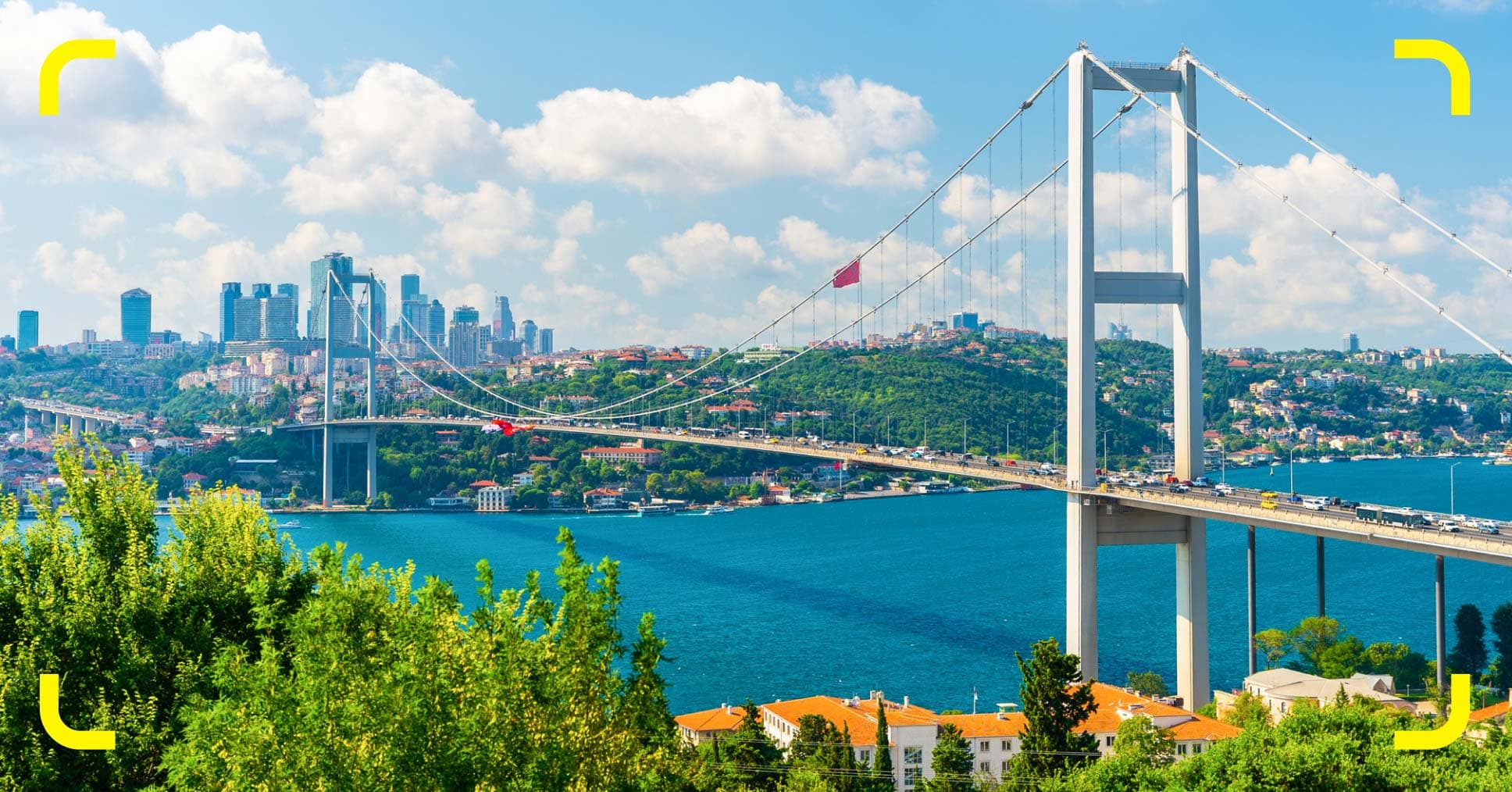
Table of Contents
Geographical facts about Turkey
Valleys studded with hot air balloons, calcium terraces that look like frozen waterfalls, and ancient cities carved inside mountains. This might be the time to grab a notebook, as you’ll definitely want to add these geographical wonders to your itinerary. Let’s start with the must-know basics:
Turkey is a transcontinental country, strategically located at the crossroads of two continents – 97% of its territory is in Asia and 3% in Europe.
The country is surrounded by three seas: the Black Sea, the Mediterranean Sea, and the Aegean Sea.
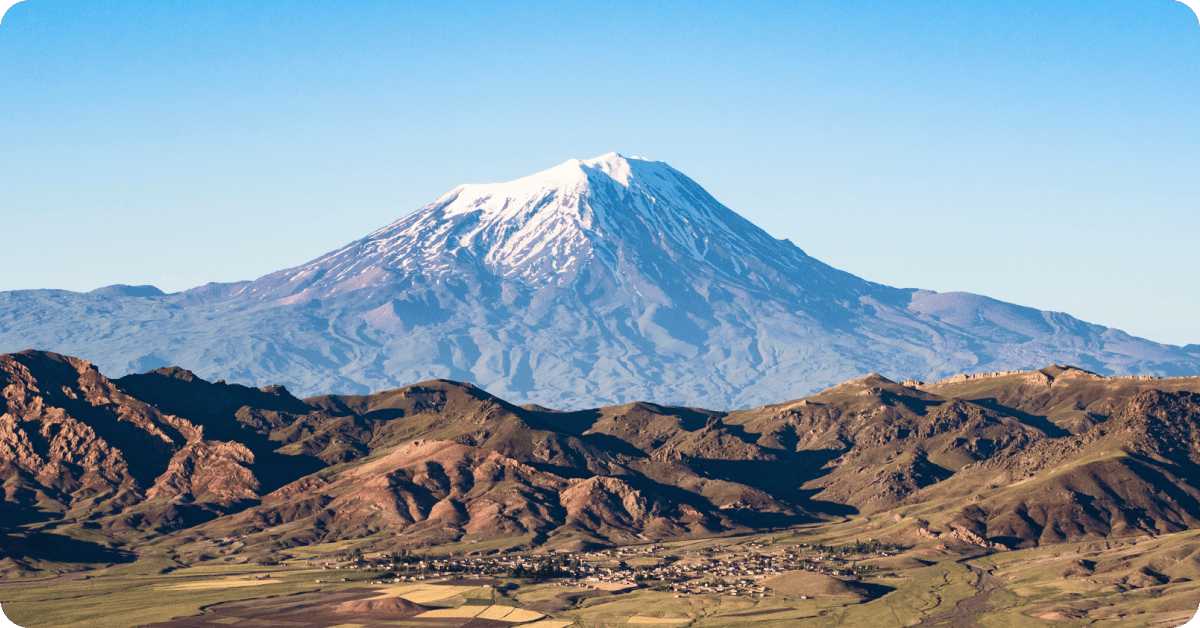
Mount Ararat is Turkey’s highest mountain, reaching 16,945 feet (5,165 meters). Some believe that the mountain is where Noah’s Ark rested after the biblical flood.1
The country is home to several natural wonders, including Köprülü Canyon. The canyon, located in southern Turkey, is not only known for its crystal-clear waters and dramatic cliffs – it also houses a Roman bridge that’s over 2,000 years old.
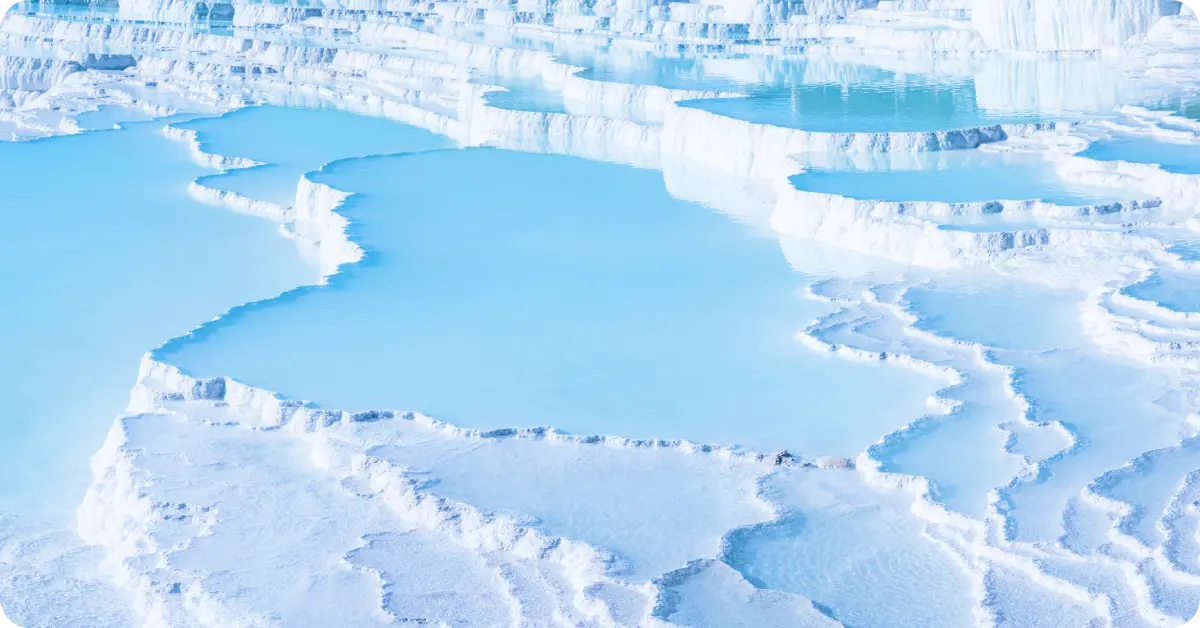
Another place you’ll want to add to your Turkey bucket list is the white cliffs of Pamukkale – a calcium-rich mineral formation. From afar, the cliffs appear to be a smooth, white layer covering the hillside. A natural spring flows through the pools, creating a cascade that stretches for 1.7 miles (2.7 kilometers). If you're planning a trip there, check the best time to visit Turkey, so you can enjoy pleasant weather during your stay.
Cappadocia’s surreal landscape of fairy chimneys and honeycomb hills hides an incredible secret beneath its surface. Ancient underground cities like Derinkuyu, plunging 18 stories deep, once sheltered up to 20,000 people and contained stables, churches, and even wineries.2
The ancient city of Troy, immortalized in Homer’s epic tales, isn’t just mythology. At this very real site, archaeologists have found nine different cities built on top of each other, creating a 4,000-year-old layer cake of human civilization.3
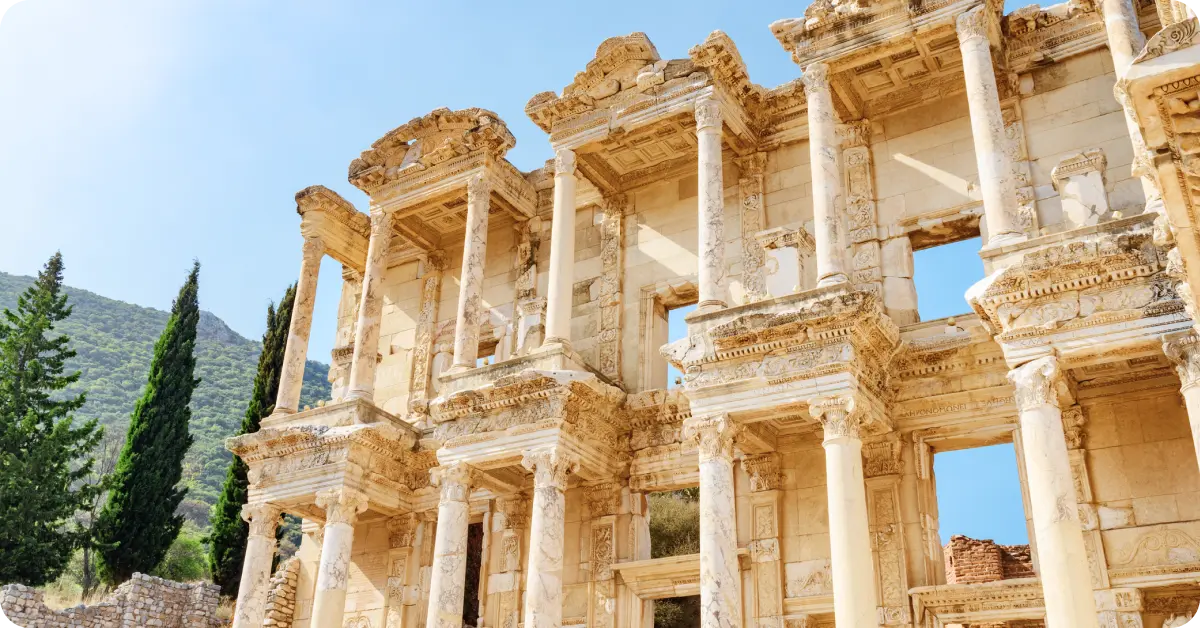
Turkey was once home to two of the Seven Wonders of the Ancient World: the Temple of Artemis in Ephesus and the Mausoleum of Halicarnassus in what is now known as Bodrum. Today, only scattered ruins and marble fragments remain where these architectural marvels once stood, though you can still visit their sites and let your imagination reconstruct their former glory.
Turkey also boasts the world’s oldest temple complex. Göbekli Tepe, nestled in the country’s southeast, predates both Stonehenge and Egypt’s pyramids, with archaeologists dating this sanctuary to approximately 9,600 BCE.4
Historical facts about Turkey
The Anatolian region witnesses a history so ancient that it takes us back all the way to the beginning of human civilization. It sheltered one of the earliest settlements, bore many names, notable figures, and historical milestones before it became what we now know as the Republic of Türkiye. Let’s take a closer look at how it all unfolded:
Turkey cradled one of the earliest settlements in the world – Çatalhöyük – a labyrinth of 150 mudbrick homes joined together, founded around 9,000 years ago.5
The Hittite Empire, founded about 4,000 years ago, marked another first for humankind: the first and oldest surviving peace treaty in history – The Treaty of Kadesh. It was sealed by the Egyptian Pharaoh Ramses II and Hittite King Muwatalli II in 1259 BCE.6
The Ottoman Empire, lasting over 600 years from 1299 to 1922, was one of the longest-lasting empires in history.7 At its peak, it spanned three continents – Europe, Asia, and Africa – making it a piping-hot melting pot of cultures, languages, and religions.
The Ottoman Empire’s entry into World War I led to its defeat and partitioning, followed by the Turkish War of Independence. This revolution concluded the collapse of the Ottoman Empire and abolished the sultanate. As a result, Turkey emerged as a more homogenous state. The leader of this revolution, Mustafa Kemal Atatürk, established the Republic of Turkey as we know it today on October 29, 1923.
Turkish women gained the right to vote in 1934, ahead of many other countries, such as France, Italy, or Greece.
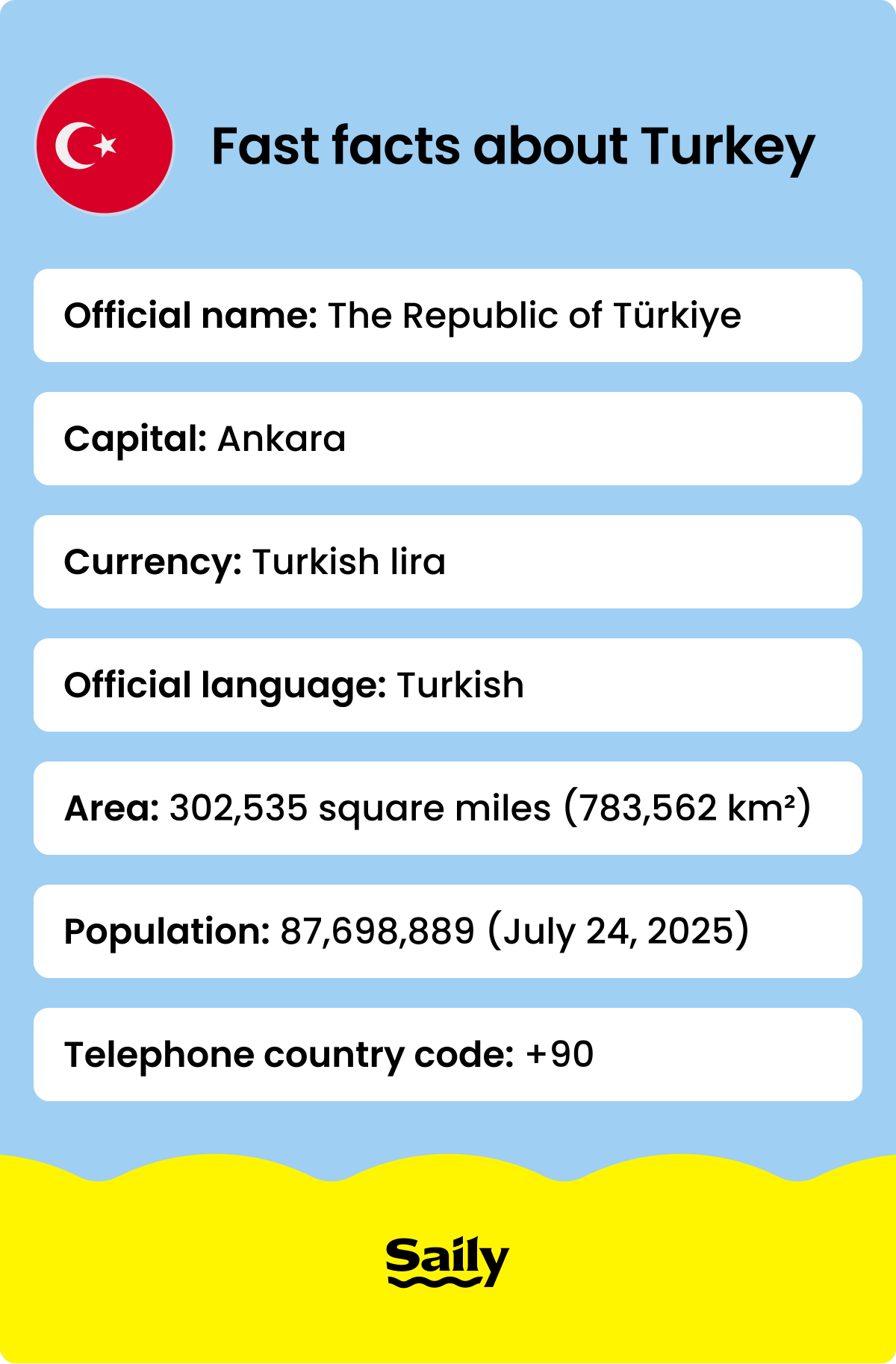
In May 2022, Turkey changed its official name to the Republic of Türkiye.
Cultural facts about Turkey
Turkey’s history, stretching across three continents and sitting at the crossroads of some of the world’s most powerful empires, has shaped the nation we see today – an epic cultural mosaic.
Turkish culture is a blend of Eastern and Western influences, with a strong emphasis on hospitality and respect for elders.
The majority of the population is Muslim, but the country itself is officially secular, meaning religion and government are kept separate.
The tulip is Turkey’s national flower and a powerful symbol in Turkish culture, representing beauty, grace, and the lavish spirit of the Ottoman Empire. During the “Tulip Era” of the 18th century, it became a hallmark of luxury and artistic expression. Even today, you can spot this motif nearly everywhere, from poetry to architecture.
Soccer is the most popular sport in Turkey. During derbies between Istanbul rivals like Galatasaray, Fenerbahçe, and Beşiktaş, thousands of fans flood the streets in their team colors, chanting club anthems.
Oil wrestling (or grease wrestling) is Turkey’s national sport and one of its oldest traditions. Wrestlers douse themselves in olive oil and grapple in an annual tournament that's been held in Edirne for over 650 years.
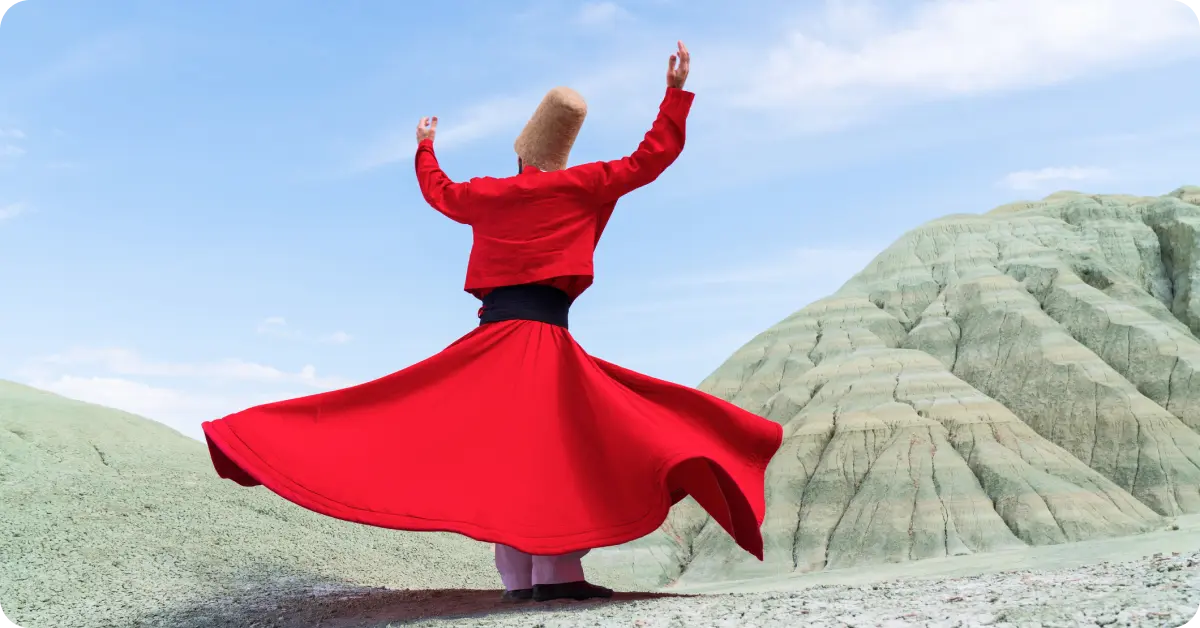
Turkey’s whirling dervishes are famous for their hypnotic dance. It isn’t just a performance – it’s a centuries-old spiritual practice, symbolizing the journey to enlightenment through movement and meditation.
Santa Claus comes from the city of Patara, located in modern-day Turkey.8 Known as Saint Nicholas, Bishop of Myra, he was recognized for his generosity and kindness, especially towards children, and his feast day, December 6, is still celebrated in many countries.
Cool facts about Turkish food and cuisine
Turkish food is a feast for the senses, offering a mix of rich flavors, textures, and centuries-old traditions. With influences from both East and West, the cuisine is quite diverse, with a rather intriguing taste for desserts. Get a taste of Turkish cuisine with these interesting facts:
Turkey takes its bread very seriously – so much so that it has the highest bread consumption per person in the world. It’s estimated that Turks eat nearly 200 kilograms of bread per capita each year!9
Turkey is famous for its unique desserts, such as chicken breast pudding – a typical Ottoman dessert. This surprisingly sweet treat is made from finely shredded boiled chicken breast mixed with milk, sugar, and rice flour, and seasoned with a pinch of cinnamon. If the concept of this treat raises an eyebrow, then the flavor surely raises them both. And who could forget Turkish delight? Its sweet, chewy texture has made it a favorite worldwide.
Did you know that Turkey consumes more tea per capita than any other country in the world?10 Most of this tea comes from the rain-soaked slopes of Rize on the Black Sea coast of eastern Turkey. Turkish tea is so important to the culture that it’s often served in special tulip-shaped glasses. The shape helps highlight the deep color and rich aroma, making each sip feel like a ritual.
While Turks might not break world records with their coffee culture like they do with bread and tea, it holds just as much importance – and perhaps even a touch more magic. Every now and then, you’ll catch Turks reading fortunes from the coffee grounds. Once a cup is finished, the residue is carefully examined for a glimpse into the future – if you’re brave enough to take a peek!
Rakı, Turkey’s national drink, also known as “Lion’s Milk,” is 45% clear brandy made from grapes and raisins. It’s distilled twice and flavored with aniseed and will surely give you a kick you won’t forget.
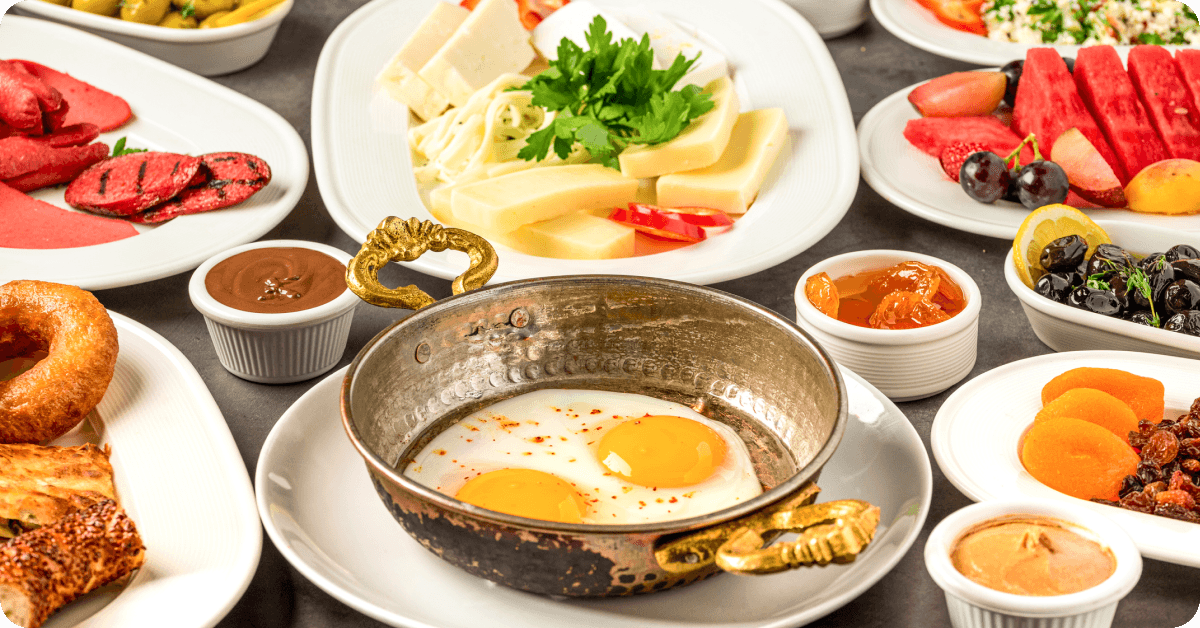
Some of the most popular dishes you will want to include in your gastronomic journey to Turkey include (but are not limited to): menemen, lahmacun, kebap, börek, köfte, and stuffed mussels. And these are just for starters – you’ll find many more unique flavors to fall for!
Important facts about the Turkish economy
Turkey’s strategic location continues to make it a key player in trade between Europe, Asia, and the Middle East. Let’s check some curious facts about the Turkish economy:
Turkey ranks among the world’s top 20 largest economies.11
Turkey exports way more than just Turkish delight. The country is a major exporter of textiles, automobiles, and electronics.12
The country's economy also benefits from its vast agricultural land – from the lush tea plantations of northern Turkey to the olive groves of the Aegean region in western Turkey. Turkey also ships out billions of dollars worth of wheat flour annually as the world's top wheat flour exporter,13 along with billions more in cotton that feeds textile industries across the globe.
Here’s a nutty fact: Turkey produces a whopping 75% of the world’s supply of hazelnuts, making it the undisputed hazelnut capital.14
Turkey's economy is also closely connected to the European Union, which accounts for over 40% of Turkey’s foreign trade.15
With its rich history, turquoise coastlines, and world-famous cultural landmarks, it comes as no surprise that tourism plays a huge role in Turkey’s economy. In fact, it’s one of the top five most visited countries in the world,16 raking in billions to its GDP every year.
Facts about Istanbul: A city of wonders
Istanbul isn’t just Turkey’s largest city – it’s a living, breathing time machine where 2,500 years of history collide with contemporary life. These fascinating facts about Istanbul prove that it truly is one of a kind:
Istanbul straddles two continents – Europe and Asia. They are separated by the Bosphorus Strait that connects the Black Sea and the Marmara Sea.
Constantinople (now Istanbul) was the largest city in the world for many centuries.17 It served as the capital of the Roman, Byzantine, and Ottoman empires from 330 CE until 1923.
Over 16 million people live in Istanbul,18 making up nearly 20% of the country’s population – talk about a city that never sleeps!
The city is home to many famous landmarks, including the Basilica Cistern, Blue Mosque, Hagia Sophia, and Topkapi Palace, to name a few. Most of these sites can be found on the European side of the city, particularly in the historic Sultanahmet district.
Istanbul boasts one of the oldest subway systems in continental Europe. Turkey’s Tünel funicular has been chugging up the steep hill between Karaköy and Galata since 1875. It is the world’s second-oldest operating underground railway after the London Underground.
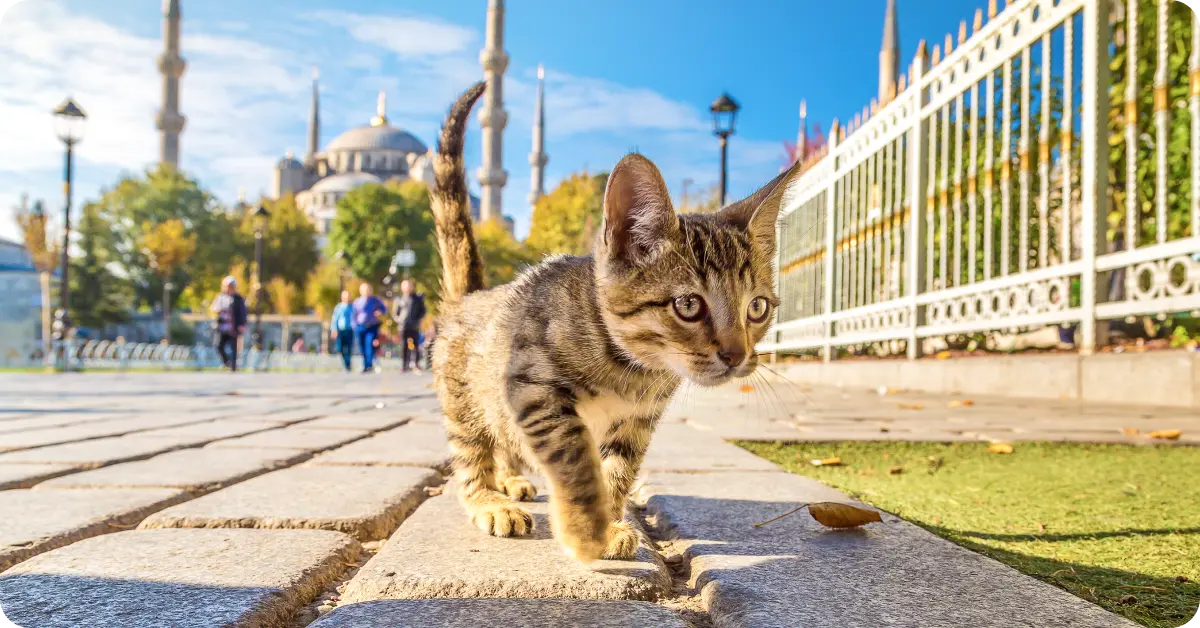
The city of Istanbul is graced by the rule of over 125,000 stray cats19 that have been roaming the streets since the days of the Ottoman Empire. Here, as is only right, they’re treated with nothing but love and respect – locals build them houses, shops put out daily meals, and the city even employs veterinarians to care for the whiskered residents.20
Istanbul’s Grand Bazaar and the Golden Horn
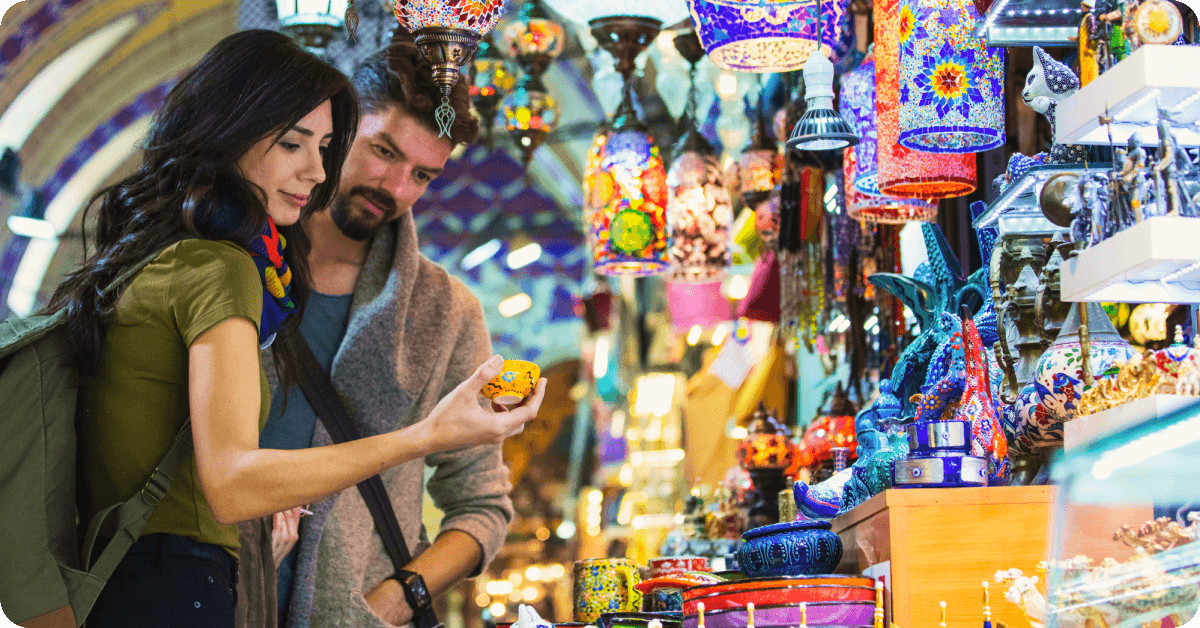
Istanbul’s Grand Bazaar is one of the oldest and largest covered markets in the world, with over 4,000 shops and stalls spread across 61 covered streets.21 Every single day, hundreds of thousands of visitors wander through its maze-like corridors, haggling for everything from hand-painted ceramics to aromatic spices.
The Golden Horn is a natural harbor in Istanbul that has been the heart of maritime trade for over 2,000 years. Many empires and civilizations vied for control of its strategic location. Today, the Golden Horn is where all of Istanbul intersects. Local fishermen line the Galata Bridge, angling for mackerel, waterfront restaurants serve up the day’s catch, and commuters hop on ferries connecting continents.
Istanbul is a city where ancient mosques share skylines with rooftop bars, where street cats rule Byzantine Empire alleys, and every rainbow step promises an adventure.
Need data in Turkey? Get an eSIM!

1 GB
7 days
US$3.99
3 GB
30 days
US$6.99
5 GB
30 days
US$9.99
Traveling to Turkey? Stay connected with the Saily eSIM app
Now, just before you run off to explore Turkey’s countless wonders, let us give you a little tip on how to stay connected. Relying on roaming in Turkey can lead to triple-digit charges if you’re not careful. A much cheaper solution is to get an eSIM for Turkey, and with Saily, plans start at just US$3.99. The Saily eSIM app offers flexible, cost-effective data plans and lets you skip the trouble of looking for a local SIM card or dealing with unexpected roaming charges. However, due to Turkey’s eSIM ban, purchasing eSIMs inside the country is restricted, so you’ll need to set up your eSIM before you arrive. Make sure to download the Saily eSIM app, install the eSIM, and enable data roaming for your Saily plan before departure so you are connected the second you land.

Stay connected with the Saily eSIM app
Affordable mobile data plans for every journey.
References
1 The Jerusalem Post (2025, March 30). Fresh clues in Turkey spark renewed debate over Noah’s Ark Discovery. https://www.jpost.com/archaeology/archaeology-around-the-world/article-845277
2 Sai, V. (2025, January 18). A subterranean city was in constant use for thousands of years. The Travel. https://www.thetravel.com/subterranean-city-used-for-thousands-of-years/
3 Archaeology Magazine. (n.d.). Uncovering Troy - interactive map of the ancient city of Troy. https://archaeology.org/travel/interactivemap-troy/
4 The Other Tour. (2025, August 8). The oldest temple in the world: Gobeklitepe. https://theothertour.com/gobeklitepe/
5 Beyer, G. (2023, September 13). Human civilization’s first cities: 7 of the oldest. The Collector. https://www.thecollector.com/first-cities-human-civilization-oldest-cities/
6 United Nations. (n.d.). Replica of peace treaty between Hattusilis and Ramses II gifts. https://www.un.org/ungifts/replica-peace-treaty-between-hattusilis-and-ramses-ii
7 Beckman, T. (2024, June 5). What are the longest-lasting empires, governments, or nations? Brainscape Academy. https://www.brainscape.com/academy/longest-lasting-empires-world-history/
8 Republic of Türkiye Ministry of Culture and Tourism. (n.d.). Santa Claus. https://www.ktb.gov.tr/EN-113778/santa-claus.html
9 World Visualized. (2024, October 16). Top 5 bread consuming countries in the world. https://worldvisualized.com/article/top-5-bread-consuming-countries-in-the-world
10 Rahman, S. (2025, May 25). 10 countries that drink the most tea in 2025. Global Tea Auction. https://www.globalteaauction.com/top-tea-consuming-countries/
11 Silver, C. (2025, January 29). The top 25 economies in the world. Investopedia. https://www.investopedia.com/insights/worlds-top-economies/
12 Eximpedia. (2025, June 12). Turkey’s biggest exports and top trade partners you should know in 2025. https://www.eximpedia.app/blog/turkey-biggest-exports
13 Workman, D. (2025, August 19). Flour Exports by Country. World’s Top Exports. https://www.worldstopexports.com/flour-exports-by-country/
14 World Population Review. (2025). Hazelnut production by country 2025. https://worldpopulationreview.com/country-rankings/hazelnut-production-by-country
15 Republic of Türkiye - Ministry of Trade. (n.d.). Turkiye and the EU. https://www.trade.gov.tr/turkiye-and-eu/turkiye-and-the-eu
16 WP Travel Editorial. (2025, August 29). Most visited countries in the world: Statistics with total arrivals. WP Travel. https://wptravel.io/most-visited-countries-in-the-world/
17 The Byzantine Legacy. (n.d.). Byzantine legacy. https://www.thebyzantinelegacy.com/byzantine-cities
18 World Population Review. (2025). Istanbul population 2025. https://worldpopulationreview.com/cities/turkey/istanbul
19 Nevres, Ö. (2024, September 5). Istanbul Cats: The Complex Reality of life on the Streets. City of Istanbul. https://cityofistanbul.net/istanbul-cats-reality/
20 Luther, L. (2025, June 19). Why are there so many cats in Istanbul? the wonderful relationship between the city & its cats. Catster. https://www.catster.com/lifestyle/why-are-there-so-many-cats-in-istanbul/
21All Accor. (2025, May 29). The Lively Markets in Istanbul: A Practical Guide for Every Traveller. https://all.accor.com/a/en/limitless/thematics/shopping/markets-in-istanbul.html