






Top 7 luxury ski resorts, where the world’s elite escape for winter
Luxury ski resorts aren’t just about skiing anymore. Sure, perfect slopes still matter, but today’s most exclusive mountain destinations are just as much about Michelin-starred dinners, total privacy, and who you might bump into at après-ski. From the French Alps to Aspen in Colorado, these places are among the most expensive ski resorts in the world, attracting celebrities, founders, and ultra-high-net-worth travelers. Based on Saily’s latest travel trends research, these seven destinations show what luxury winter travel really looks like at the top.
Table of Contents
Aspen, Colorado, the USA
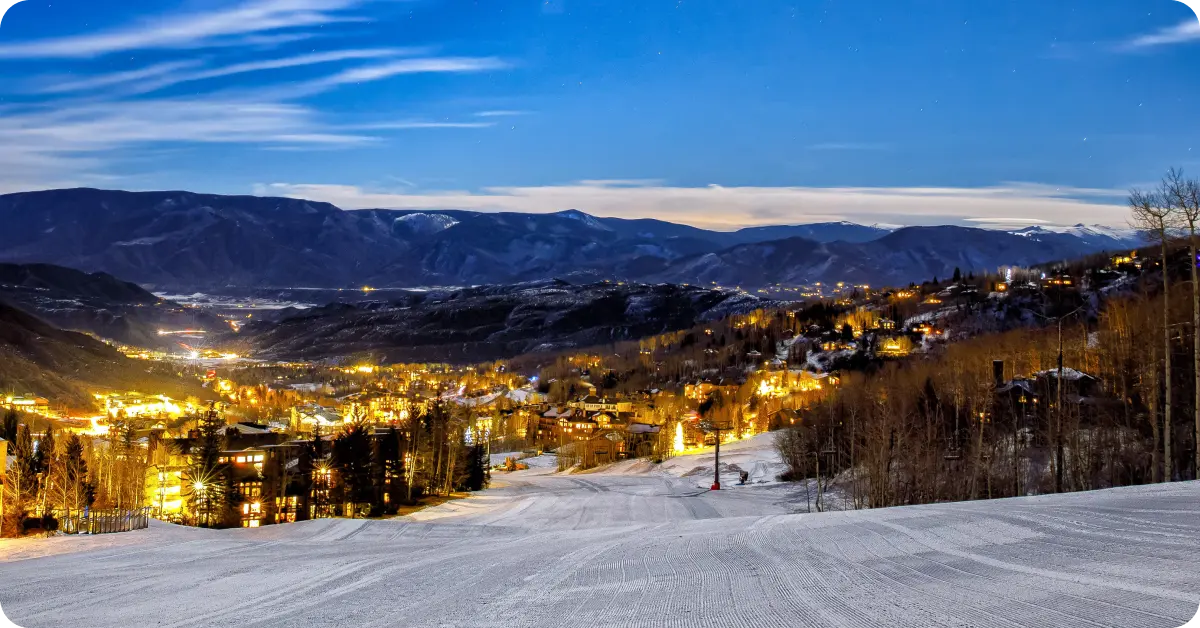
Aspen doesn’t merely lead the American luxury ski market — it commands a central place in the global conversation. This former silver-mining town turned cultural capital spans four distinct mountains — Aspen Mountain, Snowmass, Aspen Highlands, and Buttermilk — yet its influence reaches far beyond terrain statistics. According to Savills’ Ski Prime Price League, Aspen consistently ranks as the world’s most expensive ski resort for prime residential real estate, with ultra-prime homes averaging US$98,710 per square metre, outpacing traditional European rivals such as Courchevel and Gstaad.
Those numbers point to something more profound. Aspen has become America’s de facto winter capital for tech billionaires, Hollywood power brokers, and political figures. Jeff Bezos has assembled adjacent properties reportedly totaling US$215 million. The Obamas are regular visitors. Figures such as Kim Kardashian and Kevin Costner maintain homes in the area. This is not celebrity voyeurism — it’s a measure of Aspen’s gravitational pull among people with the freedom to live anywhere.
On snow, the experience varies sharply by mountain. Aspen Mountain delivers unapologetically steep groomers with no beginner terrain at all — a confident statement of intent. Snowmass spreads across roughly 3,300 acres, offering scale, variety, and genuine family appeal. Aspen Highlands draws experts to the hike-to terrain of Highland Bowl, while Buttermilk balances gentler slopes with its role as host of the Winter X Games. Each mountain serves a different mood, and together they create a rare sense of range within a single destination.
Aspen’s cultural credentials rival its skiing. The Aspen Music Festival, Aspen Ideas Festival, and year-round programming at the Aspen Institute inject intellectual energy seldom found in mountain towns. Designer shopping along Cooper Avenue and Galena Street is on par with that of major cities, while dining destinations such as Element 47 at The Little Nell and Matsuhisa signal serious culinary ambition. Après-ski at Cloud Nine Alpine Bistro or Ajax Tavern sustains the social rhythm that defines the town.
Courchevel 1850, France
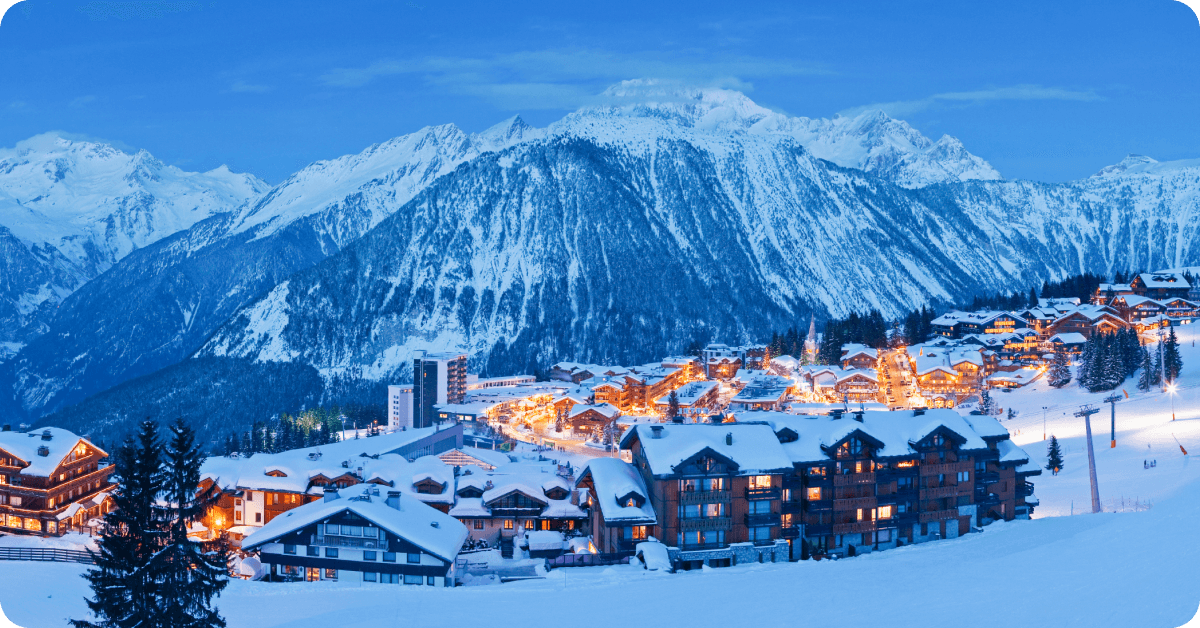
Few ski resorts command the global recognition of Courchevel 1850. With 370 miles (600 kilometres) of interconnected terrain that together form the world’s largest linked ski area, this French resort has served as shorthand for Alpine extravagance since its creation in the 1940s as France’s first purpose-built ski station.
The numbers tell part of the story. Courchevel is home to one of the highest concentrations of Michelin stars in the Alps, including the three-star Le 1947 at Cheval Blanc. Private chalets command weekly rates that can exceed US$349,884 during peak holiday periods. The Courchevel Altiport features one of Europe’s shortest paved runways, enabling rapid helicopter and private aircraft access from Geneva. These are not mere details — this is the baseline for a resort engineered for guests who expect the exceptional.
But Courchevel’s magnetism extends beyond amenities. Its international clientele — from Middle Eastern royalty to British financiers — return as much for the ecosystem surrounding the experience as for the skiing itself. Ski butlers prepare equipment overnight. In-chalet chefs arrive straight from Michelin-awarded kitchens. Service operates with near-military precision, yet remains unmistakably warm — a balance the French have arguably perfected here better than anywhere else in the Alps.
The skiing ranges from long, impeccably groomed cruisers ideal for confidence-building to genuinely demanding terrain such as the Saulire couloirs. Still, an honest assessment acknowledges that many guests divide their time between the slopes and La Mangeoire’s sun-drenched terrace or the luxury boutiques lining Rue de Bellecôte. Courchevel understands this duality — and delivers masterfully on both fronts.
St. Moritz, Switzerland
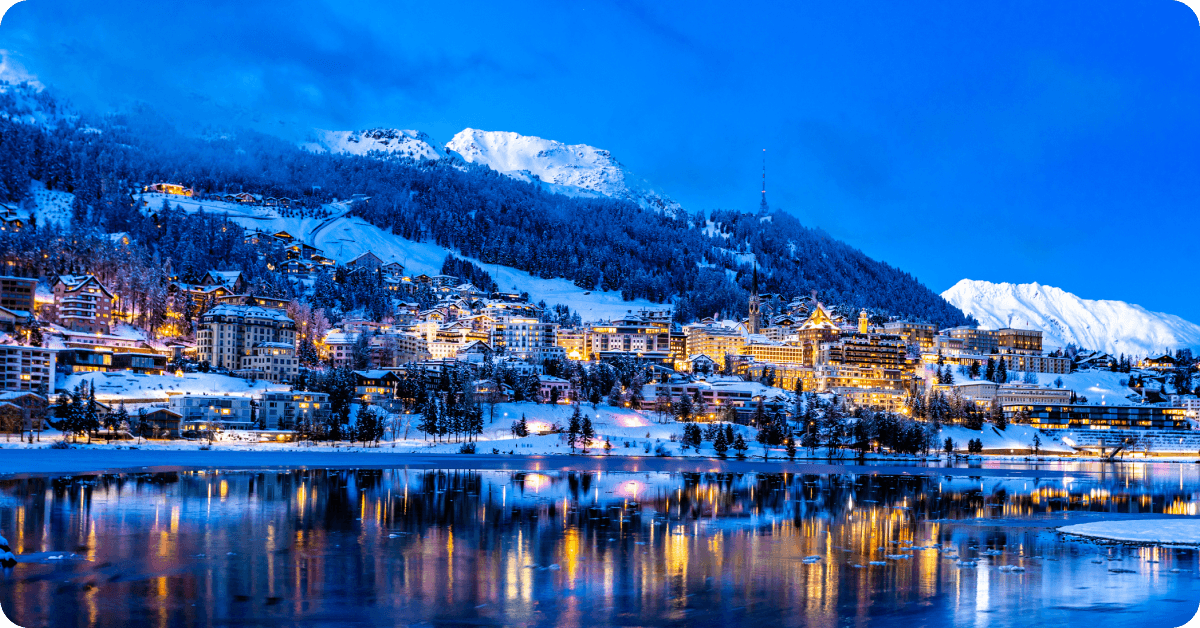
St. Moritz stands as the aristocrat of Alpine resorts — quite literally the birthplace of winter tourism. In 1864, hotelier Johannes Badrutt famously wagered that British summer guests would enjoy his resort even more in winter, a bold promise that proved prophetic. That moment sparked more than 150 years of uninterrupted luxury, cementing St. Moritz as a winter stronghold for European royalty, Hollywood icons, and global business elites.
The skiing unfolds across 217 miles (350 kilometres) of terrain spanning Corviglia, Corvatsch, Diavolezza, and Lagalb — four distinct mountains offering everything from immaculately groomed pistes to serious off-piste descents. High altitude and famously sunny conditions — St. Moritz claims more than 300 days of sunshine a year — combine to create consistently reliable snow and crisp, dry conditions prized by seasoned skiers.
Yet St. Moritz’s true distinction extends far beyond the slopes. Its frozen lake becomes a stage for White Turf horse racing, snow polo, and Cricket on Ice. Badrutt’s Palace Hotel (established 1896) remains the resort’s social axis, while landmarks such as Kulm Hotel St. Moritz and the Carlton Hotel define the upper tier of Alpine hospitality. Evenings drift toward storied dining rooms like Chesa Veglia or the Kulm’s Stübli, where Michelin-level cuisine intersects with discreet social rituals understood instinctively by regulars.
This is luxury as heritage — where Swiss precision, old-world glamour, and deeply ingrained traditions create a world newcomers aspire to enter and insiders never abandon.
Verbier, Switzerland
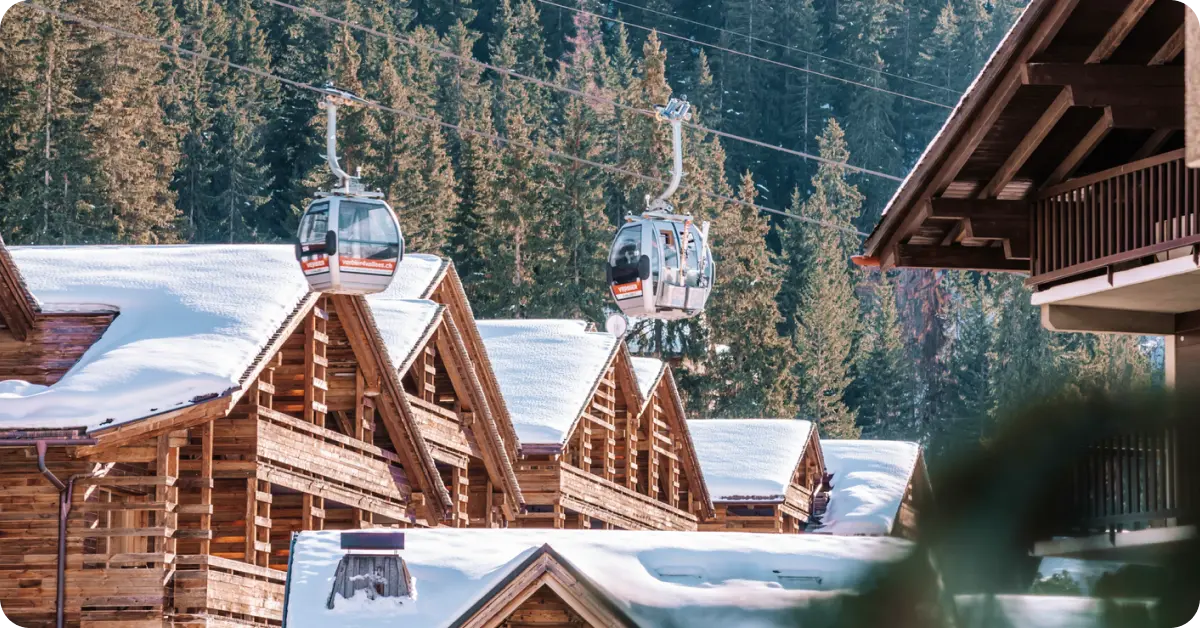
Perched at 4,920 feet (1,500 metres) in the Swiss canton of Valais, Verbier represents a more contemporary expression of Alpine luxury. As part of the expansive 4 Vallées ski area — 255 miles (410 kilometres) of terrain spanning four valleys — the resort has built its reputation on demanding skiing, legendary off-piste terrain, and a high-energy social scene that attracts a younger, more performance-driven luxury crowd.
The skiing is unapologetically expert oriented. Verbier’s predominantly north-facing slopes preserve powder longer than many Alpine resorts, while notorious runs such as the mogul-heavy Tortin and access to the freeride terrain of Mont Fort at 10,925 feet (3,330 metres) draw advanced skiers and snowboarders from around the world. The annual Verbier Xtreme competition, a flagship event on the Freeride World Tour, reinforces the resort’s standing among the sport’s elite. Guided off-piste routes and high-level mountain services cater to those seeking steep lines and serious terrain beyond the pistes.
What distinguishes Verbier is its energetic yet carefully guarded exclusivity. Après-ski begins at high-altitude institutions like Farinet and Pub Mont Fort, but the real social gravity lies behind closed doors — private chalet gatherings, members-only clubs, and invitation-only events. Properties such as W Verbier and standout private chalets have introduced contemporary design, spa-forward wellness, and a relaxed modern aesthetic that resonates with tech entrepreneurs, professional athletes, and creatives who value luxury without ceremony.
Unlike Switzerland’s more traditional resorts, Verbier embraces a performance-driven ethos — where skiing credentials matter as much as accommodation and exclusivity is earned through ability as much as status.
Gstaad, Switzerland
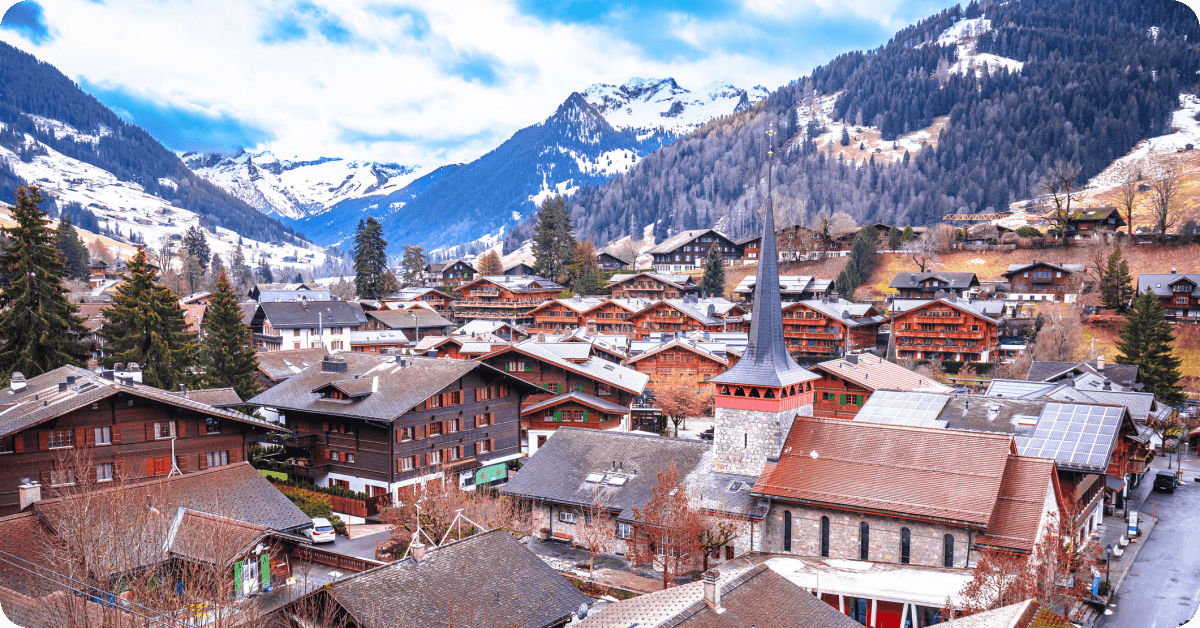
Gstaad exemplifies the philosophy that true luxury whispers rather than shouts. Nestled in the Bernese Oberland at about 3,444 feet (1,050 m), this Swiss village has cultivated a reputation for understated elegance and cosmopolitan cachet, attracting European high society and international cultural figures for decades.
The skiing centers around the Gstaad Mountain Rides terrain, with over 200 kilometers of groomed slopes across multiple sectors and easy access to the glacier-topped Glacier 3000, which rises to about 9,842 feet (3,000 m) above sea level. While much of the terrain is particularly appealing to beginners and intermediates, the real draw is the scenic cruising, impeccable grooming, and wide panorama over the Saanenland valley.
But why Gstaad truly shines among the others is its commitment to discretion and timeless style. The Promenade’s designer boutiques — from Hermès to Cartier and beyond — are housed in traditional chalets rather than glass storefronts, reinforcing the village’s classic Alpine character. Long-standing institutions like the Gstaad Palace have hosted legends from Grace Kelly to Roger Federer, while newer arrivals such as The Alpina Gstaad (opened in 2012) have elevated wellness and gastronomy offerings without unsettling the village’s quiet rhythm.
Architectural preservation and a deep respect for privacy remain priorities, and locals pride themselves on protecting both the landscape and guests’ seclusion — a quality that has made Gstaad a perennial favorite of royalty, film stars, and business leaders who value anonymity as much as excellence.
Zermatt, Switzerland
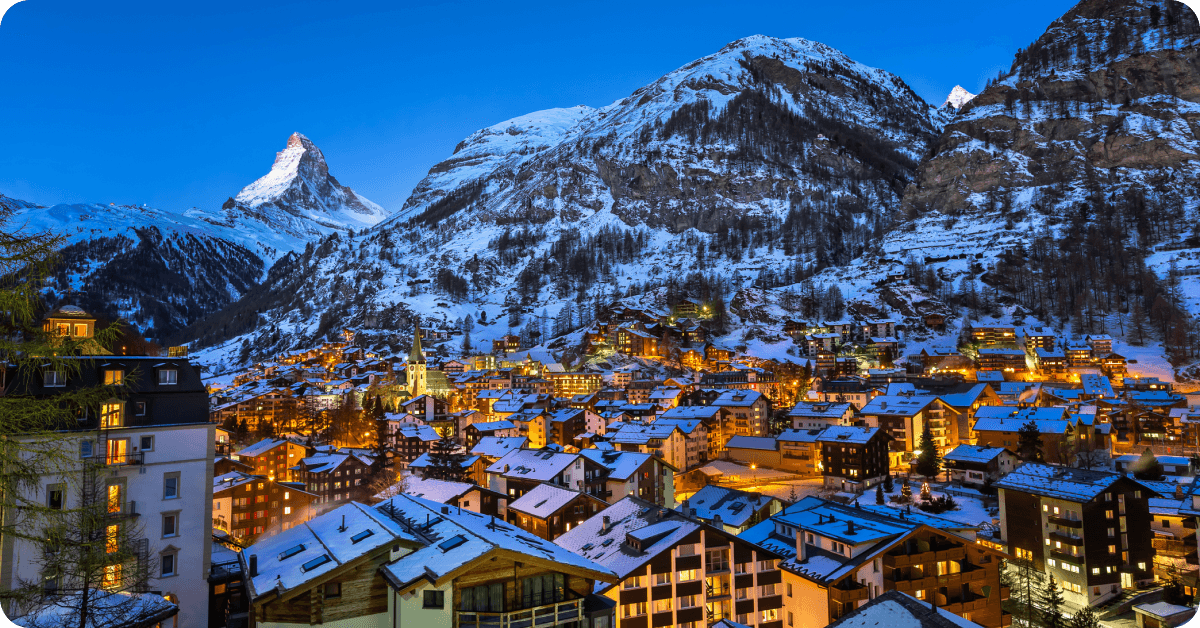
Cradled at the base of the iconic Matterhorn at 5,315 feet (1,620 metres), Zermatt has been synonymous with Alpine excellence since British mountaineers and early ski pioneers arrived in the late 19th century. This car-free village — accessible by the Glacier Express, regional trains, or a short shuttle from Täsch — has perfected the balance between timeless elegance and modern luxury while maintaining strict environmental protections that preserve its mountain character.
The skiing is world class — 224 miles (360 kilometres) of interconnected terrain linking Switzerland with Italy’s Cervinia, year-round glacier access on the Theodul Glacier, and one of Europe’s highest cable car stations at Klein Matterhorn at 12,740 feet (3,883 metres). Advanced skiers gravitate toward demanding terrain such as the Triftji area and off-piste descents from Stockhorn, while the expansive Sunnegga-Rothorn sector offers gentler slopes paired with sweeping Matterhorn views. The Matterhorn Glacier Paradise enables summer skiing long after most European resorts have closed.
Off the slopes, Zermatt’s culinary reputation is formidable — home to multiple Michelin-starred restaurants, including After Seven at The Omnia, alongside a wide range of Gault Millau–recognized establishments. Historic hotels such as the Grand Hotel Zermatterhof (established 1879) and Mont Cervin Palace continue to anchor the luxury accommodation landscape.
Yet authenticity endures — historic mazots (traditional wooden granaries) still line parts of the old village, fourth-generation families operate time-honored hotels and chalets, and Valais dialect and customs remain deeply woven into daily life. Zermatt delivers luxury without sacrificing its soul.
Whistler Blackcomb, Canada
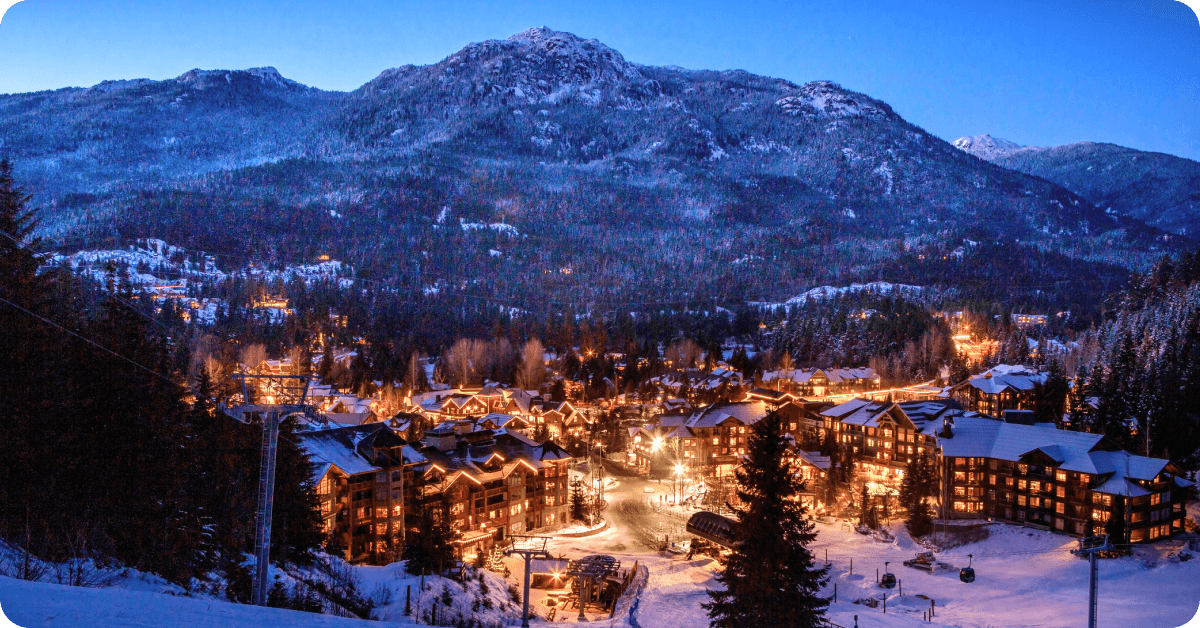
Sprawling across two mountains just north of Vancouver, Whistler Blackcomb is North America's largest ski resort, which commands over 8,100 acres of skiable terrain. But what distinguishes it isn't just scale — it’s how seamlessly it blends laid-back West Coast sensibility with luxury that rivals Europe's most prestigious destinations.
The skiing delivers exceptional variety — 200-plus marked runs, 16 alpine bowls, and three glaciers that offer summer skiing. The infrastructure is equally impressive. The PEAK 2 PEAK Gondola stretches 4.4 kilometres between Whistler and Blackcomb mountains and still holds the world record for the longest unsupported span between cable car towers at 3.024 km (1.88 miles). At its highest point, it soars 436 metres (1,430 feet) above the valley floor — among the greatest clearances of any gondola in the world.
Beyond the slopes, Whistler’s luxury reveals itself quietly. Private chalets, folded into the surrounding forest, offer a sense of seclusion that feels worlds away yet remains minutes from the village. Icons such as the Four Seasons Resort Whistler and Fairmont Chateau Whistler lend gravitas to the high-end accommodation scene, while the open-air hydrotherapy pools of Scandinave Spa and Toptable Group’s celebrated restaurants — from Araxi to Bearfoot Bistro — anchor the resort’s reputation for restorative wellness and confident, ingredient-driven dining.
Why these ski resorts are the most expensive in the world
What unites these destinations isn’t simply price — it’s a shared philosophy. Each operates with an uncompromising commitment to privacy, precision, and experience, expressed through every layer of the resort ecosystem. Infrastructure investment runs deep — perfected slopes maintained to exacting standards, elite ski instructors trusted by royalty and heads of state, seamless helicopter transfers that bypass commercial airports, and concierge teams trained to anticipate needs before they are ever articulated. Dining, wellness, and social rituals receive the same obsessive attention as the skiing itself.
These resorts also function as seasonal convergence points for global influence. Courchevel draws European business dynasties, Aspen attracts Silicon Valley’s architect class, and St. Moritz remains a winter salon where old money and new power comfortably intersect. The social capital generated in these environments — deals discussed over champagne at altitude, partnerships formed between powder runs — often justifies the cost of entry on its own.
Even so, practical considerations persist. Connectivity, in particular, can become an unexpected friction point. International roaming charges at luxury ski destinations are notoriously high, with data fees in Switzerland and France often far exceeding standard rates. The Saily eSIM removes this barrier entirely, offering reliable connectivity across major ski regions without the premium pricing imposed by traditional carriers. Whether coordinating private transfers in Verbier, sharing real-time conditions from Whistler’s backcountry, or managing business remotely from a Gstaad chalet, Saily enables seamless communication at predictable costs.
Getting started is quick. Just download the Saily app on your phone, purchase an eSIM plan you need, and follow the in-app instructions for instant activation.

Stay connected with the Saily eSIM app
Affordable mobile data plans for every journey.


Related articles
13 min read