



SIM card for Mexico in 2026: Best options for tourists and travelers
From the moment you touch down in Mexico, you’ll need mobile data — for maps, ride-hailing apps, or checking WhatsApp before you’ve even left the airport. A SIM card for Mexico is the obvious fix, but whether you go with a local SIM, an eSIM, or roaming will shape both your budget and how fast you get online. This guide covers the local SIM card providers worth knowing, where to buy one, prices, eSIM vs. physical SIM comparison, and how to stay connected without the hassle — including a fast, app-based eSIM option if you’d rather skip the registration queue entirely.

Table of Contents
- Do you need a SIM card for Mexico?
- Best SIM card for Mexico: Local network providers compared
- Telcel SIM card in Mexico
- AT&T Mexico
- Movistar
- Mexico SIM card prices and prepaid plans
- Where to buy a SIM card for Mexico
- At the airport
- Official provider stores
- Convenience stores and OXXO
- Online before you arrive
- A physical SIM card vs. an eSIM for Mexico
- Which SIM card is best for tourists in Mexico?
- Do US SIM cards work in Mexico?
- How to set up your eSIM for Mexico
- Tips for staying connected in Mexico
Do you need a SIM card for Mexico?
If your trip involves navigation, translating menus or signs, booking tours or transport, or simply staying reachable on WhatsApp, then yes, you’ll want reliable data from day one. Public Wi-Fi is available in cafés, hotels, and airports, but it’s inconsistent at best and risky for anything involving logins or payment details.
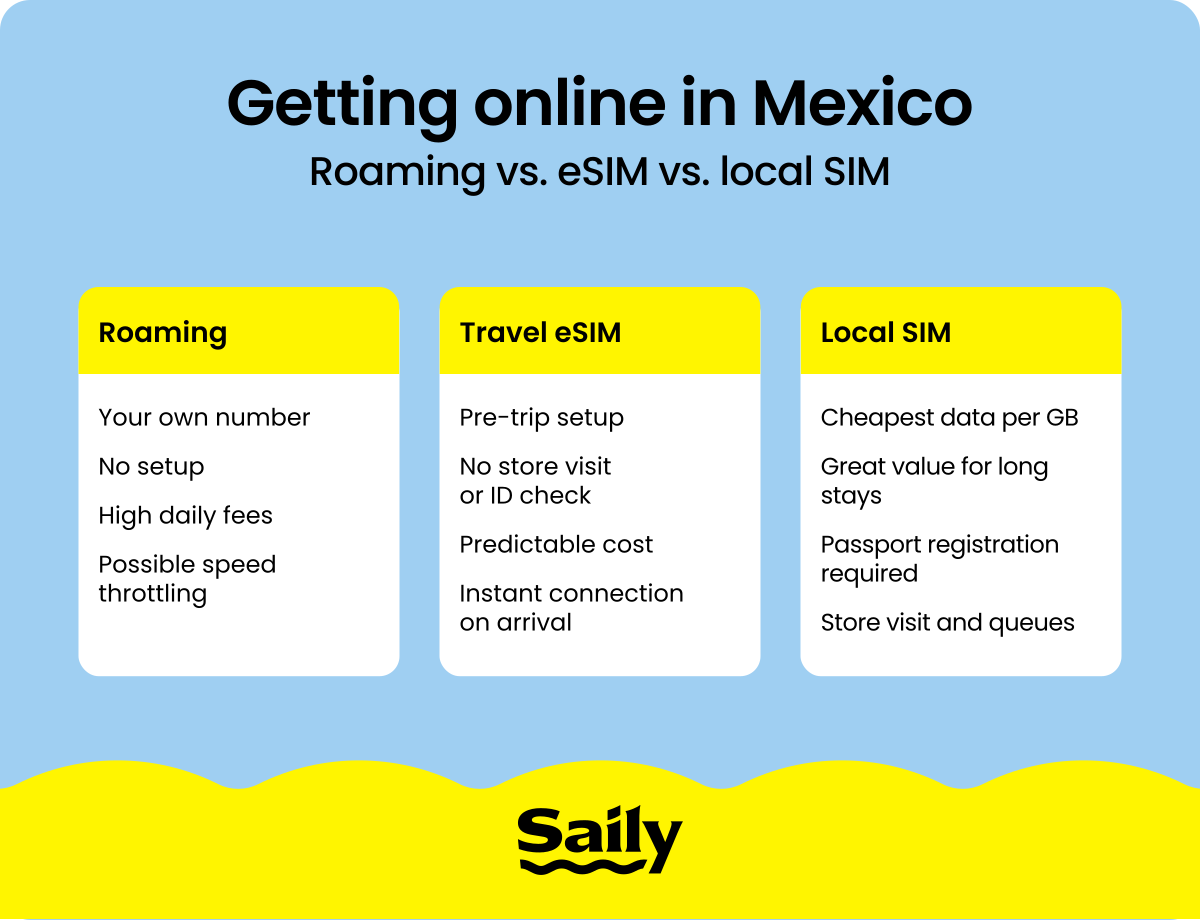
That leaves three main ways to get online: a local physical SIM, an eSIM, or roaming on your home carrier. Local SIMs are cheap, but you’ll need to find a store, show ID, and register — not ideal if you land tired and just want to get to your hotel. Roaming allows you to skip those steps, but carriers often charge a premium for it, especially with heavy data use. An eSIM for Mexico usually strikes the best balance — it doesn’t require a store visit or spending time in long lines, and it’s more affordable than roaming.
If you’d rather not deal with local SIM card registration or roaming fees at all, Saily is worth a look. It’s an app-based eSIM app by Nord Security, the company behind NordVPN, that gets you affordable data across 200+ destinations — no physical SIM or QR code scanning required.
Best SIM card for Mexico: Local network providers compared
Mexico’s mobile market is dominated by three networks: Telcel, AT&T México, and Movistar. Each offers prepaid plans that are straightforward enough for a short-term visitor to set up, but coverage isn’t identical between the three providers. Mexico City consistently ranks among the country’s best-served areas for mobile coverage, while more rural parts of states such as Chiapas and Oaxaca can be noticeably patchier across all three networks — worth keeping in mind if your trip goes beyond the usual resort circuit. All three options below are prepaid (prepago), require no long-term contract, and are easy for tourists to buy and use.
Telcel SIM card in Mexico
If coverage is your top priority, a Telcel SIM card is usually the safest choice. As Mexico’s largest mobile network, Telcel offers the best coverage across the country, which makes a difference if you’re venturing out of the major cities. If your list of things to do in Mexico includes smaller towns, beaches, or road trips to remote areas, it’s hard to go wrong with a Telcel Mexico prepaid SIM card.
Most travelers go with an Amigo Sin Límite package, a prepaid system that offers a generous data allowance, unlimited calls and texts within Mexico, and bundles for apps like WhatsApp, Facebook, and Messenger. You can buy a Telcel SIM card in Mexico at a Telcel store, airport kiosk, or authorized retailer, but you’ll need to present your passport or other ID before it can be activated. It’s a straightforward process, but staff at smaller shops may not speak much English, so it helps to know which package you want before you walk in.
AT&T Mexico
An AT&T Mexico prepaid SIM card is a solid choice if you’ll be spending most of your trip in cities or crossing over from the US. Its strongest coverage is concentrated in major urban centers and the northern half of the country, with reliable service in places like Mexico City, Guadalajara, Monterrey, and many border cities. Coverage becomes less consistent as you head into more rural or southern regions, although AT&T’s domestic roaming agreement with Telcel helps extend coverage in some areas.
Like Telcel, AT&T’s prepaid SIM cards work on a recharge model. Top up your balance and you’ll get a set amount of data, calls, and texts that’s valid for a certain number of days. Higher-value recharges usually include calls to the US and Canada at no extra cost, a handy bonus if you’re keeping in touch with family or friends back home.
Movistar
Movistar is the budget-friendly option of the three, and it works well if you’re staying mostly in urban areas and want to keep your trip to Mexico costs down. Say you’re on a short trip centered on Mexico City or another major hub — a Movistar prepaid SIM card for Mexico will usually give you all the data you need for maps, messaging, and sharing your enviable photos on social media.
The catch is reach. Movistar’s network starts to thin out once you’re outside city limits, and it doesn’t come close to Telcel’s presence in rural or remote areas. For a beach-and-city itinerary that stays close to well-populated areas, though, it’s a solid way to stay connected without paying a premium.
Mexico SIM card prices and prepaid plans
Buying a Mexico prepaid SIM card won’t break the bank, but it’s not quite the bargain it used to be. In practice, most travelers can expect to spend around MXN 100-300 (roughly US$5-17) to get connected, whether that’s buying a SIM card with an included prepaid package or purchasing a SIM and adding a recharge. The price difference between a local SIM card and an eSIM is often smaller than you’d expect, especially if you’re only visiting for a week or two, so it’s worth weighing up convenience as well as cost.
Unlike a monthly phone plan, prepaid packages stay active for a set number of days. Once the validity period runs out or you’ve used your high-speed data allowance, you’ll need to recharge to keep going. Some providers let you keep browsing at reduced speeds after your data runs out, and others cut you off until you buy another package, so always check the specifics.
Carriers update their prepaid offers often, so treat the prices and data allowances below as a guide rather than an exact price list.
Provider | Sample recharge | Approx. USD | Sample data | Validity |
|---|---|---|---|---|
Telcel | MXN 300 | ~US$17 | 5.5 GB | 30 days |
AT&T México | MXN 200 | ~US$11 | 12 GB | 30 days |
Movistar | MXN 100 | ~US$5 | 10 GB | 30 days |
These are representative prepaid packages only. Prices, included data, and promotions change regularly, so check the provider’s latest offers before purchasing.
If you’re searching for a Mexican SIM card with unlimited data, read the fine print first. Most prepaid “unlimited” plans don’t mean unlimited high-speed internet. The same caution applies to international SIM cards with unlimited data — they usually mean unlimited access to select apps, like WhatsApp or Facebook, or data that slows down once you’ve burned through your high-speed allowance. If you’re planning to stream video, tether a laptop, or work remotely, check the fair use policy before you commit.
Where to buy a SIM card for Mexico
You won’t have any trouble finding a SIM card for Mexico. You can get one at the airport, at an official carrier store, at a convenience store like OXXO, or online before you even leave home. Just keep in mind that you’ll need to show a passport or other valid ID to register a local SIM before it can be activated — it’s a legal requirement.
At the airport

Airport kiosks are a good option for travelers who want a physical SIM card as soon as they land. You’ll find telecom retailers or mobile phone kiosks at major international airports such as Mexico City International Airport and Cancún Airport so you can connect to maps and messages before you leave the terminal. The trade-off is price. Airport SIM cards often cost more than those sold elsewhere, and lines can be long if a string of international flights has just touched down. If you’re looking to save money, it’s usually worth waiting until you reach a carrier store in town or setting up an eSIM before you travel.
Official provider stores
If you already know which network you want, visiting an official Telcel, AT&T México, or Movistar store is your best bet. You’ll have access to the full range of prepaid plans, and staff can usually help activate your SIM and complete the registration process.
Official stores are a good choice if you want advice on which package best suits your trip or need help getting it set up. Just be aware that opening hours vary by location, and outside major tourist areas, English-speaking staff aren’t always guaranteed.
Convenience stores and OXXO
Looking for a convenient place to top up your prepaid plan? Look no further than a convenience store. Chains like OXXO are on nearly every corner, and many stores sell prepaid SIM cards and recargas (top-ups), which makes them a handy option once you’re a few days into your trip and just need more data.
The catch is that not every OXXO can register and activate your SIM on the spot. If your SIM hasn’t already been activated, you may still need to visit an official carrier store before you can start using it. That’s why it’s better to think of OXXO as the place to recharge your SIM, not necessarily the place to buy and activate one.
Online before you arrive
If you’d rather not deal with any of the above, you can sort out your connectivity before you even board your flight. Ordering a physical SIM online means waiting on shipping, which rarely makes sense for a short trip — but an eSIM sidesteps that process entirely. You buy and install it through an app, it’s active before you land, and because it’s tied to your phone rather than a physical chip bought in-country, you avoid a store visit, queues, and scrambling for ID at an airport counter after a long flight. For travelers who want to land with their internet connection already sorted, it’s the simplest option on this list.
A physical SIM card vs. an eSIM for Mexico
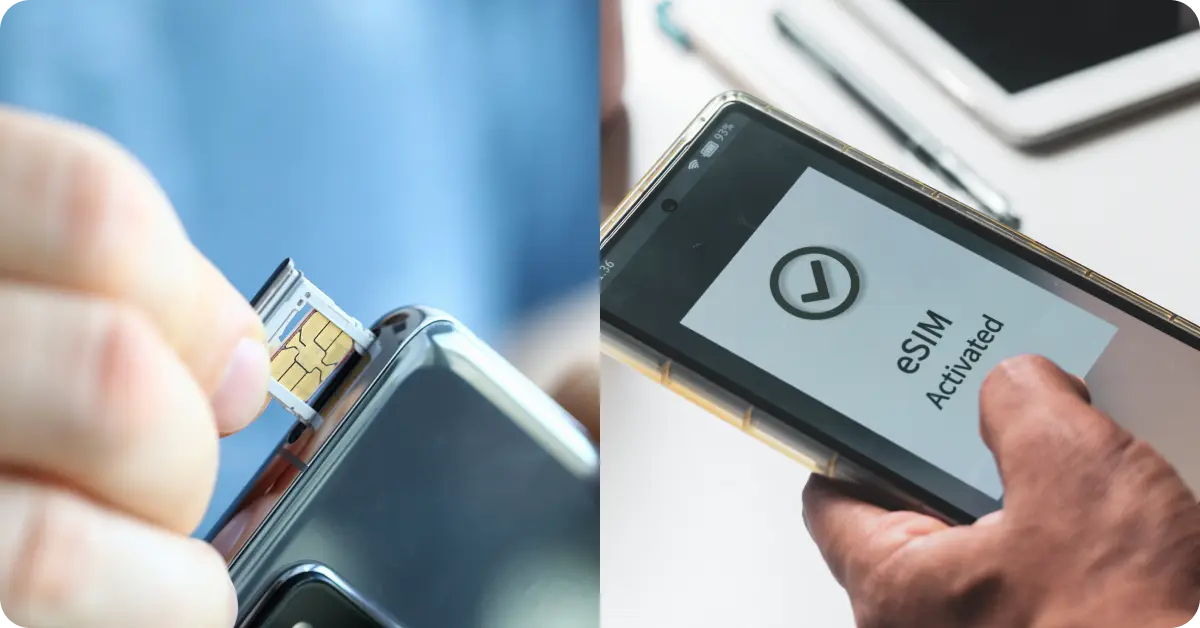
An eSIM is a digital SIM card built directly into a device. These days, they’re widely supported — most recent iPhones and major Android models support eSIM technology. Unlike a physical SIM card, you don’t need to visit any stores, register your ID, or hunt around for a tiny pin to open your SIM card tray. An eSIM is simply set up via an app before you travel, so you’re connected from the moment you land.
If you’re weighing a Mexico eSIM against a physical SIM, price is one area where a local SIM can still have an edge — and even then, it usually works best for longer stays. For a month or more in Mexico, a local prepaid SIM’s recharge rates can work out cheaper per gigabyte than an eSIM plan. For shorter trips, though, that advantage disappears once you factor in the time spent finding a store, standing in line, handing over your passport, and getting the SIM activated. An eSIM skips all of that entirely.
This is where the Saily eSIM app comes in. It was built by Nord Security, the team behind NordVPN, so its reputation for reliability is well earned. Setup happens entirely in the app — no QR codes or activation codes to deal with — and plans are priced to actually make sense for a short trip. You also get security tools no physical SIM offers — a virtual location to browse as if you’re in one of 115+ locations, an ad blocker, and web protection that flags malicious sites before you land on them.
Saily is data only by default, so it doesn’t include a traditional phone number. If you need one, you can add a US-based number for making and receiving calls while continuing to use Saily for your mobile data.
Which SIM card is best for tourists in Mexico?
The best SIM card for Mexico depends on where you’re traveling and how you like to travel. Some people want the widest possible coverage, others care more about convenience or keeping costs down.
In general, Telcel is the best choice if coverage is your top priority, especially outside Mexico’s biggest cities. AT&T México is an excellent all-around option for city breaks and popular tourist destinations, while Movistar offers good value if you’re staying in urban areas and are on a tight budget. If convenience matters most, a Mexico eSIM lets you skip the registration process and get set up before you even arrive.
Still not sure which option suits you best? Here’s a quick guide based on the kind of trip you’re planning:
Beach vacation. AT&T México or Movistar should have you covered. If you’re sticking to popular beach destinations and nearby towns, either network should provide reliable coverage without paying for Telcel’s wider rural network.
Urban exploration. AT&T México is a great fit if your itinerary revolves around places like Mexico City, Guadalajara, Monterrey, or Cancún. It offers strong urban coverage and competitive prepaid plans.
Road trip. Telcel is your safest choice. Its extensive coverage means you’re more likely to stay connected as you drive between destinations or venture beyond the usual tourist trail.
Remote work. It depends on how long you’re staying. If you’ll be in Mexico for several weeks or months and use a lot of data, a local Telcel SIM can offer better long-term value. For shorter stays, an eSIM gives you the flexibility to top up or switch plans without tracking down a store, along with security features a standard SIM doesn’t include.
Just want the easiest option? A Mexico eSIM is hard to beat. You skip a store visit, line, and passport check at a counter. You can get everything set up before you leave home and spend your first hour in Mexico exploring — not waiting in line at a phone shop.
Do US SIM cards work in Mexico?
Yes, many US carriers let you use your existing SIM card in Mexico. Providers like T-Mobile and AT&T include Mexico in many of their plans, so you may be able to use your regular data, calls, and texts without changing SIM cards. That said, it’s still worth checking your carrier’s roaming policy before you travel because the amount of high-speed data included, possible daily fees, and speed restrictions vary between plans.
If your plan doesn’t include Mexico, international roaming can get expensive fast. Some phone providers charge daily roaming fees, others charge pay-per-use rates that add up surprisingly quickly. Even plans that advertise roaming in Mexico may reduce your speeds after you’ve used a certain amount of data. That’s not ideal when you’re relying on your phone to get around Mexico.
If you’d rather know exactly what you’ll pay before you leave, a Mexico eSIM is a predictable alternative. You simply pay upfront for the data you need, so there are no surprise roaming charges to worry about.
How to set up your eSIM for Mexico
Setting up a Mexico eSIM takes only a few minutes, and you can do so from your couch before you’ve even packed. You don’t need to wait for a SIM to arrive in the mail, scan a QR code, and keep track of activation codes. The entire setup is done through the Saily app.
Download the Saily app before your trip.
Choose a data plan for Mexico (or a regional or Global plan if you’re visiting multiple countries).
Install your eSIM in the app by following the on-screen prompts.
Select the Saily eSIM as your mobile data line and turn on data roaming for that eSIM in your phone’s settings.
Enjoy your connection. The Saily eSIM activates automatically the first time it connects to a supported network in the destination country.
If you run into any issues along the way, Saily offers 24/7 live chat and ticket support, so help is always available. It also holds a 4.7 rating on Trustpilot from tens of thousands of reviews, with customers highlighting the easy setup and responsive support.
If your trip doesn’t stop in Mexico, Saily’s regional and Global plans cover 200+ destinations on a single eSIM, so you can move between countries without buying a new plan each time you cross a border — handy if you’re also comparing SIM card options in Costa Rica or other Latin American stops on the same itinerary.
Tips for staying connected in Mexico
A little preparation goes a long way. These simple travel tips will help you avoid the most common connectivity headaches while you’re traveling:
Check that your phone supports eSIM technology. Most recent iPhones and major Android models support eSIM technology, but it’s worth a quick check before you rely on one for your trip.
Download offline maps. Even if you have mobile data, downloading offline Google Maps for the areas you’ll visit gives you a backup if your signal drops or you’re exploring somewhere more remote.
Be realistic about your data needs. If you’ll mostly be using maps, messaging apps, and the occasional web search, you won’t need a huge data plan. If you intend to upload lots of photos, stream videos, or work remotely, it’s worth choosing a larger package from the start.
Keep your passport handy if you’re buying a local SIM. Mexico requires ID registration for local SIM cards, so you’ll need it on hand at the counter.
Save important numbers offline. Store Mexico’s emergency number and your accommodation’s address somewhere you can access without data, just in case. It’s also worth reading up on whether Mexico is safe to visit before you travel so you know what to expect and who to contact in an emergency.
Sort out your connection before you land: If you’d rather skip the queues and the passport-at-the-counter routine altogether, Saily lets you set up an eSIM from the app before you even leave home. Plans are affordable, come with optional security extras like an ad blocker and web protection, and the eSIM can feature a US-based phone number add-on if you want to make and receive calls (not just data). And if Mexico is just one of your stops, Saily’s Global eSIM plans cover 200+ destinations, while the Ultra plan offers generous data, premium security features, and even airport lounge access, making it a great choice for frequent travelers.
Need data in Mexico? Get an eSIM!

1 GB
7 days
US$4.993 GB
30 days
US$9.995 GB
30 days
US$14.99
We do our best to keep everything accurate and up to date, but eSIM service provider prices, plans, and features can change quickly. If you spot something that seems outdated or incorrect, feel free to get in touch with us at [email protected] — we’d really appreciate the heads-up!
FAQ
Telcel offers the widest coverage, including rural and remote areas, while AT&T México performs strongest in cities and the north. Travelers who want to skip registration queues often prefer a Mexico eSIM that installs before arrival.
Some US carriers include Mexico in cross-border plans, but speeds may be throttled after a certain data threshold, and roaming fees can add up outside those plans. Check your carrier’s terms before you travel or use a prepaid eSIM for predictable pricing.
Yes, many OXXO stores sell prepaid SIM cards and recargas (top-ups), making them a convenient place to buy credit or pick up a SIM once you’re in Mexico. Depending on the store and carrier, you may still need to complete ID registration and activation at an official provider store before you can use it.

Always connected, always on course
Connect instantly with a Saily eSIM and enjoy effortless internet access.

Related articles