





Best things to do in Guadalajara: Ultimate travel guide
If you're planning to visit western Mexico, Guadalajara should be on your radar. This lively city is packed with historical sites, bustling markets, and delicious food. Our guide covers all the most exciting things to do in Guadalajara — must-see landmarks, coolest neighborhoods, family activities, and Guadalajara day trips.
Table of Contents
- Where is Guadalajara located?
- How to get to Guadalajara
- Top things to do in Guadalajara's historic center
- Guadalajara Cathedral (Basílica de la Asunción de María Santísima)
- Instituto Cultural Cabañas (Hospicio Cabañas): A UNESCO World Heritage Site
- Templo Expiatorio del Santísimo Sacramento
- Teatro Degollado: Neoclassical architecture at its finest
- Best markets and shopping in Guadalajara
- Mercado Libertad
- Tonalá Artisan Market
- Unique things to do in Guadalajara
- Attend a Lucha Libre wrestling match
- Visit a Lienzo Charro in Charrería Arena
- Experience Mariachi music at Plaza de los Mariachis
- Cool things to do in Guadalajara
- Explore Tlaquepaque and the Pueblo Mágico
- Discover Sergio Bustamante's surrealist art gallery
- Learn about the city’s history at the Panteón de Belén
- Must-try food experiences in Guadalajara
- Tequila tastings
- Birria: Guadalajara's signature dish
- Tortas ahogadas and other local specialties
- Taste local drinks like cantaritos and pulque
- Things to do in Guadalajara at night
- Get drinks on Avenida Chapultepec
- Explore Colonia Americana
- What to do in Guadalajara with kids?
- Zoológico Guadalajara and Barranca de Huentitán
- Acuario Michin Guadalajara
- Best day trips from Guadalajara
- Tequila Town
- The circular pyramids at Guachimontones
- Lake Chapala and Ajijic
NOTE: Throughout February and March, 2026, Guadalajara and the wider Jalisco area experienced high rates of gang-related violence and civil unrest. This is still an evolving situation, and US authorities are currently advising all US citizens to "reconsider travel” to Jalisco “due to terrorism, crime, and kidnapping.” This article should be read in that context, with an understanding that you should only visit the area when it is safe to do so.
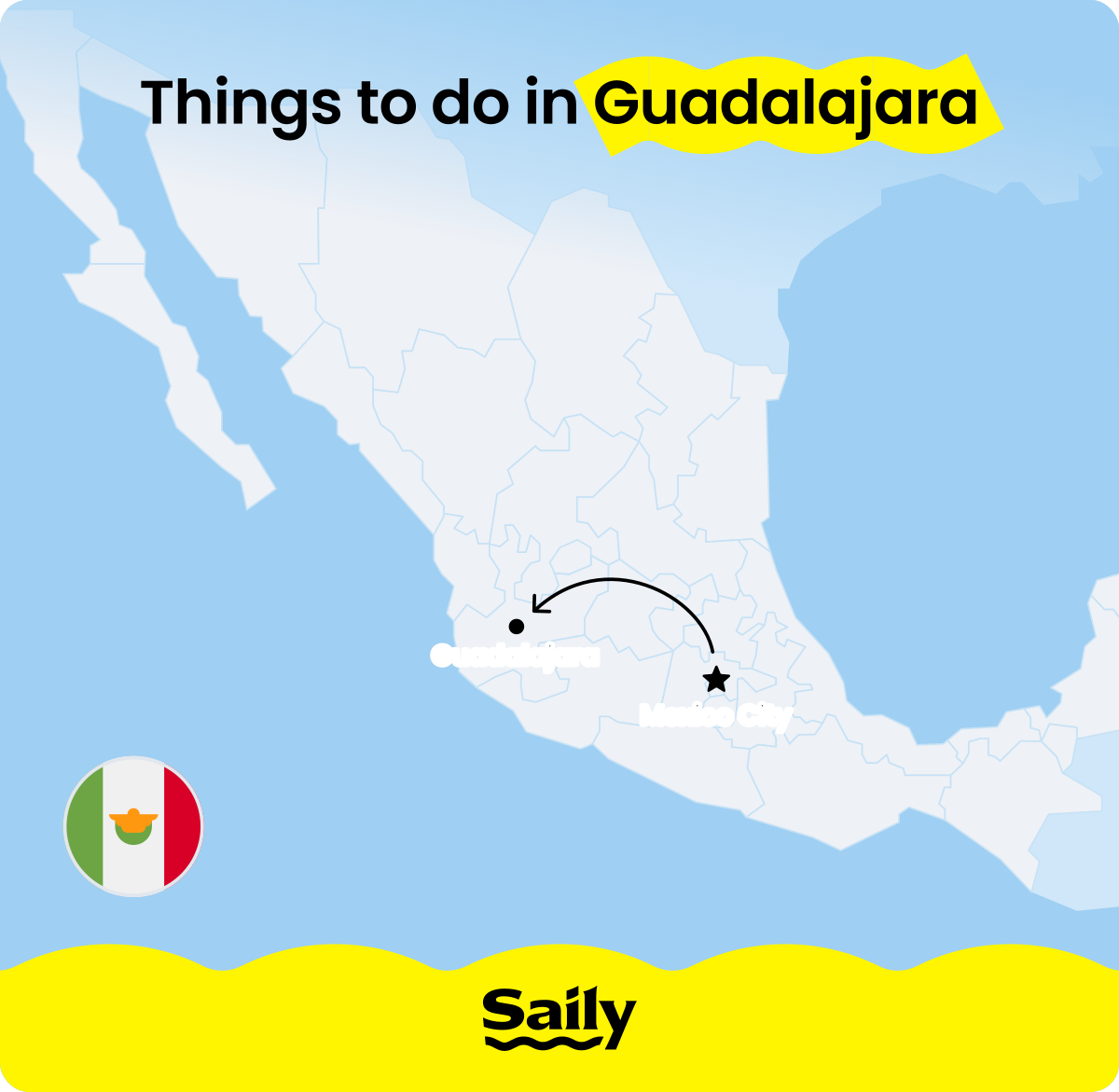
Where is Guadalajara located?
Guadalajara is the capital of the State of Jalisco in Mexico, where four games in the 2026 FIFA World Cup are to be held. The city sits on a plateau high above sea level, which is why the climate feels so much more forgiving than Mexico’s humid coastal resorts. Summers are warm but rarely overwhelmingly so, and can be a lot more comfortable than those in Cancún or Puerto Vallarta.
Try to visit between October and December, when the rainy season has eased up, temperatures sit comfortably in the low-to-mid 20s°C, and the city is at its most festive leading into the holidays. February through April is also pleasant if you want to avoid the crowds that the October festival season brings. Guadalajara hosts the massive Festival Internacional de Cine in late April, which is great fun, but very busy.
To prepare for your trip, check out our overseas travel checklist and make sure you’re packing all the essentials. Once that’s done, it’s time to plan out some of the sights, landmarks, and food spots you want to enjoy in Guadalajara.
How to get to Guadalajara
Most visitors fly into Guadalajara International Airport (GDL), which sits about a half-hour drive from the city center in normal traffic (expect a much longer, slower drive during rush hours). Uber works well at the airport and is almost always the easiest option. Just be aware that taxi touts might make a beeline for you in arrivals, and they charge considerably more.
🚗 By car: Drive from Mexico City to Guadalajara via Highway 15D. It takes around 5–6 hours in normal traffic.
🚆 By train: No direct passenger trains, so this isn’t a realistic option.
🚌 By bus: Hop on a long-distance coach from Mexico City. Expect around 6–7 hours on the road.
✈ By plane: Fly into Miguel Hidalgo y Costilla International Airport (GDL). The flight takes about 1 hour if you’re flying in from Mexico City.
Before you set off, it’s also worth thinking about how you’ll stay connected once you arrive. Many travelers prefer to use an eSIM in Mexico instead of hunting for local SIM cards, since it’s quick to set up and works as soon as you land. eSIM apps are convenient and flexible, and help you avoid roaming charges — but will your phone work in Mexico? Checking network compatibility before your trip can save you a lot of frustration later.
Top things to do in Guadalajara's historic center
Guadalajara’s historic center is always worth visiting. Within a very compact area, you’ll find grand plazas, colonial-era buildings, and famous cultural landmarks. Wander around on foot and soak up the atmosphere — wherever you go, you’ll find something worth seeing.
Guadalajara Cathedral (Basílica de la Asunción de María Santísima)
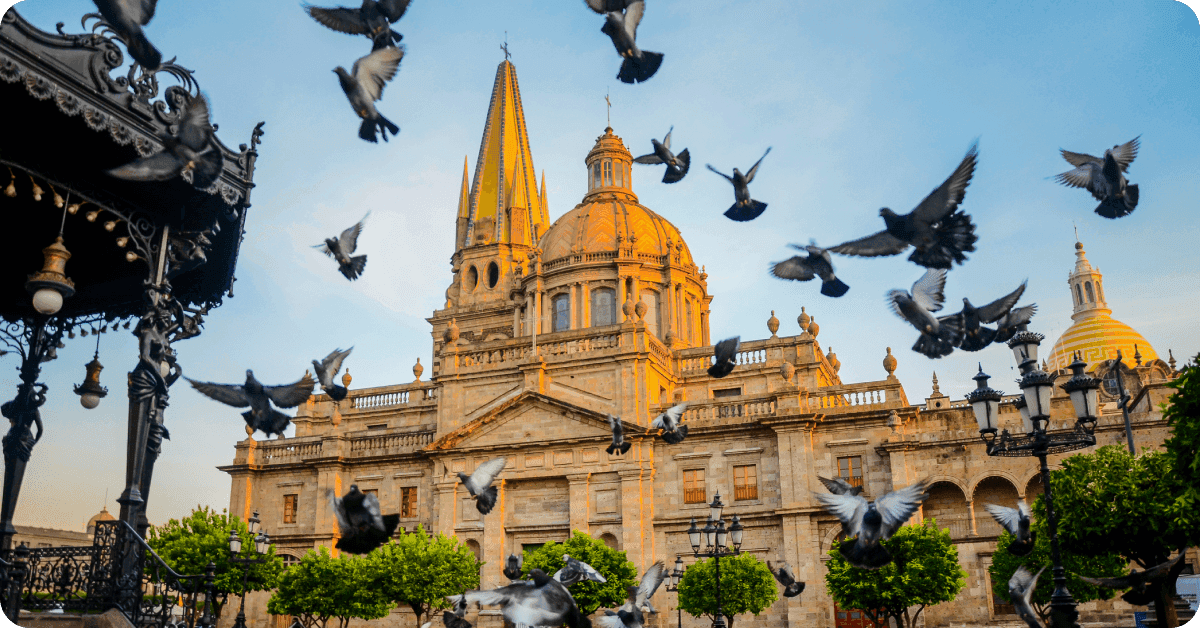
Guadalajara Cathedral is one of the more architecturally interesting landmarks in Mexico — construction ran from 1561 to 1618, long enough that Gothic, Baroque, and Neoclassical influences all ended up colliding inside. The famous yellow twin spires are 19th-century replacements. After earthquakes in 1818 and 1849 destroyed previous versions, the current Neo-Gothic towers were completed in 1854.
The preserved remains of Santa Inocencia — a young martyr usually displayed in a glass case near one of the side chapels — may not be available to view during the first half of 2026, but check in advance, in case that’s changed. Outside, the cathedral faces Plaza de Armas, one of four interconnected plazas at the heart of the district, with the Government Palace and Degollado Theater both nearby.
Instituto Cultural Cabañas (Hospicio Cabañas): A UNESCO World Heritage Site
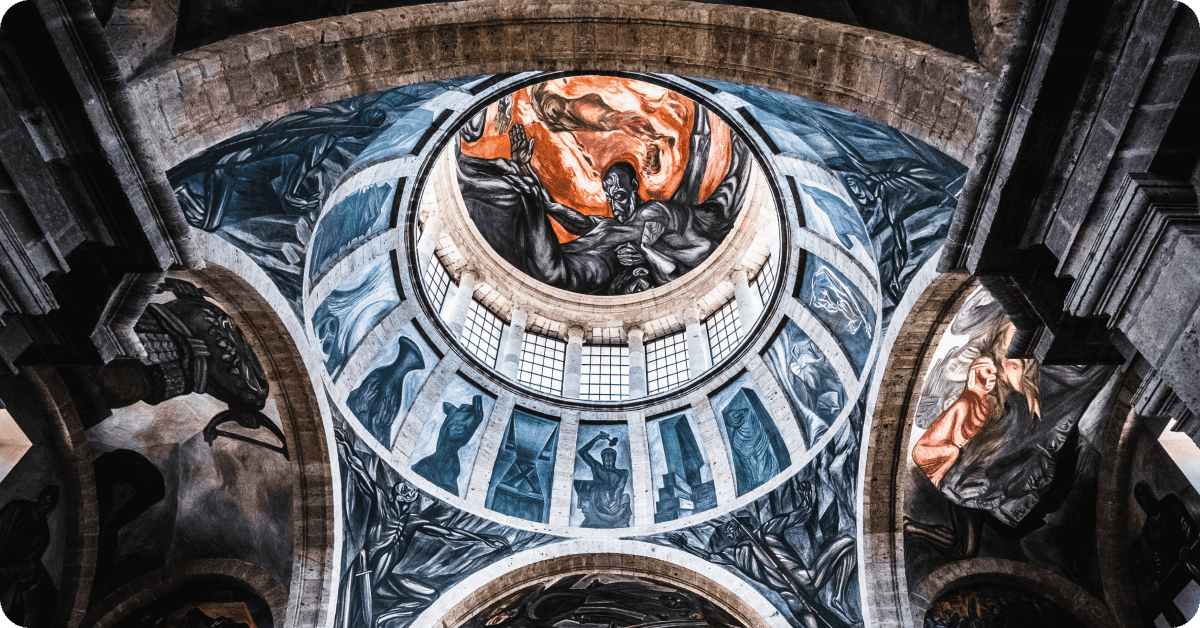
The Instituto Cultural Cabañas is a UNESCO World Heritage Site and Guadalajara's most significant cultural landmark. The building is a vast neoclassical hospice from the early 1800s, and it’s very visually impressive, but the real draw is José Clemente Orozco's murals from the 1930s. The ceiling of the Tolsa Chapel is the big draw here — an intense vision of conquest and human suffering that rewards quiet contemplation. While the building is open all week, entry is free on Tuesdays.
Templo Expiatorio del Santísimo Sacramento
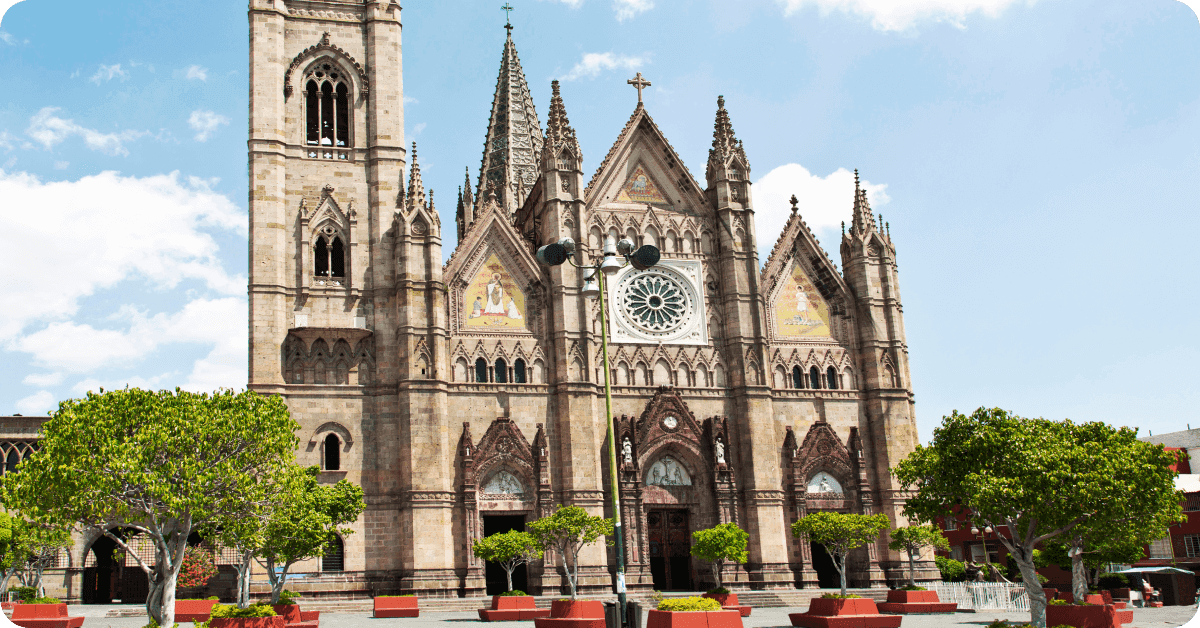
Templo Expiatorio is worth seeking out for its Neo-Gothic exterior. The building is a mass of pointed arches and ornate stonework, and the interior, where beautiful stained glass windows throw colored light across every surface, is breathtaking.
Teatro Degollado: Neoclassical architecture at its finest
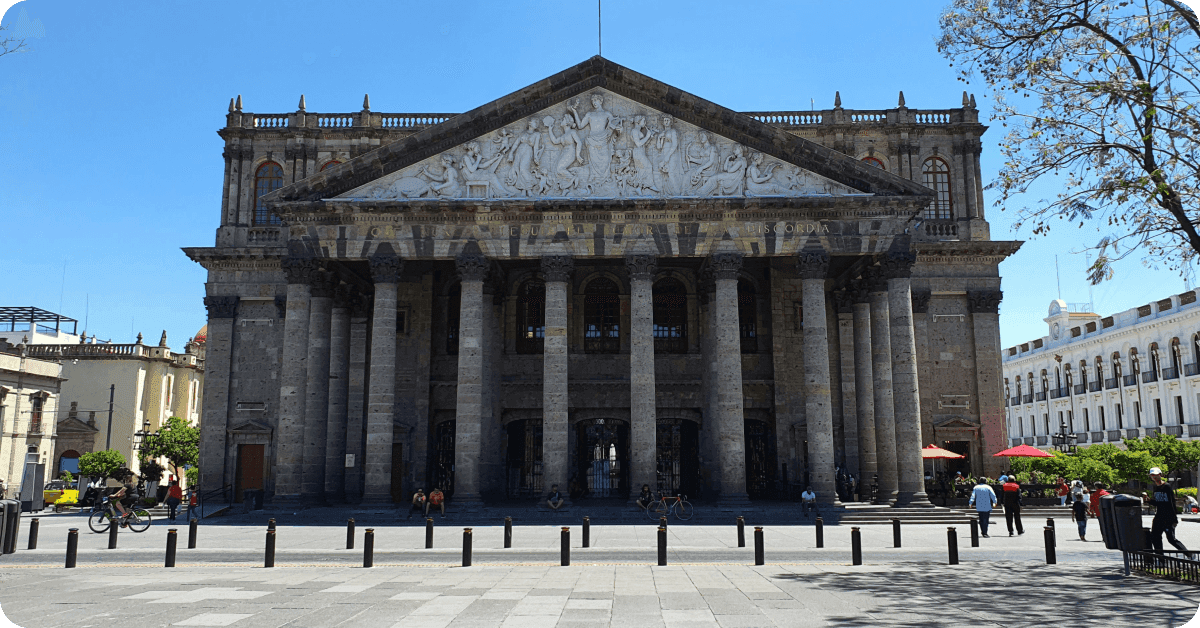
Teatro Degollado is a beautifully preserved 19th-century theater and one of the finest in Latin America. If there’s no performance scheduled, you can usually walk inside for free. Otherwise, it hosts opera, ballet, mariachi concerts, and cultural events throughout the year.
Best markets and shopping in Guadalajara
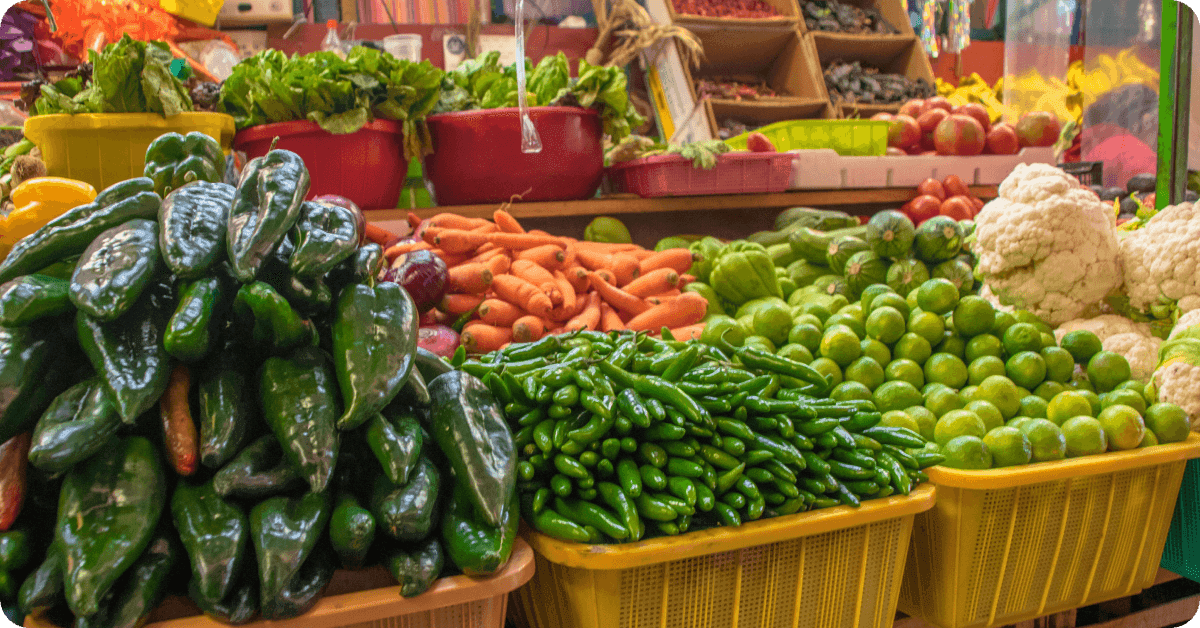
Markets are a huge part of daily life in Guadalajara. For a local, less touristy experience, Mercado Medrano is where tapatíos (as Guadalajara locals are known) actually do their weekly shopping — but if you only have time for one, head for San Juan de Dios.
Mercado Libertad
Mercado Libertad is the largest indoor market in Latin America — three floors packed with leather goods, electronics, spices, clothing, souvenirs, and food stalls stretching in every direction. For food, skip the stalls near the entrance and follow the crowds deeper in for tortas ahogadas and pozole. Don’t bother with a shopping list — just show up and let the flow of the crowd move you from one stall to the next.
Tonalá Artisan Market
Tonalá is a short drive southeast of the city and worth the trip if you have any interest in Mexican crafts. The town has built a reputation as one of the best places in the country to buy ceramics, blown glass, hand-painted pottery, and handmade furniture — much of it produced by local artisans rather than imported and repackaged for tourists. Thursdays and Sundays are market days, when the main streets fill with hundreds of vendors and the whole town becomes one long browsing session. Prices are reasonable and bargaining is expected, so don't feel awkward opening a negotiation.
Unique things to do in Guadalajara
Guadalajara's real personality reveals itself less in its landmarks than in its living traditions. A city that gave the world tequila and mariachi takes both very seriously — and there are few better places on earth to experience either at the source.
Attend a Lucha Libre wrestling match
Arena Coliseo Guadalajara hosts lucha libre twice a week — typically Tuesdays and Fridays. For the uninitiated, it's Mexican professional wrestling, but faster, more acrobatic, and considerably more theatrical. Expect elaborate masks, passionate crowds, and a pace that doesn't give you much time to be cynical about it. Tickets are cheap and available at the door or through Ticketmaster.
Visit a Lienzo Charro in Charrería Arena
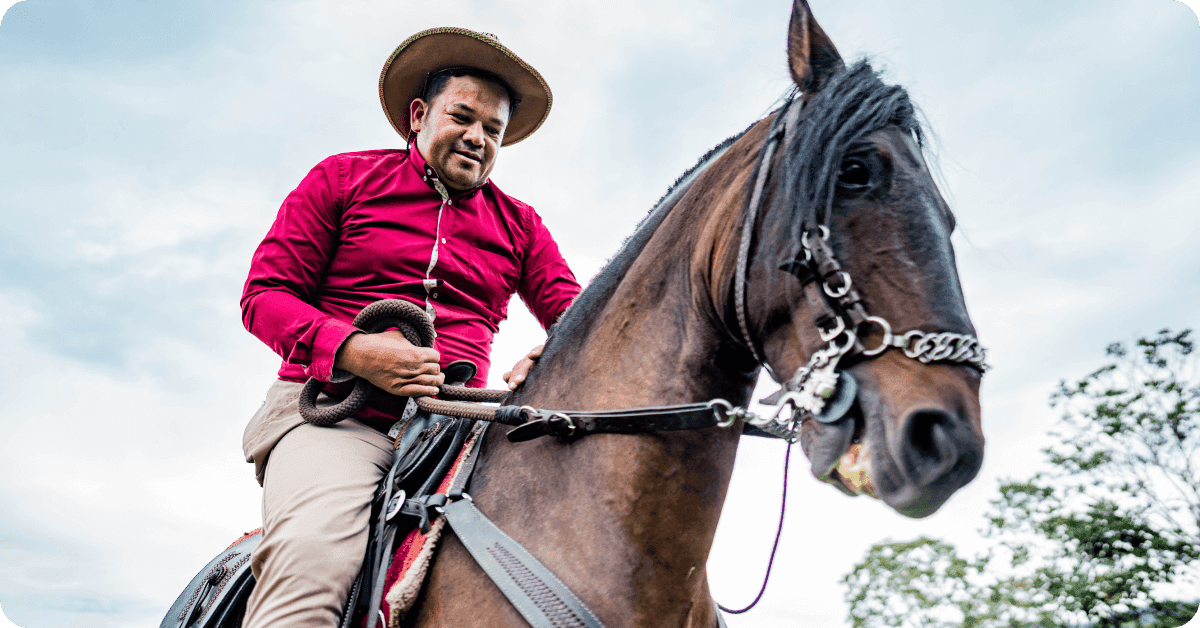
Charrería is Mexico's national sport — a formal equestrian discipline rooted in the horsemanship traditions of the old hacienda era. The term covers everything from precision rope work to horseback riding feats. It's a world away from a rodeo, despite some superficial similarities. Lienzo Charro de Jalisco is the oldest dedicated arena in the country and the natural place to watch it. Sunday competitions are the main event, and some venues offer beginner lasso lessons if you fancy making a fool of yourself in the best possible way.
Experience Mariachi music at Plaza de los Mariachis
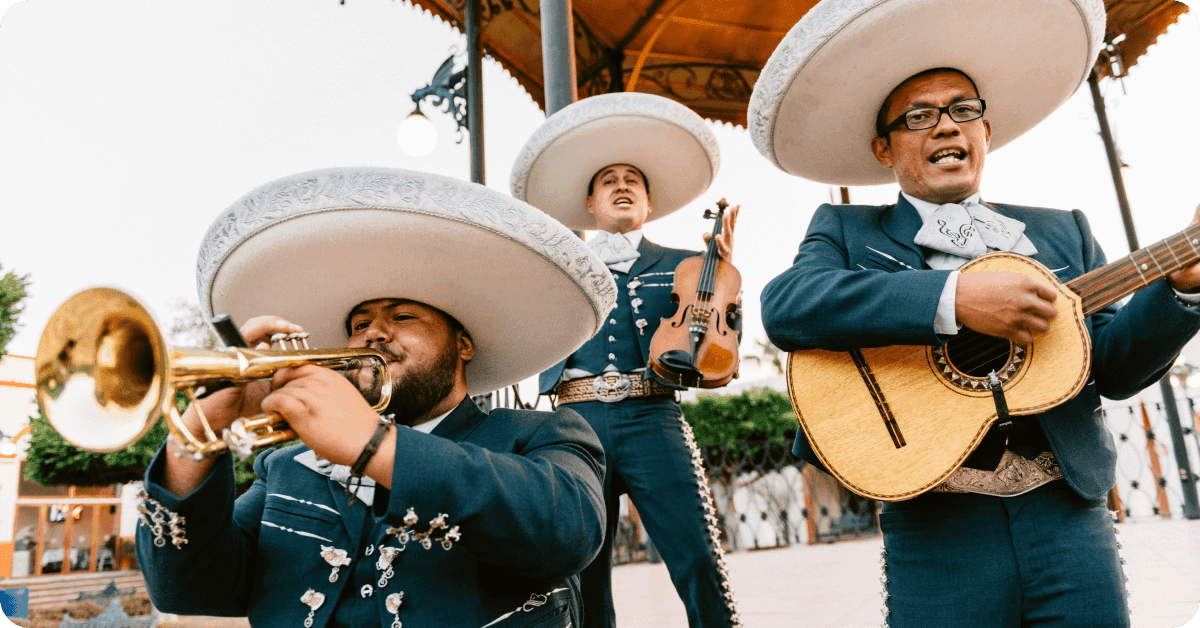
Mariachi music was born in Jalisco, and Plaza de los Mariachis is where that heritage gets its noisiest, most joyful expression. By night the plaza fills with competing bands in full charro outfits playing for crowds that spill out from the surrounding restaurants. You can request a song for a fee, or simply plant yourself with a drink and let the noise wash over you. Touristy? Yes. Great fun? Also, yes.
TIP: Combine your visit with nearby Mercado San Juan de Dios for food and shopping.
Cool things to do in Guadalajara
Guadalajara has developed a genuinely thriving creative scene over the past decade, much of it concentrated in a handful of neighborhoods that reward aimless wandering — craft galleries, independent coffee shops, street art, and colonial architecture all competing for your attention. If you've written off Mexican cities as purely historical destinations, this side of Guadalajara tends to change that fairly quickly.
Explore Tlaquepaque and the Pueblo Mágico
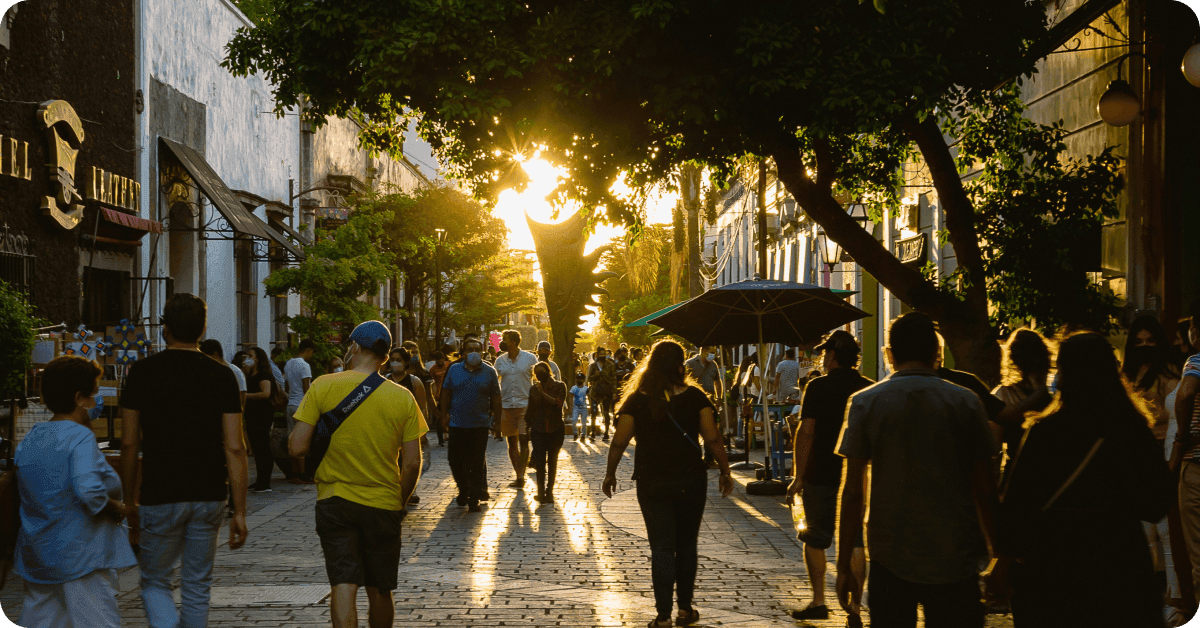
Tlaquepaque holds "Pueblo Mágico" status and earns it. Calle Independencia is lined with art galleries, craft boutiques, and cafés in handsome colonial buildings — the kind of street that swallows a half-day without you noticing. The craft scene is a step up from typical souvenir fare: blown glass, Talavera ceramics, and hand-carved furniture all well represented. Metro Line 3 gets you there quite cheaply, or you can grab an Uber if you're planning to shop.
Discover Sergio Bustamante's surrealist art gallery
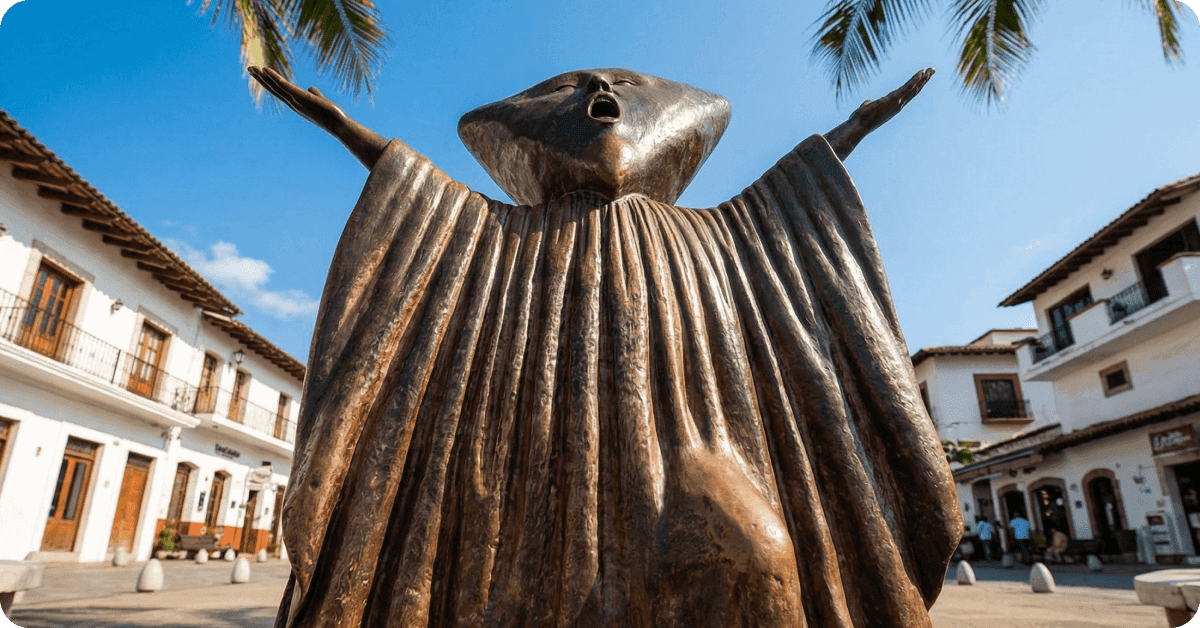
Sergio Bustamante's gallery is one of Tlaquepaque's highlights — his bronze sculptures feature elongated, triangular-headed figures in strange, surreal scenarios. The outdoor garden and patio are filled with oversized pieces that make it feel less like a conventional art show and more like a trip through Bustamante’s personal dreamscapes.
Learn about the city’s history at the Panteón de Belén
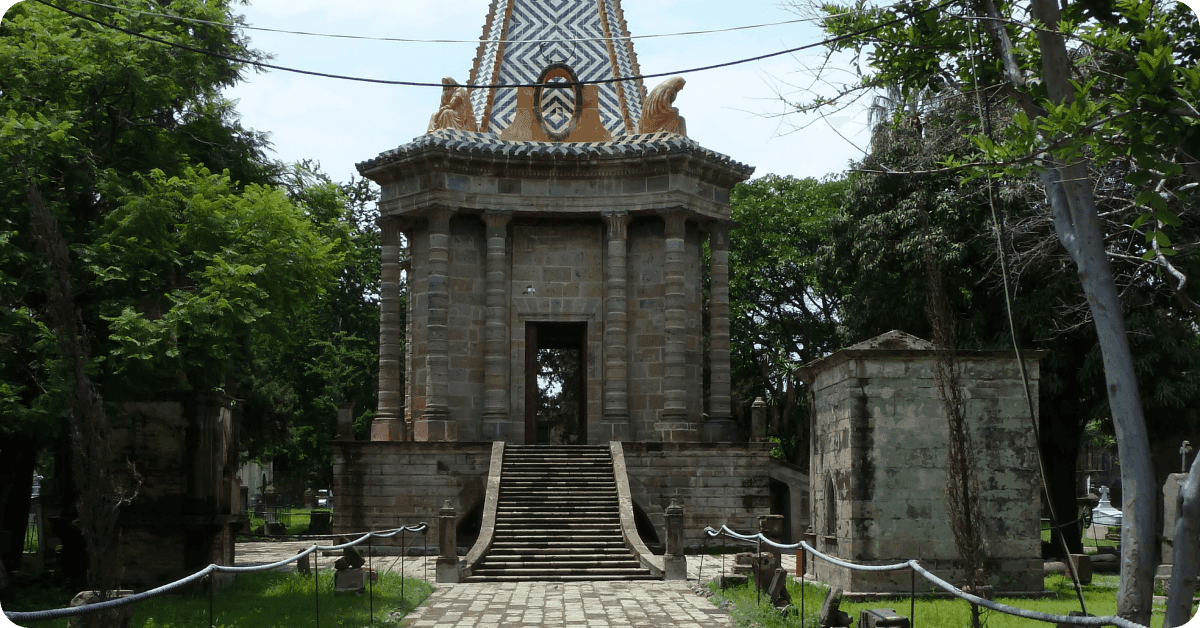
Panteón de Belén is a 19th-century cemetery that served as the city's main burial ground during cholera outbreaks, and has accumulated some suitably dark folklore — including the local legend of a vampire buried within its walls, his coffin pierced with a metal spike. The cemetery itself is genuinely atmospheric, with elaborate above-ground tombs and mature trees growing through the stonework. Day of the Dead in early November is the obvious time to visit, when guided tours, theatrical performances, and art installations make it one of the more memorable ways to experience the holiday.
Must-try food experiences in Guadalajara
Guadalajara doesn't get as much culinary attention as Mexico City, but it probably deserves to. Jalisco is the birthplace of birria, tortas ahogadas, and pozole rojo, and street stalls, market benches, and sit-down restaurants all compete on surprisingly level terms — some of the most memorable meals here cost less than a bus fare.
Tequila tastings
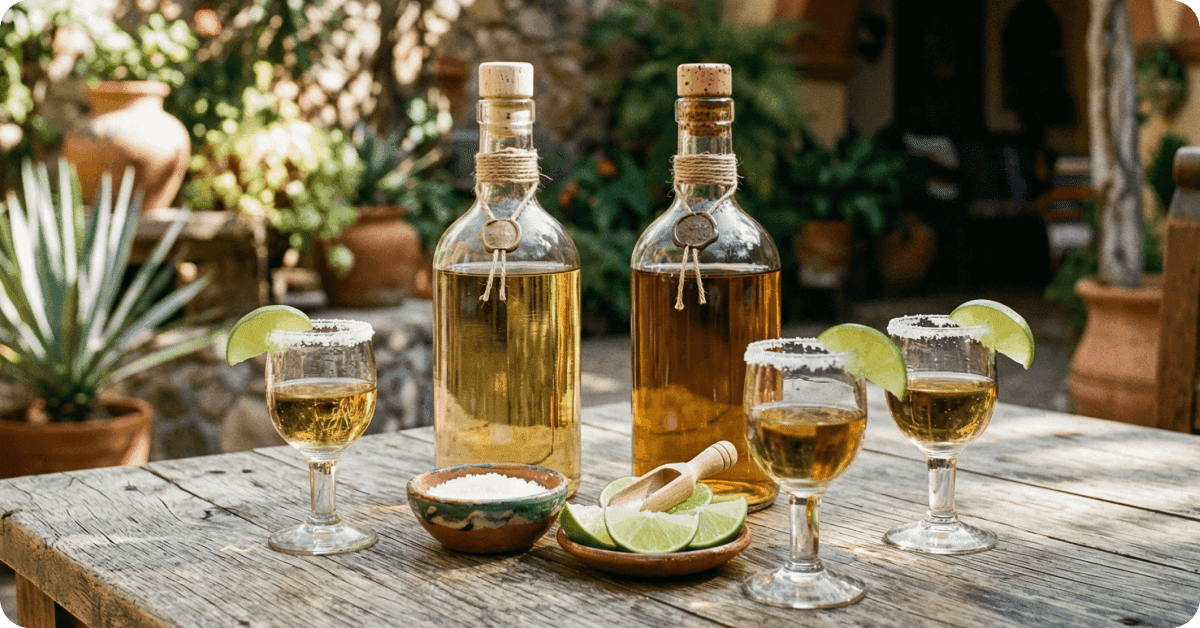
Jalisco produces around 90% of the world's tequila, so if you have a taste for Mexico’s most famous drink, you're in the right place. Most bars and tasting rooms offer guided flights covering the three main expressions — blanco (unaged and sharp), reposado (rested in oak for up to a year), and añejo (aged longer, smoother, sipping territory). Worth knowing: tequila has held a protected Designation of Origin since 1974 and can only legally be produced in specific Mexican states using 100% Blue Weber agave. Anything else is just agave spirits with ambitions.
Birria: Guadalajara's signature dish
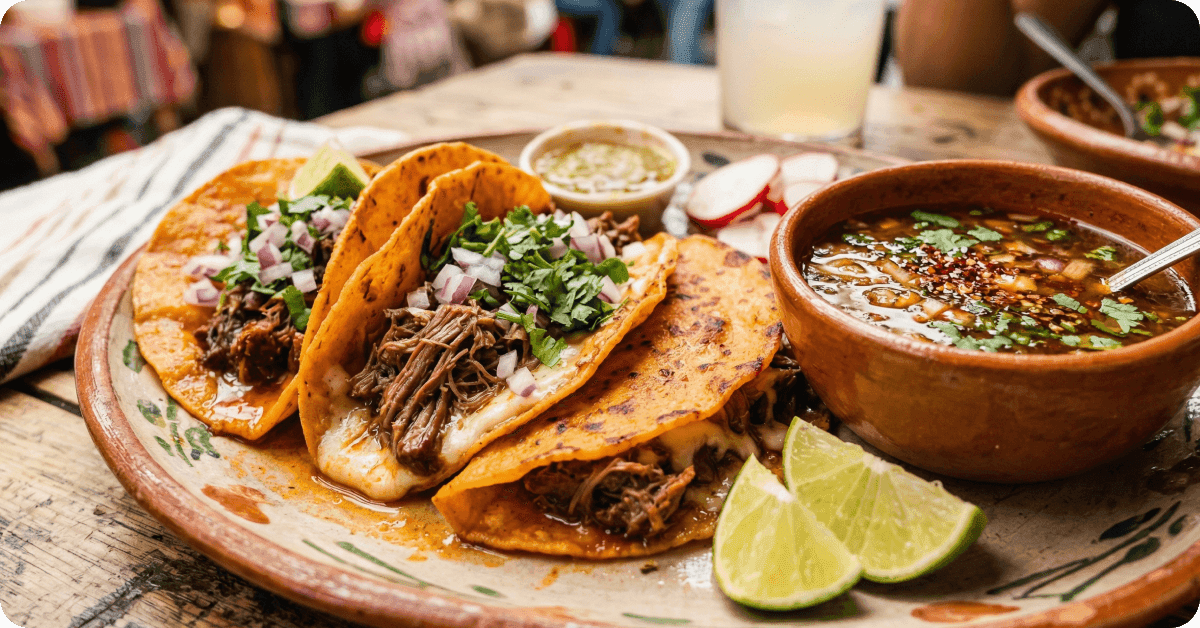
Birria is Guadalajara's signature dish — a slow-cooked stew of goat, lamb, or beef, seasoned with dried chilies and spices, served with fresh tortillas for tearing and dipping. Most birrierías do their best trade at breakfast and lunch and sell out by mid-afternoon, so eat early. Birriería las 9 Esquinas is the most recommended spot in the city — beyond that, find somewhere busy with locals and you won't go far wrong.
Tortas ahogadas and other local specialties
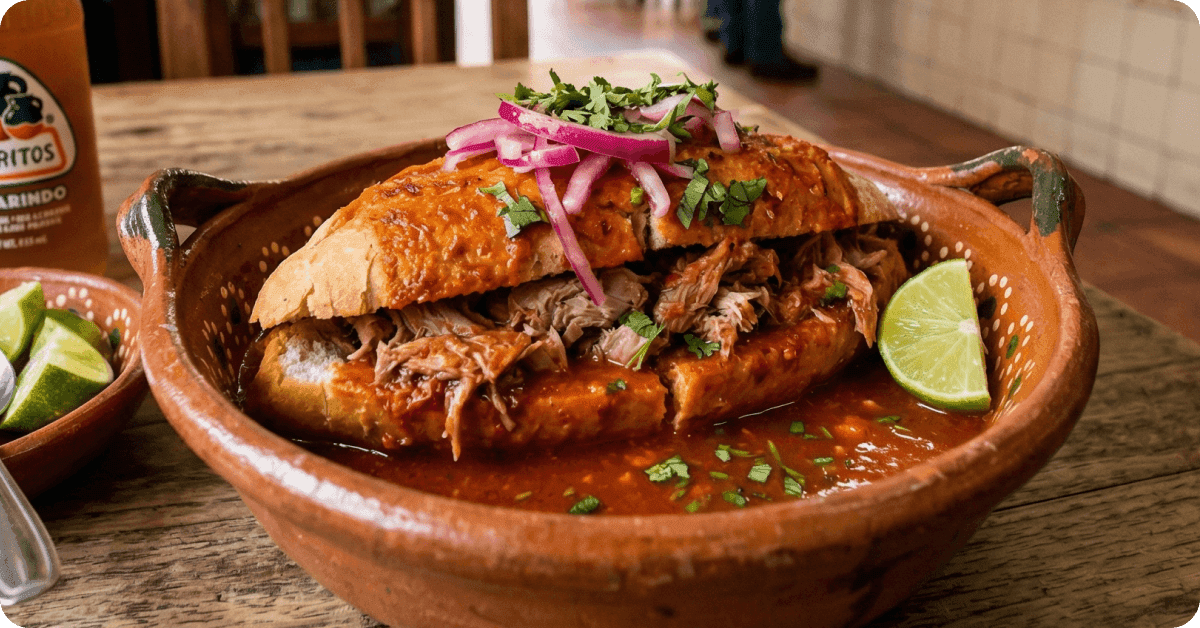
A torta ahogada — literally a "drowned sandwich" — is a crusty birote roll stuffed with pork and submerged in a fiery tomato-chilli sauce. The birote bread only really works because of Guadalajara's specific altitude and climate, which is why attempts to replicate it elsewhere always fall flat. Also worth seeking out: tejuino, a cold, lightly fermented masa drink that's tangy and unlike anything you'll find outside the region. For breakfast, La Chata and La Gorda are local institutions worth queuing for.
Taste local drinks like cantaritos and pulque
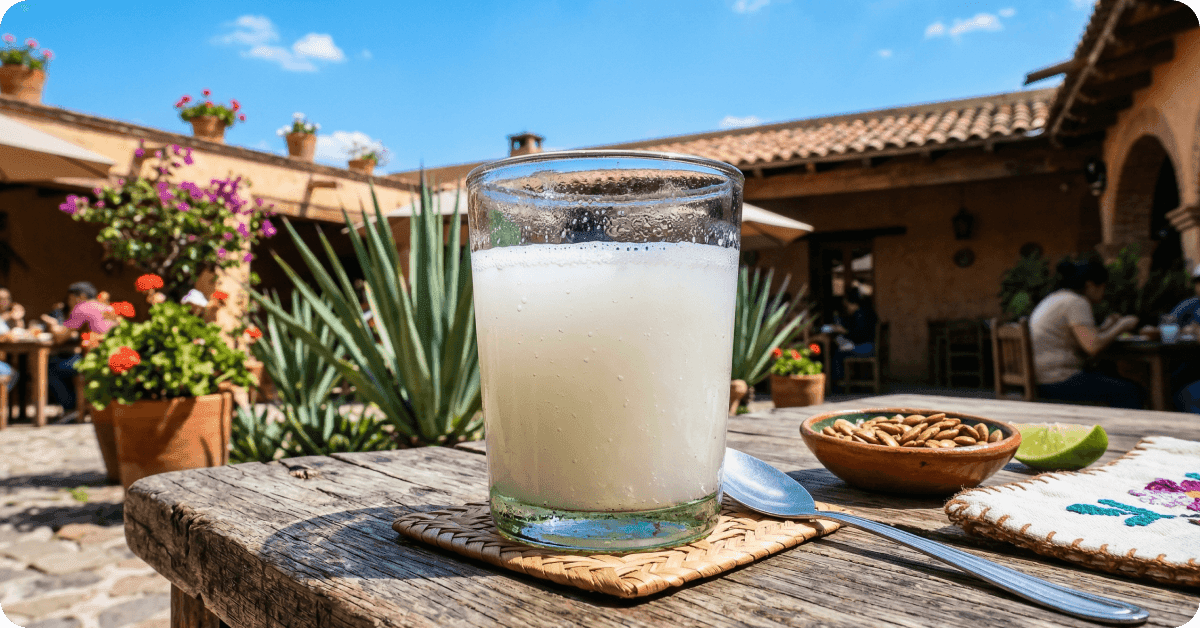
Pulque is one of Mexico's oldest drinks — a thick, slightly sour fermented agave sap that predates tequila by centuries and has an acquired-taste reputation that's at least partly deserved. La Pulkata is the go-to spot, serving it in traditional style with flavour additions if you want to ease yourself in. Cantaritos are more immediately crowd-pleasing: tequila, fresh citrus, and Squirt soda in a salt-rimmed clay cup that subtly affects the flavour in a way a plastic cup simply doesn't — and they go down considerably faster than they should.
Things to do in Guadalajara at night

Guadalajara after dark is a different city. Plaza de los Mariachis hits its stride around 10pm, and the Colonia Americana neighborhood around Avenida Chapultepec has enough bars, mezcalerías, and live music venues to fill several evenings without repeating yourself. The city has a reputation for staying out late and doing it well.
Get drinks on Avenida Chapultepec
Avenida Chapultepec is the spine of Guadalajara's nightlife — bars, clubs, and mezcalerías covering pretty much every taste, from craft beer and live rock to underground electronic nights. It's also home to the city's most visible LGBTQ+ scene, centered around the Zona Rosa. Prices are a notch above elsewhere, but the density of options means you can wander until something clicks.
Explore Colonia Americana
Colonia Americana sits within walking distance of Chapultepec but operates at a different tempo — mezcal bars with good playlists, coffee shops that turn into wine bars after dark, and evenings that don't require a cover charge or a queue. During the day it's one of the more walkable parts of the city, with tree-lined streets, colorful facades, and enough bookshops and vintage stores to fill an afternoon.
What to do in Guadalajara with kids?
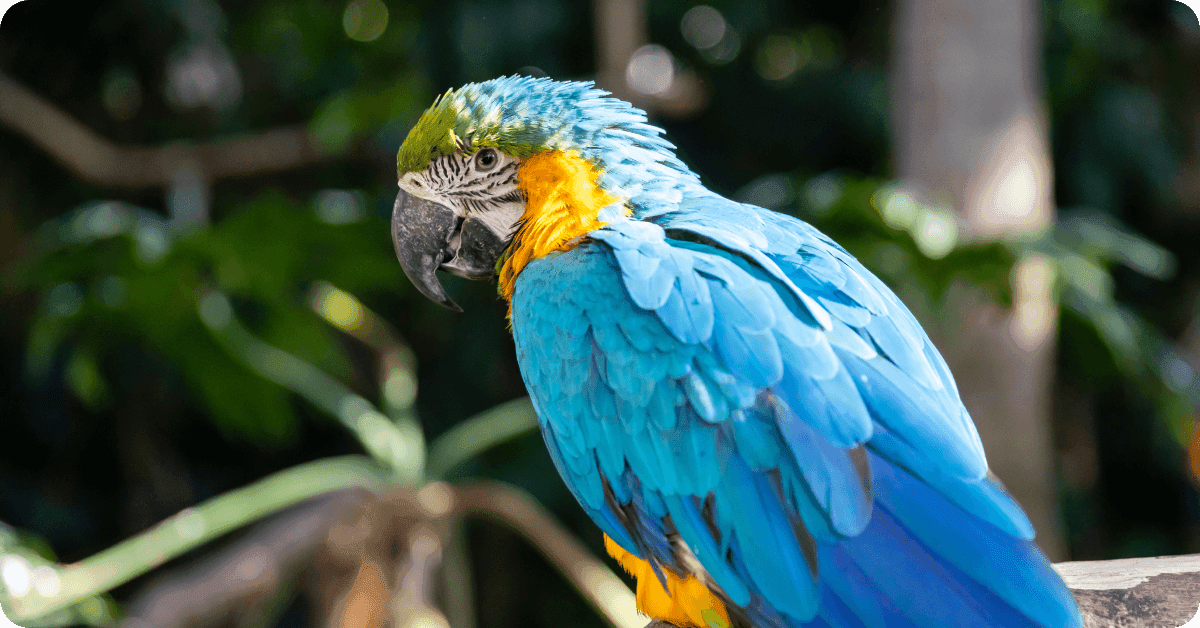
Guadalajara is a great city for families — manageable in size, with well-maintained public spaces and a handful of dedicated attractions worth building a day around.
Zoológico Guadalajara and Barranca de Huentitán
Zoológico Guadalajara sits on the edge of Barranca de Huentitán, a dramatic canyon that gives it a more interesting backdrop than the average city zoo. The cable car ride over the barranca is worth doing for the views alone. While adult tickets aren’t too expensive (less than US$30, usually), children still get a discount.
Acuario Michin Guadalajara
Acuario Michin is a modern aquarium with interactive exhibits — touch pools, educational displays, and enough variety to keep younger visitors engaged. It's a natural rainy-day option but worth visiting regardless. A standard adult pass is affordable, and it's compact enough to wrap up in a few hours.
Best day trips from Guadalajara
One of Guadalajara’s biggest advantages is its location. Mountains, lakes, historic towns, and archaeological sites are all within easy reach. You should absolutely plan a few great day trips.
Tequila Town
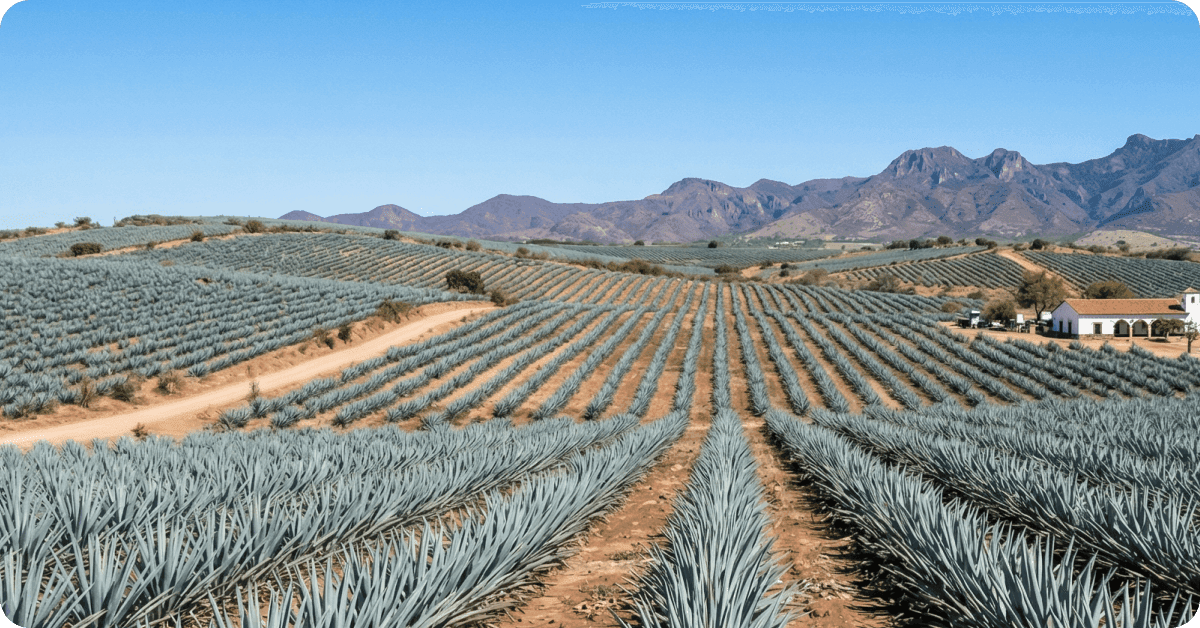
The town of Tequila is about an hour northwest of Guadalajara — the birthplace of the drink, surrounded by hillsides blanketed in blue agave. The José Cuervo Express tourist train runs on Saturdays and is the most popular way to get there. Distilleries worth visiting include Tres Mujeres and Cava de Oro, and some agave farms outside town have added barrel-shaped hotel rooms and cave restaurants to their offerings.
The circular pyramids at Guachimontones
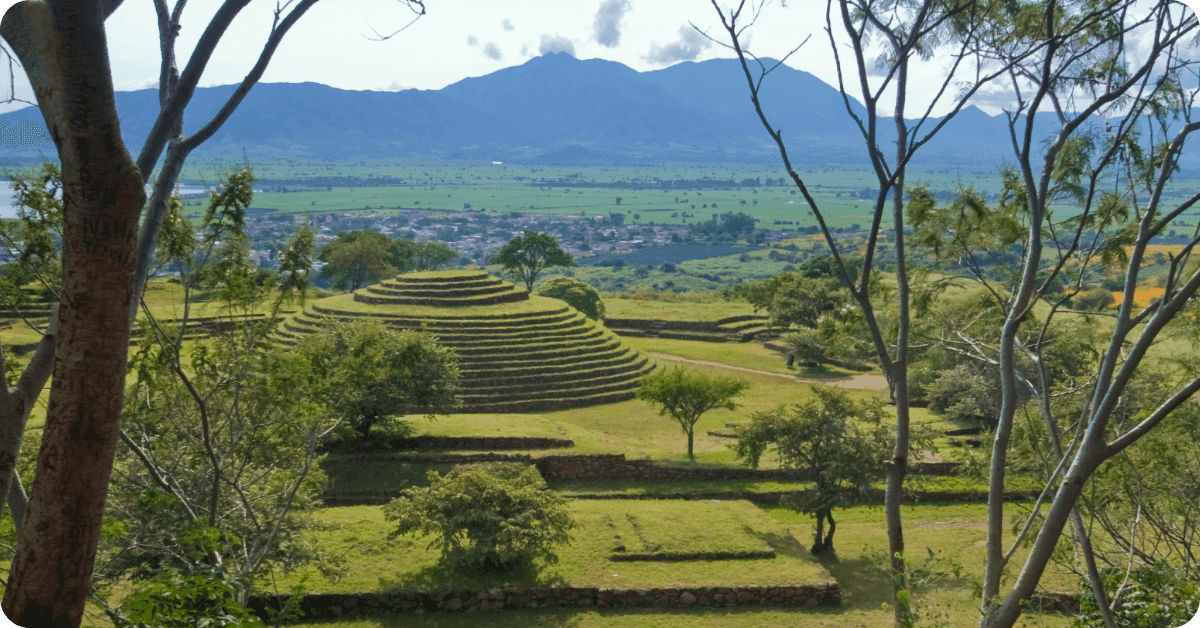
Guachimontones is one of western Mexico's most unusual archaeological sites — circular stepped pyramids built by the Teuchitlán culture around 2,000 years ago, a design found virtually nowhere else in Mesoamerica. Getting there takes effort: most visitors take a bus to Teuchitlán and then a taxi, with some hiking involved. Maps and transport might not be widely available on the ground, though, so make sure your phone's data connection is sorted before you set off. Wondering how to get mobile internet in Mexico? You’ve got a few options. You could use data roaming, but that’s usually the most expensive option. A better move is to buy a local SIM card or, if you want to get online as soon as you land, just download an eSIM app.
Lake Chapala and Ajijic
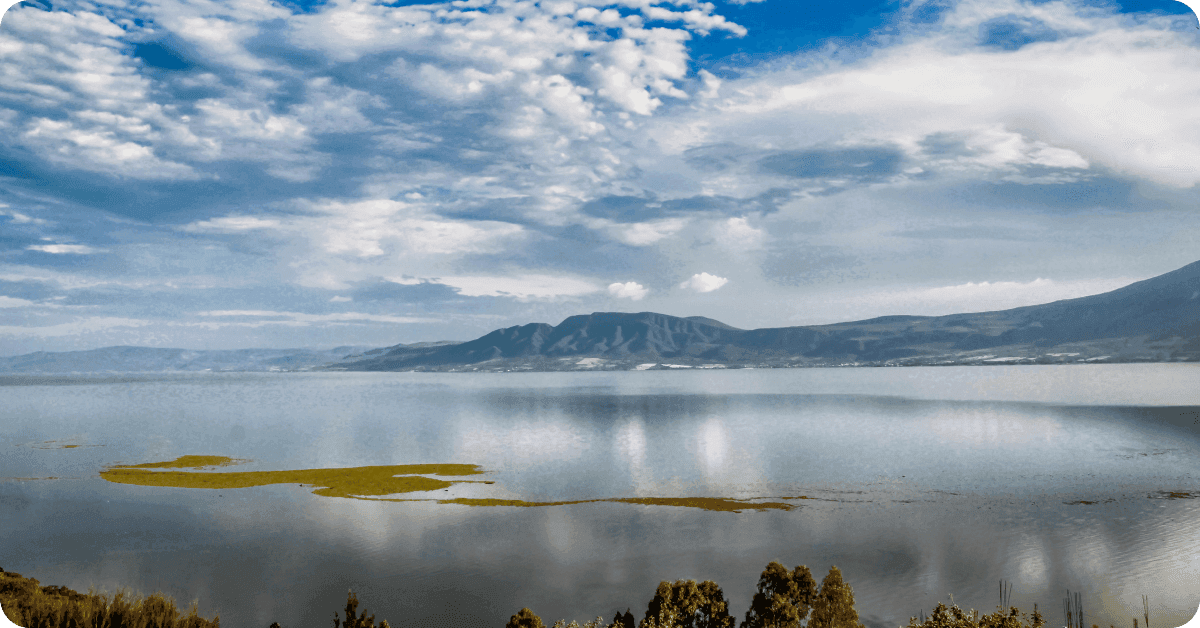
Lake Chapala is Mexico's largest freshwater lake and an easy day trip — about an hour by bus from the old central bus station. The real draw is the nearby village of Ajijic: cobblestone streets, a craft market, and a relaxed lakeside atmosphere that feels a world away from the city. Home to one of the largest expat communities in Mexico, it's also quietly become one of the better spots in the region for a long lunch and fresh fish tacos by the water.
Need data in Mexico? Get an eSIM!
1 GB
7 days
US$4.99
3 GB
30 days
US$11.99
5 GB
30 days
US$16.99
FAQ


Related articles
