





10 best things to do in Malaga
Malaga is best known for its sunlit coastline, and I understood the reason for this reputation before I even reached the city. I arrived in late September, at around six in the evening, and the first thing I noticed was the light. Its golden bloom softened everything it touched, and it gently draped the rugged hills beyond the runway. The usual frantic rhythm of travel — the clatter of luggage wheels, the rush for taxis — lost its percussive beat. The air was warm and the whole place seemed to exhale. It was my first taste of Malaga’s particular magic: It’s a city that makes it easy to slow down, look up from your phone, and start enjoying yourself before you’ve even dropped your bag off at your hotel. This guide covers the 10 experiences I’d tell a friend to prioritize, featuring the practical tips and local details to help first-timers get it right on the first go.
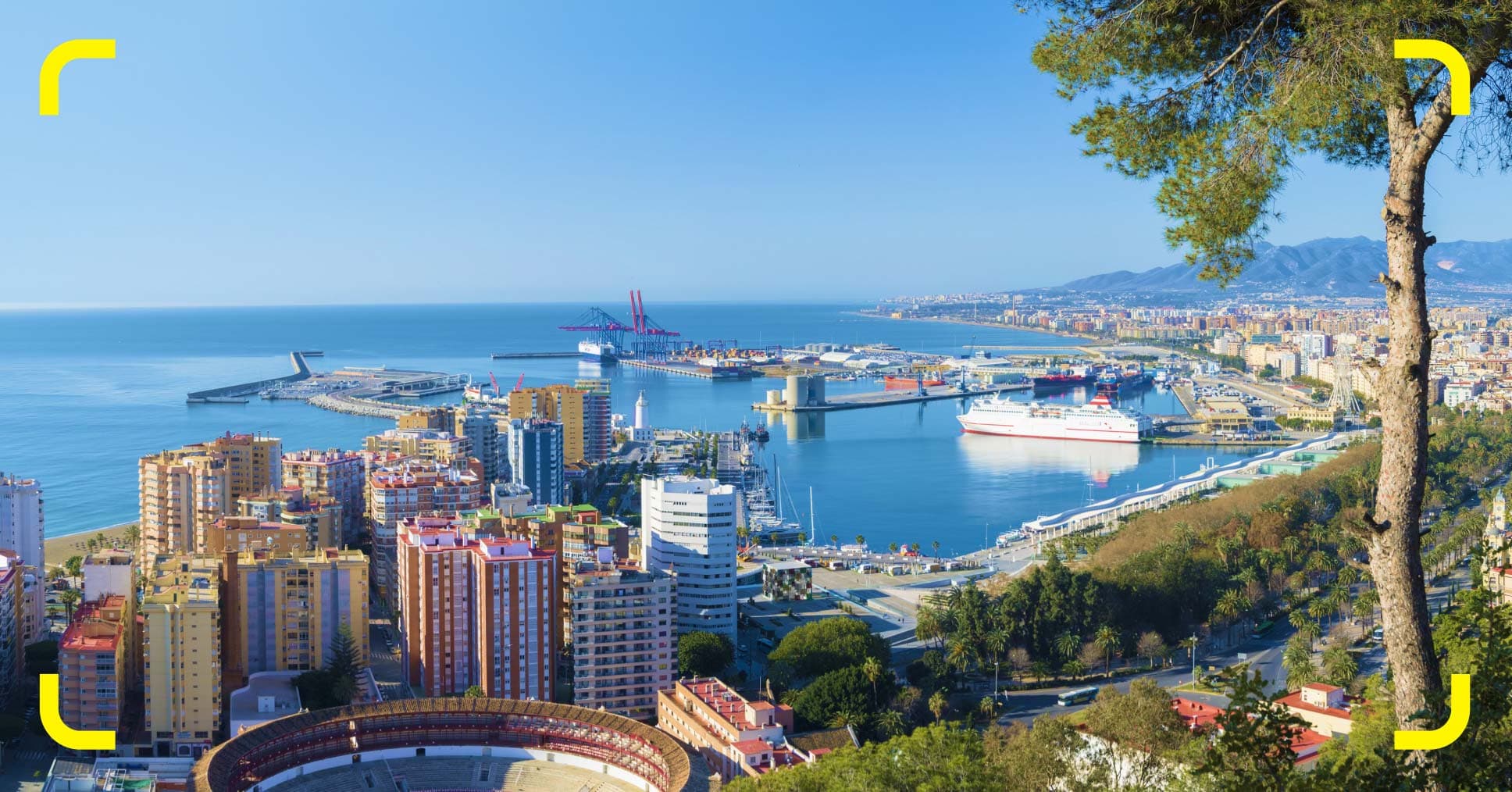
Table of Contents
- Best things to do in Malaga: A quick overview
- Best cultural experiences in Malaga
- Explore the Alcazaba of Malaga
- Visit Gibralfaro Castle
- See the Malaga Cathedral
- Unique natural attractions in Malaga
- Explore the cliffs of the Caminito del Rey
- Discover Málaga Park (Parque de Málaga)
- Eat tapas like a local
- Relax on La Malagueta Beach
- Unique experiences in Malaga
- Spend an evening in Antonio Banderas’ Malaga
- Discover Fuente de Piedra
- Experience Malaga’s nightlife
- Escape to Marbella
- Take the train to Granada
- Practical information for visiting Malaga
- Best time to visit Malaga
- Where to stay in Malaga
- Staying connected in Malaga with the Saily app
Best things to do in Malaga: A quick overview
I spent a week in Malaga getting to know the city on foot, walking slowly instead of rushing, easing into long afternoons and late dinners, and shaping my days around shade, food, and good views. I ate standing up and sitting down, constantly saying “just one more meal” before the light slipped away. When the sun was too strong, I ducked into museums or wandered down cooler streets. When I needed air, I climbed to the Alcazaba or Gibralfaro to look out over the rooftops.
Two trips inland broke up my routine. In Granada, I spent a full day exploring the Alhambra, a miracle of engineering that renders stone as light as lace. The Caminito del Rey offered a sharp contrast, a dramatic cliffside walk carved into the sort of rocky Andalusian landscape that makes you feel small. Back in Malaga, I kept drifting toward the same spots: the Alcazaba at golden hour, the cathedral’s quiet corners, and the beach when I needed to clear my thoughts. These are just a few of the things that stood out, so feel free to build your own week from the pieces that fit.
Top 3 outdoor activities
Walk the cliffside pathway of the Caminito del Rey on a day trip.
Spend a slow afternoon on La Malagueta Beach.
Take a shaded wander through Parque de Málaga by the port.
Top 3 cultural experiences
Get lost in the courtyards and ramparts of the Alcazaba.
Climb to Gibralfaro Castle for the view and the breeze.
Step into Málaga Cathedral, then linger outside in its picturesque garden.
Top 3 couples’ activities
Experience a sunset from Gibralfaro and watch the city turn amber.
Do a long tapas crawl in the historic center, one small plate at a time.
Take an evening walk around Muelle Uno when the harbor lights are on.
Top 2 solo-travel activities
Spend a proper hour in Librería Mapas y Compañía, a cozy bookshop refuge.
Take yourself to Casa Aranda for churros and hot chocolate, then sit long enough to get in tune with the atmosphere of the buzzing alleyway the restaurant is situated in.
Top 2 family-friendly activities
Enjoy some beach and promenade time with snacks.
Wander the many parks and plazas.
Top foods to try
Snack on espetos de sardinas grilled over open flames.
Sample fried fish from a proper freiduría (a shop specializing in selling fried food, particularly fried fish).
Best for adventure seekers
Walk the Caminito del Rey and take day trips that push inland into the hills.
Best for relaxation
Dedicate a whole day to the beach, with no alarms set.
If you do nothing else, I would keep three pillars as a part of your itinerary: the Alcazaba for history, the beach for breathing space, and one day outside the city. Malaga makes the most sense when you let it open into the landscape around it.
Best cultural experiences in Malaga
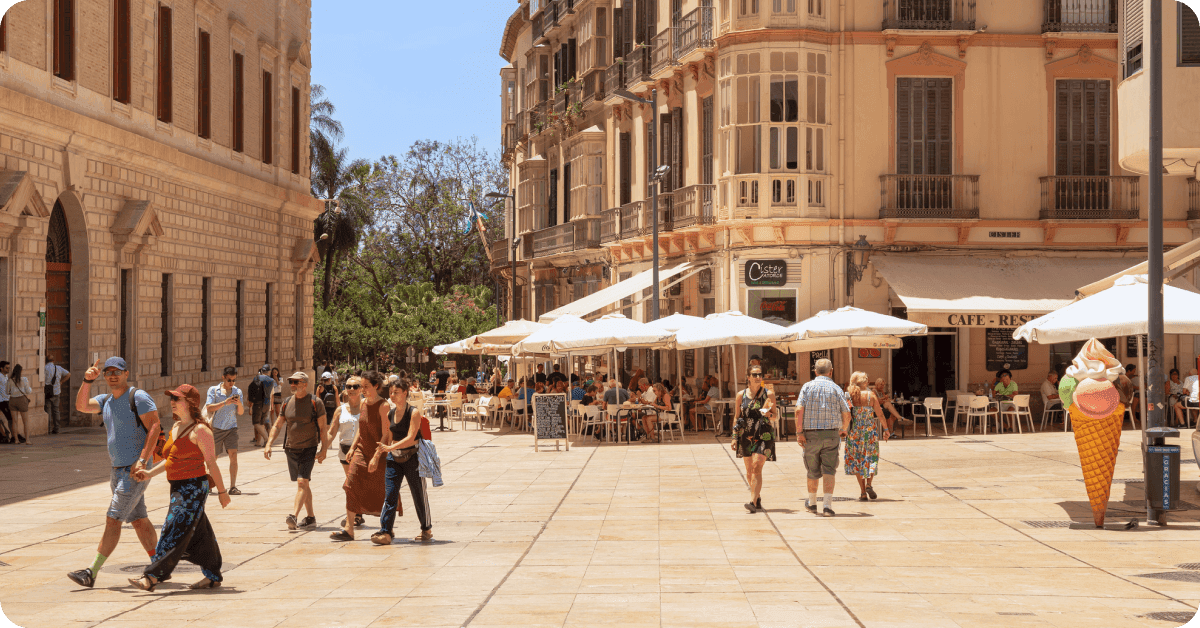
Malaga’s culture exists out in the open. Centuries of history are stacked on top of each other here, and the streets let you walk right through the layers. The city has been inhabited for roughly 2,800 years, and it began as a Phoenician trading post called Malaka around 770 BC. While I came for the coastline, that history caught me off guard in ordinary moments. I would step out for a coffee and find myself beside a Roman theater or duck into the Museo Picasso to cool off and discover that Pheonician walls still stand in the building’s cellar.
That’s the context for the three cultural stops I’d tell you to prioritize on a first visit. The Alcazaba allows for a glimpse into a Muslim-era city in stone and shade. Gibralfaro provides the elevation needed to understand why Malaga became a port worth fighting over — from here, rulers could command the entire coastline. The cathedral serves as a sanctuary from the heat, stripping away the noise of the day and sending you back outside feeling newly awake, or at least cooled off.
Need data in Spain? Get an eSIM!

1 GB
7 days
US$3.99
3 GB
30 days
US$6.99
5 GB
30 days
US$9.99
Explore the Alcazaba of Malaga
The Alcazaba illustrates the city’s layered history perfectly, letting you witness several eras in a single short climb. Phoenicians settled this hill around 600 BC, and Romans constructed the theater you pass by at the bottom. The fortress you can explore today took shape in the 11th century, when the Hammudid dynasty expanded the site into a palace-fortress and a seat of power.
I appreciated the brutal practicality of the design. The entrances bend and tighten to slow down approaching armies, and the double-wall system was built for defense, not decoration. For a visitor today, those walls provide deep shade and framed views of the port that act as a constant reminder that danger was always expected from the sea.
📍 Address: C/ Alcazabilla, 2, 29012 Málaga
🕒 Hours: 09:00-20:00 (1 Apr-31 Oct), 09:00-18:00 (1 Nov-31 Mar). Last entry is one hour before closing.
💰 Tickets: €7 (~US$8) general. €10 (~US$12) combined (Alcazaba + Gibralfaro).
💡 Free entry: Every Sunday from 14:00.
Visit Gibralfaro Castle
Gibralfaro exists because military strategists looked at the hill above the Alcazaba and realized a simple truth: Higher ground wins. In the 14th century, Yusuf I (the Nasrid ruler of Granada) ordered the expansion of the castle and the fortified walkway linking it to the Alcazaba, largely to protect the city from the rising threat of artillery.
From atop the castle walls, Malaga stops being a tangle of streets and becomes a legible map. You can identify the bullring, the port, and the long curve of the coastline. I hiked up later in the day when the heat loosened its grip, allowing me to enjoy the view without the sun glaring directly into my eyes.
🕒 Hours: 09:00-20:00 (1 Apr-31 Oct), 09:00-18:00 (1 Nov-31 Mar). Last entry is one hour before closing.
💰 Tickets: €7 (~US$8) general. €10 (~US$12) combined (Alcazaba + Gibralfaro).
💡 Free entry: Every Sunday from 14:00.
See the Malaga Cathedral
Malaga Cathedral towers above the historic center. Locals call it La Manquita, “the one-armed lady,” because the south tower remains unfinished. A plaque linked to the story says funds raised for the tower went instead to help the American colonies gain independence, although other explanations circulate too.
I visited less for the history and more for the relief. The interior acted as a sanctuary from the heat that reset my senses after walking the noisy midday streets of the historic center. After walking through the nave, I slipped out to Calle Cister, a narrow street running along the cathedral’s side, and sat in the orange-tree courtyard for a few minutes. Instead of the usual roar of the tourist crowds, I focused on the flutter of sparrows as they splashed about in the fountains. It was a perfect place to pause before rejoining the energy of the city.
📍 Location: Catedral de la Encarnación, Historic Center
🕒 Hours: Mon-Fri 10:00-20:00, Sat 10:00-18:00, Sun 14:00-18:00. Last entry is 45 minutes before closing.
💰 Tickets: €10 (~US$12) general (audio guide included).
🕯 Free access for worship: Mon-Sat 08:30-09:00, Sun 08:30-09:30.
Unique natural attractions in Malaga
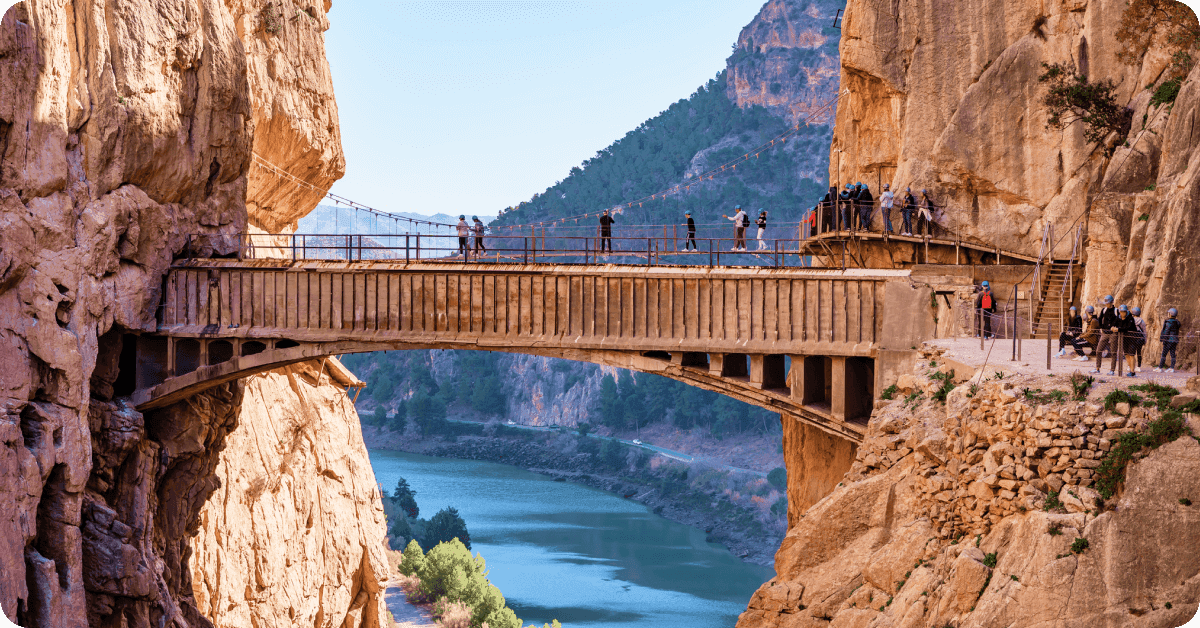
Malaga markets itself on sun and sea, and on that it surely delivers. But the landscape offers much more than just the beach. To experience the full range of it, I took a day trip inland to hike the high cliffs of the Caminito del Rey, then spent a few days using the central park as a refuge from the hot stone streets. These two spots provided two very different escapes from the tourist crowds. One was a dramatic trek through a gorge, and the other was a calming, shaded sanctuary right in the center of town.
Explore the cliffs of the Caminito del Rey
The Caminito del Rey might look like an ill-advised dare, but it is surprisingly manageable. This path clings to the vertical walls of Gaitanes Gorge, hanging roughly 100 meters above the river on a boardwalk that, at points, narrows to barely a meter wide. It began as industrial infrastructure in 1901 to help workers move between hydroelectric sites. King Alfonso XIII crossed it in 1921, giving it the name “The King’s Little Path,” but for decades it sat crumbling until a full restoration reopened it to the public in 2015.
The route traces a linear 7.7 km from north to south, though the famous boardwalk section covers only about 2.9 km of that. Entering the gorge seals you off from the rest of the country. The sheer walls block out the horizon and can cut off phone signals, leaving you with nothing to look at but the rock and the river below.
Access to the gorge is strictly controlled via timed entry slots to prevent overcrowding on the narrow boardwalks. I booked my specific time well in advance and took the regional train to the town of El Chorro, followed by the shuttle bus to the trailhead at El Kiosko. Just remember to bring closed-toe hiking boots or sturdy sneakers — the official rules explicitly ban flip-flops, and the rangers will turn you away at the gate if you are wearing them
💰 Tickets: €10 (~US$12) general admission, €18 (~US$21) official guided visit.
🕒 Seasonal schedule: Entry slots run from 09:00. The day ends at 14:50 or 17:20, depending on the season. Check the official website.
📏 Length and time: 7.7 km total, 3-4 hours (including access paths).
🧒 Age rules: No entry under 8. Bring ID for kids over 8.
Discover Málaga Park (Parque de Málaga)
Parque de Malaga runs parallel to the port, a dense green corridor sitting on land that was reclaimed from the sea in the 19th century. Its location creates a crucial buffer zone, providing a shaded transition point between the exposed, busy harbor and the stone-paved historic center.
I turned the park into my daily reading room. While the city streets amplify the midday sun, the park creates a heavy canopy of palms and plane trees that acts as a natural air conditioner. Each afternoon, I walked the central path until I found a bench near a fountain, took out a book, and stayed put for an hour. It wasn’t perfectly silent — the hum of traffic on the Almeda was still audible — but the fountains created enough white noise to let me focus on a chapter while the rest of the city rushed past.
📍 Location: Between Alameda Principal and Paseo de España, running alongside the port area
📏 Size: Three walkways, about 800 metres long
💰 Cost: Free
🕒 Best time: Late morning or early afternoon when you want shade near the center
Eat tapas like a local

The best of my meals in Malaga happened at tables that wobbled slightly on the cobblestones, sharing plates of fried bits of fish that had been swimming just a few hours prior. The ritual here is communal and tactile — you order enough plates to cover the table and you accept that olive oil is going to end up on your fingers.
I explored the Mercado Central de Atarazanas early in the week to understand the logic of the menus. Under the massive stained-glass window, the stalls are a riot of crushed ice and silver scales. You see the dogfish and the roscada laid out raw, and you realize that the city’s chefs act largely as custodians. Their job isn’t to invent new flavors but simply to crisp the skin of the fish without ruining the meat inside.
For the best version of this delectable crispy fish, I left the historic center and took a bus west to Huelin. Freiduría Lute y Jesús is a classic neighborhood fry shop where the menu is short and the service is fast. I ordered a paper cone heavy with mixed fried fish, but instead of sitting down, I walked the hot food straight to Huelin beach and ate while watching the container ships on the horizon. The frying was clean and crisp, the portion was absurdly generous, and eating it by the water felt like the most honest expression of the city I could find.
Relax on La Malagueta Beach
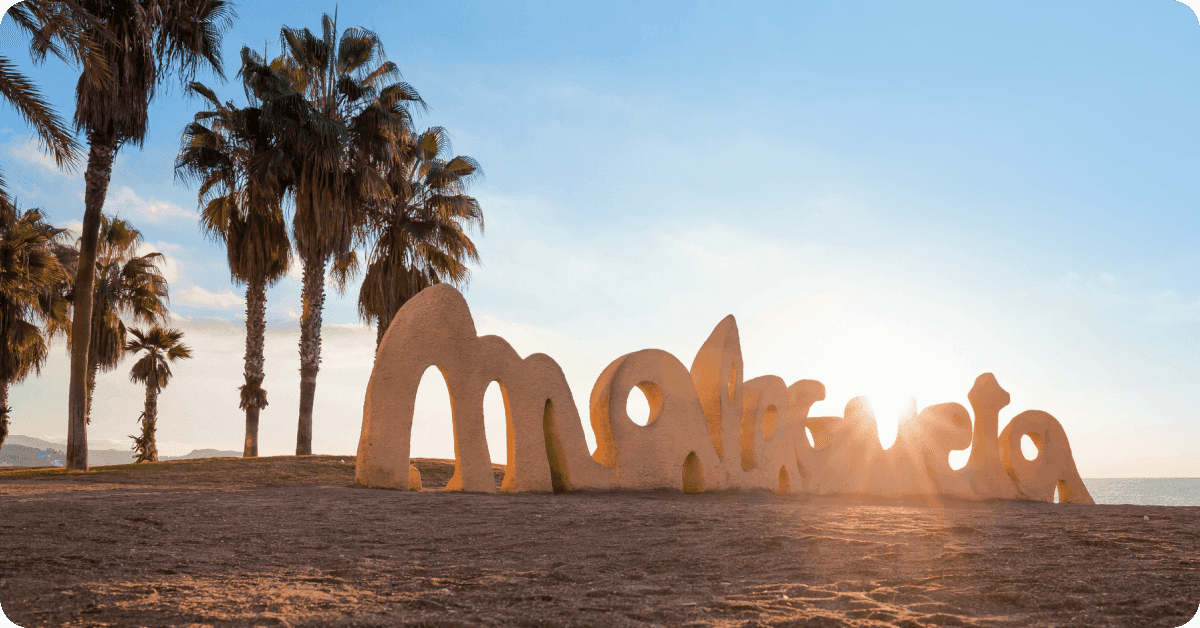
I appreciated La Malagueta because it’s stripped of any pretense of being a remote or pristine beach. It runs right alongside the city center, with a wide stretch of dark sand and the city skyline never too far from view. You won’t mistake it for a secluded cove from an Instagram reel, but that’s part of the appeal. It’s easy to reach and makes room for the unplanned parts of the day: a walk without a destination, a swim before dinner, or an hour sitting on the sand just listening to the sea.
The beach takes its name from La Malagueta, the neighbourhood behind it, which in the 19th century was home to sugar factories and other industry before the area turned into the residential district you see now. Those buildings are long gone, replaced by apartments and cafes, but the area still carries a sense of being slightly apart from the historical center. Just a few minutes inland stands the bullring of the same name, opened in 1876 — a leftover from an earlier version of the city, when this coastline marked its outer edge. Today, the coastline is a canvas of towels and umbrellas, filled with the mild choreography of people dipping in and out of the water. I preferred visiting later in the day, when the heat finally loosened its grip and the beach felt less like a frying pan.
Unique experiences in Malaga
Some destinations reward you for completing a checklist. Malaga is better explored with curiosity. The experiences that stayed with me weren’t monuments so much as detours — moments where I looked past the postcard version of the city to find something personal. The trip felt most real when I stopped demanding to be impressed and simply let the days unfold. Here are two suggestions shared by locals, the kind of plans that don’t make every guidebook but offer a genuine step off the beaten path.
Spend an evening in Antonio Banderas’ Malaga
Malaga doesn’t turn Antonio Banderas into a souvenir, which is exactly why the idea to check out his legacy in the city works without feeling tacky. Banderas was born in Malaga, but after a heart attack in 2017, he made a deliberate return to local life and has funneled a lot of that energy into the performing arts. His biggest public-facing project is Teatro del Soho, which opened in its current form in November 2019 after the old Teatro Alameda space was renovated. If you want one “Banderas” experience that is actually rooted in the city, this is the one to plan. Check the program, book ahead, and treat it like a night out
If you want to connect that night to Malaga’s food culture, start at El Pimpi (Calle Granada 62), a classic local bar and restaurant where Banderas became a shareholder in 2017. Go early, order a glass of wine, and keep the meal brief so you have plenty of time to walk over to Soho for the show. This route works because it is not a scavenger hunt. It connects two places with real ties to the actor’s life, both of which stand on their own even if you don't care about celebrity connections.
Discover Fuente de Piedra
Located about an hour’s drive inland from Malaga, Fuente de Piedra shows a quieter, more open side of Andalusia. The saltwater lagoon is one of the key breeding sites for greater flamingos in southern Europe. From March to July, during the nesting season, the sheer number of birds rivals what you’d see in a David Attenborough documentary. You can watch thousands of them — pink like diluted rosé — move slowly across the shallow water in a single, massive flock.
This is a birdwatching trip, not a hike. Start at the José Antonio Valverde Visitor Center, then follow the marked routes to the viewpoints. Bring water because the paths are exposed and shade is limited, especially once the day warms up. Bring binoculars, too, since the birds often gather far out on the water. If the noise of Malaga has started to wear on you, the silence out here offers a total reset.
Experience Malaga’s nightlife

At night, the atmosphere in Malaga shifts. The crowds slow down, the tables get moved into the squares, and what is intended to be only a quick round of drinks turns into an hours-long conversation. I appreciated that the city doesn’t force a single rhythm on you. You can choose your own pace, and there is a neighborhood to match it.
The historic center works as a natural starting point, with wine bars and small taverns clustered tightly together, so you can move from venue to venue with no plan at all. A glass of local wine turns into two, while plates of anchovies and vermouth appear on shared tables. The social energy here is effortless, perfect for talking and lingering.
For live music, drift south into Soho and the surrounding streets just off the historic center. This artsy neighbourhood has evolved into one of the liveliest parts of Malaga after dark, with a mix of bars, lounges, and spots where music matters as much as the drinks. A couple of good bets for live jazz and improvised music include Bon Bon Jazz Bar Malaga, a cozy, well-reviewed venue with an intimate vibe and drinks alongside live sessions, and Sala The Hall, known for its regular jazz and blues nights in an unpretentious setting.
For a calmer night, Muelle Uno and the port area serve well. Here, modern bars line the water, offering open-air seating where the harbor lights reflect off the sea. It is the ideal spot to talk without having to shout and watch the boats shift in the dark — great for a soft landing after a long day.
Escape to Marbella
Marbella is my “next time” promise to myself. It’s close enough to Malaga to work as a day trip, yet it presents two opposing sides of the Costa del Sol. The old town centers on Plaza de los Naranjos, a maze of white walls and quiet squares grounded in traditional aesthetics. In sharp contrast, the nearby marina district of Puerto Banús operates as a theater of wealth, where massive yachts line the marina and luxury cars cruise the strip.
I haven’t made it yet, but I already know how I’d do it. I’d go in the late morning, wander the old town first, then finish by the water with a slow lunch and a long walk on the promenade. If you’re bouncing around the Costa del Sol, reliable data helps with timetables, maps, and last-minute plans, so I’d sort that out before leaving with an eSIM for Spain.
Take the train to Granada
Granada lies inland, tucked against the mountains, and it changes the mood of an Andalucia trip in a single train ride. The fastest rail journeys from Malaga to Granada take about two hours. While a day trip is logistically possible, the sheer scale of the city’s main attraction makes a strong argument for staying overnight.
Most people visit Granada for the Alhambra, and rightly so. It’s one of those places that lives up to the weight of its reputation. Built primarily in the 13th and 14th centuries under the Nasrid dynasty, the complex shows a deep understanding of how architecture can work with climate rather than against it. Water channels cool the courtyards, shaded arcades shield the walkways from the heat, and the stone walls hold the temperature so well that the space feels almost air-conditioned. If Malaga teaches you how to slow down, Granada and the Alhambra definitely teach you how to stay put.
This city also rewards you once you leave the hill on which the palace stands. I found a grounding counterpoint to Moorish history of Alhambra at Jerusalem Book Café. The Palestinian food there arrived full of flavor — the hummus was smooth and dense with a little crater of olive oil pooling in the center for dragging bread through. The baba ganoush tasted of real char and smoke. The sharp acidity of the pickles cut through the richness, acting as a perfect palate cleanser after hours of wandering fortress walls.
As the day’s heat eased, the noise of the streets died down. The tourist crowds thinned, and the city felt habitable rather than purely historical. That shift is exactly why I advise against racing back to the station. Book the later train or, better yet, stay the night. Give yourself an evening to just exist in Granada.
Practical information for visiting Malaga
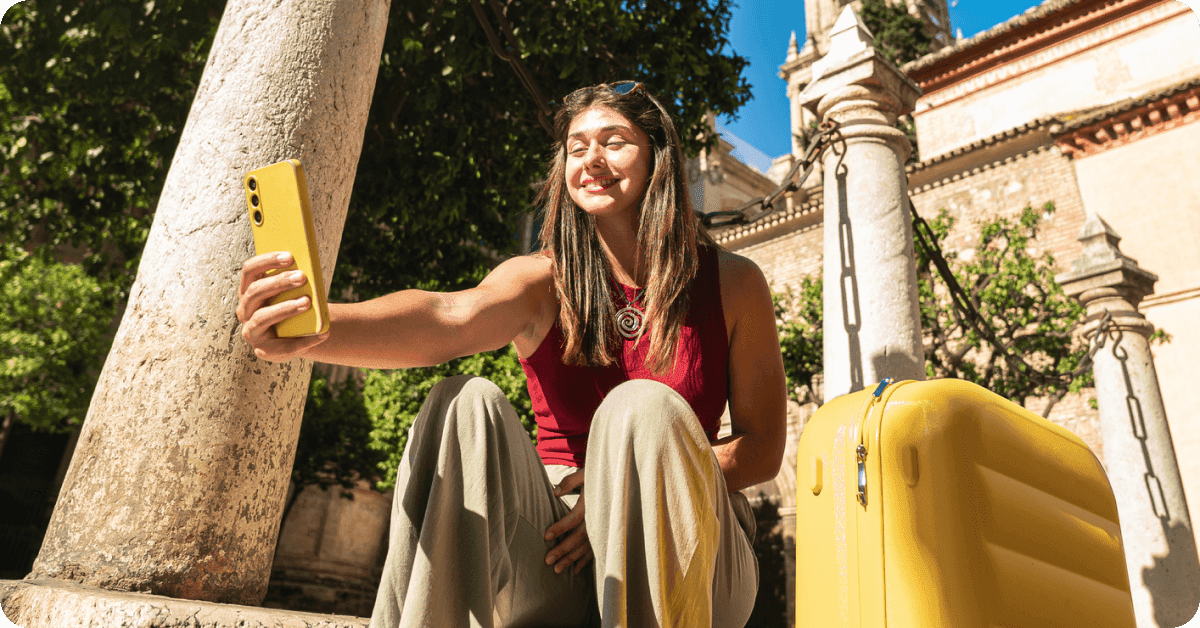
A good Malaga trip is all about making small decisions. Pick the right week and the right neighborhood, and the logistics of the trip cease to be a burden, leaving you free to focus on the city. Beyond that, the essentials are simple: good walking shoes, sunscreen, and enough mobile data to keep maps working when you wander off-route. I like sorting that last bit before I fly because public Wi-Fi never shows up at the exact moment you need it, and roaming can get pricey fast. A quick skim of our explainer on whether you should keep data roaming on or off saves you from guesswork at the airport.
Best time to visit Malaga
If you want a definitive answer on when to visit, choose May or September. May brings the heat without the full summer crush. By September, the sea remains warm enough for swimming, but the city feels far more breathable than it does in August. These months also work perfectly for a wider itinerary. Our “best time to visit Europe” guide can help you line Malaga up with other stops without turning your itinerary into a heat endurance test.
Where to stay in Malaga
The nicest part of Malaga for a first trip is the historic center. It provides easy access to the cathedral, the Alcazaba, restaurants, and nightlife, which means fewer transport decisions to make and more time outside. I liked staying close enough that I could pop back to my accommodation for a shower then head out again for the evening without feeling like I was commuting.
The La Malagueta area works well if you want to be close to the beach and reach the center on foot. Soho suits people who like a slightly sharper, artsier edge and don’t mind trading postcard streets for a more local, lived-in feel. Pedregalejo and El Palo make sense when you want a quieter base by the water, plus seafood places nearby — then you can bus into town for museums and landmarks.
Packing for Malaga is simple, though you should prepare for temperature shifts. The coastal breeze cools the city down at night, so a light jacket is essential, and sturdy walking shoes are mandatory for the hills. Read our Europe packing list to cover the basics before you go.
Staying connected in Malaga with the Saily app
Malaga rewards you for taking time to wander, and wandering works better when your phone has access to the internet. I rely on mobile data for the small practical things that keep me on schedule, like maps for cutting through side streets, opening hours when a restaurant or shop looks suspiciously closed, and last-minute reservations when dinner plans change. For an overview of your connectivity options — from pocket Wi-Fi to local SIMs — this guide to the internet while traveling explains why connectivity is more than a “nice to have.”
Roaming can turn expensive fast, and I hate doing math while on vacation. An eSIM card, also called a virtual SIM, lets you set up a data plan before you arrive without having to hunt for a shop or swap out your physical SIM. I prefer activating it ahead of time so the phone can access the internet the moment I step off the plane.
When you’re ready, download the Saily eSIM app and set up your plan before you fly. Saily is a data-only eSIM app, so you can use your existing SIM and phone number for calls and SMS, while anything that relies on data runs through Saily. That includes maps, messaging apps, and bookings.

Stay connected with the Saily eSIM app
Affordable mobile data plans for every journey.
FAQ


Related articles
