
11 min read
Welcome to Mexico – a place whose sun-drenched filter will turn you into your most curious and adventurous self. Prepare for flavors so vibrant they’ll bring a tear of joy to your eye. And don’t worry about the miles you’ll put on your shoes – every bit of soreness will vanish the moment you see the enormous canyon or the turquoise depths of a jungle cenote. Mexico is a land of endless discoveries, and this guide is a collage of places and experiences that will reveal its many faces to you. So pack your gear – here are the 15 top things to do in Mexico!
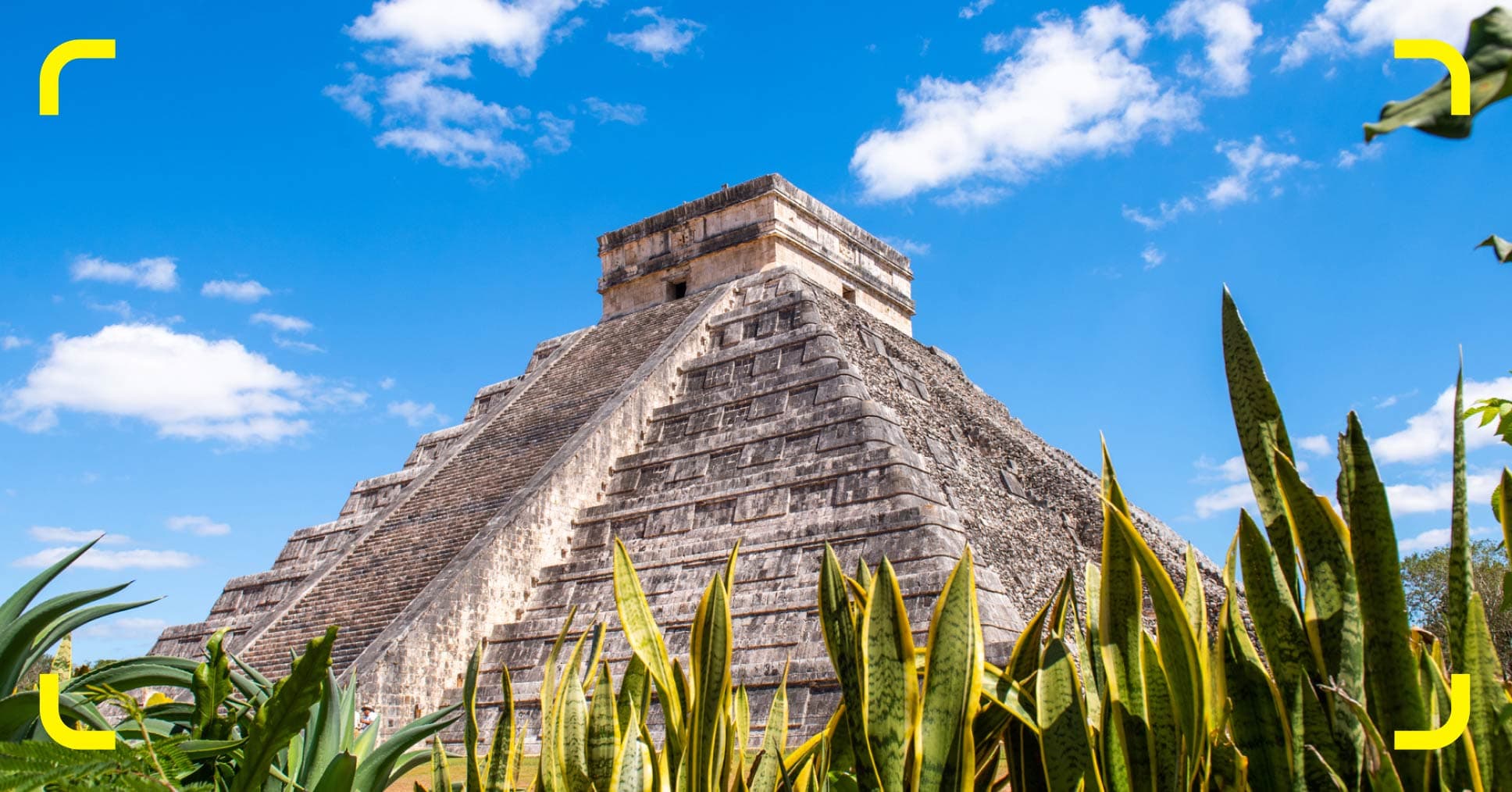
Table of Contents
Picture yourself soaking in the crystal-clear water under cathedral-like domes, with stalactites dangling overhead. Sounds like a fairytale? You can actually find it in the Yucatán Peninsula if you look out for cenotes. These are natural sinkholes formed by rainwater and fed by vast underground river systems. But for ancient Mayans, these hidden pools meant much more – they believed cenotes were the dwelling place of the rain god Chaak.
But not all cenotes are hidden under limestone domes – you can also float in their shimmering waters in a sunny jungle opening. So whether you prefer a dark cavern or a sunny natural pool, there is a cenote for every kind of explorer.
Some of the cenotes worth visiting:
Cenote Azul. Located near Playa del Carmen, Cenote Azul is great for first-timers. It has distinct shallow areas with big rocks for kids or non-swimmers. But if you’re feeling adventurous, you can also climb on a nearby rock platform and jump into the deeper section.
Dos Ojos. Here, a massive underground cavern system connects two neighbouring sinkholes. It is a world-class destination for snorkelers and scuba divers because of the glass-like underwater visibility.
Operating hours: Depending on the cenote you're visiting, they’re typically open between 8am to 5pm.
Practical info: Entry fees range from US$5-30. You can only use a biodegradable sunscreen when you’re in a cenote – regular ones are banned. Some cenotes also offer snorkeling and diving.
Mexico’s landscape is dotted with the remnants of the pre-Hispanic civilizations. From towering pyramids that served as celestial calendars to coastal fortresses overlooking turquoise waters, these archaeological sites offer a window into the ancient world of Mexico.
If you’re exploring the Yucatán peninsula, don’t miss Chichén Itzá. It’s one of the most iconic Mayan cities that’s earned its spot among the New Seven Wonders of the World. The jewel of this site is El Castillo – a 79-foot-tall, nine-level step pyramid. This architectural marvel functions as a massive stone calendar that aligns perfectly with the sun during equinoxes. But Chichen Iza isn’t all about El Castillo – the site contains 26 ruins waiting for you to explore.
Tip: The Chichén Itzá site is open from 8am to 5pm every day. You should allow yourself around 2-3 hours to explore. Chichen Itza is one of the most visited sites in all of the Yucatán Peninsula, so come as early as possible to beat crowds.
Another must-see spot in the Yucatán, the Tulum ruins are the remnants of the only Mayan coastal city. The site aims to steal your heart – it’s located on steep limestone cliffs overlooking the Caribbean Sea. Once there, make sure not to miss El Castillo, Tulum’s most imposing structure, which once served as a lighthouse and a shrine. If you’re looking for the best shot on site, come to the Templo del Dios del Viento – a small temple resting on the cliff edge, framed by turquoise Caribbean waters. Once you’ve finished exploring the ruins, climb down the cliffs and have a refreshing dip in the sea!
The place where the gods were created – that’s the meaning of Teotihuacan in Mayan, a sacred city located just 50km from Mexico City. This site features two massive pyramids: the Pyramid of the Moon and the Pyramid of the Sun, one of the largest pyramids in the world. And the best part – you can climb them both! But if that sounds more like a threat than a perk, you can also take a hot air balloon ride at sunrise to see both pyramids from above.
Prefer wilderness over manicured landscapes? Then the Palenque archaeological site is a spot for you. It’s tucked away in the tropical lowlands in Chiapas, surrounded by the vast Lacandona jungle. Palenque is arguably the most famous set of ruins among bird watchers, who flock here to spot diverse tropical species. You’ll also likely hear the resident howler monkeys echoing through the trees – just don’t mistake their screams for jaguars! After you’re done exploring the ancient Mayan temples, you can head to Misol Ha waterfalls nearby to refresh after a hot day.
Practical info: Entrance fees range US$5-40 depending on the site. Many sites don't allow large bags.
Día de los Muertos may sound grim, but it’s in fact a joyful celebration of deceased loved ones. It takes place on the night of November first through the second all over Mexico and centers on families creating elaborate altars, or ofrendas, to welcome the spirits of their loved ones back to the earthly realm. In homes and local cemeteries, you’ll see these altars adorned with marigold wreaths and intricate papel picado (perforated paper) decorations framing photographs of the deceased. To guide the spirits home, families light a trail of candles and prepare offerings of favorite foods, drinks, and personal mementos. While immersing in the festivities, be sure to sample traditional treats like calaveras (sugar skulls) and pan de muerto, a special spiced bread baked specifically for the occasion.
While these intimate gatherings are ancient, you’ve probably heard of huge parades organized across Mexico to commemorate the dead. But did you know this is a recent invention, inspired by the 2016 James Bond movie “Spectre”? Now, the streets of Mexico City are filled with massive skeleton puppets, hundreds of performers, and dancers disguised as an elegant female skeleton – La Catrina. So join the fun – but check first if your phone will work in Mexico to capture all the sights!
Best places to visit during the Day of the Dead:
Oaxaca. Admire traditional vigils and elaborate altars, and take part in colorful street processions. Don’t miss sand tapestries – intricate paintings made of colored sand and flower petals on the pavements.
Lake Pátzcuaro. If you travel around Lake Patzcuaro, visit Janitzio Island in the middle of the lake. This place is well known for its all-night Día de los Muertos vigils that transform the island’s cemetery into a sea of flickering candlelight. You can also witness a unique tradition of boats with butterfly-shaped fishing nets crossing the lake.
Mexico City. No other city can match the Día de los Muertos celebration in scale as the capital. Beyond the typical things to do in Mexico City, you can marvel at gigantic skeleton puppets at the Great Day of the Dead Parade and visit the monumental altar at the Zocalo. If you’re arriving earlier, make sure not to miss the Alebrijes Parade – a procession of fantastical, dream-like creatures from Mexican folk art.
Tip: Book accommodation well in advance for this period.
To truly understand Mexico, you have to eat your way through its streets. Far from just a quick meal, Mexican street food is a masterclass in balancing heat, acid, and crunch. From the rhythmic slicing of pork at a late-night taco stand to the sweet steam rising from a morning tamale pot, the sidewalk is where the country’s most vibrant flavors are found.
Tacos may feel like a warm hug that fits your palm, but their roots are much spicier. The name originates in the 18th century and is tied to Mexican silver miners. They used to wrap gunpowder in paper and place it in the holes of the rocks before detonation, calling this little wrap a taquito. For a long while, tacos were considered a food of the working class, especially miners. But now the soft explosion of spiciness has become a signature of Mexican cuisine.
In Mexico, you can find tacos for every mood or craving. If you need a little help exploring the variety, check out our top picks:
Tacos al Pastor – Mexico City specialty, it’s a taco that envelops thinly sliced pork marinated in dried guajillo or ancho chiles and pineapple.
Tacos de Pescado – a baja-style taco with fish covered in beer batter. It should be your go-to taco if you're ever in Ensenada.
Cochinita Pibil – a taco filled with slow-roasted pork that melts in your mouth, which you can find in Yucatán.
Tip: When in search of tacos, look for busy stands. A good rule of thumb is if locals buy it, you should too. Also, high turnover means fresh ingredients! One taco typically costs around US$1-2.
Taco is not the only star ruling Mexico’s streets. In fact, you should make it your goal to try as much different street food as possible while you’re exploring the country. Make sure not to miss:
Elote – grilled or boiled corn on a cob topped with mayo, cheese, chili powder, or lime. It’s especially popular during festivals or as a treat after a long day.
Tamales – a corn dough filled with various sour (meat, cheese, vegetables) or sweet (fruit, cinnamon, chocolate) ingredients. This little bundle is typically steamed in banana leaves or corn husks. Tamales are often made for various family events and holidays.
Quesadillas – crispy golden tortillas filled with cheese… and not just cheese! If you’re in for a new experience, try the ones with huitlacoche (corn fungus) or flor de calabaza (squash blossoms).
Tortas Ahogadas – a "drowned" sandwich made with crusty birote (sourdough bread native to Guadalajara), stuffed with fried pork and submerged in a spicy tomato and chili sauce. Try this iconic sandwich – it’s one of the best things to do in Guadalajara!
Tip: Popular stands are your friends – it means food is fresh and trusted by the locals. Most of the street food in Mexico is fried, and fried foods are generally safe as long as they're cooked at high heat.
Mexico City is a global capital of culture, boasting more museums than almost any other city on Earth. From the sprawling halls of ancient history to the intimate, colorful studios of iconic artists, the city’s galleries are as architecturally stunning as the treasures they hold.
This museum is highly regarded by scholars, historians, and visitors alike. It houses an extensive collection of Mesoamerican artifacts related to the Aztec and Mayan civilizations. The most impressive pieces include the Aztec Sun Stone and the colossal Olmec Heads. Besides, the museum is an architectural masterpiece itself! A giant concrete umbrella covers its entrance, symbolizing the roof of the world and the connection between heaven and the earth.
Casa Azul was Frida’s actual birthplace and home where she lived for many years, first with her family and later alongside her partner Diego Rivera. It offers an intimate glimpse into the artist's life as the house displays an extensive collection of her artwork and personal belongings. Visitors can also see the famous bed where Frida spent nine months as a child recovering from polio. The property also extends to stunning grounds with lush gardens and mosaic ponds.
When it comes to the Palacio de Bellas Artes, you can judge the book by its cover. The building – a mix of Art Nouveau facade and Art Deco interior – is a work of art, and so much so that UNESCO recognised it as an artistic monument. Palacio de Bellas Artes is Mexico’s most important cultural hub, filled with murals by Mexico's finest artists, including Diego Rivera, José Clemente Orozco, and David Alfaro Siqueiros. Fun fact: it took a whopping 30 years to build this masterpiece! The delay was caused by the Mexican Revolution and the massive structure gradually sinking into the city's soft soil.
Imagine a museum that is an architectural masterpiece, holds an extensive art collection, and is completely free. If you think such a place doesn't exist, a visit to the Museo Soumaya will prove you wrong. It was established by billionaire Carlos Slim to house his vast private art collection and to honor the memory of his late wife, Soumaya Domit. The collection features around 70,000 works of art spanning 30 centuries, with a major highlight being the world's largest private collection of Auguste Rodin sculptures outside of Paris. The museum building is covered in thousands of hexagonal aluminum tiles that give it a distinct, shimmering appearance.
Whale sharks may be the largest fish in the world, but don’t let their size fool you – they’re completely harmless to humans. So go for an adventure and swim alongside these gentle giants! Prepare for a full-day journey, as boat tours to see whale sharks start early, and it can take a couple of hours to reach their feeding areas. Once a shark is spotted, you'll enter the water in a small group of two with a certified guide.
To protect the animals, Mexico has strict regulations, so choose an ethical tour operator. The rules are simple: don't touch the sharks and keep your distance. Remember to use only reef-safe sunscreen and avoid flash photography.
You can find these magnificent creatures gathering seasonally in two main locations:
Isla Holbox and Isla Mujeres in the Yucatán Peninsula, from mid-May to mid-September.
La Paz in Baja California, from October to April.
What to expect: You can only observe the whale sharks while snorkeling – diving is prohibited to ensure the sharks remain undisturbed.
Cost: A tour for one person typically costs around US$100-150 per person.
Even if you've never been into wrestling, a Lucha Libre match might be something you don’t want to miss while you're in Mexico. Because it’s more than wrestling – it’s a theatre of high-flying acrobatics, colorful masks, and astonishing choreography.
The signature of Lucha Libre is the wrestlers’ masks, which are central to their characters' identity. So much so that luchadores (wrestlers) will never take their masks off in public! These masks are inspired by Aztec and Mayan warriors and are considered sacred in Mexico. In a match, wrestlers either play técnicos, the good persona, or rudos, the bad persona. So pick your champion and don’t forget to cheer for them in a match!
Location: Arena México in Mexico City. Shows happen on Tuesday, Friday, and Sunday evenings.
Tickets: US$5-30 depending on seats
Tip: You can buy luchador masks outside the arena if you want to fully immerse in the fun – this is popular with locals, not only tourists.
Safety note: Lucha Libre is a very safe event to attend, and you don’t need a tour guide to enjoy the fun, though there are tours available if you want one.
Mexico's central highlands house more than rugged mountains and rolling hills. This place is a real-life time machine that lets you step into opulent Pueblos Mágicos – Mexico’s colonial towns. During the 16th-17th century, Mexico experienced a silver mining boom, which brought immense wealth to the towns where the silver was found. So take some time to truly get lost in winding cobblestone streets and endless rows of pastel-washed houses of Mexico’s colonial towns. And then enjoy the benefits of your eSIM to find your way back out!
San Miguel de Allende was voted the “Best City in the World” multiple times and is a UNESCO World Heritage Site. It’s a magnet for artists and art enthusiasts, and home to over 100 galleries and prestigious art institutions, like the Escuela de Bellas Artes and Instituto Allende. However, the town’s focus on art was no mere accident. After the silver mines dried up and the Mexican Revolution ended, the town nearly became a ghost town. Its rebirth began when the U.S. GI Bill allowed WWII veterans to study painting and sculpture in San Miguel’s art schools, turning the quiet streets into a thriving bohemian enclave almost overnight.
Tucked into a steep valley, Guanajuato is a vertical labyrinth of multi-colored houses cascading down the mountainside. The best way to see this unique layout is through the funicular to the Pípila monument, which offers a bird’s-eye view of the city's winding alleys. The town is an important center for arts and music, and each year it transforms into a global stage for the International Cervantes Festival. Beyond its creative spirit, Guanajuato is famously home to a macabre Mummy Museum, featuring naturally preserved bodies exhumed from the region's unique soil in the 19th century.
Enter the gastronomical capital of Mexico! Oaxaca is renowned for its complex culinary heritage, specifically its seven distinct types of mole sauce and its smoky, artisanal mezcal. Beyond the plate, the town’s soul can be found in its bustling indigenous markets, where local craftspeople sell everything from hand-woven textiles to intricate wood carvings. Oaxaca is also the perfect jumping-off point to explore the surrounding valley.
San Cristóbal de las Casas is a misty Chiapas mountain town that is frequently draped in a hauntingly beautiful mountain mist. Walking the town streets, you’ll find the Templo de Santo Domingo – a church whose facade is so intricately carved in stone it looks like lace. San Cristóbal is also a functional capital for the Tzotzil and Tzeltal Maya people, who you can notice gathering in the main plaza wearing their traditional dress.
Practical info: All of the Pueblos Mágicos are very walkable and make a great destination to spend 3 to 5 days. Some colonial towns, like San Cristóbal de las Casas and Guanajuato, are located in high altitudes – keep this in mind if it might have an effect on you!
Visiting Mexico could be your chance to see the biggest mammals in the world! Each winter, whales migrate to Baja California to mate, give birth, and nurse in its lagoons. So hop on a whale-watching boat to meet the sea giants that are incredibly active. If you’re lucky – and the chances are high you will be – you can meet gray whales as they approach your boat or see humpback whales performing breaches, tail slaps, and spy-hopping. You may also catch a rare glimpse of the blue whale, the largest animal on Earth.
Best locations and months for whale watching:
San Ignacio Lagoon from December to April for grey whales.
Cabo San Lucas from December to April for humpback whales.
Bay of Loreto from January to March for blue whales.
What to expect: A boat trip to see whales typically lasts from 2 to 4 hours. If you’re heading on a tour during peak season, your chances of a sighting are nearly guaranteed.
Cost: US$80-130 per person
Imagine: You’re gliding down ancient waterways, surrounded by marigolds and poinsettias, while a mariachi band serenades you from the next vessel over. This is not one of your dreams – it’s what actually awaits you if you go to Xochimilco. Around a thousand years ago, the Aztecs turned Lake Texcoco into an intricate network of canals and chinampas – artificial islands they used as floating gardens. Now these waterways serve as Mexico City's most colorful floating party venue and are protected as a UNESCO World Heritage Site. So jump on a colourful trajinera – a gondola-like boat – grab a delicious taco from floating food vendors, and lose yourself in the mariachi melodies.
What to expect: A party buzz on water. Mariachi bands playing, vendors selling food and drinks on floating boats. It’s more festive on weekends, but if you’re looking for some calm, choose weekdays for exploring the canals.
Location: Southern Mexico City
Cost: US$30-70 per hour per boat (holds up to 15 people)
Tips:
Go with a group to split costs
Choose weekends if you’re seeking a party vibe
Choose a weekday morning if you prefer a peaceful time
How to get there: 45-minute Uber from downtown Mexico City
Every winter, millions of Monarch butterflies complete an extraordinary journey – travel up to 3,000 miles from Canada and the United States to Mexico's oyamel fir forests. When the butterflies reach their destination, hundreds of them cluster on a fir tree's branches, making them bow under the collective weight. These fluttery creatures are cold-blooded, which means they stay huddled in massive shivering clumps until the sun warms them enough to take flight again. When butterflies move, and they move all at once, their beating wings make a sound of light rain.
When: November through February
Where:
El Rosario: The largest and most popular sanctuary with the highest concentration of butterflies.
Sierra Chincua: Offers stunning mountain views and slightly easier trails.
What to expect: You’ll see trees cloaked in butterflies’ shivering orange. They start to swirl around as temperatures warm up, usually in the mid-morning. You can choose to hike or horseback ride to the butterflies’ viewing areas.
Practical info: The sanctuaries are mountain altitude, so make sure to bring warmer layers. The entrance fee is around US$6.
Mexico’s Copper Canyon is a series of six interconnected canyons that can make the Grand Canyon blush. These massive gorges stretch four times larger than Arizona’s famous landmark, with some sections plunging deeper into the earth. Your chance to see this geological marvel comes with the El Chepe train ticket. During your journey, you’ll climb from the warm, humid lowlands near sea level to over 8,000 feet in the pine-forested Sierra Madre mountains. The scenery transforms dramatically as you gain elevation, offering a front-row seat to one of Mexico's most breathtaking natural wonders.
Route:
Creel to Los Mochis (or the other way around) if you choose El Chepe Express. This is the luxury version of a train for tourists. It has a bar and terrace and focuses on the most scenic part of the canyon. The trip takes around 9 hours.
Chihuahua to Los Mochis (or the other way around) if you choose El Chepe Regional. This is the local, traditional train. It stops at about 15 different stations, including many small mountain villages. The trip takes around 16 hours.
Journey: Whichever train you choose, you’ll pass 87 tunnels and 36 bridges.
When: Board the train all year round. However, October-April is the best time to visit because the air is cooler and clearer.
Tip: Book El Chepe trains in advance because tickets are a hot commodity.
Hierve el Agua literally translates to "the water boils," but don't be misled – these mineral springs are a refreshing 22°C to 27°C. The name actually refers to the way the water bubbles and spurts through rock fissures, creating the illusion of boiling as it feeds the cliffside infinity pools.
What makes this place really special are the "petrified waterfalls." These are massive white rock formations that look like frozen water cascades. But they aren't made of water – they’re mineral deposits left behind over thousands of years as spring water trickled over the cliff and evaporated. The effect is hauntingly beautiful, looking as if Medusa herself had turned rushing water into stone.
Visit this magnificent site to soak in bubbly mineral water that overlooks the Sierra Norte mountain range. Or even better – float to the pool edge and look down at the bulbous mineral waterfalls dropping down the mountain.
Location: 2-2,5 hour drive from Oaxaca City
Activities:
Swim in natural mineral pools at the cliff edge
Take a circular trail to hike from the top pools to the mountain base and back
Practical info:
Water at the pools is pretty cold, reaching 22°C to 27°C.
It costs around US$3 to enter the pools.
Day tours to visit Hierve el Agua are available from Oaxaca.
Keep in mind the altitude, which is over 7,000 feet!
Toss your head back and try to find the rim of the limestone walls of Sumidero Canyon. Soaring above the Grijalva River, they reach around 3,300 feet in height — that’s like three Eiffel Towers stacked on top of one another. The Grijalva River serves as your highway through this national park, located just outside Tuxtla Gutiérrez in southern Mexico. As you glide through the canyon's depths, keep your eyes peeled for American crocodiles sunning themselves on the rocky riverbanks. Above, spider monkeys swing through the canopy, adding movement to the towering stone walls that will frame your journey.
Practical info: Head to San Cristóbal for organized tours or Chiapa de Corzo if you want to skip tour agencies and handle the logistics yourself.
What to expect: The tour around the canyon takes around 2 hours. You’ll see waterfalls, crocodiles, howler monkeys, and various birds.
Cost: Around US$18-21, which includes a boat tour and park entrance.
Tips: It can get really hot in the canyon, so don’t forget to bring a hat and sunscreen. It’s recommended to depart in the morning because there are more chances to see wildlife activity.
The name of the bay says it all – Akumal in Mayan means the “place of the turtles.” It’s a natural sanctuary where green sea turtles come to graze on seagrass in the calm, shallow bay waters. But turtles here do much more than feed – they help keep the ocean healthy. When these ocean gardeners graze the underwater meadows, the grass becomes thicker and more lush, allowing for a more vibrant and diverse ecosystem to thrive.
You can see the turtles up close by taking a snorkeling tour from Akumal Bay or joining a day trip from Playa del Carmen or Tulum. Once you're in the water and spot a turtle, look closely at its shell or belly. You'll often see remoras – sucker fish – hitching a ride. These little passengers aren't freeloaders, but the turtle's personal cleaning crew, munching on parasites and keeping their host healthy.
What to expect: Snorkel with the turtles in their natural habitat. Observe as they graze seagrass and come to the surface to take a break.
Regulations:
You can't touch turtles – they are a protected species.
You can only reach the territory where turtles graze with a guide or tour
Up to 6 snorkelers can participate in a single tour.
You can only use biodegradable sunscreen.
Cost: US$5 USD for entering the beach. Around US$30-60 for guided tours.
Best time to see: Turtles are most active in the mornings. Plus, there are fewer snorkelers to kick up sand and make the water murkier.
Season: Green sea turtles are resident turtles at Akumal Bay, so you can see them all year-round.
Mexico is a magical place, but it can feel out of reach if you have no internet to find that magic. Thinking of Wi-Fi? It’s a fickle hero. It might work in your hotel lobby, but the second you step out to find that hidden cenote, you're back to flying blind. Why waste time hunting for sketchy hotspots or stressing over how to get mobile internet in Mexico? Better choose an eSIM and stay connected online without giving it a second thought.
With an eSIM for Mexico, you can share moments of your trip the moment they happen, snag last-minute tour deals, and actually know what you're ordering from a street food vendor. Navigate to remote archaeological sites or discover those off-the-beaten-path cenotes without the stress of getting lost.
The best part is you can do all that without going bankrupt. Just download the Saily app, pick a data plan for your Mexico trip, and start exploring the moment you land!
For a trip that feels like smooth sailing, a little preparation goes a long way. Not a fan of planning? No worries – we’ve put together a quick guide of practical tips to handle the heavy lifting for you.
Mexico is vast and geographically diverse, so the best time to visit really depends on what you prefer – hot weather and the company of fellow travelers, or mild weather and fewer crowds. Find out what you can expect during each season.
High Season (December – April)
Dry season with clear blue skies, minimal rainfall, and warm temperatures (around 24-28°C)
Higher influx of tourists, which means higher prices for accommodations and flights
Perfect weather for outdoor activities
Shoulder Season (May – June, September – October)
Good weather and mild temperatures (around 20-26°C),
Fewer crowds – better deals on accommodations and flights
May marks the beginning of the wet season in some regions, but many places remain dry and sunny
Low Season (July-August)
Rainy season with brief afternoon downpours and higher humidity
Temperatures range from 23-32°C, with coastal areas experiencing higher temperatures
Lowest prices for travel, but expect daily rain in some areas
Regional differences
The Pacific coast stays hot and humid all year-round, so it feels tropical even during the winter months.
Central Mexico, including Mexico City and Guadalajara, has cooler evenings throughout the year because of its higher elevation.
Northern Mexico can become extremely hot during the summer months, with temperatures that make daytime sightseeing uncomfortable.
Planning your Mexico itinerary depends on how much ground you want to cover and how deeply you want to explore each destination. To truly experience the country, we recommend:
5–7 days: Perfect for a deep dive into one region.
10–14 days: Ideal for exploring two regions at a relaxed pace.
3–4 weeks: Necessary for a comprehensive journey across Mexico’s diverse landscapes.
Our advice? Mexico is vast. Trying to see everything in one go is a recipe for exhaustion. You’re much better off picking one or two regions and truly experiencing them, rather than racing through destinations and leaving with nothing but a blur of travel days. And if you need some advice on where to stay during your holiday, check out the best apps for vacation rentals.
Mexico offers several transportation options depending on your budget and travel style. To navigate the country efficiently, consider these options:
Domestic flights: Best for bridging long distances, like Mexico City to Cancún. It saves time but generally costs more.
ADO buses: Comfortable and affordable for medium distances with air conditioning and Wi-Fi.
Rental cars: Ideal for exploring regions like Baja, Oaxaca, or Yucatán at your own pace.
Uber: Available in most major cities for convenient urban transportation.
Colectivos: Local, budget-friendly shared vans that are perfect for shorter hops between smaller towns.
ADO buses are a good option for connecting most major hubs. Rental cars can give you ultimate freedom, but they can be stressful if you aren't used to local driving habits. For city hopping, domestic flights can be surprisingly affordable if booked in advance. If you start your trip from arriving in the capital, you’ll first need to navigate Mexico City airport transportation. It’s rather simple if you choose authorized taxis or the Metrobus. If you’re traveling light, the Mexico City metro offers a fast and cheap way to bypass the city's famous traffic. Just bear in mind that large bags are often restricted – and physically impossible to fit – during rush hours! The key is mixing travel methods rather than sticking to just one option.
Mexico, from sleepy beach towns to bustling hubs like Cancun, is generally safe for travelers who take sensible precautions. A little street smarts goes a long way, so here are a few essential tips for staying safe:
Stick to well-lit areas at night. Populated, tourist-friendly zones are your best bet after dark.
Use official taxis or Uber. Avoid hailing unmarked cars on the street. Ride-sharing apps provide a digital trail and set prices.
Don't wear expensive jewelry. Keep flashy accessories at home to avoid unwanted attention.
Secure your valuables. Use your hotel safe for passports, extra cash, and backup electronics.
Check local advisories. Some states have specific guidelines, so it’s worth a quick look before you cross state lines.
Learn a little Spanish. Knowing how to say "help" (auxilio) or simple greetings can be a lifesaver in a pinch.
The bottom line? Common sense applies in Mexico just as it does anywhere else. Make sure you have enough data in case you get lost or need to call a ride and stay aware of your surroundings. Don’t flash large amounts of cash, and trust your gut — if a situation feels off, it probably is.
Getting a handle on Mexico’s money habits will save you both time and pesos. To navigate the local financial landscape without stress, keep these essentials in mind:
Currency. Mexican Peso (MXN). While USD is often accepted in tourist zones, you’ll almost always get a better rate by paying in pesos.
Credit cards. Widely accepted in hotels, larger restaurants, and malls. However, always carry a backup card.
Cash. Essential for local markets, street food, taxis, and smaller "Pueblos Mágicos."
ATMs. Stick to official bank ATMs (like BBVA or Santander) located inside banks. Avoid standalone machines in convenience stores – they have higher fees and are less secure.
Tipping. The standard is 10–15% in restaurants. It’s also customary to tip tour guides, drivers, and hotel staff.
One important detail: When using an ATM or card machine, never agree to “accept the conversion” offered by the machine. Instead, let your own bank do the conversion – the machine’s rate is almost always significantly higher. You should also carry small bills and coins for tipping and street purchases because vendors often struggle to make change for larger denominations.
Packing smart for Mexico means preparing for diverse climates and activities. So to make sure you're ready for both city strolls and jungle treks, include these essentials:
Comfortable walking shoes. Between cobblestone streets and ancient ruins, your feet will be doing a lot of work — give them the support they need.
Sun protection. Mexico's sun is intense year-round, so pack a wide-brimmed hat and biodegradable sunscreen.
Insect repellent. A must-have for humid jungle trails, cenotes, and coastal regions where mosquitoes thrive.
Light layers. Mexico City and mountain towns can get surprisingly cool in the evenings.
Swimsuit and water shoes. Essential for cenotes and rocky beaches, where extra grip makes life much easier.
Enough data on your cellphone.
The secret to packing is versatility. Choose items that work in multiple scenarios so you can travel light. If you need a more detailed breakdown, check out our ultimate travel checklist.
Need data in Mexico? Get an eSIM!

1 GB
7 days
US$4.99
3 GB
30 days
US$11.99
5 GB
30 days
US$16.99


Related articles