




Things to do in Tenerife: 18 unforgettable experiences and important 2026 travel advice
My mom and I were tired of braving the Canadian and Lithuanian winters, so we decided to meet up for a sunny escape to Tenerife in February 2025. I expected a touristy, all-inclusive resort experience akin to what I was familiar with in the Caribbean. What I did not expect was landscapes that made me question whether we had accidentally booked a flight to Peru. But here's the thing — some rules for visiting Tenerife have changed since my trip. The island's response to overtourism includes new permits, fees, and booking requirements that you'll need to know about before your visit this year. I'll walk you through some of the best places I visited in Tenerife as well as my rental car fiasco, how to navigate the local bus system, and important information for visiting Tenerife in 2026.
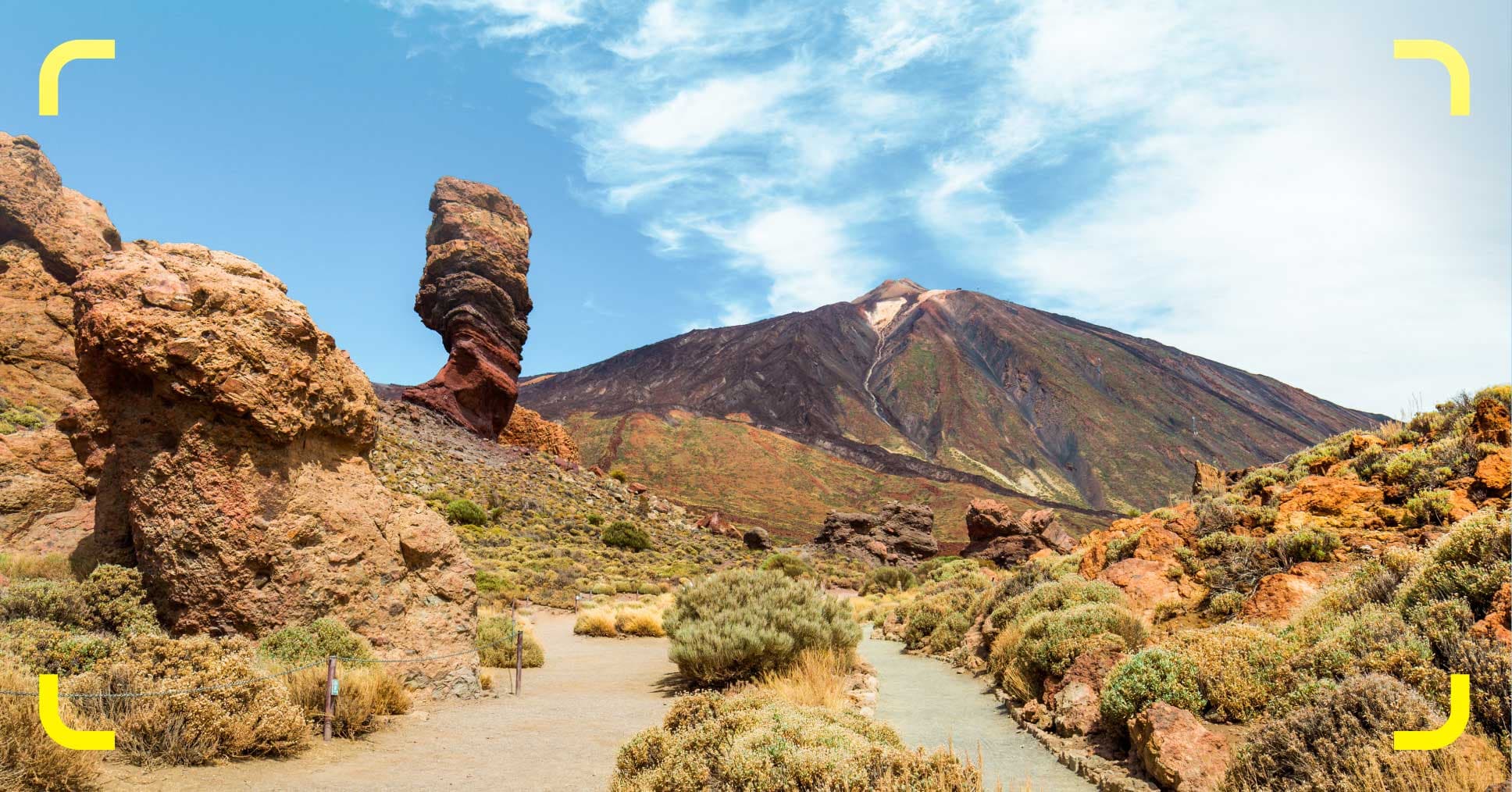
Table of Contents
- The best things to do in Tenerife: A quick overview
- Important new regulations for tourists visiting Tenerife in 2026
- Visiting Mount Teide in 2026: New ecological tax and visitor capacity
- Masca Gorge Trail: New permit requirement and no access by car in 2026
- North vs. south Tenerife: What makes travel different in each region?
- My list of the top 5 best natural sites in Tenerife
- Teide National Park
- Monumento Natural de Montaña Amarilla
- Masca Valley
- Parque Rural de Anaga (Anaga Rural Park)
- Los Gigantes cliffs
- The best beaches in north and south Tenerife
- North Tenerife beaches to check out
- South Tenerife beaches to check out
- 5 towns and cultural sites to visit in Tenerife
- La Laguna
- Puerto de la Cruz
- Santa Cruz de Tenerife
- Garachico
- Icod de los Vinos and the Dragon Tree
- 6 unique must-do experiences in Tenerife
- Try Canarian cuisine at a
- Sample locally grown fruit
- Spend the day at Siam Park
- Go stargazing
- Take a whale- and dolphin-watching tour
- Swim in natural rock pools
- What’s the best time to visit Tenerife?
- Valuable advice for visiting Tenerife
- Renting a car in Tenerife
- Public transportation
- Best restaurants in Tenerife
- Where to stay in Tenerife
- Booking sightseeing tours
- Enjoy internet access while traveling around Tenerife with a Saily eSIM
The best things to do in Tenerife: A quick overview
If you’re planning what to do in Tenerife, the obvious choice is to lay on the beach — but the island has so much more to offer! Here’s a quick glance of some of the best things to do in Tenerife:
Visit Teide National Park, a UNESCO World Heritage site and most famous place in the Canary Islands.
Sunbathe at Monumento Natural de Montaña Amarilla, a volcanic coastal cove in South Tenerife.
Explore Masca Valley, a village nestled in a breathtaking valley with lush volcanic peaks.
Hike in Anaga Rural Park, an ancient UNESCO Biosphere Reserve famous for its prehistoric laurel forests.
Admire Los Gigantes cliffs, a breathtaking 800-meter cliff formation on Tenerife’s west coast.
Explore the three best beaches in north Tenerife, Playa Jardín, Playa de los Guíos, and Playa del Socorro.
Explore the three best beaches in south Tenerife, Playa de la Tejita, Playa de El Médano, and Playa de las Teresitas.
Stroll around La Laguna, a colorful historic town famous for its cathedrals.
Find literary inspiration in Puerto de la Cruz, the most touristy town in Northern Tenerife.
Mingle with locals in Santa Cruz de Tenerife, the island’s capital.
Wander Garachico, a historic coastal town once destroyed by a volcanic eruption.
See the Drago Milenario tree in Icod de los Vinos, a 1,000-year-old tree in a famous wine town.
Try Canarian cuisine at a guachinche, a low-key eatery serving homemade wine and a maximum of three dishes.
Sample locally grown fruit, such as passionfruit, bananas, and prickly pear.
Spend the day at Siam Park, an award-winning Thai-themed waterpark perfect for families with kids.
Go stargazing at Teide National Park, which offers once-in-a-lifetime stargazing tours.
Take a whale and dolphin watching tour to spot pilot whales and bottlenose dolphins.
Swim in a natural rock pool, such as those in Garachico.
Must-try foods in Tenerife: Paella, papas arrugadas with mojo, local passionfruit.
Must-try drinks in Tenerife: Canarian honey rum, local wine at a guachinche.
Before I go into detail about the best things to do in Tenerife, I’ll need to cover an important set of new regulations for tourists visiting the island in 2026. If you want to skip this travel advice, jump to the “5 best natural sites in Tenerife” section.
Important new regulations for tourists visiting Tenerife in 2026
In April 2024, thousands of locals across the Canary Islands took to the streets with a clear message — "The Canaries have a limit." These protests highlighted how overtourism has skyrocketed housing costs for locals, clogged roads with rental cars, and strained the water supply across the islands, including Tenerife. In response to these protests, the Tenerife Island Council and Canary Islands’ Ecological Ministry approved a set of mandatory permits and taxes for visitors, starting in 2026, to balance tourism with the demands of Tenerife’s residents. More specifically, you may need to pay additional fees when visiting Teide National Park — the most visited natural site in the Canary Islands — and will need to pay for a permit to hike Masca Gorge trail.
Visiting Mount Teide in 2026: New ecological tax and visitor capacity
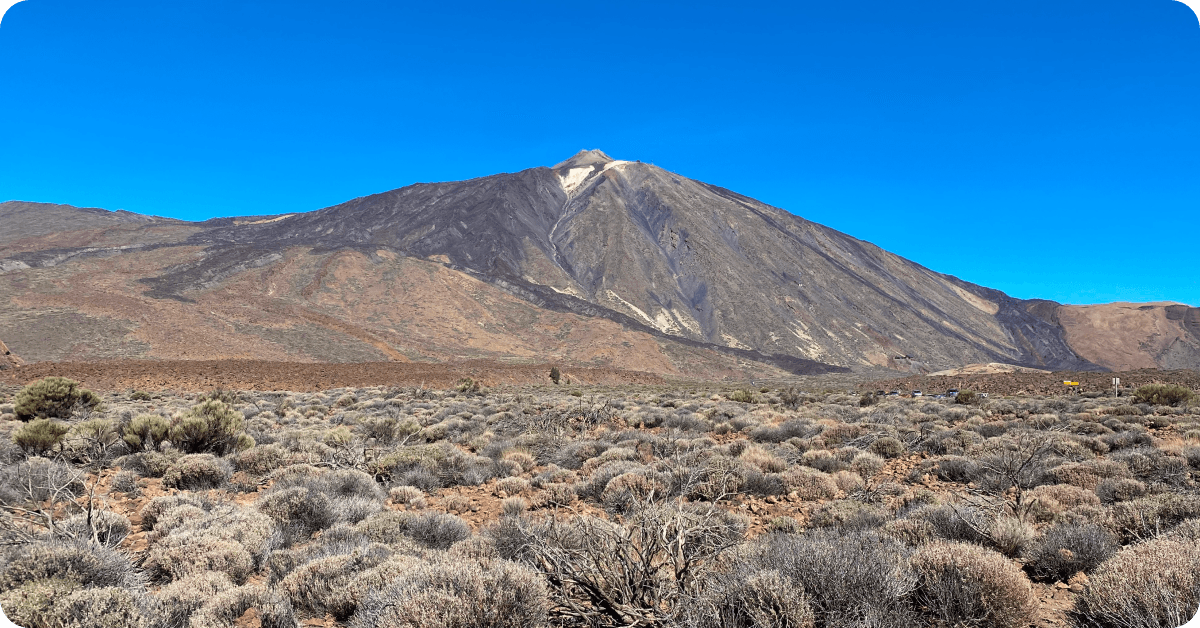
Starting January 1, 2026, tourists must pay an ecological tax of up to €25 (£21/US$29) to access popular hiking trails in Teide National Park. The cost differs based on the visitor’s place of residence, length of stay, age, and who’s in their travel group. Tenerife residents will not need to pay the ecological tax, and residents of other Canary Islands will pay reduced fees for the trails.
Here are the new fees for specific trails and services in Teide National Park:
Path 10 (Telesforo Bravo): Non-residents need to pay roughly €15 (£13/US$17) for self-guided visits or €10 (£8.70/US$11.70) if you hike with a guide. Park authorities are also set to establish a maximum capacity of 300 visitors per day for this trail, which leads to the summit of Mount Teide.
Path 7 (Montaña Blanca): Non-residents need to pay roughly €6 (£5.20/US$7) on weekdays and €10 (£8.70/US$11.70) on weekends and holidays.
Hiking from La Rambleta to the crater of Mount Teide: Teide National Park authorities may prevent you from hiking up to the crater from La Rambleta unless you have a list of mandatory equipment. They may also impose a maximum capacity of 50 visitors per time slot.
Cable car access: Additional fees still apply on top of the ecological tax.
How to pay the Mount Teide Ecological Tax in 2026: Tax payments must now be managed via the Tenerife ON platform before your visit to Teide National Park. Don’t try to sort this out when you’re already at the park — you could get fined up to €600 (£520/US$700). But before disappointment sets in, the Tenerife Island Council has explained that in exchange for this eco-tax, you’ll get additional educational services and information about the trails’ ecology.
Overall, you’ll need to budget a bit more to visit this outstanding UNESCO World Heritage site, but your contribution directly funds trail maintenance, environmental protection, and facilities that make your visit safer and more enjoyable. Do your part to visit Tenerife responsibly.
Masca Gorge Trail: New permit requirement and no access by car in 2026
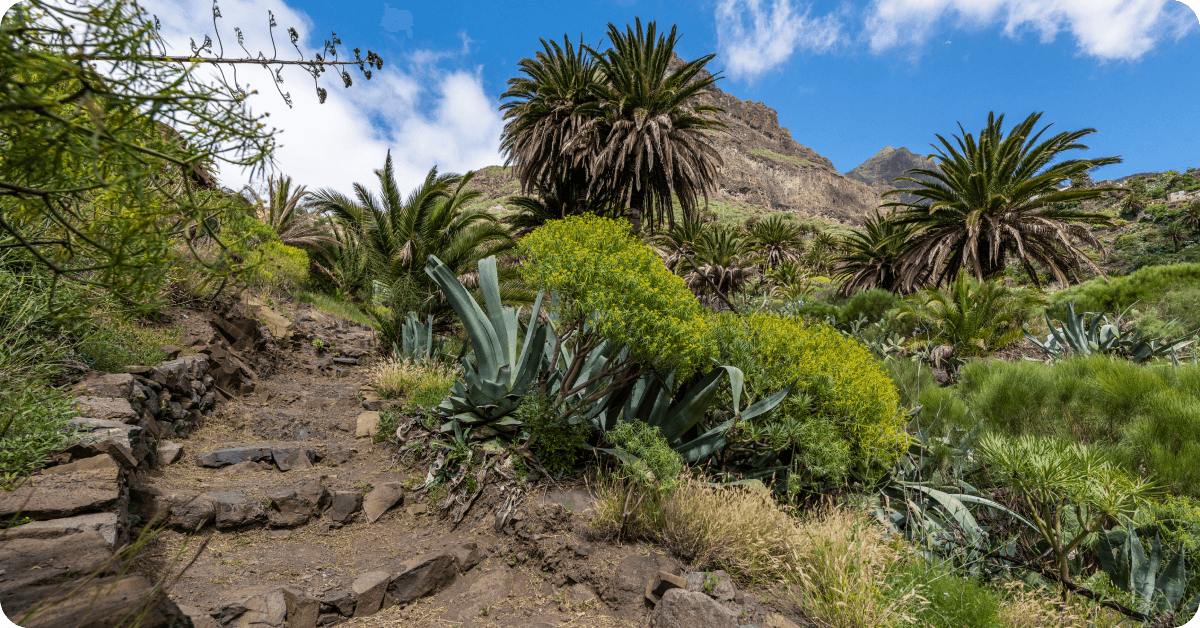
As of April 2025, visitors planning on hiking the Masca Gorge trail need to pay for a permit as part of the Tenerife Island Council’s effort to curb overtourism and sustainability concerns. You can book a permit for Masca Gorge through its official website — the cost is €40.66 (£35.31/US$47.35) for adults and €20.33 (£17.66/US$23.68) for children 8 to 18 years old. Make sure you book a permit in advance, not when you’re already at the trailhead. The cost of the permit includes access to the Masca Gorge trail, insurance, a helmet, and shuttle transport to the trail. The shuttle is mandatory because visitors are no longer able to drive to the Masca Gorge trailhead as of December 2025. You’ll need to take TITSA bus route 355 from Santiago del Teide. However, you can still access the village in Masca Valley by car.
North vs. south Tenerife: What makes travel different in each region?
The main difference between north and south Tenerife is the climate — the south is hotter year-round and the north is more prone to rain and cooler temperatures. Why so? Because Mount Teide — a dormant volcano located smack dab in the center of the island — acts like a massive weather barrier. Trade winds from the northeast bring moisture that gets trapped in the mountains up north, creating clouds and cooler temperatures. Meanwhile, the south sits in Teide's "rain shadow," staying dry and sunny most of the year (perfect for beach vacations).
North Tenerife is greener, cooler, and ideal for hiking. Architecture in the north is largely colonial, and locals go about their daily business at a slower pace, without as many tourists. That said, Puerto de la Cruz and La Laguna showcase more indigenous island culture.
South Tenerife is where you'll find postcard-perfect beaches and reliable sunshine all year long. Costa Adeje and Playa de las Américas offer water parks, luxury resorts, and beach clubs. The infrastructure here caters to tourists — you'll find more English-speaking staff and international food chains.
Getting between south and north Tenerife takes about 1 to 1.5 hours by car or bus. If you’re planning on renting a car and driving around the island, I’d recommend downloading offline maps and getting an eSIM for Tenerife so you can use your map app of choice for navigation.

Stay connected across Tenerife with a Saily eSIM
Enjoy reliable, fast mobile data in Tenerife without incurring trip-ruining roaming charges.
My list of the top 5 best natural sites in Tenerife
Arid Martian landscapes, black sand beaches, and vibrant green valleys — it’s hard to fathom that you could find these contrasts on one tiny island. But such is the mystique of Tenerife’s natural beauty. Here’s my list of the top five natural sites in Tenerife, in no particular order.
Teide National Park
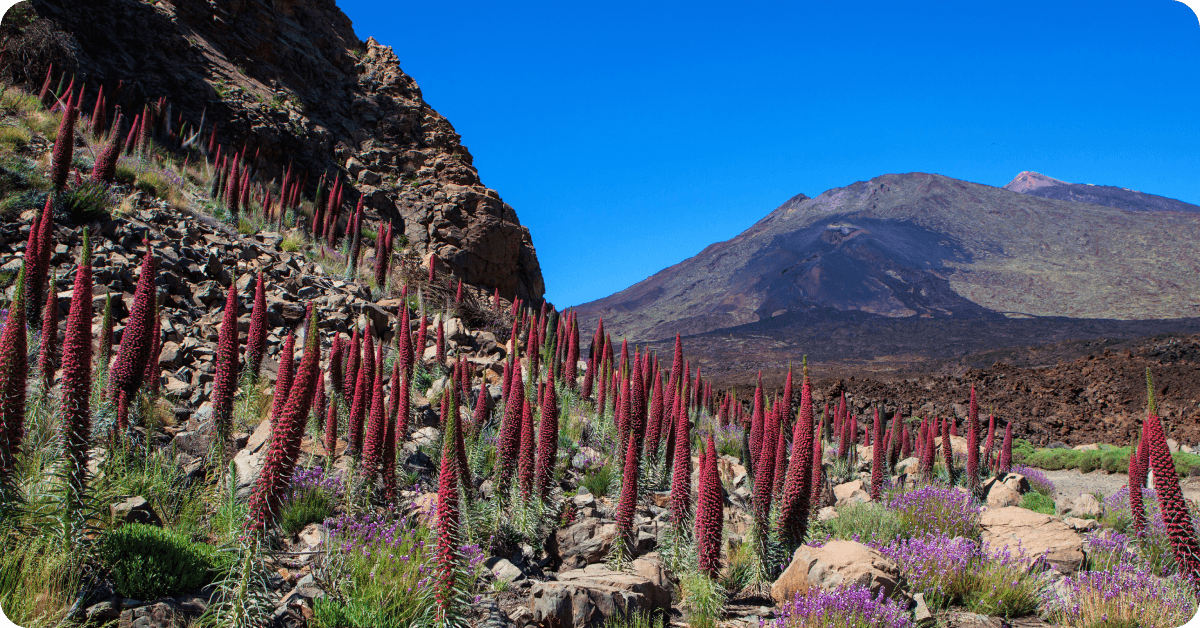
Tenerife’s most famous natural site is Mount Teide, a dormant volcano amidst surrounding rock formations in Teide National Park, which welcomes 4 million visitors per year. Mount Teide is not only a UNESCO World Heritage site but also Spain's highest peak, towering at 3,715 meters above sea level. The park’s tourist information center tells the tale of Guayota, a wicked mythological being said to live in Teide’s crater according to the Guanches — the indigenous inhabitants of the Canary Islands.
You’ll get to enjoy a range of trails at Teide National Park that suit different mobility needs — just ask staff at the visitor’s center for guidance on which ones are flat the whole way through and which are steeper and longer. Since I was with my mom, we stuck to the least challenging trails, which begin just outside the visitor’s center. Path 10 (Telesforo Bravo) leads to the summit crater of Teide. But as previously mentioned, you’ll need to pay a fee through the Tenerife ON online platform before you get to the park — otherwise, you risk a fine of €600 (£520/US$700).
Teide National Park is also home to several flora and fauna endemic to the area and found nowhere else on earth. If you visit Teide from May to June, keep your eyes peeled for the unmissable red tajinaste (Echium wildpretii) — a red, cone-shaped tower of tiny red flowers. (Unfortunately, I didn’t get to see any in bloom.) You also might want to watch your step around the park — Teide National Park is home to loads of lizards, including the Teide lizard (Gallotia galloti eisentrauti)!
📍 Teide National Park — open in Google Maps.
🚌 How to get to Teide National Park by bus:
From Puerto de la Cruz — Mount Teide bus 348.
From Costa Adeje — Mount Teide bus 342.
Important note about returning from Teide National Park: The last bus typically leaves at 4:00pm from the park. If you miss it, you’ll have to stay overnight or attempt to get a taxi for exorbitant prices.
My top tips for visiting Teide National Park:
Don’t bother driving there yourself — especially if your nervous system is still shot from your drive to Masca Valley (spoiler alert). You can find multiple bus routes across the island that lead to Teide because it is, after all, the crown jewel of Tenerife. Save yourself the stress (and some money) and take a bus to and from Teide.
The park’s high altitude means you’ll face some intense UV exposure and serious heat. You won’t find much shade either, other than at the visitor center, so sunscreen, sunglasses, a hat, and a water bottle are non-negotiables.
Food options at the tourist center are limited and super expensive. I’d recommend bringing your own snacks and water.
There is no Wi-Fi at the tourist information center nor at the cafe inside, which isn’t such an uncommon scenario when you’re looking for internet access while traveling. Cell service was generally spotty throughout the park but you might get at least one bar if you get a Tenerife eSIM beforehand. This is also why it’s very important to download offline maps beforehand. The park has maps, but you never know what could happen — it’s better to be safe than sorry.
You can purchase bus tickets as you board, but you aren’t guaranteed a seat. Monitor the bus times and try to buy tickets in advance, either at a kiosk or shop with a sticker stating that it sells bus tickets.
Monumento Natural de Montaña Amarilla
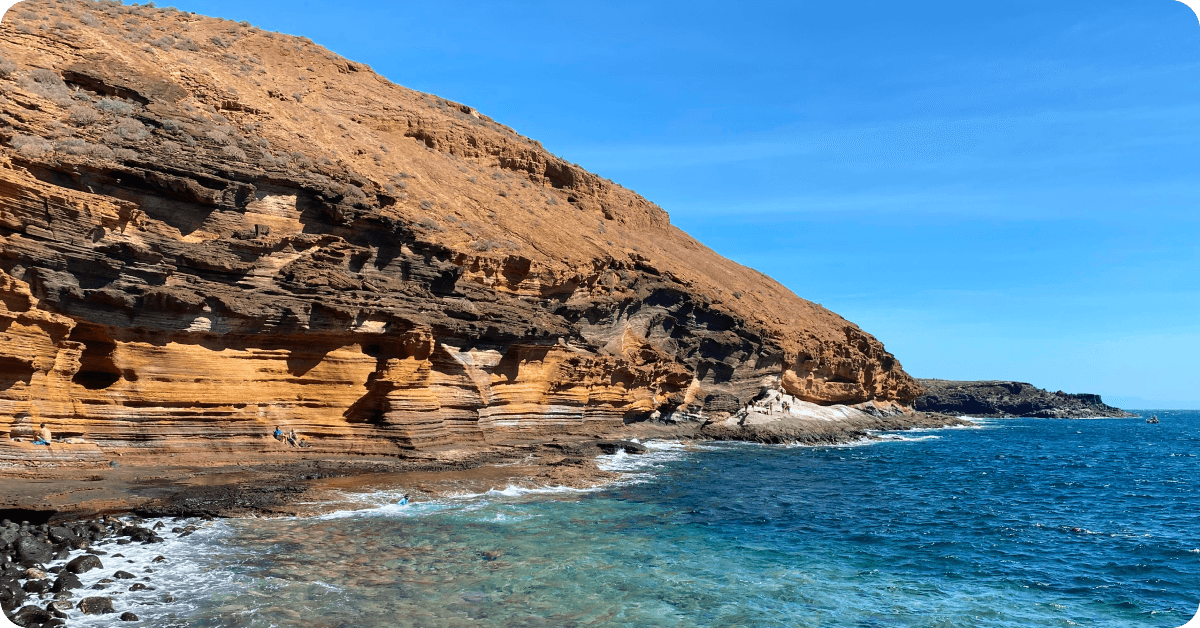
The Monumento Natural de Montaña Amarilla is a stunning volcanic coastal formation in Tenerife characterized by its terracotta-colored rocks and clear waters. It wasn’t recommended to me by anyone, nor did I find out about it from any “Tenerife things to do” searches — I found it by browsing Google Maps to check what was along the coast near our hotel. And I’m glad I did! Though plenty of people kept us company sunbathing, it still felt like a hidden gem. I spent most of my time inspecting the tiny crabs scurrying between crevices and watching crystal clear waves lap on the rock’s edge.
I can’t officially recommend swimming here because it seems quite dangerous, and there is no lifeguard on duty, but that didn’t stop dozens of people from wading along the cliff’s edge. Another important note is that you won’t find bathrooms nearby, but a small drink and snack bar sells refreshments.
Admittedly, Monumento Natural de Montaña Amarilla is a bit awkward to get to by bus, but I’d say it’s well worth visiting if you’re staying in south Tenerife.
📍 Monumento Natural de Montaña Amarilla — open in Google Maps.
🚌 How to get to Monumento Natural de Montaña Amarilla by bus:
From Costa Adeje — take Costa del Silencio bus 467. Get off at the last stop, Costa del Silencio.
Masca Valley
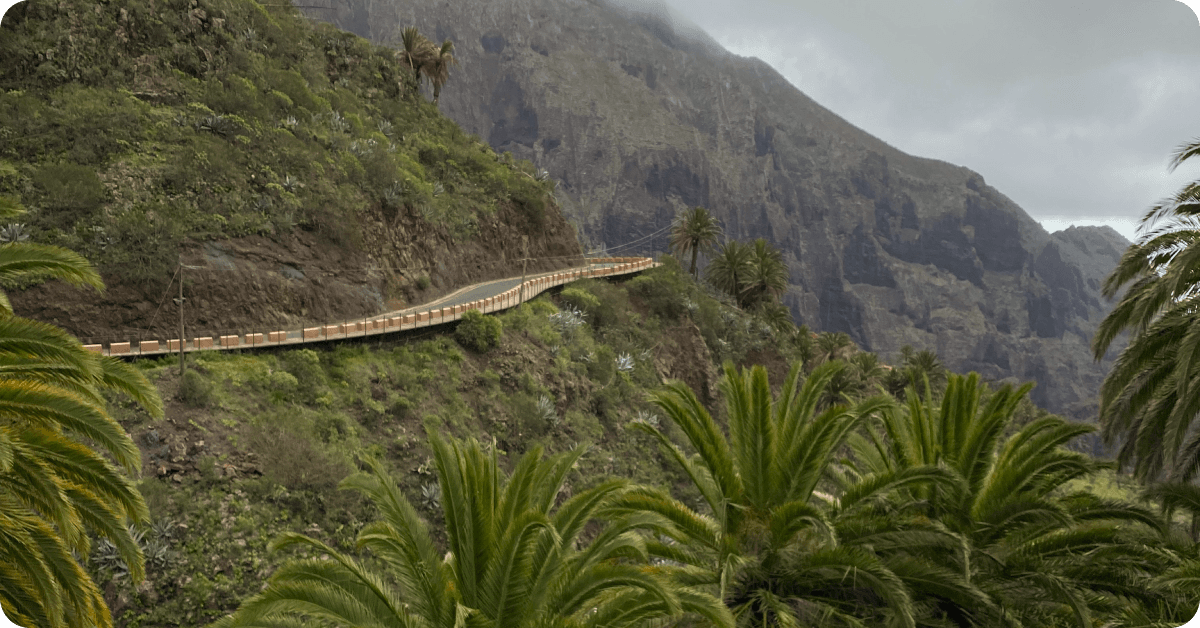
This luscious, remote mountain village made me ponder about whether I should ditch office life in exchange for mountain-side farming. I kept periodically turning to my mom to ask “doesn’t this remind you of Peru?” It’s difficult to describe the stunning views you’re in store for on the drive up to Masca and once you get to the village, but you should expect fog-draped peaks, palm trees, cacti, and tropical flowers in bloom — make sure to add this site to your Tenerife bucket list.
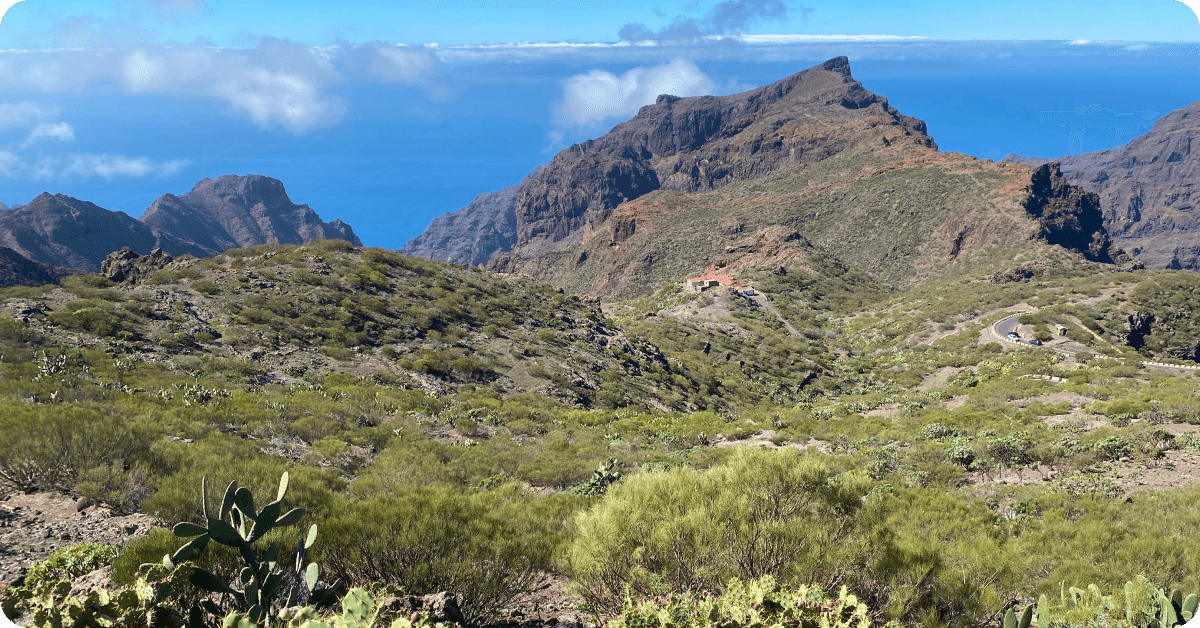
A pit stop on the way to Masca Valley.
Speaking of the drive to Masca — it’s, well, not for the faint of heart. Nothing could have prepared us for the winding, narrow, steep roads that we needed to traverse while competing with comically large tour buses for space. I don’t want to sugarcoat the fact that one wrong move could lead to hypothetically driving off the cliff. If you haven't driven manual transmission recently, absolutely book an automatic car. We did in fact rent a car with automatic transmission, but guess what was waiting for us the next day (hint: not an automatic car)? My mom ended up having to practice for 10 minutes in a parking lot after 20 years of automatic driving, then conquered these mountain roads like an absolute champion. But did this experience give both of us some new grey hairs? Absolutely.
📍 Masca Valley — open in Google maps.
Important information about hiking to Masca Gorge trail: As of April 2025, private vehicle access is strictly prohibited when getting to this trailhead. You’ll only be able to get to Masca Gorge trail by taking a shuttle bus.
My top tips for Masca Valley and what you should know before visiting:
Parking in Masca is unfortunately a nightmare because its popularity has outgrown its infrastructure. Try to arrive as early as you can, or you’ll have to spend some time maneuvering around before finding a “creative” (illegal) parking spot along the winding road.
If you haven’t booked reservations for a restaurant, expect to wait 1-2 hours to be seated. Many restaurants, especially those with front-row views of Masca’s gorgeous mountains, have made their rounds on social media and bring heaps of tourists in.
Masca’s elevation offers cooler temperatures than the rest of the island. We needed long sleeves as evening approached.
Leave Masca while the sun is still out. You do NOT want to drive down those winding roads in the dark.
The way to Masca has plenty of lookouts designated parking spots that are absolutely worth getting out of the car for.
You’ll find cafes, restaurants, shops, and bathrooms when you’re actually in Masca but not so much along the way.
Parque Rural de Anaga (Anaga Rural Park)
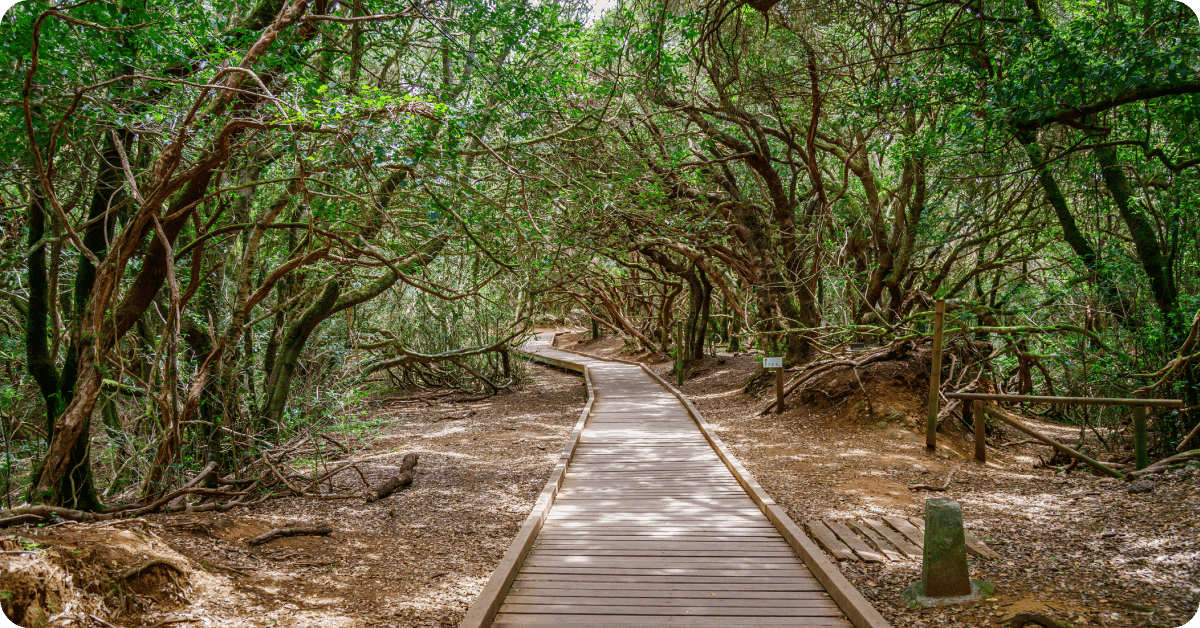
Anaga Rural Park, a UNESCO Biosphere Reserve, sits at Tenerife’s northeastern appendage and is an enchanting natural site to check out for nature lovers staying in north Tenerife. Expect to be flanked by curved laurel trunks as you stroll along a forest boardwalk and through mossy tunnels.
Much like Teide National Park, you’ll find plenty of hiking trails in Anaga Rural Park that accommodate different fitness levels, including gentle walks along coastal paths and challenging mountain ascents. You can either hike alone or book a guided tour online. Remember to pack some long-sleeved layers — temperatures can shift quickly in Anaga, and the park’s misty conditions make it cooler than other spots on the island.
Most popular trails in Anaga Rural Park:
Sendero de los Sentidos (Path of the Senses).
Three different loops — 350 m, 500 m, or 1,200 m (0.2 to 0.75 mi).
15- to 45-minute hike, depending on which loop you choose.
Easy difficulty; most popular and accessible trail. Short, flat, and family friendly.
Starts from the Cruz del Carmen Visitor Center.
Las Carboneras - Chinamada - Mirador Aguaide Viewpoint loop.
Approximately 7.9 km (4.9 mi) long.
2.5- to 3-hour hike.
Moderate difficulty.
Starts off in the forest and then becomes a rugged, coastal trail.
Afur - Tamadite Beach - El Chorro loop.
Approximately 11 to 14.3 km (6.9 to 8.9 mi), depending on which route you take.
4.5- to 7-hour hike.
Difficult; steep inclines.
Starts from the small village of Afur, leading through a black and white-pebble beach, then to coastal cliffs, and back to laurel forests.
📍 Anaga Rural Park — open in Google Maps.
🚌 How to get to Anaga Rural Park by bus:
From Costa Adeje — head to the “Magma” bus stop and take Intercambiador Sta. Cruz bus 110. Then get off at Intercambiador Sta. Cruz and take Intercambiador Laguna bus 15 to Intercambiador Laguna (T) and get off. At this stop, take the Las Carboneras 275 and get off at Cruz del Carmen, right by the park entrance.
Los Gigantes cliffs
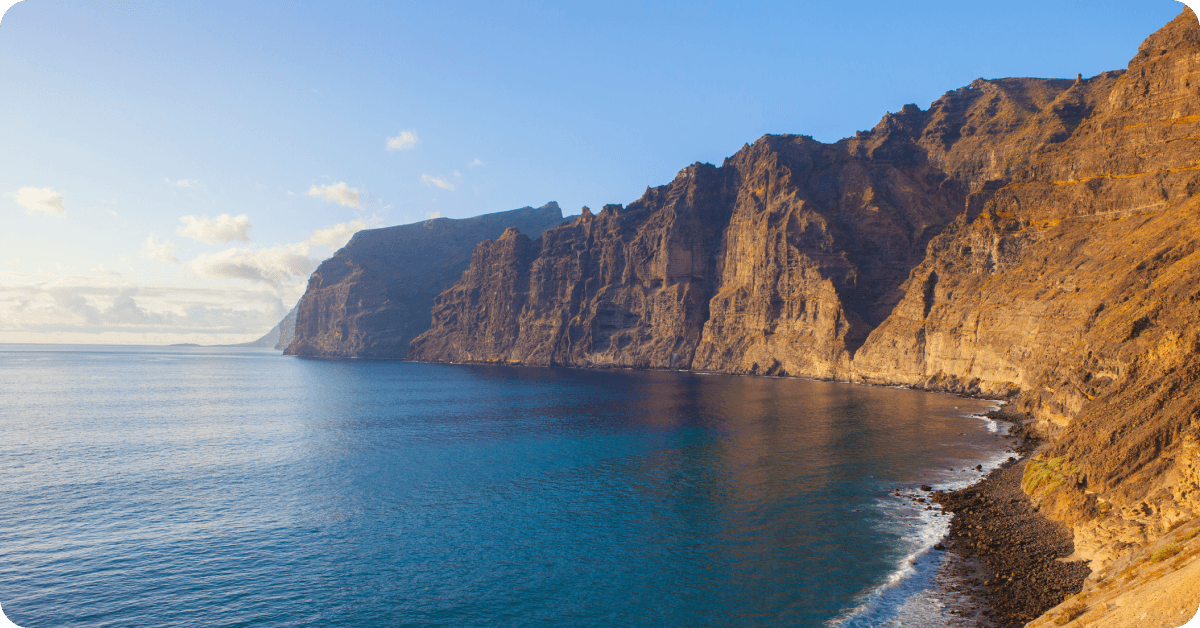
Also nicknamed the “Wall of Hell,” Los Gigantes (The Giants) cliffs loom 600 meters over the Atlantic Ocean, creating one of Tenerife’s most photographed landscapes. If you have a rental car, you can take a gorgeous coastal drive from Costa Adeje to Los Gigantes and admire the view from nearby cafes and restaurants or see them up close and personal on surrounding hiking trails. For an even more immersive experience, you can take a boat tour from Los Gigantes marina for a cliff-viewing and whale-watching experience since this area sits along major marine migration routes.
Important information about visiting Los Gigantes cliffs in 2026: Some coastal paths have become restricted due to falling rocks, and as such, some online sources recommend taking a boat tour for safer views of the cliffs.
📍 Best viewpoint of Los Gigantes: C. la Hondura, 3, 38683 Santiago del Teide, Santa Cruz de Tenerife, Spain — open in Google Maps.
The best beaches in north and south Tenerife
Beaches — isn’t that why you’ve booked a trip to Tenerife, anyway? If you’re like me, you probably need a break from constant dreary skies and frigid temperatures of the northern hemisphere. Good news — south Tenerife is famous for its year-round sunshine and warm temperatures. And while north Tenerife is more famous for its misty, lush mountainous landscapes, you might want to reserve one of your beach days for hidden gems in the north region of this beautiful island. Take a look at my list of the best beaches in both north and south Tenerife.
North Tenerife beaches to check out
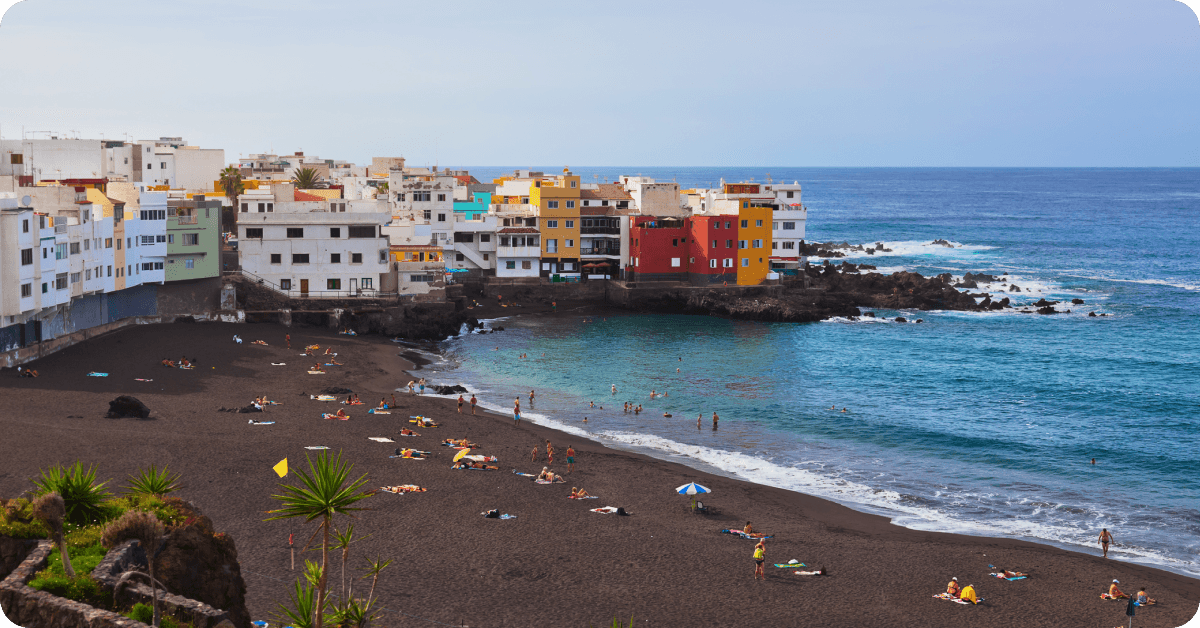
Ever been to a black volcanic sand beach? If not, head to the following three beaches in north Tenerife:
Playa Jardín. Located in Puerto de la Cruz, you’ll find black volcanic sand and lush tropical gardens designed by Spanish sculptor César Manrique.
Playa de Los Guíos. A hidden gem among locals who want to escape tourist crowds, this small black-sand beach offers a down-to-earth Canarian experience with better opportunities to mingle with residents. The surrounding Los Gigantes cliffs provide natural windbreaks and dramatic scenery.
Playa del Socorro. Surfers flock to this northern beach for consistent waves and powerful Atlantic swells. The dark sand stretches wide enough for beach games and sunbathing, while the surrounding landscape feels wild and undeveloped. Strong currents make swimming challenging for inexperienced ocean swimmers.
South Tenerife beaches to check out
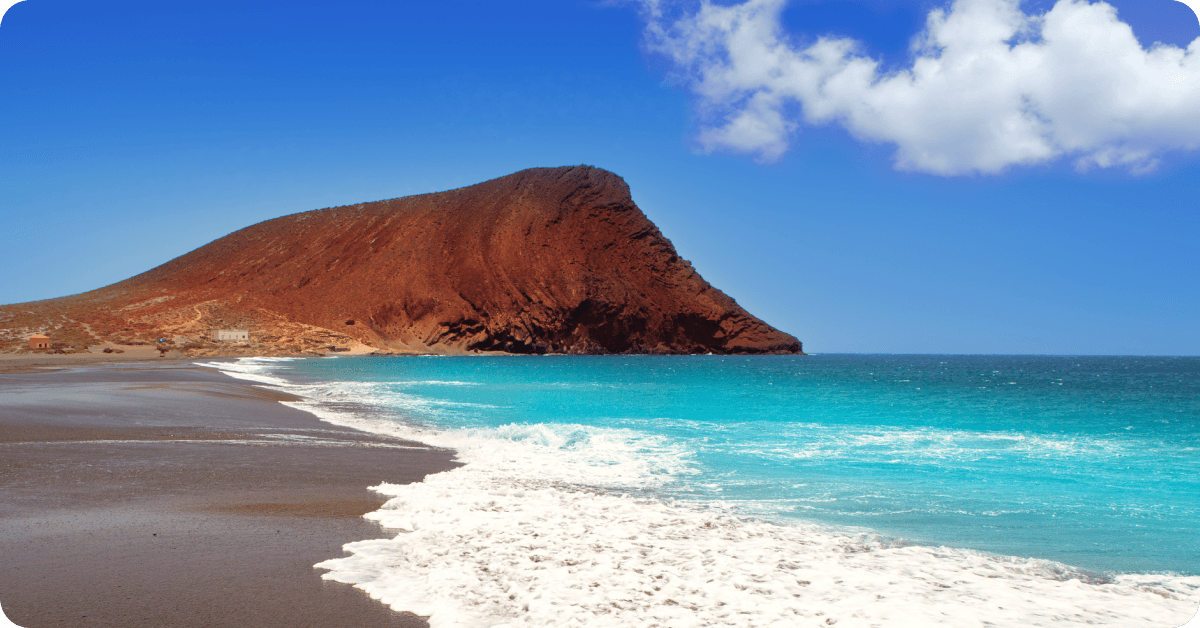
If you’ve booked a hotel in Tenerife, it’s likely it’s in the south of the island. Here’s my list of the best beaches in south Tenerife:
Playa de la Tejita. Its golden sand and natural dunes create a more secluded atmosphere compared to the developed resort beaches nearby. Make sure to head to this picture-perfect beach during golden hour for a gorgeous view of Red Mountain.
Playa de El Médano. Wind and kite surfers love this beach, apparently thanks to consistent trade winds. The long stretch of golden sand accommodates both water sports enthusiasts and those who like to lay on the sand and soak up the sun.
Playa de las Teresitas. This beach near Santa Cruz may be artificial, but it’s nonetheless magical — in fact, the sand has been imported from the Sahara Desert. Palm trees, calm waters, and plenty of nearby facilities make it perfect for families.
💡 General note about beaches in Tenerife: Nudity is common. Take that as you will.
5 towns and cultural sites to visit in Tenerife
Turns out, you can only lay on the beach for so long before getting restless and feeling a bit of FOMO. Luckily, Tenerife offers a host of historic towns to get your fill of cobblestone streets, vibrant architecture, ornate cathedrals, and local life. Here’s my list of towns and cultural sites to explore in between periods of sunbathing.
La Laguna
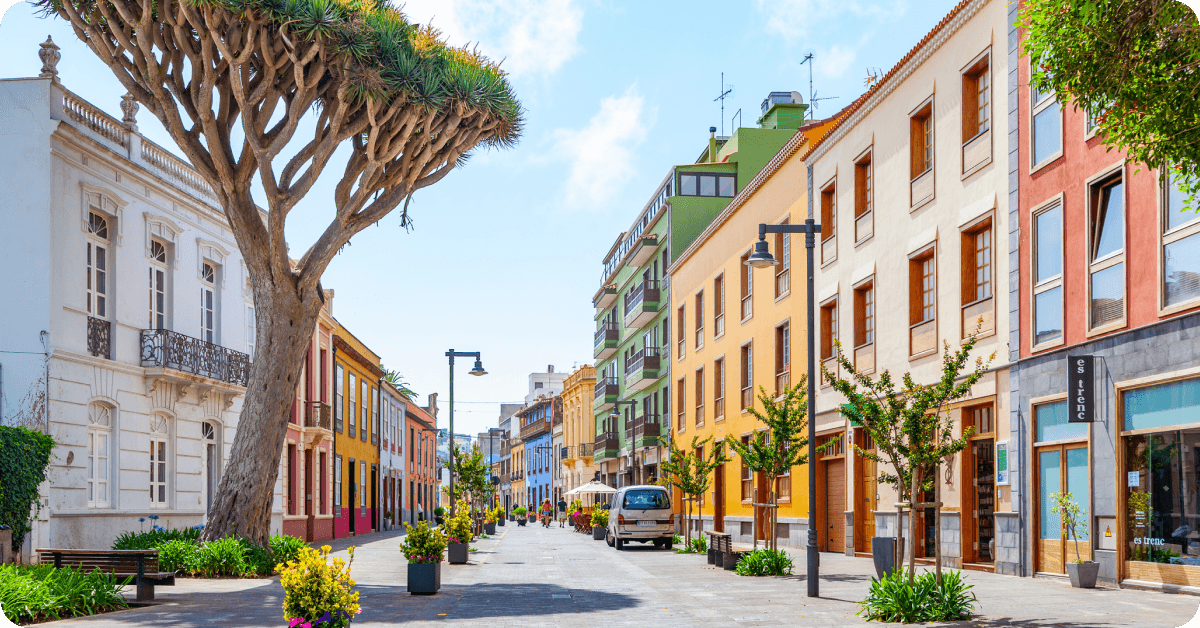
San Cristóbal de La Laguna (La Laguna, for short) earned its UNESCO World Heritage status for good reason. As the Canary Islands' first capital, its colonial architecture and colorful streets showcase 500 years of history. And thanks to the University of La Laguna, the town buzzes with students working from cafes and bookshops, making it feel less touristy than other regions of the island. The main attraction is the Cathedral of La Laguna right in the heart of the main square, accompanied by beautiful churches scattered throughout the old town. Check out the Museum of the History of Tenerife for historical and cultural Canarian exhibits.
Puerto de la Cruz
Puerto de la Cruz is the oldest tourist destination in the Canary Islands and has maintained its status as the tourist hub of north Tenerife. The town is marked by colorful architecture along cobblestone streets, the Lago Martiánez swimming complex, and the Malvasía wine that’s been famously name-dropped in several of Shakespeare’s plays. If you’re an Agatha Christie fan, keep your eyes peeled for a statue of her at the Mirador de la Paz viewpoint and try to imagine how your surroundings inspired The Man from the Sea.
Santa Cruz de Tenerife
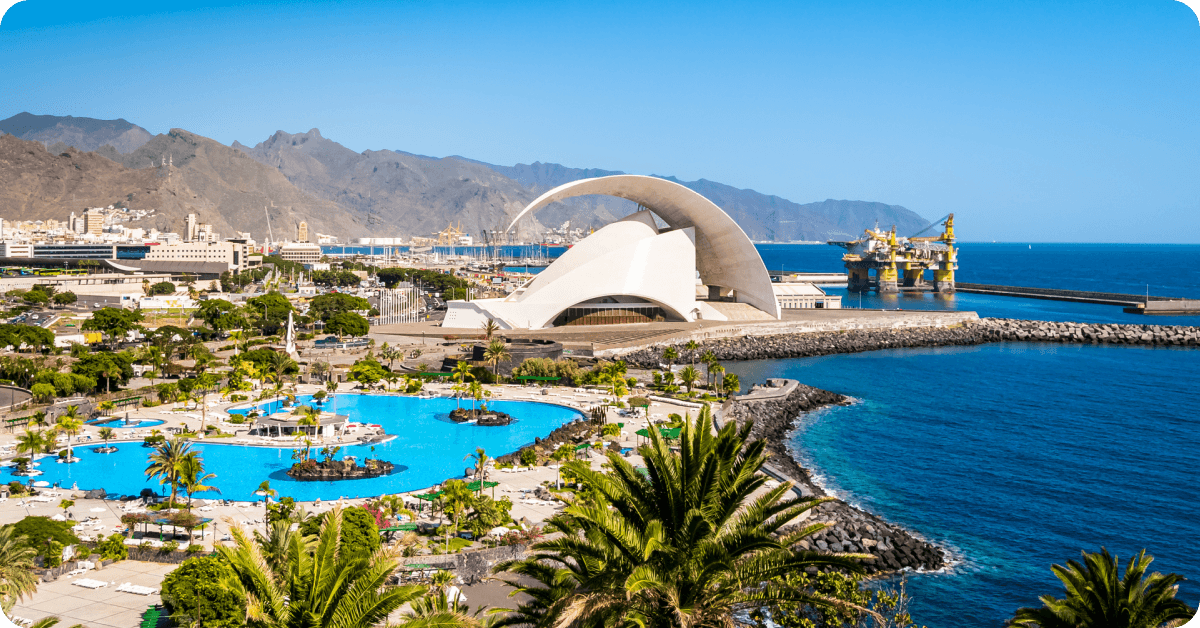
The capital of Tenerife, Santa Cruz de Tenerife, is as local as it gets. The city doesn’t cater to tourists unlike the resort towns of the south. You’ll find local markets, department stores, and restaurants primarily patronized by residents of the island. The city’s architectural landmark is undoubtedly the Auditorio de Tenerife, designed by Spanish-Swiss architect Santiago Calatrava. Santa Cruz de Tenerife also hosts one of the world’s largest Carnival celebrations in February, where the city transforms into massive street parties à la Rio Carnival. Although I was on the island in February, my itinerary was too packed to add Carnival to the list. Next time!
Garachico
Another historic coastal town, Garachico was famously destroyed by a volcanic eruption in 1706 and has since been completely rebuilt. The eruption created several nearby rock pools and destroyed Garachico's original harbor, which used to be an important trading port. Nowadays, you’ll find a cute, charming town with a world-renowned fine arts scene. You’ll probably only need a couple of hours to explore Garachico’s quaint cobblestone streets, but you can spend time sampling its cafes, restaurants, and ice cream shops.
Icod de los Vinos and the Dragon Tree
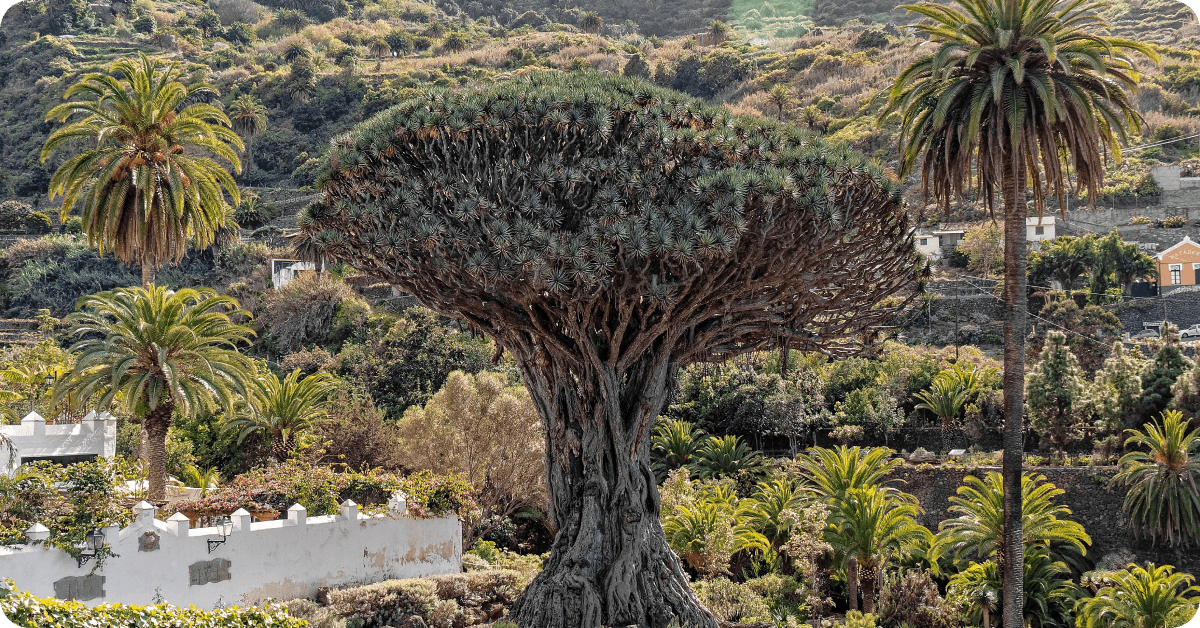
Icod de los Vinos (Icod of the Wines) is an exceptionally green town famous for its red wine. The town is also home to the 1,000-year-old Drago Milenario tree (aka the Dragon Tree), which is said to predate European colonization and possibly Christianity itself. The must-dos in Icod de los Vinos are to visit a bodega for wine tasting, where you can sample wines made from grapes grown in volcanic soil, and to pay your respects to this incredibly old tree.
6 unique must-do experiences in Tenerife
Tenerife is a unique little island in its own right. It harbors one-of-a-kind microclimates, a rich mythological history, and a local cuisine that fuses Spanish recipes with indigenous ingredients. In other words, your Tenerife itinerary should include a few experiences you can’t get in mainland Spain or anywhere else in Europe. Here’s my list of some of the most unique things to do in Tenerife.
Try Canarian cuisine at a guachinche
By far, one of the most unique things to do in Tenerife is to eat at a guachinche — a traditional, informal eatery serving local wine and homemade Canarian dishes. Guachinches originally started as family-run establishments where locals could buy wine directly from producers, but tourists have since figured out that they are the key to sampling homemade, local, and affordable food. They’re often tucked away in residential areas without flashy signs, maintaining an “if you know, you know” vibe. You won’t always find a set menu or regular hours of operation — many guachinches are only open during specific days or seasons and focus on serving dishes made with seasonal produce.
💡 Did you know? According to regional regulations, Tenerife’s guachinches are legally required to serve only their own homemade wine and water and a maximum of three dishes — beer, spirits, and soft drinks are technically prohibited.
📍 How to find a guanchinche in Tenerife: Ask locals, check social media groups, or look for small signs in rural areas. The best guachinches feel like eating at someone's grandmother's house, because that's essentially what you're doing.
Sample locally grown fruit

Fruit is fresh and abundant in Tenerife. You’ll find it sold at local markets or small bodegas in resort areas and cities alike. The island’s volcanic soil and varied microclimates create great conditions for tropical fruits that taste a whole lot different from what you get in the grocery store back home. I’d recommend trying:
Bananas. Canarian bananas are smaller, sweeter, and more flavorful than your regular ol’ grocery store bananas.
Passionfruit. If you live in the Northern Hemisphere, passionfruit rarely becomes ripe by the time it makes it to the grocery store, and it’s expensive. I had the best passionfruit of my life in Tenerife — jammy and exceptionally sweet.
Prickly pear. Also known as cactus fruit, the flavor profile is somewhere between watermelon and cucumber. You’re bound to accidentally run into fruiting cacti across the island. I found one near Monumento Natural de Montaña Amarilla but stopped myself from harvesting it, lest I suffer for the rest of my trip with tiny thorns stuck in my skin. Plus, foraging from public grounds isn’t the most sustainable tourism practice in Tenerife. Support local foragers and grab some prickly pear, de-thorned, from a shop instead.
Jams and preserves. If you don’t manage to sample any fresh fruit during your trip, you can also get jams or preserves made from prickly pear, passionfruit, banana, and other local fruit. If you’re bringing jam home, make sure the jars are 100ml or less if you’re putting them in your carry-on luggage.
Spend the day at Siam Park
Thailand … in Tenerife? I was confused to find Tenerife filled with billboards of Thai warrior statues and temples until I learned that Siam Park, a Thai-themed water park located in Costa Adeje, is one of Tenerife’s top attractions. Spending the day at Siam Park is undoubtedly one of the best things to do in Tenerife with kids, where families can enjoy steep, adrenaline-pumping water slides, lazy river rides, marine life exhibits, and a Thai restaurant.
Go stargazing
Tenerife's strict light pollution laws make it one of the world’s premier stargazing destinations. While stargazing opportunities are excellent year-round, nights are longer and skies are clearer during winter months. You can catch stunning views of the Milky Way, Jupiter's moons, Saturn's rings, and distant nebulae with telescopes provided on stargazing tours in Teide National Park.
💡 Pro tip for stargazing in Teide National Park: If you don’t want to book an excursion and you have a rental car, you can drive to Mirador de los Poleos for sunset and then head to Zapato de la Reina (the Queen’s Shoe) for stargazing.
Take a whale- and dolphin-watching tour
Los Gigantes cliffs aren’t just a famous spectacle in their own right — you can also catch some world-renowned whale- and dolphin-watching tours in a protected marine reserve off the coast. Depending on the tour company, you can take a sailboat, catamaran, or speedboat from Los Gigantes or Costa Adeje and marvel at the year-round resident pilot whales and bottlenose dolphins. Tours often include lunch and complimentary drinks.
Swim in natural rock pools
Remember how I mentioned that volcanic eruption that destroyed Garachico? The silver lining is that this natural disaster created several natural swimming pools around Tenerife's coastline, most famously in Garachico itself. The pools are protected from Atlantic waves by natural rock barriers, making them a tad safer than swimming in the ocean itself. But beyond Garachico, several coastal areas have smaller natural pools — ask a local for their favorite spot!
💡 Pro tip for visiting natural rock pools in Tenerife: The best time to swim in natural pools is when the weather’s calm. I wouldn’t risk swimming if waves are crashing too violently against the pool’s surrounding rockbed.
What’s the best time to visit Tenerife?
While Tenerife offers consistently good weather all year, the best time to visit is arguably during shoulder season — May, June, and September to November — where you can enjoy lower flight and hotel prices, fewer crowds, and Canarian sun. However, as mentioned before, north Tenerife always gets slightly lower temperatures compared to the south of the island. If you’re visiting Tenerife during shoulder season, make sure to pack some light, long-sleeved layers for cooler evenings or areas with higher altitude.
Months | Daytime temperatures | Weather | Tourism season |
|---|---|---|---|
May, June, and September to November | 20°C to 26°C (68°F to 78.8°F) | Warm, mild. | Shoulder season (cheaper hotel and flight prices, fewer crowds). |
March and April | 21°C to 23°C (69.8°F to 73.4°F) | Slightly rainy, cool nights. | Low season (cheapest hotel and flight prices, fewest crowds). |
July and August | 28°C to 30°C (82.4°F to 86°F) | Hot, dry. | High season (peak tourist season — high prices and large crowds). |
December to February | 20°C to 23°C (68°F to 73.4°F) | Mild, spring-like. | High season (peak tourist season — high prices and large crowds). |
For more in-depth weather guides across the continent, check out Saily’s Best time to visit Europe article.
Valuable advice for visiting Tenerife
Before heading to Tenerife, take a quick glance at advice I wish I would have gotten before my vacation as well as some of my top restaurant recommendations.
Renting a car in Tenerife
If you want to rent a car in Tenerife, plan it in advance. We didn’t think far ahead enough and had to settle for an unofficial car rental spot beside our hotel instead of a reputable company like Hertz. Your hotel concierges can also help you book a rental car, but it’s not a guarantee you’ll be able to reserve one, especially if you want a same-day booking during high tourist season. Ultimately, we didn’t get a car rental on the day we wanted it and had to change our plans a bit to go to Masca the following day.
A few more notes on renting a car:
If you’re opting for one of the unofficial rental companies, you also might need cash for a deposit.
We asked for an automatic car and were even told we’d be guaranteed to get one. Guess what type of car we got the next day? Hint: Not an automatic one.
Make sure to take photos of the car beforehand, especially if you notice pre-existing scratches or dents, so you don’t get blamed later and lose your deposit.
Public transportation
The TITSA bus system is excellent — buses are clean, reliable, and air-conditioned, with ample space to stow your luggage. I took a bus from the airport to my accommodation and it was about 1/10th of the price that I would’ve paid for a taxi. The bus system connects major cities and popular sites like Teide National Park. You can buy bus tickets when you get on or through the TITSA app.
💡 Pro tip: You’ll need internet access to use the TITSA app. Instead of searching for public Wi-Fi, you can either get an eSIM or SIM card for Spain to avoid enabling your international roaming.
Best restaurants in Tenerife
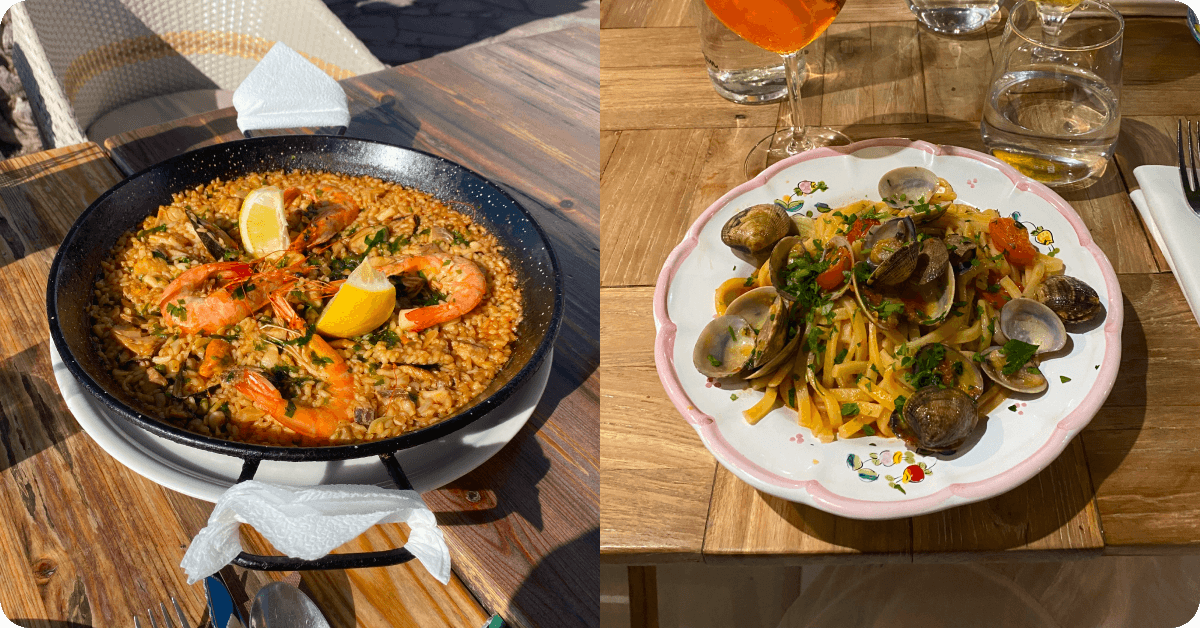
Paella from Restaurante Mayte (left) and scialatielli alle vongole from Limonella (right).
Two restaurants stood out to me in Tenerife are:
Limonella Italian Restaurant: You will definitely need to book reservations to avoid a two-hour wait, but the food is absolutely phenomenal. The must-try dish is scialatielli alle vongole (clam pasta). It was so good that we visited twice!
📍 Limonella, C. Managua, 17, 38660 Arona, Santa Cruz de Tenerife, Spain — open in Google Maps.
Restaurante Mayte: Incredible paella and an assortment of fresh seafood can be enjoyed right by the ocean. This was yet another restaurant we visited twice.
📍 C.C. Veronica 3 Calle Paseo, C. Francisco Andrade Fumero, Locales 24, 25, 26, 38660 Arona, Santa Cruz de Tenerife, Spain — open in Google Maps.
Where to stay in Tenerife
As previously mentioned, south Tenerife is where you’ll find most tourist resorts on the island. North Tenerife, on the other hand, is less touristy and seems to attract tourists keen on hiking and finding local hidden gems. The most popular places to stay in Tenerife include:
Costa Adeje. Offers both upscale and midscale resorts with easy beach access and all the tourist amenities you’ll need.
Puerto de la Cruz. An excellent northern base that strays a bit further from the crowds of the south. You’ll be closer to hiking trails and cultural sites while still having beach access.
La Laguna. Less touristy, more local. Stay here if you want to explore historic architecture and sample great restaurants.
Playa de las Américas. Popular amongst partiers. Expect a younger, wilder atmosphere.
Booking sightseeing tours
My biggest advice for booking tours to popular attractions like Teide National Park, Masca Valley, or whale watching tours — do it as far in advance as you can. Don’t wait til the last moment like we did. It’s especially important to book tours for Mount Teide in advance due to the new 2026 regulations that cap visitors at 300 for the trail up to the crater. You can book tours online, through information centres around city centers, or by asking your hotel’s concierge.
Enjoy internet access while traveling around Tenerife with a Saily eSIM
Plenty of spots around Tenerife don’t come equipped with free Wi-Fi. The easiest way to get internet access across the island is by getting an eSIM. In case you’re unfamiliar, an eSIM is a digital version of a SIM card, which means you don’t have to make any stops in a shop or at the airport to get a physical SIM to insert into your phone. My biggest nightmare is accidentally racking up a roaming bill in the hundreds of dollars by forgetting to disable my Canadian data plan. Nowadays, I have a European plan, which means I can “roam like at home” in any EU country. My mom, on the other hand, would’ve been subjected to abysmal roaming rates from her Canadian carrier if she had chosen to use roaming. Instead, she got a Saily eSIM for Spain, which offers coverage in the Canary Islands — including Tenerife. She had service everywhere on the island except for Teide National Park, where nobody seemed to have service at all. With Saily, you can install your eSIM before arriving in Tenerife so that you have internet access the moment you land. If you’re looking for fast, affordable data in Tenerife, just download the Saily eSIM app and pick a plan for your trip.
Need data in Spain? Get an eSIM!

1 GB
7 days
US$3.99
3 GB
30 days
US$6.99
5 GB
30 days
US$9.99
Further reading:
FAQ


Related articles