


Transportation in France: How do tourists get around?
In France, public and private transportation is highly developed and diverse, offering plenty of options to travel the country and its cities. But with many options might come confusion, especially if you’re a newcomer to France. In this article, we’ll cover the most common transportation options in France and how you, as a visitor, can travel the country on your visit.



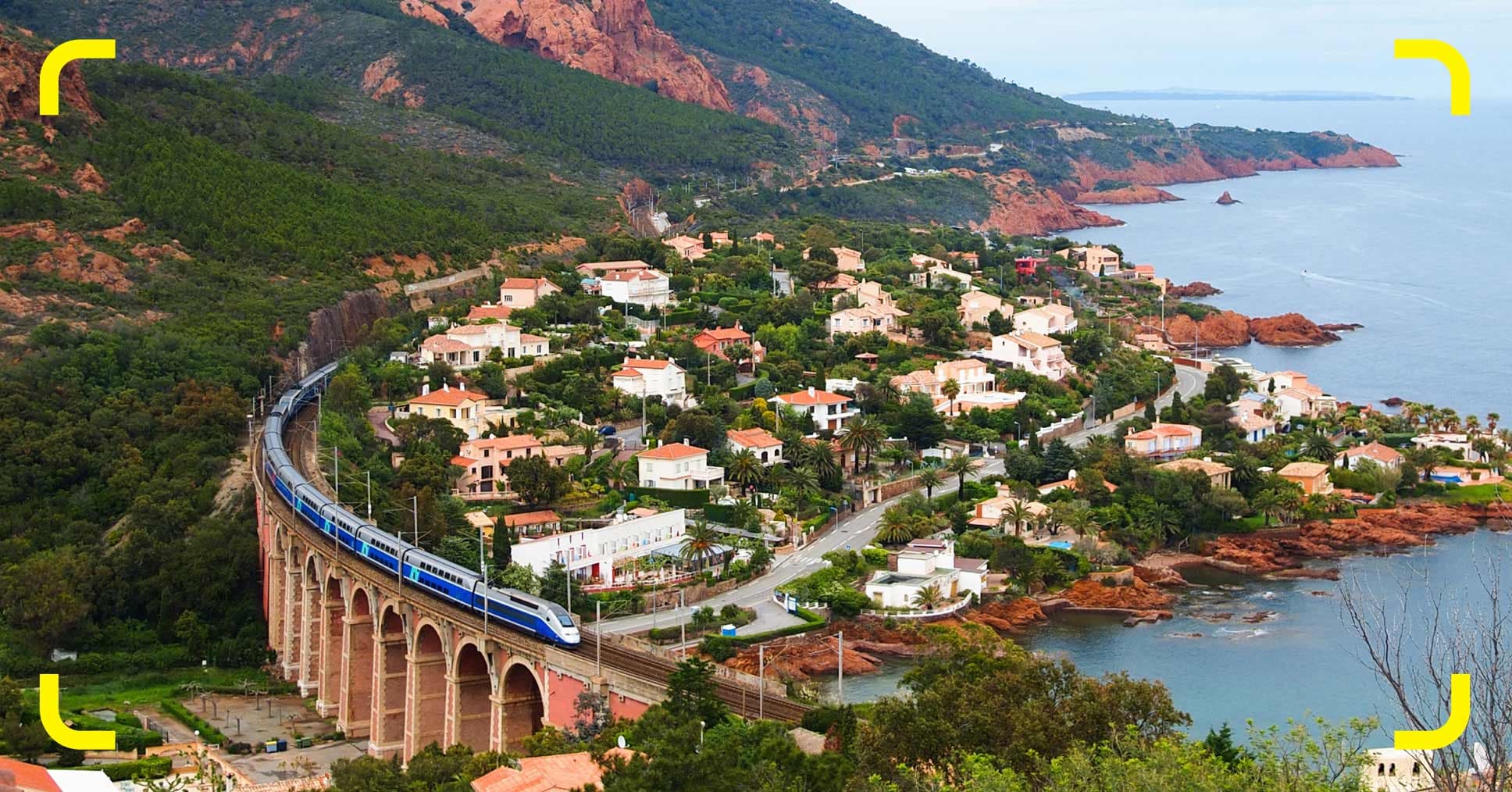
Table of Contents
- Overview of transportation in France
- What is the most common mode of transportation in France?
- Modes of transportation in France
- Trains
- Cars
- Buses
- Domestic flights
- Ferries
- Metro
- Trams
- Ride-hailing apps and taxis
- Bikes
- Is there free public transportation in France?
- Getting to and from airports in France
- Useful apps for transportation in France
Overview of transportation in France
Transportation modes in France can be split into two categories. First are the intercity transportation solutions, and the typical choices are high-speed trains, followed by domestic flights and buses. Second is the urban transportation network — regional buses and trains, metros in six cities, including Paris, trams and light rail systems, and private transportation options like ride-hailing apps.
The wide range of transportation modes means that the country is well-connected and you can travel from city to city, or inside a city, quite easily, and this is the main pro of France’s transportation system. The drawback, unfortunately, is that some of the transportation options can be expensive, especially the high-speed trains. Inside cities, communes, or regions, though, you’ll be able to easily reach and explore the most popular tourism sites by using Transport Express Regional (TER), which encompasses the country’s regional trains, regional buses, or ridesharing apps.
Overall, you should be able to find your way across France and its regions by using a variety of public and private transportation without much hassle. Remember, if you’re going to holiday in the country from outside the European Union (EU), you will need a few things, like a passport to enter and an eSIM in France to stay connected.
What is the most common mode of transportation in France?
Public transportation is very commonly used in France, including high-speed trains, which include both the main brand of the Société nationale des chemins de fer français (SNCF, National Company of the French Railways), TGV inOui, and the low-cost alternative, Ouigo TGV.
Within larger urban areas, metros and trams are used by people to get around, as are buses, which can be seen carrying passengers in cities of various sizes.
In terms of private transportation, car ownership in France is relatively high, with multiple sources, including government studies, estimating that more than 80% households own at least one vehicle. Considering the high rate of car ownership, it isn’t surprising that ride-hailing apps like Uber, Bolt, and Freenow are also highly popular for short trips in cities and from/to airports.
Modes of transportation in France
If you want to travel around in France, the country’s transportation system offers plenty of public and private transportation options, with the coverage depending on your location. Public transportation is widely developed and is fast, convenient, and in some regions or cities, even free. France is also well connected to its neighboring countries by buses, trains, and highways, allowing you to transform your journey to France into a multi-country adventure. If you need data across several European destinations, Saily has an eSIM plan for the whole of Europe.
Trains

High-speed trains and regional rail are among the most popular ways to travel in France. The transportation mode is relatively cheap, comfortable, and fast, offering visitors and residents an easy way to explore the country or visit their friends and family.
However, France’s high-speed train network has been criticized as being too Paris-centric, failing to offer direct intercity trains between cities or between large regional centers without a stop in Paris. Ticket prices have also been at the heart of the criticism, but you can still catch a good deal if you book early enough.
The best example of the high-speed rail network’s focus on Paris could be the high-speed train options between Bordeaux and Lyon, the ninth and third most populous communes in France, or the lack thereof. Instead of a direct connection between the two communes separated by a great circle distance of around 435 kilometers (270 miles), the French high-speed rail network only offers passengers a one-stop journey through Paris.
Cars
While France has an excellent public transportation network, a car gives you independence from train and bus schedules, lets you travel at your own pace, and frees you from public transportation networks that can be patchy in some rural areas. Driving around France in a car will also be costlier, especially if you’re looking to rent one for a longer period of time. Remember to bring an international driving permit if you’re renting a car in France.
France’s roads are considered high quality, the country’s passenger cars are younger than the average car in the European Union (EU), and the rate of road fatalities has fallen steadily in the past decades, according to the European Commission (EC). As a result, driving around the country should be easy and safe.
But renting a car and driving it inside cities, especially the larger ones, can become problematic. Parking in major urban areas like Paris or Marseille isn’t exactly a walk in the park, and most major cities with over 150,000 inhabitants have low-emission zones. As a result, older and more polluting cars cannot enter city centers unless you obtain a temporary exception. While not an issue you might face if you rent a car, since most rental companies offer new or at least newish models, this is something you’ll have to keep in mind if you’re eyeing alternative options to drive around in.
Buses
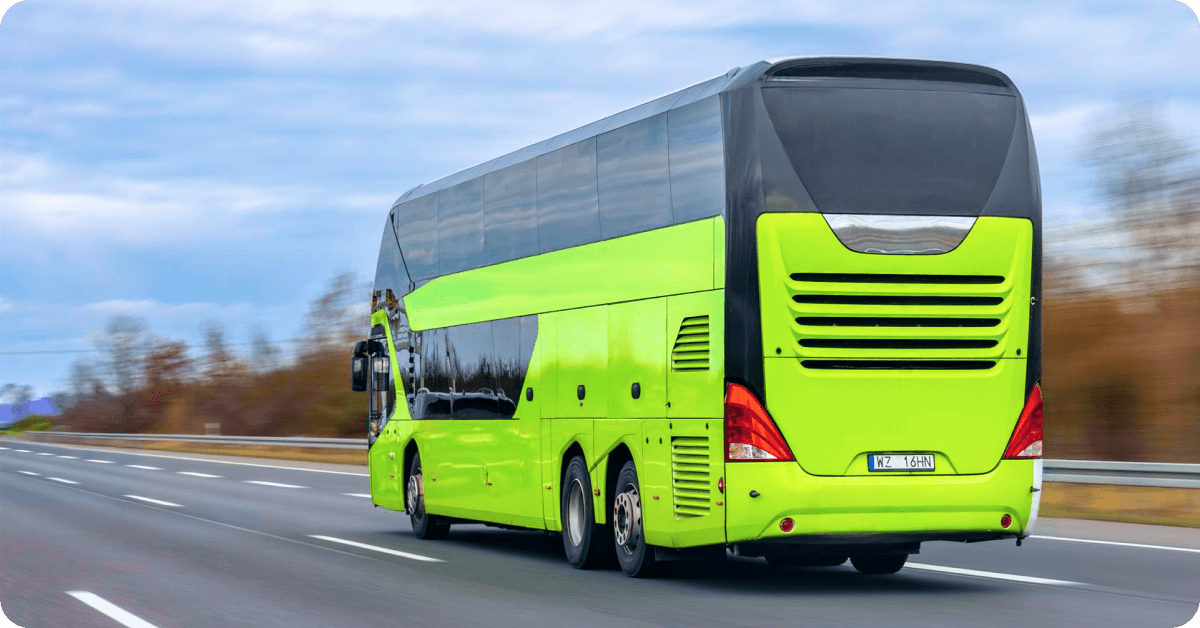
France is no exception to the global tendency that there are buses for travel inside cities and their wider urban areas, and between cities. However, with the French rail network being so well developed, intercity bus companies have long struggled to gain ground in the country. And while the then-Minister of Economy of France, Emmanuel Macron, liberalized intercity bus travel in France in 2015 with the so-called “Macron Law,” not all bus operators had success operating buses in the country.
One example is BlaBlaCar Bus, founded by SNCF, the French high-speed rail company, which will shut down at the end of 2026. Still, the liberalization of the market resulted in additional low-cost options for consumers who might have been unable to afford the ever-increasing prices of high-speed intercity train services.
Beyond buses that directly connect cities, the majority of cities and regions in France have their own transportation authorities that operate buses inside the urban areas, with some extending into the countryside. Remember that some communes offer free public transportation, even if you’re only a visitor and not a resident.
Domestic flights

France, like other large countries in Europe, does have a domestic flight network that can serve as an alternative to high-speed rail and a way to reach the island of Corsica. Although not as popular as high-speed trains for travel within mainland France, domestic flights include direct options where there are no direct rail services. One example is Air France’s services between Bordeaux and Lyon.
French airports also have more than a handful of routes to France’s overseas territories, like French Polynesia or Réunion, the island in the Indian Ocean. Currently, flights from Paris to Réunion’s Saint-Denis Roland Garros Airport are the world’s longest domestic flights in terms of the great circle distance, covering more than 9,260 kilometers (5,000 nautical miles).
And if you’re after a fun fact about France, the country’s flights to one of its overseas regions or overseas collectivities mean that you can technically have a layover on a domestic flight while flying from Paris to Papeete, the capital of French Polynesia. Three airlines currently offer one-stop flights from Papeete Tahiti International Airport (PPT) to Paris, either Charles de Gaulle Airport (CDG) or Paris Orly Airport (ORY) — Air France, Air Tahiti Nui, and French Bee. All three either stop at Los Angeles International Airport (LAX) or San Francisco International Airport (SFO) on the way to the French capital.
Ferries
France has plenty of international ferries out of its ports on the coast of the Atlantic Ocean, the North Sea, and the Mediterranean Sea to countries like Ireland, Italy, the United Kingdom, Spain, and others. Domestic ferries, namely those that connect the French mainland and its islands as Corsica, the Îles d'Hyères, various islands off the coast of Brittany, and others, are also plentiful.
For some islands, ferries are the only connection to the mainland, since not all of them — like the Îles d’Hyères group of islands — have a commercial airport with regular flights. For others, it’s a low-cost alternative to flying between mainland France and Corsica, for example. In addition, ferries enable you to take your car with you to an island and enjoy the freedom of traveling at your own pace, even if ferries can take their time to travel between point A and point B.
Metro
In France, six cities have metro systems, including the capital, Paris, which has the busiest metro system in Europe. In 2025, the Paris Metro welcomed over 1.5 billion passengers, continuing to keep its place as the busiest metro system in Europe.
Other French cities with rapid transit metro systems are Lille, Lyon, Marseille, Rennes, and Toulouse, each having dozens of stations across route networks spanning tens of kilometers.
None of the metro systems are free, even if French cities and communes have increasingly been making public transportation chargeless. Make sure your phone works in France and has a data plan so that you can pay for your ticket or pass without having to buy one at a ticket machine, which, at times, could be out of order.
Trams
France boasts an impressive number of tram and light rail networks, with at least 28 cities and communities in France welcoming riders on trams. Another three lines, or systems, are present in French border cities or towns, like Annemasse, where one tram line connects the French city with Geneva in neighboring Switzerland. Similarly, Saint-Louis and Sarreguemines have tram lines that go beyond France’s borders to Switzerland and Germany.
The fourth additional tram line that doesn’t serve a single city is the Mont Blanc Tramway, offering tourists jaw-dropping sights of the Mont Blanc massif, a mountain range part of the Alps, and access to a fair few hiking and mountaineering trails.
Unlike the metro, some communes do offer free tram or light rail rides for visitors or residents, or both. Aubagne, a commune located in the south of France, was the first in the world to offer free tramway transportation for tourists and locals, which is yet another quirky detail about the country!
Ride-hailing apps and taxis

Ride-hailing apps and taxis are also one of the few ways to get around French cities, with the most popular services, like Bolt, Freenow, and Uber, offering rides to customers who are looking for a door-to-door service. The tradeoff of the comfort of having a point-to-point ride is the price, with rideshares being more expensive than public transit.
If you favor traditional taxis, the good news is that France’s taxis have an official app called “G7.” The app works similarly to any other ride-hailing service, except that since these are official taxis, they can use taxi and bus lanes, making your journey faster compared to a ride on a ride-hailing service. Furthermore, for airport transfers in Paris — from or to Charles de Gaulle Airport (CDG) or Orly Airport (ORY) — G7 has a flat rate, potentially saving you money if other apps’ prices soar during high-demand periods.
Bikes
Many of the big cities in France have bike-sharing systems, like Paris’ Vélib’ Métropole, Lyon’s Vélo'v, Marseille’s Le Vélo, and others. Run by the cities’ municipalities, the systems are your typical bike-sharing services where you’ll have to register, buy a pass, find a bike at a designated station, rent it, and return it to a station.
Apps like Lime, Dott, or Pony also offer short-term bike or electric scooter rentals, but they might be more expensive than the municipalities’ rentals. At the same time, they can be more flexible in terms of parking, and you can leave an app’s bikes in designated parking areas instead of specific stations.
Whichever you pick, a bike will allow you to explore a city on your own route, with you passing by monuments and tourism sites with a breeze, quite literally. Although walking around, potentially getting lost, and stumbling upon a gem of a cafe or restaurant — something that is quintessential for some! — will be much harder to do on a bike!
Is there free public transportation in France?
In France, free public transportation has been steadily and increasingly adopted by cities and communes. During the most recent municipal elections in 2026, many politicians campaigned on, among other issues, promises to make public transportation free.
But France’s free public transportation systems are not created equal. For example, in Montpellier, public transportation is only free for residents, meaning that if you’re passing through the city, you’ll still have to buy a ticket. In Dunkerque, bus rides are free for everybody, notwithstanding whether you’re a resident or not. Le Monde estimated that 49 cities or territorial authorities have made ridership free as of March 2026, a number that could grow in the next couple of years.
Getting to and from airports in France

French airports, like most airports in Europe, have well-established public transportation links from and to the city centers. Private transportation, like taxis and Ubers, is available but will be slightly more expensive.
Still, not all airports’ transportation options are equal. For example, Paris Charles de Gaulle Airport (CDG), France’s busiest, has a commuter rail option to Paris Gare du Nord train station, the 9517 Bus, and the N143 and N140 buses during the night. Ride-hailing options and taxis are plentiful as well, taking you directly to your accommodation.
At Toulouse-Blagnac Airport (TLS), France’s sixth busiest, the only direct public transportation option, at the time of writing, is a bus to the city center. The city is currently building a new tram line that will connect to the existing infrastructure, but for the time being, the bus is the only direct option.
So, public transportation choices from/to airports in France do depend on the airport you’re flying from. Usually, unless you’re flying from the infamous Paris Beauvais–Tillé Airport (BVA), located around 70 kilometers (43.4 miles) from Paris proper, you can get away with a relatively inexpensive trip on a ride-hailing app or a taxi.
Useful apps for transportation in France
Using transportation in France — especially if you don’t speak French — will be much easier if you use apps to check on the schedules, routes, and potential disruptions due to strikes, which the country has become synonymous with. Some of the apps we recommend installing before your trip to France include:
Google Maps. Can’t go wrong with Google Maps to get around a country, which is usually enough to find public transportation’s optimal routes and timetables.
SNCF Connect. The quintessential app to purchase tickets for high-speed, regional, and local trains, including TGV inOui and Ouigo.
Citymapper. Citymapper is like Google Maps for public transportation but on steroids, providing route options, timetables, live timings, and even a choice to use shared transportation, like e-scooters or ride sharing. In France, Citymapper is available in eight cities, such as Paris, Lyon, Marseille, and Strasbourg.
Waze. If you’re planning to rent a car while in France, Google Maps will do the job just fine, but Waze is the go-to navigational app due to its rich features and live updates. If you can speak French, try out Roole Map, a French-made navigational app for French drivers that includes even more details about your road trip, including fuel prices along the way.
Regional transportation apps. With France having more than a handful of large regions, many of them also have their own transportation apps, like Île-de-France Mobilités, which covers transportation in the Paris region, or Lignes d’Azur Tickets for travel within the Métropole (French for metropolis) Nice Côte d’Azur.
G7 or other ride-hailing apps. G7, as the official taxi app in France, is a go-to recommendation for all tourists who will be looking to catch a ride while in Paris, Lyon, or any other larger city in the country. Alternative recommendations to G7 include Bolt, Freenow, and Uber.
Saily. Traveling around the country without mobile data can be difficult, which is why Saily should be on your phone before you land in France. Remember to download the Saily eSIM app and purchase a data plan to stay connected and buy any transportation tickets you might need.

1 GB
7 days
US$3.993 GB
30 days
US$8.995 GB
30 days
US$10.99
FAQ
French people usually get around the country and between cities using the TGV high-speed rail network on either TGV inOui or Ouigo trains. Within cities, French people use public transportation, private transportation, or ride-hailing apps like Uber or Bolt.
You can explore French cities on foot, but be careful during heatwaves, when proper hydration, seeking out shade, and sun protection are essential. In addition, France offers plenty of hiking trails across several sites, ranging from the French Alps, the French Riviera, to Brittany in the northwest of the country.
You can pay for public transportation in France by either getting rechargeable cards, using regional transportational apps, or tapping your phone on the ticket machines found inside buses or trams. Some cities and regions in France offer free public transportation.

Always connected, always on course
Connect instantly with a Saily eSIM and enjoy effortless internet access.