



Internet (manga) cafes in Japan: What to expect and recommendations
The American internet cafe died along with dial-up. You can easily picture the remnants: a few dusty terminals and a printer that jams on cue. The whole concept feels quaint now, like payphones or fax machines. But in Japan, the words “internet cafe” point to something else — the country’s 24-hour urban refuge. These places hum with salarymen who missed the last train, students cramming for exams, and budget travelers nursing jet lag with unlimited coffee refills. Walk into one at 3 AM and you’ll understand why they’ve become essential infrastructure in a country where space is luxury, and privacy comes with an hourly rate.
Table of Contents
- What is a Japanese internet cafe like?
- Services and amenities at internet cafes in Japan
- High-quality Wi-Fi and internet access
- Food and beverages
- Printing, scanning, and office services
- 24/7 accessibility
- Private booths and quiet spaces
- Gaming stations and entertainment options
- Manga and reading libraries
- Shower and rest facilities
- Sleeping pods and private rooms
- How much does staying at an internet cafe in Japan cost?
- The other side of the internet cafes in Japan
- Tips for staying in an internet cafe in Japan
- How to find an internet cafe in Japan
- How to check in at a Japanese internet cafe
- Best internet cafes in Japan
- Improve your Japanese experience with Saily eSIM
What is a Japanese internet cafe like?
Locals call these places manga kissa or net cafes. Manga kissa roughly translates to “manga coffee shop,” though coffee is just the tip of the iceberg. They feel like a hybrid of library, office and late-night shelter. Most of these establishments rose in the late 90s, when getting online meant leaving home. While American cafes faded with the spread of home internet, Japan’s version pivoted and persevered.
The modern manga cafe adapts to whoever walks through its doors, though the reasons people end up there tell a story about urban Japan itself. Consider the university student whose shared apartment feels like living inside a shoebox — they discover that a corner booth with unlimited coffee refills gives them the kind of peace their apartment never could. Meanwhile, a backpacker from Berlin stumbles onto something that seems too good to be true: a bed, a shower, and a breakfast, all for what they’d pay for a single cocktail in Shibuya.
Every location follows a similar blueprint, though the details change depending on the neighborhood and clientele. Private booths create intimate spaces within larger floors, while manga collections stretch from floor to ceiling in carefully organized sections that reflect decades of Japanese pop culture. The self-serve drink station operates around the clock, dispensing everything from hot coffee to cold barley tea, with some locations adding soft-serve ice cream machines that draw lines at 3 AM. Booth options range from basic computer terminals designed for quick email checks to flat sleeping mats that accommodate the overnight crowd, with premium rooms featuring actual doors and locks for customers willing to pay extra for complete privacy.
E-sports cafes serve a completely different purpose, focusing exclusively on gaming, with powerful computers arranged across open floors. There, the emphasis falls on performance and competition rather than comfort or privacy — they operate more like traditional Western internet cafes with upgraded hardware rather than the broader refuge concept that defines the manga cafe experience.
This entire ecosystem works because of Japan’s particular urban pressures, which create gaps that the manga cafe fills precisely. Tokyo real estate commands premium prices that make private space a luxury most young people can’t afford, while train service shuts down at midnight sharp, stranding late workers and night owls, who face expensive taxi rides home. Business hotels in central districts charge upward of US$100 per night, pricing out budget travelers and locals alike. The manga cafe threads the needle between these constraints with flexible pricing that lets customers buy exactly what they need: time, space, privacy, and entertainment – all without committing to more than they can afford.
Services and amenities at internet cafes in Japan
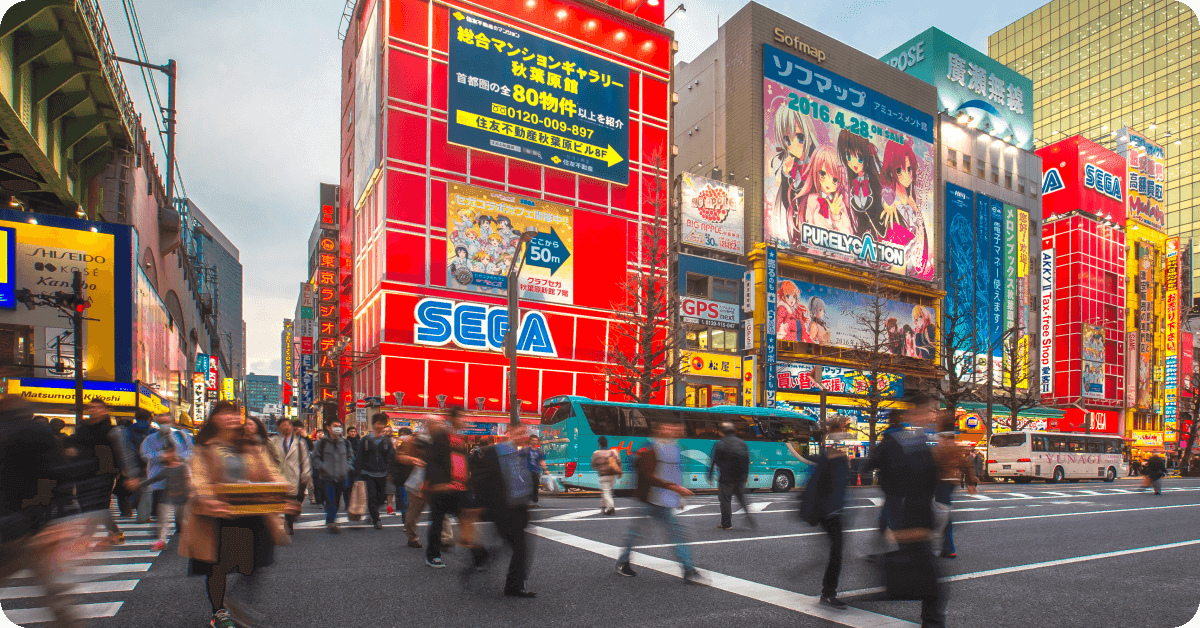
The amenities in Japanese internet cafes tell you what kind of night you might be in for. A basic chain might have the essentials: working computers and unlimited coffee from self-service dispensers. But step into a premium location and the assumptions might shift entirely. Kitchen menus with yakisoba delivered to your booth like room service. Showers with actual water pressure, a small miracle in space-constrained Japan. The difference isn’t just pricing. It’s about completely different ideas of what someone might need when they’re caught between destinations, whether that’s a missed train or temporary refuge from Japan’s relentless work culture: A place to disappear until the next grueling day demands your return.
High-quality Wi-Fi and internet access
At their core, Japanese internet cafes are built for connectivity, and they excel at it. High-speed internet is a given, with every booth equipped with a computer or terminal and Wi-Fi available for personal devices. The speeds are fast enough for streaming videos, online gaming, or remote work, and the connection is stable (a hallmark of Japan’s broadband infrastructure). While internet access is a standard feature in internet cafes worldwide, the reliability and speed in Japan often surpass what you’d find in a typical American coffee shop, making these spaces ideal for digital nomads or travelers backing up photos.
Food and beverages
Most internet cafes around the world offer a snack bar or single-serve coffee machine. In Japan, the drink station earns its own corner. You’ll find free refills of hot and cold drinks: coffee, barley tea, matcha lattes, melon soda, sometimes even soft-serve ice cream. Larger cafes also have vending machines or basic kitchen menus. Expect cheap hot meals like curry rice or yakisoba, delivered straight to your booth. It’s casual comfort food, but it gets the job done.
Printing, scanning, and office services
Most Japanese internet cafes double as makeshift workspaces. You can print boarding passes, scan documents, or even send a fax for a small fee. Computers come loaded with office software, and some cafes lend out extras like phone chargers or reading glasses. This kind of setup exists in many internet cafes worldwide, but in Japan it’s polished and dependable — ideal when you need to get something done between check-ins or train rides.
24/7 accessibility
While American or European internet cafes lock their doors at closing time, Japan’s stay open through the night, becoming urban sanctuaries when the last trains disappear into the tunnels. The cultural shift happens around 10 PM, when “Night Packs” kick in — discounted rates that acknowledge what everyone knows: Sometimes you need somewhere to exist until morning arrives. No one gets kicked out for falling asleep in their booth.
Private booths and quiet spaces
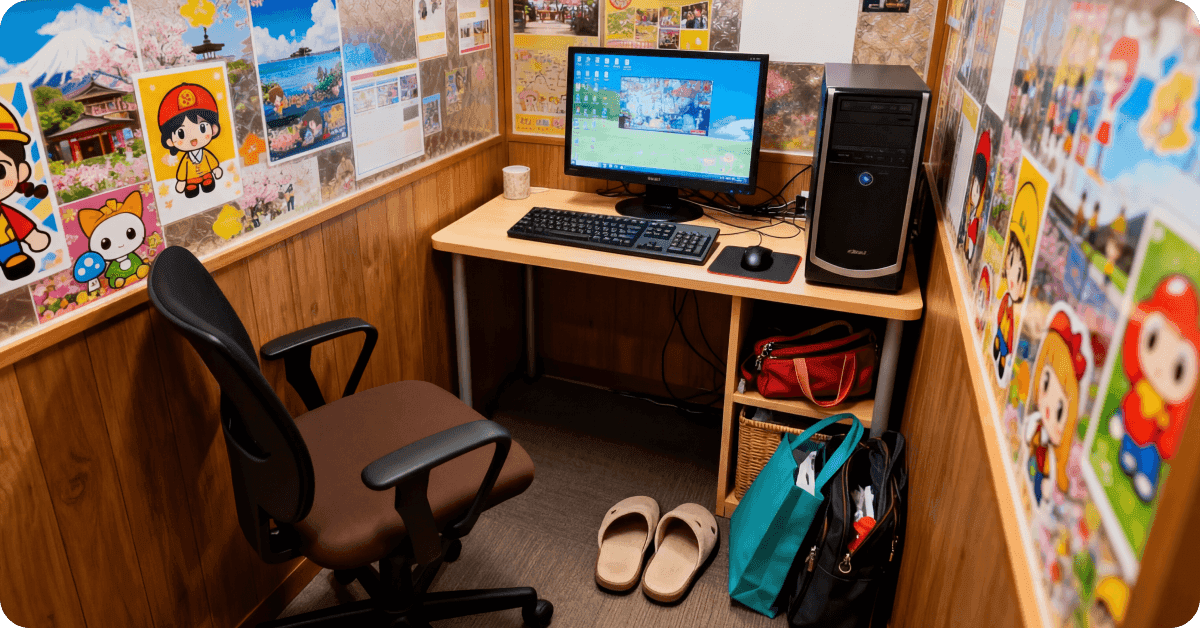
Privacy is a prerequisite for people who choose to spend time in Japanese internet cafes. It’s the default setting, like politeness or removing your shoes indoors. You get to choose your booth the way you’d pick a hotel room: reclining chairs for marathon work sessions, flat mats when sleeping is inevitable, premium pods with lockable doors when you need to disappear for a while. The walls don’t reach the ceiling, however (for ventilation and subtle staff oversight), but the atmosphere maintains that library reverence that makes these spaces popular.
Gaming stations and entertainment options
The term “internet cafe” sells these places short in terms of gaming options. You might find yourself grinding through Monster Hunter until sunrise or challenging strangers to pool while manga volumes accumulate beside your drink. High-spec gaming PCs coexist with PlayStations and Switch setups, creating entertainment ecosystems that bend to whatever mood strikes. Some locations throw in darts, billiards, even karaoke rooms — because why limit yourself to just one vice?
Manga and reading libraries
The towering bookshelves explain everything about why these places earned their name. Thousands of manga volumes climb toward fluorescent ceilings, organized by genre and author in systems that regulars navigate like personal libraries. Some customers never touch the computers, arriving solely to binge-read series they lack the space to own. Even non-Japanese speakers find value flipping through pages, absorbing visual storytelling that can transcend language barriers. One Ikebukuro location stocks around 180,000 books and magazines! If you wish to understand Japanese pop culture, these walls of comics beat any guidebook you’ll find.
Shower and rest facilities
The shower rooms can catch first-timers off guard. These clean, private spaces, stocked with soap, shampoo, and rental towels, operate like miniature spas tucked behind reception desks. Some locations even have grooming stations with hairdryers and basic toiletries. Morning queues form as commuters prepare for work, but for backpackers or anyone caught in Tokyo’s sudden downpours, these facilities are genuine lifesavers.
Sleeping pods and private rooms
The line between internet cafe and budget hotel disappears entirely in Japan’s premium locations like the Hailey’5 Cafe or any of the Kaikatsu Club cafes. Lockable rooms with dimmable lights and USB ports mimic capsule hotels, while flat sleeping booths offer enough space to stretch out properly without pretending you’re in a recliner. Some newer establishments push further into hospitality territory, creating “manga hostels” that blend library aesthetics with actual beds and real privacy. The Manga Art Hotel in Tokyo exemplifies this hybrid concept, operating as a capsule hotel themed around manga that doubles as a manga library for guests to read and relax. The comfort varies wildly depending on what you pay, but the prices remain consistently reasonable — these temporary refuges cost less than a decent dinner and deliver more than most budget hotels promise.
How much does staying at an internet cafe in Japan cost?
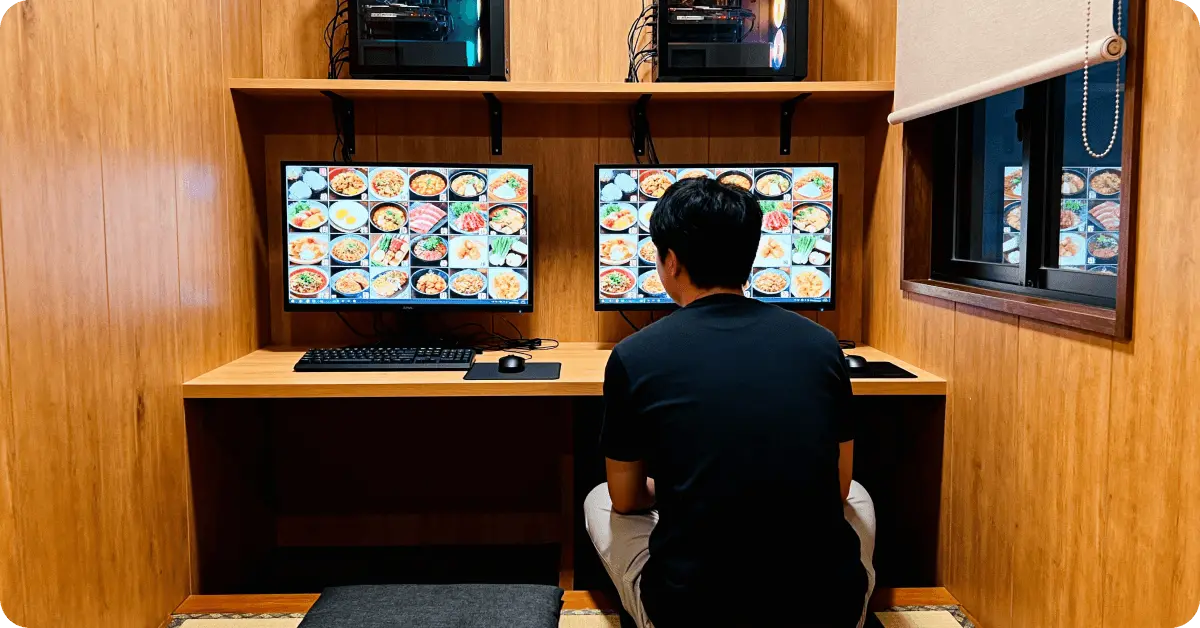
Japanese net cafes do not charge flat nightly rates like hotels — instead, you pay by the hour. Staff offer short blocks for quick stops and discounted bundles for longer sessions, and they settle the total when you check out. A basic booth costs between US$2.00 and US$5.00 per hour, while 3–6 hour bundles usually land somewhere in between US$8.00 and US$20.00. Overnight “Night packs” cover 8–12 hours and, in open seating, often go between US$12.00–US$22.00. Privacy costs extra: Lockable rooms in central Tokyo commonly reach US$30.00–US$45.00 for the night.
Small add-ons can nudge the bill: A one-time membership fee often runs US$1.00–US$3.00, showers typically cost US$2.00–US$3.00. Towels, lockers, and food beyond the drink bar add a little more. In busy districts, prices rise on weekend and holiday eves, and premium floors with gaming rigs or “private cabins” cost extra. If you’re watching your budget, our guide on how to save money on travel has a few smart tips that apply here too — especially around food and transit.
While cafes are cheap compared to hotels, they’re not always as cheap as they seem. For a broader picture, our piece on how much it costs to go to Japan breaks down what you’ll spend over a week or more, from data and meals to accommodation options across the country. Use that guide to figure out if a manga cafe is worth the trade-offs for your trip.
The other side of the internet cafes in Japan
Manga cafes occupy a complex position in Japan’s urban ecosystem, serving simultaneously as entertainment hubs and social safety nets. They’ve become integral to pop culture and youth identity, appearing in anime and movies while fostering the otaku subculture through their manga libraries and gaming stations. At a glance, it might seem that these spaces function as community hubs where different walks of life converge.
But beneath this cheerful surface runs a more troublesome current that became apparent in the mid-2000s with the phenomenon of “net cafe refugees.” Government estimates suggest over 5,400 people were using internet cafes as their primary residence by 2007, with Tokyo alone seeing thousands of nightly residents who can’t afford traditional housing. These aren’t tourists seeking adventure, but rather working poor and temporarily unemployed individuals — often young men with low-paying temp jobs — who find nightly cafe fees more manageable than apartment deposits and key money that Japanese leases demand.
The COVID-19 pandemic exposed the scale of this dependency when temporary cafe closures suddenly left their inhabitants with nowhere to go, highlighting how commercial businesses had inadvertently become informal housing for society’s margins. Government surveys found these long-term residents show little interest in manga or the internet and use the spaces purely because of the low price compared to any other housing option. The cafes themselves don’t ask questions as long as customers pay, creating spaces where economic precarity exists semi-invisibly alongside leisure and tourism. In a sense, the manga cafe tells the whole story of modern Japanese city life: The way convenience and crisis can coexist in the same fluorescent-lit room.
Tips for staying in an internet cafe in Japan
To make the most of your stay, especially overnight, it helps to know how the system works. These spaces are designed for locals first, so a little preparation makes the experience smoother.
Bring what you need, understand the etiquette, and choose your cafe with intention. While prices look low at first, small add-ons can stack up. You’re not checking into a hotel — you’re stepping into a hybrid space that asks for a bit of self-awareness and planning.
Here’s what to keep in mind before you settle in:
Carry an ID. Most cafes require you to register as a member before your first visit, so bring your passport.
Pack light essentials. Earplugs, a charger, face wipes, and a change of socks go a long way.
Check the booth type. Recliner chairs are good for work, flat mats work better for naps, lockable rooms cost more but offer quiet and privacy.
Plan your shower time. Mornings get crowded. Shower access usually comes with a fee and a timer. Some cafes also offer laundry services, which come in handy on longer trips.
Respect quiet zones. Keep phone calls to designated areas. Use headphones. Speak softly, if at all.
Watch your valuables. Booths aren’t fully secure, so use lockers when available or keep essentials on you.
Know the age limits. Many cafes restrict overnight use to adults. Lockable rooms are often 18+ only.
Don’t treat it like a hotel. It’s a safe, cheap place to pass time or crash, but it’s not designed for long-term comfort.
Try to speak at least a little Japanese to show respect and avoid coming off like an oblivious tourist. A polite “こんにちは” (konnichiwa) or “お願いします” (onegaishimasu) at the front desk can set a friendly tone. You don’t need to be fluent — a little effort goes a long way.
These cafes are designed to be flexible, not luxurious. Treat them like a layover spot — somewhere to regroup, recharge, and move on — and you’ll walk out well-fed and maybe even with a deeper glimpse into Japanese culture.
How to find an internet cafe in Japan
To locate the right kind of cafe, it helps to know the terms. “Manga kissa” (漫画喫茶) and “net cafe” are the standard search keywords. These bring up spaces with booths, manga libraries, showers, and overnight packs. Big chain names to look for include Kaikatsu CLUB, Manboo, and DiCE.
In major cities, you’ll find cafes clustered near train stations and nightlife districts. Locations in places like Shibuya, Ikebukuro, or Namba get busy on weekends, so avoid peak times if you want more space.
Make sure you’re not confusing them with e-sports cafes. Those are built for gaming, not sleeping and they won’t have showers or private booths. If you see rows of gaming chairs and no curtains, you’re in the wrong spot!
How to check in at a Japanese internet cafe
Check-in is simple once you know the flow, but it’s not always intuitive for first-timers, especially late at night when staff may speak limited English.
Here’s how it usually goes:
Walk in and head to the counter. If it’s your first visit, you’ll be asked to register. In most places, you’ll need to present a photo ID (passport is best) and fill out a short form.
Choose your seat and time pack. Staff will ask what kind of booth you want: flat mat, recliner, or private room, and how long you plan to stay. You can adjust later.
Add extras if needed. Ask for a towel or shower token now if you plan to wash up. Lockers are also available in many cafes.
Take your receipt and booth number. Some cafes assign the booth, others let you choose. Follow the signs or ask staff.
Check out at the counter. You’ll pay based on your actual time used. If you go over your initial time block, the system will calculate the next best price slot.
Most night packs start between 9:00 PM and 10:00 PM and run until early morning, often 5:00 AM to 7:00 AM depending on the plan. Show up too early and you’ll pay more than you need to. If you’re staying the night, ask for the “night pack” directly. If you’ve got time to spare, explore the manga shelves. Even if you can’t read manga fluently, the visual storytelling in many series transcends language, and it’s a great way to unwind while soaking up the atmosphere.
Best internet cafes in Japan
The best internet cafes in Japan combine comfort, privacy, 24-hour access, and clear pricing with extras like showers, manga collections, and drink bars. This shortlist covers major cities, with an emphasis on Tokyo locations that are easy to find and traveler friendly.
Kaikatsu CLUB (Tokyo, Osaka, nationwide). A reliable go-to for many net cafe enjoyers. Many locations offer lockable private rooms, showers, free drink bars, and flat-mat booths. Ideal for solo travelers who want quiet and control. Some branches allow online reservations and have women-only sections.
Manboo / Manboo Net Room (Tokyo, Yokohama). Budget-friendly and built for overnight stays. Look for locations with “Net Room” in the name — these offer private booths with real doors. Shower access and basic amenities vary by store.
Haileyʼ5 Café (Tokyo, Kyoto). Adults-only (18+), sleek, and clearly aimed at customers staying overnight. Every seat is private, and some branches feel more like boutique hostels than cafes. A good pick if you want peace and style.
DiCE (Tokyo, Yokohama). Spacious, modern, and heavy on manga selection. DiCE branches are especially popular with locals for daytime use, but also offer night packs and private booths. Ikebukuro and Shibuya are among the busiest.
Gran Cyber Café B@gus (Tokyo). Tucked into central neighborhoods like Shinjuku and Akihabara, it offers private rooms, soft lighting, and a quiet atmosphere. Less “cafe” and more “urban hideaway”. Good for decompressing between train rides.
We chose these locations for their accessibility, consistent amenities, overnight friendliness, and positive reviews from travelers.
Improve your Japanese experience with Saily eSIM
Manga cafes are great for Wi‑Fi, but you won’t always want to be indoors. That’s where Saily’s eSIM app shines, giving you mobile data the moment you land with no need for physical SIM cards or in-store setups. You download the app, choose a plan, and you’re connected within minutes. If you’re still new to the tech, here’s a clear look at what an eSIM is and how it works.
Saily works across Japan’s major networks and supports hotspots, so you can tether a laptop, translate signs, or upload photos from anywhere — not just inside a cafe. You won’t have to rely on public Wi‑Fi to find your next stop, book a booth, or navigate the side streets of Shibuya.
For longer trips or multi-country routes, eSIM for international travel keeps everything under one roof. There’s no need to switch providers — just download one app that works across borders.
Before you fly, download an eSIM app, set it up, and you’re ready. Let net cafes serve the nights, while Saily keeps you connected through the rest!
Need data in Japan? Get an eSIM!

1 GB
7 days
US$3.99
3 GB
30 days
US$7.99
5 GB
30 days
US$10.99