


Top 10 things to do in Boston: Best spots and activities
Boston sparked a revolution — and then built a walking trail so you could retrace every step. Few cities anywhere on the continent deliver as much history per square mile, but reducing Boston to a history lesson would be a mistake. The city packs a world-class food scene, championship-caliber sports culture, and some of the best museums in the country into a footprint you can cross in an afternoon. Most first-time visitors underestimate how much ground they can cover here, and plenty of repeat visitors admit they barely scratched the surface the first time around.
This guide is designed so you don’t end up like those repeat visitors — scrambling to catch what you missed. We cover the iconic landmarks worth your time, the museums that go far beyond oil paintings and plaques, the events that make timing your trip worthwhile, and the day trips that reveal what New England looks like beyond downtown. And if you're arriving from outside the US, we have a tip at the end to keep you connected from the moment you land.


17 minutos de tempo de leitura
Índice
- Popular things to do in Boston: The classics
- The Freedom Trail: 2.5 miles of American history on foot
- Fenway Park: More than just a baseball stadium
- Harvard and MIT: An afternoon in Cambridge
- Beacon Hill: The most beautiful neighborhood in Boston
- Boston museums: World-class collections in a walkable city
- The Isabella Stewart Gardner Museum: Art and the greatest unsolved heist in history
- Museum of Fine Arts: One of the great American art museums
- Boston events: What’s on and when to go
- Boston’s annual events: Plan your trip around the calendar
- World’s biggest football tournament: Boston as a host city
- Things to do near Boston: Day trips worth the drive
- Salem and Cape Cod: Two very different escapes
- Boston in winter: Beyond the cold
- Explore Boston in December
- Stay connected in Boston with Saily
Popular things to do in Boston: The classics
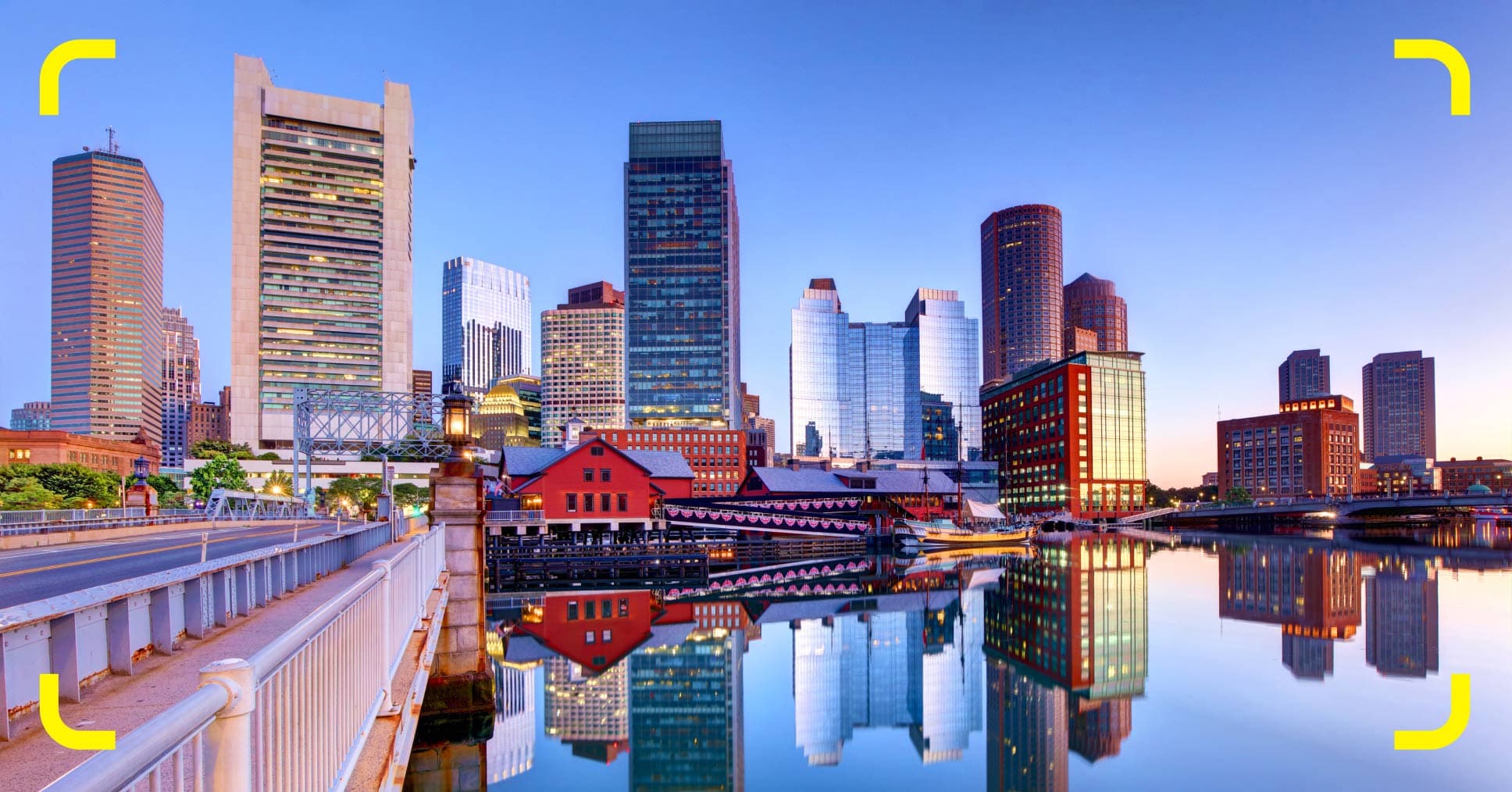
Boston’s most famous spots earned their reputations through entertaining visitors for years. The trick is knowing how to experience each one a little better than the average visitor — skipping the obvious, or combining two highlights that happen to be a ten-minute walk apart.
If you’re flying in from abroad, grab a Saily eSIM for the United States before you land. You’ll want reliable data for navigating the Freedom Trail, checking subway schedules, and finding last-minute restaurant reservations across town.
The Freedom Trail: 2.5 miles of American history on foot
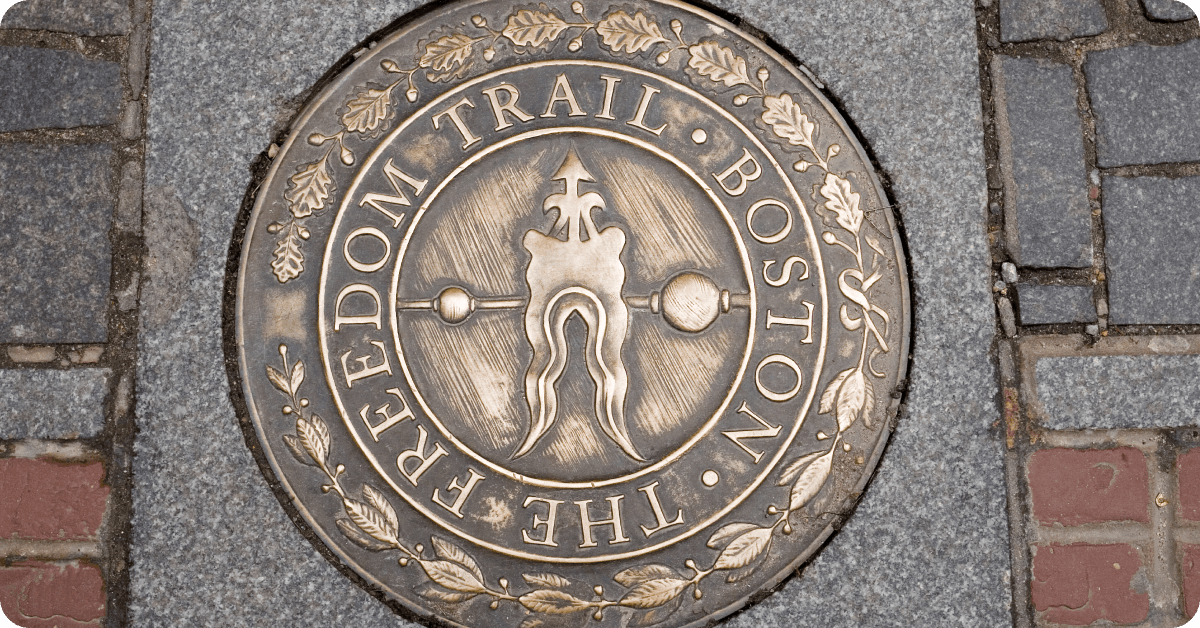
No other American city offers a self-guided walking experience quite like the Freedom Trail. A red-brick path runs 2.5 miles from Boston Common to the Bunker Hill Monument, linking 16 historic sites that trace the origins of American independence. You can pick up the trail and follow it on your own for free, or join a ranger-led tour — worth the small fee if you want context and storytelling rather than just reading plaques.
The highlights land even if you know next to nothing about colonial history. The Paul Revere House, a cramped wooden building in the North End, is the oldest remaining structure in downtown Boston and the kind of place that makes 1775 feel more tangible. The Old North Church, where lanterns signaled the route of the British advance, still holds regular services. And Faneuil Hall, the “Cradle of Liberty,” doubles as a marketplace surrounded by food stalls and street performers — a useful place to refuel midway through the walk. Budget two to three hours if you plan to stop at a handful of sites, or a full morning if you want to cover the route end to end.
Fenway Park: More than just a baseball stadium
Fenway Park opened on April 20, 1912, making it the oldest Major League Baseball park still hosting games. But even travelers with zero interest in baseball find Fenway worth visiting. The Green Monster — the 37-foot left-field wall — dominates the skyline from Lansdowne Street, and the cramped, irregular dimensions of the park give it a character that newer stadiums don’t replicate.
On non-game days, stadium tours run regularly and take you through the press box, onto the warning track, and up to the Monster seats for a view of the Boston skyline. During the season, catching a Red Sox game can turn an evening into one of the rowdiest nights you’ll spend in the city, regardless of the score. Grab a Fenway Frank, find your seat, and pay attention to the crowd — Boston fans are a spectacle of their own!
Harvard and MIT: An afternoon in Cambridge
Cambridge is a 15-minute subway ride from downtown Boston, and skipping it would mean missing one of the best afternoons any Boston trip can offer. Harvard Yard, the oldest part of the campus, is open to the public and completely free to walk through. The red-brick buildings, old-growth trees, and foot-worn paths look exactly the way an elite American university campus should — and the free Harvard Art Museums (for Massachusetts residents) or affordable general admission make lingering worthwhile.
Cross the river to MIT for a different kind of campus architecture. The Stata Center, designed by Frank Gehry, looks like a building mid-collapse and divides opinion, but it’s nothing if not interesting to gawk at. After covering both campuses, loop back to Harvard Square for lunch or coffee. The neighborhood hosts one of the best concentrations of independent bookshops, cafés, and record stores in Greater Boston.
Beacon Hill: The most beautiful neighborhood in Boston
Beacon Hill looks exactly the way people picture Boston before they arrive. Gas-lit iron lanterns line narrow streets. Federal-style brick townhouses with black shutters and window boxes crowd together on steep cobblestone lanes that block out traffic noise and city hum. The neighborhood looks both deeply historic and wealthy — and it is both.
Acorn Street, one of the most photographed streets in Boston, is worth the short detour even if the Instagram crowd can make it tricky to get a clean shot. Charles Street runs along the base of the hill and is filled with independent antique shops, small cafés, and boutiques that cater to locals more than tourists. And because Beacon Hill borders Boston Common, the whole neighborhood can be considered a natural extension of a Freedom Trail morning.
Boston museums: World-class collections in a walkable city
Boston punches well above its weight when it comes to museums. For travelers who want more than cobblestones and clam chowder, the city’s cultural layer often becomes the highlight of the trip — the part most visitors discover on a second visit and wish they’d found on the first.
The Isabella Stewart Gardner Museum: Art and the greatest unsolved heist in history
The Gardner Museum breaks every expectation of what an art museum can be. The building is a Venetian-style palazzo built around a glass-roofed courtyard garden, assembled in the late 19th century by Isabella Stewart Gardner herself, who filled it with a personal collection spanning Rembrandt, Vermeer, Botticelli, and Sargent.
Then there’s the heist. On March 18, 1990, two men dressed as police officers talked their way past security and stole 13 works valued at over US$500 million — the largest art theft in US history. The stolen pieces have never been recovered, and the empty frames where the works once hung remain on the walls, displayed exactly as Gardner’s will instructed. The FBI reward still stands at US$10 million. If you want to go deeper before your visit, the 2021 Netflix documentary This Is a Robbery is essential viewing.
Museum of Fine Arts: One of the great American art museums
The MFA holds one of the largest and most comprehensive art collections in the country, spanning ancient Egyptian artifacts through to contemporary American work. The Impressionist galleries rival many European collections, and the Art of the Americas wing — covering colonial-era portraits through Abstract Expressionism — gives first-time visitors a focused, manageable route through an otherwise enormous institution.
A practical tip: The MFA runs a US$5 Third Thursdays program, offering pay-what-you-wish admission (minimum US$5) from 5 to 10 pm on the third Thursday of every month. For out-of-state visitors, that’s one of the best deals in the city.
Boston events: What’s on and when to go
Boston’s event calendar runs deep and stays consistent year after year, anchored by sporting traditions, cultural festivals, and a handful of annual events that locals treat with genuine reverence. Timing your trip around one of the entries below can turn a good visit into a memorable one — and if you’re still mapping out the rest of your US itinerary, our guide to the best time to visit the US covers the country as a whole.
Boston’s annual events: Plan your trip around the calendar
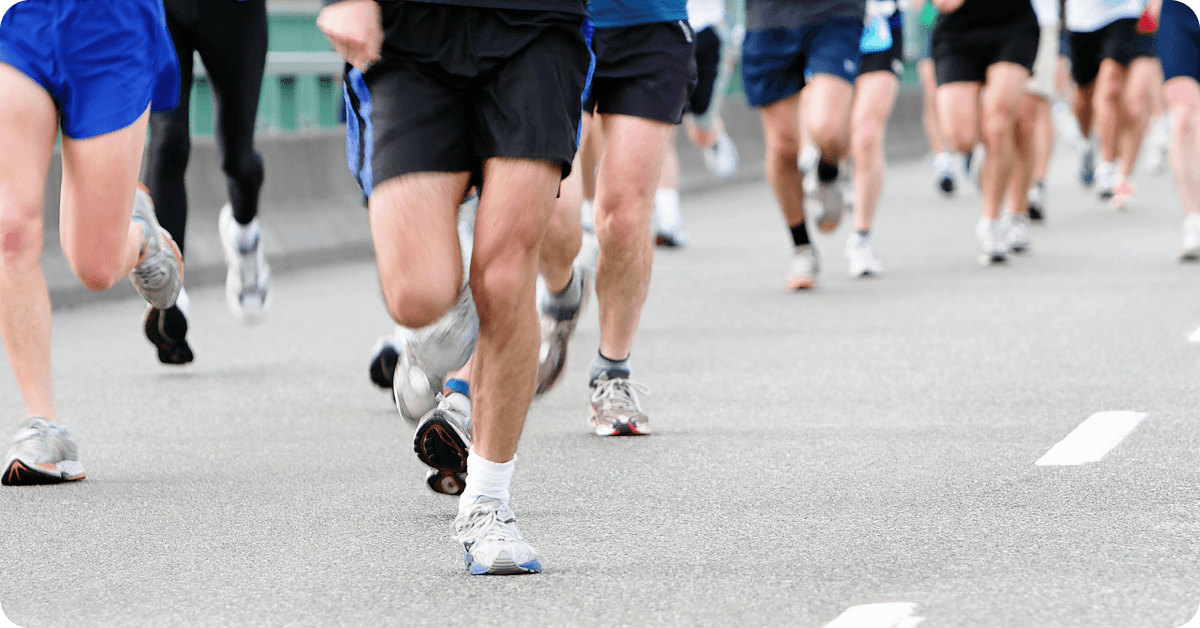
Boston Marathon (April). The world’s oldest annual marathon, happening every year since 1897. Over half a million spectators line the route, with the finish line on Boylston Street delivering one of the loudest stretches of pavement in the country on race day.
Harborfest (July 2–4). Boston’s patriotic harbor celebration lands right before the Fourth of July, with historical reenactments, concerts, and fireworks lighting up the Boston Harbor. In 2026, Harborfest carries extra weight: the festivities align with America’s 250th anniversary, and Boston — as the cradle of the Revolution — plans to mark the occasion on a scale the city hasn’t attempted in decades.
Fourth of July. The Boston Pops concert on the Esplanade draws tens of thousands to the banks of the Charles River, followed by one of the largest fireworks displays in the country. Arrive early — blanket space disappears fast.
Head of the Charles Regatta (October 16–18, 2026). One of the world’s largest rowing events, drawing international competitors and spectators to the banks of the Charles River every fall. The regatta coincides with peak foliage season, which makes the riverbanks a destination even if you couldn't care less about rowing.
First Night (December 31). Boston’s own New Year’s Eve celebration — the country’s oldest and largest — takes over City Hall Plaza with performances, ice sculptures, and a parade down Boylston Street, capped by fireworks over Boston Common and the harbor at midnight.
Every event on the list books up accommodation fast. If you want to time your trip around one, plan well in advance.
World’s biggest football tournament: Boston as a host city
The biggest sporting event Boston has hosted in decades kicks off in June. Gillette Stadium — renamed “Boston Stadium” for the tournament — will host seven matches: five group-stage games, a Round of 32 knockout fixture, and a quarterfinal.
The group-stage lineup alone makes a strong case for planning a trip around a match day. England vs. Ghana (June 23), Norway vs. France (June 26), and Scotland vs. Morocco (June 19) bring star power and passionate traveling fans. If you want to watch Mbappé and Haaland on the same pitch, the Norway vs. France fixture on June 26 is your date.
One logistical reality worth flagging: Gillette Stadium is in Foxborough, about 30 miles south of downtown Boston. Special commuter rail services run from South Station on match days, but a rental car works too if you account for traffic and leave early. The tournament overlaps with America’s 250th birthday celebrations, making summer 2026 a particularly compelling window to visit. For the full schedule, check out our schedule guide for this summer’s biggest football event.
Things to do near Boston: Day trips worth the drive
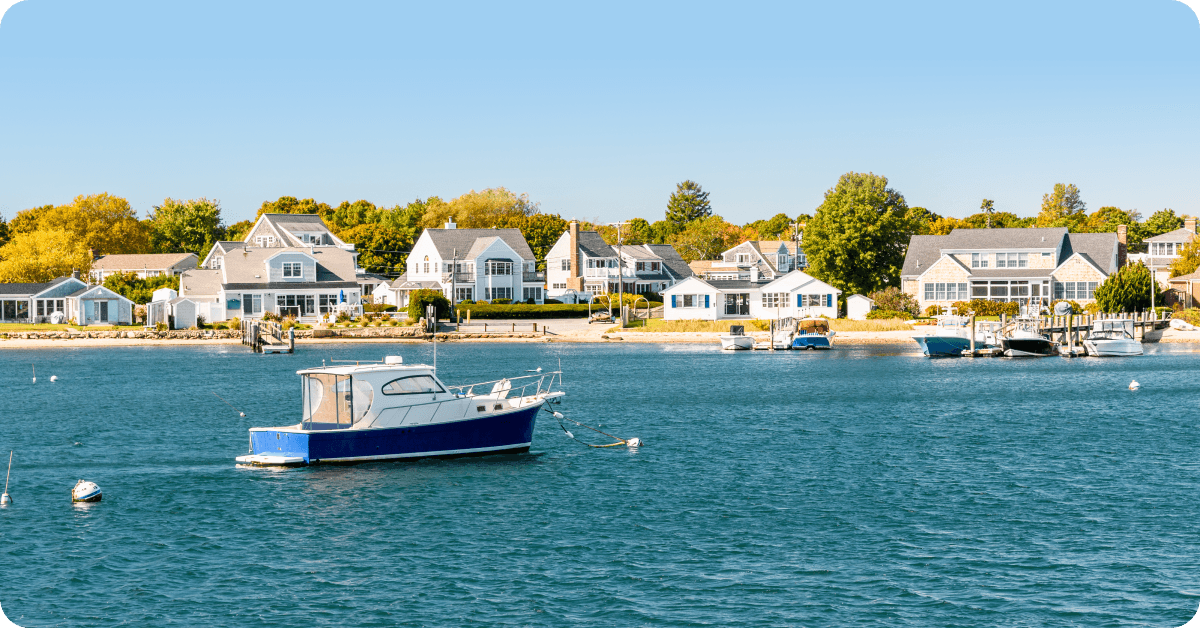
The best advice a Boston local can give you is not to spend your whole trip in the city. Within two hours, the landscape opens up into some of the most distinctive stretches of the American Northeast. If your schedule allows more than two days, at least one of those days belongs outside the city limits.
Salem and Cape Cod: Two very different escapes
Salem, about an hour north by commuter rail, draws visitors for the obvious reason — the 1692 witch trials — but the town rewards curiosity beyond the dark history. The Peabody Essex Museum holds one of the best collections of Asian export art in the country, and the town’s waterfront architecture and independent restaurants give it genuine charm rather than theme-park kitsch. Fall visits overlap with the month-long Haunted Happenings festival, which turns the whole town into a destination.
Cape Cod, roughly an hour south, operates on a completely different rhythm. The beaches stretch for miles, seafood shacks serve fried clams with a view, and the Cape Cod National Seashore offers bike trails through dunes and salt marshes that make downtown Boston sound like another continent. One important note: Cape Cod in summer requires booking accommodation weeks — or months — ahead. Availability disappears fast, especially around the Fourth of July.
Boston in winter: Beyond the cold
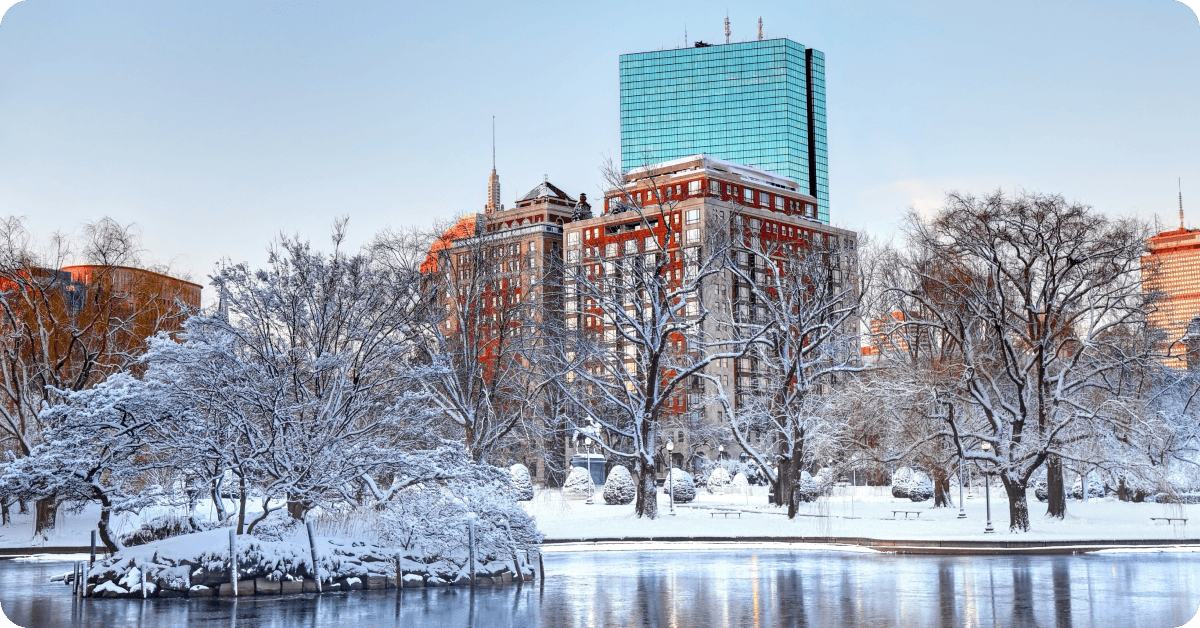
Winter strips away the crowds and gives Boston a different kind of appeal. The Boston Public Library on Copley Square — one of the most beautiful public buildings in the country — becomes a warm refuge between walks, with its Renaissance Revival courtyard and vaulted reading rooms worth a visit on their own. The Boston Public Garden, dusted with snow and emptied of summer tourists, trades its Swan Boats for frozen pathways and bare-branch views of the Back Bay skyline.
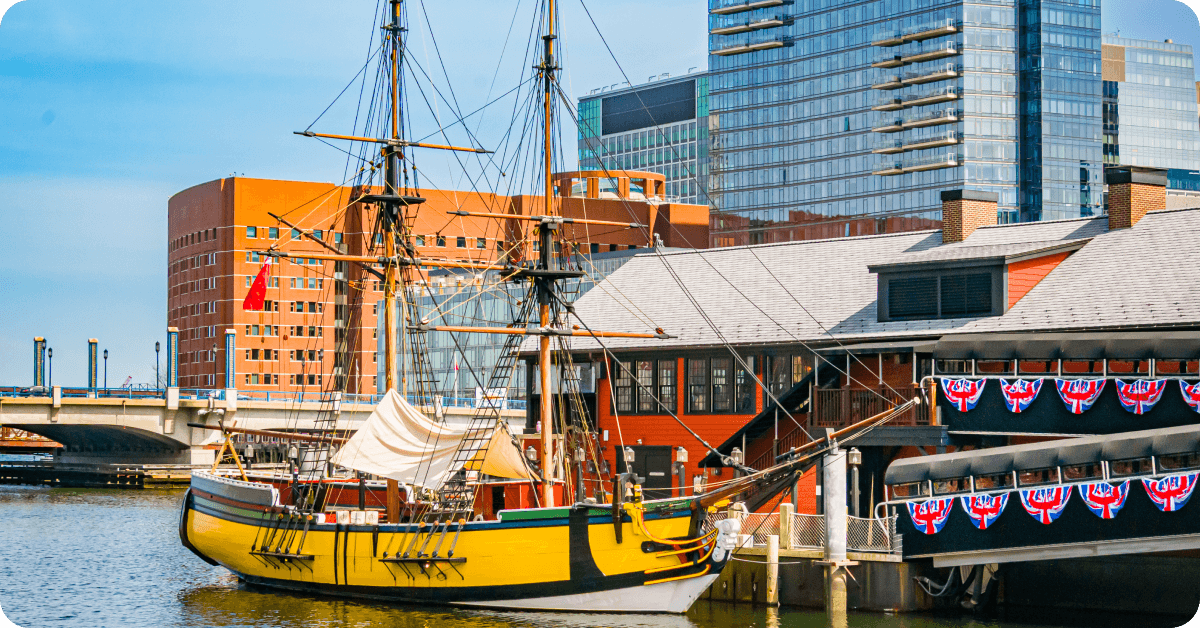
Over in Boston's North End, the Italian restaurants that pack out sidewalk tables in July turn cozy and unhurried, and a plate of pasta at Giacomo’s or a cannoli from Modern Pastry tastes better on a cold night. Even the history gains a new edge in winter — standing on the waterfront where the Boston Tea Party unfolded in December 1773 carries more weight when the harbor wind cuts through your jacket. And if you pass the Samuel Adams statue outside Faneuil Hall, you’ll notice he looks far more at home in a New England winter than he ever would in summer.
Explore Boston in December
December transforms Boston into its most atmospheric version. Snow softens the brick row houses, holiday lights wrap the lampposts on Newbury Street, and the cold pushes everyone into the city’s best bars and restaurants.
The Frog Pond ice skating rink on Boston Common opens for the winter season and gives you the chance to skate with the city skyline as a backdrop. Admission is US$10 for adults, with skate rentals available on-site. Along Faneuil Hall and in the Seaport District, holiday markets sell handmade gifts and local food alongside mulled cider and hot chocolate.
December also puts the Boston Celtics and Boston Bruins deep into their NBA and NHL seasons, and catching a game at TD Garden — a five-minute walk from the North End — ranks among the best things you can do in the city at any time of year. The energy inside TD Garden on a Celtics night has to be experienced to be understood.
Stay connected in Boston with Saily
Boston is one of the most walkable cities in the US, but your phone still earns its keep every day. You'll rely on it for MBTA subway schedules, restaurant reservations in the North End, navigating between Beacon Hill and Cambridge, and grabbing last-minute tickets for a Red Sox game at Fenway.
If you’re visiting from outside the country, a Saily eSIM for North America covers the US, Canada, and Mexico on a single plan, so you can cross borders without swapping SIMs or watching roaming charges pile up. Download the Saily eSIM app, get your North America plan, and install an eSIM. The plan activates automatically the moment you land at Logan, so you’re online before you reach baggage claim — and it stays with you all the way to Montreal, Toronto, and beyond. For a full breakdown of your connectivity options, check out our guide to getting data in the US.

1 GB
7 dias
US$ 3,993 GB
30 dias
US$ 8,995 GB
30 dias
US$ 13,99
FAQ
Boston is one of the best entry points for anyone visiting the US for the first time, or for Americans exploring the Northeast. Getting around is straightforward: The MBTA subway — known locally as the T — connects all the major neighborhoods quickly and cheaply, and you can tap in with a contactless credit card, mobile wallet, or CharlieCard. Water taxis cover the harbor and waterfront areas during warmer months. Most of the spots in the guide above are within walking distance of each other or one T stop apart, so you won’t need a car at any point during your stay. The New England Aquarium on Central Wharf makes an easy add-on for families — especially paired with a stop at the nearby Boston Children’s Museum in the Seaport District.
Absolutely, and the experience could not be more different. Boston is a tightly packed city. Two well-planned days here cover more ground than a week in Manhattan, and the pace rewards walking, lingering, and eating your way through the North End without checking a clock. Boston’s history is closer to the surface — you can trace the origins of American independence on foot before lunch and catch a Red Sox game by evening. Neighborhoods like South Boston and the Seaport offer a completely different energy from anything in Manhattan. Many travelers combine both cities on the same trip. The Amtrak Acela runs between New York and Boston in about three and a half hours, with regular departures throughout the day. If you’re weighing Boston against other destinations, our guide to the best cities in the US for first-time visitors breaks down what each one offers.
Boston ranks among the pricier US cities, broadly comparable to Chicago and a step below New York and San Francisco. Mid-range hotel rooms downtown cost anywhere from US$150 to US$350 per night, and restaurant prices reflect a city with a strong food culture and a high cost of living. Where Boston saves you money is on activities: the Freedom Trail costs nothing, Boston Common costs nothing, walking Beacon Hill costs nothing, and several museums run discounted admission windows during the week. For a cheap and genuinely good lunch, the food trucks along the Rose Kennedy Greenway serve everything from jerk chicken to wood-fired pizza, and Quincy Market inside Faneuil Hall Marketplace packs over 25 local food vendors under one roof. Budget around US$200 to US$250 per day for a comfortable mid-range trip covering accommodation, food, and activities.
Boston is one of the safer major US cities for visitors. The main areas covered in the guide above — the Freedom Trail, Beacon Hill, Back Bay, the Seaport, Cambridge, and Fenway — are well-patrolled and well-lit after dark. Standard city common sense applies in the evenings: Stick to busier streets, use the T or a rideshare for longer distances, and keep an eye on your belongings in crowded areas like Faneuil Hall. The stretch of Commonwealth Avenue near Boston University buzzes with students and stays lively well into the night.
Two days covers the Freedom Trail, a museum, Fenway, and a neighborhood or two. Three days gives you a more comfortable version with time for Cambridge and a day trip to Salem or Cape Cod. Four or five days work for anyone who wants to slow down, catch a game, and explore beyond the obvious — grab a beer at the Harpoon Brewery beer hall in the Seaport, find live music in Allston or Jamaica Plain, or spend an afternoon wandering the galleries and shops of SoWa in South Boston. Boston’s compact layout does a lot of the work, letting you cover most sights on foot without rushing, and the T fills in the gaps. One practical note: If you’re visiting during the Marathon, the Fourth of July, or a World Cup match day in 2026, add an extra day to account for crowds and book accommodation well in advance.

Sempre no caminho certo sem perder a ligação
Ligue-se instantaneamente com um eSIM Saily e desfrute de um acesso à Internet sem esforço.