An international plan or an eSIM? The quick answer
If convenience is your top priority, an international plan from your mobile carrier might be the better choice — it typically suits occasional travelers on short trips. If you want to save money on mobile data while traveling, a travel eSIM will usually give you better value and flexibility, which makes them popular with frequent travelers and digital nomads. Saily, the eSIM service created by the team behind NordVPN, offers affordable data plans in 200+ destinations. You can install your eSIM directly through the app without scanning a QR code or entering activation details.
What is an international phone plan, and how does it work?
An international phone plan works as a roaming add-on from your mobile carrier that allows you to keep your existing phone number while traveling abroad. Your carrier uses local partner networks for roaming in your destination, and the charges are added to your regular mobile bill without using a separate SIM or eSIM.
The convenience of keeping your usual billing method with your phone number for standard calls and texts is the main advantage of international phone plans. That said, using your phone without the right roaming option may also lead to unexpected charges. Daily fees can also add up fast, and some plans reduce your speeds after you use a set amount of high-speed data.
International plans vary considerably by carrier. Below, we explain how travel eSIMs compare with international options from the three largest US carriers.
Good to know: Roaming plans can vary depending on where in the world you travel, too. If your trip includes the United States, it’s worth understanding roaming charges in the USA, while those visiting Europe might find our guide to EU roaming helpful.
An eSIM vs. an AT&T international plan
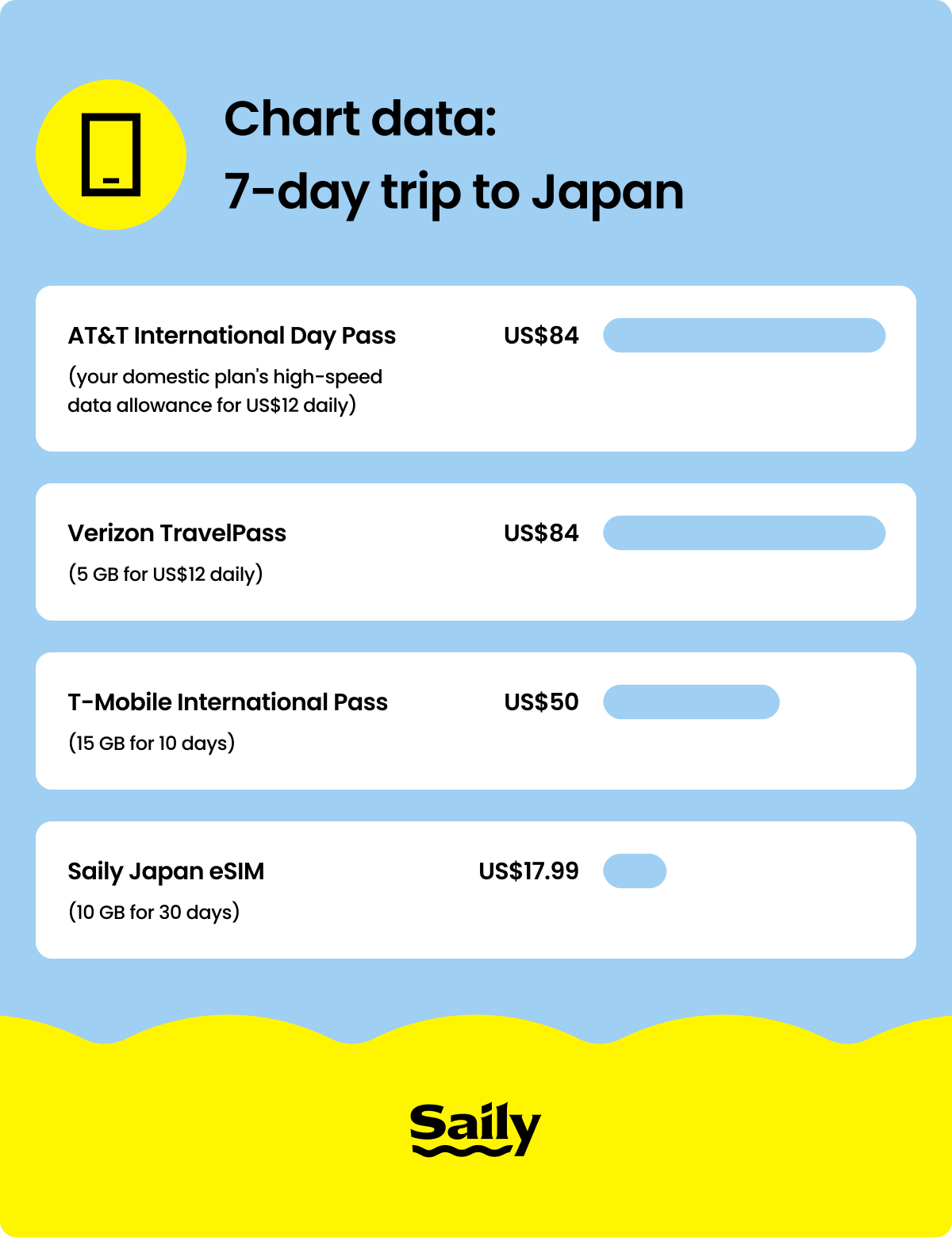
AT&T’s main roaming option is the International Day Pass, which lets eligible customers use their current plan in over 210 destinations. The cost is US$12 per line for each 24-hour period of land-based usage. Additional lines used on the same calendar day cost US$6 each. The pass begins when you use data or make or receive a call abroad. The AT&T International Day Pass is typically pretty straightforward to set up and includes the talk, text, and data allowances from your domestic plan, so you can keep your usual US number.
The AT&T International Day Pass is often best suited for short trips and for those who want to keep their regular phone number. If you’re planning an extended trip or you’ll need more data, using a combination of an AT&T line for calls and an eSIM data plan may offer a good balance of convenience and cost.
An eSIM vs. a Verizon international plan
Verizon’s primary roaming option is TravelPass, which lets you use your domestic talk, text, and data allowances in more than 210 destinations for US$12 per day (US$6 in Canada and Mexico). Like AT&T, it requires little setup — you just use your phone abroad as you normally would while keeping your existing number.
The catch is cost — a two-week trip adds up to US$168, which is why Verizon also offers a US$100 monthly plan for longer stays. Verizon also caps high-speed data, so once you’ve used up your daily high-speed allowance, speeds are reduced for the rest of the 24-hour time period, which may slow down tasks like video streaming or large downloads.
Travelers comparing a travel eSIM with Verizon international roaming options should consider both the daily fee and high-speed data allowance. The Verizon TravelPass is a good fit for occasional travelers who want convenience and to keep their regular number. For longer trips or heavier data use, a travel eSIM may be the more economical choice.
An eSIM vs. a T-Mobile international plan
Many T-Mobile plans already include international texting and data in more than 215 countries without the need to purchase a daily roaming pass. The exact allowance depends on the domestic plan. For example, the Experience More option includes up to 5 GB of high-speed international data, while the Experience Beyond option includes up to 15 GB. After the high-speed allowance is used, data continues at speeds of up to 256 Kbps. Calls generally cost US$0.50 per minute unless the traveler adds an International Pass, costing US$10 for one day (2 GB of high-speed data), US$50 for 10 days (15 GB), or US$75 for 30 days (30 GB), all with unlimited calling.
Once the high-speed data is used up, the reduced speeds may be fine for occasional maps, messaging, email, and light browsing. However, slower speeds may prove frustrating for streaming, video calls, uploads, or other data-heavy activity.
T-Mobile’s roaming plans are often enough for light international use. Travelers who need more high-speed data can purchase an International Pass or supplement their plan with a travel eSIM. And if you're weighing T-Mobile business plans vs. personal options, the same eSIM logic applies — a travel eSIM can keep data costs predictable either way.
The following table shows how the main international options from AT&T, Verizon, and T-Mobile compare in terms of cost, included data, and speed limits.
Carrier option | Typical cost | Included data | Speed limit or reduction |
|---|
AT&T International Day Pass | US$12 per day for the first line and US$6 for additional lines used that day
| Uses the talk, text, and data allowance from the domestic plan | Domestic plan limits and restrictions apply
|
|---|
Verizon TravelPass or International Monthly Plan | US$12 per line per day outside Canada and Mexico and US$6 per day in Canada and Mexico or US$100 per month for trips of 9+ days | TravelPass: 5 GB of high-speed data per 24-hour session, then unlimited
Monthly Plan: 20 GB high-speed, 250 minutes of calls, unlimited texts
| Reduced to 3G speeds after 5 GB
|
|---|
T-Mobile included roaming or International Pass | Included with selected qualifying plans or International Pass: US$10 (1 day, 2 GB), US$50 (10 days, 15 GB), US$75 (30 days, 30 GB)
| Up to 5 GB on Experience More or 15 GB on Experience Beyond, followed by unlimited slower data up to 256 Kbps. Calls are generally US$0.50 per minute without a pass, unlimited with one.
| Up to 256 Kbps after the high-speed allowance
|
|---|
What is a travel eSIM, and how does it work?
Although travelers sometimes call it an “eSIM card,” an eSIM is a digital SIM profile rather than a removable plastic SIM card. Travelers who prefer a physical option can also compare international SIM cards with unlimited data.
Most eSIM plans let you choose a country, region, or global plan, install it before or during your trip, and activate it when you’re ready to connect. Most compatible phones can store multiple eSIM profiles, allowing you to keep your regular carrier line while adding a travel plan.
Curious why more travelers are switching from physical SIM cards to eSIMs? Learn why physical SIM cards are fading out.
💡 Pro tip: Before purchasing, check if your phone supports eSIM technology and make sure it’s carrier unlocked. Using an Apple device? Here’s a helpful list of iPhones that support eSIM.
Do eSIMs offer calling and texting?
Most travel eSIMs are built mainly for mobile data and don’t automatically include a phone number, voice minutes, or SMS. Travelers can still make calls and send messages over data using apps such as WhatsApp, FaceTime, Messenger, or Signal.
Saily’s standard eSIM plans are also data first, but users can purchase a US phone number separately in the Saily app and pair it with a text and calling plan. The number is not automatically bundled with the data plan, and users must complete identity verification before activating it. That said, the US number stays the same while you travel within qualifying destinations, even if you switch to a different Saily data plan for your next destination.
Good to know: Saily supports phone calling and texting across Europe, the Americas, Asia-Pacific, Africa, and the Middle East. For a full list of coverage, visit our FAQs page.
Is an eSIM cheaper than roaming?
A travel eSIM is usually a cheaper option than carrier roaming, particularly on trips lasting more than a few days, because you pay a fixed upfront price for data instead of a daily fee. The main exception is a very short trip, when paying for one roaming day may be simpler and reasonably competitive.
An eSIM vs. an international plan: Cost comparison
When comparing an eSIM vs. a carrier international plan, consider the total trip cost rather than the price for a single day. For example, a traveler using a US$12 daily roaming pass throughout a 10-day trip would pay US$120 for one line. A prepaid travel eSIM may cost substantially less for the same period, depending on the destination and data allowance.
The table below compares the main cost-related differences between a travel eSIM and a carrier international plan.
Feature | Travel eSIM | International plan |
|---|
Price | Fixed prepaid price based on destination, duration, and data allowance
| Usually a daily fee or monthly add-on, often charged per line
|
|---|
Data
| A set allowance, unlimited plan, or country or regional package | Usually draws from your domestic allowance or includes a separate roaming allowance |
|---|
Speed | Often includes a defined amount of high-speed data
| May include high-speed data followed by reduced speeds |
|---|
Calls and texts | Usually data only, with calls and messages requiring apps or a separate add-on
| Lets you keep your regular number and typically supports standard calls and SMS
|
|---|
Coverage | Country, regional, or global plans available
| Depends on your carrier’s international partner network |
|---|
Setup | Requires an eSIM-compatible, carrier-unlocked phone and initial installation
| Minimal setup because roaming runs through your existing carrier line |
|---|
Best for | Longer trips, frequent travelers, multi-country travel, and data-heavy use
| Short trips, traditional calling, and maximum convenience
|
|---|
Saily fits on the eSIM side of the comparison by offering prepaid country, regional, and Global data plans managed through one app. Created by the team behind NordVPN, it also includes built-in security features such as web protection, an ad blocker, and a virtual location changer on eligible plans. These extras are especially useful for travelers who’d otherwise rely heavily on public Wi-Fi abroad.
Pros and cons of eSIMs and international plans
A travel eSIM and an international plan each have their trade-offs. The right choice depends on your budget, trip length, and the way you plan to use your phone abroad.
International plans
In general, international plans are relatively simple to use. Keep your existing phone number, make and receive calls and texts as usual, and don’t worry about installing a new app or changing your SIM before traveling. Your carrier handles billing, making the experience familiar from start to finish.
The trade-off is typically cost, but performance may take a hit, too. Not only can daily roaming fees creep up if you’re not keeping track — but, for most plans — your data speeds will decrease once you’ve reached your high-speed allowance. Depending on your carrier and where you’re headed, using your phone without the right roaming option can also result in unexpected charges.
Travel eSIMs
Travel eSIMs usually cost less than international roaming and give you the flexibility to choose country, regional, or global plans based on your itinerary. They don’t require swapping a physical SIM card, and some providers, such as Saily, also include built-in security features like web protection, an ad blocker, and a virtual location feature.
The main drawbacks are that your phone must support eSIM technology and generally be carrier unlocked, and most travel eSIMs are data only by default, so traditional calls and texts may require an app or a separate add-on.
Good to know: Setting up your eSIM for the first time might feel a little unfamiliar, but Saily makes it easier with in-app installation that doesn’t require QR or activation codes, along with 24/7 live chat support.
Do you need an eSIM if you have an international plan?
You may not need a travel eSIM if your carrier’s international plan already provides enough data, calls, and texts. However, many eSIM-compatible phones support dual SIM, letting you keep your carrier line active for calls while using a travel eSIM for reliable data or as a backup connection. When deciding whether to use an international phone plan vs. eSIM, look at total cost, data speed, calling needs, and setup.
How to choose the right option for your trip
The right option depends on your trip length, destination, data needs, and whether you rely on traditional calls or internet-based messaging. The comparison below weighs both options against each of those factors:
If you’re … | Consider … | Because … |
|---|
Taking a weekend city break | Your carrier’s international plan
| It’s convenient and may be worth the daily fee for a short trip.
|
|---|
Visiting one country for a week or longer | A country eSIM | It often provides better value than paying daily roaming charges.
|
|---|
Traveling through several countries | A regional eSIM
| One plan can cover multiple destinations without buying separate country plans.
|
|---|
Working remotely or traveling frequently | A travel eSIM or Saily Ultra | It offers more data as well as greater flexibility, and extra travel features can make long-term travel easier.
|
|---|
Relying on your home number for calls | Both a carrier plan and a travel eSIM | You can keep your number for calls while using the eSIM for affordable mobile data.
|
|---|
When a travel eSIM makes the most sense
A travel eSIM is usually the better choice for longer trips, multi-country itineraries, and digital nomads who expect to use a lot of mobile data and don’t want expensive charges on their phone bill. Saily offers both single-destination and multi-country plans, plus unlimited options like Saily Ultra.
Saily Ultra includes 30 GB of high-speed data followed by unlimited data at up to 1 Mbps across 121 destinations with perks such as airport lounge access, fast-track services, priority support, and bundled Nord Security services including NordVPN, NordPass, NordLocker, and Incogni.
When an international plan makes the most sense
An international plan is often the better option for shorter trips, travelers who depend on their regular phone number for calls and SMS, or anyone who prefers a simpler setup. While you’ll usually pay more for that convenience, you might find the premium worthwhile for a weekend getaway or business trip. If you mainly want to reduce data costs, you can also combine your carrier line with a travel eSIM.
Tips for planning your connectivity abroad
A travel eSIM is just one of several ways of getting an internet connection while traveling abroad. Whichever option you choose, the following tips can help you stay connected without going over budget:
Check eSIM compatibility before you travel. Make sure your phone is unlocked by your carrier and supports eSIM technology.
Install your eSIM on a reliable Wi-Fi connection. Download and activate your travel eSIM before leaving home or while connected to a trusted network at your hotel or airport.
Estimate your data needs. Navigation, social media, streaming, and video calls all use different amounts of data. Choosing the right data allowance can help you avoid paying for more than you need.
Turn off roaming on your primary line if you’re using an eSIM for data. This helps prevent accidental roaming charges while allowing your travel eSIM to handle mobile data.
Keep a backup connection available. Even if your carrier offers an international plan, having a travel eSIM ready gives you another way to get online if roaming is slow, unavailable, or too expensive.
Protect yourself on public Wi-Fi. Airport, hotel, and café networks can expose your data to unnecessary risks. Saily includes built-in security features that set it apart from many travel eSIM providers, such as a virtual location changer (115+ locations), web protection, and an ad blocker — helping you block malicious sites, limit trackers, and reduce ads without requiring a separate security app.
Choose a plan that fits your itinerary. Saily offers cost-effective data in 200+ destinations, and its country, regional, and Global plans let you pay only for the coverage you need. Setup happens right in the app — no QR codes or activation codes required.
Check recent reviews before you buy. When it comes to choosing an eSIM provider, reputation matters. As of August 4, 2026, Saily holds an average “Excellent” rating of 4.7 out of 5 stars on Trustpilot, backed by thousands of customer reviews.