








このページのコンテンツはご希望の言語で利用できません。
Europe packing list: A comprehensive guide for every season and region
Your European vacay is booked (woohoo!) — now what on earth do you pack? Well, the contents of your suitcase will depend a whole lot on the season and what part of the continent you’re heading to. Are you embarking on a seaside stay in Sicily? A moody bookshop-hopping spree in Scotland? Or a snow-laden stroll through some of the best Christmas markets in Europe? No matter what type of European vacation you’ve got planned, we’ve put together a comprehensive packing guide to ensure you're prepared for any season or country.

目次
- Essentials for any trip to Europe, no matter the country
- What to wear in Europe by season and country
- Summer (June-August) packing list for Europe
- Southern Europe
- Central Europe
- Northern Europe
- Fall (September-November) packing list for Europe
- Southern Europe
- Central Europe
- Northern Europe
- Winter (December-February) packing list for Europe
- Southern Europe
- Central Europe
- Northern Europe
- Spring (March-May) packing list for Europe
- Southern Europe
- Central Europe
- Northern Europe
- How to dress like a local in Europe
- Digital and tech essentials for Europe: Checklist
- Tips for packing like a pro for a trip to Europe
- Packing for a European vacation: Final takeaways
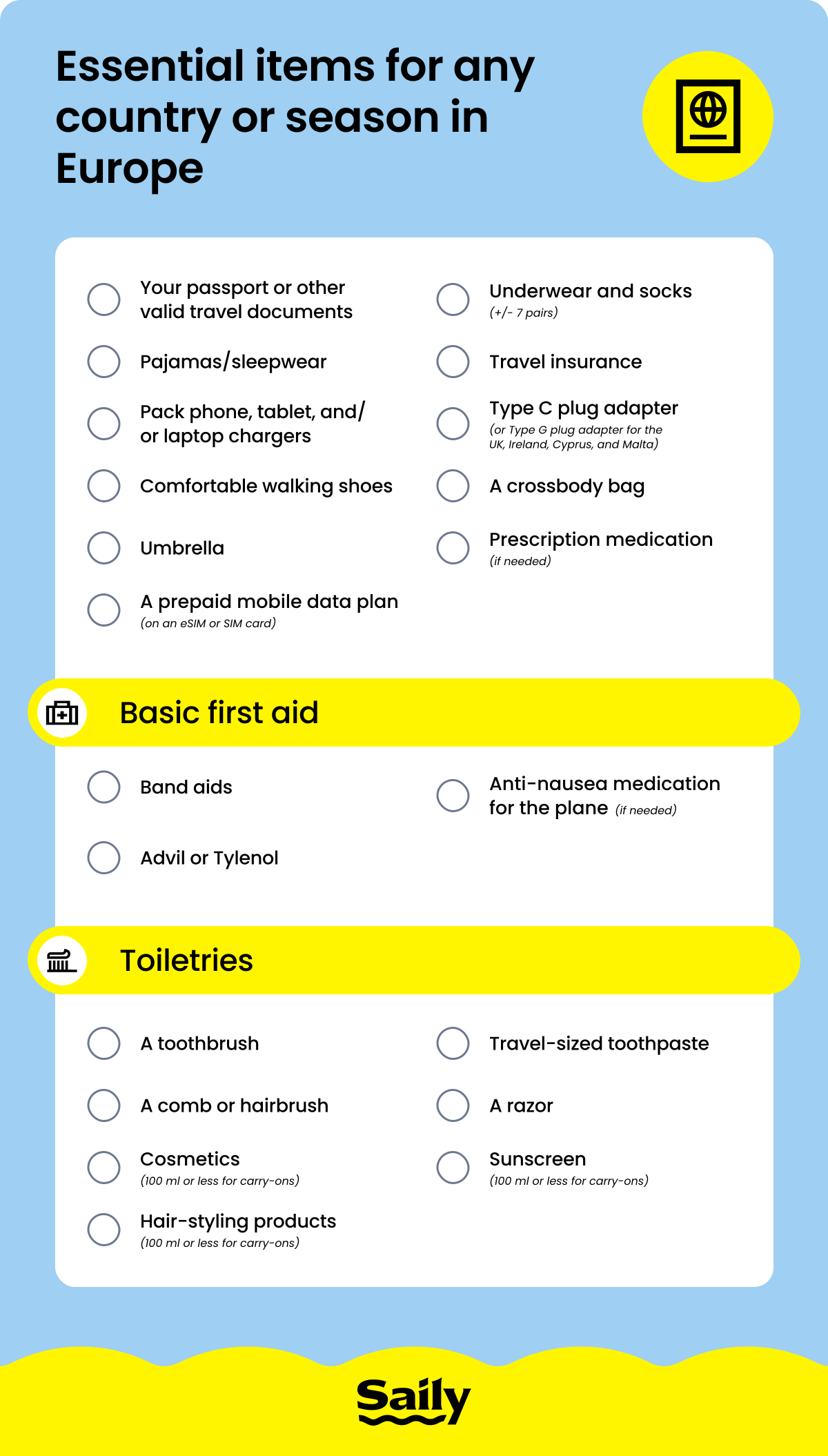
Essentials for any trip to Europe, no matter the country
If you’ve searched “Europe packing list” and found yourself here, it’s probably because you’re feeling a tad overwhelmed by the endeavour. To make things easy, let’s start with some travel essentials that you’ll need during any season, in any country. Think of these as a part of an international travel checklist — the non-negotiables that deserve space in your luggage regardless of where or when you're traveling:
Your passport or other valid travel documents. Obvious? Yes. Commonly forgotten? Also yes. Check the expiration date now, since many European countries require at least six months’ validity beyond your return date.
Travel insurance. It may be the last thing you want to think about, but unexpected medical emergencies can hit you at the worst time. You can get travel insurance through an independent provider or as an add-on when you purchase your flight tickets.
Medication and first-aid essentials. Prescription medication, painkillers, and band aids won’t take up much space in your bag, and they’ll spare you some hassle. European pharmacies are excellent, but trying to explain a specific medication while feeling unwell is a headache in and of itself.
Underwear and socks. If you’re packing for a weekend trip or a vacation short enough where you won’t do laundry, pack a pair of each per day, plus a couple of additional pairs. If you’ll be in Europe for a while and are planning on doing laundry, 7-9 pairs should work.
Pajamas/sleepwear. Summer heatwaves might tempt you to sleep in the nude, but if you're in an eight-bed hostel dorm, your bunkmates probably won't appreciate it.
Comfortable shoes. You'll walk more than you think. European cities are designed for pedestrians, with cobblestone streets and hidden alleyways made to be explored on foot.
A plug and voltage adapter. European outlets are typically Type C (two-pronged), and in the UK, Ireland, Cyprus, and Malta, they are Type G (three-pronged). But purchasing a plug adapter may not be enough — European outlets have a higher voltage (230V) than the US ones (120V). While many smartphones, tablets, and laptops have been manufactured for worldwide use and don’t require a voltage adapter, the same doesn’t apply to other electronics like a hair dryer.
A small, cross-body bag. Having a day bag that you can keep close to your body is particularly important in certain cities where pickpocketing is rampant (Barcelona, Paris, Rome, and Milan are notorious hotspots). If a travel backpack is more your style, we’d recommend wearing it at the front of your body.
A toiletry bag. While amenities like shampoo and conditioner can be purchased upon arrival, you’ll probably want a few basics handy. Just keep in mind that if you’re traveling with a carry-on, liquids cannot exceed 100 ml each, for a total of 1 L of liquid or gel items (the standard limit at most airport securities). Remember to pack:
A toothbrush
Travel-sized toothpaste
A comb or hairbrush
Deodorant
A razor
Make-up/cosmetics (in 100 ml containers or less for carry-on luggage)
Hair styling products (in 100 ml containers or less for carry-on luggage)
A travel data plan. Spotting “No service” on your phone just as you go to order a ride from the airport is a sour start to a trip. The most convenient way to stay connected while you travel to Europe is by getting a prepaid mobile data plan — just download an eSIM app, choose a plan that works for your trip, and install an eSIM on your cell phone before you depart.
What to wear in Europe by season and country
Figuring out what clothes to bring is arguably the most daunting part of packing. We’ll cut to the chase — regardless of season or country, the oldest trick in the book is to pack a variety of versatile pieces that can be mixed, matched, and layered. But whether those options are between wool sweaters or tank tops will totally depend on when you’re visiting Europe and which regions, specifically.
European weather is not monolithic. If you’ve only packed sundresses for a summer stay in Stockholm, don’t be surprised when you’re chattering your teeth on a brisk evening. In Malta, however, you’d be totally comfortable. To avoid any wardrobe malfunctions, we'll cover what to pack for your Europe trip for summer, fall, winter, and spring in Southern Europe, Central Europe, and Northern Europe. Of course, don’t take our advice as a set of hard-and-fast rules. The best way to prepare is by actively monitoring the weather forecast closer to the day you depart for your trip. With climate change in our midst, your guess is as good as ours. Hail in June, heat waves in October — European weather patterns are changing in real time, making historical temperature averages less reliable than they once were.
With that disclaimer out of the way, let’s go through your packing essentials for Europe based on each season and region, starting with summer.
Summer (June-August) packing list for Europe
While much of Southern Europe experiences scorching, borderline unbearable temperatures in summer, Northern European countries like Sweden and Finland might leave you disappointed if you’re seeking consistently warm days. Let’s break down packing requirements for summer travel around the continent.
Southern Europe
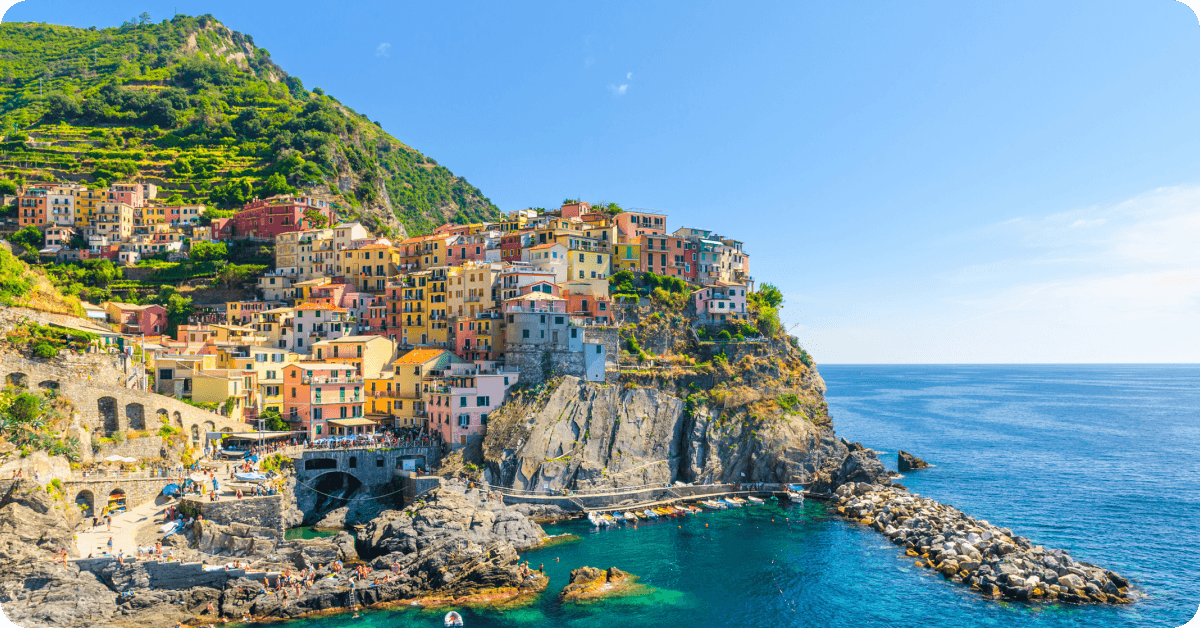
In Southern European countries like Italy, Spain, and Greece, summer’s a scorcher — temperatures average between 80.6 °F (27 °C) and 96.8 °F (36 °C) during the day, and heatwaves have been increasing in recent years. And air conditioning? In Southern Europe, it’s becoming more popular due to rising temperatures, but it's still less common than in the US. While many homes in Southern Europe may not have made the upgrade yet, a 2025 analysis by Euronews.com shows that Italy is by far the EU's largest consumer of air conditioning, followed by Greece, France, and Spain. Here’s what to bring for a hot summer stay in Southern Europe:
Light, breathable, light-colored clothing. Stick to materials like cotton, linen, and technical fabrics that wick moisture. Dark colors absorb heat, so save your black outfits for evening outings.
Comfortable, breathable footwear. Think lightweight sneakers or supportive sandals that won't leave you with blisters on hot, swollen feet.
Swimwear. Even if you're not planning to hit the beach, having swimwear on hand opens up spontaneous swimming opportunities. Plus, you might find yourself scrambling to cool off in a pool.
Sunglasses. We recommend polarized ones to protect your eyes while enhancing visibility, especially near water.
A hat with a brim. Beyond just protecting your face, a good hat helps regulate your body temperature when shade is scarce.
Central Europe
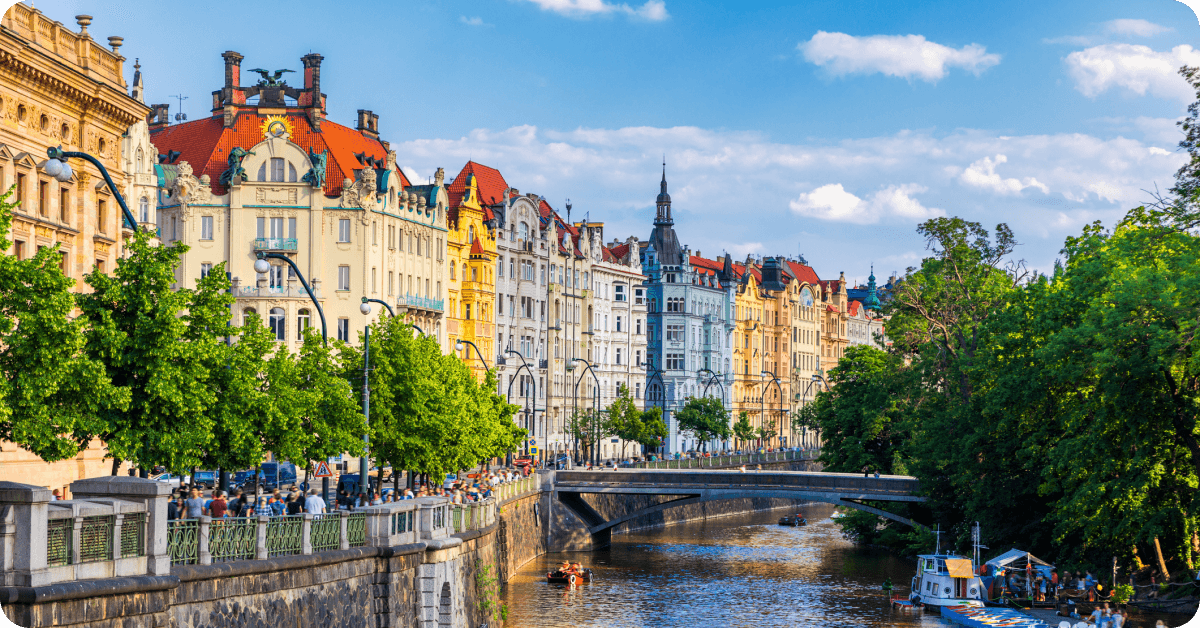
Heading to Germany, Austria, or Hungary in the summer? Prepare to sweat … and then to cool off with a brief torrential downpour. According to the International Journal of Climatology, Central Europe is not only experiencing increasing summer temperatures but also increased humidity. Germany’s heat wave in summer 2025 broke several temperature records in cities like Berlin, Frankfurt, and Munich — with daytime highs soaring above 99 °F (37 °C) and even 104 °F (40 °C) during peak days. With that in mind, we recommend bringing the following with you:
Loose, breathable clothing. Cotton and linen are your best friends when humidity rises.
Breathable, comfortable shoes. You'll be traversing a lot of cobblestone streets — make sure your shoes won't leave you with blisters.
An umbrella. Summer thunderstorms can appear with little warning in Central Europe (more than once per day, too!).
Sunglasses. The city looks a lot nicer when you're not squinting the whole time.
Northern Europe

Oh, the frustration of Northern European summer. Step out into the sun? You're scorched. Move to the shade? Goosebumps. This region is known for its dramatic changes in weather throughout the day and particularly chilly nights, with average lows of 48 °F (9 °C) to 57 °F (14 °C). As such, we’d recommend a wider variety of clothing:
Breathable, long, and short-sleeved layers. The shade is cool, the sun is real hot. Layers are the answer to Northern Europe's confusing summer temperatures.
A hoodie or light sweater. Evenings will cool down enough for you to use one.
Loose-fitting pants. Because your shorts may not see the light of day.
A rain jacket and umbrella. You're likely to use them because places like Scotland, Norway, and Sweden can experience four seasons in a single day.
Sunglasses. Yes, they're still needed this far up north.
Fall (September-November) packing list for Europe
Fall in Europe is somewhere between romantic, enchanting, and … wet. Autumn is also when many countries see their highest rainfall of the year. Venice's infamous acqua alta (flooding) begins in October, Portugal sees frequent downpours, and the UK lives up to its rainy reputation — though October isn’t the worst time to visit the UK, as long as you’re properly dressed for the weather. Let’s take a look at what your European wardrobe should include in the fall.
Southern Europe

September in Italy and Spain can pretty much be treated as summer, with temperatures still able to climb to 86 °F (30 °C) in many regions. The Mediterranean Sea retains its warmth well into October, making beach days entirely possible in places like Sicily, Crete, or the Costa del Sol. By November, however, the seasonal shift becomes more prominent, with cooler evenings and increased rainfall (somewhere between 60 °F [15 °C] and 75 °F [24 °C]).
A light jacket, windbreaker, or cardigan. Evenings tend to cool down by late October. If you’re planning on dining outdoors in the evening, you’ll definitely need an extra layer.
A mix of short and long-sleeved tops. The Mediterranean fall often delivers summer-like afternoons followed by distinctly autumnal evenings on the same day.
Close-toed shoes. It’ll be too cool for sandals, especially in the evening or after rainfall.
A light scarf. Especially for late October or early November.
An umbrella. November brings showers in Italy and other parts of the Mediterranean, often arriving in short-lived bursts rather than the persistent drizzle found in northern parts of the continent.
Swimwear. If you’re traveling in September, at least.
Central Europe

September will still be quite warm, with average temperatures in Germany, Austria, and Hungary sitting around 63 °F (17 °C) to 77 °F (25 °C) and dipping down in the evenings to around 52 °F (11 °C) to 61 °F (16 °C). But with the chilly air from the Alps, October and November become much more nippy, and you may even be lucky (or unlucky?) enough to see some early snowfall. If you’re traveling after September, take the following with you:
Sweaters, hoodies, and/or cardigans. Knitted sweaters capture the cozy fall atmosphere Central Europe, too!
A waterproof jacket. Rain isn't out of the question during falltime.
Jeans or your choice of pants. Thick denim might be a bit intense in early September, but perfect for later fall months.
Thermal underlayers. By late autumn (especially November), temperatures in cities like Munich or Krakow can approach freezing, particularly in the early morning or evening hours.
Boots or waterproof walking shoes. The later you visit in the season, the more likely you'll need boots.
A hat and gloves. By October, morning frost is common across much of Central Europe.
Northern Europe
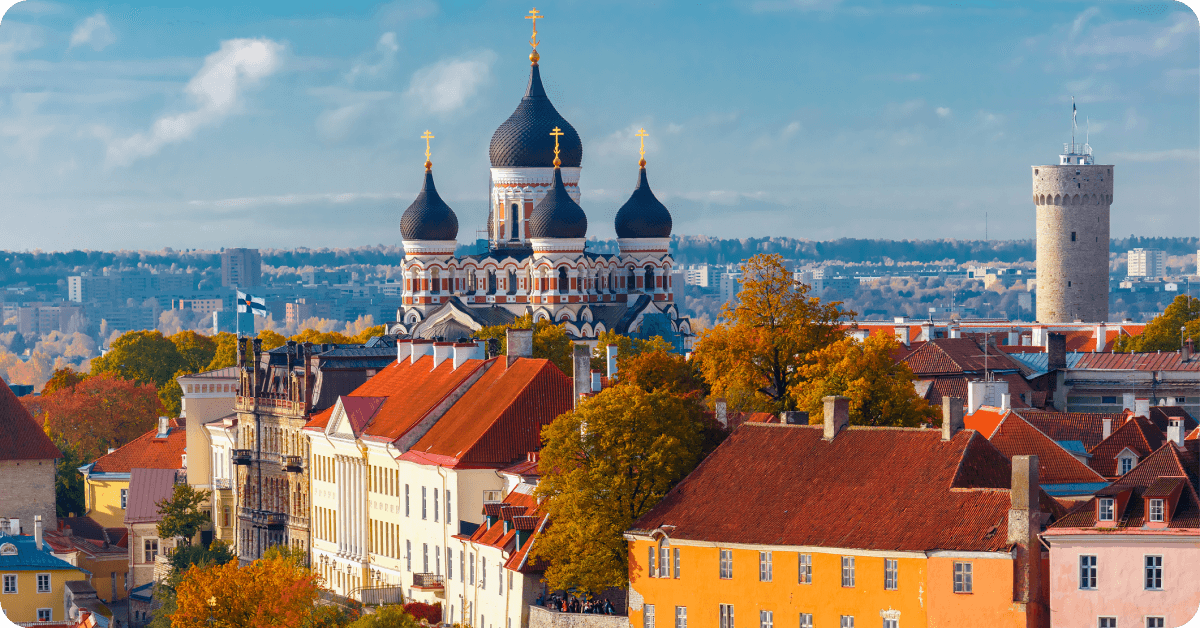
September can still be relatively warm, but Sweden, Norway, and Finland's temperatures creep toward freezing by October. The region's famous autumn foliage peaks earlier than in Southern Europe, with forests turning gold and crimson by mid-September. It’ll also start getting a whole lot darker — Stockholm loses nearly four minutes of daylight every day throughout autumn, meaning a November day has nearly six fewer hours of light than a September one (and less sun = less warmth). If you're traveling in October or November, your list should include:
A winter coat. By October, temperatures can already approach freezing.
Waterproof boots. Snow is possible, especially in late fall, and Northern European cities are well-equipped to continue functioning despite weather that would shut down countries further south.
A warm hat, gloves, and a scarf. Not optional by November.
Thermal underlayers. You'll last outdoors a lot longer with layers.
Warm, thick socks. Keeping your feet warm is crucial for keeping your entire body warm (look into thermoregulation!).
Winter (December-February) packing list for Europe
Winter weather feels different across Europe — countries like Italy might shut down their streets with a mere 2 cm of snow, while Finland considers trekking through a blizzard the norm. Let's break down what you'll need for each region during Europe's most varied season.
Southern Europe

Southern Europe remains mild at 45 °F (7 °C) to 60 °F (15 °C) during winter months. These temperatures won't require serious winter gear, so you can leave the balaclava at home. But don't mistake "mild" for "warm" — a Mediterranean winter can feel surprisingly chilly, especially with coastal humidity. Locals often bundle up more than temperatures might suggest, partly due to older buildings with minimal insulation and heating. As such, some winter essentials for Southern Europe include:
A medium-weight coat. Winter is mild but can still feel cold, especially with sea breezes along the coast.
Long-sleeved tops for layering. Buildings are often less insulated than you might expect, with many accommodations lacking central heating systems otherwise common in colder climates.
Waterproof shoes. Rain is common, though snow is rare except in mountainous regions. Winter is actually the wettest season in much of Southern Europe, with cities like Lisbon receiving most of their annual rainfall between November and February.
Light gloves and a scarf. Useful for cooler evenings and early mornings.
An umbrella. You may not see much snow but winter showers are common.
Naturally, if you're heading to the mountains in winter, your packing list will need to include specialized gear and equipment for skiing in places like the Italian Dolomites or Greece's Mount Parnassus.
Central Europe

Central Europe chills from 25 °F (-4 °C) to 40 °F (4 °C) during winter months, with temperatures frequently dropping well below freezing, especially in January and February. But winter months may just be the best time to visit Central European countries, which host some of the oldest and most iconic Christmas markets on the planet. Cities like Prague, Vienna, Budapest, and Munich welcome millions of tourists during the holiday season. Here’s what to pack if you’re joining the Christmas crowds:
A heavy winter coat. Temperatures regularly drop below freezing throughout Central Europe, with cities like Prague, Vienna, and Berlin experiencing extended periods of sub-zero weather.
Insulated, waterproof boots. Heat escapes from your feet and head the fastest! Make sure to break in your boots before your trip, too.
Thermal underlayers. Constantly shivering while you’re trying to sightsee is annoying, to say the least. Try investing in some thermal heattech before you depart for your trip.
A warm hat, scarf, and gloves. Wool is the go-to material for many Europeans but thick cotton hats, scarves, and gloves will do.
Hand warmers. We recommend picking up either air-activated, disposable hand warmers or electric, rechargeable ones before your Christmas market visit. Stick a couple of these bad boys in your mittens and you may just forget it’s winter at all!
Northern Europe

The frigid temperatures of Scandinavia make it all worth it when you cast your eyes upon the region’s iridescent Northern Lights. Just remember that you'll be close to the Arctic Circle with temperatures to match — around 10 °F (-12 °C) to 30 °F (-1 °C) with practically no daylight. In December, cities like Stockholm and Oslo might see only six hours of daylight, while the northernmost parts of Finland get polar nights (when the sun doesn't rise at all for weeks!). Proper packing is as much about comfort as it is about safety.
Serious winter gear. When we say serious, we mean snowpants and all. Depending on how far north you plan on going, you might need to do additional research on expedition-quality winter coats.
Insulated, waterproof boots with good traction. You'll likely trek through snow even in cities. Make sure to break them in before your trip!
Wool socks. Multiple pairs to keep feet warm and dry. Merino wool is worth the extra cost for its superior warmth-to-weight ratio and ability to stay warm even when damp.
Thermal underlayers. Thermal clothing is designed to insulate your body heat — something you’ll desperately need during the brutal winters of this region. Synthetic or wool options are best. Avoid cotton, which holds moisture and can actually make you colder.
Face protection. A balaclava for extremely cold days when exposed skin can develop frostbite. The burning sensation of truly cold air on your lungs is also reduced with a face covering.
Optional: Ice grips for shoes. The further up north you go (and the more remote), the more likely you'll need ice grips to walk without slipping.
Spring (March-May) packing list for Europe
Dreamy avenues in full bloom and fewer crowds make springtime in Europe an underrated, yet absolutely lovely time to travel. Southern Europe hosts the most pleasant temperature averages, with Central Europe close behind. Northern Europe, on the other hand, will still be slowly thawing during these months.
Southern Europe

Spring in countries like Italy and Spain sits between 55 °F (13 °C) and 75 °F (24 °C). Here’s what to pack for spring in Southern Europe:
A light jacket. Spring evenings can still be cool.
A mix of short and long-sleeved tops. Springtime temperatures can be confusing and ever changing so pack a variety of tops.
A light scarf. For cooler mornings and evenings.
Comfortable walking shoes. Always a must when walking in any European city!
Sunglasses. The Mediterranean spring sun is deceptively strong.
Central Europe

Spring in Central Europe isn’t quite as warm as its southern counterparts, with temperatures ranging widely from 45 °F (7 °C) to 65 °F (18 °C). Here’s what to pack for springtime in countries like Germany and Austria:
A medium-weight jacket. Temperatures are rising but still unpredictable in Central Europe's spring, with overnight frosts possible through April in cities like Munich, Prague, and Warsaw.
A mix of short and long-sleeved tops. You might not know what kind of tops you'll need until you feel the temperatures yourself.
Jeans or other pants. Keep the shorts at home.
Waterproof shoes. Springtime showers are common in Central Europe.
Light gloves. Useful in March and sometimes April, particularly for early mornings or evenings when temperatures can still dip close to freezing.
An umbrella. It'll protect you from the rain and make a cute accessory for photos.
Northern Europe
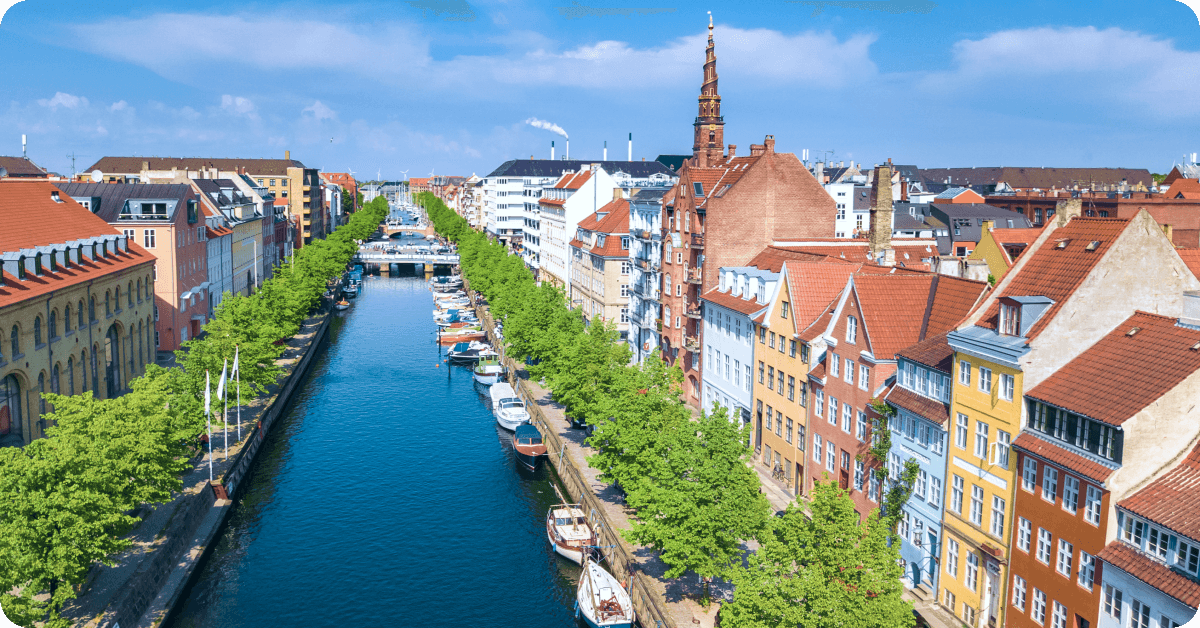
Spring arrives later the further north you go in Europe, with true spring conditions often not appearing until late April or even May in countries like Sweden, Norway, and Finland. Average temperatures are far from what you might expect from spring — around 35 °F (2 °C) to 55 °F (13 °C). But chilly temperatures aside, you can finally say goodbye to those dreadfully long winter nights. Your springtime packing list for Northern Europe should include:
A winter coat for March, a lighter jacket for April and May. The closer to summer months, the warmer the weather (duh!).
Waterproof footwear. Having wet feet all day won't make for a good trip.
Long-sleeved tops that can be layered. Spring is still cool (or even cold) in Northern Europe.
A hoodie or cardigan. Definitely necessary at night.
A light hat and gloves. Also might be necessary in the early morning or evening.
Sunglasses. It might not be that warm but the sun might make an appearance or two!
How to dress like a local in Europe
Some Europeans would say they can spot an American tourist from a mile away (or more appropriately, a kilometer away) just based on the way they’re dressed. How so? Because generally speaking, it’s the norm to dress a bit more formally in Europe compared to the US. While athleisure is perfectly acceptable in much of North America, tracksuits and sweats are reserved for the gym across much of Europe. If you want to blend in a bit more, the “traditional” advice would be to stick to color-coordinated, light, and slightly dressy attire.
But … is this actually valid advice in 2025? In our humble opinions, not exactly. Fashion trends are more globalized than ever, and no country exists in a bubble. High fashion, streetwear, tracksuits, head-to-toe goth getups — you’re bound to see it all in Europe. Our best advice is to dress however you feel comfortable and show off your own personality. European fashion isn't a strict uniform. But don’t go out for your morning run to the store in your pajamas (that may not be frowned upon only in the UK).
However, if you plan on visiting religious sites, avoid wearing shorts and make sure your shoulders are covered. For women, some churches or cathedrals may even require a scarf to be lightly wrapped around your head. Skirts or dresses are fine as long as they extend below the knees.
Digital and tech essentials for Europe: Checklist
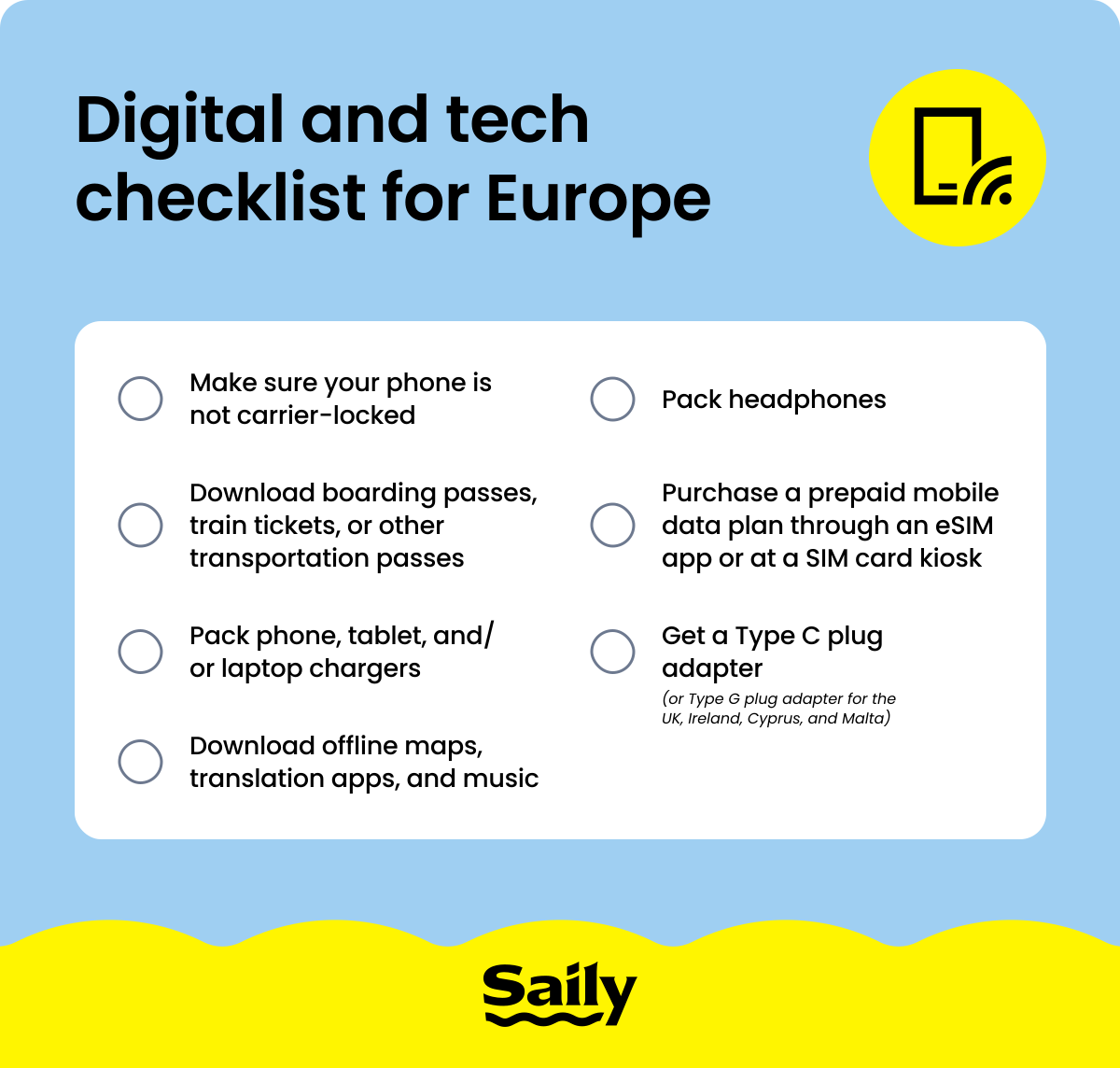
Not everything you need for a European trip needs to fit in your suitcase. You’ll want to make sure you have some digital essentials taken care of so you’ll have service and an internet connection on your trip. You’ll need:
A phone with no carrier lock. Unless you’re planning on racking up an enormous roaming bill, you’ll want to get a prepaid mobile data plan on an eSIM or SIM card. In order for those to work, you’ll need to make sure that your phone isn’t locked to your carrier network back home.
An eSIM. If you tend to spend a lot of time online, we’d recommend one of Saily’s Europe eSIM plans with unlimited data, which will cover 35 countries without the surprise charges that can come with traditional roaming in the EU. You won't need to find a local SIM card for each European country you visit — you can get a data plan right from the comfort of your phone. That also works as a great alternative to SIM cards for Europe.
A power bank (portable charger). While not necessary, being able to charge your phone at any time comes in handy when you’re in a remote area.
Downloaded apps. If you lose connection for whatever reason, having navigation maps, translation apps, and a currency converter downloaded can save the day. For our top picks, check out our list of the 30 best travel apps.
Boarding passes and pre-booked transportation tickets. Do people still have printers these days? Managing your passes and tickets through your phone has got to be cheaper than those darn ink cartridges. Make sure you’ve got everything downloaded before you depart!
Plug and voltage adapter. Europe typically uses Type C outlets with 230V (higher than the US’s 120V). Make sure you’ve invested in a plug adapter, and if you’re carrying electronics other than a smartphone, a voltage adapter, too. Note that the UK, Ireland, Cyprus, and Malta use Type G sockets, so you’ll need a different adapter for those countries.
Camera and memory cards. If photography is important to you, consider bringing a dedicated camera rather than relying solely on your phone.
Headphones. Perfect for enjoying music, podcasts, or videos during long train rides, flights, or bus journeys.
Cloud storage solution. Back up your photos and important files to the cloud so you won’t lose precious memories.
Tips for packing like a pro for a trip to Europe
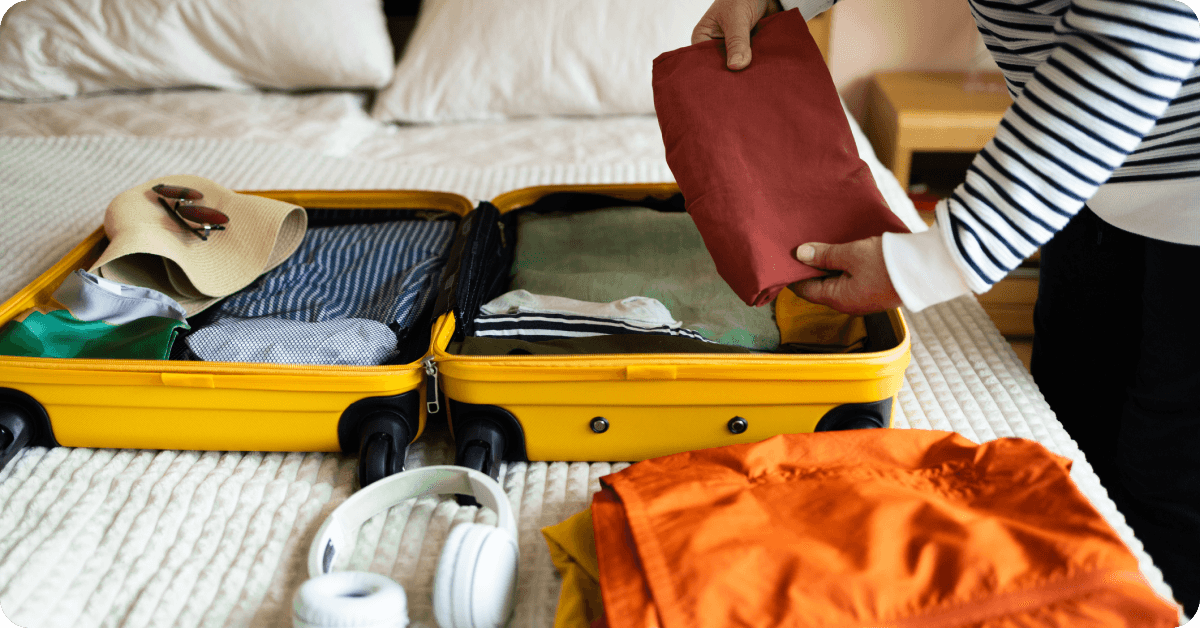
If it’s your first time traveling internationally, you might not be familiar with some packing hacks that seasoned travelers have developed over many years of exploring. Here are some of our favorites that you can use to pack for Europe:
Decide if you really need checked luggage. Can you make do with a carry-on? Many European budget airlines charge steep fees for checked bags, and navigating public transport is much easier without clunky luggage slowing you down.
Try the 5-4-3-2-1 packing rule. No, this isn't a trick for police officers to see if you're sober enough to drive — it's a minimalist packing strategy used by the savviest of backpackers. Pack 5 pairs of socks/underwear, 4 tops, 3 bottoms, 2 pairs of shoes, and 1 jacket.
Use packing cubes. Roll your clothes into little burritos to maximize space.
Beware of airport security restrictions. No flammable items, no weapons, no sharp objects. Liquids need to be in 100 ml or less, up to 1 L total. It’s easiest to pack them in a ziplock bag, though some airports might make you take them out and put them into a standardized bag that cannot overflow.
Less is more. Type A personalities rejoice in overpacking for "what if" scenarios, until they're cursing to themselves about having to lug around a 50-pound bag down cobblestone streets until the 3 pm hotel check-in (seriously, who invented that!?).
Layers, layers, layers. Dress like an onion...or a cake...or whatever layered food item you please. The point is to pack a combo of short sleeves, long sleeves, and jackets that can be added or removed as conditions change.
Don't pack what you can buy locally. Yes, every European country will have shampoo and toothpaste. Will it be your regular one? Maybe, maybe not, but it's worth saving space in your bag.
Bring some cash. You’d be surprised how often it’s needed in some parts of Europe. Not all European countries use the Euro (€) — even some in the European Union, like Poland, Sweden, and Czechia, have their own currencies. While you might assume credit cards are widely accepted, that’s not always the case. For example, Germany is (in)famous for preferring cash. Some public restrooms even charge money (again, who invented this!?). Ordering cash beforehand might also be cheaper than using local currency exchange rates once you arrive.
Have some tissues handy. Speaking of public restrooms, not every public restroom is guaranteed to have toilet paper. Enough said.
Leave room for souvenirs. Try not to pack your bag to the brim so you can take some tangible travel memories home.
Packing for a European vacation: Final takeaways
After covering everything from seasonal wardrobes to tech essentials, let's distill this down to the most critical packing takeaways for your next European vacation.
Be mindful of the average temperatures depending on what country you're visiting and the season. Research current weather trends, not just historical averages, as climate change has altered traditional patterns.
Comfortable footwear is a must. This bears repeating because nothing ruins a European vacation faster than painful feet. Break in new shoes before departure.
Pack light, buy local. Europeans manage to live there year-round without bringing everything they own everywhere they go. You can too.
Get an eSIM plan to stay online. If you want affordable mobile data on your trip, consider getting an eSIM plan for Europe. With Saily, you can even choose an unlimited data plan for the continent, which is much easier than finding an international SIM card with unlimited data. If you’re just visiting a single country, browse through Saily's list of 200+ available destinations, which includes plans for popular European countries like Italy, Spain, France, and Germany.

Stay connected with the Saily eSIM app
Affordable mobile data plans for every journey.
FAQ


