





SIM card for France: The best options for tourists and travelers in 2026
Navigation, translation apps, digital train tickets, and restaurant bookings are easier when your phone has data as soon as you arrive in France. However, using your usual carrier can mean high roaming charges, while buying a SIM after landing may involve queues, unfamiliar plans, and identity checks in French. A physical SIM card for France can work well if you need a French number or plan to stay for several weeks. For a shorter vacation, an eSIM is often simpler because you can install it before departure. Below, you’ll find the best 2026 options, prices, setup steps, and coverage guidance.

Table of Contents
- Best SIM card and eSIM options for France in 2026
- Best SIM card in France
- Orange SIM card for France and the Orange Holiday option
- eSIM for France: The easy alternative
- How much does a French SIM card cost in 2026?
- Prepaid SIM card France: What you get for the price
- Can a tourist buy a SIM card in France?
- How to set up your SIM card or eSIM in France
- Where to use your SIM card across France’s top destinations
- Tips for staying connected in France
Best SIM card and eSIM options for France in 2026
Can’t decide on whether to buy a physical France SIM card or use an eSIM? A physical SIM may suit a longer stay or if you need local calls. However, an eSIM is usually the easier option for a short trip because you don’t need to collect or swap physical cards.
France has four main mobile network operators — Orange, SFR, Bouygues Telecom, and Free Mobile. Coverage is generally strongest across cities and major travel routes in metropolitan France, although signal quality can be less reliable in rural areas, mountain regions, and other remote locations. France’s telecom regulator, Arcep, provides operator coverage maps that you can check before visiting less populated areas.
If you’re arriving from outside the EU, you should check your carrier’s international rates before using your home plan. A day pass can be convenient, but the cost quickly adds up on a longer trip. You can read more about how international roaming works and, if you’re a US customer, check the details of using T-Mobile in Europe.
For travelers who mainly need mobile data, Saily offers app-based prepaid eSIM plans in 200+ destinations. It was created by Nord Security, the company behind NordVPN, and its eSIM can be installed directly via the app without the need to scan a QR code or enter a manual activation code.
Best SIM card in France

Choosing a SIM card in France depends on how long you’re staying, how much mobile internet you need, and whether you want a local phone number. France prepaid SIM cards are available from Orange, SFR, Bouygues Telecom, and Free Mobile, with different data packages, validity periods, and allowances for calls and SMS.
Orange is a strong all-around option with broad coverage and several prepaid and tourist products.
SFR offers rechargeable prepaid cards and passes for data, calls, and international use.
Bouygues Telecom provides standard prepaid cards as well as the My European SIM option for visitors.
Free Mobile offers a one-month, no-contract travel plan with a French number, calls and texts, and a large data allowance. Its current visitor offer is available as either a physical SIM or eSIM.
The best prepaid SIM card for your trip will depend on the amount of data you need, whether you want unlimited calls, and how easily you can buy and activate the plan.
You can buy a SIM card in France at carrier stores, some airport kiosks, electronics retailers, supermarkets, and tabacs, or order one online for delivery or collection. However, airport kiosks typically charge more than provider websites or city stores.
A local prepaid SIM card in France can be useful if you’re staying longer, need a French phone number, or plan to make regular local calls. However, using a SIM card comes with some trade-offs, including the need to find a retailer, dealing with possible language barriers, bearing in mind store hours, and completing identity registration. You’ll also need an unlocked phone.
Orange SIM card for France and the Orange Holiday option
Orange is France’s largest mobile network operator and is often chosen by travelers who prioritize broad network coverage and access to in-country support. You can buy a standard Orange Mobicarte prepaid SIM or choose an Orange Holiday product designed for visitors through an Orange store or the Orange website.
The current Orange Holiday Europe range includes physical SIM and Orange eSIM options with 20 GB, 50 GB, or 100 GB of data and 31-day validity. Depending on the plan, it may also include unlimited calls and texts within eligible European countries.
However, the Orange Holiday option isn’t always the cheapest choice if you only need data. A physical card must still be delivered or purchased, and you’ll need to complete the required identification process. Orange states that its Holiday lines initially remain valid for a limited period unless the user completes identity verification with a passport.
In other words, Orange’s coverage and service options are appealing, but a data-only eSIM may be quicker and better value for a short vacation. Also check for activation fees, minimum top-ups, delivery charges, and roaming costs if you buy or activate the SIM outside France.
eSIM for France: The easy alternative
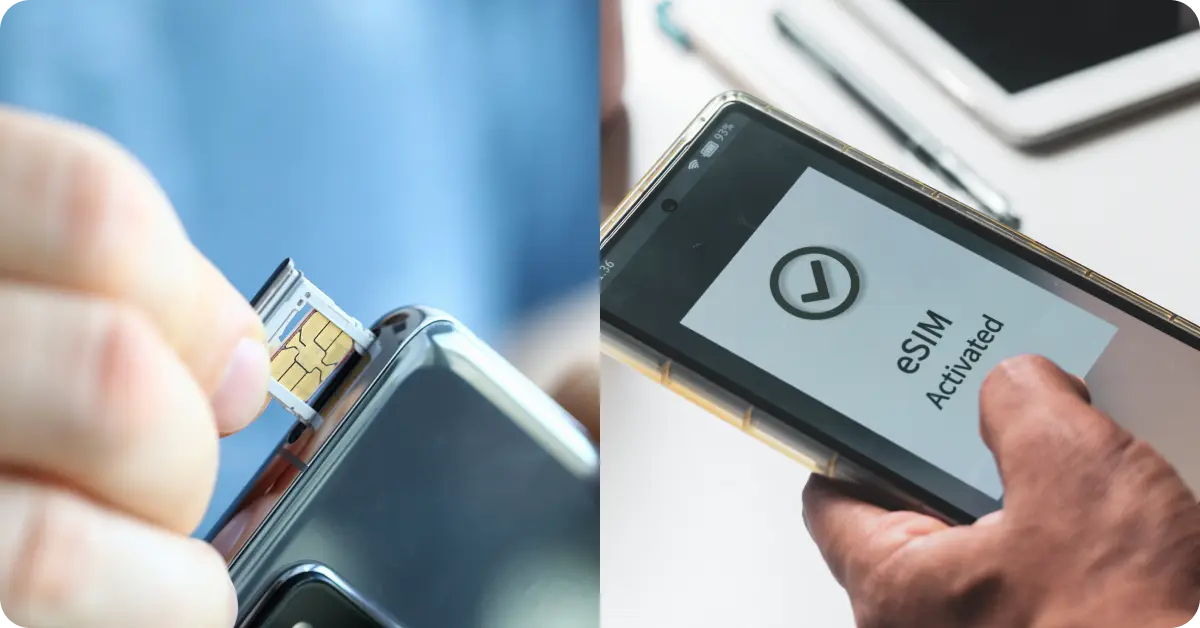
An eSIM is a digital SIM built into a compatible phone. Instead of replacing your usual physical SIM, you install a travel plan electronically and select it for mobile data. This makes an eSIM for France particularly convenient if you mainly need navigation, translation, messaging, browsing, and travel apps.
You can purchase and install the eSIM before flying, so you can connect as soon as your plane lands. Saily’s France plans currently range from 1 GB to 20 GB, with unlimited data options also available. Prices start at approximately US$4 (€3.49) for 1 GB valid for seven days, while larger fixed-data plans last 30 days. As with most unlimited data plans, fair-use limits may apply, so double-check the full-speed daily allowance before purchasing.
The Saily eSIM app also includes three built-in security features:
A virtual location changer. It lets you choose from 115+ virtual locations.
An ad blocker. It blocks many online ads and can help reduce unnecessary data use.
Web protection. It helps block malicious websites and limit trackers.
Saily is primarily a data service, but you can add a US-based phone number with a separate call and text plan. It isn’t a French local number, and the phone plan supports local calls rather than international calls. Travelers can also use apps such as WhatsApp, FaceTime, or Messenger for calls over data.
The best eSIM for France should match your trip length, data needs, and travel itinerary. It’s worth noting that although you can install Saily before departure, the data plan isn’t pre-activated — it activates when the eSIM first connects to a supported network in France.
If France is one stop on a longer trip through other countries, Saily’s Europe eSIM plan may be more practical than buying a new SIM or eSIM plan for every country. You can compare the process with getting a SIM card in Germany, for example.
How much does a French SIM card cost in 2026?
A French SIM card can cost anywhere from a few dollars for a basic starter product to US$58 (€50) or more for a large tourist bundle with calls, texts, and extensive data. Prices vary based on the data package, validity period, and whether calls and SMS are included. Remember to check for activation fees, minimum top-ups, delivery charges, roaming fees, and any other extra cost before choosing a plan.
For example, Orange’s current online Mobicarte range starts at approximately US$3.45 (€2.99), with one-month prepaid offers from around US$11.50 (€9.99). However, tourist bundles and airport purchases may cost more, and a low advertised price doesn’t always include everything you need.
Option | Typical 2026 price | What you usually get | Best for |
|---|---|---|---|
Local prepaid SIM | About US$3.50-23 (€3-20) to start | French number, prepaid data, calls, and texts | Longer stays and local calls |
Tourist SIM bundle | About US$23-81 (€20-70) | Larger data allowance, short-term validity, calls and texts | Visitors wanting an all-in-one package |
Travel eSIM | From approximately US$4 (€3.49) | Prepaid mobile data installed digitally | Short trips and fast setup |
Saily’s France plans start at approximately US$4 (€3.49), with no physical delivery or store visit required. Check the current plan page before buying because prices, promotional extras, and available allowances may change.
Prepaid SIM card France: What you get for the price
A prepaid SIM card lets you pay in advance without signing a long-term contract or passing a credit check. Tourist-friendly plans generally include mobile data and may also provide a French phone number, local calls, texts, and roaming in other European countries.
Validity matters as much as data volume. A plan that expires after seven or 14 days won’t cover a three-week trip, while a 30-day package may be unnecessary for a weekend. Check whether validity starts at purchase or when the SIM first connects.
Top-up rules also vary. Some carriers let you recharge online, in an app, or at a retail outlet, but you may need to create a personal account and provide an address or other details. Some providers also require you to top up within a set period to keep your French number active, so check the expiry rules before buying. For a short visit, that extra administration can make a prepaid SIM less convenient than it first appears.
Can a tourist buy a SIM card in France?
Yes, tourists can buy a SIM card in France. You’ll generally need an unlocked phone and valid identification, usually a passport, to register the line. SFR, for example, asks prepaid users to provide personal details and an identity-document number, while Orange uses passport-based verification for its travel products.
You can often buy a tourist SIM card in France at an airport, an official carrier store, including Orange or SFR stores, a supermarket, or a tabac. Carrier stores are useful if you want help registering and activating the plan. Although airport kiosks are convenient, they may offer fewer choices at higher prices.
A French prepaid SIM can generally be used elsewhere in the EU under the region’s “Roam like at home” rules, although fair-use limits and plan-specific restrictions may apply. You should check the allowance before crossing a border rather than assuming all domestic data is available abroad. Learn more about EU roaming rules and how the system works.
A travel eSIM removes the need for in-person shopping and physical card swap. With Saily, you can choose, purchase, and install a plan from home without completing French SIM registration at a store.
How to set up your SIM card or eSIM in France
Setting up a physical SIM is usually simple, especially with help from a store employee. Most recent iPhones and many flagship Android phones support eSIM technology, but check your exact model before buying.
Make sure that your phone is unlocked. A carrier-locked device may reject a French SIM card. If you're not sure whether your device is compatible, check our guide, Will my phone work in France?
Choose a provider and plan. Compare the data allowance, validity, calls, texts, and EU roaming terms.
Bring your passport. The seller or provider may need it to register the line.
Insert the SIM. Keep your home SIM somewhere safe if you remove it.
Follow the activation instructions. You may need to restart your phone, enter a PIN, or complete online identification.
Check the mobile data settings. Make sure the new SIM is selected for data and that the correct APN settings have loaded.

Get internet access in minutes with a virtual SIM card
Affordable mobile data plans for every journey.
To set up a Saily eSIM:
Check that your phone is unlocked and eSIM compatible. You can review iPhones that support eSIM or use Saily’s compatibility checker.
Download the Saily app and choose a data plan for France.
Purchase the plan and tap “Install eSIM” in the app.
Follow the in-app instructions to add the eSIM to your phone. Saily supports direct installation without a QR code or manual activation code on compatible devices.
Set the Saily eSIM as your mobile data line and enable data roaming for that eSIM.
Turn off mobile data roaming for your home SIM to avoid accidental charges.
Install the eSIM while you still have a reliable Wi-Fi connection. Your Saily plan will activate when you arrive and connect in France, provided the eSIM is turned on and roaming is enabled. If you run into issues like failed activation, connection problems, or data running out unexpectedly, Saily offers 24/7 customer support through live chat and email or ticket support.
Where to use your SIM card across France’s top destinations
You should have reliable mobile coverage in major cities, such as Paris, Lyon, Marseille, Nice, Bordeaux, and Strasbourg. Popular coastal areas and well-traveled routes are also generally well served by 4G, with 5G available in many urban locations. You can install an eSIM for Paris before arrival if the capital is your first stop.
If you want to discover the delights of rural France, coverage may be less consistent in the French Alps, the Pyrenees, Provence, isolated villages, and national parks. When away from main tourist routes, you should download important maps, tickets, and accommodation details in advance.
Tips for staying connected in France
Staying connected in France is easy when you sort out your data plan ahead of time — a few simple tips will keep you connected throughout your trip.
Arrange your connection before flying. Buying or installing your plan in advance means you won’t need to depend on airport Wi-Fi or search for a shop after landing.
Check eSIM compatibility. Confirm that your device supports eSIM technology and is carrier unlocked before purchasing a digital plan.
Compare roaming options carefully. A home-carrier day pass may be fine for one or two days but expensive over a longer vacation.
Choose a data plan that reflects your habits. Navigation apps such as Google Maps and messaging generally use relatively little data, while video streaming, cloud backups, and frequent photo uploads use much more.
Keep a backup option. Save essential travel documents offline and keep your home SIM available for important verification texts while making sure its data roaming is disabled.
Check EU coverage. A French SIM may include EU roaming, but a France-only eSIM may not. Choose a regional plan if you’re visiting several countries.
Review fair-use limits. “Unlimited” doesn’t always mean unlimited full-speed data, so check for daily allowances or reduced speeds.
Use app-based connectivity for less friction. Saily offers affordable prepaid data across 200+ destinations, in-app installation, 24/7 support, a built-in virtual location changer, an ad blocker, and web protection.
For more ways to prepare, see our guide to staying connected while traveling.
Need data in France? Get an eSIM!

1 GB
7 days
US$3.993 GB
30 days
US$8.995 GB
30 days
US$10.99
FAQ
Orange is a strong local option if you want broad coverage, a French phone number, and bundled calls and texts. For most short-term tourists who mainly need data, a travel eSIM such as Saily can offer better value and easier in-app setup without a store visit. Match the plan to your trip length and whether you need a local number.
A basic prepaid SIM may start at around US$3.50-23 (€3-20), while larger tourist bundles can cost US$23-81 (€20-70) or more, depending on data, calls, and validity. Saily’s France data plans currently start at approximately US$4 (€3.49), with no separate physical SIM delivery or in-store activation.
Yes. Tourists can buy prepaid SIM cards at airports, carrier stores, supermarkets, and some tabacs, although a passport or other valid ID is usually required for registration. An eSIM can be purchased and installed before arrival, so you can skip the in-person store process.

Always connected, always on course
Connect instantly with a Saily eSIM and enjoy effortless internet access.

Related articles
