

18 best things to do in Cape Town in 2026
It doesn’t take long to see why locals call Cape Town the “Mother City.” Here, a flat-topped mountain drops into two oceans, world-class vineyards sit just on your doorstep, and wildlife safaris are a couple of hours away. The city’s rich culture spans from the brightly painted streets of Bo-Kaap to the edgy galleries of industrial Woodstock. Few places pack this much beauty, history, and food into one skyline. This guide breaks down what to do in Cape Town for every kind of traveler — adventure seekers, culture lovers, foodies, families, and anyone watching their budget.
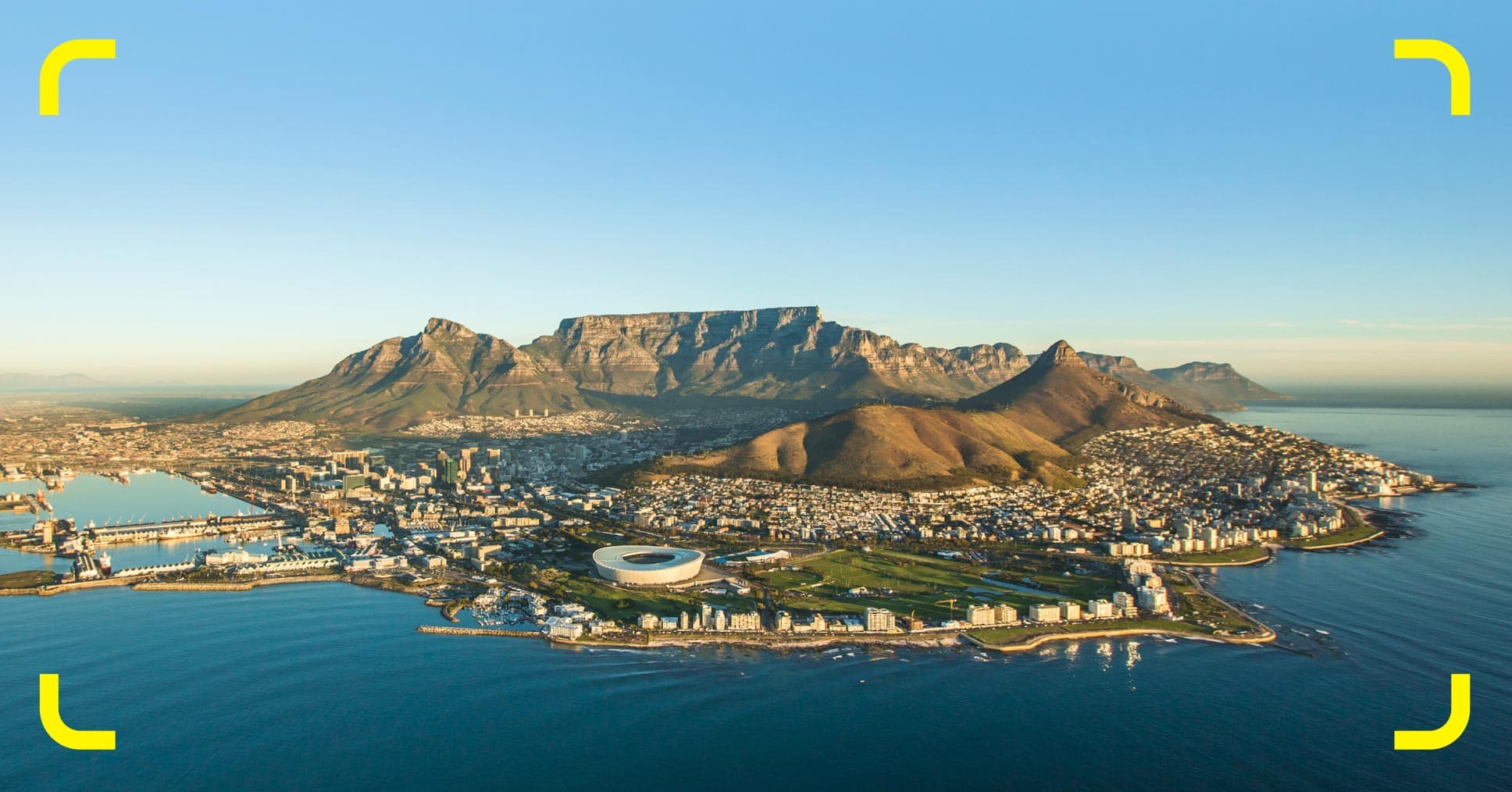
Table of Contents
- 1. Take the cable car or hike up Table Mountain
- 2. See the penguins at Boulders Beach
- 3. Explore the colorful streets of Bo-Kaap
- 4. Visit the V&A Waterfront
- Zeitz MOCAA (Museum of Contemporary Art Africa)
- 5. Drive along Chapman’s Peak
- 6. Take a ferry to Robben Island
- 7. Relax at Camps Bay and Clifton beaches
- 8. Walk through Kirstenbosch Botanical Garden
- 9. Watch the sunset from Signal Hill or Lion’s Head
- 10. Go wine tasting in the Cape Winelands
- 11. Tap into history at the District Six Museum
- 12. Explore the Cape Peninsula and Cape of Good Hope
- 13. Stroll the Sea Point Promenade
- 14. Try adventure activities
- Paragliding from Signal Hill or Lion’s Head
- Surfing at Muizenberg
- Shark cage diving and kayaking
- Sea kayaking
- 15. Browse Cape Town’s best markets
- 16. Experience Cape Town at night
- 17. Things to do in Cape Town with kids
- Two Oceans Aquarium
- World of Birds Wildlife Sanctuary
- Muizenberg Beach and the Scratch Patch
- 18. Stay connected in Cape Town with Saily
1. Take the cable car or hike up Table Mountain
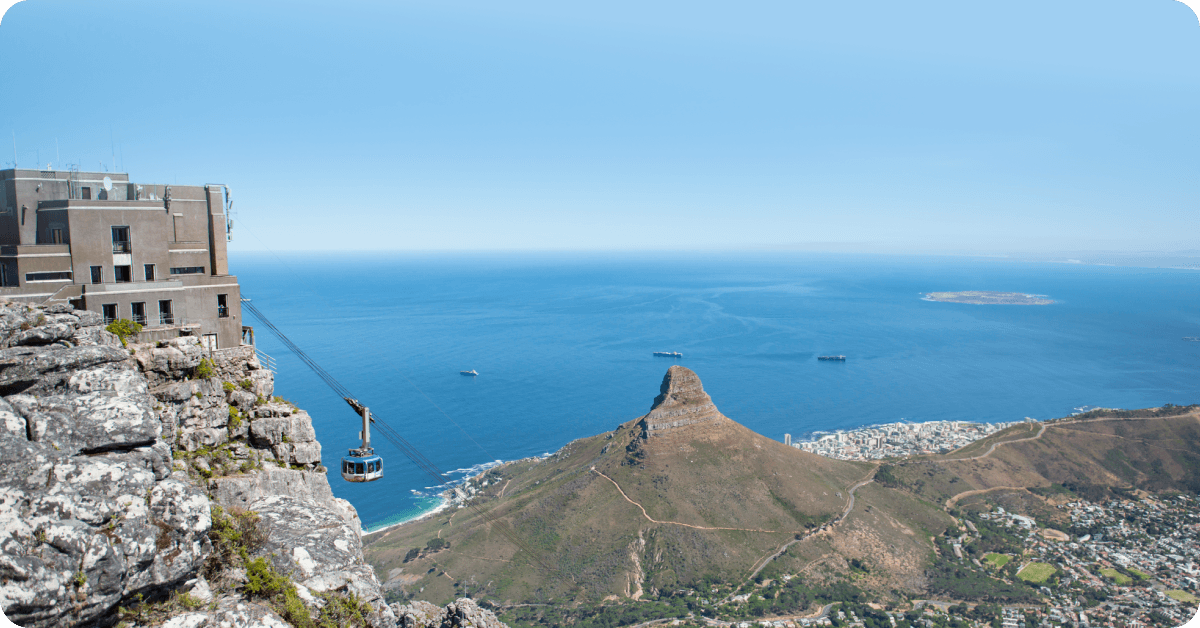
Few city views come close to the one from the top of Table Mountain. This flat-topped giant that watches over Cape Town has earned its spot on the New Seven Wonders of Nature list and hands every hiker and cable-car rider a 360° panorama that’s hard to shake.
You’ve got two options to get up to the mountain. If you like to hike, you can choose from around 65 hiking routes to the top. Platteklip Gorge is the classic — well-marked, direct, and the most popular first-timer’s choice. Prefer to skip the sweat? You can also go up with an aerial cableway that will whisk you up in a rotating car and let you marvel at breathtaking views the whole way up.
Once at the summit, you can wander the walking paths, browse the souvenir shop, or grab a coffee at the Table Mountain Cafe. It’s also the kind of view you’ll want to send to everyone back home in real time, and a Saily eSIM app can help you with that. Stay connected at the summit so you can share the panorama the moment you take it in.
Cable car price. Adult return tickets are R450 (roughly US$25) if you buy online and a little more — R490 (US$25) if you buy at the ticket office.
Hiking time. Platteklip Gorge takes about 2.5-3 hours up. India Venster runs closer to 3.5 hours.
Book ahead. It’s worth buying cable car tickets online to skip the queues at the Lower Cableway Station. However, you may still queue on busy days.
Weather matters. The cableway closes in high winds or bad weather — always check the live status before heading up.
2. See the penguins at Boulders Beach

One of the most charming places to visit in Cape Town isn’t a museum or a mountain — it’s a beach full of penguins. Boulders Beach, just outside Simon’s Town on the Cape Peninsula, is home to a colony of African penguins. It’s one of just a handful of places in the world where you can see them on land like this. The wooden boardwalks on the beach wind through the dunes right up to viewing platforms. Here, you can watch the birds waddle and swim just a few feet away.
Make sure to leave a half-day for exploring Boulders Beach. Simon’s Town itself is a postcard-pretty village just up the road. Along the harbor, you’ll find seafood spots, quirky little shops, and a working dockyard to wander past.
Entry fee. International visitors pay around R190 (roughly US$10), with reduced rates for children and South African residents.
Location. Just outside Simon’s Town on the Cape Peninsula, about a 45-minute drive south of central Cape Town.
3. Explore the colorful streets of Bo-Kaap
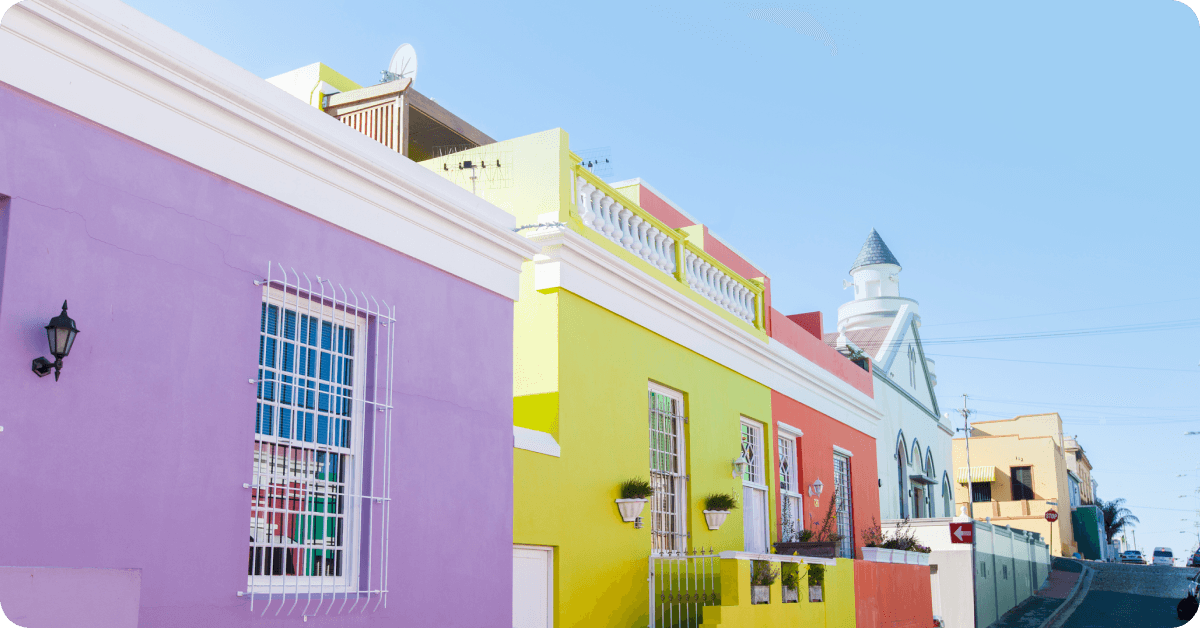
Ask anyone what Cape Town is known for, and Bo-Kaap will probably come up before long. Perched on the slopes of Signal Hill, this historic area is one of the most photographed neighborhoods in town. It’s a tangle of steep cobblestone streets lined with houses that are painted in every shade of pink, lime, turquoise, and tangerine.
Bo-Kaap was historically known as the Malay Quarter. Built in the 18th century, it was used as housing for enslaved people from Southeast Asia and East Africa. Their descendants became the Cape Malay community — people with a unique Creole identity, Afrikaans dialect, and distinct culinary traditions. For generations, these Bo-Kaap homes were leased rather than owned, and every house on the cobbled streets had to be painted white. When apartheid ended, and residents were finally able to buy their homes, many painted them in bright colors as a celebration of freedom and individuality — a tradition that’s stuck around to this day.
To go beyond taking photos, pop into the Iziko Bo-Kaap Museum. Set inside one of the oldest surviving houses in the area, it offers a closer look at Cape Malay heritage and daily life through the centuries. It’s hands-down one of the most beautiful places in Cape Town.
Iziko Bo-Kaap Museum. Entry fee is around R 20 for adults (roughly US$1).
Location. On the slopes of Signal Hill, a short walk from Cape Town’s city center.
Be respectful. These are private homes, so ask before photographing people or doorsteps up close.
4. Visit the V&A Waterfront
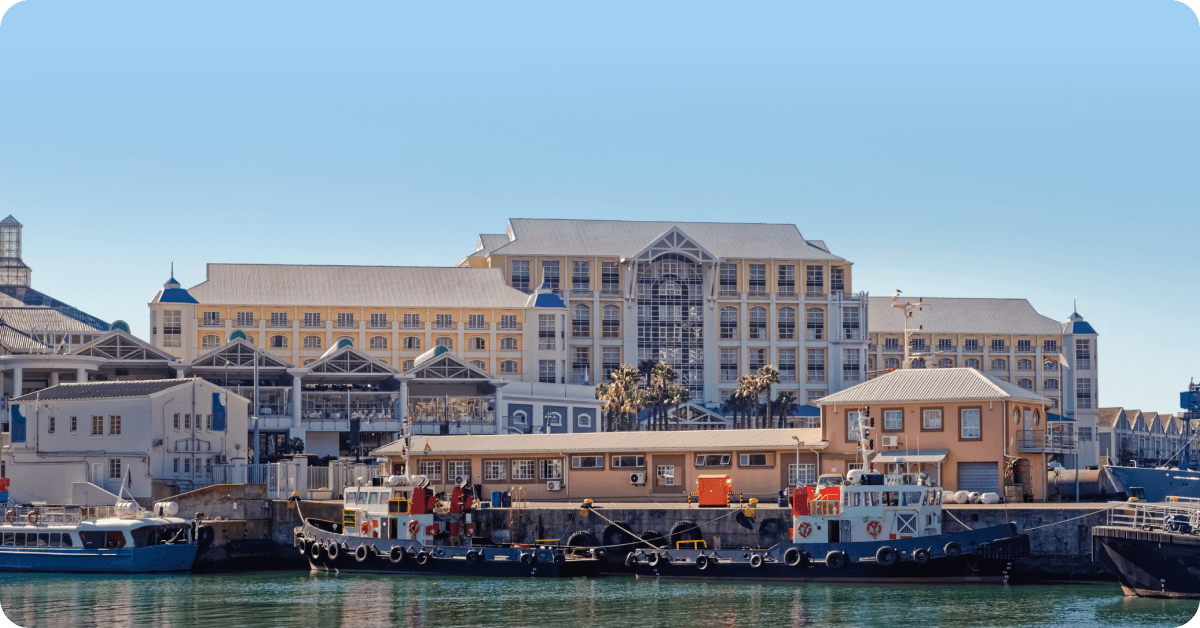
Short for Queen Victoria and her son Alfred, the V&A Waterfront is a 123-hectare district around the oldest working harbor in the Southern Hemisphere. It’s filled with upmarket apartments, a major shopping mall, a marina, and various restaurants, museums, and live music venues. Table Mountain looms in the background of the Waterfront, and you can see an occasional Cape fur seal lounging on the docks. You should plan to spend at least half a day there, though the V&A can quietly eat up a whole one. To filter through restaurants and harbor tours, it’s a good idea to download a few of the best travel apps before you arrive.
If you’d rather take in the views, hop on the Cape Wheel for a slow spin over the harbor. And before you head out, make time for The Watershed — an indoor craft and design market, packed with over 150 local makers selling ceramics, textiles, and artisan goods. It’s one of the best places in Cape Town for souvenir shopping that doesn’t feel mass-produced.
Cape Wheel. The price for an international adult visitor is R275 for adults (roughly US$16,50) with reduced rates for children and South African residents.
The Watershed. Open daily from 10am to 6pm, and is free to browse.
Zeitz MOCAA (Museum of Contemporary Art Africa)
Zeitz MOCAA is the world’s largest museum dedicated to contemporary African art. It’s located inside a repurposed 1920s grain silo at the V&A Waterfront — a 57-meter concrete giant that has been hollowed out into a cathedral-like atrium. The carved-out interior alone is worth the visit, even if you only have an hour to spare for the galleries.
Entry fee. Admission for adults costs R265 (roughly US$16), and for anyone under 18 years old it’s free.
Opening hours. Open daily from 10am to 6am, with the last entry at 5:30pm.
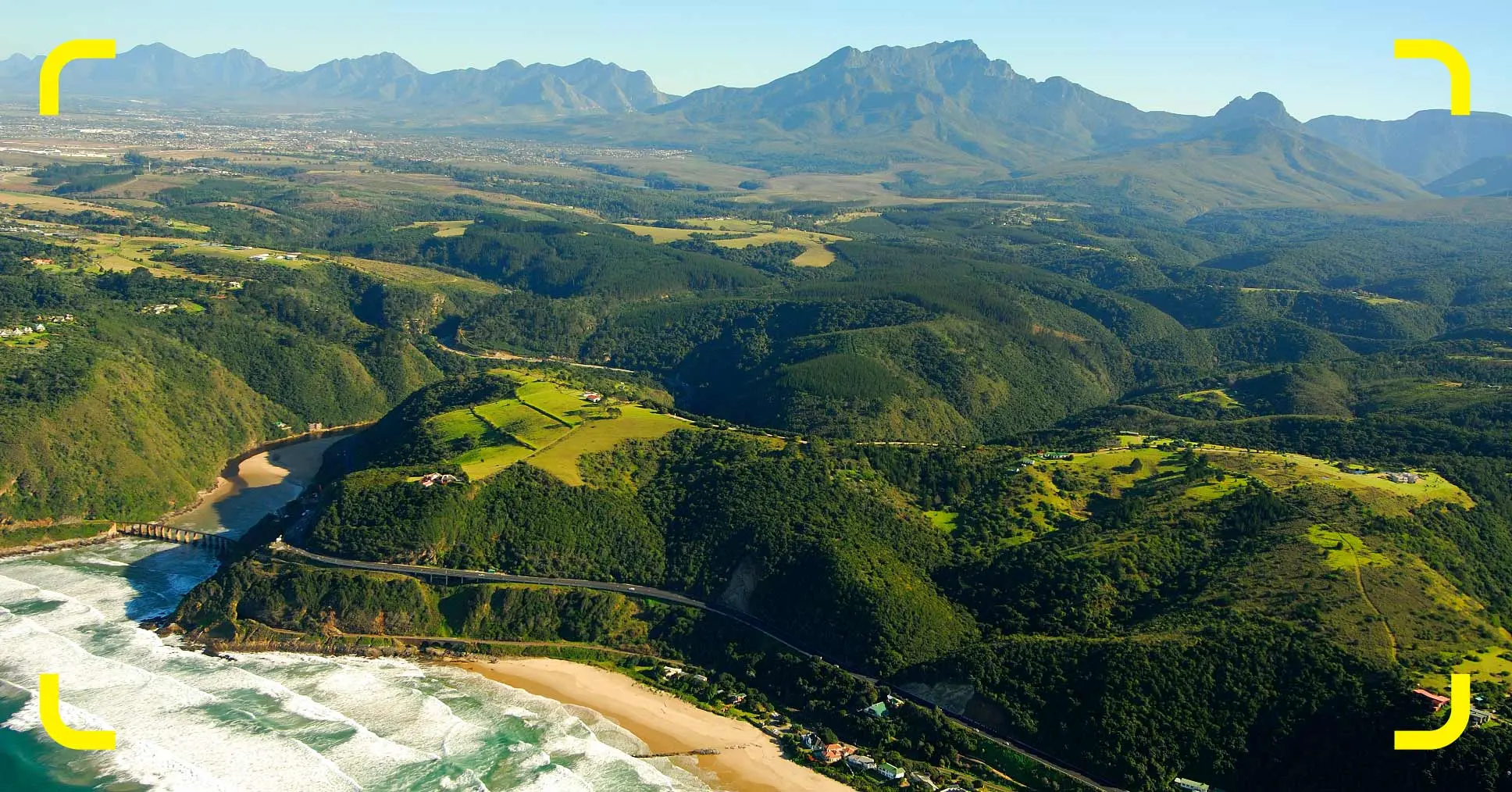
5. Drive along Chapman’s Peak
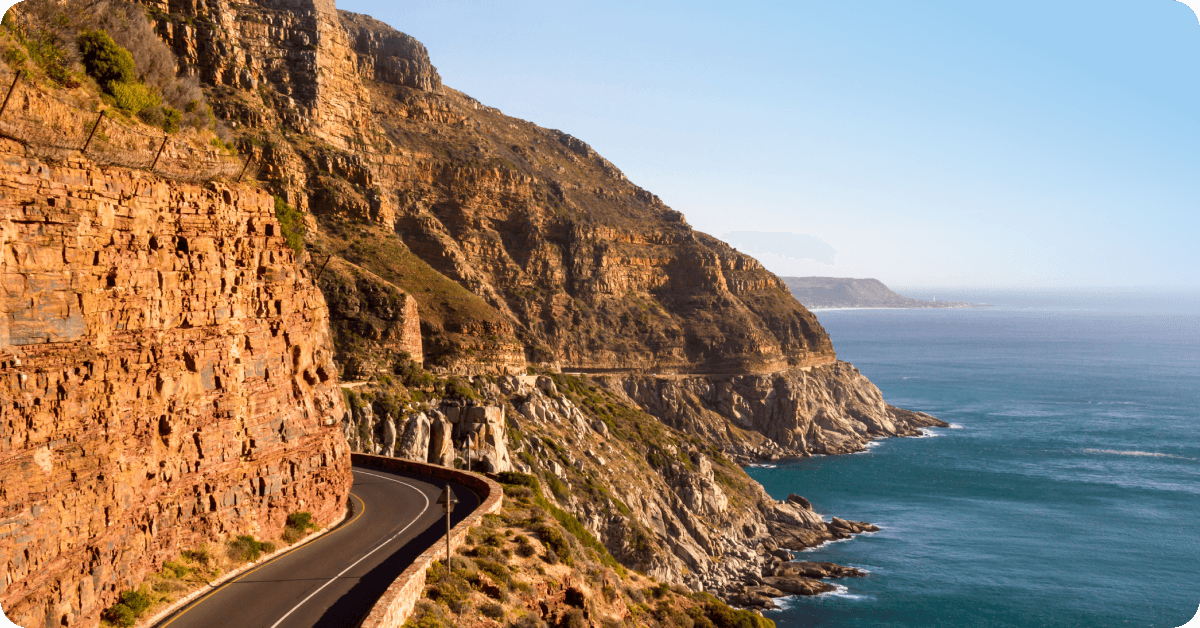
Carved into the cliffs between Hout Bay and Noordhoek, Chapman’s Peak Drive is often named one of the most spectacular coastal drives in the world. The route is just nine kilometers long but packs in 114 curves along Atlantic cliffs, with viewpoints every few hundred meters begging you to pull over.
Take it slow. You can stop at a handful of rest stops for photos, picnics, or just a quiet moment looking at the ocean. Pair the drive with a stop in Hout Bay, where the working harbor serves up some of the freshest fish and chips in Cape Town.
Toll fee. Around R66 (roughly US$4) for a standard light vehicle going through Chapman’s Peak Drive.
Location. On the Atlantic side of the Cape Peninsula, about a 30-minute drive south of central Cape Town.
Good to know. The road can close in high winds, heavy rain, or after rockfalls — check the live status before you set off.
6. Take a ferry to Robben Island
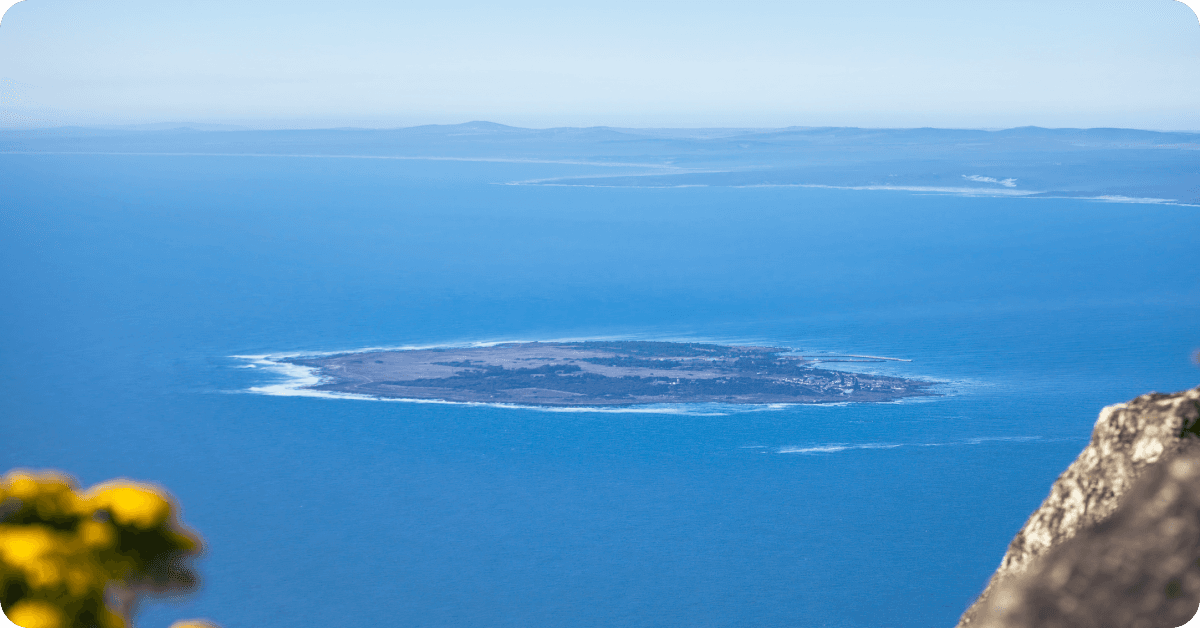
Not every must-see in Cape Town is a happy one, but Robben Island deserves your time. Located a few kilometers offshore, this UNESCO World Heritage Site served as a political prison for decades during apartheid. Its most famous prisoner, Nelson Mandela, spent 18 of his 27 years of imprisonment here before becoming South Africa’s first democratically elected president.
A visit to Robben Island will get you closer to the country’s history — especially if you book the official museum tour. After a 30-minute ferry ride from the Nelson Mandela Gateway at the V&A Waterfront, you’ll board a bus that loops past the Limestone Quarry, the leper graveyard, Robert Sobukwe’s house, and the wartime bunkers, before ending inside the maximum-security prison and Mandela’s former cell.
Ticket price. R600 (roughly US$37) per adult for international visitors, with reduced rates for children.
Tour length. Around 3.5 hours, including the ferry trip both ways and the guided tour of the prison.
Departure point. Nelson Mandela Gateway at the V&A Waterfront. Ferries run several times daily if the weather permits.
Book ahead. Tickets often sell out days or weeks in advance — reserve your spot online before you arrive in Cape Town.
7. Relax at Camps Bay and Clifton beaches
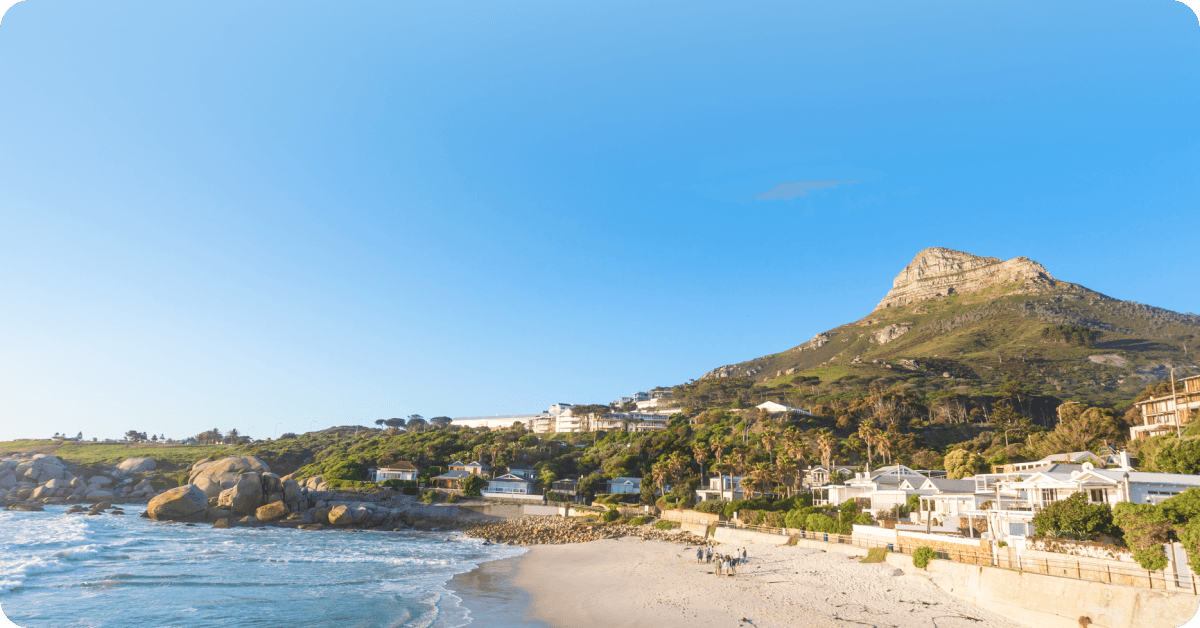
Sooner or later, every Cape Town itinerary lands on the Atlantic seaboard. Camps Bay is a long arc of white sand backed by a palm-lined promenade and the Twelve Apostles mountain range rising behind it. The beachfront restaurants and bars make it easy to pair a swim with a long lunch or a sunset drink.
A few minutes up the coast, Clifton hides four sheltered coves below its cliffs — known, with very little imagination, as 1st, 2nd, 3rd, and 4th beaches. Each draws its own crowd, but the family-friendly 4th Beach is the largest. If you’re traveling on a budget, you’ll be delighted to hear that these world-class beaches are completely free to enter! Just keep in mind that the Atlantic water stays bracingly cold year-round, averaging 13–16°C even in summer. If the main beaches feel too packed, head to nearby Maiden’s Cove — a quieter spot with tidal pools, braai (South African barbecue) facilities, and stunning mountain views.
Cost. Free to visit. Parking along Victoria Road fills up fast on summer weekends.
Best for windy days. Clifton’s coves are naturally sheltered from the city’s strong southeasterly wind — a lifesaver when other beaches are getting sandblasted.
8. Walk through Kirstenbosch Botanical Garden
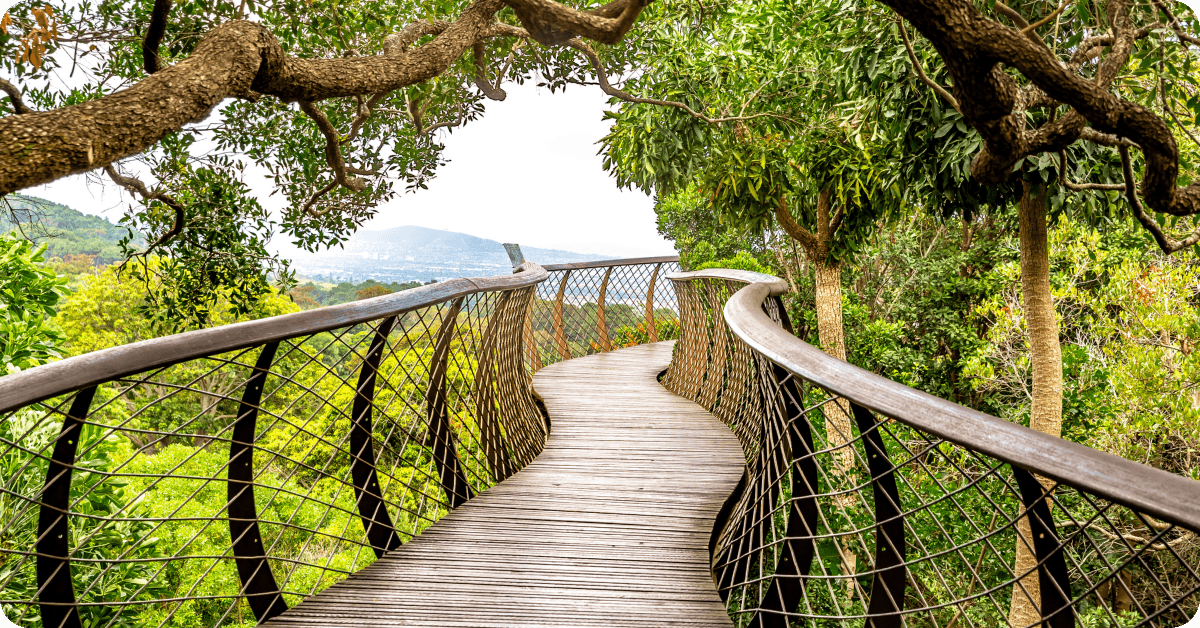
Kirstenbosch is one of those places that can quietly take over your whole afternoon. Set against the eastern slopes of Table Mountain, it’s the first botanical garden in the world dedicated to a country’s indigenous flora, with over 7,000 plant species on its slopes. It’s now part of the Cape Floral Region UNESCO World Heritage Site.
The star attraction is the Tree Canopy Walkway, known as the “Boomslang” — Afrikaans for “tree snake.” It’s a curved 130-meter steel and timber bridge that snakes through the arboretum up to 12 meters above the forest floor. From up there, you can see the botanical garden, the Cape Flats, and the mountains beyond. Time your visit right, and you can catch the Kirstenbosch Summer Sunset Concerts, a Sunday evening picnic and music event that runs from late November through April.
Entry fee. R270 (roughly US$16.50) for international adult visitors, with a reduced price for children aged 6-17, and free admission for those under 6 years old.
Opening hours. Open daily from 8am to 7pm in summer (September-March) and 8am to 6pm in winter (April-August).
Location. Situated in Newlands, about a 20-minute drive south-east of central Cape Town, roughly 13 km from the city center.
9. Watch the sunset from Signal Hill or Lion’s Head
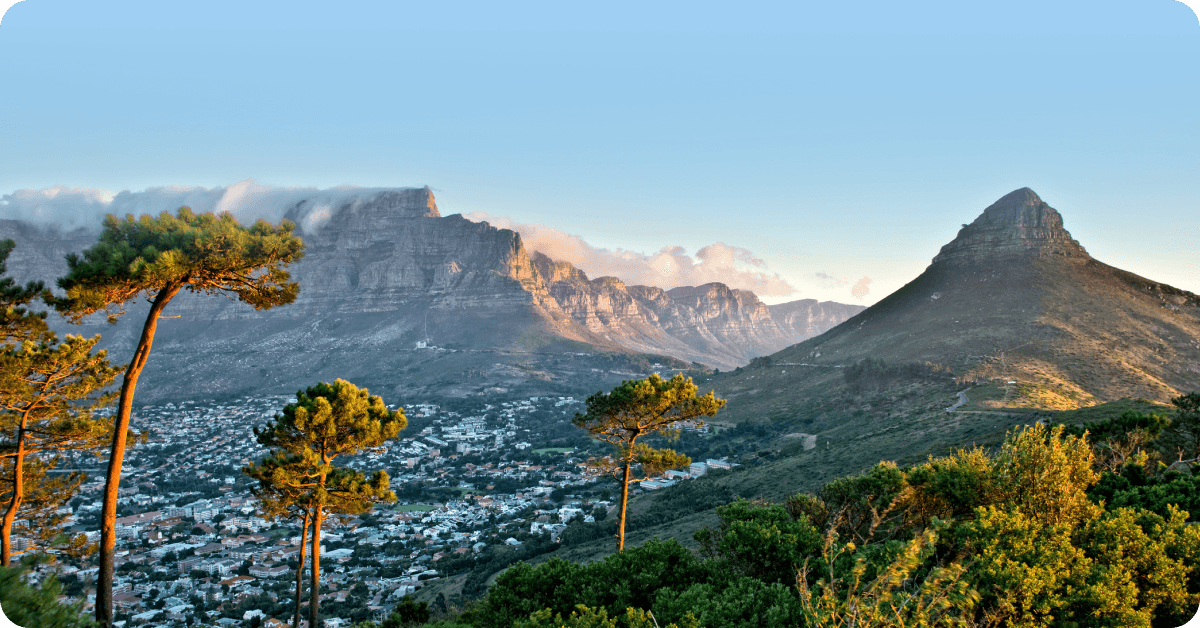
Two of Cape Town’s best sunset spots cost nothing at all — and they sit side by side just west of the city center.
Signal Hill is the drive-up option. Park at the top of the 350-meter flat-topped summit, unfurl your blanket, and take in views of the city, the Atlantic seaboard, and Table Mountain. It’s Cape Town’s classic sunset picnic spot, so make sure to arrive early!
Lion’s Head, right next door, is the hike. It’s 5.5-kilometre return trail up the 669-meter peak, with chains and ladders in the final stretch and 360-degree views from the top. For an unforgettable adventure, time it for the monthly full moon hike—a local tradition where you climb at dusk, watch the sunset, and descend by moonlight.
Signal Hill. Short drive up Signal Hill Road from the city center, with free parking at the top. Arrive at least an hour before sunset — the lot fills up fast.
Lion’s Head. Trailhead on Signal Hill Road. Allow 2-3 hours at a moderate pace with stops for taking photos.
💡 Safety tip. Don’t hike Lion’s Head alone, especially at dawn or dusk. Stick to the main route with at least one other person.
10. Go wine tasting in the Cape Winelands
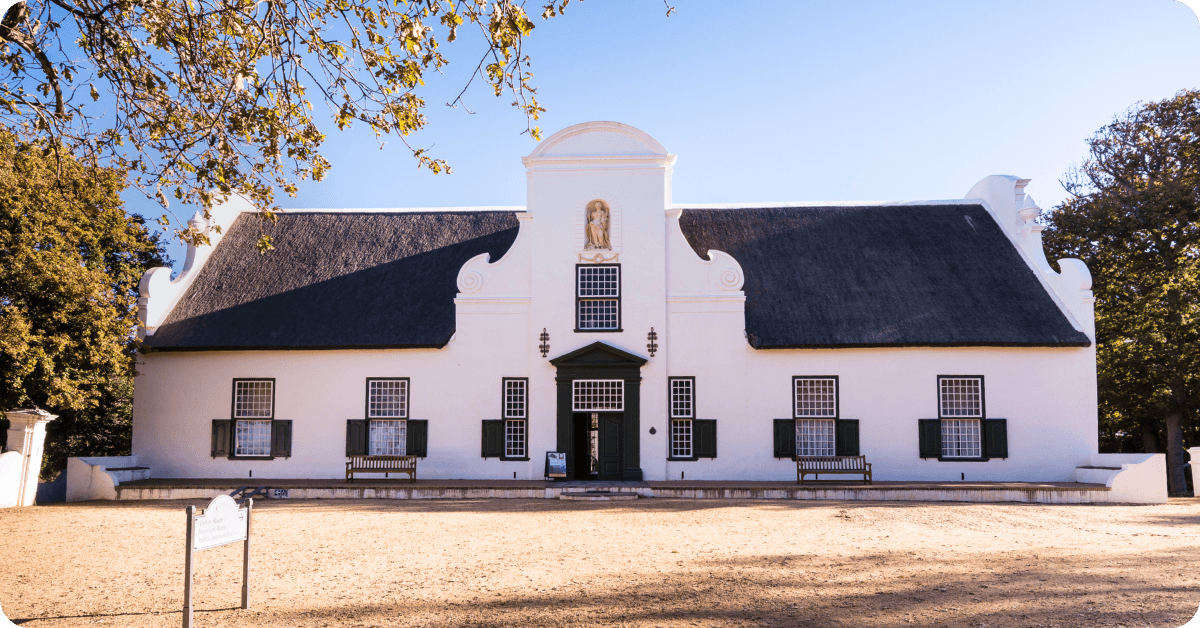
If you’re looking for a day trip from Cape Town, point your car east. The Cape Winelands is South Africa’s oldest and most celebrated wine region, with hundreds of estates spread across rolling valleys. South African wine has a serious international reputation these days — the country is one of the world’s top 10 wine producers.
You’ve got three main regions to choose from. Constantia sits closest to the city, about a 20-minute drive south, and is home to Groot Constantia — South Africa’s oldest wine estate, founded in 1685. Stellenbosch and Franschhoek, both around 40-60 minutes from Cape Town, are where other world-renowned estates are.
💡 Tip: Consider an eSIM for South Africa before you head to the Winelands! Between booking tastings, calling Ubers, and checking tram times, you’ll lean on data more than you’d expect.
Constantia tastings. From around R170 (roughly US$10.50) for a tasting of 5 wines at Groot Constantia.
Franschhoek Wine Tram. R 350 (around US$21.50) for a hop-on hop-off ticket to the Wine Tram. Wine tastings at each estate are extra, ranging from R60 to R260 (around US$4 to US$16).
How to get there. Constantia is a short Uber or rental car ride from central Cape Town. For Stellenbosch and Franschhoek, the easiest options are a guided tour with transport included or the Franschhoek Wine Tram with a transfer from Cape Town.
Book ahead. Wine estates often require tasting reservations, especially on weekends and in peak season (November-April).
11. Tap into history at the District Six Museum
Housed in a historic Methodist church on Buitenkant Street, the District Six Museum honors the 60,000 residents forcibly removed from their homes. In 1966, the apartheid government declared this vibrant, mixed-race inner-city community a whites-only area, subsequently bulldozing its buildings to the ground.
What makes this museum special is how personal it feels. Many of the guides are former District Six residents, and the exhibits are stitched together from photographs, original street signs, and handwritten testimonies. You’ll also see a huge floor map of the old neighborhood that visitors can walk across — ex-residents have signed it to mark where their homes once stood.
District Six museum is right in the city center, so it pairs nicely with a stroll through the nearby Company’s Garden — South Africa’s oldest public park, originally planted by the Dutch East India Company in the 1650s.
Entry fee. R65 for a self-guided visit or R80 (roughly US$4-5) for a guided tour.
Opening hours. Monday to Saturday, 9am to 4pm.
Location. 25A Buitenkant Street in central Cape Town, a short walk from Company’s Garden, City Hall, and the Castle of Good Hope.
12. Explore the Cape Peninsula and Cape of Good Hope
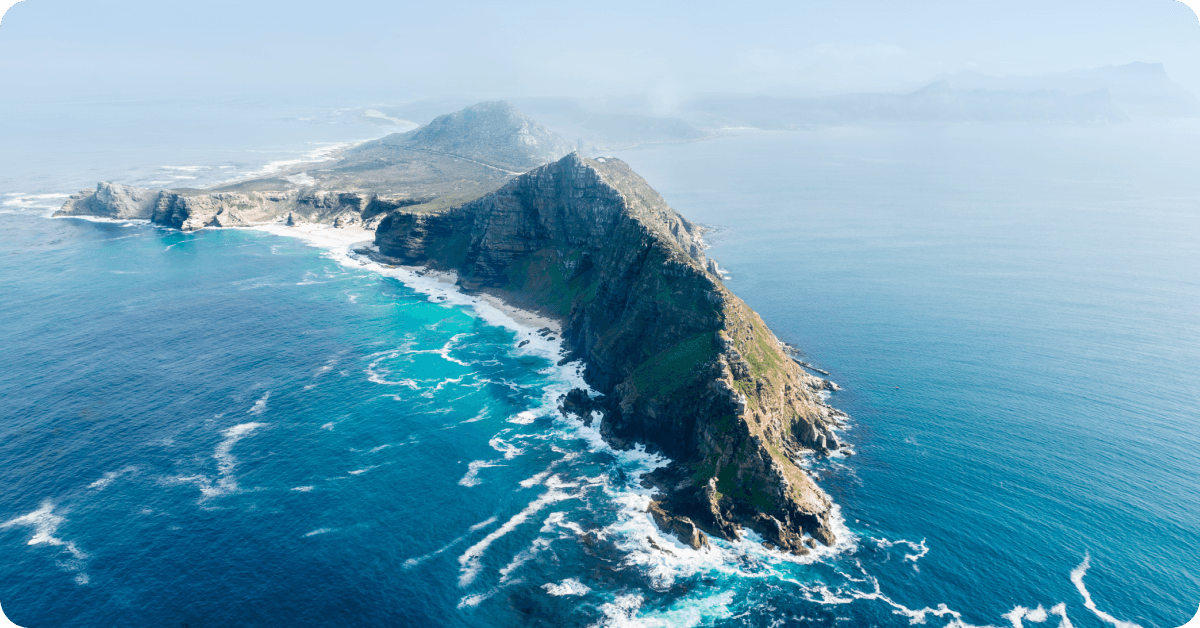
If you only plan to do one big day trip outside the city, make it a trip to the Cape Peninsula. The drive south is magnificent: You’ll pass by cliffside roads, visit tiny seaside villages, and marvel at the dramatic Cape of Good Hope — the most south-western point of the African continent.
Once in the Cape Peninsula, keep an eye out for baboons, ostriches, bontebok, and eland — they roam freely along the road. Consider hiking (or take the Flying Dutchman funicular) up to the old Cape Point lighthouse for sweeping panoramas. You can self-drive easily — the roads are good and well-signposted — or join an organized tour from Cape Town that handles all the logistics.
Entry fee. R515 (roughly US$32) for international adult visitors to the Cape of Good Hope gate. Ticket prices reduced for children.
Time needed. Allow a full day — it’s at least eight hours round-trip from Cape Town if you want to enjoy the stops without rushing.
How to get there. Self-drive via Chapman’s Peak Drive or book a guided full-day tour with transport included.
13. Stroll the Sea Point Promenade
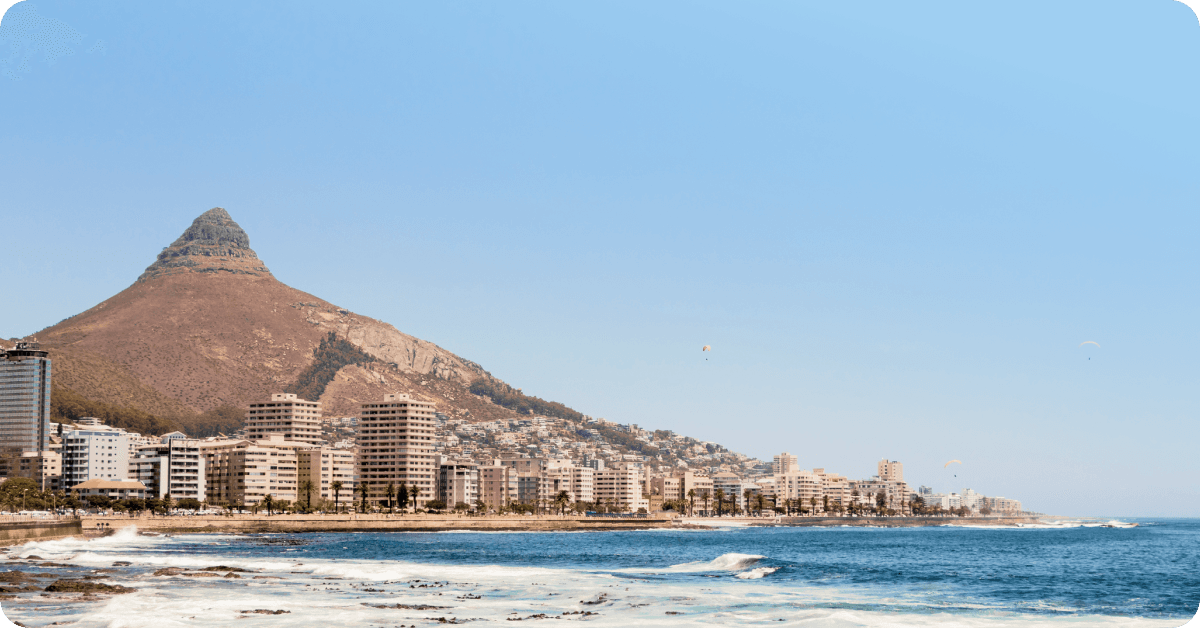
If you want to feel like a local in Cape Town, you should head straight to the Sea Point Promenade. It’s a flat, paved walkway hugging the Atlantic coast. It runs roughly seven kilometers from the V&A Waterfront, past the candy-striped Green Point lighthouse, all the way to Bantry Bay. It’s one of the few places where the city’s many communities overlap: Joggers, dog walkers, families, surfers, and tourists all share the same stretch of seafront.
The walk is free, and that’s the whole appeal. Public art dots the route — the giant Ray-Ban sunglasses sculpture Perceiving Freedom points directly at Robben Island and is one of the most photographed spots on the prom. Don’t skip the Sea Point rock pools near Saunders’ Rocks at the Bantry Bay end. At low tide, the granite boulders hide sea anemones, small fish, urchins, and the occasional starfish — bring kids, and you’ll lose an hour easily.
Location. The promenade runs along Beach Road from Mouille Point to Bantry Bay.
Best time to visit. Late afternoon for the sunset, or early morning if you want to dodge the wind.
Sea Point Pavilion. Entry to the pools is around R39 (roughly US$3).
14. Try adventure activities
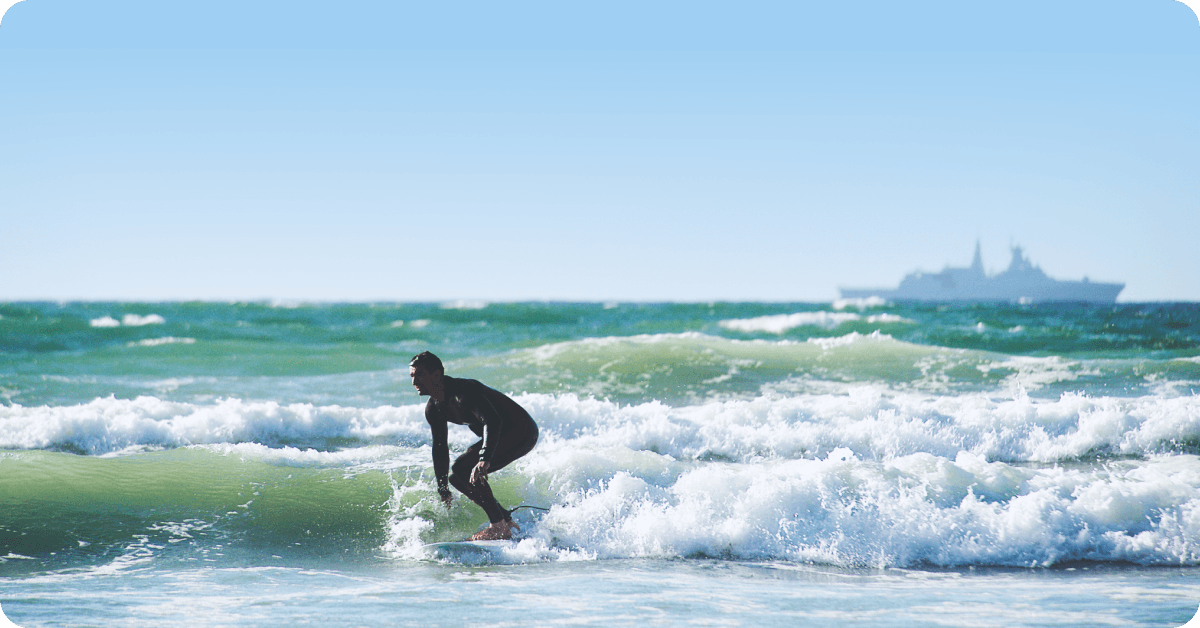
Cape Town is a city wedged between a mountain, two oceans, and a wind tunnel, which makes it one of the world’s great adventure playgrounds. Whether you want to fly, paddle, or surf, this is the place.
Paragliding from Signal Hill or Lion’s Head
Strap into a harness with a certified pilot and run off the edge of a mountain. Most tandem flights launch from Signal Hill and land on the Sea Point Promenade, while Lion’s Head is used only when wind conditions allow. Paragliding, you’ll see sweeping aerial views of the city, the Atlantic, and Table Mountain, and there’s no prior experience needed. A 10–20 minute flight runs for around R1,800 (roughly US$111).
Surfing at Muizenberg
Muizenberg is one of the best beginner surf beaches in Cape Town, with its gentle, sand-bottomed waves and surf schools lined up along the beachfront. Even if you haven’t surfed before, you should definitely try! It costs around R200-400 (roughly US$11-22) to rent a board and a wetsuit for a half day, and group lessons start at around R500-600 (roughly US$31-37) depending on the school.
Shark cage diving and kayaking
If one of the things on your bucket list is to see a shark up close, Cape Town is the right place to make it true. A two-hour drive east of the town, near Dyer Island, you can drop into a steel cage and come eye-to-eye with great white or copper whaler sharks. The experience costs around R3,655 (roughly US$226), with peak diving season running from May to September.
Sea kayaking
If sharks aren’t your scene, consider going sea kayaking. Paddle from Simon’s Town past the African penguin colony at Boulders Beach, or launch from the V&A Waterfront for a two-hour paddle. The chances are high you’ll spot seals, dolphins, and even whales. This adventure costs around R600 (roughly US$37) per person, but it really depends on the tour operator you choose.
15. Browse Cape Town’s best markets
Plug into local life by visiting Cape Town’s weekend markets — most are free to enter and make for a perfect morning out.
Oranjezicht City Farm Market is the foodie favorite. It brings together over 40 local farmers and 80 artisan food traders selling fresh produce, organic vegetables, cheeses, baked goods, and ready-to-eat meals from across the world. Open Saturdays (8am - 2:30pm) and Sundays (8:30am - 2:30pm), and also Wednesday nights in summer.
Neighbourgoods Market takes over the Old Biscuit Mill — a former Victorian biscuit factory turned creative complex in Woodstock — every Saturday and Sunday from 9am. It’s where locals in Cape Town actually go: There’s live music, espresso martinis, and street food from every corner of the globe.
Greenmarket Square is the city center’s daily open-air market, set on cobblestones that date back to 1696. Traders from across the continent sell handmade crafts, wooden carvings, beaded jewelry, fabric prints, leather goods, and paintings — perfect for picking up an authentic souvenir. Open Monday to Saturday, roughly 9am to 4pm. Bargaining is expected!
16. Experience Cape Town at night
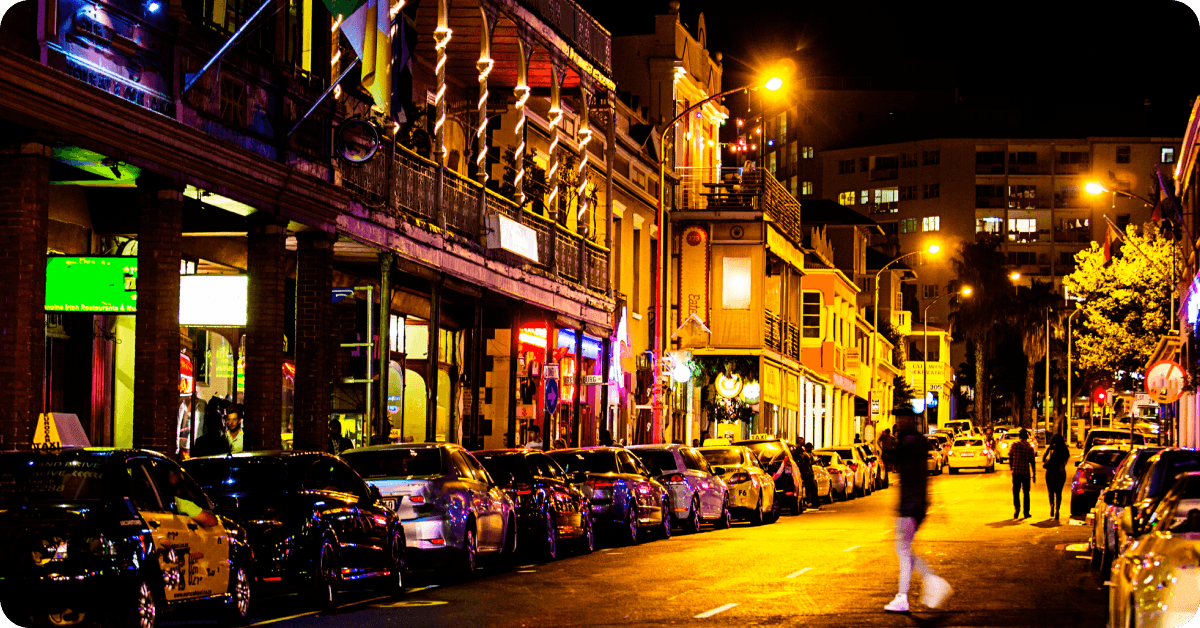
Cape Town at night steps beyond a quiet dinner. The city has a proper after-dark scene split across a few distinct neighborhoods.
Long Street is the city’s most famous nightlife strip — a buzzy stretch of Victorian-era buildings lined with bars, late-night restaurants, clubs, and live music venues.
Kloof Street is a more relaxed, more polished district for a night out. Tucked into the Gardens neighborhood with Table Mountain looming overhead, it’s where you’ll find craft cocktail bars, artsy cafés, and some of the city’s best restaurants.
The Cape Town Comedy Club at the historic Pumphouse on the V&A Waterfront hosts local and international stand-up acts five nights a week. Its lineup consists of both emerging open-mic talents and TV regulars.
While it may not sit at the very top of the list of the safest countries in Africa, South Africa is a relatively safe country for tourists. However, you should enjoy nightlife with caution. Go out with a group of friends, use taxi services for door-to-door transportation after dark, and avoid walking between venues.
17. Things to do in Cape Town with kids
Outdoorsy, walkable, and packed with attractions, Cape Town is a great city to travel to with kids. So if you’re traveling with a family in tow, consider visiting the places mentioned below.
Two Oceans Aquarium
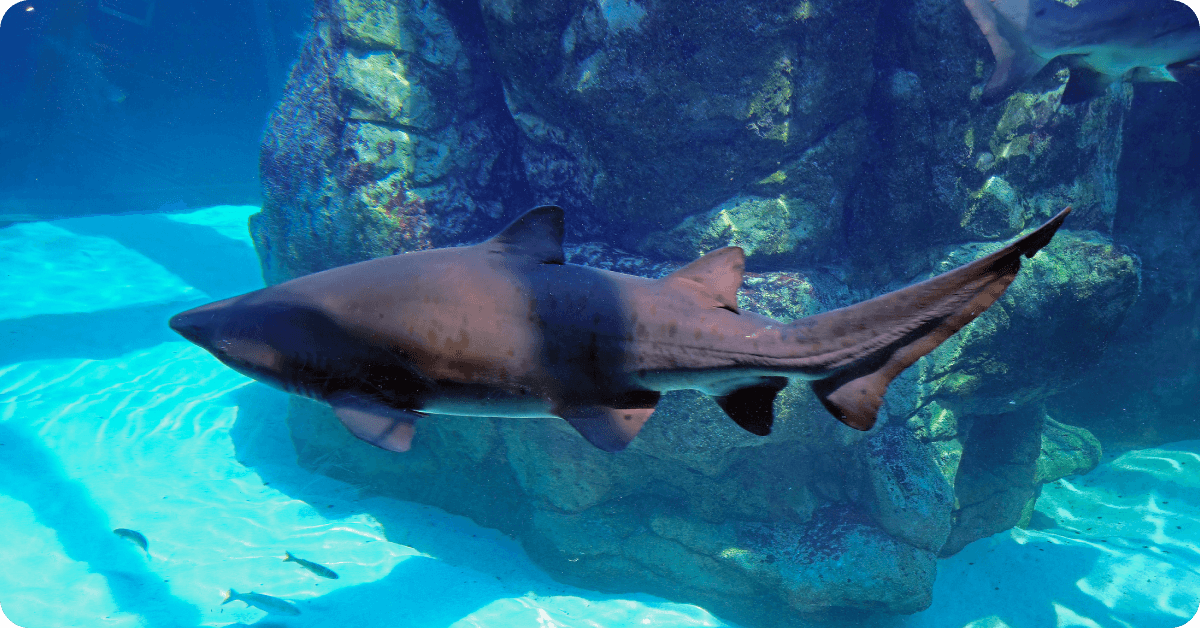
Situated at the V&A Waterfront, Two Ocean Aquarium is home to local marine life — sharks, rays, sea turtles, jellyfish, and the standout Kelp Forest Exhibit. The Touch Pool lets younger kids handle kelp, anemones, and sea stars. There are also daily feeding sessions, so make sure to time your visit around them! Adult entry is around R280 (roughly US$17), with kids 4-13 at R130 (roughly US$8).
World of Birds Wildlife Sanctuary
Africa’s largest bird park, World of Birds Wildlife Sanctuary, is tucked into Hout Bay, with over 3,000 birds and small animals across 400 species in its aviaries. Kids can get close to the birds and visit the Monkey Jungle, where squirrel monkeys roam in a large walkthrough enclosure. Entry is around R145 (roughly US$9) for adults and R60 for children aged 3-18 (roughly US$4).
Muizenberg Beach and the Scratch Patch
Muizenberg’s gentle, sand-bottomed waves are great for splashing, and the iconic candy-coloured beach huts are a classic family photo spot. A short drive away in Simon’s Town, the Scratch Patch lets kids dig through a cave floor covered in tumbled semi-precious stones — tiger’s eye, amethyst, rose quartz, jasper — and fill a bag to take home.
18. Stay connected in Cape Town with Saily
Skip airport queues at eSIM kiosks and sort your data before takeoff. With a Saily eSIM, your phone will connect the moment you touch down in Cape Town. Saily plans for South Africa start at US$7.99 with strong coverage in Cape Town, Johannesburg, Durban, and Pretoria.
A reliable connection beats Wi-Fi hunting every time. Pull up Google Maps on the bends of Chapman’s Peak, post the sunset from Signal Hill, or grab a Robben Island ticket the second a tour pops up. Download the Saily app before you fly, set up your eSIM in a few taps, and stay connected the whole trip.
Plan visiting nearby countries? Saily’s eSIM plan for Africa covers 35 destinations across the continent on a single plan.
Need data in South Africa? Get an eSIM!

1 GB
7 days
US$3.99
3 GB
30 days
US$9.99
5 GB
30 days
US$12.99
FAQ
Often called the “Mother City,” Cape Town is known for its dramatic scenery, rich history, and laid-back coastal lifestyle. It’s crowned by Table Mountain and ringed by stunning beaches like Camps Bay and Clifton. Just beyond the city, the Cape Winelands offer some of the world’s finest wines.
The Big Six is a curated list of Cape Town’s most iconic landmarks. The list includes:
Table Mountain cableway
Robben Island
Kirstenbosch National Botanical Garden
Cape Point
V&A Waterfront
Groot Constantia
Three days in Cape Town is enough to hit the main tourist attractions — Table Mountain, the Cape Peninsula, and the V&A Waterfront — and get a real feel for the city. But if you want to explore Cape Town beyond the must-sees, five to seven days is the sweet spot. It will give you time to fit in a wine tasting day, a serious hike, and a couple of slower mornings without sprinting between landmarks.
Some of the best things to do in Cape Town are also the most obvious, so don’t leave without going up Table Mountain, meeting the African penguins at Boulders Beach, and standing at the dramatic Cape of Good Hope. Wander the candy-coloured streets of Bo-Kaap, taste your way through the Cape Winelands, and catch a sunset from Signal Hill or Lion’s Head.
The good news is that some of the best things to do in Cape Town are free! Hike Table Mountain or Lion’s Head, stroll the Sea Point Promenade, or claim a spot on Clifton, Camps Bay, or Muizenberg. Wander the rainbow streets of Bo-Kaap, browse the handmade crafts at Greenmarket Square, then head up Signal Hill for a sunset picnic.
The South African summer (November to March) is the sweet spot — warm, dry weather, long daylight hours, and great conditions for beaches and hiking. December and February are peak months, so expect higher prices and bigger crowds. However, if you want similar weather with some breathing room, you should aim for November or March. Winter (June to August) is cooler and wetter, but it’s your best shot at lower prices on flights and hotels.

Always connected, always on course
Connect instantly with a Saily eSIM and enjoy effortless internet access.

Related articles