


8 best things to do in New York in 2026
New York does not reveal itself at once. First, it throws a skyline at you, then a corner deli, then a brass band in the subway, then a park that feels almost rural until a siren reminds you where you are. It’s a city that needs to be treated like a conversation. You start with the obvious openings: the panoramic view, the famous park, the ferry across the harbor. Then you let the city get stranger, richer, and more specific as the day unfolds. This is your guide to that conversation with the Big Apple.
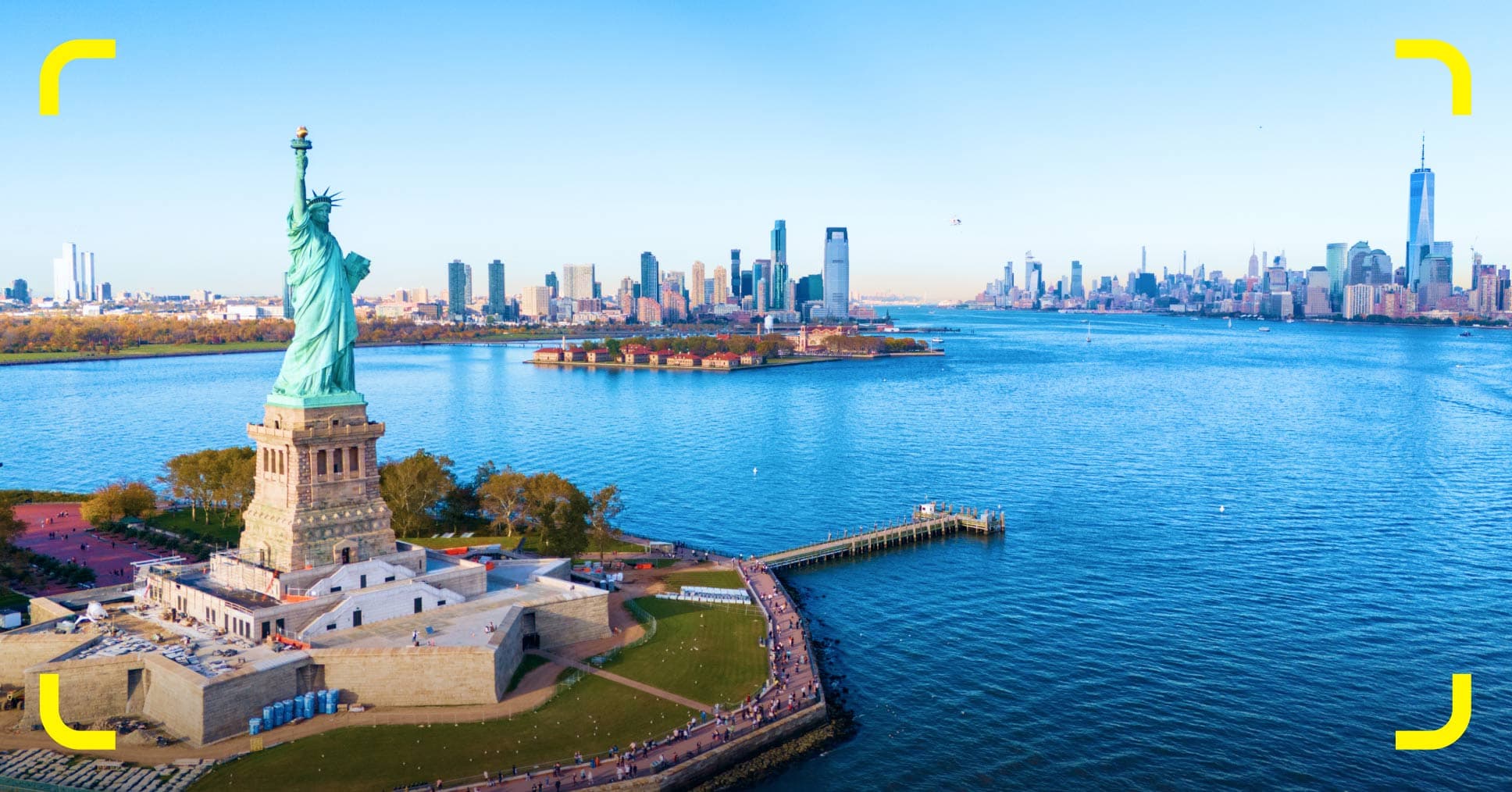
Table of Contents
- 1. See the Manhattan skyline from the right places
- 2. Let Central Park remind you that New York has lungs
- 3. Take the Staten Island Ferry and read the city from the water
- 4. Give one museum your afternoon
- 5. Follow New York through its immigrant table
- 6. Cross the Brooklyn Bridge, then stay on the Brooklyn side
- 7. Spend the evening in a room with a stage
- 8. Relax in New York without buying a ticket
- Stay connected in New York with Saily
1. See the Manhattan skyline from the right places
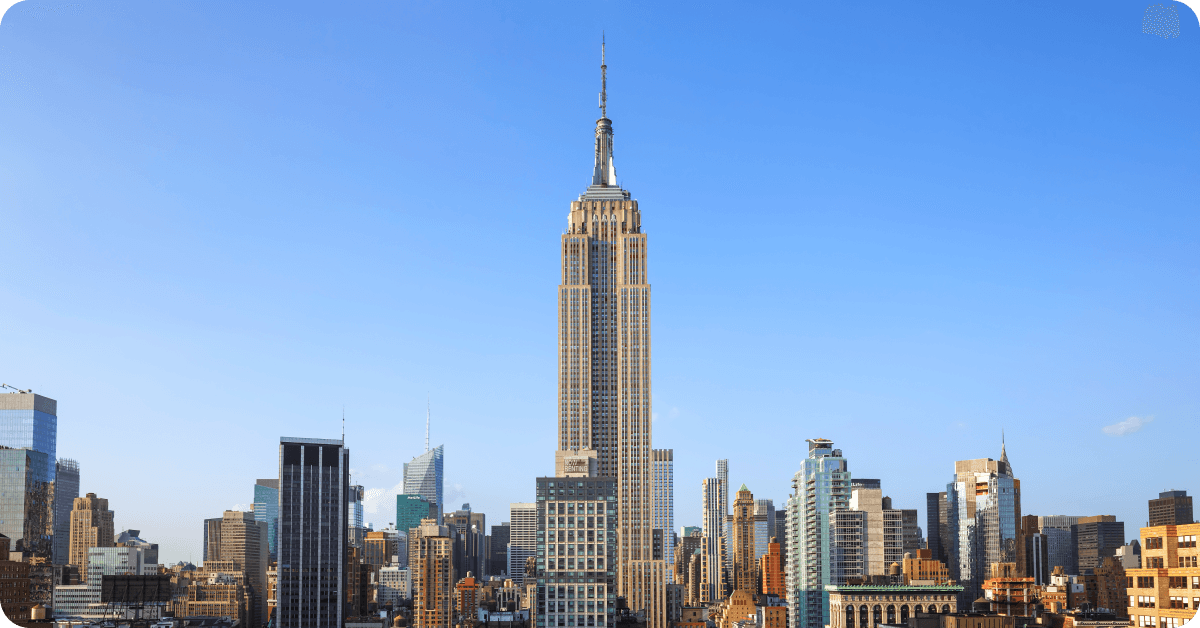
Before venturing into New York’s observation decks, subway platforms, and borough viewpoints, make sure your connection is sorted. An eSIM can help with maps, tickets, reservations, and rides without making you hunt for public Wi-Fi between stops. Then start with the skyline. It is New York’s favorite way of turning ambition into scenery. That is why Top of the Rock works as a first stop. The deck crowns 30 Rockefeller Plaza, the Art Deco tower that helped define Midtown in the 1930s, and from there the city finally starts reading like a composition. Central Park opens to the north. The Empire State Building anchors the south. The old Rockefeller image of New York still hovers here too: the ironworkers in the 1932 “Lunch Atop a Skyscraper” photograph, eating calmly on a beam high above the street, turned the skyline into a story about labor, bravado, and the city’s appetite for myth.
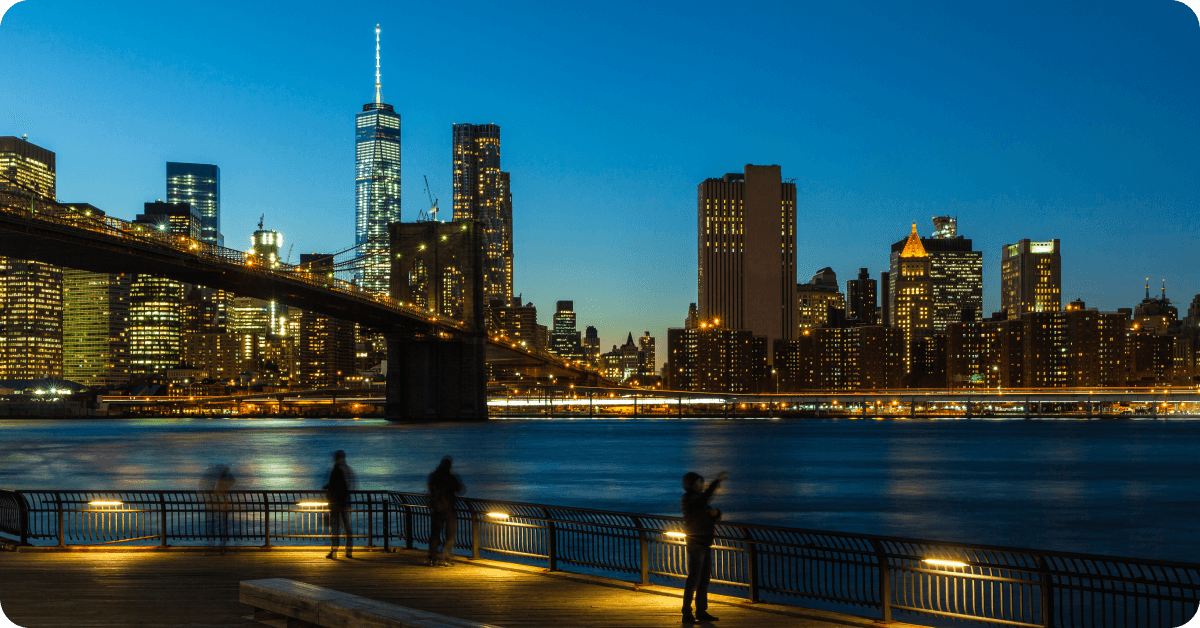
Then see the skyline a second time from Brooklyn Heights Promenade in the evening, where Manhattan rises across the water instead of closing in from all sides. New York is built to be looked at from a distance as much as lived in from within. This is where The Lonely City by Olivia Laing earns its place in a day bag. Laing wrote the book out of her own solitude in New York, and her line that loneliness “is collective; it is a city” gives the view its missing dimension. From Brooklyn, the skyline is no longer only a triumph of steel and money. It becomes a stack of lit windows, separate rooms, and lives unfolding behind glass, all of them held inside the same facade.
2. Let Central Park remind you that New York has lungs
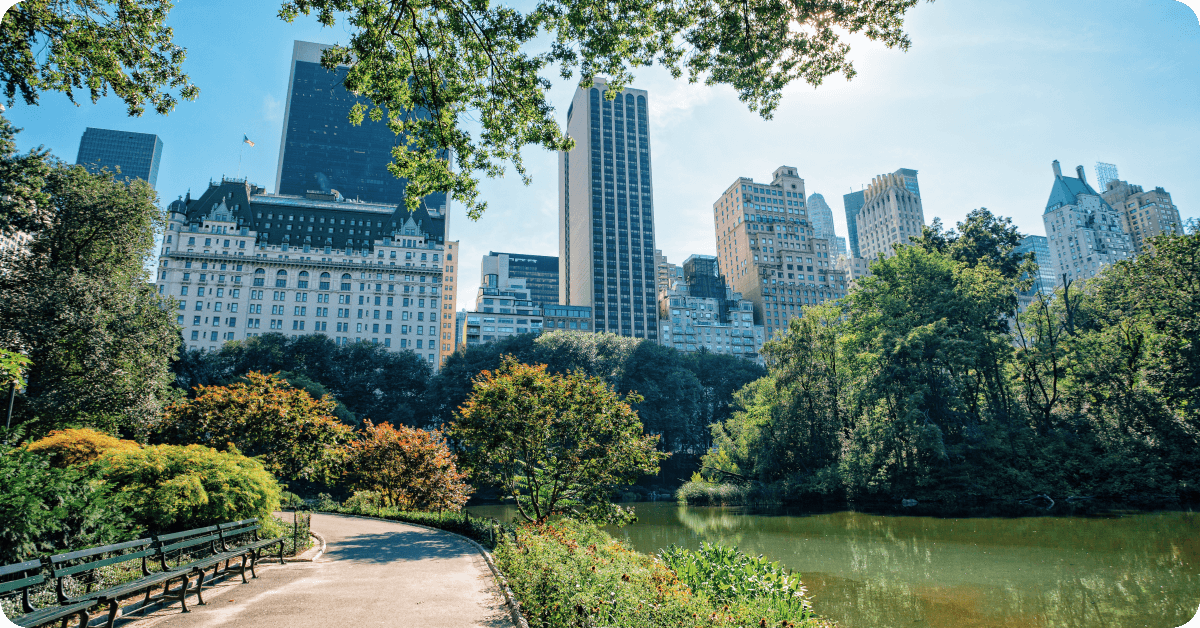
Greensward Plan by Frederick Law Olmsted and Calvert Vaux shaped Central Park to feel open and slightly unpredictable, even though almost every turn was planned. That design still holds. The crosstown roads were sunk below grade on hidden transverse roads, so carriages, and later traffic, could move across Manhattan without breaking the calmness of the park above. The best way to get a sense of what Central Park is all about, is to enter near 72nd Street, walk to Bethesda Terrace, cross Bow Bridge, and then slip into the Ramble. In less than half an hour, the park moves from carved stone and broad vistas to twisting paths and dense cover, and that change in texture is what makes it memorable.
The park also carries a history of displacement under its lawns. Before Central Park, this land included Seneca Village, a mostly Black community founded in 1825. By 1855, it had 225 residents, churches, a school, and unusually high rates of Black property ownership before the city forced residents out by 1857 through eminent domain. That history keeps the park from becoming too easy on the eyes. It is one of New York’s great public spaces, and one of its clearest examples of how beauty, power, and loss can occupy the same ground.
3. Take the Staten Island Ferry and read the city from the water
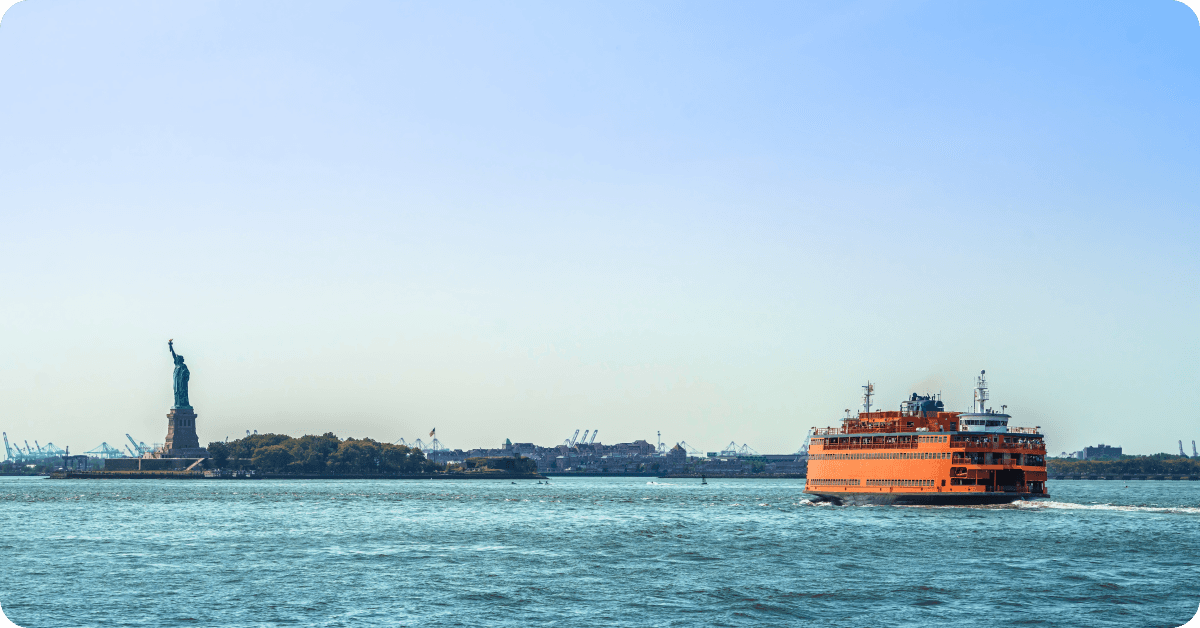
The Staten Island Ferry gives you one of New York’s great views without charging for it. Board at Whitehall Terminal in Lower Manhattan and take the 25-minute ride to St. George Terminal. Stand outside on the right side as the ferry leaves Manhattan. The Statue of Liberty comes into view across the harbor, Governors Island sits off to the side, and the towers of lower Manhattan begin to shrink behind you.
Before New York became shorthand for skyscrapers, it was a port. From 1892 to 1954, Ellis Island processed more than 12 million immigrant steamship passengers, many of whom first saw America as water, inspection halls, and a skyline beyond the harbor. People crossed these waters with papers, names that would be shortened or changed, and a version of America they had built in their minds long before the harbor appeared. Emma Lazarus gave that scene its lasting language in “The New Colossus,” the sonnet later mounted inside the Statue of Liberty’s pedestal:
Here at our sea-washed, sunset gates shall stand
A mighty woman with a torch, whose flame
Is the imprisoned lightning, and her name
Mother of Exiles. From her beacon-hand
Glows world-wide welcome.
Give me your tired, your poor,
Your huddled masses yearning to breathe free,
The wretched refuse of your teeming shore.
Send these, the homeless, tempest-tost to me,
I lift my lamp beside the golden door.
That is what the ferry puts in front of you without turning the ride into a history lesson: Liberty Island with the poem’s promise, Ellis Island that held the inspection rooms and immigration desks, and lower Manhattan that waited after the paperwork. The route is short, ordinary, and used by commuters every day. That ordinariness makes it better. New York’s grandest harbor story is still visible from a free public ferry.
Good to know: Staten Island Ferry
|
4. Give one museum your afternoon
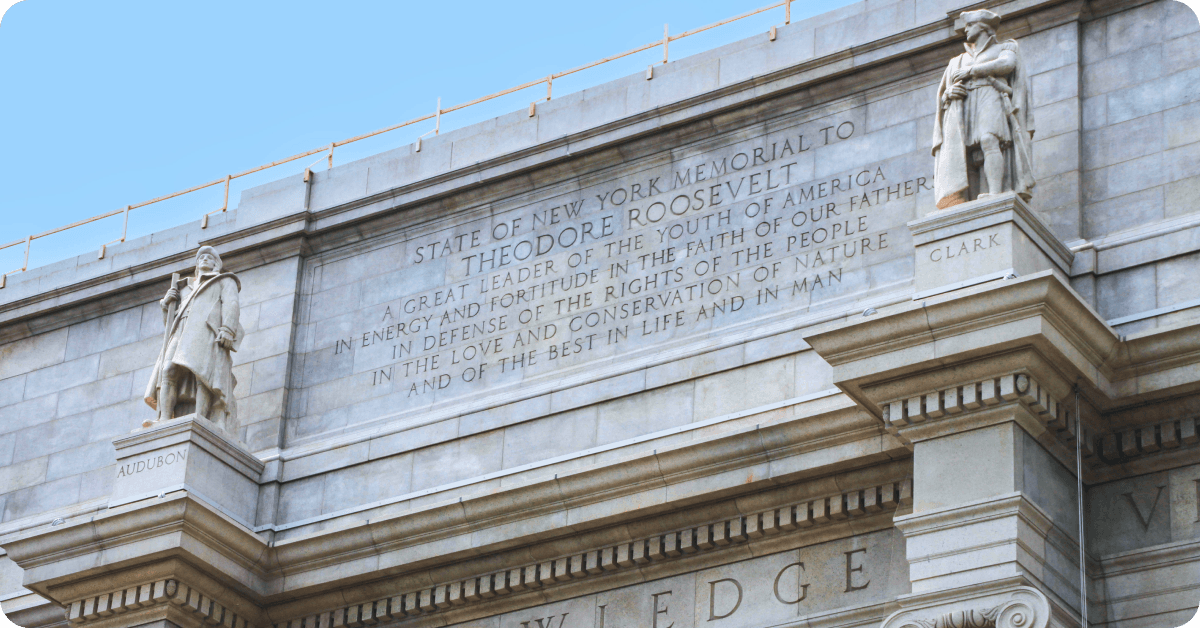
New York can turn museums into errands if you let it. Resist that. Pick one and let the day bend around it. The Met makes the most sense after Central Park because it sits along the park’s eastern edge and has enough range for almost any visitor: Egyptian temples, European paintings, arms and armor, Greek sculpture, Islamic art, fashion, photography, and whole rooms that seem to open into other centuries. The Egyptian wing alone can pull a visitor in for a day, especially near the Temple of Dendur, a sandstone temple from around 15 BCE that was moved from Egypt after the construction of the Aswan High Dam.
MoMA gives a different kind of jolt. It is more compressed, more connected to the city that turned department-store windows, magazine covers, lofts, advertising, and fame into a visual language. Van Gogh’s The Starry Night draws the crowd, but MoMA’s real pull is broader: it shows how 20th-century art moved from painted emotion to abstraction, design, photography, and pop culture. For a different kind of scale, go to the American Museum of Natural History on the west side of Central Park. The blue whale in the Milstein Hall of Ocean Life still awes people, but the museum’s real strength is range: dinosaurs, meteorites, ocean ecosystems, human origins, and the Hayden Planetarium under one roof. It is the best pick for families, but adults should not treat it as a children’s consolation prize!
Good to know: New York museums
|
5. Follow New York through its immigrant table
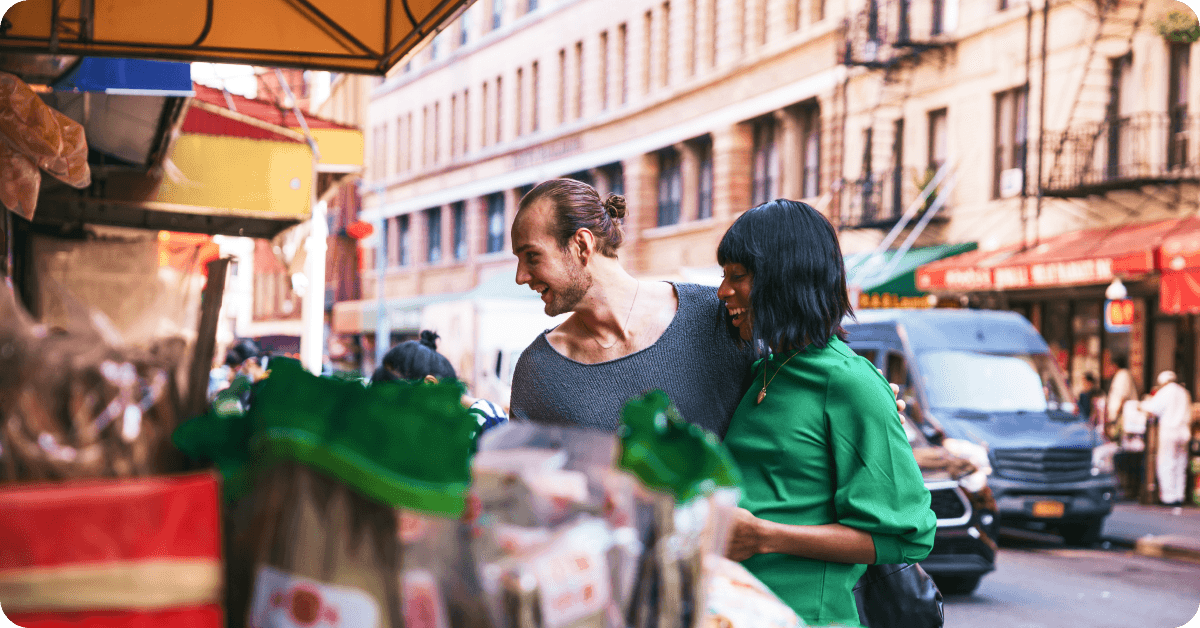
New York food makes the most sense when you start reading it as migration history. Begin in Chinatown, on Doyers Street, where Nom Wah Tea Parlor has been serving the neighborhood since 1920, first as a bakery and tea parlor, later as one of the city’s great dim sum rooms. Doyers, a short, bent lane that once carried the nickname “Bloody angle” because its curve made it a useful place for ambushes during old gang fights. For something current and meat-free, go downtown to Spicy Moon in the East Village or West Village. Its vegan Sichuan food belongs to a newer New York: mapo tofu and dan dan noodles without the usual meat, and enough chili oil to make your soul sing.
For pizza, cross to L’Industrie in Williamsburg or the West Village, where Tuscan-born Massimo Laveglia turned the New York slice into something thinner, sharper, and more Italian in its details without making it fussy. That is the point of eating in New York: No single meal explains the city, but a good day of eating starts to show how people arrived, adapted, and argued with tradition to produce something you’ll remember the taste of for a long time.
Good to know: New York food stops
|
6. Cross the Brooklyn Bridge, then stay on the Brooklyn side
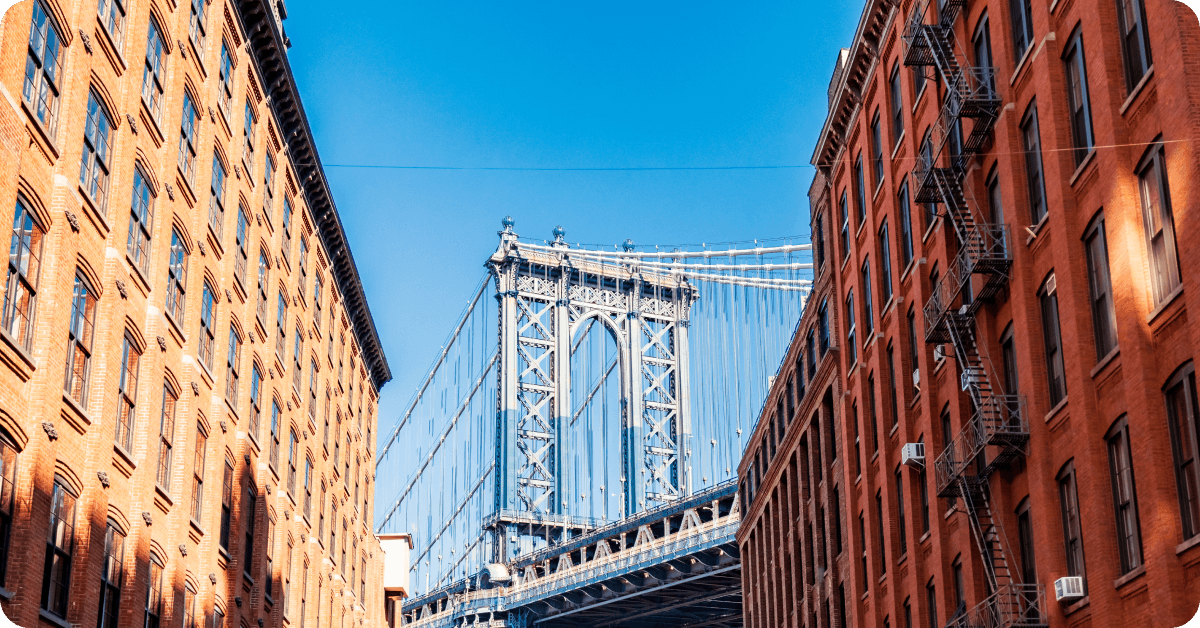
Walk the Brooklyn Bridge from City Hall toward DUMBO, so the crossing leaves you somewhere worth staying. Take it slow and soak up the sights and sounds, the first stretch is all traffic noise and slow elevation. Then the wooden path rises above the cars, the granite towers cut into the sky, and the bridge starts doing what it has done for a century: Making people stop halfway across and look back. Its history, however, is rougher than the view suggests. John A. Roebling designed the bridge and died before construction began. His son Washington took over, then suffered from caisson disease after working in the pressurized chambers under the East River. Emily Warren Roebling carried messages between Washington’s sickroom and the engineers, learned the technical language of the project, and crossed the finished bridge first by carriage.
Stay in Brooklyn after the crossing. Walk into DUMBO for the Washington Street view, where the Manhattan Bridge frames the Empire State Building between brick warehouses. It is crowded but the iconic shot is worth it. Then head down to Brooklyn Bridge Park for Jane’s Carousel, the old Tobacco Warehouse, and the riverfront paths. The bridge has always attracted a circus around it. In 1884, after rumors spread that it might collapse, P. T. Barnum marched 21 elephants across the span to calm the public. Now the proof comes in a less furry procession: commuters, cyclists, wedding shoots, bored teenagers, and tourists with pizza boxes, all crossing without thinking much about the engineering under their feet.
7. Spend the evening in a room with a stage
After the observation decks and bridge walks, New York should be heard indoors. Book one room before dinner and build the evening around it. For Broadway, start around 44th and 45th Streets, where theaters sit close enough that the whole district feels wired for curtain time. The Booth Theatre, the Lyceum, the Shubert, and the Music Box are good names to check when you want a play or musical in the old Theater District rather than a vague “night out near Times Square.”
For jazz, go downtown. The Village Vanguard is located at 178 Seventh Avenue South, down a short staircase into a triangular basement that seats about 123 people. It opened in 1935, and the room still looks built for listening: narrow tables, low ceiling, small stage at the wide end of the triangle. Bill Evans recorded there. John Coltrane recorded there. The room has no interest in making you comfortable in the lazy sense. It asks you to be quiet and pay attention. If the night needs comedy instead, walk to Comedy Cellar on MacDougal Street. It opened in 1981, still runs live comedy seven nights a week, and the low ceiling does half the editing. Weak jokes die quickly in a room that small.
8. Relax in New York without buying a ticket
Midtown can empty a wallet with impressive speed, but some of its best rooms still belong to anyone who walks in. Start your ticket-less journey at Grand Central Terminal, where commuters pass under a painted sky without always looking up. The ceiling in the Main Concourse shows a Mediterranean-style zodiac, though the constellations appear reversed, a mistake or a divine perspective depending on which explanation you prefer. Downstairs, the Whispering Gallery turns architecture into a party trick: Stand in one corner, speak into the tile, and a person in the opposite corner can hear you. It is silly and better than half the paid attractions in Midtown.
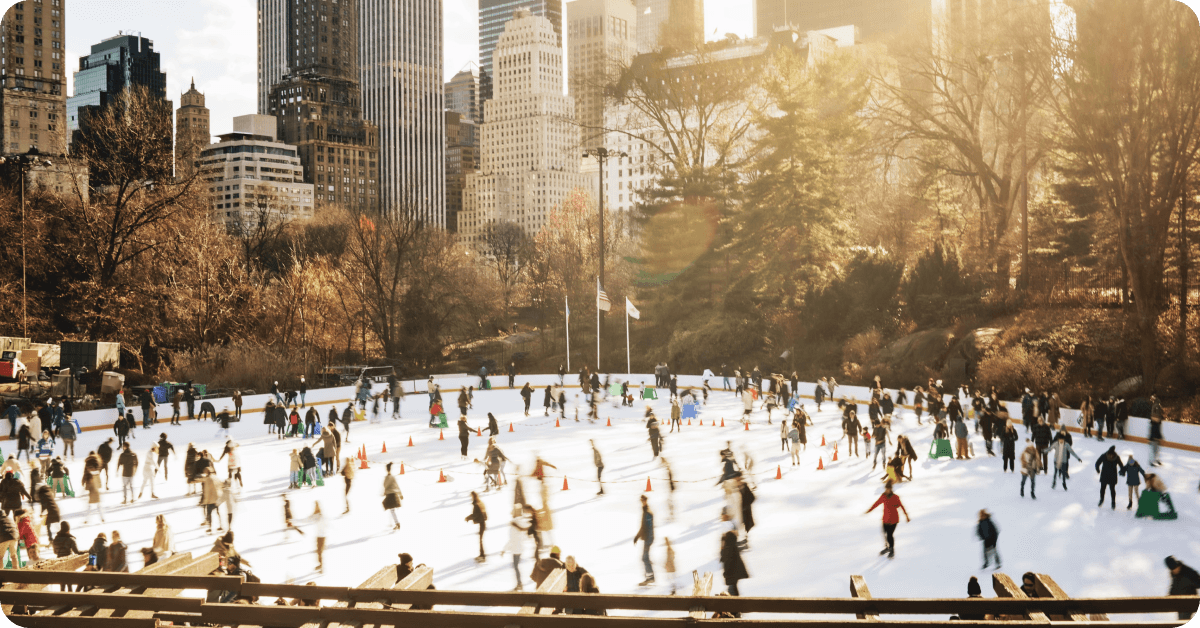
Then walk to the New York Public Library’s Stephen A. Schwarzman Building and Bryant Park behind it. The library lions outside are called Patience and Fortitude, names given during the Great Depression by Mayor Fiorello La Guardia because he thought New Yorkers needed both. Inside, the Rose Main Reading Room stretches almost the length of two city blocks, with long tables and painted clouds. Bryant Park feels like the library’s outdoor room. Office workers eat salads from plastic bowls, chess players lean over boards, tourists rest their feet, and winter skaters loop beneath the towers when the rink is up. Grab a chair and relax without treating the pause as wasted time.
Stay connected in New York with Saily
New York is rough on phone signal: too many towers, too much glass, too many people trying to load the same map outside the same subway entrance. A Saily eSIM for New York gives you prepaid mobile data for the city, with country-wide coverage from the USA’s best networks and 3G/4G/LTE/5G connectivity depending on local network conditions. No travel eSIM data plan can make a signal perfect beside every skyscraper or inside every subway station, but having mobile data ready before you land gives you a better shot at keeping maps, tickets, rides, and reservations within reach. If you're still deciding which map app to lean on, our Apple Maps vs. Google Maps comparison covers how the two differ in transit directions and place search.
Travelers covering more than the city can also choose an eSIM for the United States, then install it through the Saily app before the trip. In a city where a good day can jump from Central Park to Chinatown to Brooklyn after dark, sorting out your connection early removes one small, but important, stress factor.

1 GB
7 days
US$3.993 GB
30 days
US$8.995 GB
30 days
US$13.99
FAQ
New York is best known for its iconic landmarks, especially the Manhattan skyline, Lady Liberty, the World Trade Center, One World Trade Center, Wall Street, the New York Stock Exchange, Central Park, Broadway, and the Brooklyn Bridge. The city also carries a strong cultural charge through museums, food, literature, theater, and the simple act of walking down a block where five different versions of New York seem to be happening at once.
That is a highly debatable question. The Upper West Side is often considered one of the most beautiful areas of New York because it gives the city room to breathe: brownstones, old apartment buildings, Central Park on one side, Riverside Park on the other, and the American Museum of Natural History nearby. Brooklyn Heights also belongs in the conversation, especially near the Promenade, where lower Manhattan rises across the water.
Take the Staten Island Ferry for a free harbor view, then walk the High Line later in the day for old rail tracks, city planting, gallery buildings, and pockets of west-side people-watching. New York also has free museums on select days, free concerts in parks during warmer months, and the Bryant Park ice skating rink in winter, where admission is free if you bring your own skates.
Yes, it is worth visiting New York if you’re open for more than a checklist. The first visit can cover the skyline, Central Park, the Metropolitan Museum, Chinatown, Brooklyn, and a night in a theater, jazz club, or comedy room. A second visit can go deeper into Queens, Harlem, the Lower East Side, and the Bronx. It’s best to give yourself to neighborhood wandering that makes people visit NYC again after swearing the first trip exhausted them.
In one day, focus on Manhattan: see the skyline from Top of the Rock, walk through Central Park, visit the Metropolitan Museum or MoMA for modern art, then eat Chinese food in Chinatown. In three days, add the Staten Island Ferry, Wall Street, the World Trade Center area, Brooklyn Bridge, DUMBO, and the High Line. In five days, leave more space for Queens food, the Upper West Side, a Broadway or jazz night, and the Oculus at the World Trade Center if you need a dramatic indoor stop that also doubles as a shopping mall.
Spring and fall are the most comfortable seasons for long walks, park time, and bridge crossings, while December gives you Christmas windows, holiday markets, and an ice skating rink scene. Summer can be sweaty, crowded, and loud, but free concerts and outdoor events make the city feel more public. For a fuller seasonal breakdown, read our guide to the best time to visit New York.
Pack comfortable shoes, a weather-appropriate jacket, a portable charger, and clothes that can survive a full day of subway platforms, museum halls, restaurant lines, and sudden plan changes. Car traffic can make short rides surprisingly slow, so expect to walk and use the subway more than taxis. For connectivity, compare a SIM card for New York with Pocket Wi-Fi for New York before you travel, especially if you need maps, ride apps, and ticket wallets working from the moment you land.
Three days is enough for a strong first impression, but five days gives New York more space to become interesting beyond the obvious landmarks. With three days, focus on Manhattan, Brooklyn Bridge, the ferry, one museum, and one good night out. With five days, add Queens, Harlem, the Upper West Side, a slower food day, and a looser airport buffer if you want to explore things to do near New York JFK airport before or after a flight.

Always connected, always on course
Connect instantly with a Saily eSIM and enjoy effortless internet access.