


Things to do in Rome: The ultimate guide to the Eternal City
Looking for the best things to do in Rome? Fair warning — narrowing it down is the hard part. The Italian capital is a city where you walk past a 2,000-year-old temple on your way to grab a cornetto and nobody bats an eye. But this guide covers everything from iconic landmarks to hidden gems and free attractions, so you can make the most of your trip.
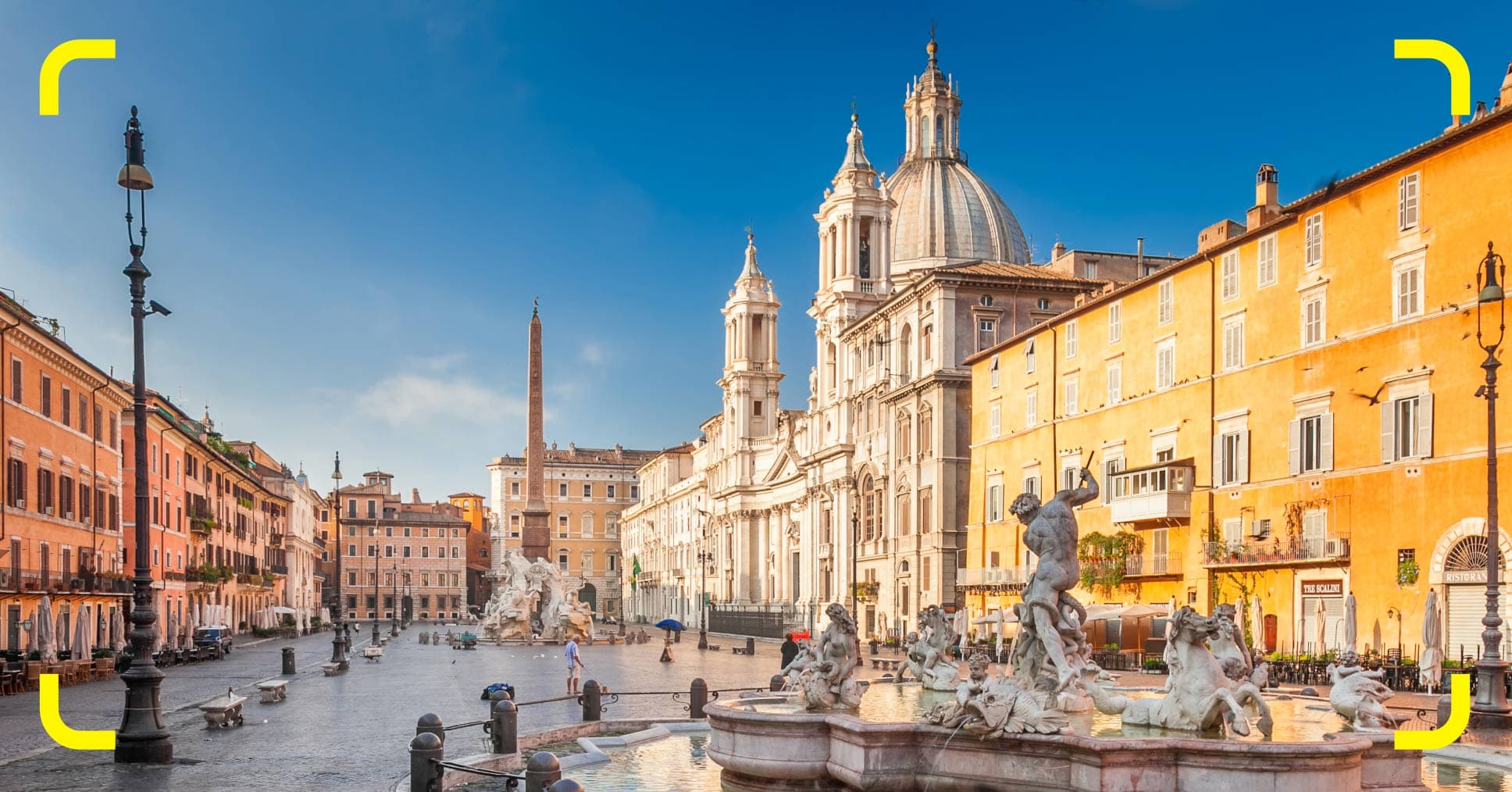
Table of Contents
- 1. Explore the Colosseum
- Tips for visiting the Colosseum
- 2. Visit Vatican City and the Sistine Chapel
- St. Peter’s Basilica and the dome climb
- 3. Wander through the Roman Forum and Palatine Hill
- What to see at the Roman Forum
- 4. Marvel at the Pantheon
- 5. Toss a coin at the Trevi Fountain
- 6. Climb the Spanish Steps
- 7. Stroll through Trastevere
- 8. Discover Piazza Navona
- 9. Tour the Borghese Gallery and gardens
- 10. Visit Castel Sant’Angelo
- 11. Pay respects at the Victor Emmanuel II monument
- 12. Explore the Appian Way and catacombs
- Free things to do in Rome
1. Explore the Colosseum
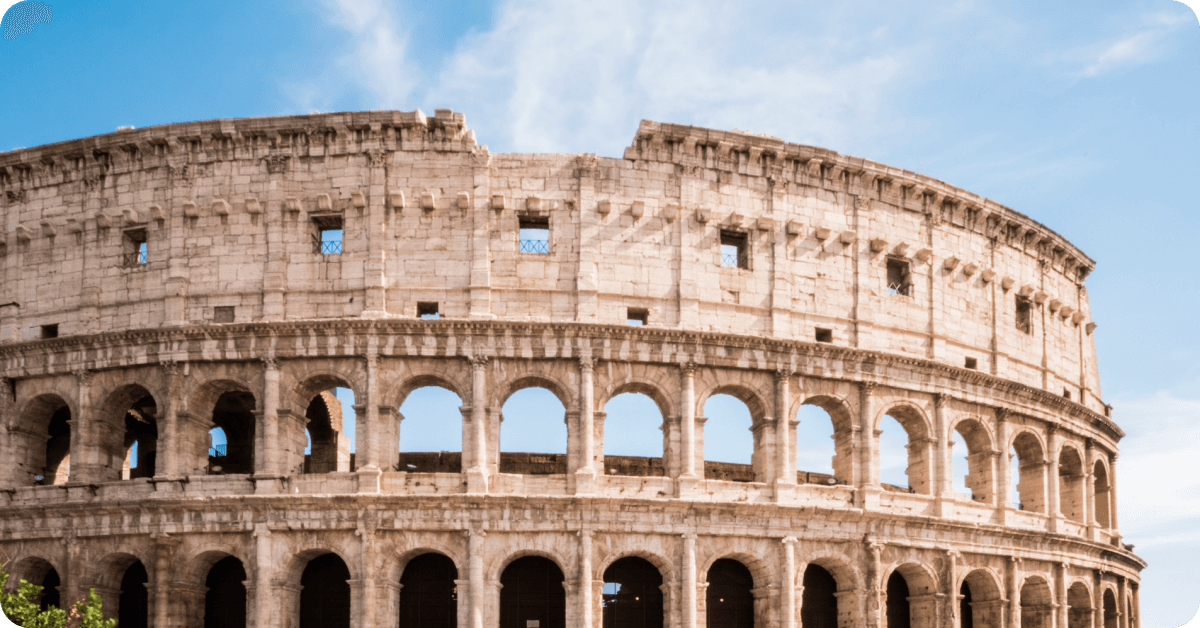
No list of “things to do in Rome” is complete without the Colosseum. Built in 80 AD, the 50,000-seat amphitheater once hosted gladiatorial combat, wild animal hunts, and even mock naval battles. But today, it’s the most famous landmark in the city.
Standard tickets get you onto the first and second levels, but the Full Experience upgrade will add a lot more to the visit. You’ll get arena floor access where gladiators once stood and a trip down into the underground tunnels where fighters and animals waited before their fights. The Colosseum opens at 8:30 AM, and arriving early or late afternoon is the best way to beat the crowds. Either way, book timed-entry tickets in advance — walk-up queues can eat hours of your day.
Tips for visiting the Colosseum
Book a guided tour if you can. The underground tunnels are only accessible on guided tours, and having an expert narrator makes a huge difference.
Wear comfortable shoes and bring sun protection. Shade is scarce, especially on the upper levels.
Free entry on the first Sunday of the month. Tickets for free entry days can’t be reserved online — collect them at the ticket office on a first-come, first-served basis. Try to arrive early because you can expect crowds.
2. Visit Vatican City and the Sistine Chapel
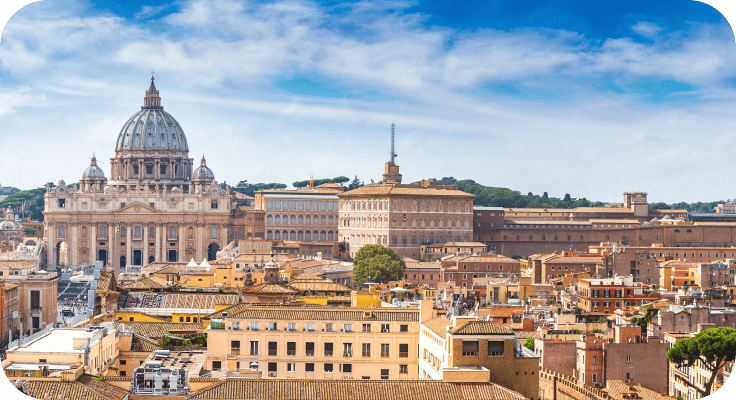
Vatican City is the world's smallest sovereign state, tucked right inside Rome. Whether you’re religious or not, this is one of the top things to do in Rome for anyone with even a passing interest in art or architecture.
The Vatican Museums house roughly 70,000 works spanning centuries, from ancient Egyptian artifacts to Renaissance masterpieces. However, only about 20,000 are on display at any given time. You can’t miss the Sistine Chapel and Michelangelo’s legendary ceiling, too. You’ll reach it at the end of the museum route.
St. Peter’s Basilica and the dome climb
Entry to St. Peter’s Basilica is completely free, so it’s hard to believe that Michelangelo’s Pietà — one of the most famous sculptures ever created — sits just to the right of the entrance. The sheer scale of the Basilica’s interior has a way of making even loud tourists go quiet for a second.
Once you’ve checked the ground level out, head up. The dome climb gives you the best views in Rome — you can tackle all 551 steps yourself or pay extra for the elevator option, which covers the first stretch and leaves you with about 320 to finish.
3. Wander through the Roman Forum and Palatine Hill
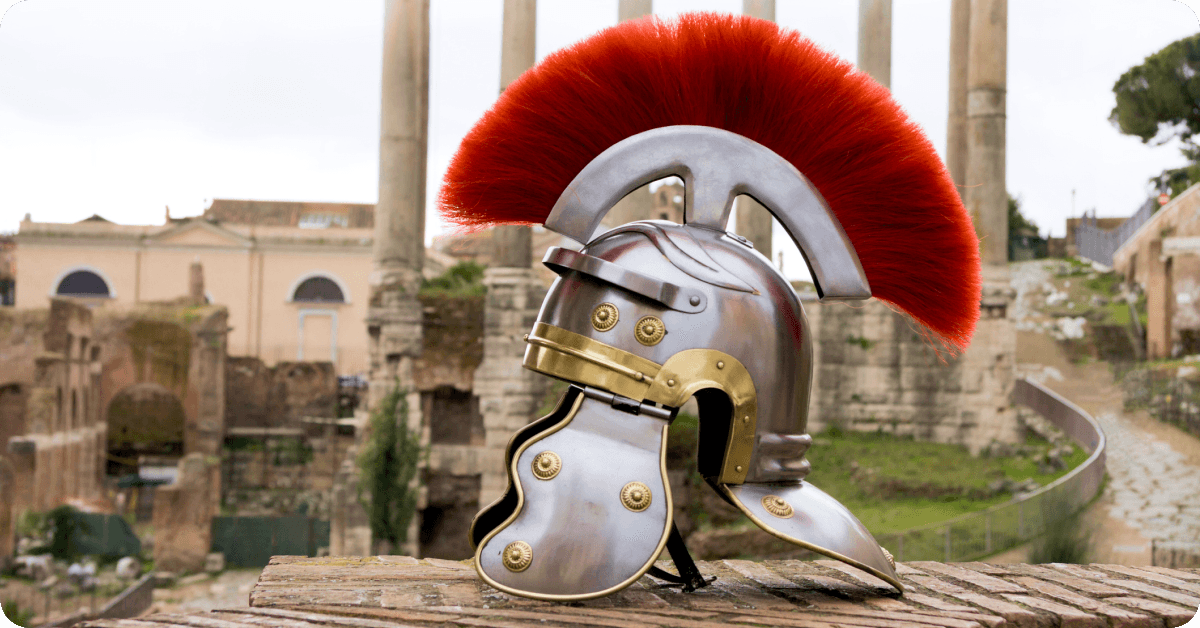
The Roman Forum was the beating heart of ancient Rome. It was the place where senators debated, merchants traded, temples were built to the gods, and triumphal processions paraded through after military victories. Today it’s a sprawling open-air archaeological site, and while it takes a bit of imagination (and ideally a guide) to piece together what stood where, walking through it is one of the most humbling experiences Rome has to offer.
After your visit to the Roman Forum, you can also head up to Palatine Hill, the most central of Rome’s seven hills and, according to legend, the spot where the city was founded. It’s quieter and greener than the Forum below, dotted with the ruins of imperial palaces where emperors like Augustus and Domitian once lived. The views alone are worth the walk — on one side you look down over the Forum, on the other across the vast footprint of the Circus Maximus.
Both sites are included in every Colosseum combo ticket, so if you’ve already visited the Colosseum, there’s no excuse to skip them.
What to see at the Roman Forum
The Forum can feel overwhelming without context, so hiring a guide or grabbing an audio guide is a smart move. Here are the key stops to look out for:
Temple of Saturn. It’s one of the Forum’s oldest and most iconic structures, recognizable by its eight standing columns. It once housed Rome’s state treasury.
Arch of Titus. The arch was built in 82 AD to celebrate Emperor Titus’s conquest of Jerusalem. The detailed relief carvings inside are remarkably well preserved.
House of the Vestal Virgins. The house was once a residence of the priestesses who tended Rome’s sacred flame. The courtyard with its statues and reflecting pools is one of the Forum’s most atmospheric corners.
Curia Julia. It’s also known as the Senate House where Roman politicians met to argue over the fate of the Republic (and later, the Empire). The brick exterior is modest, but knowledge of what happened inside gives it a lot of weight.
Via Sacra. It’s the main road through the Forum and Rome’s oldest street. Triumphal processions marched along this route, and walking it yourself still feels oddly significant.
Temple of Castor and Pollux. Only three elegant columns of this temple remain, but they’re among the most photographed in the Forum.
Plan around 2-3 hours to explore both the Forum and Palatine Hill properly. Comfortable shoes are non-negotiable — there’s a fair amount of climbing involved.
4. Marvel at the Pantheon
The Pantheon, built around 125 AD under Emperor Hadrian, is one of the best-preserved ancient Roman buildings in existence. Its dome remains the world’s largest unreinforced concrete dome, and at its center sits the oculus — a 9-meter-wide opening to the sky that serves as the building’s only light source. Yes, it’s completely open. Yes, it rains inside. And yes, there are drains on the floor to handle it.
Beyond the engineering, the Pantheon also houses the tomb of Renaissance painter Raphael and several Italian kings. It’s still a functioning Catholic church, too!
5. Toss a coin at the Trevi Fountain
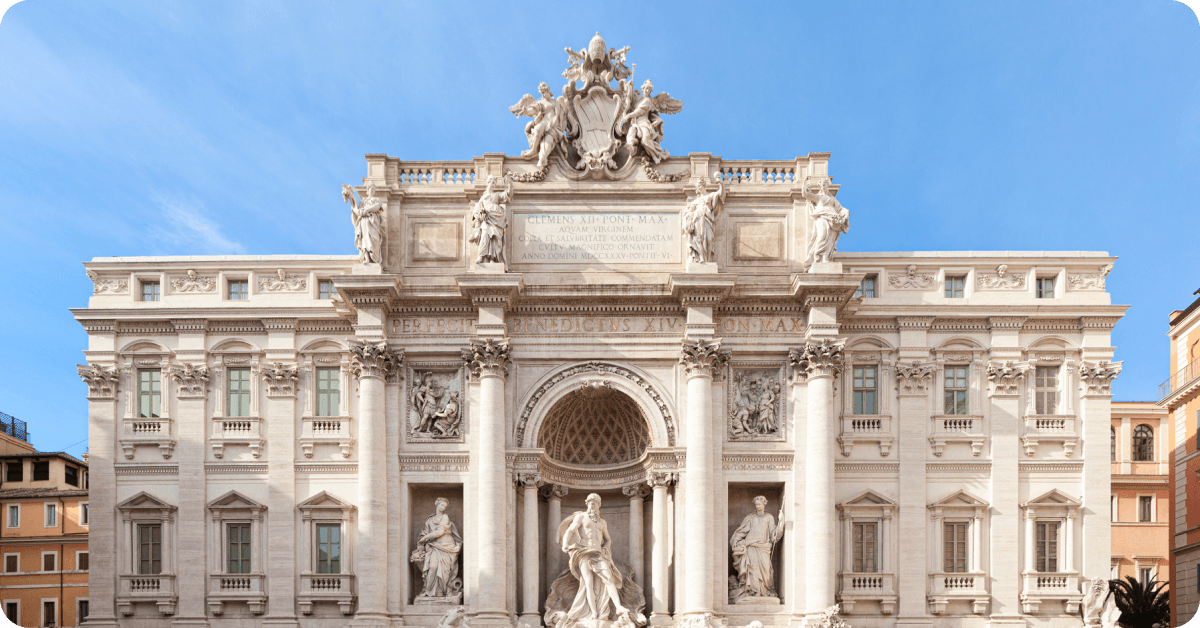
The Trevi Fountain is the largest Baroque fountain in Rome and arguably the most famous fountain in the world. The tradition is simple — stand with your back to the fountain and toss a coin over your left shoulder with your right hand. Legend says it guarantees your return to Rome. Whether or not you believe it, the numbers suggest plenty of people aren’t taking any chances — roughly €3,000 in coins are fished out of the fountain every day, adding up to over a million euros a year, all of which is donated to charity.
Since February 2026, there’s also a €2 fee for tourists who want to walk down the steps and get close to the basin. You can still admire the fountain from the upper street level for free, but if you want that coin toss (and the photos to prove it), you’ll need to pay. Rome residents and children under 6 get in free.
For the best experience, visit early in the morning before or late at night, when the fountain is beautifully lit and the crowds thin out considerably.
6. Climb the Spanish Steps
The 135 travertine steps connecting Piazza di Spagna to the Trinità dei Monti church above have been one of Rome’s most recognizable landmarks since the 1720s. At the base sits the Barcaccia, a quirky half-sunken boat fountain designed by Pietro Bernini (father of the more famous Gian Lorenzo), and at the top you’re rewarded with a lovely view over the rooftops and domes of the city center.
The surrounding streets are worth your time, too — Via Condotti is Rome’s premier luxury shopping strip, lined with names like Gucci, Bulgari, and Valentino. Window shopping is free, at least.
One important note — sitting on the steps has been banned since 2019, and the rule is actively enforced. Fines can reach up to €400, so take your photos, enjoy the climb, and keep moving. Don’t forget to share photos, too! If you need data for your Instagram stories, get an eSIM for Italy from Saily.
7. Stroll through Trastevere
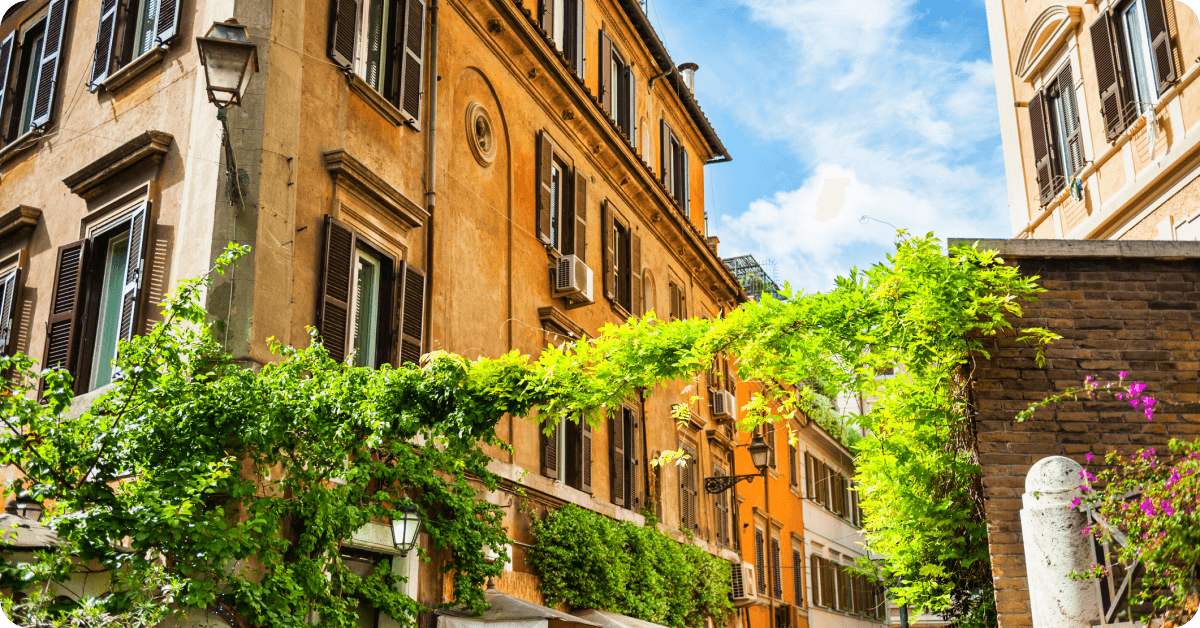
Trastevere is a neighborhood on the west bank of the Tiber, known for narrow cobblestone alleys, ivy-draped buildings, and trattorias where the pasta is made fresh. It’s one of the best spots in Rome for an Italian food tour or an evening passeggiata — a quintessentially Italian tradition of a slow, aimless stroll before (or after) dinner.
While you’re here, stop by the Basilica di Santa Maria in Trastevere, one of Rome’s oldest churches, dating back to the 4th century. Its glittering medieval mosaics are stunning, and the piazza out front is one of the most relaxed people-watching spots in the city. If you happen to be in Rome on a Sunday, make a detour to the Porta Portese flea market — a sprawling, mile-long affair running from 7 AM to 2 PM with everything from vintage clothing and antiques to old books and questionable electronics.
8. Discover Piazza Navona
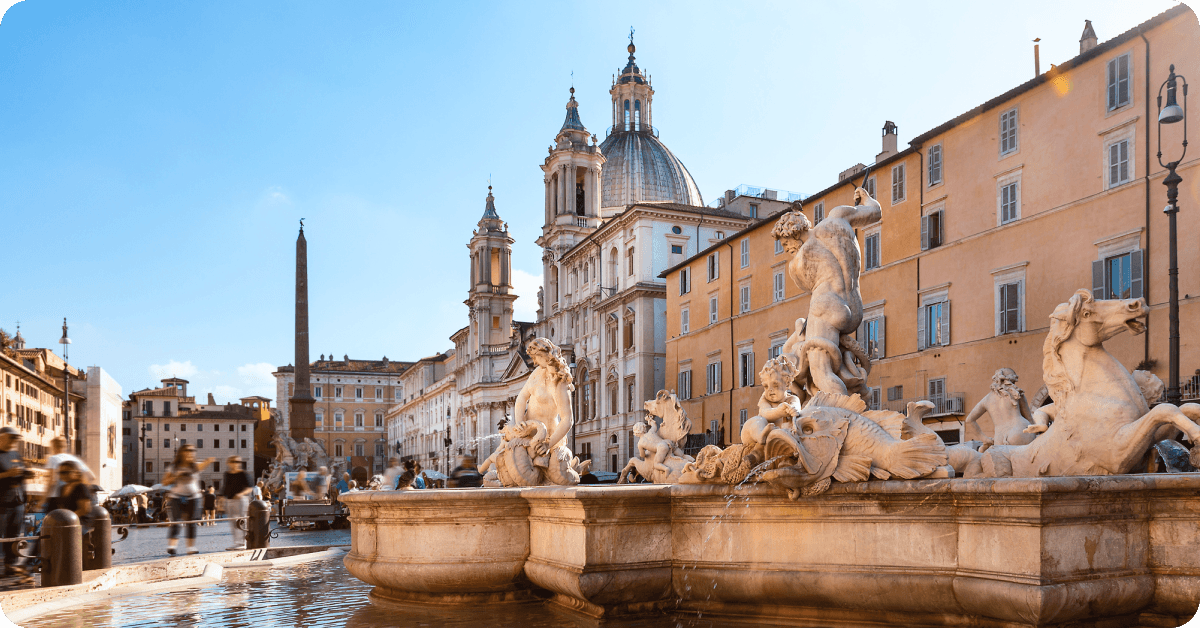
Piazza Navona sits on the exact footprint of an ancient Roman stadium — Emperor Domitian’s 1st-century athletics arena — and you can still see the elongated oval shape in the layout of the square today. It’s one of the most beautiful public spaces in Rome, and that’s not a title the city hands out lightly.
The centerpiece is Bernini’s Fountain of the Four Rivers, a sculpture representing the Nile, Ganges, Danube, and Río de la Plata, topped by an Egyptian obelisk. Two more fountains anchor the north and south ends of the piazza, and the surrounding Baroque facades, including Borromini’s Sant’Agnese in Agone church, complete the scene.
On any given day you’ll find street artists sketching portraits, musicians performing, and tourists slowly rotating in circles trying to take it all in. The cafés lining the square are famously overpriced (expect to pay a premium for that front-row seat), but honestly? Ordering one espresso and watching the piazza do its thing for half an hour is money well spent.
9. Tour the Borghese Gallery and gardens
The Galleria Borghese is small by Roman standards, but what it lacks in size it makes up for in sheer concentration of masterpieces. Bernini’s sculptures alone, such as Apollo and Daphne, are worth the visit, and then you’ve also got masterpieces by Caravaggio, Raphael, and Titian filling out the rooms.
There’s a catch, though — entry is strictly limited to two-hour timed slots, and tickets sell out fast. Booking in advance isn’t just recommended — it’s essential if you actually want to visit the gallery. Standard tickets start at €16, with reduced rates for EU citizens aged 18-25.
Once your two hours are up, step outside into the Villa Borghese gardens. The 200-acre park is perfect for a slow walk, a bike ride, or a rowboat on the lake near the Temple of Asclepius (boats are around €5 for 20 minutes).
10. Visit Castel Sant’Angelo
Castel Sant’Angelo started out as Emperor Hadrian’s mausoleum in 139 AD, spent centuries as a papal fortress and prison, and now operates as a museum. That’s quite the résumé for a single building, and the layers of history are visible as you walk through — from the original funerary chambers at the base to the lavishly decorated papal apartments higher up.
The real payoff comes at the top. The rooftop terrace offers some of the best panoramic views in Rome, with St. Peter’s Basilica and the Vatican so close you almost feel like you could reach out and touch the dome. It’s an especially good spot at sunset.
Don’t rush past the approach, either. The Ponte Sant’Angelo, the pedestrian bridge leading to the castle, is lined with ten angel statues designed by Bernini, each holding a symbol of the Passion of Christ. It’s one of the most photogenic walks in the city — and unlike most things in Rome, there’s no ticket required to enjoy it.
11. Pay respects at the Victor Emmanuel II monument
The Altare della Patria, or Altar of the Fatherland, is impossible to miss. This enormous white marble monument dominates Piazza Venezia and was built in the early 1900s to honor Victor Emmanuel II, the first king of unified Italy. It also houses the Tomb of the Unknown Soldier, guarded by an eternal flame and a permanent military presence.
Romans have a complicated relationship with the building. Its sheer size and blindingly white marble feel a bit out of place among Rome’s warmer, weathered tones, which is why locals have lovingly nicknamed it “the wedding cake” or, even better, “the typewriter.”
Love it or not, it’s worth going inside. The ground-floor museum is free to enter and covers the history of Italian unification. But the real draw is the panoramic glass elevator ride to the rooftop terrace (€12), which delivers one of the best 360-degree views in Rome — the Forum, the Colosseum, the domes of the city center, all laid out in front of you. Some say that it’s an even better vantage point than St. Peter’s dome, and far fewer people know about it.
12. Explore the Appian Way and catacombs
The Via Appia Antica, built in 312 BC, was one of the most important roads in the Roman Empire — a military and trade route stretching all the way from Rome to the port of Brindisi in southern Italy. Nearly 2,300 years later, you can still walk along its original basalt cobblestones, passing crumbling tombs, ancient ruins, and towering remnants of Roman aqueducts. It’s one of the more unusual things to do in Rome, and exactly the kind of experience that makes you forget you’re still technically inside a major European capital.
The best way to explore is on foot or by bike — rental shops near the start of the road have you covered. Sundays are ideal, as a section of the road is closed to traffic and the whole stretch feels very peaceful.
Along the way, you’ll also find the entrance to Rome’s catacombs — vast underground burial networks with miles of tunnels carved into the soft volcanic rock. The two most popular are the Catacombs of San Callisto and the Catacombs of San Sebastiano, both accessible only by guided tour.
Free things to do in Rome
Rome is packed with world-class experiences that don’t require a ticket or a reservation. If you’re watching your budget, or just like a good deal, here are some of the best free things the city has to offer:
Visit Rome’s free churches. Rome’s churches are essentially free museums! St. Peter’s Basilica gets all the attention, but don’t overlook Santa Maria Maggiore (jaw-dropping 5th-century mosaics), San Giovanni in Laterano (technically Rome’s cathedral), and Santa Maria del Popolo, where two original Caravaggio paintings hang in the Cerasi Chapel. You can actually see six Caravaggio works across three churches, including San Luigi dei Francesi and Sant’Agostino, without spending a cent.
Explore Rome’s piazzas and fountains. Some of the best moments in Rome happen when you’re just wandering with no particular plan. Piazza Navona and its Bernini fountains, the grand symmetry of Piazza del Popolo, the Trevi Fountain lit up after dark — none require a ticket. For something more local, swing by Campo de’ Fiori in the morning when the daily market is in full swing, selling fresh produce, flowers, and spices.
Walk through Villa Borghese gardens. Rome’s largest central park is free to enter and perfect for escaping the chaos of the centro storico. Jog the shaded paths, have a picnic on the grass, or time your visit for sunset at the Pincian Hill terrace, which overlooks Piazza del Popolo and offers one of the city’s most romantic views.
Admire the views from Aventine Hill and the Orange Garden. The Giardino degli Aranci on Aventine Hill is a quiet garden with panoramic views over the Tiber and the city skyline. While you’re there, peek through the famous keyhole at the Priory of the Knights of Malta — St. Peter’s dome appears perfectly framed at the end of a tree-lined hedge. It’s free, it takes five seconds, and it’s one of those small Roman moments you won’t forget. Get there early to avoid a queue.
Free museum Sundays. As we’ve mentioned before, on the first Sunday of every month, state-run museums and sites across Rome open for free, including the Colosseum, Roman Forum, Palatine Hill, the Borghese Gallery, and the Pantheon. However, everyone knows about it, so you need to arrive as early as possible, especially for the Colosseum, where free tickets are distributed first-come, first-served.

Stay connected with the Saily eSIM app
Affordable mobile data plans for every journey.
FAQ
For a first visit, prioritize the Colosseum, Vatican Museums and the Sistine Chapel, the Pantheon, the Trevi Fountain, and the Roman Forum. Together, they cover Rome’s ancient history, Renaissance art, religious heritage, and lively city center.
If you’re unsure how many days you should spend in Rome, three to four days is enough to see Rome’s main highlights without rushing too much. Stay for five to seven days if you want to explore more neighborhoods, take day trips, and leave time for long lunches and unplanned walks.
Rome is moderately priced compared with many other European capitals. Budget travelers can usually manage on €80-100 per day, while mid-range travelers should plan for approximately €150-200 per day. Your total will depend on accommodation, attractions, dining, and the time of year.
Yes, Rome is generally safe for visitors, and violent crime against tourists is uncommon. Pickpocketing is the main concern, particularly in crowded areas, at major stations, and on public transport. Keep your phone and wallet secure, use a zipped bag, and stay aware when moving through busy crowds.
A few small adjustments can make your trip smoother:
Avoid ordering cappuccino late in the day. It’s traditionally considered a breakfast drink, so choose an espresso after lunch.
Do not tip as you would in the United States. Tipping is not usually expected, although rounding up or leaving a small amount for good service is appreciated.
Do not expect lots of ice in your drinks. Drinks in Italy are often served with little or no ice.
Avoid restaurants directly beside major attractions. They are often more expensive, so walk a few streets away for better food and value.
Do not rush your meals. Lunch and dinner are meant to be enjoyed slowly, rather than squeezed between sightseeing stops.
Keep your voice down. Be considerate in restaurants, churches, and on public transport.
Watch your belongings in crowded areas. Keep bags closed and valuables out of easy reach, especially around major landmarks and busy transport hubs.

Always connected, always on course
Connect instantly with a Saily eSIM and enjoy effortless internet access.
Related articles