Toronto public transportation system overview
Toronto’s transport network is mostly overseen by the Toronto Transit Commission (TTC), with a few extra players (like the UP Express) filling in the gaps. Think of it like this — the subway is a central river, with streetcars and buses as tributaries feeding riders into it. Most of any given journey happens on the subway, but then you’ll start or finish the process with, for example, a short bus ride.
Let’s cover the key facts you should know about the network.
Structure: Four subway lines form the backbone, with streetcars and buses acting as connectors that bring you to the nearest station.
Coverage: Transport service goes all across the city, with reliable airport access available via the UP Express train.
Pros: Beyond how widespread and accessible the system is, the big pro is convenience, with one unified fare working across all modes.
Cons: Crowding can be very intense on rush hour trains (though that’s standard for a lot of subway systems) and the network is less helpful the further you get from the downtown area.
Operating hours: Most service runs from around 6 AM to 1:30 AM, while reduced overnight bus routes ("Blue Night Network") fill the gap on major corridors.
Frequency: Subways run every few minutes at peak times. Streetcars and buses vary more depending on the route and time of day. Buses and streetcars are often delayed by intense traffic.
Simple as Toronto’s transit links are, getting around a city you don’t know can be a little overwhelming. To make things easier, you’ll want reliable mobile data, so you can check times and routes, download ride-hailing apps, and buy tickets ahead of time. You can get online in Toronto using a Saily eSIM plan for Canada, starting from US$5.29. Canada is also included in the 121 destinations covered by Saily’s Ultra plan. If you want extra perks like airport lounge access and faster security and check-in, that might be the way to go.
How good is Toronto's public transportation?
Toronto's public transportation is very good, especially if you’re visiting the city. It's extensive, reasonably frequent, and easy to use once you understand the fare system, though crowding and delays can test your patience during peak hours.
Full-time residents are sometimes (understandably) unhappy about bus delays and crowded subway carriages, but for outsiders, the network does everything it needs to and more.
Toronto public transportation options
Toronto gives you a handful of ways to get around, each suited to a different kind of trip. Here's everything you need to know about each one, from the TTC to the UP Express.
Subway (TTC)
The subway is the backbone of Toronto's transit operation, and is made up of four lines covering major corridors across the city. You’ll spot an entrance to each subway station by the distinctive red and white logo, and these are your best bets for starting a cross-city trip. The TTC is quick and frequent, but coverage thins out as you get further away from the downtown area, and carriages can be packed full during peak times.
Streetcars (TTC)
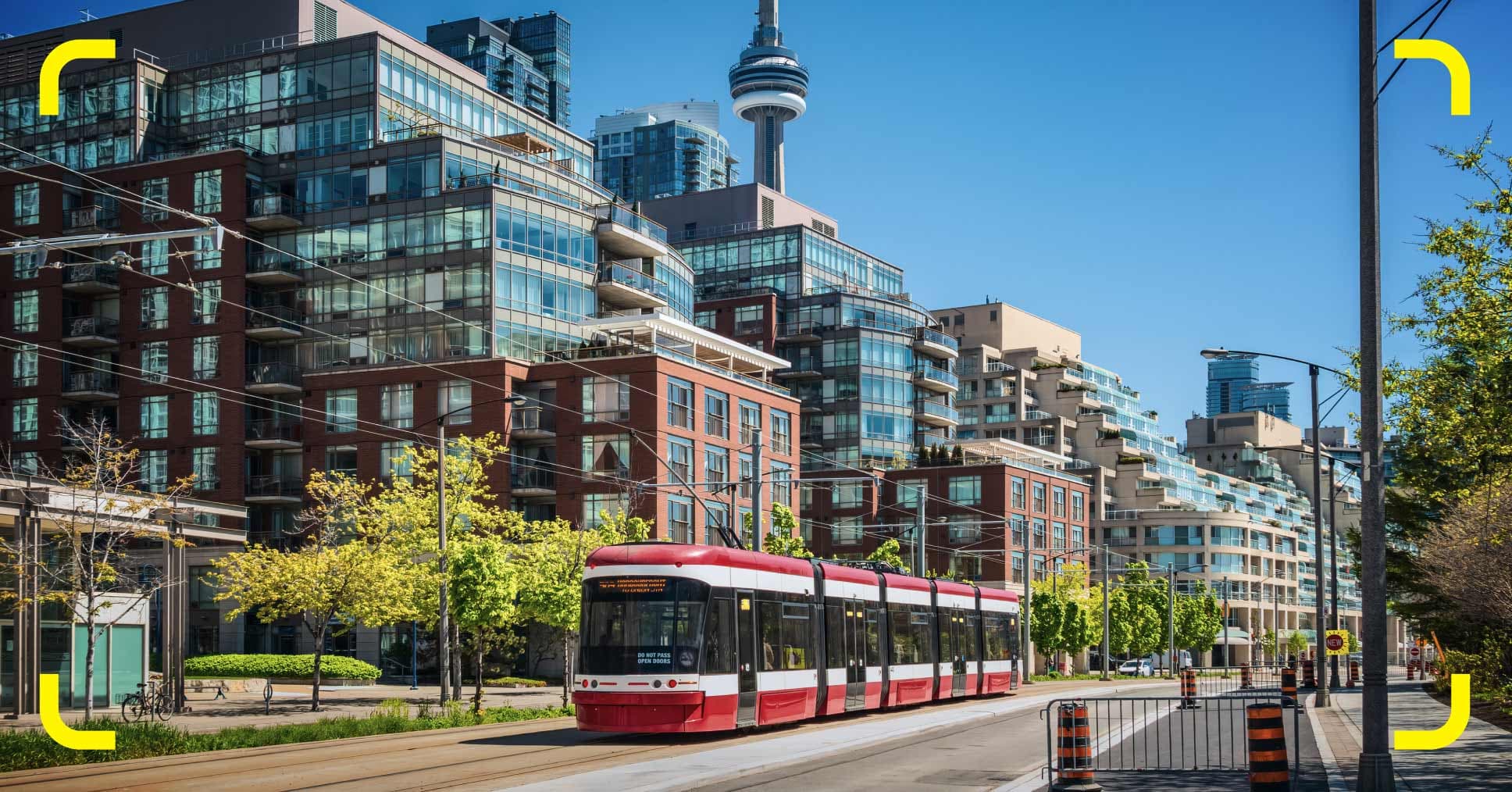
Streetcars run above ground and mostly stick to the downtown routes. You board at marked stops and pay the same way as any other TTC service (tap your card, ticket, or contactless payment). They're great for short urban hops, but traffic can slow them down compared to the subway.
Buses (TTC)
Buses actually cover the most ground of any TTC link, reaching neighborhoods the subway and streetcars can’t. You wait at a stop, pay the same standard fare, and hop on. They're ideal for local trips or connecting to a subway station, though they're just as prone to traffic delays as any other road vehicle, so budget extra time.
UP Express
The UP Express is a dedicated train linking Union Station downtown to Pearson International Airport in about 25 minutes. You tap in with PRESTO or buy a ticket at the station, and it's the fastest, most direct way to make the airport run. The tradeoff is cost: it's pricier than a regular TTC fare.
How do you pay for public transport in Toronto?
Toronto uses one unified, tap-based payment system across the subway, streetcars, and buses. Here's how each payment method actually works. This is the big strength of the system — ticketing is really, really simple. Whatever method you use, though, one thing stays the same: from the moment you validate the ticket or tap your card, you’re in the system for two hours, and can transfer freely without paying more.
PRESTO card
PRESTO is a reloadable card you can buy for CA$4 (or just under US$3) at any subway station or participating Shoppers Drug Mart. You can also set up a digital card through the PRESTO app, for no cost. You load it with funds (however much you want), then tap it on the reader when you board a bus or streetcar, or at the subway gate.
PRESTO Ticket
If you don’t want a reloadable card, you can buy a single-use paper PRESTO ticket. You can buy one from a fare vending machine at any subway station and tap it just like a PRESTO card. It's a good option for a quick one-off trip, but probably inferior to the PRESTO card if you plan to use the transport system a lot during your trip.
The easiest option of all is to just tap your contactless credit card, debit card, or mobile wallet (Apple Pay, Google Pay) directly onto the reader when you board or enter a station.
How much does public transport in Toronto cost?
Fares in Toronto are flat within the city, meaning the price depends on your payment method more than how far you're going. Listed below are the prices for different kinds of ticket in Canadian dollars — just remember that a physical PRESTO card does require a one-time extra payment of CA$4.
Payment method | Single ride (adult) | Day pass | Monthly pass |
|---|
PRESTO card | CA$3.30 | N/A | N/A |
|---|
PRESTO ticket | CA$3.35 | CA$13.50 | N/A |
|---|
Contactless Credit/Debit | CA$3.30 | N/A | N/A |
|---|
Cash | CA$3.35 | N/A | N/A |
|---|
While every traveler has their own specific needs, most people just won’t have much use for the paper day pass ticket. Remember, you have two hours for each standard fare, so unless you plan to hop on and off the system all day, a PRESTO card or a couple of tickets are the best options.
Getting to and from the Toronto Airport
Pearson International Airport connects easily to downtown Toronto, and you've got a few solid options depending on your budget and priorities.
UP Express is the fastest option at 25 minutes, with trains every 15 minutes. Standard fare is CA$12.35, or CA$9.25 with a PRESTO card. Best for tourists who want speed and don't want to deal with transfers.
A TTC bus with the subway is the cheapest option at a single $3.30 fare, but it takes more than 60 minutes and involves a transfer at Kipling Station.
Taxi or ride-share are convenient for door-to-door service, especially with luggage, but pricier and subject to traffic.
Other Toronto transit options
You don’t have to rely on public transport in Toronto if you don’t want to, of course. Plenty of reliable options are available (though some cost a bit more than the TTC).
Taxis and ride-sharing services
Uber and Lyft both operate across Toronto, alongside local licensed taxis. They're a decent choice for late-night trips or luggage-laden jaunts to the airport, but the prices can be very high, especially during surge times. If you’re going for this option, make sure that your phone works in Canada and that you’ve got dependable mobile internet. The best options for getting online (without breaking the bank) are to buy a prepaid SIM card for Canada, or get an eSIM plan.
Driving
Renting a car makes a lot of sense if you're planning day trips outside the city (to Niagara Falls, for example) but it's not a very fun way to get around downtown — unless sitting in Toronto traffic is your idea of a good time. Parking is also expensive and often restricted, so check signage carefully. Many downtown streets have permit-only parking or metered spots with strict time limits, and towing is common for violations.
Ferry
The Toronto Island ferry runs from the waterfront out to the Toronto Islands (a great day trip if you’re looking for beaches, biking, and skyline views). It's not part of the TTC fare system, so you'll need a separate ticket, which you can buy online or in person.
Biking
Toronto has a bike-share program called Bike Share Toronto (who’d have guessed?), with docking stations all over downtown and beyond. With a growing network of bike lanes, getting around the city by bike is pretty easy and enjoyable, and you’ll see a lot of landmarks and locations that you’d miss on the TTC.
Walking
Downtown Toronto is really compact and walkable, with pedestrian-friendly streets and the underground PATH network for when the weather turns bad. It's often the easiest way to get between nearby attractions without waiting for transit. Even more so than biking, walking will let you stumble on those little wayside cafes and hidden bars that you’d miss otherwise.
What is the best way to get around Toronto for tourists?
For most tourists, a mix of the subway and walking covers almost everything downtown, with the UP Express handling airport transfers. It's fast, affordable, and doesn't require planning around traffic.
Whichever way you get around, staying connected makes the whole trip smoother, whether you're pulling up transit maps, checking wait times, or just exploring a new neighborhood. Downloading an eSIM app before you go means you land with data ready to go, no searching for a local SIM card or relying on spotty airport Wi-Fi. Get your eSIM for Canada, pack your bags, and get ready for your next adventure.