






Turkey packing list: What to bring for every season and situation
Ever stared at an empty suitcase, wondering what on earth to pack for Turkey? Well, our team did just that before leaving for our last workation, so you're not alone. Turkey's diverse climate means you could be sweating in Istanbul's summer heat one day and shivering in Cappadocia's winter winds the next. In this Turkey packing list, you'll discover exactly what to pack for every season, activity, and situation — so you can focus on making memories instead of worrying about what you forgot.
Table of Contents
- Essential travel items for any trip to Turkey
- What to wear in Turkey to stay respectful
- What to pack for Turkey by season
- Spring (March-May) packing list for Turkey
- Summer (June-August) packing list for Turkey
- Fall (September-November) packing list for Turkey
- Winter (December-February) packing list for Turkey
- Packing tips based on trip length
- How to pack for a seven-day trip to Turkey
- How to pack for a two-week trip to Turkey
- How to pack for a 30-day trip to Turkey
- Activity-specific packing tips
- Hot air balloon rides in Cappadocia
- Historical sites and ancient ruins
- Beach and coastal activities
- Adventure sports and outdoor activities
- Turkish bath experiences
- Urban exploration and shopping
- Climbing Mount Ararat and other serious mountaineering
- Tech and connectivity checklist
- What NOT to pack when traveling to Turkey
- Ready to start packing?
Essential travel items for any trip to Turkey
No matter when you visit Turkey, some items are absolute must-haves. Think of these as your travel insurance policy — the basics that'll keep you comfortable and connected regardless of what Mother Nature throws your way.
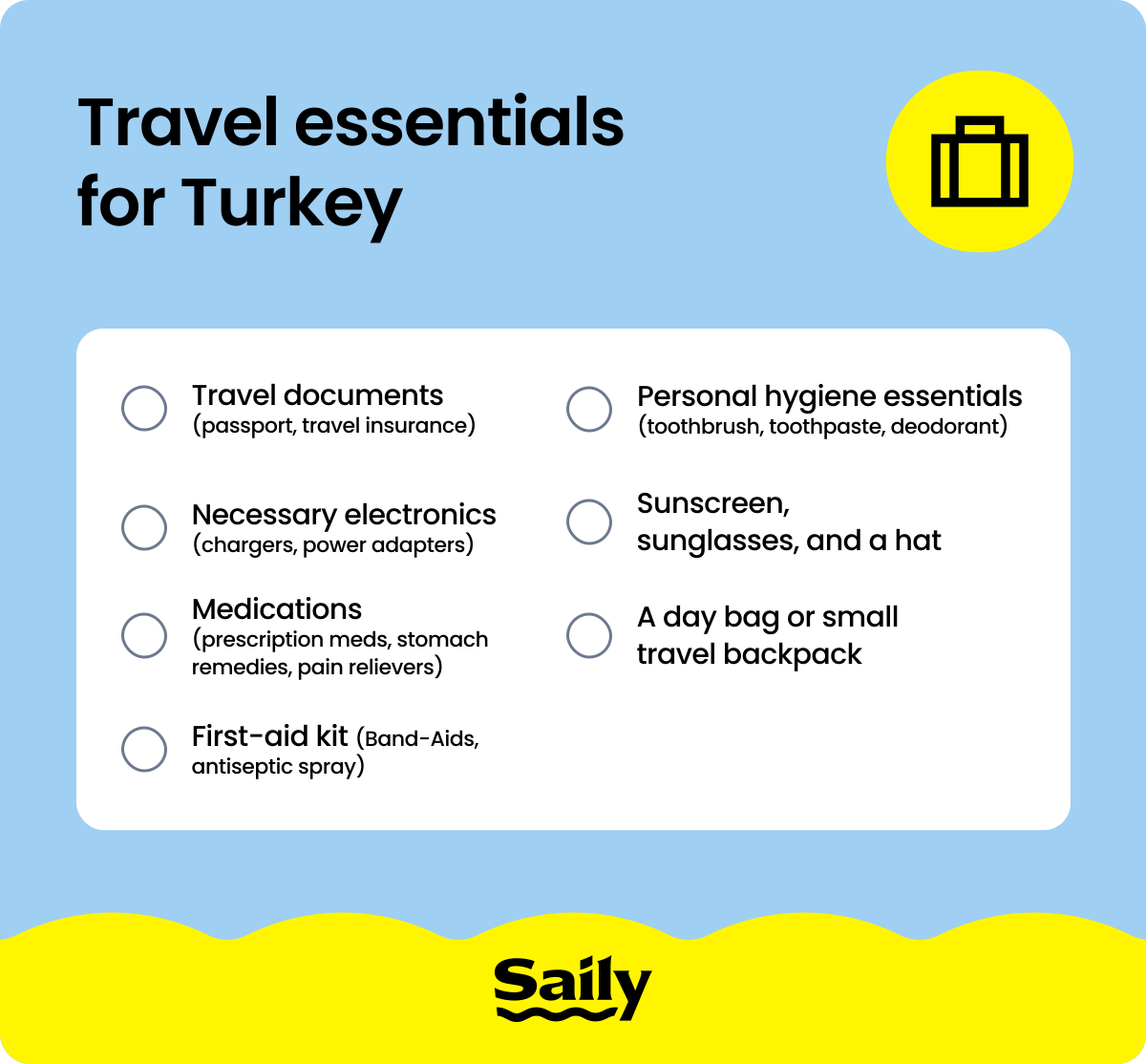
No matter when you visit Turkey or what brings you there, these items should definitely make it into your suitcase:
Travel documents. Pack your valid passport, travel insurance documents, flight confirmations, and accommodation bookings in an easily accessible folder.
Necessary electronics. Pack your essential devices and charging equipment. (For more details, see the Tech and connectivity section)
Medications and a basic first-aid kit. For peace of mind, pack your regular prescriptions, plus pain relievers, band-aids, and stomach remedies.
Personal hygiene essentials. Although Turkish stores stock international brands, packing your essential toiletries like toothbrush, toothpaste, and preferred skincare products saves time and ensures you have familiar products that work for you.
Sun protection. UV protection is crucial regardless of season, especially with Turkey's strong Mediterranean sun beating down, so bring sunscreen, sunglasses, and a hat.
A day bag or a small backpack. You'll need this for daily sightseeing and carrying water, snacks, and souvenirs throughout your adventures.
This foundation covers you whether you're packing for a weekend trip or an extended adventure. But before we walk you through what to expect and what to wear in Turkey during each season, you need to understand Turkish dress customs. This knowledge can help you travel respectfully and feel confident while exploring diverse regions.
What to wear in Turkey to stay respectful
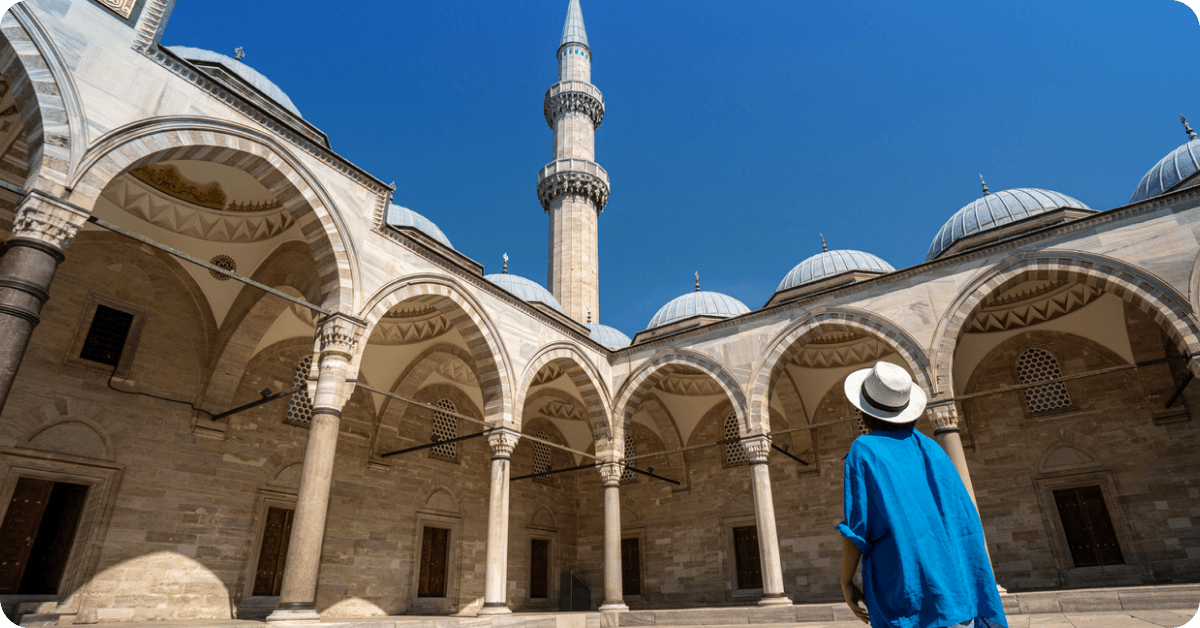
When traveling, we're essentially guests in someone else's home, and understanding local dress customs shows respect for our hosts while enhancing our own experience. Although we firmly believe in personal freedom of expression, adapting to local norms can help you connect more authentically with Turkish culture and feel more confident exploring the country.
Turkey is a secular, predominantly Muslim country where both Turkish women and men wear diverse styles, from very Western fashion, including crop tops and short dresses, to more modest attire. In most situations, tourists can wear their usual clothing, but dressing with cultural sensitivity is always appreciated.
Western cities like Istanbul are very liberal regarding dress choices, while eastern cities tend to be more conservative. In urban areas, shorts and tank tops are perfectly acceptable, especially in hot weather. Beach resorts embrace the type of casual wear you'd expect in other parts of Europe.
However, specific dress codes apply regardless of the region when visiting religious sites. Women must cover their heads with a scarf, wear long sleeves, and ensure clothing covers below the knees. Men need long pants and shirts with sleeves. Both should avoid sleeveless shirts, low necklines, and tight, revealing clothing.
When visiting religious sites, bring slip-on shoes since you'll need to remove your footwear at the entrance to mosques. And make sure your socks don't have holes!
What to pack for Turkey by season
Turkey's climate varies significantly by region, resulting in different packing challenges depending on where you're headed. Coastal areas along the Mediterranean and Aegean seas experience hot, dry summers and mild, rainy winters, while the interior Anatolian plateau has a continental climate with hot summers and cold winters.
Your packing strategy needs to account for these regional variations, plus seasonal temperature swings that can range from freezing winters in places like Cappadocia to scorching 104 °F (40 °C) summers in southern regions.
Spring (March-May) packing list for Turkey
Spring in Turkey can be wildly unpredictable. One day you're enjoying mild 59 °F (15 °C) sunshine, the next you're caught in an unexpected downpour with temperatures dropping to single digits.
In spring, expect significant regional variations across Turkey.
Region (key destinations)📍 | March 🌦️ | April ⛅ | May ☀️ |
|---|---|---|---|
Western Turkey (Istanbul, Troy) | 48-59 °F (9-15 °C), moderate rainfall with frequent overcast days | 52-64 °F (11-18 °C), moderate rainfall with more sunshine | 59-75 °F (15-24 °C), decreasing rainfall, longer sunny days |
Central Turkey (Cappadocia, Ankara) | 32-55 °F (0-13 °C), cold nights with possible frost, light snow or rain | 41-63 °F (5-17 °C), dry conditions with large day-night temperature swings | 50-72 °F (10-22 °C), warm days with cool nights, minimal precipitation |
Mediterranean coast (Antalya, Fethiye, Kas, Marmaris) | 54-66 °F (12-19 °C), mild and humid | 59-72 °F (15-22 °C), warm temperatures with occasional showers | 64-77 °F (18-25 °C), consistently warm with low rainfall |
Aegean coast (Bodrum, Pamukkale, Ephesus/Selçuk area) | 46-61 °F (8-16 °C), frequent showers, windy conditions | 54-66 °F (12-19 °C), mild temperatures with intermittent rainfall | 61-73 °F (16-23 °C), warm and increasingly dry |
Black Sea coast (Trabzon, Samsun) | 47-48 °F (8-9 °C), wettest month with substantial rainfall and overcast conditions | 45-61 °F (7-16 °C), cool and wet with frequent showers and cloudy skies | 50-65 °F (10-18 °C), still cool and wet with persistent cloud cover |
Eastern Turkey (Erzurum, Van, Kars) | 19-43 °F (-7 to 6 °C), very cold with overcast skies, snow common | 28-52 °F (-2 to 11 °C), cold and breezy conditions with possible snow | 39-62 °F (4-17 °C), refreshing temperatures but still cool nights |
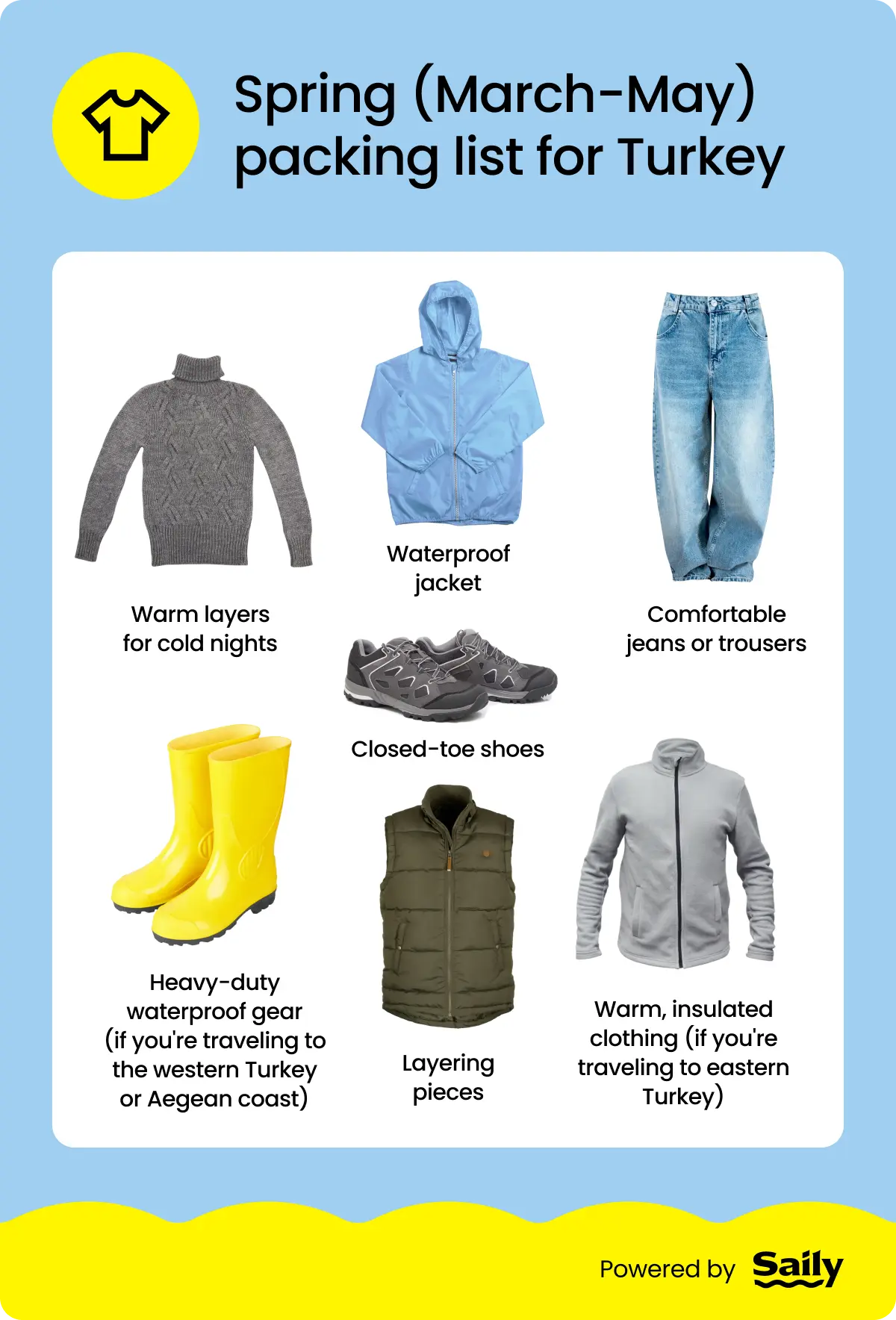
🧳If you’re traveling to Turkey in spring, make sure to pack these essentials:
Layering pieces. Pack light sweaters, cardigans, and long-sleeve shirts you can easily add or remove throughout the day.
Waterproof jacket. A lightweight, packable rain jacket will keep you dry and comfortable, especially during March and April showers.
Comfortable jeans or trousers. Choose stretch materials that move with you and avoid heavy denim that takes forever to dry.
Closed-toe shoes. Waterproof walking shoes or boots will handle wet cobblestones and the uneven paths through ancient ruins with ease.
Warm layers for cold nights (if you're traveling to central Turkey). Pack a fleece or warm sweater since temperatures can drop to freezing in March, especially in Cappadocia.
Heavy-duty waterproof gear (if you're traveling to the western Turkey or Aegean coast). March and April bring frequent showers to these areas, so prioritize quality rain protection over lightweight options.
Warm, insulated clothing (if you're traveling to eastern Turkey). Pack a heavy jacket, warm boots, and cold-weather gear since snow is still common in March and April, with temperatures remaining very cold.
Summer (June-August) packing list for Turkey
Summer in Turkey doesn't mess around. Temperatures regularly hit the high 80s to low 90s °F (30s °C), and the sun can be relentless.
In summer, expect hot, dry conditions across Turkey with regional temperature variations.
Region (key destinations)📍 | June ☀️ | July 🌡️ | August ☀️ |
|---|---|---|---|
Western Turkey (Istanbul, Troy) | 63-79 °F (17-26 °C), long sunny days with minimal rainfall | 68-86 °F (20-30 °C), hot and dry conditions, intense sun | 70-88 °F (21-31 °C), hottest month with very low humidity |
Central Turkey (Cappadocia, Ankara) | 59-81 °F (15-27 °C), warm days with cooler evenings, dry conditions | 64-88 °F (18-31 °C), hot days with significant day-night temperature differences | 66-90 °F (19-32 °C), peak heat with cool nights, minimal precipitation |
Mediterranean coast (Antalya, Fethiye, Kas, Marmaris) | 80-90 °F (27-32 °C), possible heatwaves | 82-95 °F (28-35 °C), intense heat and humidity, high water temperatures | 81-93 °F (27-34 °C), driest month with scorching temperatures |
Aegean coast (Bodrum, Pamukkale, Ephesus/Selçuk area) | 75-85 °F (24-29 °C), hot and dry | 79-90 °F (26-32 °C), peak tourist season with intense heat | 78-88 °F (26-31 °C), consistently hot with minimal rainfall |
Black Sea coast (Trabzon, Samsun) | 63-73 °F (17-23 °C), warm temperatures with high humidity and occasional rainfall | 68-77 °F (20-25 °C), warmest period with muggy conditions | 70-83 °F (21-28 °C), high humidity |
Eastern Turkey (Erzurum, Van, Kars) | 48-70 °F (9-21 °C), pleasant days but cool nights, dry conditions | 54-75 °F (12-24 °C), warm days with cool evenings | 55-83 °F (13-28 °C), warmest month with average highs but cool nights |
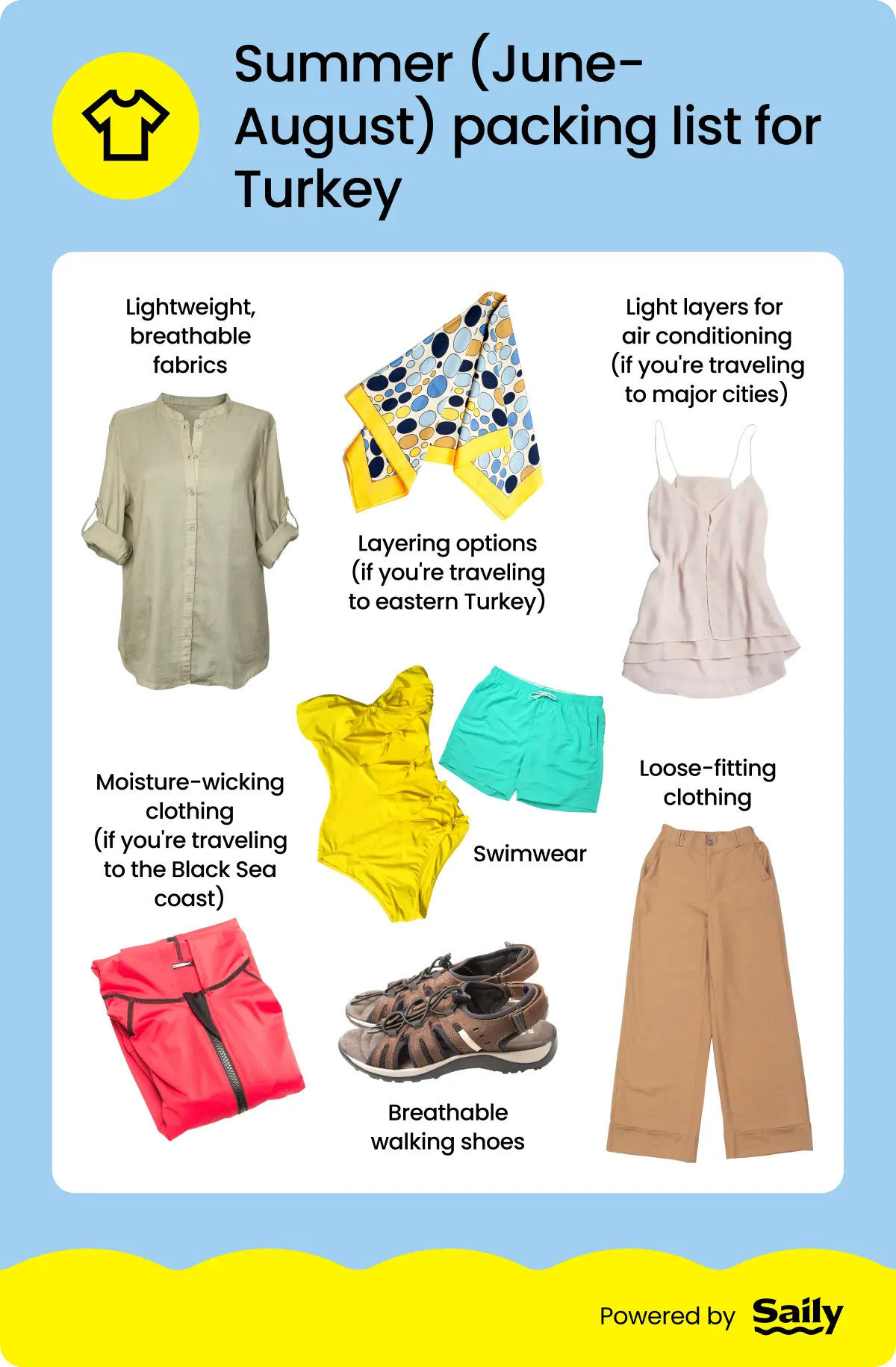
🧳Your summer packing list for Turkey should include:
Lightweight, breathable fabrics. Cotton and linen beat synthetic materials for staying cool in intense heat.
Loose-fitting clothing. Flowy dresses and loose linen shirts keep you cooler than tight clothes that trap heat.
Breathable walking shoes. Comfortable sandals with good support work best for hot pavement and ancient ruins.
Swimwear. Pack at least two sets if you're visiting Turkey's stunning coastlines, where water temperatures range from 77 to 86 °F (25-30 °C), with the Mediterranean coast warmer than the Aegean.
Light layers for air conditioning (if you're traveling to major cities). Indoor spaces can be heavily air-conditioned, which can create dramatic temperature differences.
Moisture-wicking clothing (if you're traveling to the Black Sea coast). Pack moisture-wicking fabrics and extra clothes for the muggy conditions.
Layering options (if you're traveling to eastern Turkey). Despite it being summer, nights can be surprisingly cool, with temperatures dropping to the 50s °F (10-15 °C), so pack light sweaters or jackets.
Fall (September-November) packing list for Turkey
Fall might just be Turkey's sweet spot. Some even say that this is the best time to visit Turkey! The crushing summer heat fades, tourist crowds thin out, and you get that perfect mix of warm days and crisp evenings. But don't let the pleasant temperatures fool you — fall weather can be surprisingly unpredictable.
In fall, expect pleasant temperatures with increasing rainfall as the season progresses.
Region (key destinations)📍 | September 🍂 | October 🌦️ | November ❄️ |
|---|---|---|---|
Western Turkey (Istanbul, Troy) | 70-80 °F (21-27 °C), warm and sunny with minimal rainfall | 57-70 °F (14-21 °C), cooler temperatures with increased rainfall averages | 45-57 °F (7-14 °C), cool weather with frequent rain |
Central Turkey (Cappadocia, Ankara) | 60-77 °F (16-25 °C), pleasant days with cooler evenings, dry conditions | 45-72 °F (7-22 °C), cool but pleasant weather | 35-55 °F (2-13 °C), cold mornings and evenings, occasional frost |
Mediterranean coast (Antalya, Fethiye, Kas, Marmaris) | 75-85 °F (24-29 °C), still warm with pleasant, mild weather | 66-77 °F (19-25 °C), pleasantly warm temperatures, decreasing rainfall | 55-68 °F (13-20 °C), mild temperatures with moderate rainfall |
Aegean coast (Bodrum, Pamukkale, Ephesus/Selçuk area) | 72-82 °F (22-28 °C), warm, sunny conditions with little rainfall | 63-75 °F (17-24 °C), pleasant temperatures with occasional showers | 52-64 °F (11-18 °C), cooler with increased precipitation |
Black Sea coast (Trabzon, Samsun) | 64-75 °F (18-24 °C), warm but with increasing clouds and frequent rain | 57-68 °F (14-20 °C), pleasant but wet conditions with heavy rainfall | 45-59 °F (7-15 °C), cool and very wet with substantial rainfall |
Eastern Turkey (Erzurum, Van, Kars) | 55-76 °F (13-24 °C), warm days but cooler nights | 32-65 °F (0-18 °C), mild days but cold nights on the plateau | 23-45 °F (-5 to 7 °C), significantly colder with temperatures dropping near freezing |
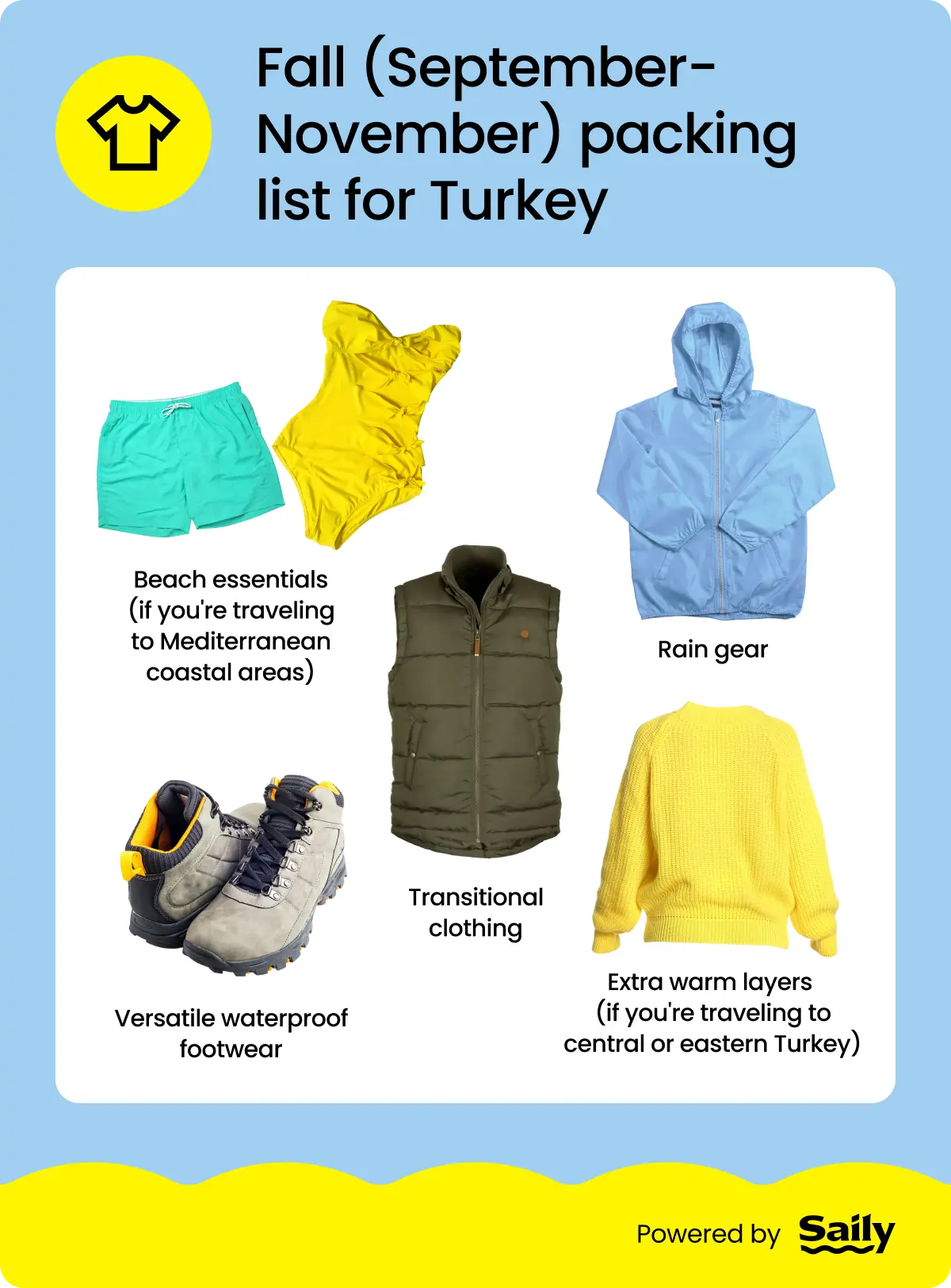
🧳Here’s what to bring to Turkey in fall:
Transitional clothing. Pack pieces that work for both warm afternoons and cool mornings because temperatures can vary significantly.
Rain gear. October and November bring frequent showers, so waterproof clothing is essential during these months.
Versatile waterproof footwear. Choose shoes that can withstand increased rainfall on city streets and in rural areas.
Extra warm layers (if you're traveling to central or eastern Turkey). In Cappadocia, temperatures can drop to 35 °F (2 °C) at night in November, while eastern regions like Erzurum can see lows of 23 °F (-5 °C), so bring fleece or wool sweaters to stay comfortable.
Beach essentials (if you're traveling to Mediterranean coastal areas). September and early October still offer pleasant beach weather thanks to the warm Mediterranean climate.
Winter (December-February) packing list for Turkey
Winter in Turkey varies dramatically by region. Istanbul gets cold and wet, Cappadocia can see snow, and the eastern regions turn into winter wonderlands.
In winter, expect cold temperatures with significant regional variations and increased precipitation.
Region (key destinations)📍 | December ❄️ | January 🌨️ | February 🌦️ |
|---|---|---|---|
Western Turkey (Istanbul, Troy) | 42-51 °F (5-11 °C), cool and damp with occasional snowfall | 39-48 °F (4-9 °C), coldest month with frequent rain and possible snow | 38-50 °F (3-10 °C), cloudy, wet conditions |
Central Turkey (Cappadocia, Ankara) | 23-39 °F (-5 to 4 °C), freezing temperatures, snow-dusted valleys | 23-39 °F (-5 to 4 °C), coldest and wettest month | 25-41 °F (-4 to 5 °C), snow and frost are common |
Mediterranean coast (Antalya, Fethiye, Kas, Marmaris) | 45-57 °F (7-14 °C), mild compared to other regions but still cool and wet | 41-54 °F (5-12 °C), cool temperatures with increased rainfall | 43-57 °F (6-14 °C), milder conditions returning with moderate precipitation |
Aegean coast (Bodrum, Pamukkale, Ephesus/Selçuk area) | 43-55 °F (6-13 °C), cool with frequent rainfall and occasional frost | 39-52 °F (4-11 °C), cold with wet conditions | 41-55 °F (5-13 °C), cool temperatures with continuing precipitation |
Black Sea coast (Trabzon, Samsun) | 41-52 °F (5-11 °C), cool and wet with moderate precipitation and cloudy conditions | 36-46 °F (2-8 °C), coolest month with high humidity and frequent rain | 36-50 °F (2-10 °C), cold temperatures with moderate monthly precipitation |
Eastern Turkey (Erzurum, Van, Kars) | 13-32 °F (-10 to 0 °C), freezing cold and breezy conditions | 13-33 °F (-10 to 0 °C), coldest month | 15-35 °F (-9 to 2 °C), severe cold with snow, ice, and freezing winds |
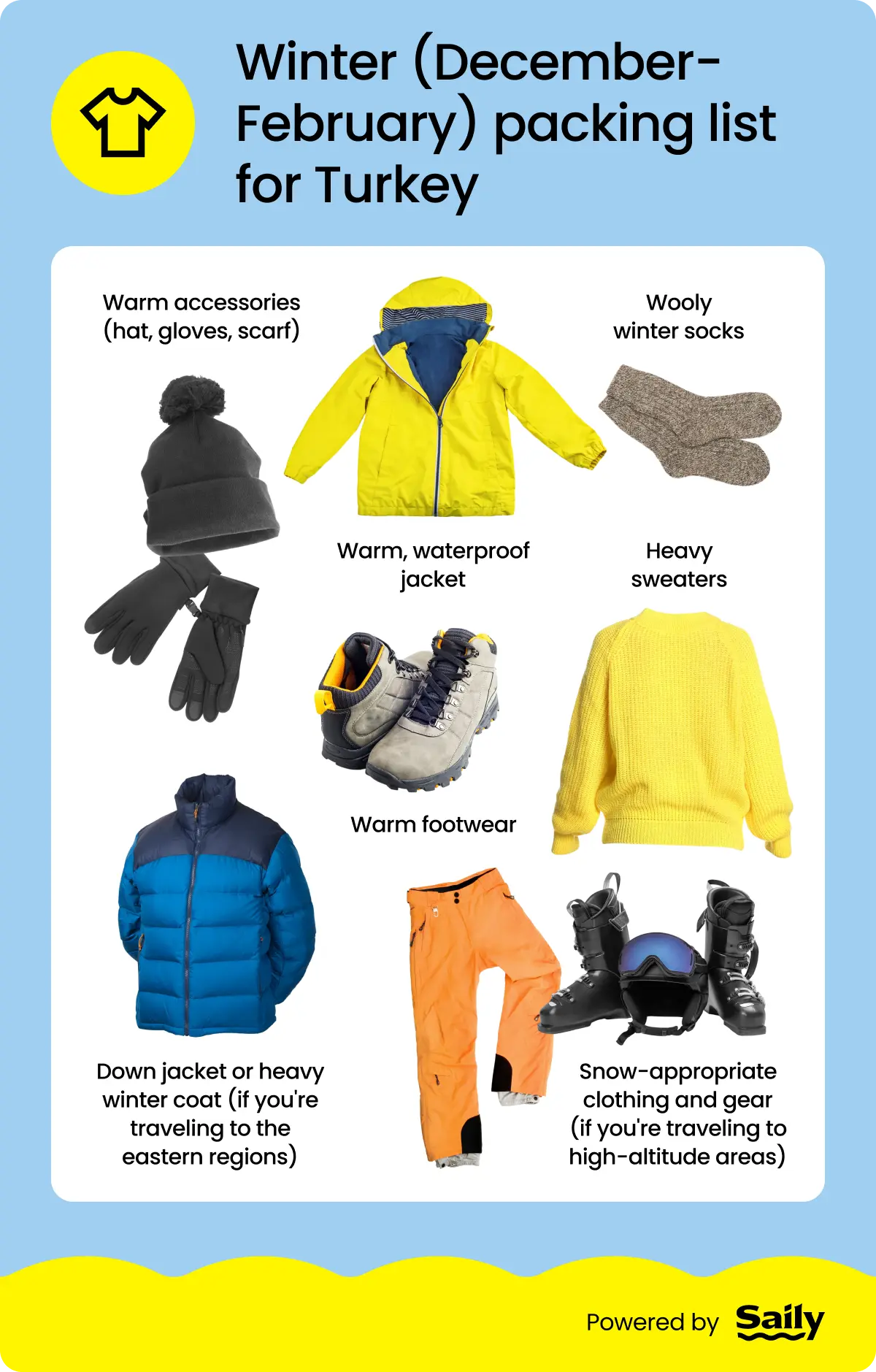
🧳If you're traveling to Turkey in winter, make sure to pack these essentials:
Warm, waterproof jacket. Choose something wind-resistant for chilly Bosphorus breezes and offering protection from frequent rain and snow.
Warm footwear. Waterproof boots with good traction are essential for wet, potentially icy streets and snowy conditions.
Warm accessories. A hat, gloves, and a scarf are crucial since you'll be losing heat through your head and hands in the cold conditions.
Heavy sweaters. Pack at least two warm options for layering in the consistently low temperatures.
Wooly winter socks and extra layers. Pack multiple pairs of warm socks and some backup clothing since winter conditions can be harsh, and laundry may take longer to dry.
Down jacket or heavy winter coat (if you're traveling to the eastern regions). Eastern Turkey experiences extreme cold with temperatures dropping to -4°F (-20°C) in cities like Erzurum and Kars, and as low as -13°F (-25°C) in the Ardahan province, so pack a well-insulated, windproof winter jacket.
Snow-appropriate clothing and gear (if you're traveling to high-altitude areas). Pack snow boots, waterproof snow pants, and thermal underwear since major cities like Van, Kars, and Erzurum are located at over 5,577 feet (1,700 meters) altitude, where temperatures can drop way below zero Celsius.
Packing tips based on trip length
The length of your Turkey adventure affects your packing strategy. Packing for a week requires almost surgical precision, while a month-long journey gives you room for "just in case" items. Let’s figure out how to pack for different-length trips to Turkey.
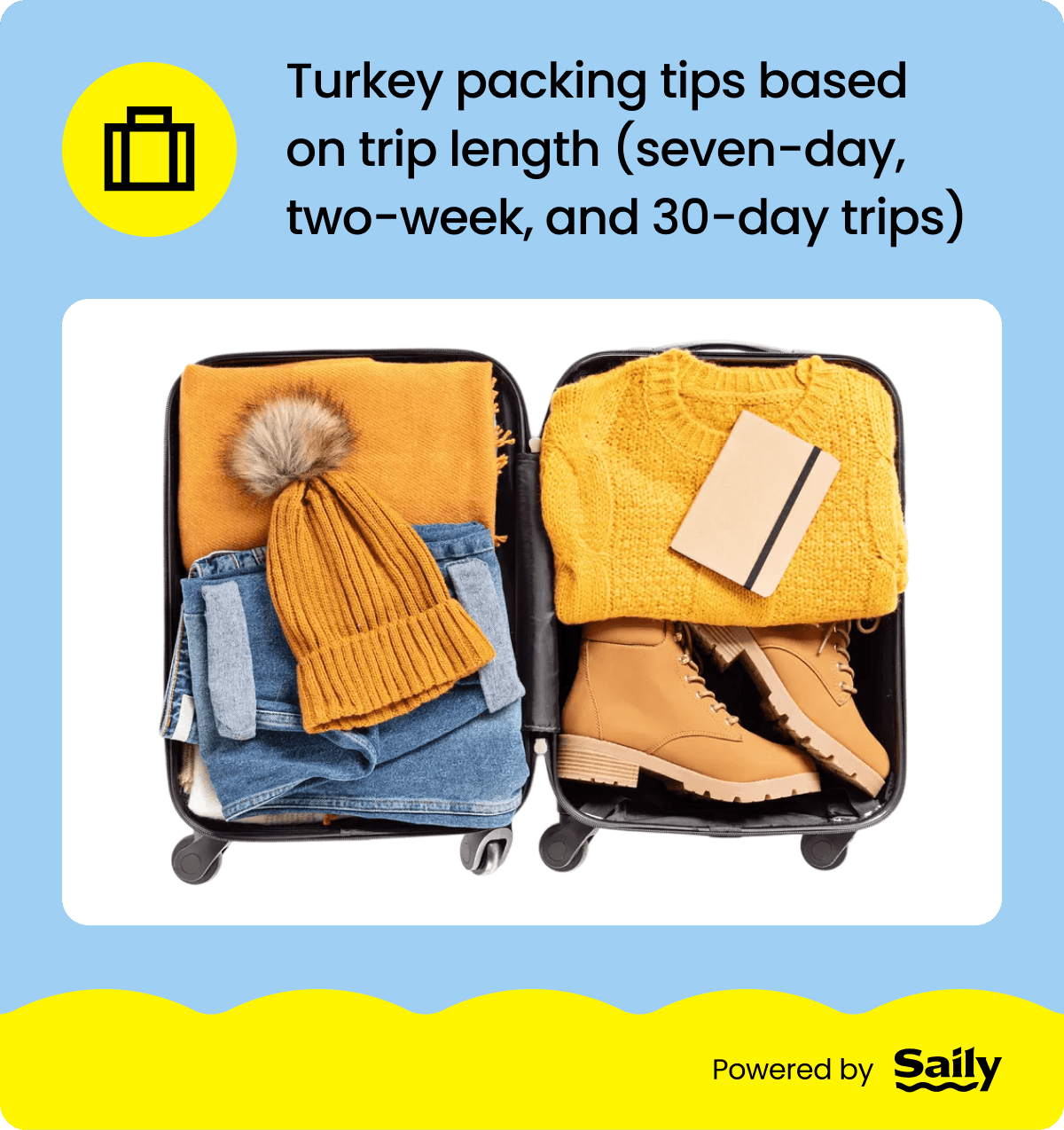
How to pack for a seven-day trip to Turkey
A week in Turkey moves fast, and you want to pack efficiently. Every item needs to earn its place in your suitcase.
Packing tips for a seven-day trip:
Pack 7-8 versatile pieces that mix and match. Bring enough items to create outfits for each day, plus extras in case you get caught in a sudden downpour or need to change after a messy kebab lunch. Choose clothing that works for multiple occasions — pants suitable for both sightseeing and dinner, tops that layer well with different bottoms.
Include one or two dressy outfits. Pack one or two nice ensembles for upscale restaurants, cultural events, or special occasions. One modest dress works well for both visiting religious sites and enjoying classy dinners.
Choose multi-purpose items. A scarf works for warmth, mosque visits, and fashion, while a lightweight cardigan adds comfort during chilly flights and provides coverage for religious sites — every item should serve multiple functions.
Pack just enough toiletries. No more, no less. It's only a seven-day trip, so you probably don't need an entire bottle of shampoo or a full tub of face cream. Use travel-sized containers even if you’re checking bags.
Pro tip💡Use packing cubes and compression bags for organization. These will keep your clothes organized and help you fit more items efficiently, making it easier to find what you need while maximizing your luggage space.
How to pack for a two-week trip to Turkey
Two weeks give you breathing room to pack a more comprehensive wardrobe while still maintaining reasonable luggage limits. Within this timeframe you can typically cover multiple regions and activities, so your packing needs to be more diverse.
Packing tips for a two-week trip:
Plan for laundry around day 9. Pack for one week plus one day's worth of clothes, then plan a laundry day mid-trip.
Pack 10-12 versatile core pieces. Build a capsule wardrobe that covers all planned activities and weather variations across different Turkish regions. Choose items that work in multiple combinations to maximize outfit options.
Prioritize layering pieces. Turkey's temperatures can swing dramatically from morning to night and between regions, so pack items like cardigans, light jackets, and long-sleeve shirts, that you can easily add or remove as conditions change.
Pack comfort items for longer stays. Pack that extra book for long bus rides between cities, a travel pillow for multiple flights, quality headphones for transportation, or an additional portable charger since you'll likely have checked luggage with extra space for comfort items.
Bring laundry essentials for emergencies. Pack travel-sized detergent and a waterproof dry sack for quick hotel room washing between laundry days — essential for unexpected stains or when you need clean clothes before your scheduled laundry day.
Pro tip💡Many Turkish hotels, hostels, and Airbnbs have washing machines available for guests, either free of charge or for a small fee. Ask about laundry facilities when you check in to avoid expensive hotel laundry services.
How to pack for a 30-day trip to Turkey
A month in Turkey means you're staying long enough to live like a local rather than a tourist, so focus on essentials and plan to shop locally for the rest.
Packing tips for a 30-day trip:
Pack for one week plus weather-specific extras. Bring seven core outfits for daily activities, then add climate layers since you'll likely explore multiple regions during a month-long stay. Pack warm clothing for Cappadocia's cool nights, lightweight pieces for Mediterranean beaches, and waterproof options for the Black Sea's rainy conditions.
Prioritize essential basics you can't replace. Pack enough undergarments and socks for your entire trip, plus any specialized pieces (like well-fitting bras), since these items are harder to find in the right sizes locally.
Choose durable, versatile fabrics. Select wrinkle-resistant, quick-dry materials like merino wool, synthetic blends, and quality cotton that withstand frequent washing and heavy use over a month.
Pack minimal toiletries and medications. Bring only absolute essentials and your prescription medications. Turkish pharmacies stock international brands at reasonable prices for everything else.
Reserve space for Turkish finds. Leave room in your luggage for Turkey's excellent leather goods, stylish clothing, unique jewelry, modern ceramics, and reasonably priced tech accessories.
Don’t pack what you can easily buy or rent locally. For month-long adventures, Turkish bazaars and modern shopping areas provide everything from basic clothing to specialized outdoor gear, like diving equipment, hiking boots, or skis, so you don’t have to pack bulky items.
Pro travel tips💡For month-long stays, consider Turkish laundromats (çamaşırhane) because they cost significantly less than hotel laundry services. Also, take advantage of Turkey's excellent local markets, where quality clothing costs much less than in Western shops. And if you're shopping heavily, consider shipping purchases home halfway through your trip to keep your luggage manageable.
Activity-specific packing tips
Turkey offers incredibly diverse activities and experiences. Your itinerary might include hot air ballooning, exploring ancient ruins, relaxing on the beach, and participating in adventure sports — each requiring different gear to maximize your experience.
Hot air balloon rides in Cappadocia🪂
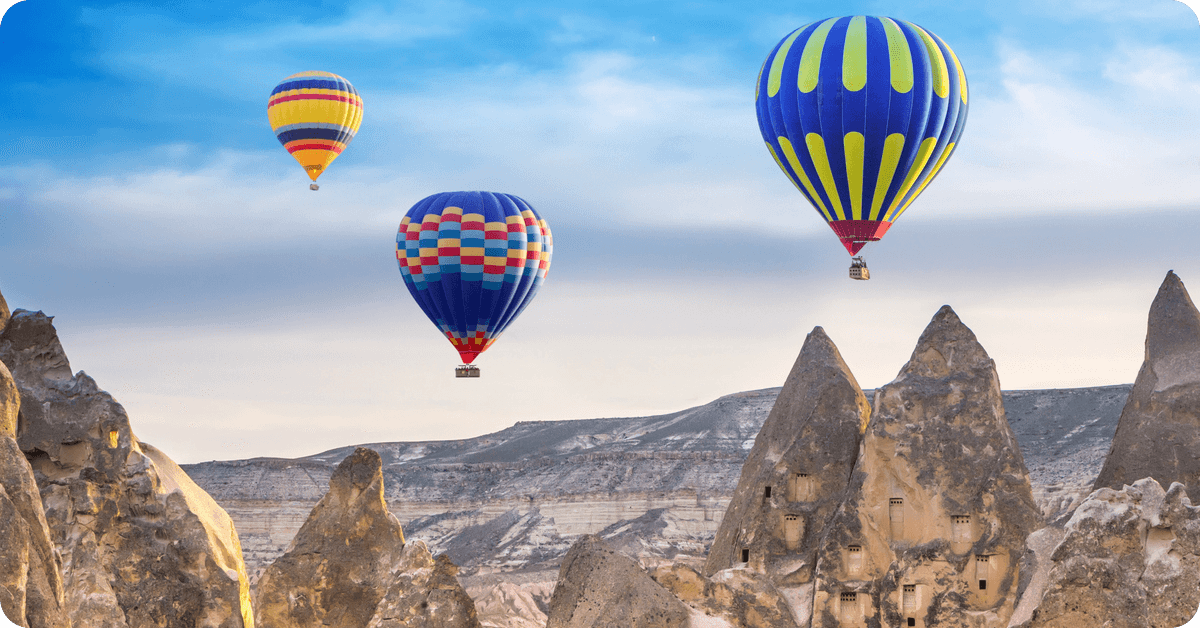
Hot air balloon rides over Cappadocia at sunrise are one of Turkey's most iconic experiences, but early morning flights require specific preparation:
Warm layers for dawn departures. Bring a fleece jacket and warm pants since pre-dawn temperatures can be surprisingly cold, even in summer.
A secure camera strap. Attach your phone or camera so you don't drop it while flying over the fairy chimneys. Yes, it happens.
A small crossbody bag. Keep your essentials close since balloon baskets have limited storage space.
Historical sites and ancient ruins
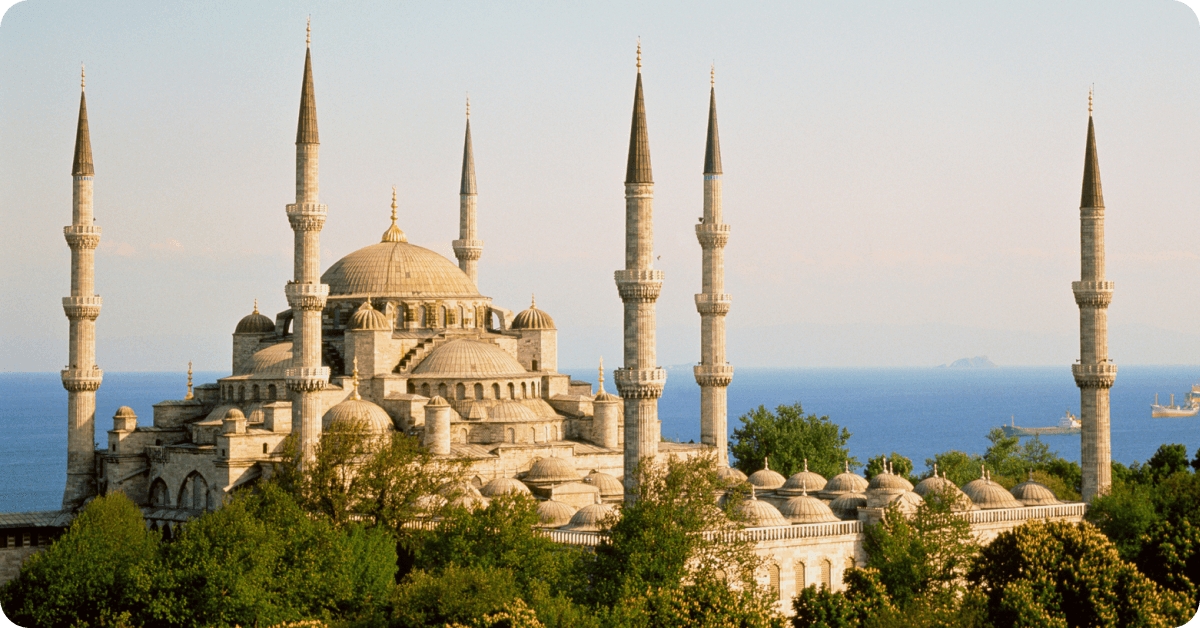
Turkey's most visited historic sites include the ancient city of Ephesus, the Hagia Sophia, and the Mevlana Museum. These locations demand specific considerations:
Comfortable walking shoes with arch support. You'll be walking on ancient marble floors, uneven stones, and cobblestones for hours.
Modest clothing for visiting religious sites. For specific tips, refer to the What to wear in Turkey to stay respectful section.
Sun protection gear. Bring a wide-brimmed hat and sunglasses since many ruins offer little shade.
Beach and coastal activities
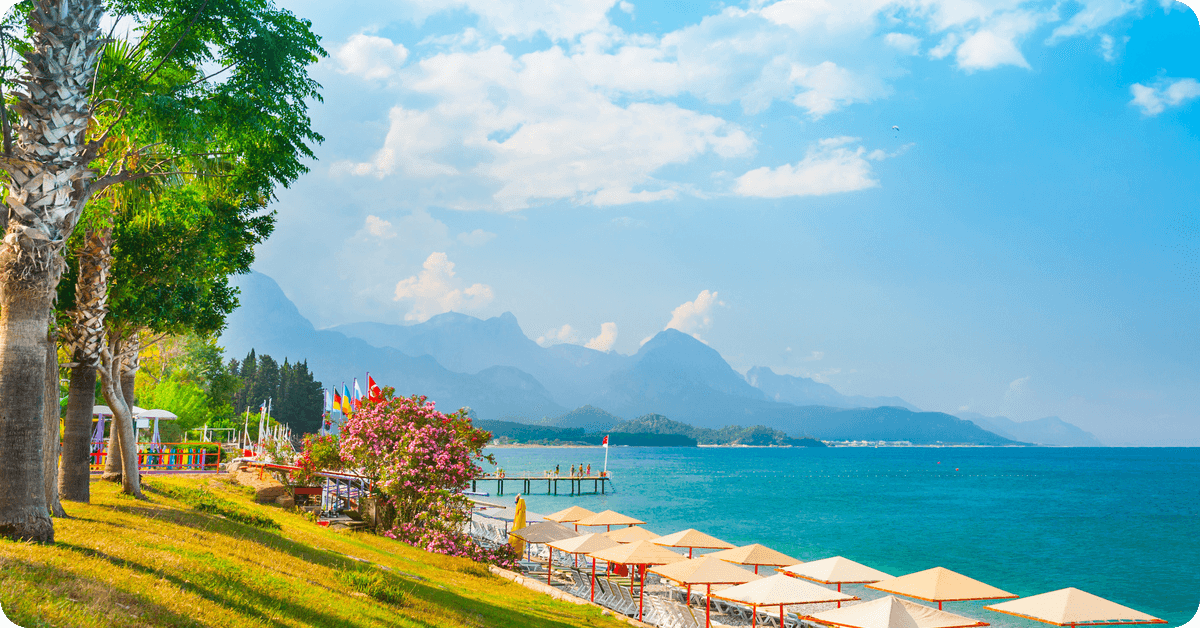
Turkey's stunning coastlines offer excellent swimming, boat tours, and water sports. Make sure to pack:
Quality swimwear and a lightweight cover-up. Pack at least two swimsuits so you always have a dry option for multiple beach days. Choose a cover-up that works for both the beach and casual beachside dining.
Water shoes for rocky beaches. Turkish coasts are often rocky, so foot protection is important.
A waterproof phone case. Protect your electronics during boat tours and water activities along the Mediterranean and Aegean coasts.
Adventure sports and outdoor activities🥾
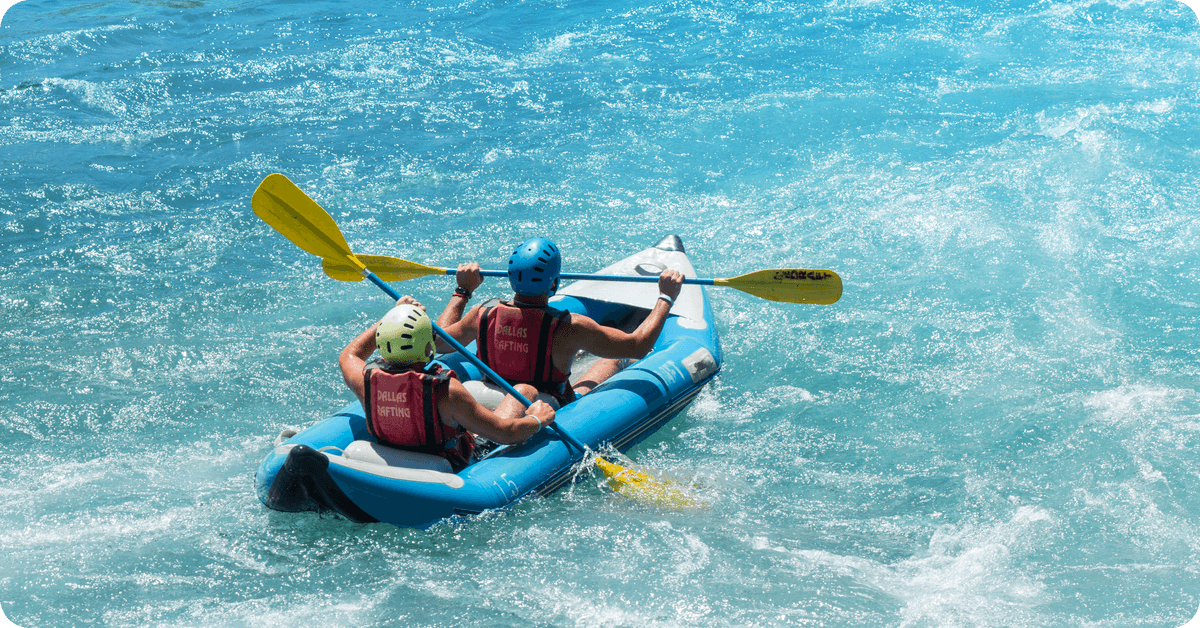
Turkey's adventure season runs from May to October and includes activities like paragliding, hiking, and water sports. If you’re indulging in any of those, make sure to pack:
Sturdy hiking boots. Proper footwear is essential for trekking in Cappadocia's valleys and coastal trails, such as the Lycian Way.
Quick-dry activewear. Synthetic materials work better than cotton for hiking, paragliding, and other outdoor pursuits.
A hydration pack or a large water bottle. Turkish sun and physical activities demand constant hydration.
Of course, you’ll also need activity-specific equipment! But we still suggest renting what you can on-site to keep your luggage manageable and avoid carrying bulky items.
Turkish bath experiences🛁
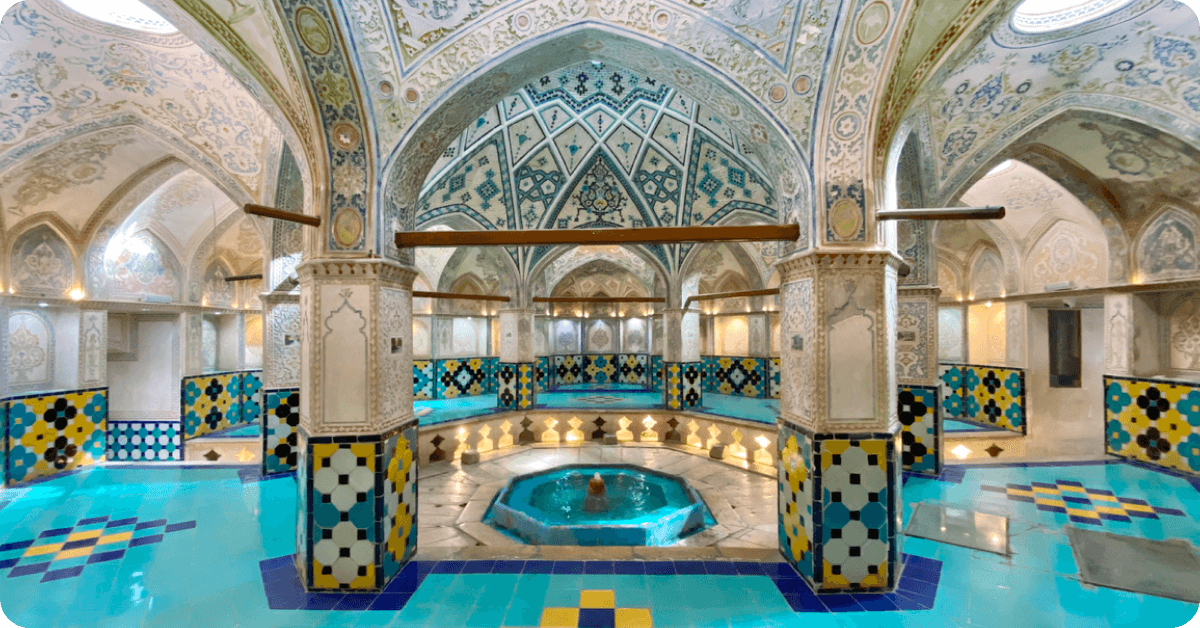
Traditional Turkish baths (hammams) are essential cultural experiences. If you're planning to visit one, pack:
Swimwear you don't mind getting ruined or that is more durable. Hammam scrubbing (a traditional deep-cleansing treatment with rough mitts) can be intense on delicate fabrics.
Flip-flops or waterproof sandals. You'll need footwear for wet floors.
Hair ties and minimal jewelry. Keep accessories simple since you'll have to remove most items.
Urban exploration and shopping
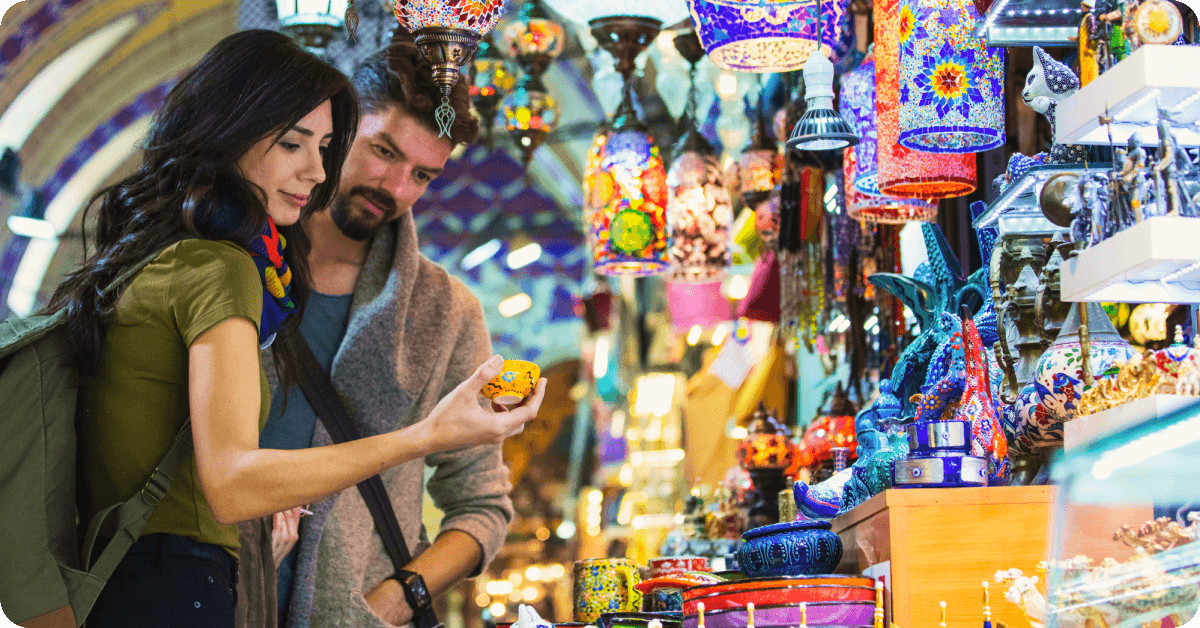
Cities like Istanbul offer world-class shopping at places like the Grand Bazaar. Make sure to pack:
A secure crossbody bag. Keep your valuables safe while navigating crowded markets and tourist areas.
A portable phone charger. A fully charged phone is essential for navigation, translation, photos, and payments.
Extra foldable bag. Pack a lightweight tote for unexpected purchases at markets and bazaars.
Climbing Mount Ararat and other serious mountaineering
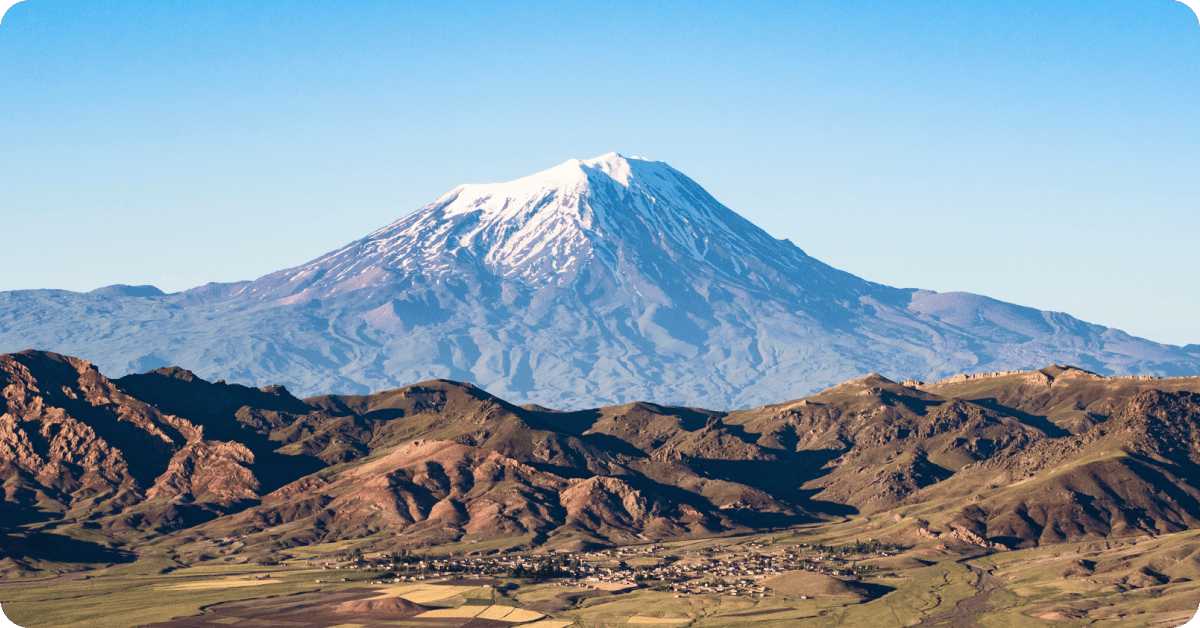
Specialized mountaineering gear is essential for technical climbs like Mount Ararat, but airline regulations complicate transport. Ice axes must go in checked luggage when properly sheathed, while crampons are generally allowed in carry-on bags. Climbing harnesses and carabiners are typically permitted in both carry-on and checked bags.
However, consider renting the gear locally instead. Many climbers choose this option since Mount Ararat tour operators and rental companies in Doğubayazıt offer essential equipment, including crampons, tents, boots, and technical clothing. Renting eliminates airline hassle and ensures you have proper gear suited for local conditions.
Disclaimer: Serious mountaineering requires extensive planning beyond basic packing advice. Consult specialized mountaineering guides, professional climbing resources, and experienced local operators before attempting technical climbs like Mount Ararat. This general Turkey packing guide doesn't cover the comprehensive safety planning, permits, weather considerations, and technical expertise required for high-altitude mountaineering.
Tech and connectivity checklist
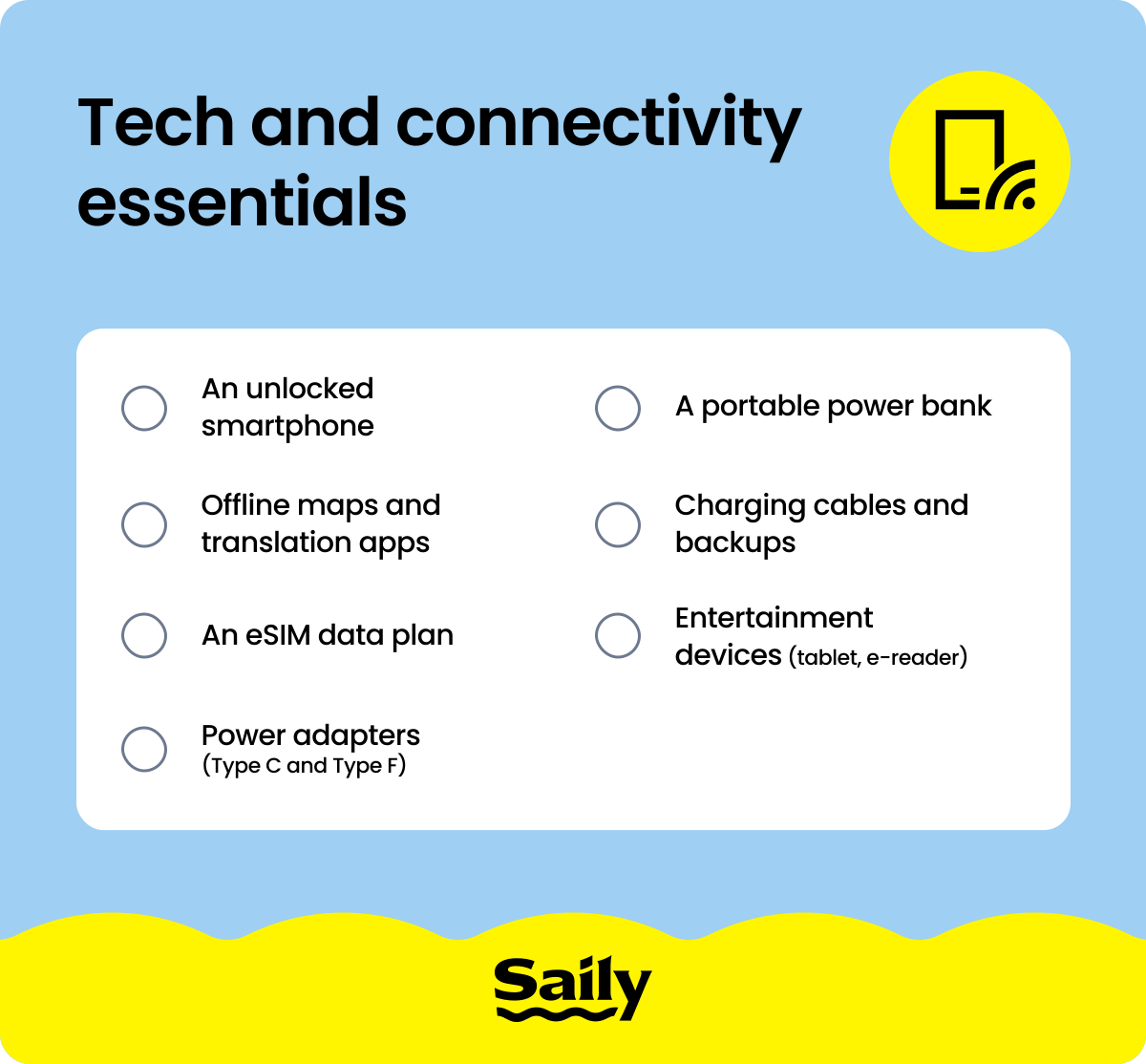
Your phone, chargers, and other tech gear are essential tools for navigating Turkey. Having the right setup helps you stay connected, find your way around, and capture memories.
Tech travel essentials for Turkey include:
An unlocked smartphone. Make sure your phone works with SIM cards for Turkey or eSIM plans so you can choose the best connectivity option.
Offline maps and translation apps. Download Google Maps for offline use and Google Translate before traveling. Turkish can be challenging, and not all locals speak English. Also download essential travel apps like Istanbul's public transport app (İBB Mobil) and a currency converter.
An eSIM data plan. Set up an eSIM to avoid unnecessary hassle with local SIM cards. An eSIM for Turkey can save you from searching for phone shops and dealing with language barriers at mobile stores. Set it up at home and activate it when you arrive.
A power adapter. Turkey uses Type C and Type F electrical outlets with 220V/230V power, so bring an adapter that works with European-style round pins.
A portable power bank. Pack a backup battery for long sightseeing days when power outlets aren't available.
Charging cables and backups. Bring backup USB and Lightning cables since they tend to break when you need them most, and finding replacements while traveling can be frustrating.
Entertainment devices. For long bus rides between Turkish cities, load a tablet or e-reader with movies, books, and podcasts. Consider packing a laptop and headphones.
Pro tip💡Keep all electronics in your carry-on bag since checked luggage gets rough handling and can get lost during flight connections.
Need data in Turkey? Get an eSIM!

1 GB
7 days
US$3.99
3 GB
30 days
US$6.99
5 GB
30 days
US$9.99
What NOT to pack when traveling to Turkey ❌
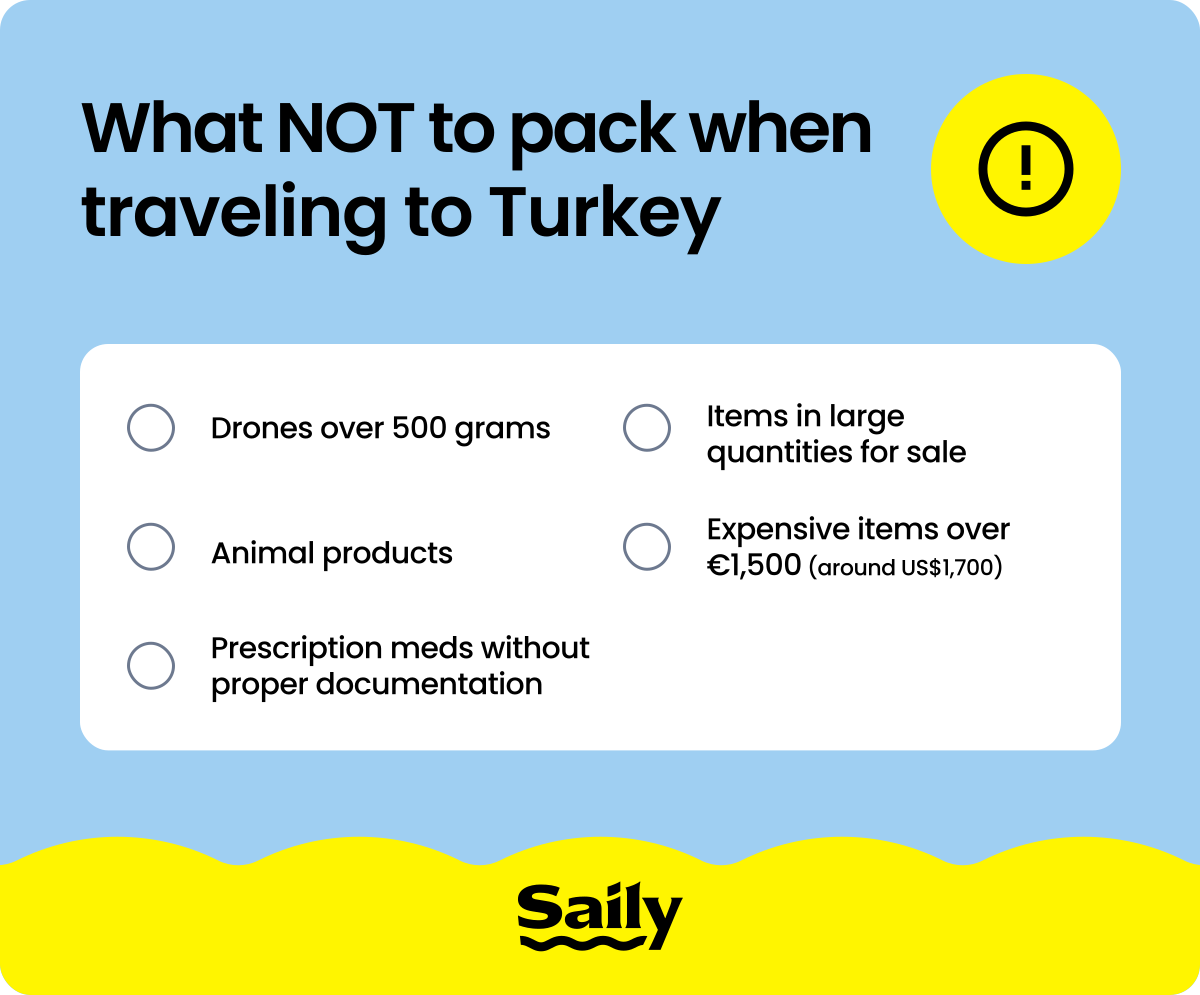
Smart packing means knowing what to leave behind. Skip these items to avoid customs issues, save luggage space, and prevent unnecessary hassles.
Drones over 500 grams. Turkey requires foreign visitors to register drones and obtain permits before bringing them into the country if they weigh more than 500 g (1.1 lbs). Small drones are largely exempt from formal registration requirements, but check current regulations before packing any drone equipment.
Animal products. Turkey prohibits the entry of all animal-origin products, including meat, dairy, and eggs. Plant-based food products are limited to a maximum of 3 kg. A couple of packages of cookies won't cause problems, but avoid bringing a substantial amount of food.
Prescription medications without proper documentation. Keep all medications in their original packaging and take relevant prescriptions and medical documentation from your doctor. Turkey prohibits narcotic substances and requires that medicines be for personal treatment only, limited to reasonable amounts based on your stay duration.
Items in large quantities for sale. Avoid bringing multiple identical items that look like you plan to sell them. Customs officials can flag anything that seems like it's for business rather than personal use.
Expensive items over €1,500 (around US$1,700). High-value purchases face full import duties rather than standard fixed tax rates, so declare valuable items to avoid complications.
If you are planning to travel with a furry friend, keep in mind that pets require extensive paperwork. Turkey allows a maximum of two pets (cats, dogs, or birds) per traveler, or alternatively, up to 10 aquarium fish, with proper veterinary documentation and health certificates. All pets undergo health checks upon arrival.
Ready to start packing?
Packing smart for Turkey comes down to understanding the country's diversity and your own travel style. Your Turkey packing list should reflect both the practical realities of travelling to Turkey and respect for local customs.
Remember that Turkey's four distinct seasons mean weather can vary dramatically depending on when you visit. Use our seasonal guide to tailor your clothing choices, but always pack a few versatile pieces that work across different situations.
Keep this Turkey travel checklist handy when you're doing your final packing check. The difference between a good Turkey trip and a great one often comes down to having the right gear for the right moment — whether that's a waterproof jacket for an unexpected Istanbul downpour or a respectful scarf for a spontaneous mosque visit.
For more travel planning help, check out our complete international travel checklist to ensure you have completed all essential preparation steps.

Stay connected with the Saily eSIM app
Affordable mobile data plans for every journey.


Related articles
