


12 best things to do in Madrid in 2026
Madrid, the capital of Spain, is packed with grand palaces, world-famous art, beautiful parks, and busy markets. In this guide, we’ll walk you through all of the best things to do in Madrid, covering ticket prices, opening times, and free attractions.
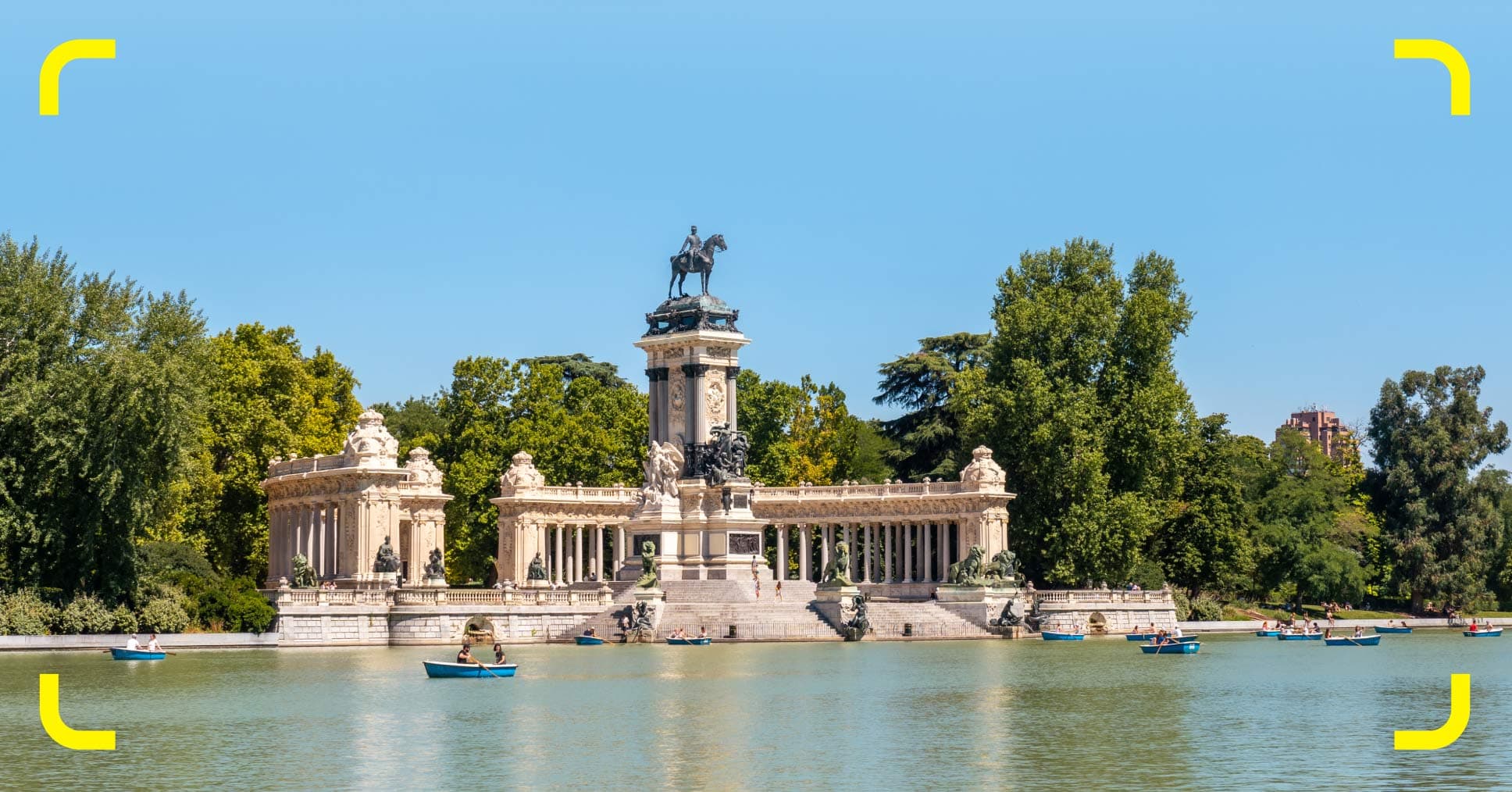
Table of Contents
- Madrid’s famous landmarks and historical locations
- Royal Palace of Madrid
- Plaza Mayor
- Puerta de Alcalá
- Temple of Debod
- Best museums to visit in Madrid
- Museo Nacional del Prado
- Reina Sofía Museum
- Thyssen-Bornemisza Museum
- Best parks and outdoor activities in Madrid
- El Retiro Park
- Casa de Campo
- Madrid Río
- Best food markets and foodie experiences in Madrid
- Mercado de San Miguel
- El Rastro
- Stay connected in Madrid with Saily
Madrid’s famous landmarks and historical locations
One of the interesting facts about Spain you’ll learn in Madrid is just how influential this country has been throughout world history. A lot of that influence is reflected in Madrid’s palatial architecture and enormous historical buildings. Conveniently, many of these important landmarks are within walking distance of each other, so you can probably knock a few of them off your list in one afternoon.
Royal Palace of Madrid
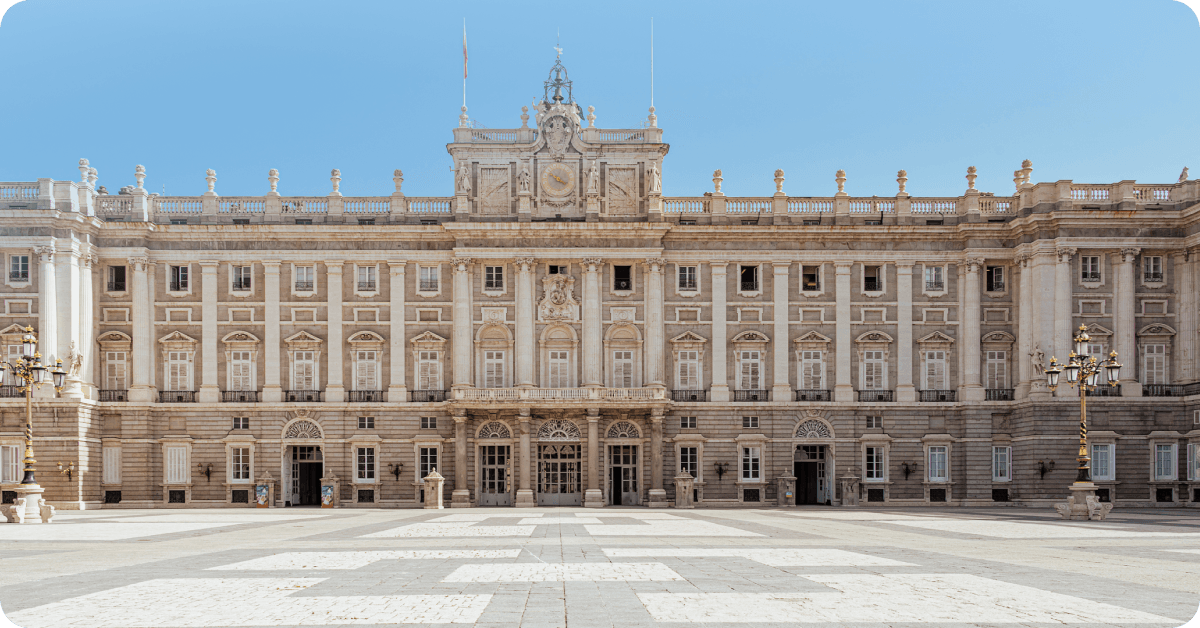
The Royal Palace of Madrid is one of the largest palaces in the world, with 3,418 rooms. Though the royal family hasn’t lived here since the 1930s, it’s still a must-visit location for anyone who enjoys history, architecture, and decadent interior design. The nearest metro is Ópera (lines 2 and 5), just a five-minute walk away. General admission is €18, but kids, seniors, and students get in on a reduced €9 ticket. If you’re an EU or Ibero-American citizen, you can get in free from Monday to Thursday at specific times (4-6 PM October to March, 5-7 PM April to September), though there’s usually a long line.
Plaza Mayor
Madrid’s grand central square, built in the early 1600s (and then rebuilt more than once after fires), is today surrounded by iconic red apartment buildings. Look around, and you’ll see 237 wrought-iron balconies with porticoed arcades underneath. Over the centuries, the plaza has been used to host royal coronations, bullfights, and public executions. Today? Well, it’s mostly home to cafes and souvenir shops, but you should still give it a visit. While you won’t find much to do there, it’s a nice free photo stop before you head on to other nearby landmarks.
Puerta de Alcalá
Charles III commissioned this neoclassical gate in the 1770s, marking the eastern entrance to Madrid. Many giant monumental gates were constructed around Europe, but Puerta de Alcalá was one of the first, predating Berlin’s Brandenburg Gate by a decade. Today, the city has expanded far beyond the gate, which sits right at the edge of Retiro Park.
Temple of Debod
The Temple of Debod is a real 2,200-year-old Egyptian temple, which the Egyptian government gifted to Spain in 1968. It was shipped and rebuilt brick by brick in Parque del Oeste, one of the best (totally free) sunset spots in Madrid. Entry to the temple is free, but you do need to book a time slot, which you can do online — if you have mobile data. To make sure you can book attractions during your trip, get an eSIM app or a SIM card for Spain.
Best museums to visit in Madrid
The Prado, Reina Sofía, and Thyssen-Bornemisza museums make up what’s known as Madrid’s “Golden Triangle of Art.” Situated around Paseo del Prado, all three are within a short walk of each other.
Museo Nacional del Prado
Museo Nacional del Prado is one of the greatest art museums in the world, housing the works of (to name a few) Velázquez, Goya, Bosch, and El Greco. You can get in with standard admission for €15, but the museum has a free entry window every day at 6-8 PM, from Monday to Saturday (5-7 PM on Sundays and holidays). For obvious reasons, a lot of people show up for the free slots, so expect a long but fast-moving line.
Reina Sofía Museum
The main reason people visit Spain’s museum of modern and contemporary art is Picasso’s Guernica, painted in 1937 in response to the bombing of the Basque town of the same name. You can see it in Room 205.10 on the second floor, but the whole museum is packed with artistic classics. Standard admission is €12, or you’ll get in for free between 7-9 PM any day that the museum is open (it’s closed on Tuesday) and all day on Sunday. Contrary to some outdated online reports, photography is allowed in the Guernica room — the 30-year photo ban was lifted in 2023.
Thyssen-Bornemisza Museum
This private collection (assembled by the Thyssen-Bornemisza family) fills in the gaps the Prado and Reina Sofía leave open. Here you’ll encounter works from the Italian Renaissance, Impressionism, and 20th-century American movements all under one roof. It’s a good pick if you want a broad view of Western art history, and is usually the quietest of the three “triangle” museums. Fun fact — if you’re visiting all three, the combined Paseo del Arte pass covers one visit to each and is cheaper than buying tickets separately. Alternatively, you can access many of the exhibits in the Thyssen-Bornemisza Museum for free on Mondays between 12 and 4 PM.
Best parks and outdoor activities in Madrid
Madrid is a very green city. The streets are lined with giant trees, creating wonderful tunnels of shade on hot summer days, while the city’s parks are beautiful, well-maintained, and free to access.

El Retiro Park
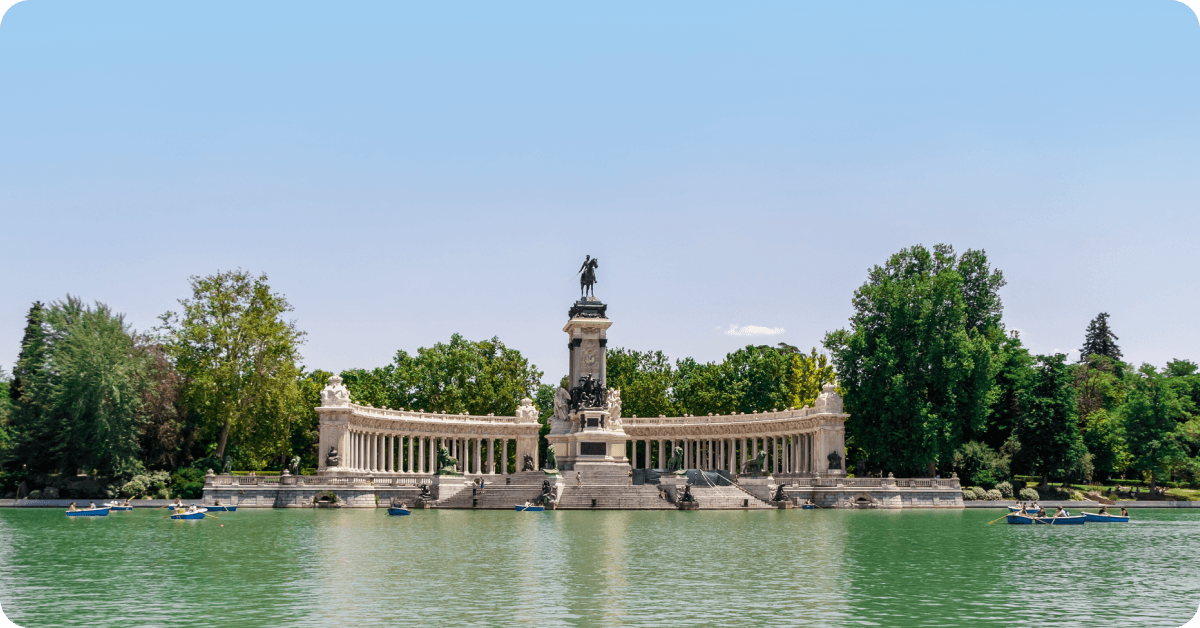
Madrid’s former royal garden, opened to the public in the late 1800s, is centered on a large boating lake where you can rent a rowboat for 30 minutes at a time. On weekends, you can see street performers, drum circles, and fortune tellers near the lake. Entry to the park is free, and you can spend hours here.
Casa de Campo
Madrid’s largest green space, at roughly five times the size of Retiro, is the least touristy of the city’s big parks because locals mostly use it for running, cycling, and picnics. It’s also home to Madrid Zoo Aquarium and the Parque de Atracciones (an amusement park), so it works as a half-day trip if you’re traveling with kids. The Teleférico cable car, which normally links Parque del Oeste to the heart of Casa de Campo with views over the Royal Palace and the Manzanares Valley, has been closed for a while, so check its status before planning a visit around it. Without the cable car, the easiest access points are Lago and Batán metro stations (line 10) on the park’s eastern edge.
Madrid Río
A green corridor built over a stretch of highway that used to run along the Manzanares River, Madrid Río is one of the best places in the city for a long walk or a bike ride. Here you’ll find Arganzuela Urban Beach, a set of water features that run from around 11 AM to 9 PM (in summer only). A skatepark, climbing wall, and BMX track are scattered along the route. Madrid Río connects to Casa de Campo in the north and to Parque Lineal del Manzanares in the south, so you can turn it into as short or long a walk as you like. The path is free and always open, with Príncipe Pío (lines 6 and 10) being the easiest metro stop to start from.
Best food markets and foodie experiences in Madrid
Once, Madrid’s markets were places for locals to do their grocery shopping, but that’s not as common these days. Many of the markets cater to tourists, but that doesn’t mean you should skip them — in fact, some of the best food you’ll eat in Madrid can be found at these events.
Mercado de San Miguel
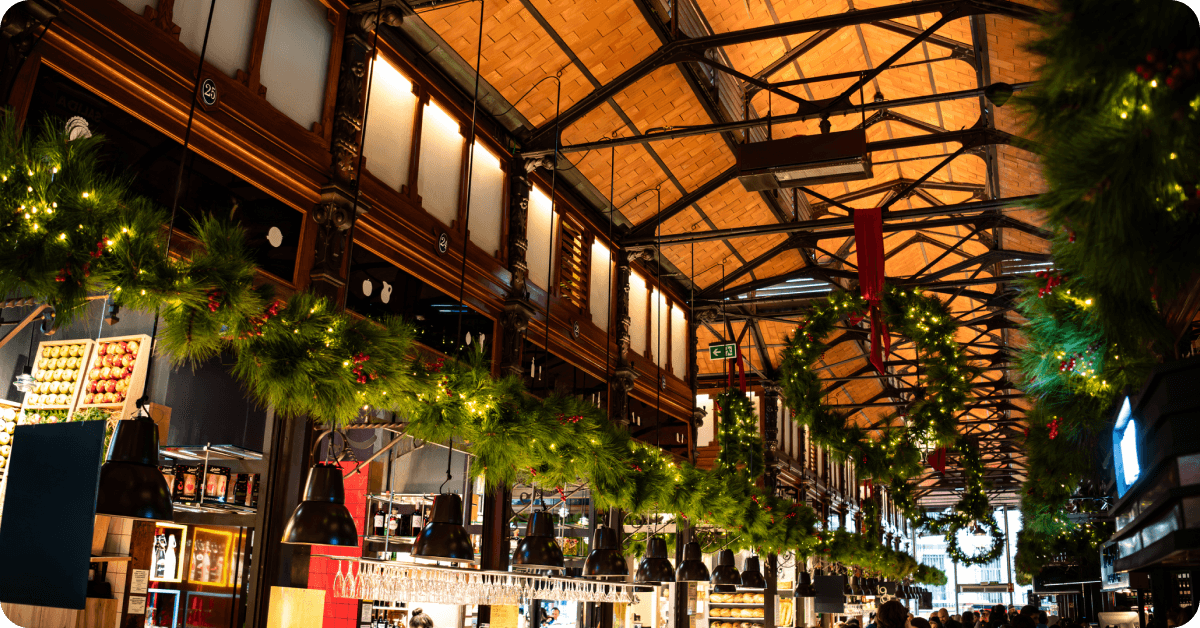
Mercado de San Miguel (or Saint Michael’s Market) takes place in an iron-and-glass hall dating back to 1916. Today it’s a gourmet food hall swarming with tapas stalls, oyster bars, and vermouth stands. It only takes around five minutes to walk from Plaza Mayor to the market, so it’s a good place to get lunch between sightseeing stops. Just be prepared for slightly higher prices than elsewhere in the city — it’s a tourist hotspot, and the cost reflects that. The space opens at 10 AM.
El Rastro
Madrid’s biggest open-air flea market is open every Sunday morning on Calle de la Ribera de Curtidores (in the historic La Latina neighborhood). You can find everything here — vintage clothing, antique jewelry, secondhand books, and anything else people might have decided to clear out of their spare rooms. The streets around the market are lined with lively tapas bars and lunch spots, so once you’ve finished shopping, you won’t struggle to find a bite. El Rastro market starts about 9 AM and continues until 3 PM, but most stalls start packing up just after 2 PM.
Stay connected in Madrid with Saily

Getting around Madrid is a lot easier if you can check your online maps, translate a menu under the table, and book a last-minute museum slot from the train. To make the most of the city, get mobile data with an eSIM for Spain.
With Saily, you can install an eSIM that works in Madrid and across the rest of Spain. If you download your eSIM before you travel, your profile will activate as soon as you touch down at Madrid’s Adolfo Suárez Madrid-Barajas Airport, getting you online before you even leave the plane.
Saily comes with extra security features, including an ad blocker and web protection, but for most travelers, the big benefit of an eSIM is just convenience. No physical cards to swap in and out of your device, no lining up at a SIM kiosk, and no roaming fees — just land, get online, and enjoy all that Spain’s capital has to offer.
Need data in USA? Get an eSIM!
1 GB
7 days
US$3.99
3 GB
30 days
US$6.99
5 GB
30 days
US$9.99
FAQ
Don’t miss the Prado, the Royal Palace, and Retiro Park. If you can, try to see Guernica at the Reina Sofía and check out Mercado de San Miguel for the food scene.
Madrid is known for its art museums (the Prado, Reina Sofía, and Thyssen-Bornemisza), its royal history, tapas culture, and a nightlife scene that regularly runs later than in most other European capitals.
Barrio de las Letras and the streets around Plaza Mayor and Plaza de la Villa are generally considered the most visually striking, with narrow lanes, old façades, and a strong literary history tied to the neighborhood’s name.
Walking through Retiro Park costs nothing, and a Sunday morning at El Rastro flea market is very affordable (if you don’t buy too much). Both the Prado and Reina Sofía also have daily free-entry windows.
Yes. Between the art collections, the historic center, and the food scene, Madrid is really worth a visit. Despite being a beautiful and culturally important city, it’s a little quieter and less expensive than Paris, London, or Rome.
Three days is enough to cover the main landmarks, one or two museums from the Golden Triangle, and a decent portion of the food scene. Transport in Spain is very reliable, so you can get around Madrid quickly on buses and metro trains.
Spring (April to June) and autumn (September to October) bring mild weather and manageable crowds. Summer gets brutally hot, often above 95°F (35°C), while winter is mild by northern European standards but can still be chilly at night. If you’re going in summer, sunscreen, shades, and hats are essential for your Spain packing list.
Comfortable walking shoes are the priority, given how much of the city you’ll cover on foot, plus layers if you’re visiting in spring or autumn, since mornings and evenings can be cool even when afternoons are warm. In summer, pack light fabrics and sun protection, since the heat is dry but intense.
Three to four days cover the highlights comfortably. If you want to add day trips to Toledo or Segovia, plan for five to six.

Always connected, always on course
Connect instantly with a Saily eSIM and enjoy effortless internet access.

Related articles