


Transportation in Spain: Tips to get around with public and private transportation
How do you visit Spain and potentially visit all of the sights, at least in one or two of the country’s regions? By using some form of transportation, of course! While Spain is massive — one of the largest countries in Europe, in fact — with a vast number of options for transportation, that mission might be somewhat possible. Whether you’re planning to travel with public transport or are used to having your own car, in this article, we’ll discuss the ways you can get around Spain. Buckle up!



目录
- A quick overview of transportation in Spain
- Key modes of private and public transportation in Spain
- High-speed trains (AVE)
- Regional and commuter trains
- Buses
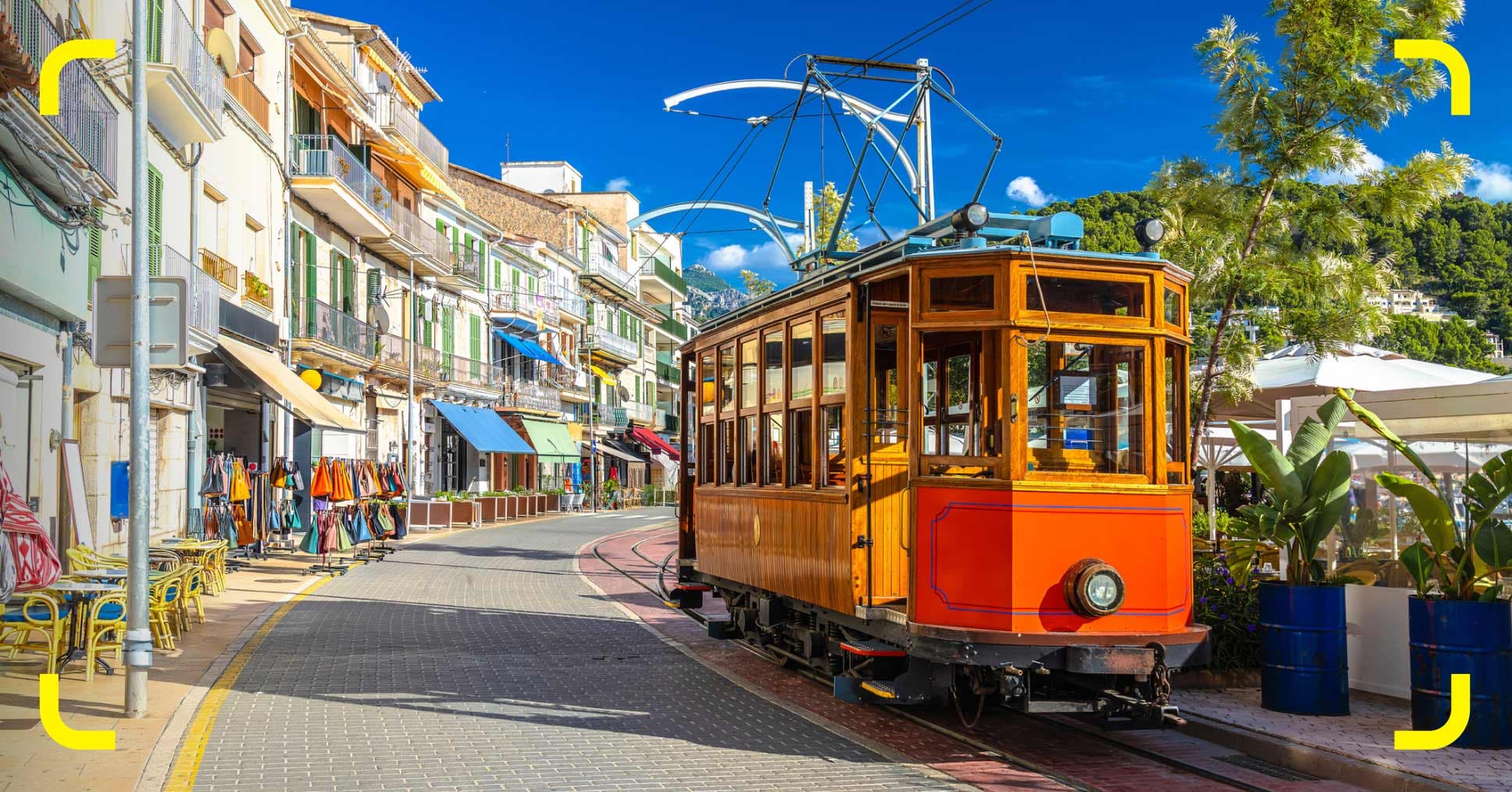
- Metros and trams
- Domestic flights
- Rental car
- Taxis and ride-hailing apps
- Bicycles and scooters
- Walking
- Best transportation to use between cities in Spain
- Recommended urban transportation in Spain
- How much does transportation cost in Spain?
- So, what is the best way to get around Spain?
- Travel tips for private and public transportation in Spain
- Useful apps to navigate transportation in Spain
A quick overview of transportation in Spain
Transportation in Spain can be split into several categories, including urban, intercity, and cross-country. Each has several options: domestic flights between major cities, ferries that connect Spain’s islands with the mainland, and high-speed trains that shuttle from/to most cities. There are plenty of bus routes as well, including low-cost options within cities. You can also rent a car, carpool, or travel between point A and B with ride-hailing apps. The largest urban areas also have their own metro systems.
Summing up such a complex system isn’t easy. But if we were to attempt it, the main pros of Spain’s transportation services include a wide array of modes, good connectivity between major cities, and plenty of budget-friendly options.
In terms of cons, some rural areas might have poor connectivity with public transportation , and limited environmentally friendly alternatives to travel between mainland Spain and its island communities are available. That’s the basic rundown of the system, at least!
To stay connected while traveling in Spain — and to avoid using public, usually unsafe Wi-Fi networks — don’t forget to order an eSIM before you arrive in Spain.
Key modes of private and public transportation in Spain
Transportation in Spain can be split into two categories — public transport and private means of getting around. In terms of public transportation, the more budget-friendly option is to take long-range buses and trains for intercity travel. For intra-city journeys, buses, trams, metros, and even trolleybuses (only Castellón de la Plana!) are available.
In addition, domestic flights within Spain are plentiful, including for those who want to visit the country’s island communities, like the Canary Islands. Ferries also take travelers across the water, though you’ll have to budget more time for travel with this option.
In terms of private transportation, a rental car is probably the best option for someone who wants to visit many cities and live by their own schedule. Alternatively, carpooling services such as BlaBlaCar do exist, but they will require you to adapt to other people’s plans.
To travel within the many cities of Spain, the main ride-hailing apps are Bolt, Cabify, Freenow, and Uber. Walking within city centers is possible, and so is renting an electric scooter on apps like Lime or Voi.
High-speed trains (AVE)
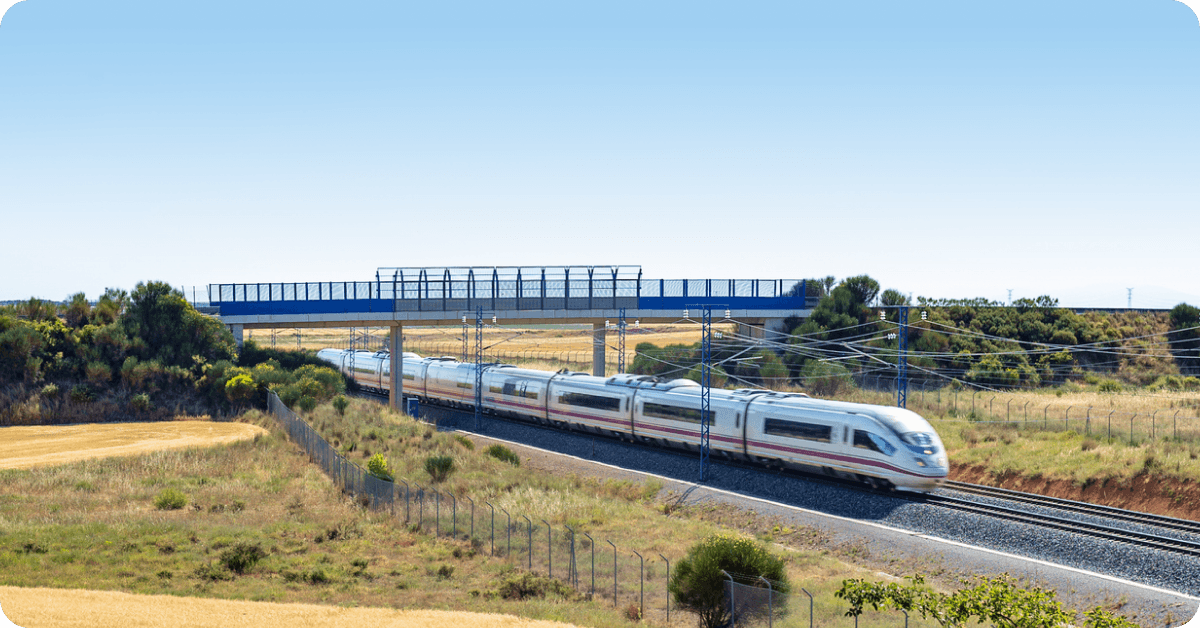
High-speed trains are a popular transportation option for mainland Spain. Hopping between major cities with high-speed trains such as Renfe’s Alta Velocidad Española (AVE), Ouigo España, or Iryo is easy and relatively fast.
AVE trains provide service from 52 different Spanish and nine French train stations, so this network offers considerable coverage. Be warned, however, that the AVE train network does not reach every community in Spain. For example, getting from Madrid to Bilbao, the largest city in the Basque Country, is only possible on a direct Alvia train, which takes around five hours. A comparable journey — of around 400 kilometers — from Madrid to Alicante, with an AVE train, is around two hours and 30 minutes.
Besides Spain’s national railway company, Renfe, two low-cost operators, Ouigo España and Iryo, also provide high-speed train services. Compared to Renfe, the two have fairly limited high-speed networks, covering only 15 and 12 destinations, respectively. Note that Renfe also has its own low-cost alternative, branded as Avlo. From Madrid, Avlo’s services connect to seven destinations, including stops on the way.
You can purchase tickets for Spain’s high-speed train services online, on the operators’ websites, at ticket offices at train stations, or by using self-service machines.
If you are planning a longer stay in Spain, in addition to double-checking that your phone will work in Spain, consider getting Renfe’s Spain Rail Pass. Instead of buying individual train tickets, non-Spanish residents can buy the pass that is valid for a month and includes four, six, eight, or 10 journeys in Standard or Comfort classes. The price of the Spain Rail Pass ranges from €220 (US$256.19) to €455 (US$529.82), depending on the number of journeys.
Alternative rail passes that are also valid in Spain include Interrail’s Global Pass — if you’re a resident of an European country — or the Eurail pass — if you live outside a European country of Europe.
An interesting fact about Spain: Did you know that the country’s dedicated high-speed rail network, measuring at over 3,191 kilometers (1,982 miles) in distance in 2024, is the longest in Europe, and second-longest in the world?
Regional and commuter trains
Spain’s high-speed rail network is complemented by its regional train networks, which cover popular commuter routes, oftentimes between major cities and rural areas that are inside cities’ metropolitan boundaries.
Spain’s regional and commuter train system is more confusing than its relatively straightforward high-speed train system. For example, Renfe, Spain’s national railway company, operates Media Distance — Spanish for mid-distance — regional trains across a number of major cities to connect them with their suburbs and beyond.
Then, regional trains operate within each autonomous community. The Basque Country has the Euskotren, Catalonia has the FGC, the Valencian Community has the FGV, and the Mallorcan islands have the FS and SFM as operators of their regional trains. And those are just a few examples!
The main train pass used for commuter trains is Abono Único, or Single Pass. For €60 (US$69.82), you get unlimited trips on Spain’s commuter trains, Media Distancia trains, some regional train services within Catalonia, and some Avant, which are medium-distance but high-speed routes. However, Avant routes are limited to specific four rail corridors.
You can purchase tickets for regional and commuter trains via an app, including Renfe’s, or at self-service kiosks and ticket offices at the train station.
Buses
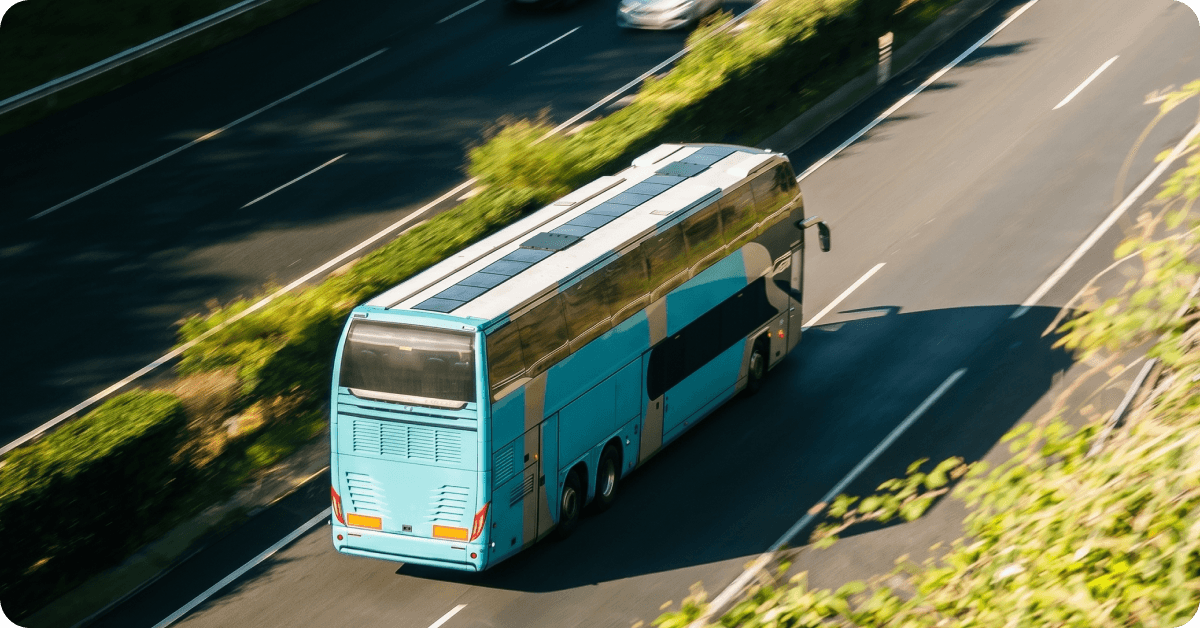
An alternative to traveling through Spain is taking the bus. The main bus operator for journeys between most cities is ALSA, Spain’s national bus company. Spain’s regions have their own operators as well, such as Catalonia’s Moventis or Andalusia’s Avanza. Some international companies, like FlixBus or BlaBlaBlaCar Bus, also provide bus transportation services in Spain.
The main question when it comes to intercity buses is how they compare to the train. While the passenger experience is a subjective matter, the two transportation modes can be compared using two criteria — price and time.
A journey from Madrid to Barcelona on ALSA’s services ranges from 7 hours and 20 minutes to 11 hours and 55 minutes, depending on the number of stops. On AVE trains, a Madrid-Barcelona journey takes a little more than three hours.
ALSA does have the pricing advantage. While single tickets themselves are priced similarly — €40 ($US46.50) for the bus, €49.80 ($US57.89) for the AVE train – the aforementioned Single Pass is valid for ALSA’s services. This Spanish bus company also has monthly regional and route-specific passes.
Within the major cities in Spain, buses are also used to get around, including to rural areas. Usually, each city has its own urban transport company, with separate schedules and routes. Before visiting your destination, make sure you have an eSIM app like Saily to check the latest schedules and real-time updates about public transportation bus services.
Metros and trams
Another urban transportation choice, especially in big cities like Barcelona or Madrid, is metros and trams. In total, Spain has five metro systems — in Barcelona, Bilbao, Madrid, Palma de Mallorca, and Valencia.
Alicante, Granada, Malaga, and Seville have light rail systems that serve passengers on a handful of lines that cut through the cities, providing fast and comfortable transit. Cadiz, Palma de Mallorca, and Valencia have hybrid metro and suburban train systems, easing commutes for locals and tourists alike.
Buying tickets for the metro, trams, or light rail usually entails using a local transit app or self-service kiosks. Suppose that you’re looking for a transportation option to go from Valencia’s airport to the city, and your choice is the metro. You can either get a single ticket, a time-limited one, or a pass for 10 trips on the metro, tram, bus, and trains. The price ranges from €4.80 (US$5.56) for a single ticket up to €17 (US$19.70) for a 72-hour pass that unlocks unlimited trips on the city’s public transportation, including the metro.
Domestic flights
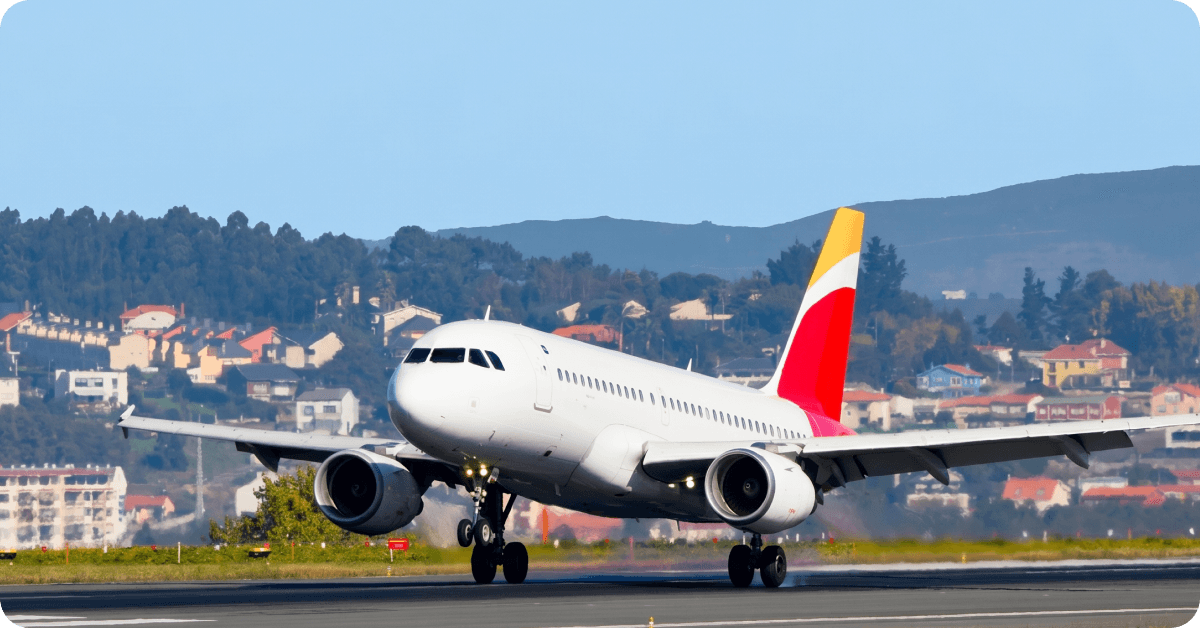
With Spain being one of the largest countries in Europe, as well as having plenty of islands within its domain, domestic flights are a popular way to travel between many cities. In fact, over 8,600 domestic flights are scheduled to depart per week in June 2026, resulting in over 1.2 million weekly departing seats within the country’s domestic flight network.
Undoubtedly, opting for domestic flights within Spain will save you a lot of time when traveling long distances or to the country’s islands. Compared to the ferry between Barcelona and Palma de Mallorca, which takes more than seven hours, flying the route typically takes about half an hour, becoming a real time-saver even with the wait at the airport.
However, if you do want to take your own car to either the Balearic Islands or the Canary Islands, you will have to take the ferry. Driving on water, for now, is not an option!
One con regarding domestic air travel is that, while the flight time is much shorter than taking the bus or a high-speed train, the actual travel time can be longer. Getting to the airport and going through all of the security checks can be more time-consuming than taking the train, for example, which usually is a direct city center-to-city center connection.
You do have to get to the airport, which in larger cities can be costly, not to mention the fact that their cheapest tickets are the basic fares. Selecting seats and additional bags will cost more money, which inflates the final price of a ticket.
Still, some of the gaps left by Spain’s high-speed trains are filled by airlines, like on journeys between Madrid and Bilbao. Since these two cities are not yet served by AVE trains, passengers can buy plane tickets and hop on a 40- to 45-minute flight from Madrid and Bilbao to get easily between the two cities.
Rental car
Using a rental car to get around Spain is the best option if you prioritize the independence to travel anywhere, anytime. It will be the most costly option as well since you have to pay the rental fee, top the car up with fuel, and buy insurance.
More than a handful of rental car companies — like Europcar, Hertz, or Sixt — operate in Spain. You can easily rent a car shortly after landing at the airport, but reserving a vehicle beforehand is the smarter thing to do since you can compare prices between different vendors. Reserving your rental in advance is also a sure-fire way to get a car that fits your needs if you’re traveling with your kids, for example, or your group has a lot of luggage.
Taxis and ride-hailing apps

Taxis and ride-hailing apps are great on-demand options for transportation within Spanish cities. The country’s top ride-hailing options are Bolt, Cabify, Freenow, and Uber, which are available across dozens of Spanish cities.
However, the apps’ coverage differs by region. In Catalonia, where Barcelona is, the local government attempted to push out ride-hailing from the region in 2019, and even if the EU’s top court said “nuh-uh” in 2023, it attempted to do so again in 2025. While it remains to be seen how the taxi versus ride-hailing battle develops, for now, services like Uber or Bolt are still available in the region.
If you do venture out into smaller cities, taxis might be your go-to transit option within city centers. Spain does have its own taxi app, called PideTaxi. You can also grab a taxi on the street, with taxi drivers lighting up a green light on their roof or showing a glowing “LIBRE” sign on the dashboard.
💡 Tip: Be careful with taxis near major tourist attractions, train stations, or airports. Taxi drivers never approach potential customers, so make sure that you only get into officially licensed taxis!
Bicycles and scooters
Another great way to get around cities is to rent a bicycle or a scooter.
Renting a bike is relatively easy and can be done on your phone by using an app. The tricky part, however, will be picking out the service you want to use, since you’ll have plenty to choose from depending upon where you are. Barcelona has Bicing, which is a government-owned bike-sharing service, while Madrid has its own BiciMAD. Researching bike-sharing apps before arriving in your city of choice in Spain is recommended!
Getting a bike from a local shop is an alternative to bike-sharing apps. Some bike shops do offer tours around cities, meaning that you can exercise both your brain and legs at the same time!
As for motor scooters, you can either rent one like you would rent a car — it entails providing your ID, driver’s license, and a credit card for a deposit at a rental office — or you can use scootershare apps. In Spain, Acciona, Cooltra, and Yego are the main scooter rental apps, which are available in several, but not all, cities.
Renting a bike or a scooter is a genuinely great alternative to renting a car if you have no plans of leaving city centers. Less stress about parking and/or highway driving is always a bonus while you’re on holiday. Less stress in general is always a bonus, even if you’re not in Spain!
Walking

Where possible, walking is the best option to traverse short distances in Spanish cities. You get all of the pros of other transportation methods — whether independence, exercise, or both — without any cons. Well, the only downside to walking everywhere is that you will have to plan your route accordingly since walking takes a tad bit longer than utilizing something with wheels, like a bus.
Still, the benefits are plentiful. You get to move your body. You get to get lost and discover restaurants, art galleries, or other local gems that you might have otherwise missed.
And yes, walking in Spain is safe. Do be mindful of your environment, though, and take care of your belongings while strolling around the main tourist attractions in big cities like Barcelona or Madrid. The best things to do in Madrid are all within walking distance of each other, and a lot of people explore them on foot.
Best transportation to use between cities in Spain
If you were to ask what the best option is to travel between cities, the answer is high-speed trains. Buses, on longer distances, may take too long, while flying domestically on routes where Air Europa and/or Iberia face no low-cost competition can get expensive.
Getting from the mainland to either the Balearic or Canary islands includes two options — the ferry or an aircraft. Sailing is quite slow and more often than not does not have a price advantage compared to flying.
For example, on Ryanair’s flights from Barcelona to Palma de Mallorca, the cheapest fares — even during the peak summer season — are advertised at €20.99 (US$24.33). The cheapest ferry tickets around early June are also around the €20 (US$23.19) to €30 (US$34.78) range.
Recommended urban transportation in Spain

Traveling within cities in Spain involves several options, ranging from walking, renting a bike, renting an electric scooter, or renting a regular scooter (also known as a moped) to using taxis and/or ride-hailing apps.
Unlike with intercity travel, the question of which mode of transportation is the best within the urban areas has no easy answer. Public transportation, like buses or the metro, is great for longer distances without breaking the bank, while taxis and/or ride-hailing services offer better comfort. Simultaneously, walking is cheap, healthy, and offers you a chance to come across places that you might otherwise miss if you’re sitting inside a bus or a metro.
How much does transportation cost in Spain?
The cost of transportation in Spain is very much dependent on the type of journey you’re taking, your location, and whether you have multi-journey passes. Still, public transportation, including buses and trains, will usually be cheaper for intercity travel than flying. On an exemplary journey from Madrid to Barcelona on June 2, 2026, the prices are as follows:
Type of transportation | Journey length* | Price** |
|---|---|---|
High-speed train (AVE/Ouigo España/Iryo) | 3 hours and 17 minutes | €49.80 (US$57.86)/€39 (US$45.32)/€41.17 (US$47.83) |
Bus (ALSA) | 7 hours and 35 minutes | €40.45 (US$46.99) |
Flight (Air Europa/Iberia) | 1 hour and 25 minutes | €183.53 (US$213.13)/€81 ($US94.07) |
* Combined with the cheapest option.
** Cheapest prices at the time of writing on May 21, 2025.
For intracity journeys, public transportation is the winner compared to taxis or ride-hailing services, beating the car-based options due to a more favorable price-to-quality ratio. Renting a bike or an electric scooter short term does not necessarily beat buses or metros in terms of price, but it does provide the flexibility to leave them in designated parking areas that might be more convenient for you.
Walking is also a brilliant option to get around cities in Spain, and it is free. If the weather is nice — and if you’re in the country anywhere between April and October, it will be — walking almost becomes a must to truly enjoy Spain. If it’s summer, stay hydrated because the Spanish sun offers no mercy to visitors who skip hydrating and sun protection!
So, what is the best way to get around Spain?
The answer to the question of which is the best way to get around Spain might have a slight hint of bias in it, but the best travel option between cities is high-speed trains. Compared to buses and airline services, they are the best bang-for-buck transportation option, combining better speeds than buses and lower prices than for domestic flights.
Public transportation is the go-to option for travel within urban areas, since in many cities across Spain, bus, metro, or tram services are cheap, reliable, and comfortable. Walking is, as mentioned, also brilliant to get to know the city you’re staying in.
Travel tips for private and public transportation in Spain
Using transportation in Spain is relatively straightforward, but keep the following in mind, both when using private and public transit:
Buy tickets and validate them in advance. Buying tickets in advance will guarantee you will have a spot on a train, bus, or aircraft, especially on the busiest corridors within the country. It will save you some money, too! To validate your tickets, look for turnstiles at stations or validators onboard your vehicle of choice.
Use official apps and self-service kiosks. The easiest way to buy tickets for public transportation is to either use the local transit apps or self-service kiosks near bus or train stations. Each city will typically have its own transportation app — Madrid has EMT Madrid, while Barcelona offers the TMB App.
Consider travel cards if you’re staying longer.
If you do plan to stay for a longer duration in Spain and perhaps even visit multiple cities, think about getting monthly passes or multi-journey cards for multiple trips. Renfe, Spain’s national railway company, has 10-journey passes and a monthly pass. In cities, transit operators offer individual passes for the areas they operate within.
Travel during non-peak periods. Do try to avoid using public transportation during the rush hours on working days. Traffic and the number of commuters in major cities can get overwhelming even for the locals, so remember that the rush hour is between around 7 AM and 7 PM, which can impact travel times.
Keep connected to stay informed about potential strikes. From time to time, Spanish unions do go on strike, which can disrupt public transportation services throughout the whole country or in specific regions. To keep yourself informed about any potential disruptions, stay connected while on your travels by using an eSIM like Saily.
Stay vigilant and safe. Spain is safe, yes, but where tourists gather, so do nefarious actors. Whenever you’re using public transportation, keep your bag, backpack, and valuables like your phone close to you. When traveling on trains, keep tabs on your luggage at all times.
If you do pick private transportation as your option for exploring Spain, these tips might be helpful:
Rent a car before arriving in Spain. To ensure a smooth experience, rent a car before landing in Spain. Usually, rental companies have offices or kiosks at airports where you will pick up your keys and leave a deposit, allowing you to smoothly continue your journey.
Get insurance for your rental. You think the extra insurance is not very useful — until it is. And then, you chastise yourself for not getting it, so just do it. Get the extra insurance. Be safe. Be thankful to your past self for insuring your rental.
Seek out garages to park your car in big cities. Unfortunately, parking will be scarce in larger cities in Spain. Driving around the same block repeatedly to find a spot is an option, but the easier thing to do is to search for local parking garages for short or even long-term parking.
Useful apps to navigate transportation in Spain
Understanding all of the private and public transportation choices in Spain can get confusing. However, some apps that will help you navigate the maze of Spain’s transportation network.
Google or Apple Maps. The old-school map apps are hard to beat in this case since they’re great at providing directions when you’re walking in the city or want to find out which public transportation option is the best for you.
Citymapper. Citymapper is a great option to navigate multiple modes of urban transportation and has live schedule updates, potential routes, and ride-hailing services. In Spain, the app works in the Balearic Islands, Barcelona, the Basque Country, Granada, Madrid, Malaga, Seville, Valencia, and Zaragoza.
Omio. For intercity travel, Omio is what Citymapper is to urban travel. Omio has all the details you might need to travel between cities since you can look up potential route options, compare pricing, and even purchase tickets for multiple modes of transportation like buses or trains.
Renfe’s app. If you do want to avoid an intermediary when purchasing train tickets, you can get Renfe’s official app. Renfe allows you to check schedules and book tickets on its AVE, Avant, Larga Distancia, and Media Distancia trains throughout Spain on its app.
Bolt, Cabify, Freenow, and Uber. Bolt, Cabify, Freenow, and Uber are the main ride-hailing apps used throughout Spanish cities. One tip to save money is to check out the prices between a couple of the apps before ordering your ride. Cabify and Freenow are the more popular options in Spain, so your best bet is to download these two!
Saily. Saily, as an eSIM app, does not provide transportation. But Saily will let you connect to the internet safely while you’re looking for the optimal route to travel within or between cities or trying to pay for tickets for those journeys — or, heck, sharing those airport selfies with your friends to let them know that you’re flying from Madrid to Barcelona just because you can!