




15 things to do in New Jersey: A local-approved guide for 2026
Ask a traveler what they know about New Jersey and you’ll hear either “the Turnpike” or “nothing” — and locals are fine with that reputation. The truth is, the Garden State packs 130 miles of Atlantic coastline, one of the biggest theme parks on Earth, a wilderness where people still hunt for a mythical devil, and more diners per capita than anywhere in the country. Here are the best things to do in New Jersey, region by region.
Table of Contents
- Where is New Jersey and how to get around
- Hit the Jersey Shore: The best beaches and boardwalks
- 1. Cape May
- 2. Ocean City and Wildwood
- 3. Atlantic City
- Explore North Jersey
- 4. Liberty State Park and the Jersey City waterfront
- 5. Hike the Delaware Water Gap and the Palisades
- 6. Paterson Great Falls
- Discover Central Jersey
- 7. Princeton
- 8. Grounds for Sculpture in Hamilton
- Venture into South Jersey
- 9. The Pine Barrens
- 10. Battleship New Jersey and the Camden Waterfront
- Best theme parks and family attractions
- 11. Six Flags Great Adventure and Safari in Jackson
- 12. American Dream in the Meadowlands
- 13. Liberty Science Center in Jersey City
- Unique and cool things to do in New Jersey
- 14. Lucy the Elephant in Margate
- 15. Northlandz
- Stay connected in New Jersey with Saily
Where is New Jersey and how to get around
New Jersey sits right between New York City and Philadelphia on the US East Coast, which makes it ridiculously easy to tack onto a trip to either city (or both). It’s nicknamed the “Garden State,” and once you get past the NJ Turnpike and into the farmland, pine forests, and coastline, the name starts to make a lot of sense.
Most international visitors fly into Newark Liberty International Airport (EWR) — it’s the most convenient of the New York metro area’s three major airports for getting anywhere in NJ. If you’re arriving from abroad, set up a Saily eSIM for the USA before your flight so you have data the moment you land — handy for maps, ride-hailing, and looking up NJ Transit schedules without hunting for airport Wi-Fi.
Not sure what an eSIM is? Here’s a quick explainer on what an eSIM is and how it works, or just download the Saily app and set one up in a couple of minutes.
Hit the Jersey Shore: The best beaches and boardwalks
The Jersey Shore isn’t just a reality TV punchline — it’s actually 130 miles of coastline dotted with Victorian towns, neon-lit boardwalks, and stretches of wild dunes where the only company is seabirds.
1. Cape May
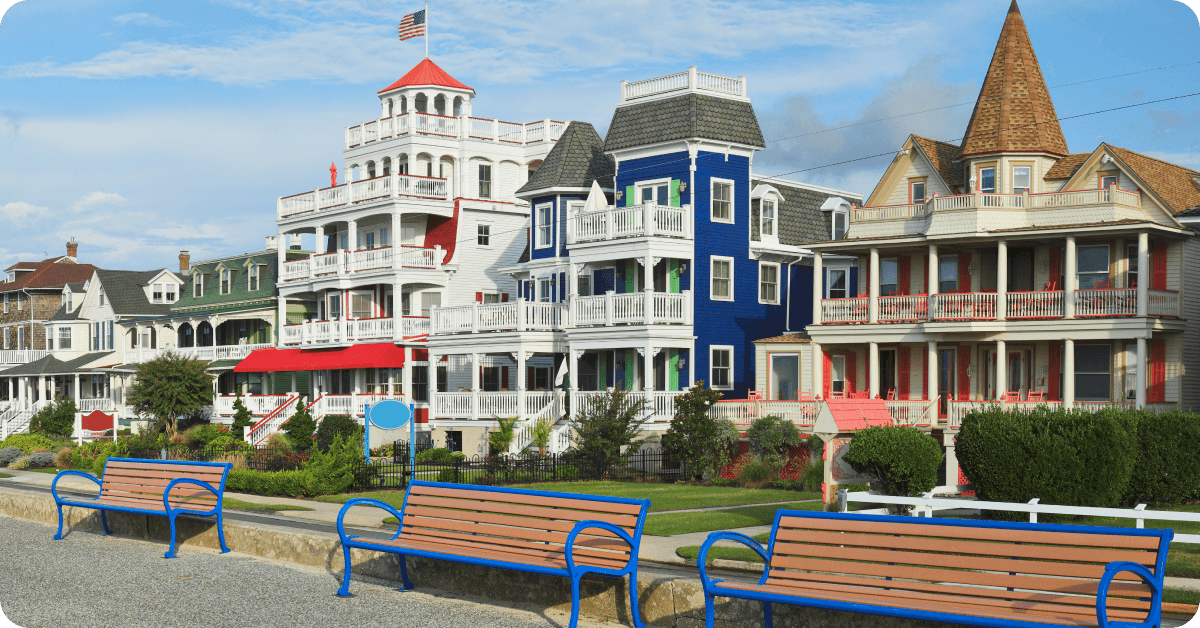
All the way at the southern tip, Cape May is the oldest seaside resort in the United States — people have been vacationing here since the 1700s, and by the mid-1800s it was the summer destination for East Coast high society, complete with lavish beachfront hotels and promenading along the shore. A devastating fire in 1878 leveled much of the town center, but what rose from the ashes was a wave of ornate Victorian “cottages” (some comically large) dripping with gingerbread trim. Over 600 of those buildings still stand, making Cape May one of the few entire cities designated a National Historic Landmark — right alongside Williamsburg and the Alamo.
Today it’s pastel-colored, walkable, and slow-paced. Once you're there, browse the boutiques and ice cream shops on Washington Street Mall, climb the 199 steps of the Cape May Lighthouse for panoramic views of the Atlantic and Delaware Bay, or head to Sunset Beach to hunt for “Cape May diamonds” — smooth quartz pebbles that wash down the Delaware River and have been collected here since the 1700s.
2. Ocean City and Wildwood
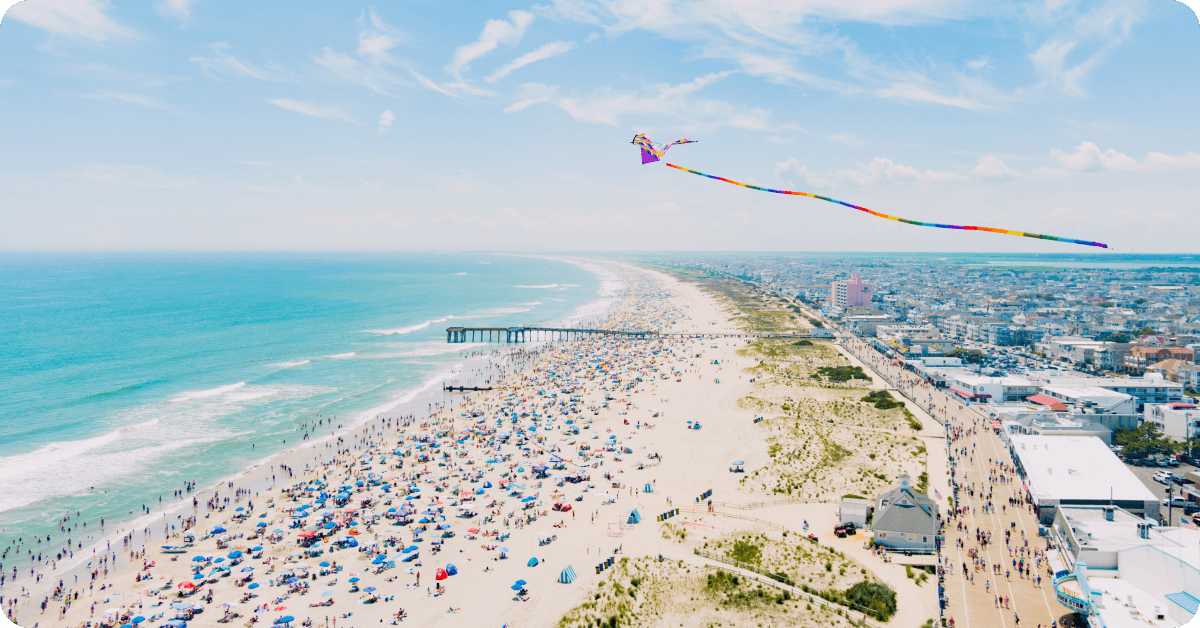
These two towns sit just a few miles apart on the southern Shore and deliver the classic Jersey boardwalk experience, but in very different flavors. Ocean City has been a dry town since 1909 (no alcohol sales anywhere on the island), which is a big part of why it markets itself as “America’s Greatest Family Resort.”
Wildwood gives a different kind of energy with Morey’s Piers, a trio of amusement piers that stretch over the beach with roller coasters, water rides, and a beachfront waterpark. All-inclusive ride wristbands typically run around US$56-97, depending on the package and time of season.
3. Atlantic City
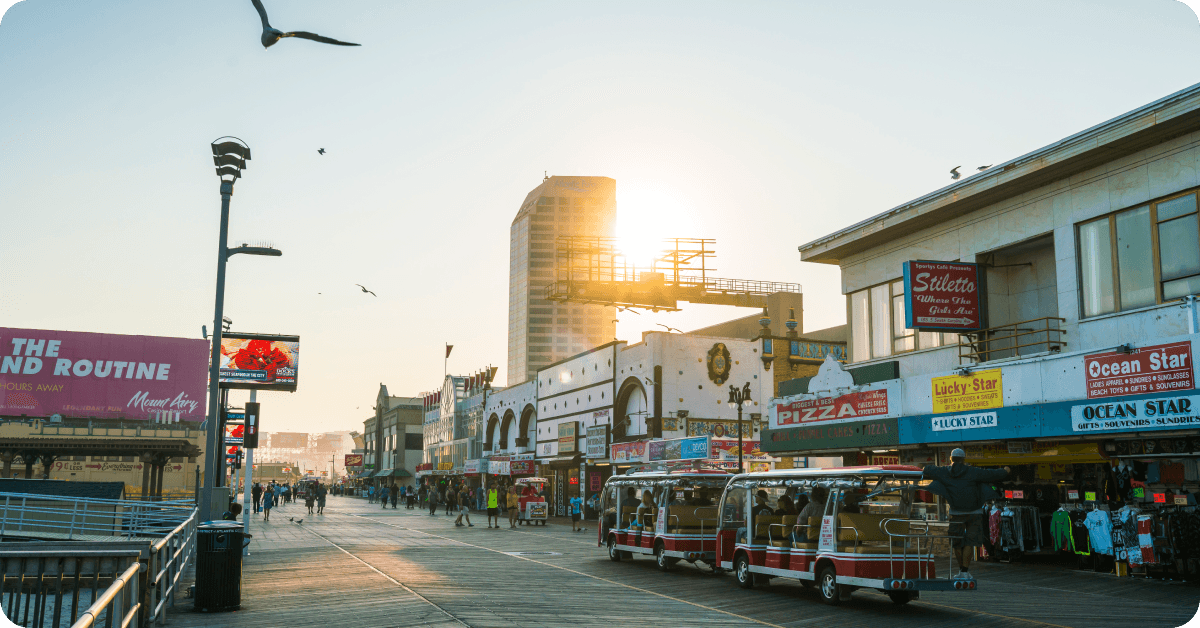
The original Boardwalk — yes, with a capital B. Atlantic City literally invented the concept in 1870, when hotel owners built a wooden walkway to keep sand out of their lobbies. That modest one-mile plank has since grown into a four-mile oceanfront icon, and it’s also the reason you’ve been paying US$400 rent on a board game square your entire life (every classic “Monopoly” street is named after a real Atlantic City road).
Today, Atlantic City is a strange, wonderful mashup of Vegas glitz and old-school beach town. The casinos and high-rise hotels line the shore, Steel Pier’s amusement rides jut out over the ocean — a tradition since 1898, when it billed itself as “The Showplace of the Nation” — and the salt air mixes with the smell of funnel cake and ambition. Beyond the gaming tables, AC has a surprisingly strong dining scene (Dock’s Oyster House has been serving seafood since 1897, and Borgata alone has over a dozen restaurants), outlet shopping at Tanger Outlets, and live shows ranging from comedy clubs to headliner concerts at Borgata and Hard Rock.
Explore North Jersey
North Jersey often gets overlooked in favor of the Shore, but it’s home to some of the state’s most dramatic scenery, waterfront views, and its best skyline.
4. Liberty State Park and the Jersey City waterfront
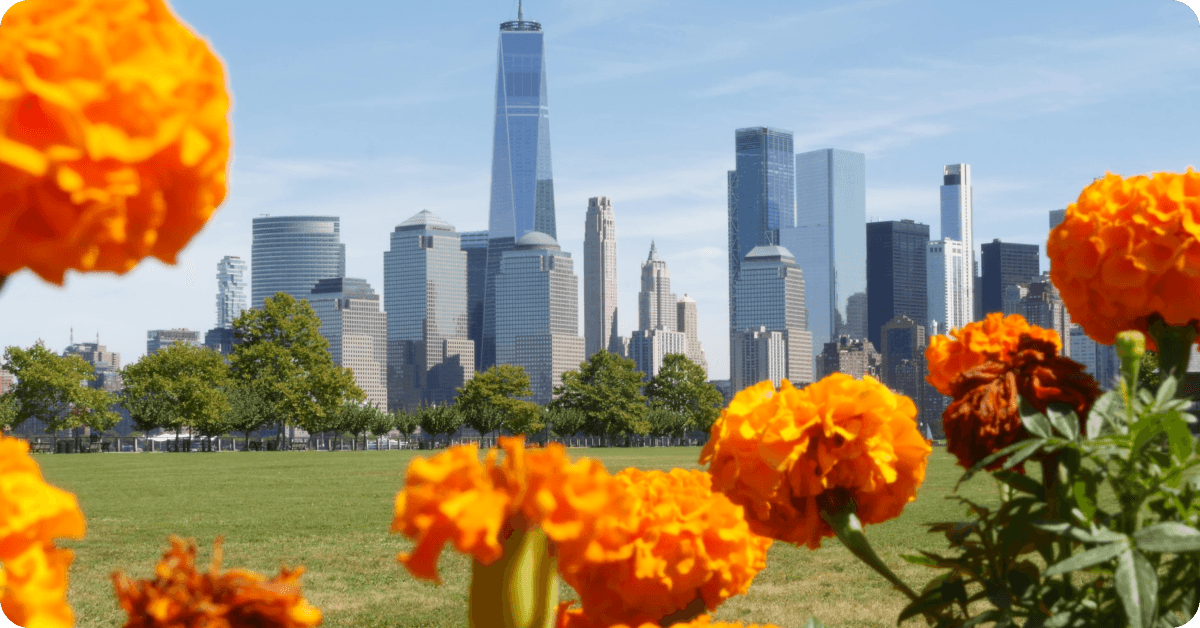
Liberty State Park sits directly across the harbor from the Statue of Liberty — closer to her than Manhattan is, actually — and offers sweeping, unobstructed views of Lady Liberty, Ellis Island, and the full NYC skyline. It’s free to enter and one of the most photogenic spots in the entire metro area.
Walk the waterfront promenade, visit the Empty Sky 9/11 Memorial — two parallel brushed-steel walls stretching 210 feet each, inscribed with the names of the 746 New Jersey residents lost that day — and catch a ferry to Liberty Island right from the park. History nerds should check out the beautifully weathered Central Railroad of New Jersey Terminal, built in 1889, which served as the gateway to America for over 10 million immigrants arriving via Ellis Island between 1892 and 1954.
The park is also home to the Liberty Science Center (covered in the family section below). And Jersey City’s waterfront beyond the park has exploded in recent years with restaurants, craft breweries, and public art — Jersey City is regularly cited as one of the most diverse cities in the country, and the food scene reflects it. Worth an evening stroll, at minimum.
5. Hike the Delaware Water Gap and the Palisades
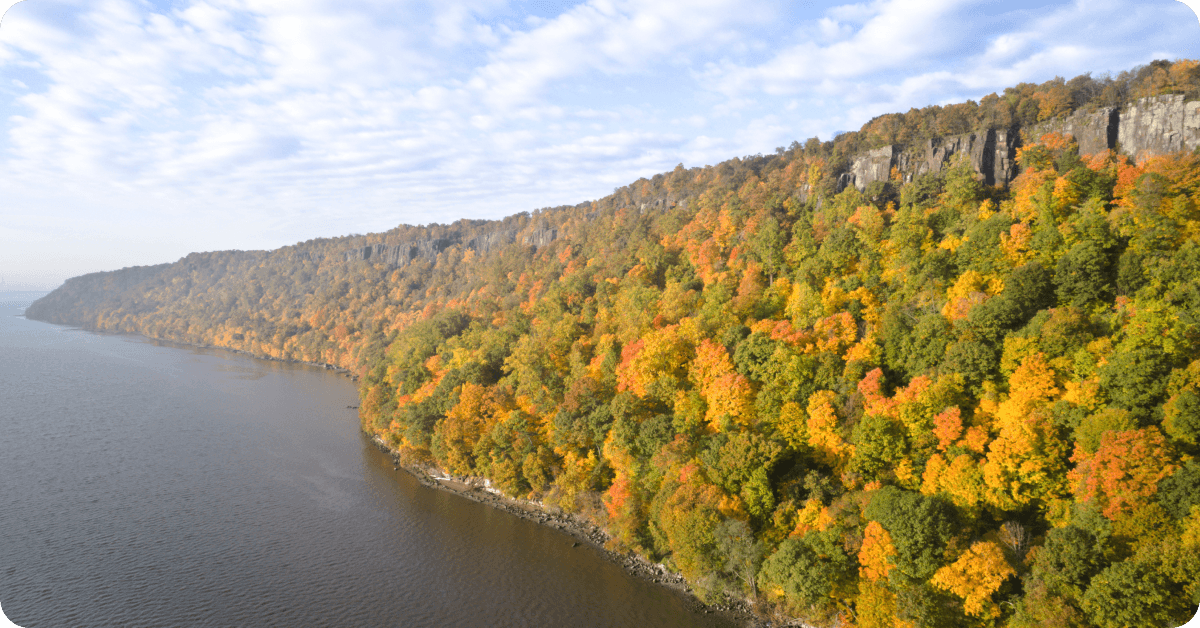
The Palisades are a wall of volcanic diabase rock formed around 200 million years ago, rising up to 540 feet along the Hudson River and stretching roughly 40 miles through Bergen County. The hiking trails here — especially the Long Path and the Shore Trail — feel worlds away from civilization, even though you can see the Manhattan skyline across the water. The cliffs were nearly quarried into oblivion in the 1890s before preservationists fought to save them.
In the northwest corner of the state, the Delaware Water Gap National Recreation Area protects 70,000 acres along a 40-mile stretch of the Delaware River — think waterfalls, ridgeline trails, and some of the best paddling on the East Coast. The star hike is Sunfish Pond, a 44-acre glacial lake left behind by the last Ice Age, reached via a section of the Appalachian Trail (about 6 miles round-trip with a solid 1,250-foot climb). Kayaking and canoeing the Delaware itself is a summer ritual for locals — multiple outfitters rent gear and run shuttles. Both areas are free to enter.
6. Paterson Great Falls
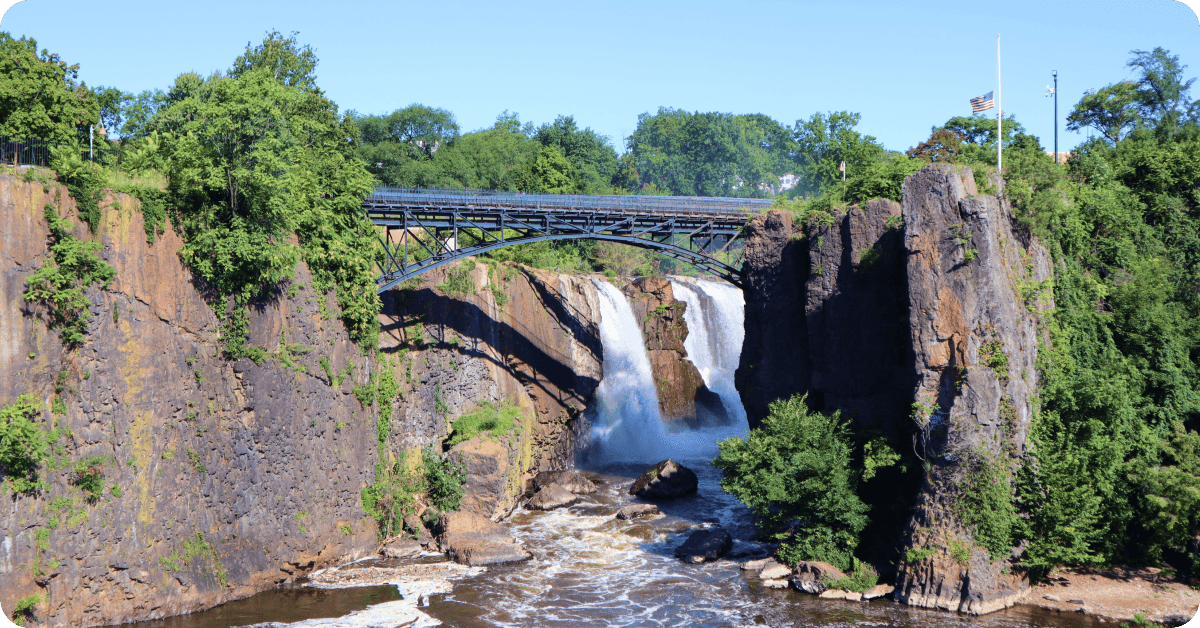
A 77-foot waterfall, 260 feet wide, thundering through a rocky gorge — in the middle of a city. The Great Falls of the Passaic River is the second-largest waterfall by volume east of the Mississippi (only Niagara beats it), and finding it tucked inside an urban neighborhood surrounded by brick mill buildings is kind of a cognitive dissonance.
The history here is just as big. In 1792, Alexander Hamilton, then secretary of the treasury, picked this exact spot to found the Society for Establishing Useful Manufactures and build America’s first planned industrial city. The idea was to harness the falls’ power to wean the young nation off British imports, and it worked — Paterson went on to produce everything from cotton and silk to locomotives and Colt revolvers.
Today it’s a National Historical Park, completely free to visit, and easy to reach from anywhere in North Jersey. You can see the falls from multiple overlooks, walk through the surrounding historic district, and be back in your car within an hour.
Discover Central Jersey
Yes, Central Jersey exists. Don’t let anyone from North or South Jersey tell you otherwise. It’s home to Ivy League elegance, world-class sculpture, and some of the state’s best farmland.
7. Princeton
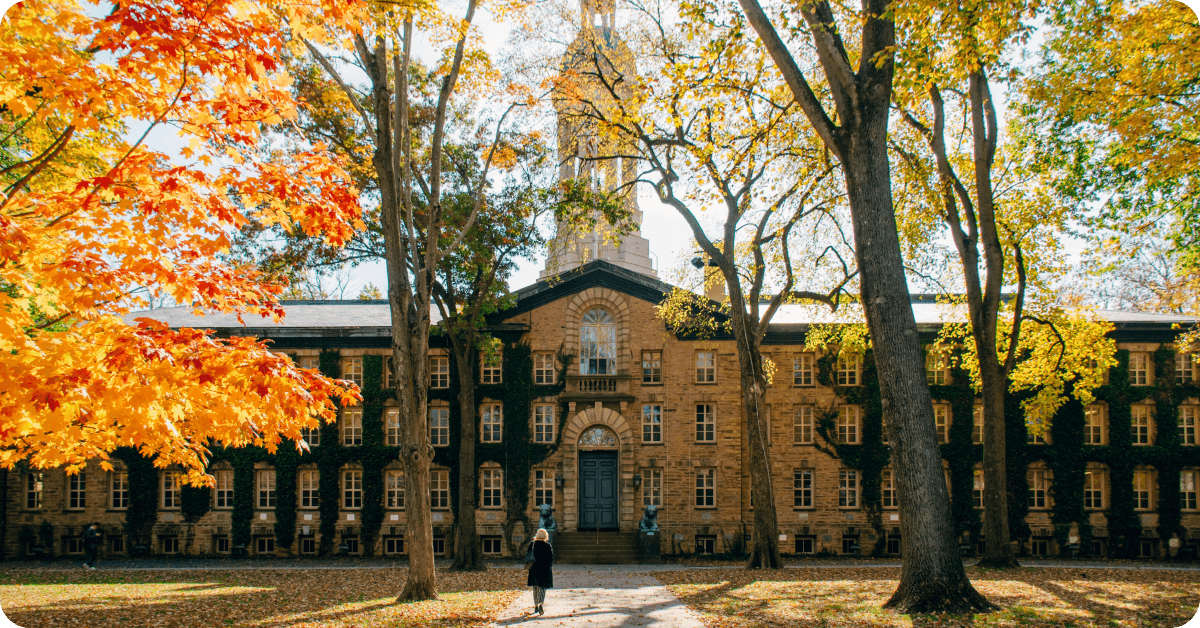
Few college towns in America are as walkable and quietly stunning as Princeton. Princeton University was founded in 1746, making it the fourth-oldest college in the country, and the campus wears that history well — students walk among Gothic stone buildings, ivy-covered archways, and manicured lawns. Nassau Hall, the university’s oldest building (1756), briefly served as the capitol of the United States when the Continental Congress met there in 1783. And none other than Albert Einstein spent the last 20 years of his life here, walking to work at the Institute for Advanced Study — his house on Mercer Street still stands.
The Princeton University Art Museum is free and excellent. It recently reopened in a new building, with over 100,000 works spanning ancient antiquities to contemporary art. Nassau Street, the main drag running along the campus, is lined with independent bookshops, cafés, and restaurants. And if you want a dose of Revolutionary War history, Princeton Battlefield State Park marks the site where Washington scored a pivotal victory in January 1777. You can easily fill a half-day here without spending a dime.
8. Grounds for Sculpture in Hamilton
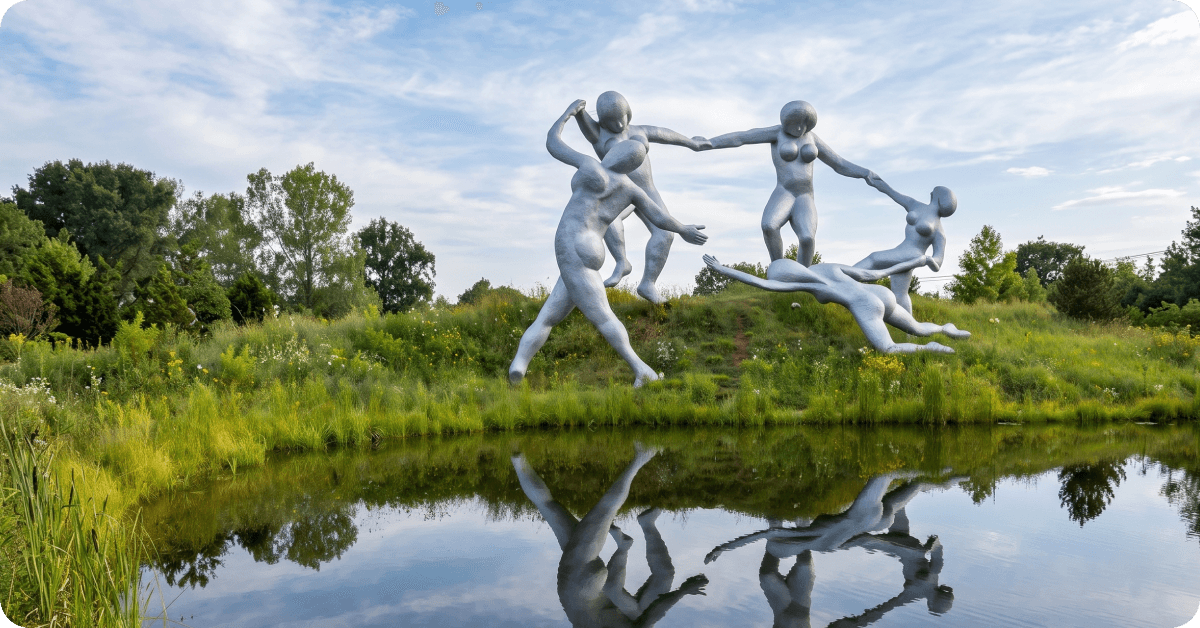
Grounds for Sculpture was founded in 1992 by J. Seward Johnson II, an heir to the Johnson & Johnson fortune and a sculptor himself, who wanted to make contemporary art feel accessible rather than intimidating. Mission accomplished — this is the kind of park where you turn a corner and find a life-sized bronze recreation of a Renoir painting sitting in an actual garden, or stumble upon a Seward Johnson figure so realistic you mistake it for another visitor.
The highlight for many is Rat’s Restaurant, named after the character in “The Wind in the Willows,” and set in a landscape designed to look like you’ve wandered into a Monet painting — lily ponds, stone bridges, and French countryside atmosphere in central New Jersey. Reservations are strongly recommended.
Venture into South Jersey
South Jersey moves to a different rhythm — slower, greener, and just a little bit weirder (in a good way).
9. The Pine Barrens
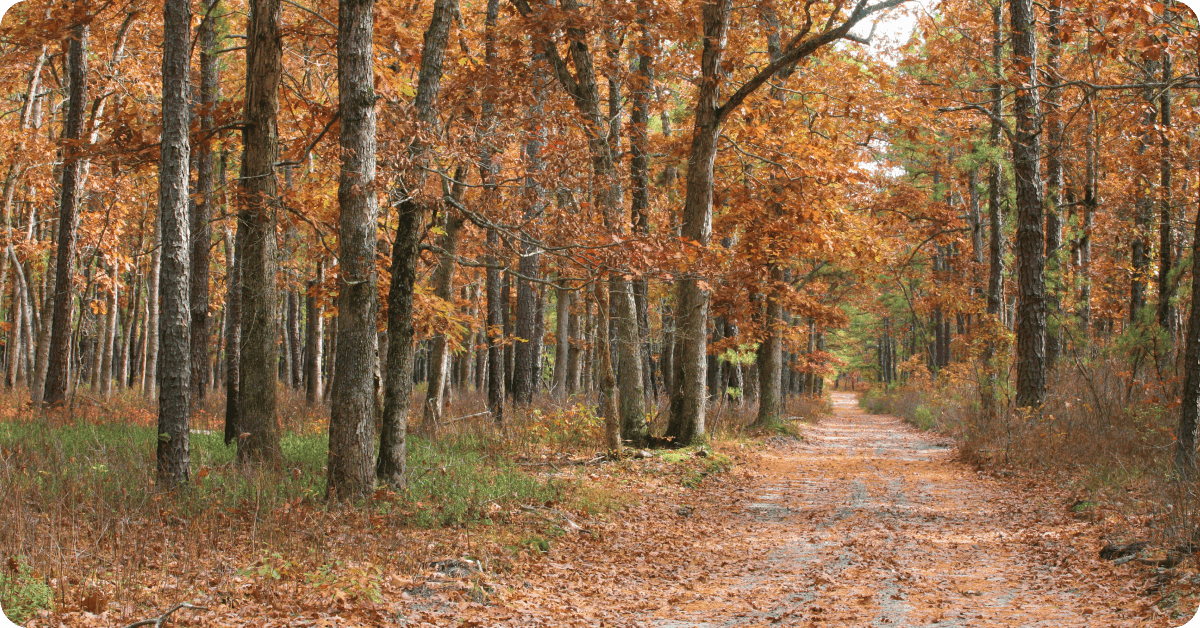
The most densely populated state in America hides a million-acre wilderness where the rivers run the color of tea, ghost towns crumble under pine canopy, and residents will casually tell you about the winged, hoofed creature that’s been terrorizing the forest since 1735.
The Pine Barrens, officially known as the Pinelands National Reserve, covers 1.1 million acres of southern New Jersey, about 22% of the state’s total land area. It’s one of the largest stretches of undeveloped coastal forest on the Eastern Seaboard, and it sits on top of the Kirkwood-Cohansey aquifer, one of the purest natural water supplies on the East Coast. The cedar-stained rivers that wind through the pines get their distinctive amber color from those tannins — perfectly clean, just eerie-looking.
Then there’s the Jersey Devil. According to legend, a creature was born to a local woman named Mother Leeds in 1735 and immediately sprouted wings, hooves, and a forked tail before flying into the pines. In January 1909, hundreds of sightings across South Jersey and Philadelphia triggered a full week of panic — schools closed, posses formed, and police opened fire in the streets. Locals will still tell you the stories with a mix of pride and not-entirely-joking unease.
10. Battleship New Jersey and the Camden Waterfront
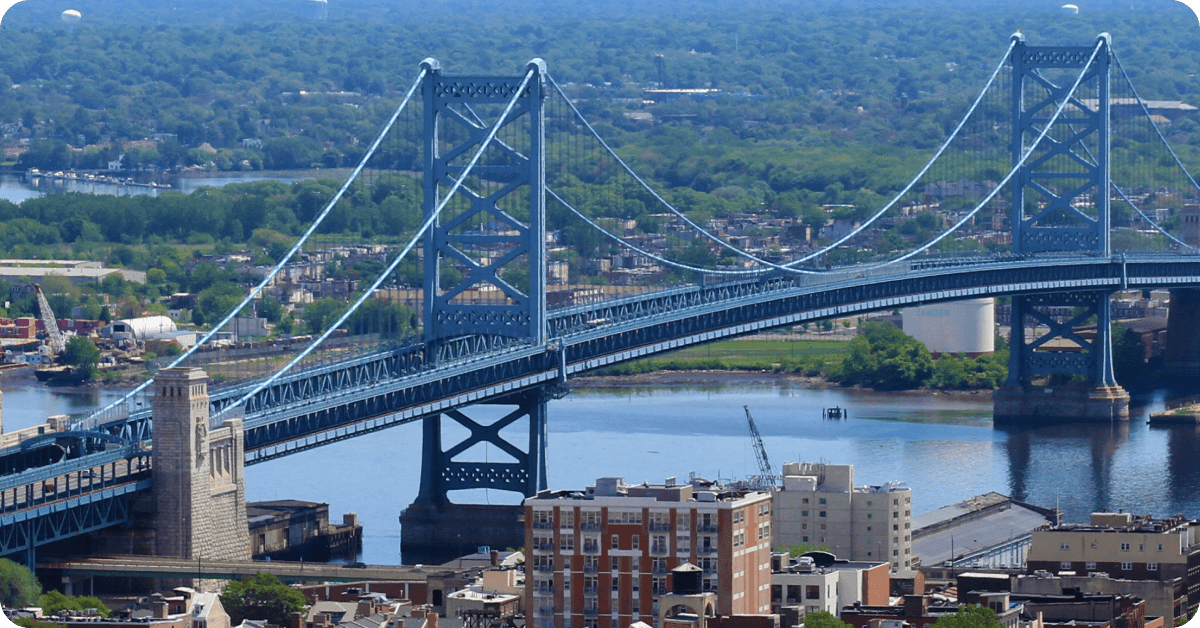
The USS New Jersey (BB-62) is the most decorated battleship in US Navy history, with action across four conflicts, including World War II. Her crew called her “Big J,” and she earned 19 battle stars and a Navy Unit Commendation before retiring to the Camden waterfront, where she now sits permanently docked with the Philadelphia skyline as her backdrop.
This isn’t a “look but don’t touch” museum. You can walk the teak decks, climb inside the massive 16-inch gun turrets, squeeze through the narrow crew quarters, and stand on the bridge where admirals gave orders. The self-guided tour takes a couple of hours, and if you really want to commit, the ship runs overnight encampment programs where you sleep in the same berths the sailors used. It’s a visceral experience whether you’re a history buff or not.
Best theme parks and family attractions
New Jersey punches absurdly above its weight in the theme park department. You’ve got one of the biggest parks in the world, a mall that’s basically a city of entertainment, and a science museum that would make Bill Nye weep with joy.
11. Six Flags Great Adventure and Safari in Jackson
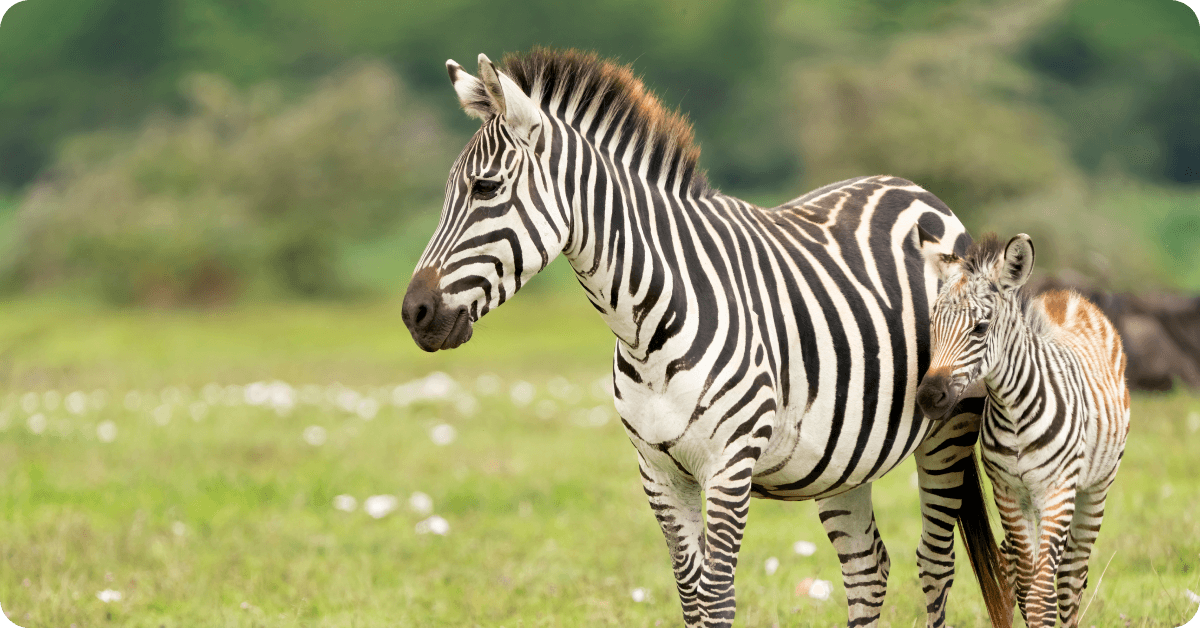
At 510 acres, Six Flags Great Adventure is the second-largest theme park in the world. It has 14 roller coasters, including Kingda Ka, which launched riders 456 feet into the air at 128 mph in 3.5 seconds and held the title of world’s tallest and fastest coaster until it closed. Even if you’re not a coaster junkie, the sheer scale of the place is hard to ignore — there are 47 rides and attractions in total.
Then there’s the Wild Safari, a 350-acre drive-through animal preserve where roughly 1,200 animals — giraffes, rhinos, lions, elephants — roam in open habitats that you cruise through in your own car. You can even feed giraffes from your window on VIP experiences. Next door, Hurricane Harbor is a full-blown water park for when the Jersey summer heat hits.
Single-day online tickets typically range from US$40-90 depending on the day. Season passes start around US$75-90 and pay for themselves in two visits. We recommend always buying tickets online because gate prices can be significantly higher, and Six Flags runs frequent flash sales that can knock the price down to US$30-ish if you time it right.
12. American Dream in the Meadowlands

Part mall, part indoor theme park, part US$5-billion fever dream that took 17 years to build, American Dream started life in 2003 as a project called “Xanadu,” cycled through multiple developers and construction halts, and finally opened in 2019 as a small city with a roof. It’s one of the most ambitious entertainment spaces in the country, and kids absolutely lose their minds here.
Nickelodeon Universe is the largest indoor theme park in the Western Hemisphere. DreamWorks Water Park is one of the largest indoor water parks in the world, complete with a massive wave pool and dozens of slides. And then there’s Big SNOW — North America’s only year-round indoor ski and snowboard slope, built on real snow inside a 16-story structure. There’s also an aquarium, a mirror maze, and a ropes course.
13. Liberty Science Center in Jersey City

Liberty Science Center has been a Jersey City institution since 1993, spread across multiple floors of interactive exhibits covering everything from weather systems and infectious disease to engineering and the Hudson River ecosystem. The star experiences include the Touch Tunnel, an 80-foot pitch-black maze you navigate entirely by feel (surprisingly unnerving for adults), and the Infinity Climber, a towering suspended climbing structure that stretches multiple stories with no barriers between levels — just ropes, nets, and the mild existential question of how you got up there.
Then there’s the Jennifer Chalsty Planetarium, with an 89-foot dome and an 8K resolution system that makes you forget you’re not actually hurtling through the Milky Way. LSC also runs After Dark events for adults (21+) on select Thursday nights, with drinks, music, and access to the exhibits without any children around. That alone might be worth the trip.
Unique and cool things to do in New Jersey
New Jersey’s unofficial motto should be “weird and proud of it” — here are some attractions that prove it.
14. Lucy the Elephant in Margate
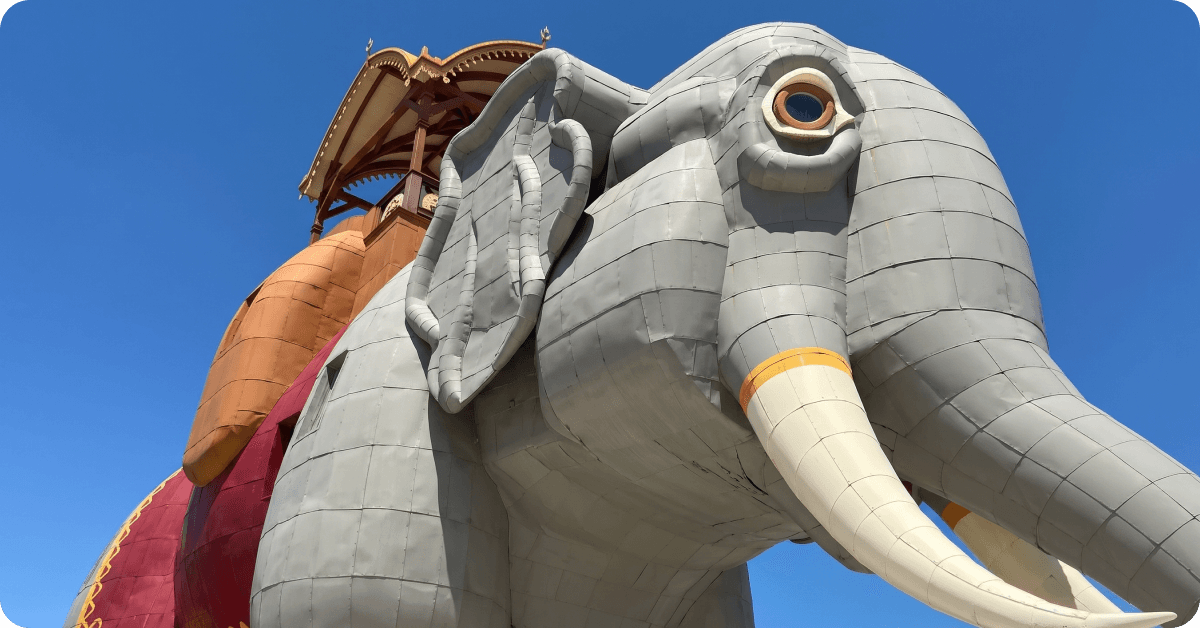
She's 65 feet tall, weighs 90 tons, is made of wood and tin, and has stood on the Margate shoreline, shaped like an elephant, since 1881. Lucy is a National Historic Landmark, and she might be the most charmingly absurd structure on the entire East Coast.
She was the brainchild of James V. Lafferty, a Philadelphia real estate developer who figured the best way to sell beachfront lots in then-desolate South Jersey was to build a six-story elephant you could see from miles away. He even patented the concept of animal-shaped buildings. Over her 140+ years, Lucy has served as a real estate office, a tavern, a rental cottage, and a summer home. By the late 1960s she was deteriorating badly, and a developer planned to demolish her, until the Save Lucy Committee formed in 1969 and raised the money to physically move her two blocks to safety.
She’s been restored multiple times since, most recently in a US$2.4 million renovation completed in 2022, and you can climb inside her, walk up to the viewing platform on her howdah, and take in the ocean views from her back. She is, frankly, perfect.
15. Northlandz
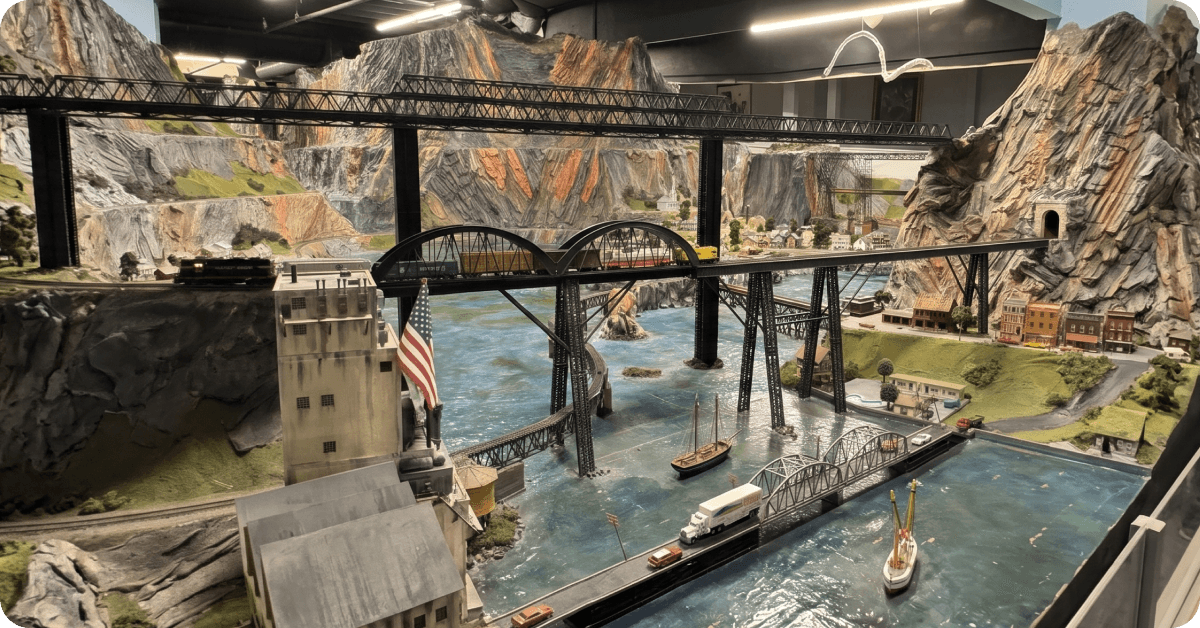
Northlandz in Flemington is what happens when one person dedicates their life to a single magnificent obsession. Bruce Williams Zaccagnino spent nearly two decades hand-building what is now recognized as the world’s largest model railroad. It consists of over 8 miles of track, 400 bridges (some towering 40 feet), and hundreds of tiny, meticulously crafted towns, mountains, and tunnels spanning multiple floors of a 52,000-square-foot building. Over 100 trains run simultaneously through landscapes that range from alpine villages to industrial cities. The place is endearingly eccentric — there’s also an organ room where Zaccagnino used to play a massive theater organ for visitors.
Stay connected in New Jersey with Saily
New Jersey is a state where you’re constantly on the move — checking beach-tag prices in Cape May, pulling up trail maps at the Delaware Water Gap, hailing a ride from Liberty State Park, and looking up whether that restaurant in Asbury Park takes reservations (it does, and you need one). Hunting for spotty Wi-Fi and eating roaming charges shouldn’t be part of the plan.
If you’re visiting from outside the US, the easiest move is to set up a Saily eSIM for the USA before your flight. It activates the moment you land at Newark (EWR), so you’ll have reliable data before you even clear baggage claim — no hunting for airport Wi-Fi, no overpaying for a physical SIM, no standing in line at a kiosk while your travel companions wander off. An eSIM is a digital SIM built into most modern phones, and setting one up takes about two minutes. When you’re ready, download the Saily app, pick a data plan that fits your trip, and you’re set before takeoff.
Now you just need an itinerary, a good playlist (Springsteen, obviously), and a data connection to tie it all together.
Need data in New Jersey? Get an eSIM!

1 GB
7 days
US$3.993 GB
30 days
US$8.995 GB
30 days
US$13.99
FAQ
The Jersey Shore is the state’s biggest overall draw — Atlantic City’s Boardwalk alone sees roughly 27 million visitors a year. For a single ticketed attraction, Six Flags Great Adventure in Jackson is the most visited — the second-largest theme park in the world, plus a drive-through safari. That said, if you want the most uniquely New Jersey experience you can’t get anywhere else, it’s Lucy the Elephant — a 65-foot, 140-year-old elephant-shaped building you can actually climb inside.
The Jersey Shore — 130 miles of Atlantic coastline with everything from Victorian Cape May to the neon-lit boardwalks of Wildwood and Atlantic City. The food — pork roll (or Taylor ham, depending on where you stand in that war), 24-hour diners, boardwalk pizza, saltwater taffy, tomato pie, and some of the best tomatoes and blueberries in the country. And the culture — Bruce Springsteen and the Asbury Park music scene, “The Sopranos,” and a general attitude that’s loud, loyal, and unapologetic about all of it.
Yes. You’ve got world-class beaches, one of the biggest theme parks on the planet, a 77-foot waterfall in the middle of a city, 1.1 million acres of pine forest with its own cryptid, Ivy League campus strolls, a 65-foot elephant you can climb inside, and a food scene that turns diners into institutions. Most of it is within a short drive of everything else — the state is only 170 miles long, so you can hit the beach in the morning and a mountaintop trail in the afternoon.
For a beach day, Cape May offers a historic seaside town with a free zoo, while Asbury Park has live music and waterfront restaurants. If you want culture and history, Princeton is perfect for an Ivy League campus stroll and a free art museum — pair it with Grounds for Sculpture in nearby Hamilton for a full day. For the outdoors, the Delaware Water Gap has waterfall hikes and kayaking, and the Palisades offer dramatic cliffs with Manhattan skyline views. And if you want a quick city hop, NJ Transit or PATH gets you to Manhattan in under 30 minutes, while Camden is a quick bridge-cross to Philadelphia — both are easy add-ons to any NJ trip.

Always connected, always on course
Connect instantly with a Saily eSIM and enjoy effortless internet access.

Related articles
