What is the transport system in Japan like?
Japan’s public transportation system is one of the best in the world. In big cities, such as Tokyo or Osaka, trains can take you to basically any destination. Kyoto, on the other hand, relies more heavily on buses. And when it comes to rural areas or countryside towns, trains and buses are more limited, making car rentals or taxis the better option.
Station signs, on-train screens, and ticket machines almost always have English versions, especially at bigger stations, making it easy enough to get around as a tourist.
Japan’s transport system is extensive and can look confusing at first, but it’s actually straightforward, organized, and safe. However, planning your route ahead of time helps you pick the right option.
Types of public transport in Japan
Japan’s public transport network relies on three main pillars: trains, subways, and buses. Understanding how each works will make navigating the country much easier.
Trains
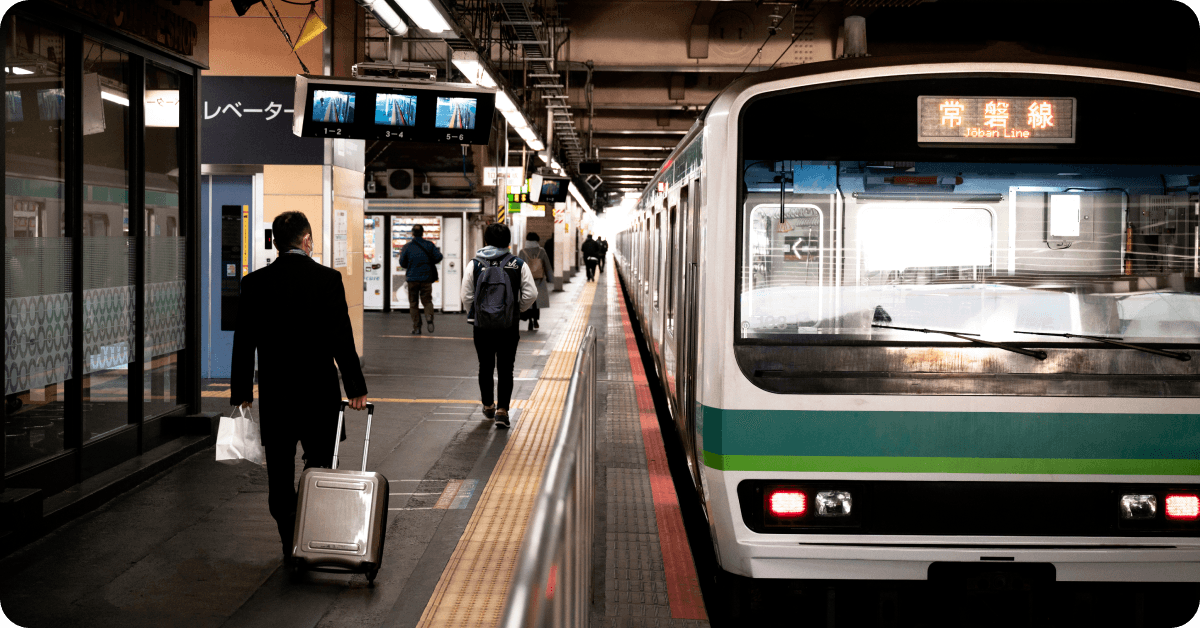
Trains in Japan are clean and convenient. You’ll likely encounter three types of trains in Japan:
The Shinkansen (the bullet train). This is one of the fastest ways to travel long distances in Japan. You can hop on the Tokaido Shinkansen in Tokyo and get to Osaka or Kyoto in about two and a half hours. A one-way ticket for this trip is around ¥15,000 (US$94), and you can book it online or at a Shinkansen ticket office in the station.
Japan Railways (JR). This is the biggest railway network in Japan. JR lines run across the country and are also covered by the Japan Rail Pass.
Private railways. Dozens of private companies run throughout the city, covering areas that JR doesn’t. The Tokyu, Keio, and Odakyu lines in Tokyo are excellent examples. Any IC card, like Suica or Pasmo, works on these lines too. A JR Pass won’t, though.
Subways
The transportation in Tokyo includes an extensive subway network, with nine Tokyo Metro lines and four Toei Subway lines. Osaka, Nagoya, Fukuoka, Sapporo, and Kyoto all have their own metro systems, though Kyoto’s is on the smaller side, with just two lines (Karasuma and Tozai).
The subway will likely become your go-to mode of transport. Fares are based on the distance and range from ¥180 to ¥430 (US$1-3) for a one-way trip in Tokyo. And you can pay using your IC card too. If you plan on using the Tokyo subway a lot, you could buy a metro pass to save money.
Short and long-distance buses
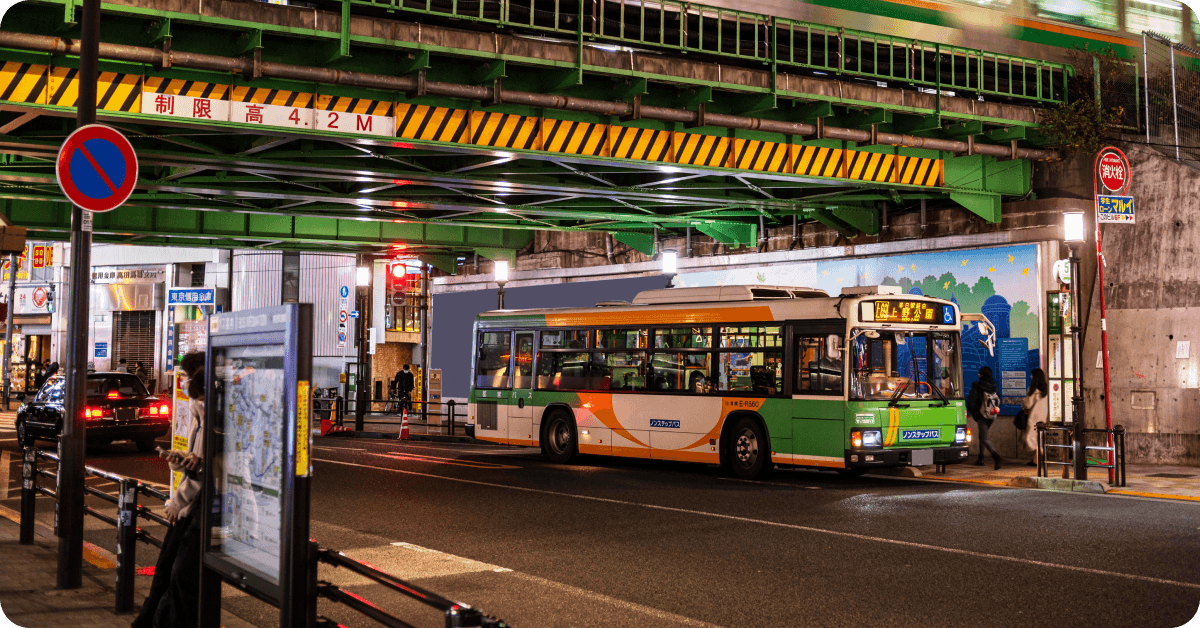
Buses are another way to get around cities and the country. They’re especially useful in Kyoto for reaching neighborhoods where subways or trains don’t go. A base fare in Tokyo is ¥210 (US$1.30), and just like for subways, you can use your IC card to pay.
For long-distance travel, overnight buses are a popular choice — particularly among budget travelers. They’re significantly cheaper than the Shinkansen and save you at least one night’s accommodation. Companies like Willer Express have English-language booking sites, so non-Japanese speakers can plan their trip easily. However, the trade-off is time — going from Tokyo to Kyoto, for example, takes around nine hours by bus versus two and a half hours by bullet train. So if time matters most to you, the train is the better call.
How to get around with public transport in Japan
A map of Japan’s public transport system — Tokyo’s especially — can look like a plate of spaghetti at first glance. But once you know a few core things, getting around can actually become straightforward.
How to get transportation cards in Japan
IC cards are one of the smartest things you can buy as a tourist in Japan. They’re prepaid cards that work on trains, subways, and buses across the country. Beyond transport, you can use them at convenience stores, vending machines, and various shops, restaurants, and cafes. And if nothing else, they make a pretty cool souvenir.
Card | Best for | Where to buy | Valid for | Cost |
|---|
Suica | Travelers coming into Tokyo (works across the city) | Narita, Haneda, and major JR East stations | The Welcome Suica is valid for 28 days. The card itself expires only after 10 years of inactivity. | ¥500 deposit + loaded balance |
|---|
Pasmo | Travelers coming into Tokyo (works across the city) | Airports and Tokyo Metro stations | The Pasmo Passport is valid for 28 days. The card itself expires only after 10 years of inactivity. | ¥500 deposit + loaded balance |
|---|
Icoca | Osaka or Kyoto-focused trips | Kansai airports and major stations | The card itself expires only after 10 years of inactivity, including the Kansai One Pass for tourists. | ¥500 deposit + loaded balance |
|---|
Japan Rail Pass | Multi-city Shinkansen travel | Online (before arrival) | JR Passes are good for 7, 14, or 21 days. | ¥50,000, ¥80,000, and ¥100,000 |
|---|
Suica: Issued by JR East, Suica is one of the most popular IC cards in Tokyo. It works on all train lines and buses in cities across the country. You can pick one up at major JR East stations or at the airport for around ¥500, which is a refundable deposit. A tourist version called Welcome Suica skips the deposit but expires after 28 days. And if you want to get set up before you even land, JR East’s Welcome Suica Mobile app lets iPhone users order a digital version ahead of their trip.
Pasmo: Pasmo is the second most common IC card in the Kanto area, issued by Tokyo’s private rail and bus operators. It works just like Suica and costs the same — approximately ¥500 as a deposit, plus whatever balance you load onto it. A tourist version called Pasmo Passport is also available at major Tokyo stations and the airport.
Icoca: This JR West’s IC card covers the Kansai region (Osaka, Kyoto, and Kobe) and is a solid option if you’re starting your trip there. The tourist version, the Kansai One Pass, comes with discounts at select tourist attractions. You can get an Icoca card at Kansai airports or major stations.
Japan Rail Pass (JR Pass): The JR Pass is a separate pass for tourists planning multiple long-distance train trips, not a tap-and-go IC card. It gives you unlimited travel on most JR trains — including the Shinkansen — for seven, 14, or 21 consecutive days. Prices are ¥50,000 (US$315) for seven days, ¥80,000 (US$504) for 14 days, and ¥100,000 (US$630) for 21 days. You can use a free JR Pass calculator online to see if it’s worth buying one.
How to navigate Japan’s public transportation
Japan’s train and subway network is one of the most efficient in the world, but it can feel overwhelming on your first ride. A few simple habits will help you move through it like a local.
Load your IC card at ticket machines. Keep your balance updated using any ticket machine at a train station. Just select the English menu option (or hit the チャージ button) and select the amount you want to top up.
Use Google Maps or NAVITIME: Both apps give accurate, real-time route planning for trains, subways, and buses in Japan. If you aren’t sure about which train to get on, check if the times and platform numbers from one of the apps match the signs. They work best with a steady data connection, so having a Saily eSIM set up before you land keeps them running smoothly wherever you go.
Know your last train. Except for special occasions, trains don't run all night, with the last departure usually around midnight. Miss it, and you’re waiting until around 5 am or hailing a taxi.
Follow the colors. Big stations like Shinjuku or Shin-Osaka can feel disorienting. Luckily, every train line is color coded. So when in doubt, just follow the right color and you'll find your way.
Avoid rush hours. If you can, avoid the trains from 7:30-9:30 am and 5:30-8:00 pm on weekdays. Trains get extremely crowded, so waiting it out is often worth it.
Walk when you can. Tokyo is very walkable, and if your destination is 20-30 minutes away on foot, you’ll often get there just as fast. Walking is also a great way to actually experience Japan — that’s how you stumble onto the spots that don’t show up in any guidebook, or on a list of top things to do in Tokyo (opens in a new tab).
How much is public transportation in Japan?
Public transportation in Japan is affordable, but small trips add up quickly over a full day.
Transport type | Approximate cost |
|---|
Subway/train (a single trip) | ¥180-430 (US$1-3) |
|---|
City bus (a single trip) | ¥210 (US$1.30) |
|---|
Long-distance bus | ¥3,800+ (US$24) |
|---|
Day pass | ¥1,000-2,000 (US$6-13) |
|---|
Shinkansen (Tokyo → Osaka, a single trip) | ~¥15,000 (US$94) |
|---|
JR Pass | ¥50,000 (US$315) for 7 days,
¥80,000 (US$504) for 14 days,
¥100,000 (US$630) for 21 days |
|---|
Trains and buses aren’t the only way to get around Japan. And the mode you go with ultimately depends on your preferences, budget, and specific plans or circumstances.
Taxis
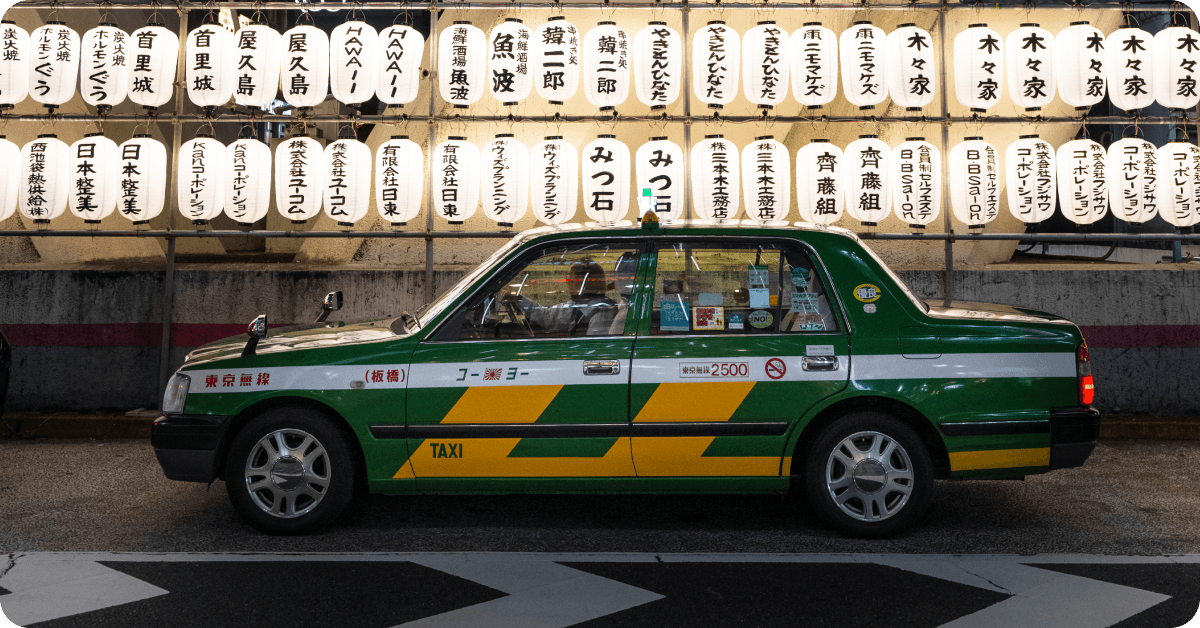
Taxis in Japan are clean and reliable — no surprise given the country’s reputation for quality service. They’re metered by distance, with the starting fare around ¥400-750 (US$2.50-4.70) for the first 1-2 kilometers and ¥80-100 (US$0.50) added for every 200-400 meters after that. You can also expect a 20% surcharge at night. Taxis are the pricier option but useful when public transport isn’t available or you’re hauling heavy luggage.
💡 Pro tip: Taxi doors in Japan open and close automatically, so resist the urge to close them yourself.
Airplanes
A strong domestic flight network operates in Japan, with carriers like ANA, JAL, Peach, Jetstar Japan, and Skymark. For long-distance trips — think Tokyo to Sapporo, or Osaka to Okinawa — flying is the right move. It’ll be faster and usually cheaper than taking an eight-hour Shinkansen ride or boat, especially if you book in advance and use a budget carrier like Peach. Domestic flights usually fly out of Haneda in Tokyo rather than Narita — which is good news because Haneda is closer to the city.
Rental cars
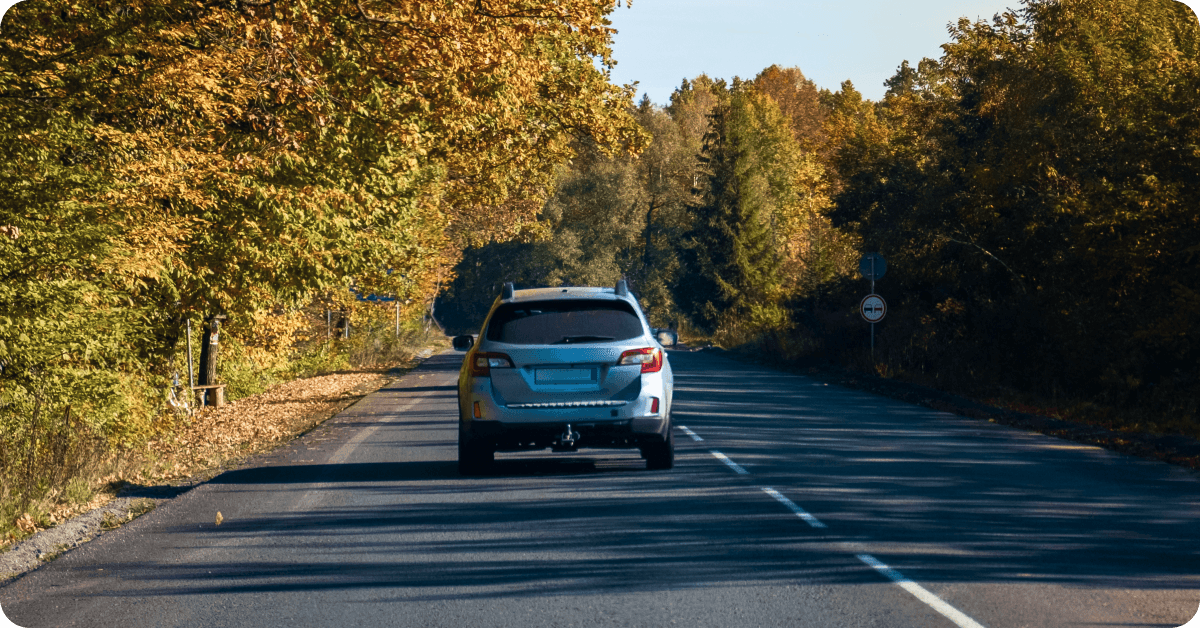
For rural Japan, renting a car is the way to go. It’s hard to fully experience places like the Japanese Alps or Hokkaido’s countryside if you’re relying solely on public transport. Roads in Japan are well maintained and navigation apps are all in English. Keep in mind, though, that cars drive on the left side of the road. Parking in major cities is expensive and often hard to find, and highway tolls add up quickly too.
💡 Pro tip: Renting a car in Japan requires an international driving permit, which you’ll need to get in your home country before you arrive. Make sure that’s taken care of before you build your whole trip around driving.
Bicycles and Scooters
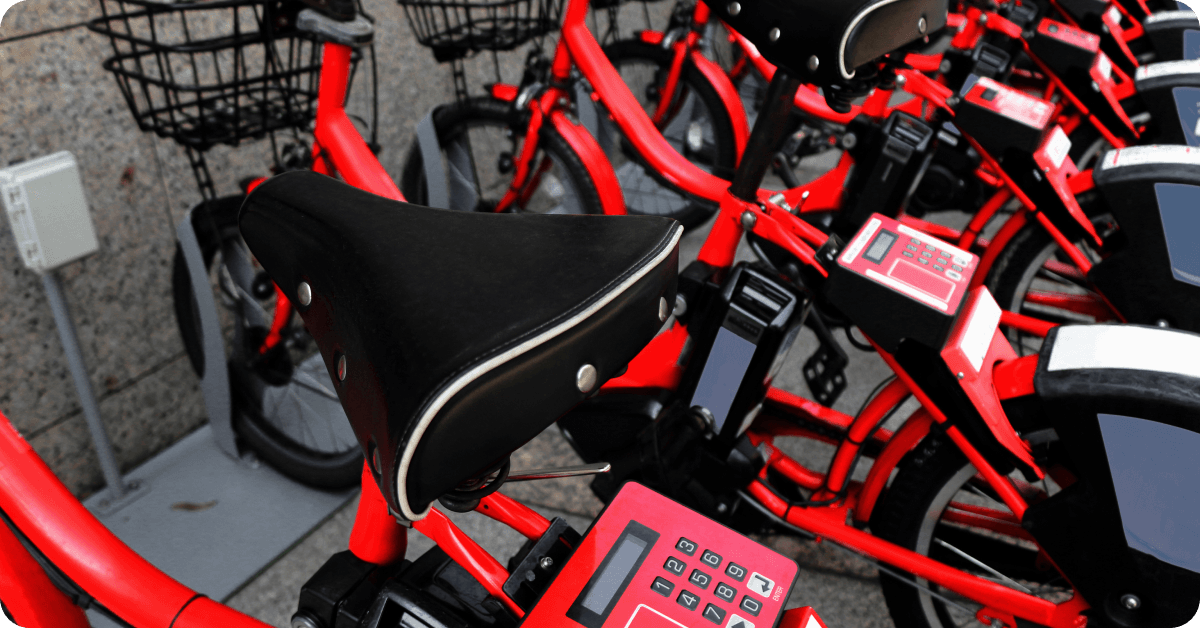
You’ll notice bikes fill the streets in Japan, especially Tokyo. Cities like Kyoto, Hiroshima, and Kanazawa are especially good for cycling, with flatter terrain and manageable distances. Some hotels offer bike rentals, and you can find dedicated rental shops near tourist areas. Apps like Docomo Bike Share, available in cities like Tokyo and Osaka, let you rent and return bikes at docking stations across the city. Scooter rentals are another option, with stations scattered throughout tourist areas.
Ride-hailing apps
Ride-hailing apps are restricted in Japan. All app-based rides go through licensed taxi companies. GO is the dominant Japan taxi app, with coverage in all 47 prefectures across the country — though only in areas where taxi companies operate. It’s also available in English and supports in-app card payment.
Uber also operates in Japan but in a more limited capacity — it just connects you to local taxi fleets in major cities. DiDi is available as well, and it often offers discount codes that are worth looking out for. These apps are especially handy if you’re worried about speaking Japanese because trip information is all in the app.
What is the best way to get around Japan for tourists?
For most tourists, trains are the best way to get around Japan. They’re fast, comfortable, reliable, and make it incredibly easy to cross off the top things to do in Japan on your itinerary. The Shinkansen handles long-distance travel between cities, while local networks cover everything within a city. Planning multiple Shinkansen trips? The Japan Rail Pass might be worth it. If you’re spending most of your time in rural areas, then a rental car will give you the most freedom.
Practical tips for getting around Japan
Keep these Japan travel tips in mind for a smooth trip:
Book Shinkansen seats in advance. It’s especially important during peak seasons, like Golden Week, Obon, or when the cherry blossoms bloom, when reserved seats fill up fast.
Use luggage transfer (takkyubin) services. You can send your bags directly to your hotel rather than hauling them around the city and dealing with heavy bags on trains. It only costs around ¥1,500-2,500 (US$9-16) per bag and makes navigating Japan way easier, especially when you’re jetlagged.
Be punctual. Trains leave on time, down to the minute. If Google Maps says the train leaves at 10:32, be on the platform by 10:31.
Avoid rush hours. Avoid traveling during weekday mornings (7:30-9:30 am) and evenings (5:30-8:00 pm) in bigger cities when trains get packed, especially if you’re traveling in a larger group or have big bags.
Follow public transport etiquette. Japan is serious about etiquette. Avoid talking on the phone, keep your voice low, don’t eat, give up priority seats to those who need them, and don’t block the doors.
Know the last train time. Check schedules wherever you’re going, which is usually around midnight. If you miss the last departure, you’re stuck with a taxi.
Stay connected. Navigating Japan’s transport system is easy as long as you have a reliable connection. A Saily eSIM for Japan keeps you connected from the moment you land without the cost of international roaming or the hassle of finding a local SIM card. Pocket Wi-Fi is another option, but it’s better for groups. Interestingly, some local providers now bridge both formats — our Japan Wireless eSIM review takes a look at a provider that includes a physical pocket Wi-Fi backup guarantee if digital activation fails on arrival. Check out our eSIM vs. pocket Wi-Fi in Japan comparison guide to figure out which works best for your trip.
How the Saily eSIM app can make navigating Japan’s transportation easier
Getting around Japan is easy and intuitive — as long as you’re connected. You’ll be constantly checking routes, looking up train times, translating signs, and booking tickets online. Saily eSIM plans help you avoid connectivity issues. An eSIM is a digital SIM card you download directly to your phone, with no physical SIM swapping or hunting for a SIM kiosk after your flight. You can download an eSIM app and set everything up before you travel. Once you land, your eSIM activates automatically and connects to local networks.
With Saily, you also get built-in web protection and an ad blocker that can save up to 28.6% of your data. When you’re running maps and translation apps all day, every bit of data savings counts. Plans are flexible and affordable, and you won’t risk suddenly running out of data mid-trip. You also get an unlimited hotspot, so you can connect your other devices too.