



Best transportation in Tokyo for tourists and tips to get around
With a population of around 37 million people in its Greater Area, Tokyo’s transportation network is one of the most complex in the world. And yet, somehow, it works like clockwork. Understanding the intricacies of Tokyo transportation can be a tough nut to crack, though, so in this article, we’ll cover all you need to know about transportation in Japan and its capital, along with some helpful tips to get around.
Table of Contents
- How to get around in Tokyo
- Trains
- Subways
- Bus lines
- How to use public transport in Tokyo
- Transportation cards and tickets in Tokyo
- IC cards
- Tokyo Subway Ticket pass
- Paper tickets
- How much is public transport in Tokyo?
- How to get to Tokyo from other Japanese cities
- How to get to Tokyo from Narita and Haneda airports
- From Narita Airport
- From Haneda Airport
- Key tips for navigating transportation in Tokyo
- So, what is the best way to get around Tokyo for tourists?
How to get around in Tokyo
Tokyo’s transportation system is like a well-oiled, ridiculously clean, and famously punctual machine with its trains, subways, buses, taxis, ferries, and even rental bikes. However, the railway and subway are the most popular means of transportation in Tokyo, servicing up to 40 million people every day!
Naturally, the real challenge for people visiting Tokyo for the first time is navigating over 100 train and subway lines crisscrossing the metropolis. Even with tactile paving and multi-language signs, figuring out where to start can feel overwhelming. To understand Tokyo’s transportation, it’s best to break it down into separate means of transport.
Trains
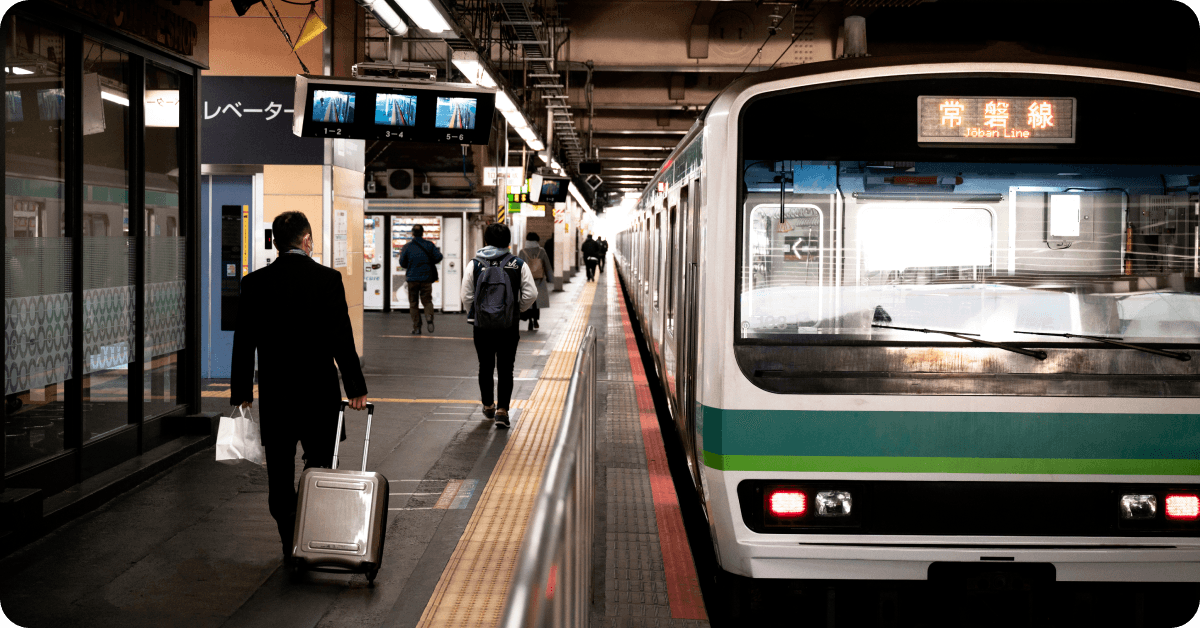
Trains are the backbone of Tokyo’s transport network. Managed by the Japan Railways (JR) Group, most of the city’s above-ground commuter lines stretch for miles, including the famous Yamanote line that circles central Tokyo and connects hubs like Shinjuku, Shibuya, Tokyo, and Ueno stations. Other handy JR lines include Chuo, Sobu, and Keihin-Tohoku, which spread deep into the suburbs and neighboring prefectures.
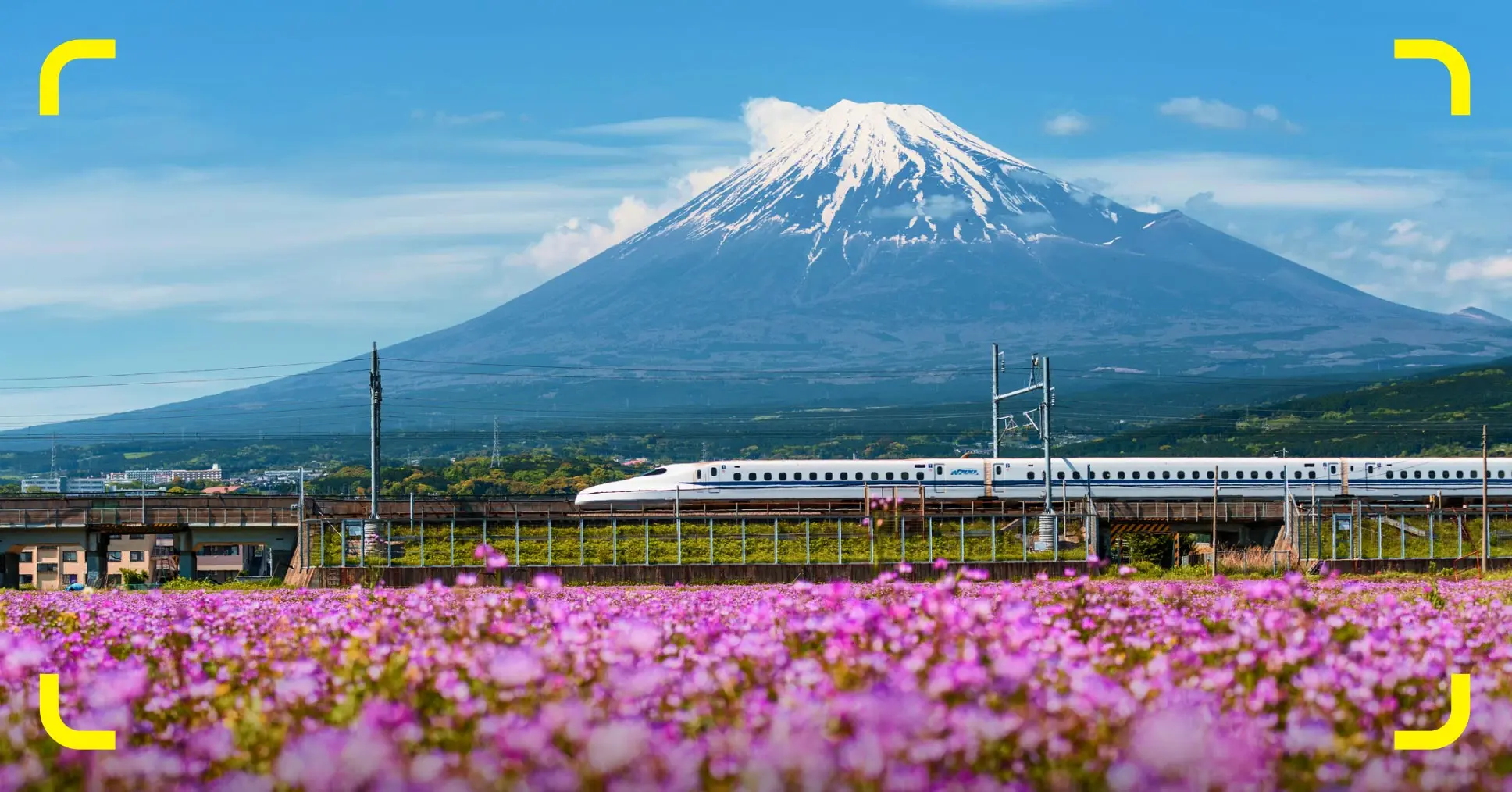
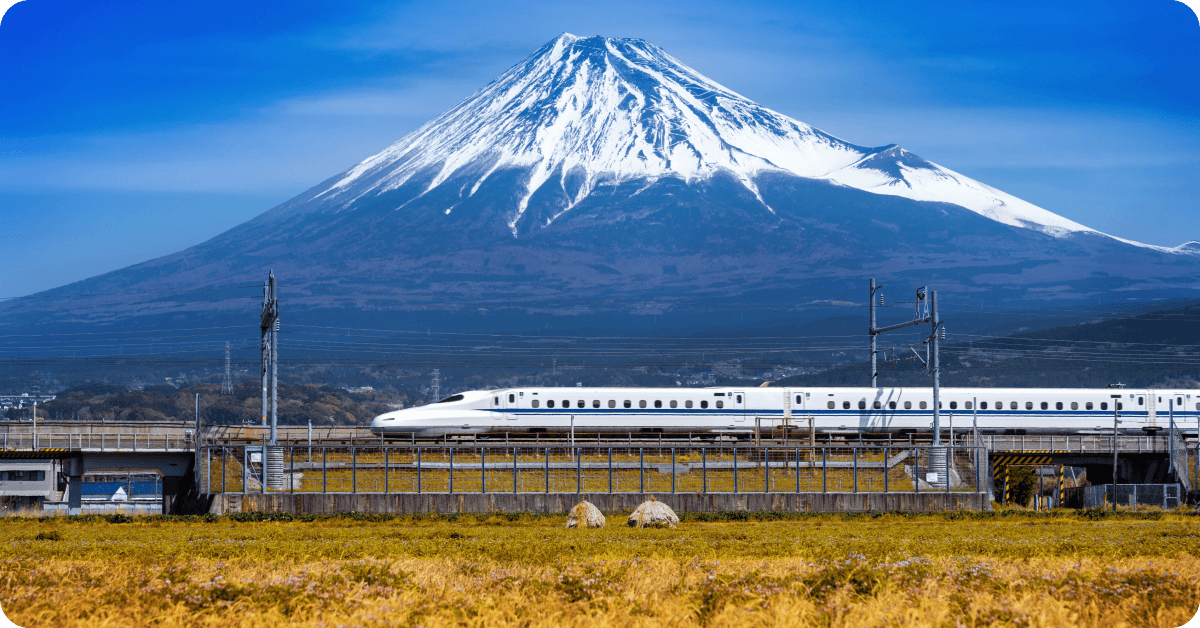
For travels outside the Tokyo Greater Area, Shinkansen (bullet trains) zoom out of Tokyo and Shinagawa stations with speeds of up to 200 mph (320 km/h), providing both a highlight and a fast way to reach other Japanese cities. Whether you’re heading to Kyoto, Osaka, or all the way up to Hokkaido, the bullet train is the best way to travel (if you’re lucky, you can even see great up-close views of Mount Fuji when on the Shinkansen!). Local private railways like Keio, Odakyu, Tokyu, and Seibu also fill in the gaps, connecting central Tokyo to the suburbs and popular day-trip destinations like Hakone or Kamakura.
Getting tickets for Shinkansen can be a bit tricky if you’re not familiar with Shinkansen lines, such as Tokaido, Hokuriku, or Sanyo. These are just a few of the routes that connect cities like Osaka, Kyoto, Nagano, or Hiroshima. While you can get tickets for each of these lines at Tokyo and Shinagawa stations, buying them online (either via SmartEX for Tokaido, Sanyo, and Kyushu lines or regional JR websites for other Shinkansen lines) can save you some time.
Subways
Tokyo has 13 subway lines run by two operators: Tokyo Metro (nine lines) and Toei Subway (four lines). Together, they form a dense system that covers pretty much every corner of central Tokyo. The Ginza, Marunouchi, and Hibiya lines (all Tokyo Metro) are some of the most useful for tourists, since they stop at popular spots like Asakusa, Ginza, Roppongi, and Ueno. Toei lines such as Asakusa also come in handy, particularly when you want to reach Haneda Airport or the lesser-known neighborhoods of eastern Tokyo.
At first glance, the Tokyo subway can look overwhelming, but it’s actually easy to navigate, especially with apps like Google Maps (just don’t forget to download an eSIM app for smooth connections!). Most stations have English signage, color-coded line maps, and alphanumeric station codes (such as G09 for Ginza station on the Ginza line), so you don’t need to know how to read kanji to find your way. Safety is a clear priority, too, since most platforms are fitted with screen doors that separate passengers from the tracks. Women can choose women-only cars, available on several lines during morning rush hours and clearly marked in pink on platforms and train doors.
Bus lines
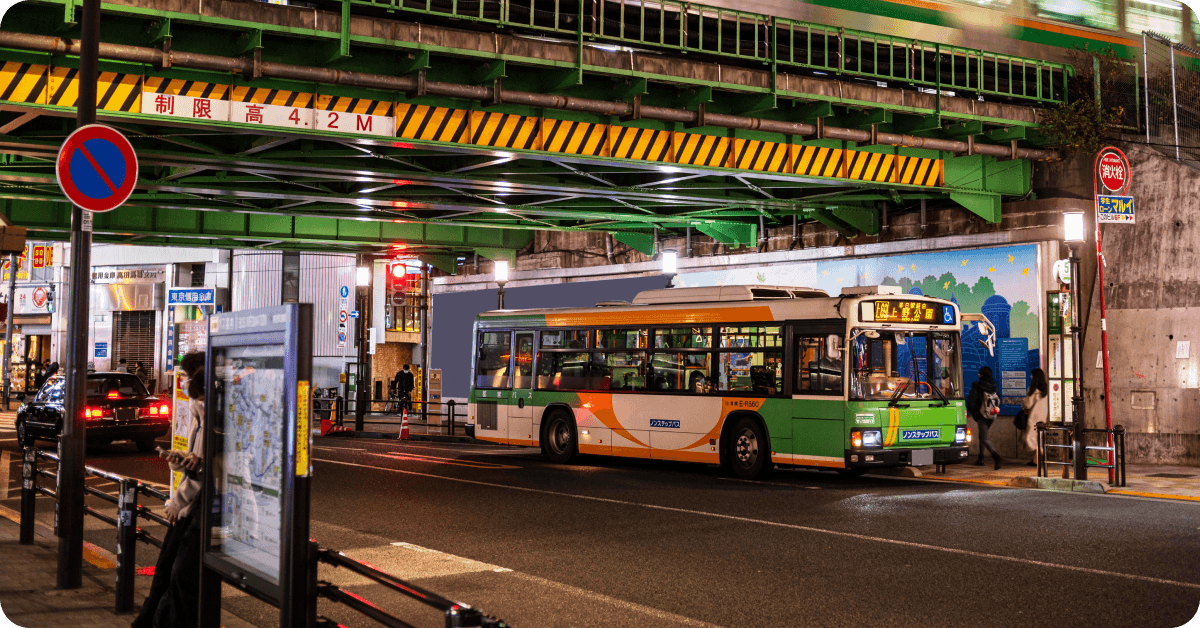
While trains and subways are the stars of Tokyo’s transit system, buses fill in the routes that rails don’t cover. The Toei Bus network runs across central Tokyo and is especially useful for sightseeing in areas like Roppongi, Ueno, or the waterfront. Flat fares of ¥210 (about US$1.30)* for adults make bus rides simple and affordable. You can pay with cash (exact change is appreciated) or, more conveniently, tap your IC (integrated circuit) card at the reader next to the driver.
For first-timers, the Sky Hop Bus and other hop-on hop-off services can be a fun way to see Tokyo’s landmarks without sweating over routes. Just keep in mind that buses can get stuck in traffic, so they’re rarely the fastest option in a city this big.
*JPY/USD conversion rates are accurate as of June 16, 2026
How to use public transport in Tokyo
To use public transport in Tokyo, you’ll need either a rechargeable IC card (Suica or PASMO), a Tokyo Subway Ticket pass, or a valid ticket for the line you’re taking. Beyond that, it’s a matter of knowing which station to board at, where to exit, how to read the route maps, and how to check schedules and fares. Sounds like a lot? Let’s break down the most important things to get you up to speed.
Transportation cards and tickets in Tokyo
To pay for public transport in Tokyo, you have three main options:
Get an IC card and tap it at the gate when entering/exiting.
Use a Tokyo Subway Ticket pass (24, 48, or 72 hr unlimited access).
Buy a single-use paper ticket from a station machine.
Out of the three options, the IC cards are the most versatile, since you can use them across nearly all trains (including JR), subways, buses, and even at convenience stores, vending machines, and many restaurants! An IC card will also get you past Shinkansen gates, provided you pair your Shinkansen ticket with the IC card.
IC cards
You can get your preferred pre-paid IC card in an automated ticket machine at any major station or the airport. We recommend getting one as soon as you arrive, so when you land, simply find the IC card machine and follow the on-screen instructions (English is available). Since the cards are pre-paid, you’ll have to top them up with cash, so make sure you have some yen on hand (¥5,000 should be enough for a couple of days, and you can always top up your IC cards at convenience stores).
You can choose from at least a few IC card providers, including:
Welcome Suica. A tourist version of the classic JR Suica card, Welcome Suica is valid for 28 days and requires no deposit. The card works on virtually all trains, subways, buses, and contactless payment points across Japan. If you’d rather go fully digital, Mobile Suica is a separate option available on iPhones and on Android phones sold in Japan, though it requires a Japanese-language setup process that’s not tourist friendly. You can get a Welcome Suica card at Haneda and Narita airports and select JR stations.
TOURIST PASMO. As an answer to Welcome Suica, the PASMO card launched in May 2026. Similarly, it is valid for 28 days, requires no deposit, and works on the same wide range of transport and stores. You can buy it at machines in Tokyo’s major subway stations, including both airports.
Other IC cards. Regional IC cards issued elsewhere in Japan — such as ICOCA (JR West), Kitaca (JR Hokkaido), TOICA, manaca, or SUGOCA — are fully usable in Tokyo. They work on the same trains, subways, buses, and contactless payment points as Suica and PASMO, with no need to swap cards when you travel between regions. If you already own one from a previous trip, just bring it along and top it up at any ticket machine in Tokyo.
To use your IC card for the subway or railway in Tokyo, simply tap your IC card at the designated spot on the subway gates. When exiting the metro, tap the card at the exit gates to leave the subway. The card will charge the fare once you step out, so make sure to have enough money on your IC card!
You can top up your IC card at any station ticket machine, convenience store, or via the Suica or PASMO mobile apps (available on iPhones and on Android phones sold in Japan). Just remember that Welcome Suica and TOURIST PASMO balances are non-refundable, so don’t load more than you’ll spend.
If you’ve booked a Shinkansen ticket online, you can pair it with your IC card. For SmartEX users, go to “Details” and “Designate IC card” on its website or app. Register a new IC card by typing the number you’ll find on the backside of your IC card, and you’re all set! Once at the station, tap your IC card at the Shinkansen gate, collect the small paper ticket the gate prints out for you, and proceed. Once you arrive at your destination, exit the Shinkansen platform by tapping the IC card at the gates. Keep the ticket for yourself — you won’t need it at the exit gates.
Welcome Suica users can also use the “Touch de Go!” service when boarding JR East Shinkansen trains with non-reserved seats. You’ll need to register your card on the JR East website beforehand — once that’s done, it works the same way as a subway tap-in. Simply tap your IC card at the Shinkansen gate and tap it again when you exit the platform at your destination. The system will automatically deduct the fare from your IC card.
Important: Non-reserved seats on Shinkansen trains are limited and are not guaranteed in case the number of reserved tickets increases. Make sure you’re not traveling during peak times to avoid losing your seat.
Tokyo Subway Ticket pass
If you’re planning on staying in Tokyo throughout your whole trip, you might want to use a Tokyo Metro pass known as a Tokyo Subway Ticket. Along with other special tourist-friendly tickets, they often offer better value than IC cards, especially if you’re sticking to subways. You can get 24, 48, and 72 hr subway passes at the airport or at designated spots at major stations (like Shinjuku, Ueno, Ginza, or Ikebukuro), allowing you to use the subway an unlimited number of times. You can also get a Tokyo City Pass that includes these subway passes, plus adds tickets to popular attractions such as the Tokyo Skytree or Senso-ji temple in Asakusa.
Child (ages 6-11) | Adult (ages 12+) | |
|---|---|---|
24 hr Tokyo Subway Ticket | ¥500 (around US$3.00) | ¥1,000 (around US$6.20) |
48 hr Tokyo Subway Ticket | ¥750 (around US$4.70) | ¥1,500 (around US$9.30) |
72 hr Tokyo Subway Ticket | ¥1,000 (around US$6.20) | ¥2,000 (around US$12.50) |
Paper tickets
Finally, you can just go the old-fashioned way and get a paper ticket for the subway. You will find ticket machines next to the metro gates, where you can easily get your ticket. Before buying, check your destination to know how much you’ll need to pay. If you can’t find it, don’t worry — you can buy the cheapest ticket and proceed to the gates. Put the ticket into the slot and proceed through the opened gates. Don’t forget to take the ticket with you, or you won’t be able to exit the subway!
Once you arrive at your destination, use the same ticket you bought to exit the subway. If you’re not sure whether you’ve paid the full amount for your fare, you can use the fare adjustment machines next to the subway exit gates. Simply put your ticket in the machine and wait until it calculates the full price. Once done, you can pay the difference at the spot and proceed towards the exit, where you’ll slide the ticket through into the gate slot, opening the gates to the exit.
How much is public transport in Tokyo?
Public transport in Tokyo is pretty affordable, especially compared to other major world capitals. A single subway ride costs between ¥180 and ¥430 (US$1.12 to US$2.85) depending on the operator and distance, while JR train fares start at ¥150 (about US$1). Bus rides are a flat ¥210 (US$1.30). If you’re planning to hop around a lot, multi-day passes can save you a chunk of yen.
If you use Google Maps, you’ll notice that the app actually shows you the price of your trip to the destination. You can find it on the right side of the screen, right under the estimated trip time:
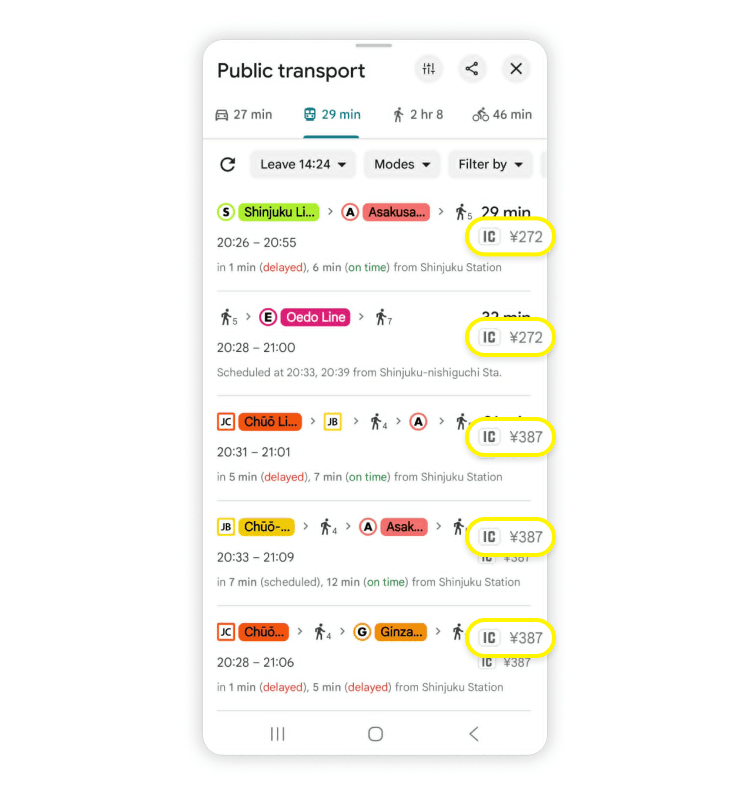
Tokyo subway fares typically range from ¥180-330 (roughly US$1.12-2), depending on the distance traveled. A typical bus fare is usually around ¥220 (about $1.40). Below you can find a breakdown of all public transport pricing options.
Ticket/Card | Price (adult) | Validity | Coverage and benefits |
|---|---|---|---|
Welcome Suica | ¥0 (the card is free, but you need to top it up with at least ¥360-660 for subway trips) | 28 days | All trains, subways, and buses nationwide, plus convenience stores and vending machine payments |
TOURIST PASMO | ¥0 (the card is free, but you need to top it up with at least ¥360-660 for subway trips) | 28 days | Same as Welcome Suica, nationwide IC payments |
Tokyo Subway 24-hour Ticket | ¥1,000 (around US$6.20) | 24 hours | Unlimited rides on Tokyo Metro and Toei subway lines |
Tokyo Subway 48-hour Ticket | ¥1,500 (around US$9.30) | 48 hours | Same as above |
Tokyo Subway 72-hour Ticket | ¥2,000 (around US$12.50) | 72 hours | Same as above |
JR Pass (7-day) | ¥50,000 (around US$312) | 7 days | Unlimited JR train rides nationwide, including most Shinkansen trains |
JR Pass (14-day) | ¥80,000 (around US$500) | 14 days | Same as above |
JR Pass (21-day) | ¥100,000 (around US$624) | 21 days | Same as above |
How to get to Tokyo from other Japanese cities
If you’re starting your Japan trip in Osaka or Kyoto and heading to Tokyo, you’ve got a few solid options, including bullet trains, buses, and domestic flights.
Shinkansen (bullet train). The fastest way to reach Tokyo from major cities like Kyoto (2 hr 15 min), Osaka (2 hr 30 min), Hiroshima (4 hr), or Sendai (1 hr 30 min). Tickets cost between ¥10,000 (about US$62) and ¥22,000 (about US$137) one way, with trains arriving at Tokyo or Shinagawa stations.
Highway bus. Cheaper but slower, overnight buses from Osaka, Kyoto, or Nagoya to Tokyo cost ¥3,500 to ¥9,000 (about US$22 to US$56) and take 6 to 9 hours. Comfortable seats, blankets, and onboard restrooms are usually included.
Domestic flights. ANA, JAL, and budget carriers like Peach or Jetstar fly from Sapporo, Fukuoka, Okinawa, and other distant cities to Haneda or Narita airports. Tickets start at around ¥6,000 (around US$37) if you book early.
How to get to Tokyo from Narita and Haneda airports
Tokyo’s transportation network conveniently connects Narita and Haneda airports to the city center. The Keisei-Toei Asakusa line is the main commute artery that you can use to reach the city center or travel from one airport to another, if needed, but it’s not your only option. Here’s how to reach Tokyo from each of these airports.
From Narita Airport
Narita sits about 60 km east of central Tokyo, so getting downtown takes about an hour to an hour and a half, depending on the route you pick. To reach the city from Narita airport, you can use:
Narita Express (N’EX). It’s the fastest train option, with direct connections to Tokyo, Shinjuku, Shibuya, and Yokohama stations. Narita Express typically costs around ¥3,070 to ¥4,070 (around US$20 to US$25), taking about an hour to get to the city.
Keisei Skyliner. Keisei Skyliner is a speedy alternative that reaches Ueno in about 40 minutes. The train tickets for Skyliner typically cost around ¥2,580 (about US$16), making it a great choice for those heading to central Tokyo.
Keisei Main Line (Limited Express). This option is the budget pick, but it works like a charm if you’re not in a rush. It costs around ¥1,100 to ¥1,400 (around US$7 to US$9) and reaches Ueno in a bit over an hour. If you take this option, don’t get anxious when you see the route display suddenly changing to the Asakusa line — that just means the train has reached the subway tracks, merging with the city’s metro system.
Airport Limousine Bus. The high-end equivalent of public transport, airport limousine buses are a comfortable alternative to the subway that comes with luggage storage and drops you off directly at major hotels in Shinjuku, Ginza, or Shibuya. Tickets for those cost around ¥3,200 (US$20) and the ride takes somewhere in the range of an hour and an hour and a half.
Taxi. If you have money to burn, then you can ditch the trains and buses and just hop on a cab instead. You’ll have to splurge around ¥20,000 to ¥30,000 (US$125 to US$190), but if you’re traveling in a group that brought lots of luggage, that might be peanuts compared to hauling all those suitcases across subway stations.
From Haneda Airport
Contrary to Narita, Haneda is much closer to central Tokyo (about 15 km south), so the trip is significantly shorter. Some travelers even recommend arriving at Haneda and leaving from Narita to optimize the travel time. Regardless of what you decide, though, here’s how to reach Tokyo from Haneda Airport:
Tokyo Monorail. Tokyo Monorail connects Haneda Airport to the Hamamatsucho station (on the JR Yamanote line), taking you to the city center in about 15 minutes. It’s cheap too, costing just ¥520 (just over US$3.20).
Keikyu line. Just like the Keisei line from Narita, the Keikyu line connects to the Asakusa line with direct trains to the Shinagawa station, which take roughly 12 minutes and cost ¥330 (about US$2). From there, you can transfer to JR and Shinkansen or stay onboard and ride the Asakusa line to your preferred destination.
Airport Limousine Bus. Same as Narita, Haneda airport buses come with direct routes to Shinjuku, Ueno, Ginza, and other hubs for ¥1,200 to ¥1,400 (around US$8 to US$9) and are great if you’re not keen on navigating the metro or hauling your luggage through the city.
Taxi. Unlike Narita, Haneda Airport is way closer to central Tokyo, so taxis from this airport cost around ¥5,000 to ¥10,000 (US$31 to US$62), depending on traffic and destination. It’s a perfect alternative for public transport, especially if you’re jetlagged and don’t want to deal with crowds, maps, and all that hassle.
Key tips for navigating transportation in Tokyo
With plenty of Tokyo travel tips for getting around, you can make navigation even more of a breeze by remembering at least some of these pointers:
Trains stop around midnight. Most lines wrap up service between 12:00 and 1:00 am, with the last train departing key stations like Tokyo and Shinjuku around 11:30 pm. Plan your nights out accordingly or budget for a taxi ride home.
Use Google Maps or NAVITIME. Navigation apps are essential for Tokyo trips, so get used to Google Maps or NAVITIME taking up most of your screen time while you’re there. Both apps provide real-time schedules, platform numbers, exit recommendations, and even the cheapest fare options. NAVITIME is especially handy for advanced filters like “least transfers” or “lowest cost.”
Arrange luggage transfers. Japan is famous for its luggage shipping services. If you come with big suitcases, do yourself a favor and ship your luggage instead of hauling it with you. You’ll find plenty of services that ship between hotels, cities, and airports for around ¥2,000 to ¥3,000 (around US$12.4 to 18.6) per bag.
Be punctual. Trains in Tokyo leave on the dot. If your phone says departure is at 14:32, that’s 14:32 sharp. Show up at least 5-10 minutes early.
Keep left on escalators. When in Tokyo, keep to the left and leave the right side open for power-walkers when in the subway or on escalators. The floors in crowded hubs usually have stickers to indicate the flow of traffic, but the general rule of thumb is to keep left, unless shown otherwise. If you go to Osaka, be prepared for the exact opposite, though.
Avoid rush hour. Weekdays from 7:30 to 9:30 am and 5:00 to 8:00 pm pack subway cars to sardine levels. Travel outside those windows if you can, and for the love of whatever you hold sacred, do not bring your luggage onboard.
Observe public transport etiquette. Remember, traveling on the Japanese metro means no phone calls, no loud conversations, no eating, and definitely no shoving. Don’t engage in annoying tourist behavior — set your phone to silent and leave priority seats open for those who need them.
Watch for women-only cars. When in Japan, you’re likely to see certain cars on select lines that are reserved for women, children, and people with disabilities. Look for the pink signs on the platform if you need them.
Watch the gap and mind the lines. Tokyoites line up neatly at marked spots on the platform, at the bus stops, and pretty much everywhere else. So follow suit, wait your turn, let people exit first, and only then board.
Sort out connectivity before you leave the airport. You’ll want Google Maps, translation tools, and IC card apps ready the second you step into the city. An eSIM is the easiest way to stay online while out and about. Providers like Saily offer Japan-specific plans starting at just a few dollars, but if you’re traveling with a group of people, you might also want to consider a pocket Wi-Fi option. With an eSIM, you won’t have to worry about roaming fees — you get instant activation, you can keep your home number active, and you can top up data straight from the app whenever you need more.
So, what is the best way to get around Tokyo for tourists?
For most tourists, the winning combo is a mix of Tokyo subways and railways, along with a Welcome Suica or TOURIST PASMO card plus Google Maps. The IC card covers nearly every train, subway, and bus you’ll take, while Google Maps handles the navigation. If your trip leans heavily on subway rides, you might want to swap in a Tokyo Subway 24/48/72-hour ticket for extra savings. And if you’re hopping between cities, then getting a JR Pass is worth the money. Regardless of which you choose, you likely won’t be too disappointed. Oh, and grab Saily’s eSIM for Japan plan, too, to stay connected while on your journeys!
Saily’s eSIM plans for Japan:
Amount of data | Duration | Price |
|---|---|---|
1 GB | 7 days | US$3.99 |
3 GB | 30 days | US$7.99 |
5 GB | 30 days | US$10.99 |
10 GB | 30 days | US$17.99 |
20 GB | 30 days | US$24.99 |
Unlimited GB | From 5 to 30 days | From US$18.99 to US$71.99 |

Stay connected with the Saily eSIM app
Affordable mobile data plans for every journey.
FAQ
The main transportation in the Tokyo area is the intricate train and subway system. The combined JR, Tokyo Metro, and Toei networks move millions of passengers every day, and most of the city’s top attractions sit within a short walk of a station.
To use Tokyo Metro as a foreigner, grab a Welcome Suica or TOURIST PASMO card from an airport ticket machine, top it up with some yen, and tap it at the subway gate when entering and exiting. All Tokyo Metro stations have English signs and color-coded line maps, so you don’t need any Japanese skills to find your way.
Yes, Uber works in Tokyo, but it operates differently from most other countries. Instead of independent drivers, Uber partners with licensed taxi companies, so when you book a ride, you’re essentially calling a regular taxi (with regular taxi prices) through the Uber app.
Yes, the biggest transportation headaches include extreme rush hour crowds, occasional service delays caused by earthquakes or typhoons, and the fact that most lines stop running around midnight, which can leave late-night travelers stranded or stuck with a pricey taxi fare.
Well, yes and no. Public trains and subways shut down between roughly 12:00 and 1:00 am, so after that your options are taxis, bike-sharing or e-scooter services, ride-hailing apps like Uber or GO, or night buses. Some travelers also wait it out at 24-hour cafés, karaoke rooms, or capsule hotels until service resumes around 5:00 am.

Always connected, always on course
Connect instantly with a Saily eSIM and enjoy effortless internet access.