




Transportation in Mexico City: Best ways to get around and tips for safety
If you’re heading to Mexico City, you’ll need to know how to get from point A to B. Fortunately, the city has a huge public transportation network that is affordable and easy to use once you know what your options are. You’ll also have plenty of private transportation choices, which can be handy when planning your routes through the busy traffic. This guide covers the metro, Metrobús, buses, taxis, ride-hailing apps, and airport transportation, along with safety tips and apps to make getting around the city a whole lot easier.
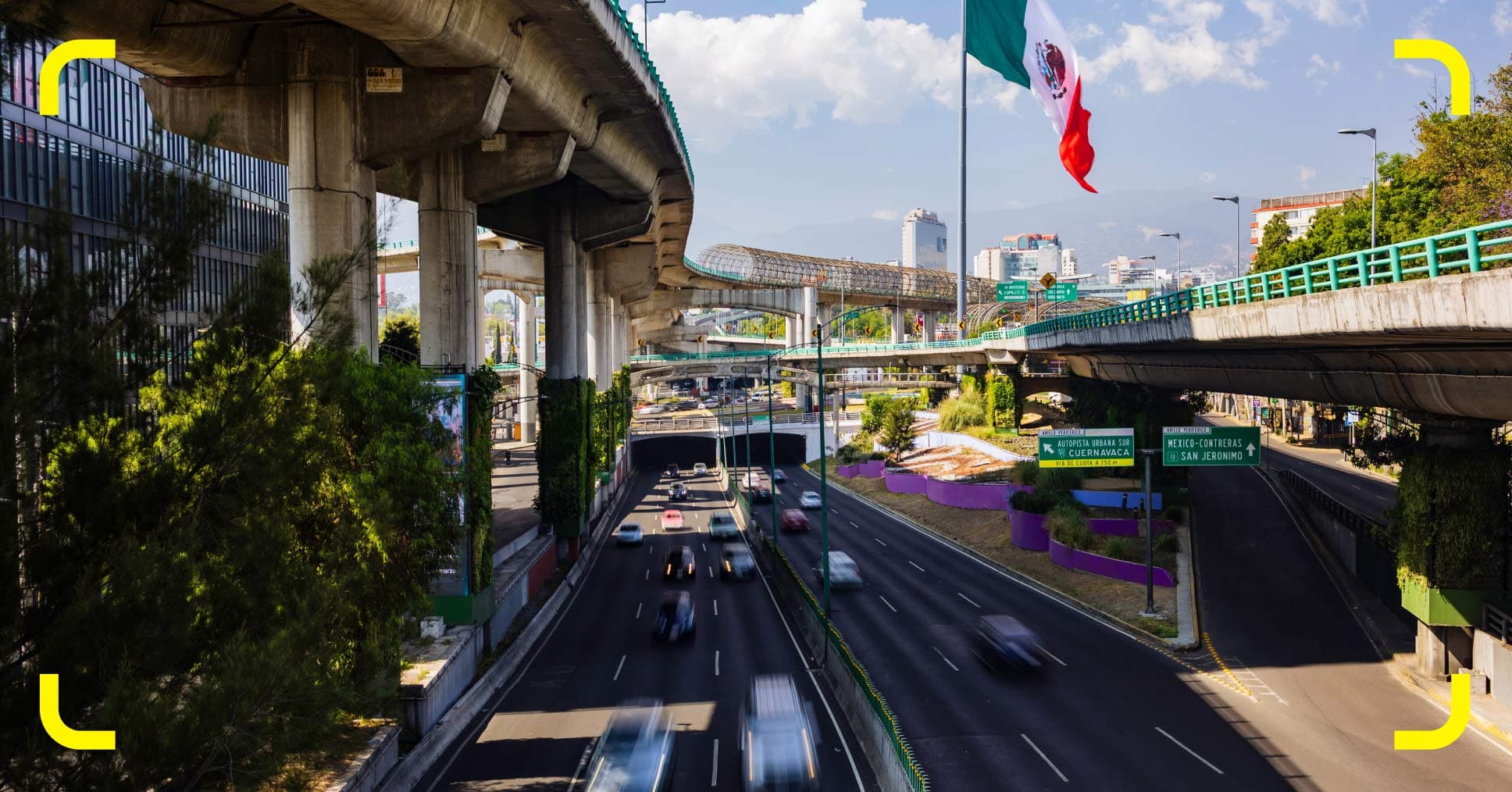
Table of Contents
- Transportation in Mexico City: Best ways to get around and tips for safety
- Overview of transportation in Mexico City
- What is the best mode of transportation in Mexico City for tourists?
- Public transportation in Mexico City
- Metro
- Metrobús
- Buses
- Cablebús
- Light rail
- Bike-sharing (the EcoBici system)
- Using the Integrated Mobility Card (MI) in Mexico City
- Private transportation in Mexico City
- Taxis
- Uber, DiDi, and other ride-hailing apps
- Bike
- Private transfers
- Car rentals
- Safety of transportation in Mexico City
- Airport transportation in Mexico City
- Apps to navigate transportation in Mexico City
- Tips and tricks for using transportation in Mexico City
Transportation in Mexico City: Best ways to get around and tips for safety
If you’re heading to Mexico City, you’ll need to know how to get from point A to B. Fortunately, the city has a huge public transportation network that is affordable and easy to use once you know what your options are. You’ll also have plenty of private transportation choices, which can be handy when planning your routes through the busy traffic. This guide covers the metro, Metrobús, buses, taxis, ride-hailing apps, and airport transportation, along with safety tips and apps to make getting around the city a whole lot easier.
Overview of transportation in Mexico City
Mexico City has one of the largest transportation networks in Latin America, with a mix of public and private options, serving millions every day. The metro, buses, and ride-hailing apps are the go-to choices for most travelers, connecting major neighborhoods, tourist sites, business areas, and transport hubs. You’ll find trolleybuses, Cablebús, light rail, and the EcoBici bike-sharing system around the city, too.
Public transit can get crowded during rush hour and may feel confusing at first, but it’s a solid way to skip the gridlock and save money on every ride. Having mobile data helps you stay on track, so consider picking up a Saily eSIM for Mexico to access maps, translation tools, and ride-hailing apps wherever you go.
What is the best mode of transportation in Mexico City for tourists?
For tourists, the best mode of transportation in Mexico City is usually a mix of metro, Metrobús, walking, and ride-hailing apps. Use the metro for cheap, fast daytime trips between major areas, and the Metrobús for routes along main avenues. Walking works well in neighborhoods such as Roma, Condesa, Polanco, Coyoacán, and parts of Centro Histórico. For late-night travel, airport transfers, unfamiliar areas, or trips with luggage, the Uber or DiDi ride-hailing apps are usually the safer and more convenient choice.
Public transportation in Mexico City
Mexico City has a large, affordable, and well-connected public transport system. Before you start using it, pick up an Integrated Mobility Card (Tarjeta MI) at any metro station — it works on the metro, Metrobús, Cablebús, and light rail (Tren Ligero) systems. Local buses still take cash for payment, and EcoBici has its own app and registration.
Metro
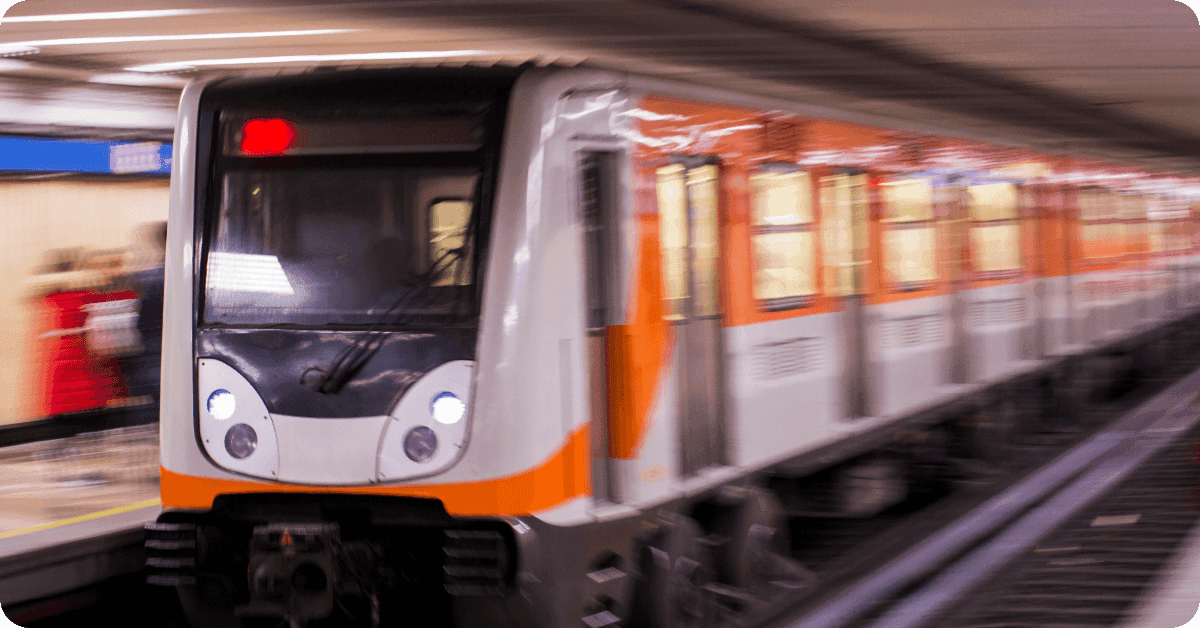
The Mexico City Metro is the main public transportation system in Mexico City, with 12 lines connecting central neighborhoods, bus terminals, markets, and cultural sites. Check your route on Google Maps or the metro’s official app before entering a station, follow the line color and final station direction, and tap your MI card at the turnstile. The standard fare is MXN 5 (US$0.29), and usual operating hours are 5 am to midnight Monday to Friday, 6 am to midnight on Saturday, and 7 am to midnight on Sundays and public holidays. The metro system is fast and cheap, but it can get crowded and hot, so avoid rush hour if possible and keep your belongings secure. It’s worth remembering that some metro cars and waiting areas are reserved for women and children.
For more detail, read our full guide to the Mexico City Metro.
Metrobús
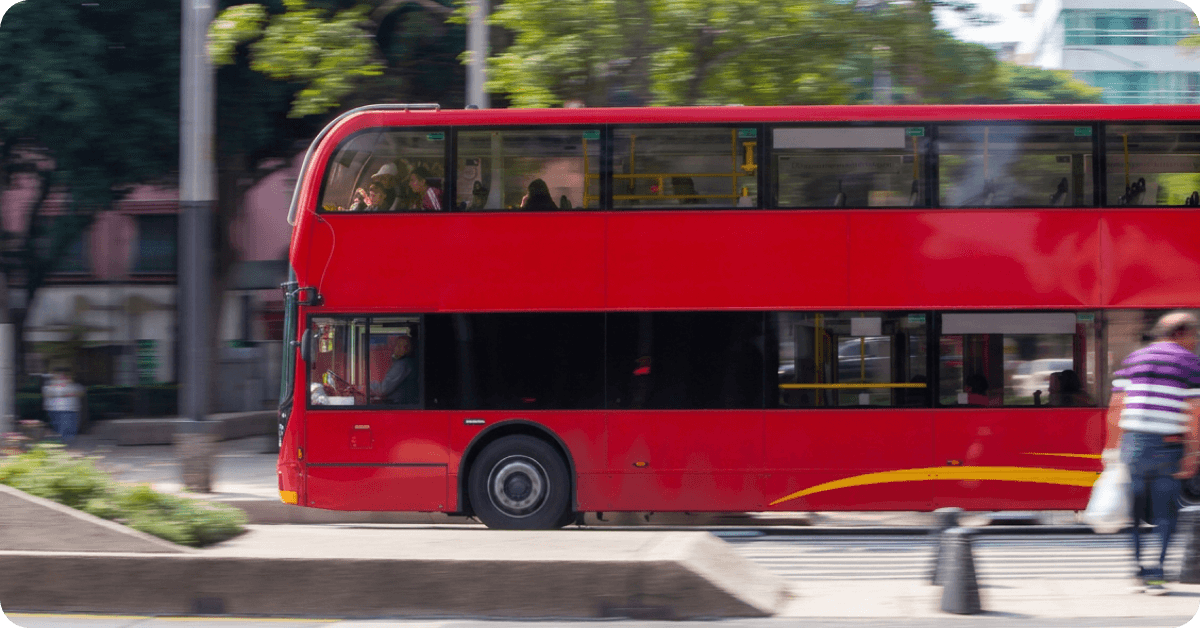
The Metrobús is Mexico City’s bus rapid transit system, with large buses running on fixed routes and often in dedicated lanes. Board at dedicated stations and tap your MI card at the turnstile. You can also tap a contactless Visa or Mastercard, or use Apple Pay, Google Pay, or Samsung Pay at most stations. Remember to check the direction before boarding because some routes have branches. The standard fare is MXN 6 (US$0.35), while the airport service on Line 4 costs MXN 30 (US$1.73). The Metrobús is easier to use than many local buses and can avoid some traffic, but it still gets crowded at peak times and doesn’t serve every neighborhood.
Buses
Beyond the metro and Metrobús, Mexico City has a network of city buses and smaller microbuses (often called peseros) that fill the gaps. They’re relatively cheap — usually MXN 5 to 7 (US$0.29-0.40) — and paid in cash directly to the driver, so carry coins or small bills. Routes are displayed on the windshield or the side of the bus, but there aren’t always clear stop signs — locals often flag them down from the sidewalk. A navigation app like Google Maps or Moovit can tell you which bus to take and where to get off, which makes them much easier to use. If the route looks complicated or involves several changes, the ,etro, Metrobús, or a ride-hailing app will usually be simpler.
Cablebús

Cablebús is Mexico City’s cable car system and part of the integrated transport network. It currently has three lines, each costing MXN 7 (US$0.40) per ride with the MI card. Lines 1 and 2 mainly serve residential districts in Cuautepec and Iztapalapa, so most tourists won’t need them. Line 3, which crosses Bosque de Chapultepec, is the most visitor friendly and offers scenic views of the forest.
Light rail
The light rail system, also known as Tren Ligero, operates in the south of Mexico City and connects with Metro Line 2 at Tasqueña. It is great for reaching Xochimilco, a historic borough known for its canals, floating gardens, and colorful trajinera boats. The fare is MXN 3 (US$0.17), and you can use your Tarjeta MI to tap in. The network is much smaller than the metro, but it’s useful if you want to visit Xochimilco independently.
Bike-sharing (the EcoBici system)
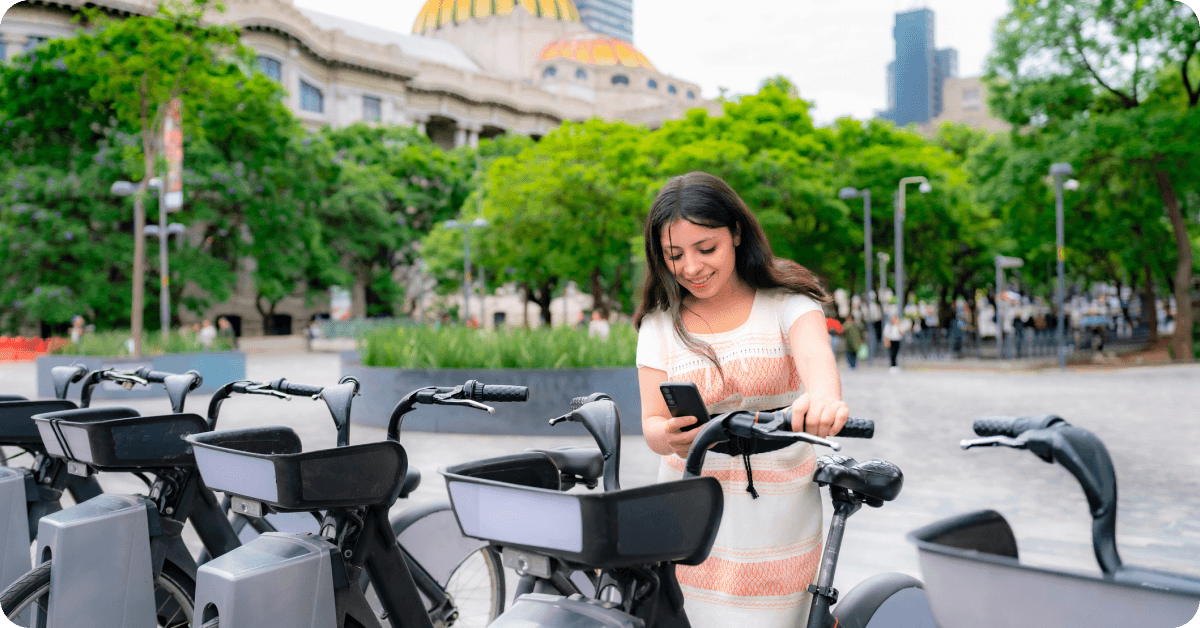
EcoBici is Mexico City’s public bike-sharing system, with docking stations across central districts such as Roma, Condesa, Polanco, Juárez, and along Paseo de la Reforma. Download the EcoBici app, register with an ID and a credit or debit card, and choose a one-day, three-day, or seven-day plan (check current prices on the EcoBici website (opens in a new tab)). Then find a station in the app, unlock a bike, ride, and dock it at any station when you’re done. Rides can last up to 45 minutes on the one-day and three-day plans, or up to 90 minutes on the seven-day plan — if you need longer, just dock and take another bike to restart the clock. EcoBici is great for short hops between neighborhoods but not ideal for long distances or routes with heavy traffic. It also goes without saying that it might not be the best choice during bad weather!
Using the Integrated Mobility Card (MI) in Mexico City
The Integrated Mobility Card, or MI card, is the easiest way to pay for major public transportation in Mexico City. It works on several city transport services, including the metro, Metrobús, Cablebús, and light rail systems.
You can buy and recharge it at metro ticket booths and vending machines at some transport stations. The card costs MXN 15 (US$0.87) before you add ride credit, and the maximum balance is MXN 500 (US$28.90). To use it, tap the card at the turnstile or validator when entering the system.
The MI card saves you from buying separate tickets or carrying cash for every ride, though not every local bus accepts it, and EcoBici requires separate registration.
Private transportation in Mexico City
Private transportation in Mexico City is usually more comfortable and convenient than public transportation, but it costs more and can still be slow in heavy traffic. Private options are most useful when going to and from the airport or for late-night journeys, trips with luggage, or group travel. They are also handy on routes where public transportation would involve several changes. You can use a mix of public transportation during the day and private transportation at night.
Taxis

Mexico City has no shortage of taxis, but you should be careful about which ones you use. Official taxi stands, hotel-booked taxis, prepaid airport taxis, and app-based options are safer than hailing a random taxi from the street. At the airport, official taxis usually work through prepaid booths inside the terminal, so you know the fare before you ride. In the city, use taxis from official stands, hotels, restaurants, or reliable apps. If you want route tracking, upfront pricing, and cashless payment, Uber or DiDi may be simpler.
Uber, DiDi, and other ride-hailing apps
Uber, DiDi, and other ride-hailing apps are widely used in Mexico City. They work in the usual way — you enter your destination, check the fare, confirm the ride, and follow the driver details in the app.
For tourists, ride-hailing apps are often one of the safest transportation options in Mexico City because they show the driver’s details, track the route, and offer cashless payment. Uber operates in Mexico City, and DiDi is also common, so it’s worth checking both apps to compare prices and wait times.
At the airport, ride-hailing pickups don’t stop in front of the terminal doors, and the exact location can vary depending on the terminal and current airport rules. Open the app once you land, follow its pickup instructions, and be prepared for a short walk outside the terminal.
Before your trip, consider downloading the Saily eSIM app so you can request a ride as soon as you land.

Stay connected with the Saily eSIM app
Affordable mobile data plans for every journey.
Bike
A private bike rental can be useful if you are a confident cyclist and plan to stay in bike-friendly areas such as Roma, Condesa, Polanco, and Reforma. Some hotels, hostels, and rental shops offer bikes or guided bike tours. However, traffic can be intense, road surfaces vary, and some areas have limited bike lanes, so EcoBici or a guided tour may be better for casual riders.
Private transfers

Private transfers are pre-booked drivers or shuttle services that take you directly to your destination. They cost more than public transportation or ride-hailing apps, but they can be useful for airport transfers, late arrivals, families, group travel, or trips with lots of luggage. A private shuttle in Mexico City can also work well for hotel transfers or business trips where you want a fixed plan and more space.
Car rentals
Car rentals are not usually the best way to get around central Mexico City because traffic is heavy, parking can be difficult, and driving in unfamiliar areas may be stressful. Renting a car only makes sense if you plan to take day trips outside the city or continue traveling through Mexico by road. Rental prices start from around MXN 200 (US$11.56) per day for a small car, but insurance and fuel will add to the total. You’ll need a valid driver’s license, a credit card in your name, and Mexican car insurance, which is legally required and usually added at the rental counter. Most companies require drivers to be at least 21.
Safety of transportation in Mexico City
Safety matters when using transportation in Mexico City, especially in crowded areas or on unfamiliar routes. Most transport options are safe when used sensibly, but pickpocketing can happen in busy stations, packed metro cars, and crowded bus routes.
During the day, the metro and Metrobús are practical for many tourist routes. At night, ride-hailing apps or official taxis are usually better, especially if you are traveling alone, returning from an evening out, or going somewhere unfamiliar. Solo women travelers can also use women-only metro cars and waiting areas where available.
A few small safety habits can make a big difference:
Travel during off-peak hours when possible. The metro and Metrobús can be extremely crowded during weekday rush hour.
Keep belongings secure. Carry your bag in front of you and keep valuables hidden away.
Avoid displaying valuables. Keep your phone, camera, and wallet out of sight when not in use.
Use official services. Choose official taxis, prepaid airport taxis, ride-hailing apps, or recognized public transportation systems.
Plan your route before leaving. Check directions while you still have a stable connection or use an eSIM card like Saily.
Use ride-hailing apps at night. They are often easier to use and safer after dark.
Share your trip details. Ride-hailing apps usually let you share your route with a friend or family member back home.
Stay aware in crowds. Busy platforms, waiting areas, and escalators are common places for pickpocketing.
Trust your instincts. If a station, street, or vehicle feels wrong, choose another option.
You can also read more in our guide to whether Mexico is safe to visit.
Airport transportation in Mexico City
Mexico City International Airport, officially known as Benito Juárez International Airport, is well-connected to the city. Transportation from the airport can feel confusing at first. Your best option depends on the terminal as well as your luggage, arrival time, and current pickup rules.
If you arrive during the day with a small bag, public transportation can work well. If you arrive late, travel with family, or have several suitcases, an official taxi, ride-hailing app, or private transfer may be easier.
The best airport transportation options include:
Official airport taxis: Safe and simple for most arrivals. Buy a prepaid ticket from an official taxi booth inside the terminal, then follow the signs to the taxi area.
Uber or DiDi: Convenient and sometimes cheaper than an official airport taxi. Pickup points can be confusing, so follow the app instructions and check where your driver can legally collect you.
Private transfers: A good option for families, groups, late arrivals, or travelers with lots of luggage. Book before you arrive and confirm the meeting point with the company.
Metrobús Line 4: A budget-friendly option that runs between the airport and the city center, with stops at San Lázaro, the Centro Histórico area, and Buenavista along the way. The airport fare is MXN 30 (US$1.73), and this option works best if you are traveling light.
Metro Line 5: The Terminal Aérea station connects the airport area with the Metro network. It is cheap, but not ideal with large bags, after a long flight, or during rush hour.
Rental cars: Useful if you plan to leave the city, but not necessary for a Mexico City stay. Traffic, parking, and unfamiliar roads can make driving more stressful than helpful.
Choose the airport option that seems the simplest. After a long flight, the last thing you need is trying to figure out the best way to get to your hotel or accommodation. And for a full airport-focused guide, read our article on Mexico City airport transportation.
Apps to navigate transportation in Mexico City
Apps make transportation in Mexico City easier, especially if you are new to the city. They help you compare routes, book rides, and find your way through stations where you don’t speak the local language.
Google Maps: Good for public transportation routes, walking directions, traffic estimates, and travel-time comparisons.
Moovit: Useful for metro, Metrobús, and bus routes, especially when Google Maps feels unclear.
Uber: Good for private trips, airport transfers, and late-night journeys.
DiDi: Another common ride-hailing app, useful for comparing prices and wait times.
EcoBici: Needed to register, find bikes, check docking stations, and manage your account.
CDMX app: Useful for local city services and some mobility-related features.
Saily eSIM app: Helps you get mobile data for maps, ride-hailing apps, translation tools, and travel information.
Tips and tricks for using transportation in Mexico City
Getting around Mexico City becomes much easier once you know a few local travel habits. These tips can help you save time, avoid confusion, and travel more safely.
Get an Integrated Mobility Card early. Buy an MI card at a Metro station or vending machine and add enough credit for several rides.
Avoid rush hour when possible. The metro and Metrobús can be extremely crowded during weekday commuting times.
Use ride-hailing apps at night. Uber or DiDi can be safer and easier after dark, especially in unfamiliar areas.
Carry a small amount of cash. Some buses, taxis, or small services may not accept cards.
Travel light on public transportation. Large suitcases are hard to manage on the metro, Metrobús, and buses, especially at peak commuter times.
Know about women-only cars. Some metro cars and waiting areas are reserved for women and children under 12 — they’re usually at the front of the train and clearly signed.
Check Sunday road closures. Some streets close for cycling and pedestrian events on Sundays, which can affect car routes and ride-hailing times.
Download offline maps. They can help if your signal drops underground or you find yourself in a crowded area.
Check airport pickup points before you land. Ride-hailing pickup points may not be directly outside the terminal. The best pickup area may depend on your app, terminal, and current airport rules.
Keep your phone charged. Maps, ride apps, translation tools, and hotel details are not helpful if your battery is at 3%.
Stay connected. Mobile data helps you check routes, call a ride, translate signs, and contact your accommodation. Before your trip, read our guide to using the internet in Mexico and check whether eSIMs are safe if you still hesitate to grab one.
Need data in Mexico? Get an eSIM!

1 GB
7 days
US$4.99
3 GB
30 days
US$9.99
5 GB
30 days
US$14.99
If you’re planning to travel outside Mexico City, you might want to learn about getting around the country — to do so, check out our guide to transportation in Mexico.
FAQ
Yes, public transportation in Mexico City is generally safe during the day when you use busy routes, keep your belongings secure, and stay aware of your surroundings. The main risk for tourists is usually pickpocketing in crowded areas rather than serious crime.
The safest mode of transportation in Mexico City is usually a ride-hailing app or an official taxi service, especially at night or when traveling with luggage. During the day, the metro and Metrobús are safe options for many tourist routes if you avoid rush hour and keep valuables secure.
How long it takes to get around in Mexico City depends on distance, traffic, and the type of transportation you use. A short neighborhood trip may take 10-20 minutes, but a cross-city journey can take 45 minutes to more than an hour during peak periods.
It is usually safer to take Uber or another ride-hailing app in Mexico City than to hail a taxi from the street. App-based rides show driver details, route tracking, upfront pricing, and offer cashless payment, while official taxi stands and prepaid airport taxis are safer than random street taxis.

Always connected, always on course
Connect instantly with a Saily eSIM and enjoy effortless internet access.

Related articles