





Best time to visit Japan: Weather and travel tips
Japan rewards those who understand its secret: Everything depends on when you arrive. Seasons alter landscapes, define festivals, and determine your memories. Arrive at the right moment, and you'll find yourself walking beneath cherry blossoms drifting like pink snow or watching maple leaves blaze beneath temple lanterns. This guide will help you plan for those moments.
Table of Contents
- A quick overview: When to visit Japan
- Japan by the month: A season for every traveler
- December–February in Japan: Snowfall and solitude
- March–May in Japan: Cherry blossoms and renewal
- June–August in Japan: Festivals amid heat and humidity
- September–November in Japan: Autumn’s fiery finale
- Cheapest time to visit Japan
- Best time for events, festivals, and seasonal activities
- When to avoid visiting Japan
- Tips for travelling to Japan
- Recap: The best times to explore Japan
A quick overview: When to visit Japan
The best time to visit Japan is in spring (March to May) or autumn (September to November), especially if you dream in shades of pink petals and crimson leaves. During these seasons, mild weather pairs beautifully with nature’s most dramatic displays: cherry blossoms in spring, radiant foliage in fall. The summer months, on the other hand, burst with energetic matsuri (the Japanese word for festivals), while winter brings serene, snowy landscapes, quiet temples, and excellent skiing. But while these seasons offer broad brushstrokes, the real texture of Japan’s climate and culture emerges month by month.
Japan by the month: A season for every traveler
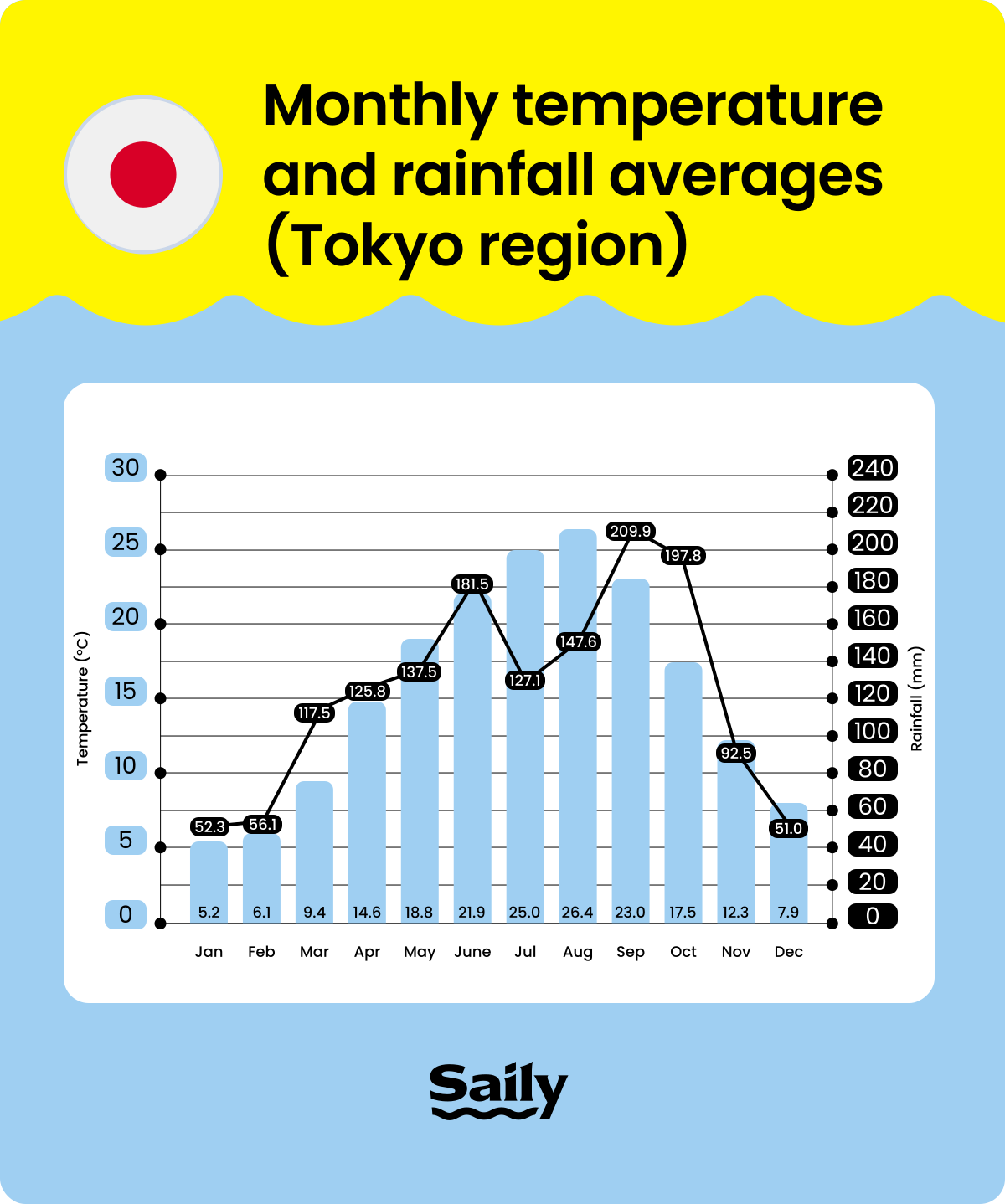
Japan transforms dramatically with each passing month. To travel through its calendar is to witness a nation reinventing itself continually, shifting from snowbound silence to lantern-lit revelry. Here’s how this spectacle unfolds, and when your own story might best fit into it.
December–February in Japan: Snowfall and solitude
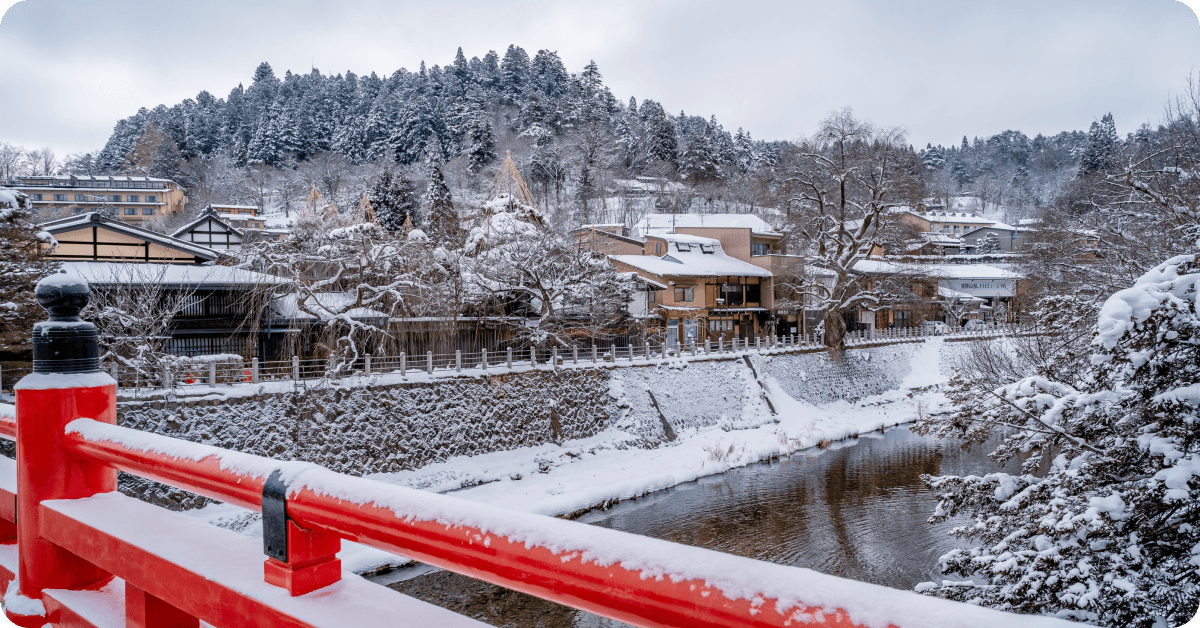
Japan's winter is for the traveler who appreciates stillness and a touch of solitude. During the holiday season, cities glow gently beneath festive decorations, while temples and shrines rest under a tranquil blanket of snow. In northern Japan, Hokkaido offers some of the world's best powder skiing, affectionately dubbed “Japow” by ski enthusiasts.
In Tokyo and Kyoto, mild winters make for peaceful city explorations without the usual throngs. Temples that usually bustle with tourists fall quiet, their inner gardens open for contemplative journeys into Japan’s storied past. Snow-capped landscapes in the north offer solitude, punctuated only by occasional festival cheer.
Temperature: Tokyo averages 5–10°C (41–50°F), Hokkaido frequently below freezing.
Rainfall: Minimal precipitation, ensuring clear, crisp winter days.
Crowds: Light, except during the bustling New Year holidays.
Prices: Year’s lowest rates, with accommodations ranging from US$60–120 per night.
Highlights: Sapporo Snow Festival, Nagano’s snow monkeys bathing in hot springs, festive city illuminations.
March–May in Japan: Cherry blossoms and renewal
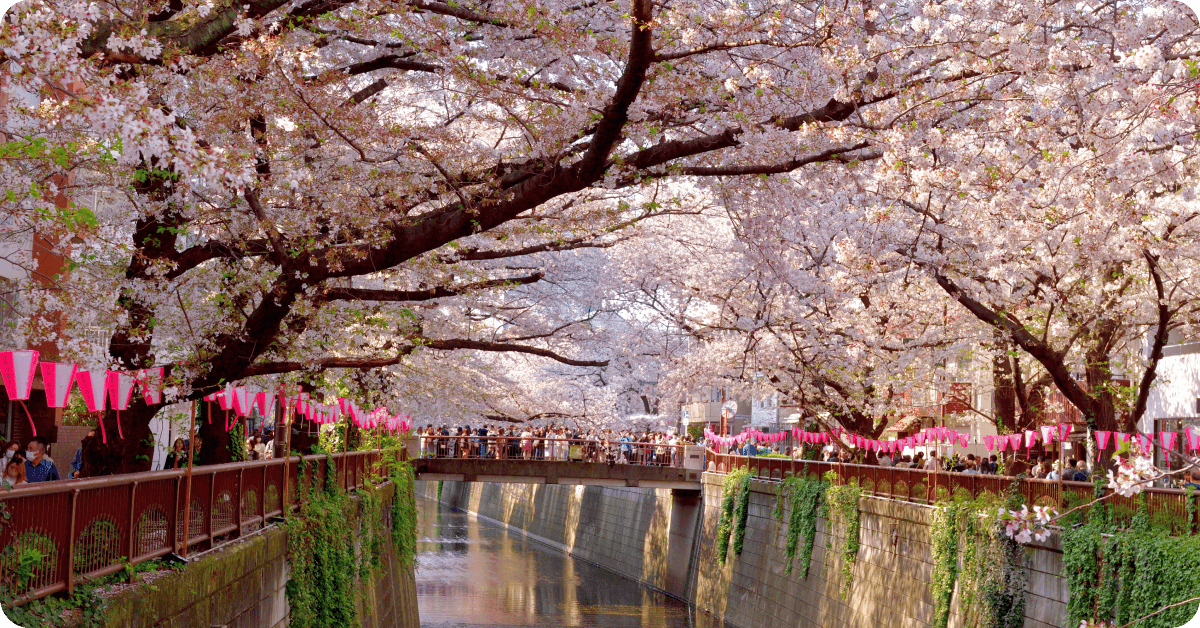
Spring arrives in Japan like a tidal wave. Cherry blossoms (sakura) briefly and beautifully burst into life, transforming city parks into ethereal, pastel-hued havens. This fleeting spectacle stirs profound national sentiment, rooted in the Buddhist appreciation of transient beauty.
Hanami, the communal act of blossom-viewing, sweeps through Japan as sakura trees bloom from Kyushu northward to Hokkaido. Picnics range from serene contemplation to joyous, sake-fueled celebrations beneath canopies of pink and white petals. Japan’s gardens, from Kanazawa’s Kenroku-en to Tokyo’s Ueno Park, come to life in pink and green as well. But travelers beware: This season, though breathtaking, demands careful planning due to intense crowds.
Temperature: Tokyo warms quickly and sees temperatures from 10–23°C (50–73°F).
Rainfall: Relatively dry until the onset of the rains in late May.
Crowds: Dense during peak cherry blossom weeks, moderate in mid- to late May.
Prices: High season with accommodations ranging US$150–300 per night; flights from US$800–1200.
Highlights: Hanami parties, Kyoto’s Miyako Odori geisha performances, and the Takayama Spring Festival.
June–August in Japan: Festivals amid heat and humidity
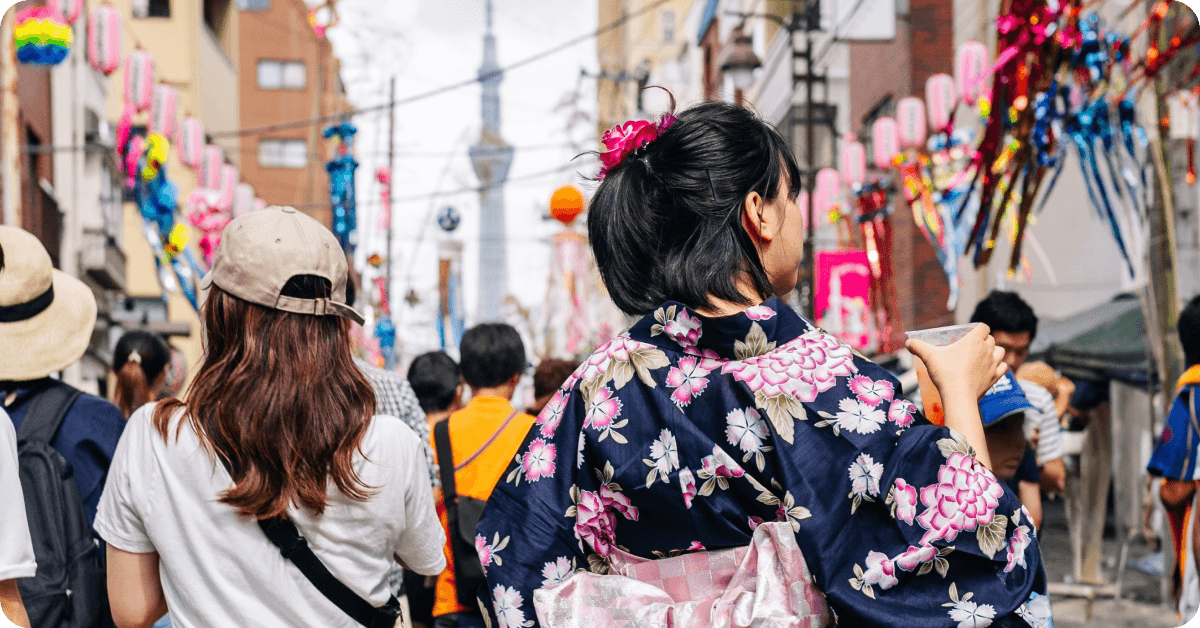
Japanese summers test your endurance but reward it spectacularly. June kicks off with the rainy season (tsuyu), which refreshes the country’s landscapes and gives way to vibrant hydrangea blooms, all while putting the best waterproof gear to the test. In July and August, festival season ignites, filling streets with traditional music, colorful dances, and tempting street foods.
Yes, the heat is intense, yet it amplifies the energy of events like Kyoto’s month-long Gion Matsuri and Tokyo’s explosive Sumida River fireworks. Summer culminates with Obon, an emotionally charged period honoring ancestors with lantern-lit processions and rhythmic dances. If you're chasing a beach vacation, Okinawa’s islands offer turquoise waters and coral reefs with far less humidity than mainland cities.
Temperature: Tokyo averages 20–31°C (68–88°F) and experiences high humidity. Heat eases only by late August.
Rainfall: Heavy in June, decreasing in July and August.
Crowds: Moderate during early summer, heavy during Obon (mid-August).
Prices: Affordable in June (US$80–150), peaking in August (US$150–250).
Highlights: Kyoto’s Gion Matsuri, Obon festivals, spectacular fireworks displays.
September–November in Japan: Autumn’s fiery finale
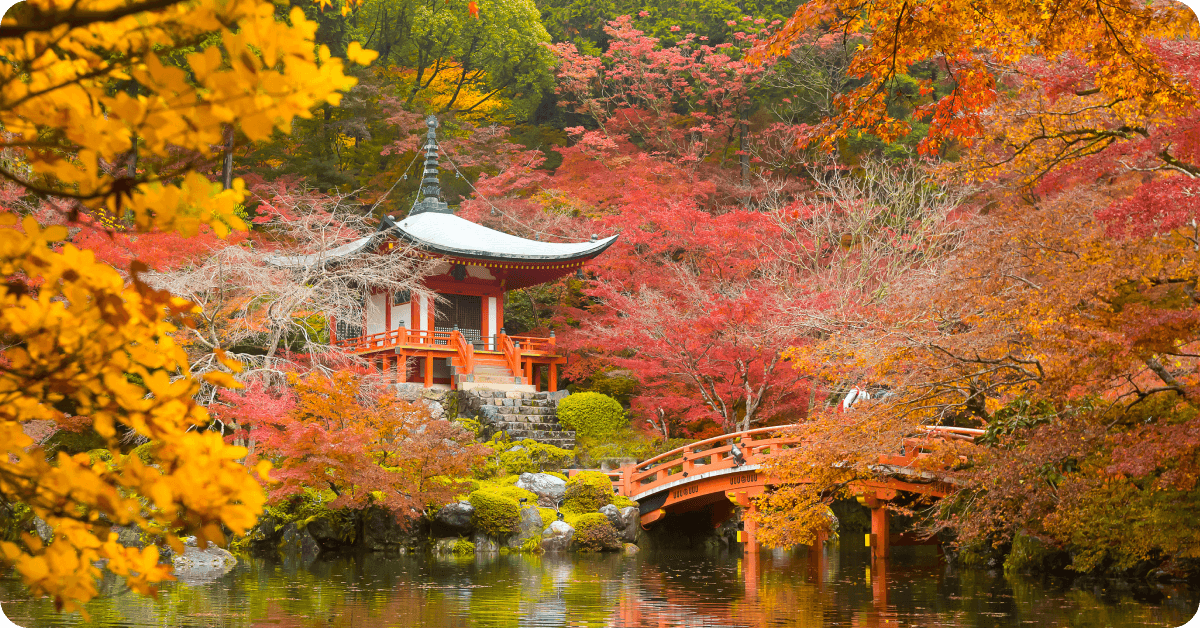
Autumn unfolds slowly, with fall foliage painting Japan’s mountains and temples in vivid crimson and gold hues. It’s a reflective season, inviting leisurely walks through historic temple gardens and hikes through wooded trails ablaze with maple leaves.
Kyoto becomes autumn's unofficial headquarters as evening illuminations enhance the colors of temple grounds. Harvest festivals celebrate local produce, creating rich culinary experiences alongside visual splendor. Visit in late October for that sweet spot where crowds thin slightly, yet the maples are already glowing red. Crowds build steadily toward November's foliage peak, but autumn maintains a civilized dignity that spring completely abandoned months ago.
Temperature: Tokyo cools from 27°C (81°F) in September to 10°C (50°F) by late November.
Rainfall: Clear, but early September still lingers at the edge of Japan's typhoon season, so check forecasts if you're heading south or to coastal regions.
Crowds: Increasing through autumn, particularly heavy in mid- to late November.
Prices: Moderate in early autumn (US$120–180), higher in foliage hotspots (US$180–250).
Highlights: Koyo (autumn leaf viewing), Kyoto’s Jidai Matsuri, Kurama Fire festivals.
Cheapest time to visit Japan
If your goal is to save money without sacrificing the essence of Japan, focus on late winter and early summer. These periods offer the best deals on accommodation and flights, plus a calmer atmosphere at major sites.
While January and February may lack blossoms or festivals, they offer clear, crisp days, discounted hotel rates, and lower airfare. These months are perfect for urban exploring or ski trips. June, despite being the rainy season, brings lush landscapes, blooming hydrangeas, and thinner crowds. It’s a tradeoff: less predictable weather in exchange for better prices and availability.
Here’s a breakdown of what you can expect:
Season | Avg. hotel cost | Avg. flight cost | Notes |
|---|---|---|---|
December–February | US$60–120 | US$600–800 | Cheapest season overall, ideal for budget travelers. |
March–May | US$150–300 | US$800–1,200 | Peak cherry blossom season, prices spike. |
June–August | US$80–250 | US$700–1,000 | June is affordable, but pricing during July and August peaks with Obon. |
September–November | US$120–250 | US$800–1,100 | Mid-range to premium, especially in foliage hotspots. |
Budget travelers can stretch their yen furthest by embracing Japan’s off-season charms. Fewer crowds, lower prices, and unique seasonal views often make for richer, more personal experiences.
Best time for events, festivals, and seasonal activities
Japan celebrates each season with distinctive flair, offering everything from exuberant spring festivals to contemplative winter traditions and traditional events:
Spring (March–May): Cherry blossom season brings out Japan's collective obsession with fleeting beauty. Kyoto's Miyako Odori showcases geisha performances with the precision of Swiss clockwork, while Takayama's Spring Festival sees locals hauling massive ornate floats through narrow streets with the devotion of religious pilgrims.
Summer (June–August): The season when Japan sweats together in glorious festival madness. Kyoto's Gion Matsuri runs for an entire month because apparently three weeks of parades isn't quite enough. Tokyo's fireworks competitions turn the night sky into a battleground of pyrotechnic one-upmanship, while the Obon festival proves that honoring your ancestors can involve surprisingly good street food.
Autumn (September–November): When Japan does what it does best — turning natural phenomena into an art form. Kyoto's temple illuminations transform ancient buildings into Instagram bait (though admittedly beautiful Instagram bait), and the Jidai Matsuri parades Japanese history through modern streets like a living textbook. The autumn leaves perform their annual color show with theatrical timing.
Winter (December–February): Japan strips away the festival fanfare and gets serious. Snow-covered temples offer the kind of silence that makes you actually think, while Sapporo's Snow Festival proves that ice sculpture is a legitimate competitive sport. New Year celebrations here aren't about champagne and confetti — they're about ritual, reflection, and really good sake.
Need data in Japan? Get an eSIM!
1 GB
7 days
US$3.99
3 GB
30 days
US$7.99
5 GB
30 days
US$10.99
When to avoid visiting Japan
Japan has its moments of beautiful chaos, and then it has periods when that chaos stops being beautiful:
Golden Week (Late April–Early May): Golden week is the time when four national holidays occur, and 125 million Japanese people simultaneously decide they need a vacation. Hotels triple their prices, trains become human sardine cans, and the path to that peaceful temple you wanted to visit now resembles a theme park queue.
Silver Week (mid-September): While it’s less well-known than Golden Week, this holiday period can be just as hectic. When Respect for the Aged Day and Autumnal Equinox Day align, they often create a five-day weekend, leading to price hikes, dense crowds, and sold-out bullet train tickets.
Obon (Mid-August): Obon is an ancestor-honoring holiday that turns the entire country into one massive family reunion. Combine domestic tourism fever with sweltering heat and humidity that makes you question your life choices, and you've got Obon.
Cherry blossom peak: Sure, the sakura are gorgeous, but good luck finding a hotel room under US$400 or taking a photo without seventeen selfie sticks in the frame.
Rainy season (June–Early July): Japan’s rainy season is a clear reminder that the country isn’t always picture-perfect. Expect daily downpours that can turn your temple-hopping plans into an extended relationship with your hotel room and convenience store umbrellas.
Tips for travelling to Japan

Japan rewards the prepared traveler and gently punishes the “wing-it” crowd:
Local holidays: Avoiding those Golden Week and Obon periods isn’t just a suggestion. It’s survival advice — unless you enjoy paying premium prices to stand in lines with everyone else in the country.
Transport options: The Japan Rail Pass can be your golden ticket to sanity, but only on the right itinerary, so check our guide on whether the Japan Rail Pass is worth it in 2026 before you buy it. Even if the pass does not match your route, beware that point-to-point shinkansen tickets can get expensive fast.City transport works like clockwork, which is both wonderful and slightly intimidating.
Use an eSIM for Japan: Trying to navigate Tokyo’s subway system while hunting for Wi-Fi is a special kind of modern hell. An eSIM helps you avoid that chaos by keeping you connected from the moment you land and it's a great alternative to a SIM card for Japan. If you're wondering what an eSIM is, it's basically a digital SIM card that saves you from the ancient ritual of swapping tiny plastic chips.
Learn a few local phrases: "Arigatō" and "sumimasen" won't make you fluent, but they'll earn you the kind of warm smiles that make Japan addictive. The effort matters more than the pronunciation.
Bring cash AND your credit card: Japan's relationship with cash is beautifully stubborn. Rural areas treat credit cards like a suspicious foreign concept, so come prepared with actual money.
Check what to pack: Japanese summers require deodorant and rain gear. Winters demand layers. Springs need allergy medication. Autumns are perfect and require nothing but a camera. Oh, and don’t forget a power adapter. Japan primarily uses A sockets with some B type mixed in.
Get travel insurance: Getting insured is especially important if you plan to hike active volcanoes or drive on the left side of the road for the first time. Japan is generally low risk, but the unexpected still happens.
Download useful apps: Make sure you have translation tools that work offline, maps that don’t require data, and a currency converter handy — especially when you’re trying to decide if that wagyu is wildly overpriced or just reasonably expensive by Japanese standards.
Budget for your journey: Financial surprises can derail a trip, so understanding the latest price trends for flights and hotels is essential. Our detailed guide on how much it costs to go to Japan provides a full breakdown of daily expenses and seasonal shifts to help you plan your spending.
Recap: The best times to explore Japan
There's no absolutely perfect time to visit Japan because every season offers something different as well as something you'll have to compromise on. The trick is figuring out what matters most to you and planning accordingly for that dream trip.
Ideal weather: Spring and autumn offer that Goldilocks zone of comfortable temperatures and natural drama. It’s not too hot, not too cold — just right for walking until your feet hurt.
Lower prices: January through February and June are when Japan gets affordable. You'll either freeze or get rained on, but your wallet will thank you.
Cultural experiences: Time your trip around the seasonal festivals if you want Japan to show off. Each season has its own personality: Spring offers optimistic beauty, summer enjoys energetic chaos, autumn settles in with contemplative elegance, and winter brings introspective calm.
Come prepared or come spontaneous, come in peak season or shoulder season, come with a detailed itinerary or just a sense of curiosity. This country has been perfecting the art of seasonal living for centuries, and it's more than happy to teach you a thing or two about finding beauty in whatever moment you happen to arrive.

Stay connected with the Saily eSIM app
Affordable mobile data plans for every journey.
