


Is Italy safe to visit in 2026? Guide to Italy’s safety
Italy, known for humbling sites like the Roman Forum and for regional dishes that will have you exclaiming “Mama mia!”, has had some safety issues in recent years, mainly related to petty crime. This article explains what to watch out for if you are planning a visit to Italy, whether the country is safe to visit, and whether you should reconsider traveling to Italy. (You should not!)
Table of Contents
Is it safe to travel to Italy right now?
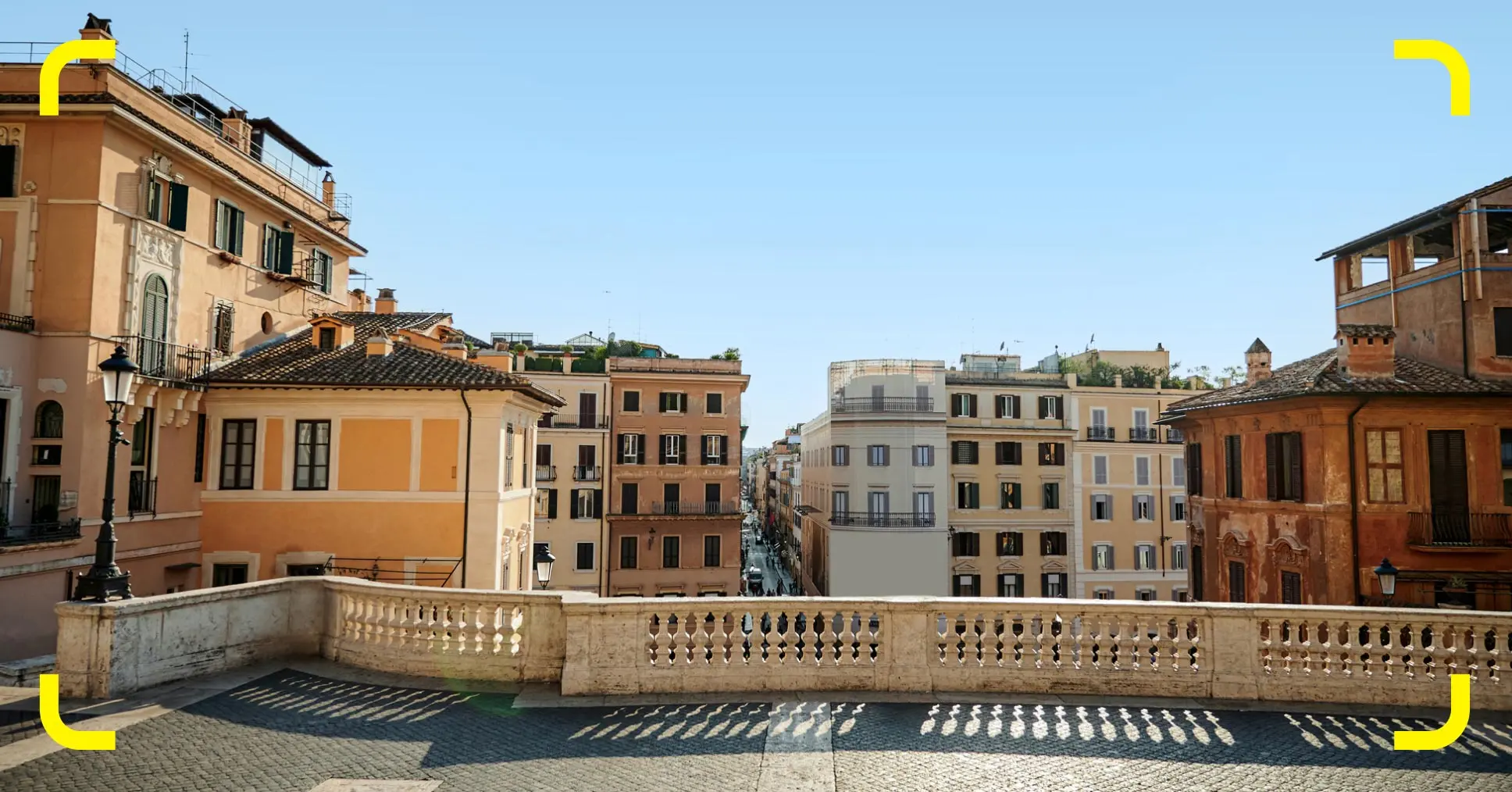
In the past few years, Italy has been generally safe. At the same time, the country has recently been dealing with petty crime, which has been most prevalent around popular sites and landmarks, like the Milan Cathedral or the Spanish Steps in Rome. At the same time, Italy has had to face several other issues in the past years, ranging from severe weather events to the eruption of Mount Etna in December 2025.
In May of the same year, the United States State Department issued a level 2 travel advisory for US citizens visiting Italy, urging travelers to “exercise increased caution” due to potential terrorist activity. The advisory remains active to this day, and according to the State Department, “Italian authorities have identified several potential threats to the country, including terrorists from North Africa, returning foreign fighters, anarchists, and homegrown terrorist groups.”
One way to monitor the situation in Italy is to monitor local news about the latest developments across Italian cities. That includes any upcoming demonstrations or protests, which can escalate into short-term tensions within a specific city or province. Make sure you can also receive any security alerts by ensuring your phone works in Italy.
Italy’s safety overview
Generally, Italy is considered safe, and the statistics back it up, including yearly data for violent crime, as well as petty crime, with rates for both steadily falling in the last few decades. In terms of weather-related events, like floods, Italy experiences the heaviest rainfalls in autumn and winter, making it safer to travel to the country during the warmer periods of the year. Italy’s seismic activity is also mostly concentrated around the central part of the peninsula and in the northern part of Sicily.
Meanwhile, while violent crime had been prevalent during the late 1990s, Italy’s fight against organized crime has paid dividends. According to the Italian National Institute of Statistics (Istat), 2024 saw 327 homicides in the country, a 2.1% drop year-on-year (YoY), for a rate of 0.55 per 100,000 inhabitants. For comparison, in terms of firearm fatalities, the safest state in the US is Hawaii. The island has a rate of 3.7 firearm fatalities per 100,000 people in 2024, according to the Centers for Disease Control and Prevention (CDC), meaning that data proves Italy is much safer than the safest state in the US.
What about petty crime in Italy?
Official statistics show that reported overall theft has been steadily decreasing since its peak in 2007, per Istat. This does mean that Italy has become safer over the years, even when considering petty theft, despite what fear-mongering posts on your favorite social media network imply!
Petty theft, which includes snatched bags, pickpocketing, and burglary, dropped during the first years of the COVID-19 pandemic. In 2023, theft returned to its pre-pandemic levels with more than 1 million reported cases during the year in the whole country. However, the rate is much lower than its peak in 2007.
The country’s petty theft levels still depend on several factors. More rural areas and smaller towns are usually sheltered from the pickpocketing that happens in major cities because they see fewer tourists. Second, two areas within one city are not the same. While Rome’s Termini train station is generally considered an area to avoid during the night to avoid being mugged, some of the capital’s other neighborhoods, like Monteverde, do not carry the same reputation. Once again, the primary reason is foreign travelers’ flows, with most visitors staying in major cities and concentrating near tourist areas.
In general, Italy has been making strides to help its tourists feel safer. After all, who else will drink limoncello and eat all the food in Italy during the summer?
At major tourist attractions, including religious sites across the country, the Italian government has been taking action and increasing the police’s presence, which has reduced petty crime around Italy’s main landmarks. Public transportation in Italy is also considered safe, even if the major train and/or bus stations are best avoided during certain periods of the day.
Common safety concerns in Italy
So, what do you have to watch out for in Italy in terms of your safety?
Pickpocketing and petty theft
While you might think that carrying your phone in the pocket of your pants is safe, blink, and it may have disappeared. Other items that thieves target are credit cards, cash, passports, and even jewelry. Thefts often happen in crowded areas like city centers, where people have to move around each other, and thieves can easily blend within the masses at major tourist attractions.
The best tip is to carry your phone and other valuables in a sling bag that can be zipped up and is hard to rip off your body. Some companies make secure bags with travelers’ security in mind.
Pickpockets usually target tourists around the popular landmarks across Italy. Be careful when walking around the premises of the Colosseum in Rome or anywhere along the Amalfi Coast and its towns.
Mafia and organized crime
Italy is regarded as the birthplace of the mafia, or organized crime, and has had spikes in violence related to disputes between criminals in the past. Nowadays –– as evident by the low violent crime numbers –– these organizations have largely stayed away from violence in the open.
As a tourist, you have nothing to worry about, especially since the Italian government has been cracking down on organized crime and the families of organized crime in the past few years. Still, best to stay away from things that are illegal or illicit, which is where the criminal groups operate and thrive.
Tourist traps and scams
Italian cities are no exception when it comes to common tourist traps and scams being conducted in and around their main attractions. Any vendors coming up to you and trying to sell you a souvenir or offering a gift are best avoided by politely telling them that you’re not interested.
The supposed gifts, whether a rose or a bracelet, usually have to be paid for after you’ve taken possession of them. If you’re not interested, remember to stay polite and not escalate the situation, but also be assertive that you’re not entertained by the idea of a bracelet.
These traps and scams are common in crowded areas around city centers where many tourists gather.
Overcharging in taxis or restaurants
Another concern while traveling in Italy is related to drivers overcharging for your ride in a taxi or servers including excessive service fees in the bill at restaurants.
To avoid being overcharged for a taxi, only get into official cabs that have the “taxi” logo on them or use ride-sharing apps. Beware of strangers at airports, train stations, and other transport hubs offering taxi rides — these are not licensed operators and their prices are not regulated.
Before sitting down at a restaurant, ask the server if there are service fees or any other charges just to sit down. In Italy, though, restaurants do have the so-called “coperto” fees, which cover plates, tablecloths, and cutlery. Stereotypically, the more touristy the place, the higher the likelihood that restaurants will target visitors with bogus charges.
Floods, earthquakes, and other natural disasters
Italy lies in a unique geographic position, surrounded by mountains in the north, and by sea in the center and south of the country. It is also in the middle of the convergence between the Eurasian and African plates, whose movements have resulted in the Alps, Apennines, and the active volcanoes in the central and southern parts of the country.
However, the last strong –– as classified using the Ricther scale –– earthquake was in 2016, with the epicenter being around the Marche and Umbria regions. Mount Etna’s last eruption was in December 2025, while Mount Vesuvius last erupted in 1944.
The most recent large-scale flooding in Italy happened when Storm Harry passed through the country. The storm mostly affected Sicily and Sardinia, damaging infrastructure on the islands and even causing a landslide in Niscemi, a town in Sicily.
Usually, Italy’s rainy seasons are in autumn and winter, meaning that if you do travel to the country during the warmer months, you will not have to deal with floods. However, in May 2023, for example, Emilia-Romagna experienced heavy rains, resulting in floods that severely affected the region.
Public Wi-Fi threats
One threat travelers often overlook when visiting a foreign country is public Wi-Fi. We often know the dangers posed by connecting to an unprotected network, yet we sometimes overlook them in order to get online.
The risks are plentiful — data theft, malware on your device, and phishing attacks. If your data gets stolen or if your phone is infected with a virus, it can result in unfortunate situations and stress, instead of you having to worry about which pasta dish to pick out.
An eSIM is a way to get around using public Wi-Fi while abroad. For example, an eSIM for Italy will keep you connected whether you’re in Rome, Florence, or Naples, and yes, eSIMs are safe. Safer than using public Wi-Fi, anyway!
Saily, for example, has built-in eSIM safety features that block ads as well as malicious sites. Better safe than sorry, and with an eSIM, you’ll never be sorry.
Need data in USA? Get an eSIM!

1 GB
7 days
US$3.99
3 GB
30 days
US$8.99
5 GB
30 days
US$12.99
How safe is Italy in different areas?
As with any country or even city, Italy’s safety depends on the area you’re staying in. Some cities — or even specific neighborhoods within them — are notorious for being unsafe for one reason or another.
So statistically, which cities in Italy are the safest and which are the least safe with regards to petty crime? In 2024, on a per-100,000 people basis, the most thefts occurred in Milan, Rome, and Florence, per Istat. The cities with the lowest theft rates were Potenza, Oristano, and Nuoro, with two of these cities being on the island of Sardinia.
Does that mean that Milan or Rome is unsafe? No, but there’s always a “but.” It does mean that you have to be more careful in these cities. Specifically, around areas where there are a lot of other tourists, such as train stations, main landmarks, and bars/restaurants around many of the historical sites.
If you’re thinking of staying longer and moving to the country by obtaining Italy’s digital nomad visa or a regular work visa, research the neighborhoods of the city you’re planning to live in.
Unlike in larger cities, smaller towns that are further away from the main tourist attractions are generally safer in terms of all types of crimes. However, once again, thorough research before moving somewhere is a must!
Safety tips for Italy
Italy is safe as a major tourist destination, but it does require vigilance around certain areas. Some general tips to protect yourself against petty theft or any other incidents include:
Be aware of your surroundings.
Whenever you are near an attraction, you should be very aware of your surroundings and your personal belongings. Thieves can use large crowds, create a commotion, or provide distractions to make sure you don’t notice when they peruse your pockets or backpack.
Add an extra layer of protection.
If possible — and this is more than a suggestion — keep your documents, phone, and valuables behind an extra layer of security. That could be pockets on pants or shorts that zip closed or a sling bag that you can keep close to you. Under no circumstances keep valuables in your back pockets!
Do not leave your items unattended.
Even if you think you’re leaving your bag, phone, or any other personal item in a safe place, if it’s accessible to everyone, it can get snatched. Wherever you go, keep your valuables on you and keep an eye on your bag or backpack, even when you sit down at a café, at a restaurant, or even on a bench. The same applies to public transportation — keep your belongings close to you.
Reject gifts or small items from people who approach you.
It’s a common tourist scam around the world, including Italy — a seemingly friendly individual approaches you, offering a flower, bracelet, or other small trinket. The idea is that you’ll accept the gift, thinking that it’s free, but the individual will demand payment. To avoid a potentially tense scene, reject items these scammers attempt to force on you while remaining polite and calm.
Use ride-sharing apps or official taxis only.
Using a ride-sharing app is usually a safe bet, but if you need a ride and see a taxi near you, double-check whether it is legitimate. Taxi drivers never approach potential customers, so if a person does walk up to you with an offer to take you to your destination, it is safe to assume that you will get overcharged massively!
Do not use public Wi-Fi.
While many places in Italy will offer free Wi-Fi to their customers, public networks shouldn’t be trusted since cybercriminals can easily infiltrate them. Opt for a physical SIM card of a local mobile operator or download an eSIM app to keep yourself connected while in Italy.
Make sure your travel insurance is up to date.
Before you leave for Italy, sign up for a medical insurance plan to protect yourself from unexpected costs, since Italian healthcare providers generally do not accept US health insurance. Anything can happen on vacation even if you have a good packing list for Italy and prepare a lot of items for health and safety in advance. Consider your risk level when deciding whether your plan should include medical evacuations.
Monitor local news to know about natural disasters.
One way to stay up-to-date with what’s happening in the country you’re visiting is to monitor local news, which includes any new information about natural disasters that might be transpiring.
Such events include potential floods and volcanic eruptions. Double-check that your phone can receive emergency notifications, and for US citizens, it is probably a smart idea to sign up your trip or prolonged stay in the Smart Traveler Enrollment Program (STEP).
Contact emergency services in case of an incident.
If any safety incident happens, always make sure to contact emergency services first. The general number to contact the Italian authorities is 112. However, a fire brigade can be reached by calling 115, the police by dialing 113, or medical services by ringing 118.
Local laws dictate that petty theft, for example, is punishable with a fine and/or a short prison sentence. Whatever the situation, do not hesitate to report it to the police.
Is Italy safe? Key takeaways
The key takeaway from the article should be that, yes, Italy is safe. Yes, you have to be careful and avoid becoming distracted around famous monuments, but this goes for any travel destination. But with a low violent crime rate and strides in ensuring safety around the main tourist attractions, Italy’s safety has only improved over the past few years.
What is important to remember, in addition to the aforementioned safety tips, is to stay connected while traveling. Having a safe and reliable internet connection in Italy will help you monitor any developments and help you make decisions that will protect you from any dangers that you might encounter while traveling from, to, or within the country. That includes having data, which can be obtained by buying a local SIM card or an eSIM, such as Saily.
The choice between a physical SIM card and an eSIM for Italy depends on many factors, but the hassle-free option is an eSIM. You can purchase and set one up before you even land in Italy, and it will activate once you set foot inside the country.
If you do opt for Saily’s eSIM solution while traveling throughout Italy, the price ranges between US$3.99 and US$71.99. The full pricing breakdown is as follows:
Amount of data | Duration | Price |
|---|---|---|
1 GB | 7 days | US$3.99 |
3 GB | 30 days | US$8.99 |
5 GB | 30 days | US$12.99 |
10 GB | 30 days | US$20.99 |
20 GB | 30 days | US$28.99 |
Unlimited | 30 days* | US$71.99 |
*Unlimited data plans are also possible for a five-day, 10-day, 15-day, 20-day, and 25-day stay. The prices vary, and the price displayed in the table above is for a 30-day unlimited data plan only.
If you’re staying in Italy for longer or plan to move beyond the country’s borders during your trip, consider the Saily Ultra plan. It includes unlimited international data, all of the app’s safety features, and even lounge access at 16 different Italian airports.

Say goodbye to roaming fees with a travel eSIM
Affordable mobile data plans for every journey.
FAQ
Yes, Italy is safe for solo women travelers. Solo women travelers generally feel safe in Italy, with its low rate of violent crime. Pickpocketing and other scams are prevalent in major tourist areas, however.
Generally, comparing data from Italy’s Istat and the US’ CDC shows that Italy maintains a lower rate of violent crime. At the same time, Italy has had more problems than the US with pickpocketing and typical tourist scams in major cities like Milan or Rome.
Yes, Italy’s tap water is safe to drink. Some cities, including Rome, have water fountains to drink from on the city’s streets. If you’re traveling to Italy during the summer, make sure to hydrate to avoid heat exhaustion.
Italy is a very safe place to live. While some cities’ neighborhoods are considered more dangerous, the country, in general, has low burglary rates and is considered one of the safest countries in Europe.
Yes, Italy is safe to travel to for US citizens. General safety tips are valid for citizens of all countries, but if you are a US citizen, you must have valid health insurance and are aware of the nearest embassy or consulate, whether you're just visiting the country or moving to Italy from the US long term.


Mobile data without borders
Saily — your secure and reliable eSIM companion for every journey.