




The 24 best things to do in Philadelphia: The ultimate travel guide
Have you wondered what LeBron James, arguably one of the greatest basketball players of all time, who just signed with the Philadelphia 76ers, will do with his free time in the city? Or are you planning to go to Philadelphia and are looking for the best things to do on your visit? In this article, we’ll introduce the sights, attractions, and activities in the city — often called the birthplace of the United States! — to help you plan your own travel itinerary for Philadelphia.
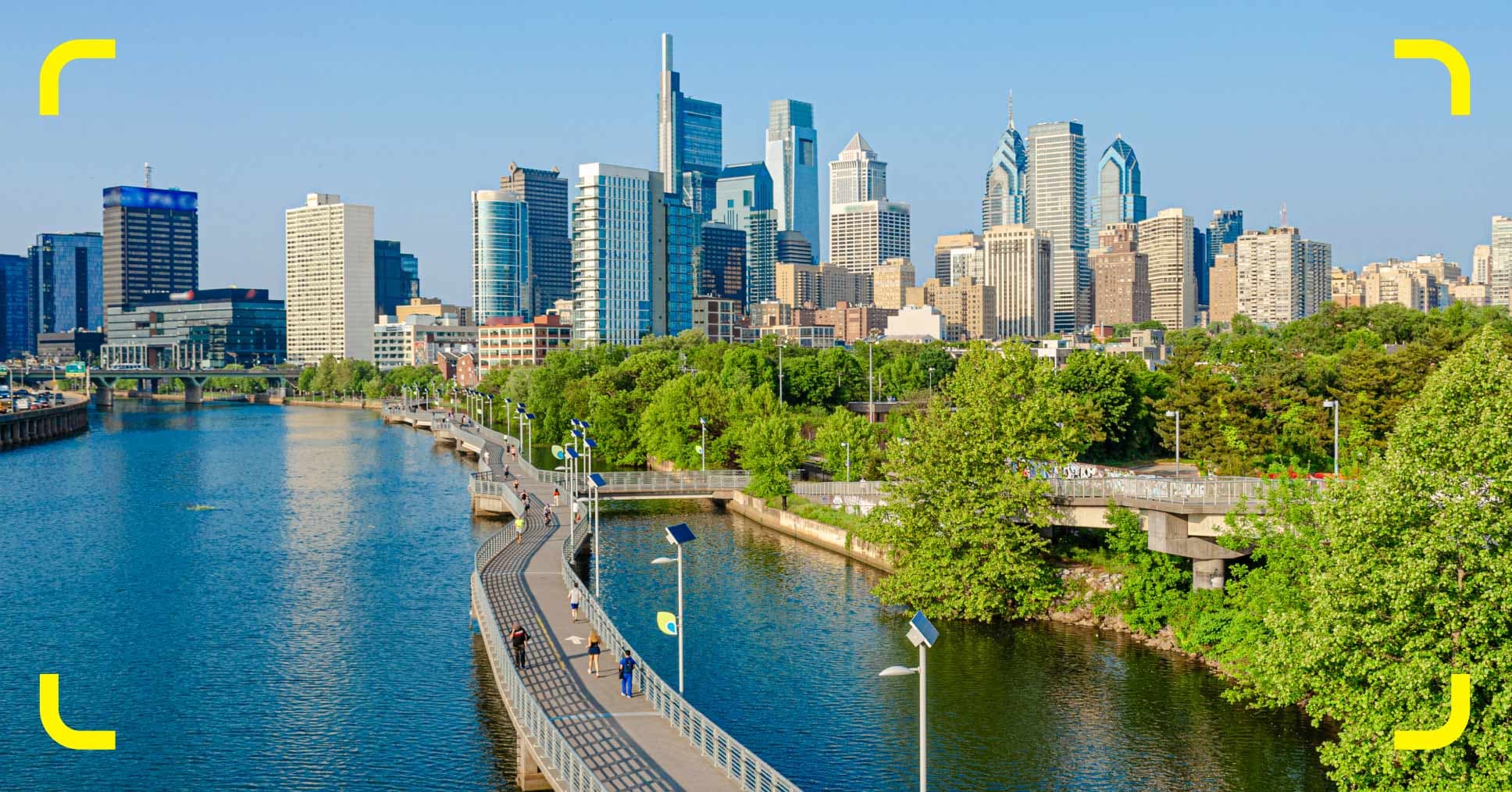
Table of Contents
- Where is Philadelphia?
- When should you visit Philadelphia?
- Explore historic Philadelphia’s Old City and Independence Hall
- 1. See the Liberty Bell
- 2. Tour Independence Hall
- 3. Wander Elfreth’s Alley
- 4. Visit the Museum of the American Revolution
- Top things to do in Center City
- 5. Philadelphia City Hall and tower views
- 6. Snap a photo at the LOVE Park
- 7. Relax in Rittenhouse Square
- Must-see art museums and the Rocky Steps
- 8. The Philadelphia Museum of Art and the Rocky Steps
- 9. The Barnes Foundation
- 10. Rodin Museum
- Where to eat in Philadelphia
- 11. Make a stop at the Reading Terminal Market
- 12. Explore Italian Market Street
- Unique and cool things to do in Philadelphia
- 13. Philadelphia’s Magic Gardens
- 14. Eastern State Penitentiary
- 15. The Mütter Museum
- 16. Free things to do in Philadelphia
- 17. Watch a Philadelphia sports teams play
- Things to do in Philadelphia on a night out
- 18. Bars in Philadelphia’s Center City
- 19. Fishtown
- Things to do in Philadelphia with kids
- 20. The Franklin Institute
- 21. Philadelphia Zoo
- Best day trips from Philadelphia
- 22. Longwood Gardens
- 23. Gettysburg National Military Park
- 24. Lancaster and Pennsylvania Dutch Country
- Stay connected in Philadelphia with Saily
Where is Philadelphia?
Philadelphia is located in the northeastern part of the US, right between New York and Washington, D.C. You have a few options to travel to the city, even if you’re located outside of the country.
Flying to Philadelphia from outside the US is relatively easy since Philadelphia International Airport (PHL) is one of the hubs of American Airlines. While a fair share of the airport’s international connections are summer seasonal — with traffic doubling during the summer compared to the winter — you can still grab an international flight to the city during the winter from several European cities.
Getting to the city from the airport is straightforward. You can either grab an Uber for a 20- to 30-minute drive to City Hall or use the Southeastern Pennsylvania Transportation Authority’s (SEPTA) Airport Line for a 25-minute ride to the same spot.
Remember — for an international traveler, roaming in the US can be expensive. You should consider getting an eSIM for the US, making it easier to stay connected while you travel. Alternatively, you can buy a local US SIM card that you can find either at the airport, a convenience store, or a retailer like Walmart.
If you live on the East Coast of the US, you can take the train to Philadelphia. Amtrak has four services that stop in Philadelphia — the Acela, the Keystone Service, the Northeast Regional, and the Pennsylvanian. All four originate in either Boston or New York and stop at some point on the East Coast or continue beyond Philadelphia.
Two interstate highways also cross through Philadelphia — the I-76, which originates in Ohio, and the I-95. The I-95 begins in Miami, Florida, and runs throughout the whole East Coast of the US, ending at the border with Canada in Maine. Both highways are good options to travel on if you’re planning a road trip that will include Philadelphia.
When should you visit Philadelphia?
Since Philadelphia is located in the northeastern part of the country, like many cities situated in the region, it can get cold during the winter. So unless you’re into snow and ice, the best time to visit this part of the US is late spring, summer, and early autumn to enjoy warmer weather and some of the outdoors activities, including taking a walk through Philadelphia.
However, if you do want to witness LeBron James playing in a Philadelphia 76ers jersey or watch a Philadelphia Eagles game, your domestic or international travel checklist will have to include warm clothes since both teams mostly play during the colder winter months.
Explore historic Philadelphia’s Old City and Independence Hall
Philadelphia’s Old City is a neighborhood where reminders of the past can be found around almost every corner. Few, if any, places are better than the Old City to learn about the history of the US. Here are the main attractions to see in the neighborhood:
1. See the Liberty Bell
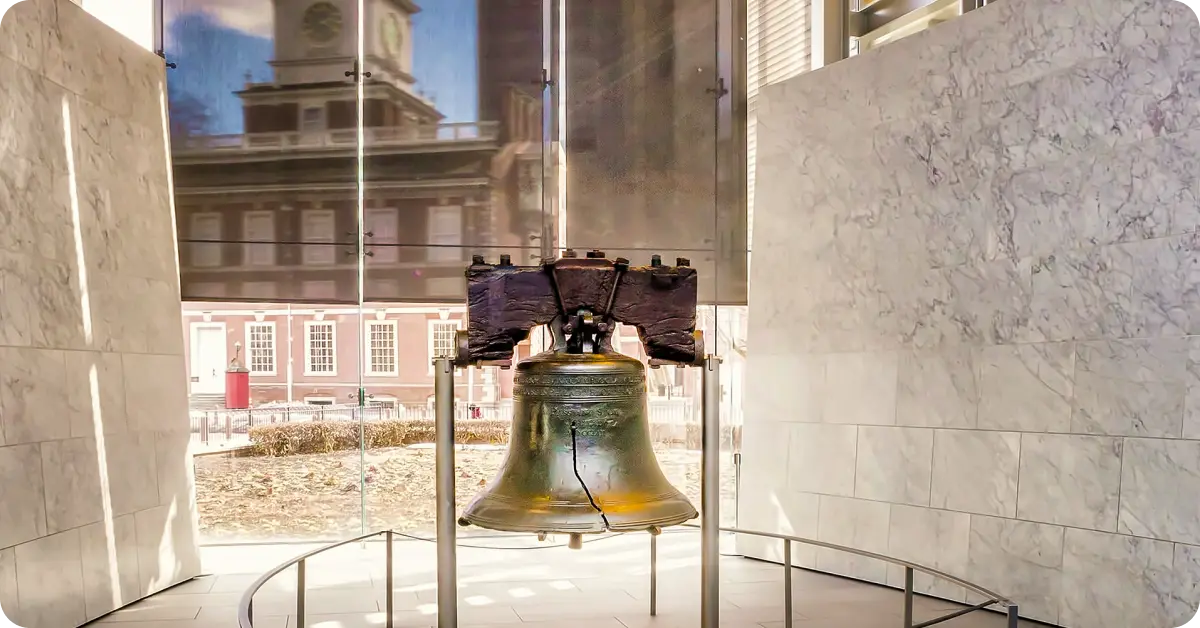
Located in the aptly named Liberty Bell Center, the Liberty Bell is one of the more famous icons of the US independence movement. The bell, weighing 2,080 pounds (940 kilograms), has a legendary crack that you can see in all of its glory at the Liberty Bell Center.
While touching the actual bell is strictly off limits, you can still walk up to the Liberty Bell within a few feet and grab a picture. Don’t skip out on the artifacts found at the Liberty Bell Center, where you’ll learn more about the bell’s history, including the two small replicas of the Liberty Bell. One of them has a hidden crack in it that mimics the original bell’s crack, and you’ll have an opportunity to guess which one from the sound that it makes.
The center is open between 9 AM and 5 PM, and the entry is free. During the peak summer season, it gets busy, so prepare to wait in line if you’re visiting the center during the weekend or peak hours of the day.
2. Tour Independence Hall
Walk across Chestnut Street from the Liberty Bell, and you’ll run into Independence Hall, the centerpiece of the Independence National Historical Park in Philadelphia. The Founding Fathers of the US adopted the Declaration of Independence and the Constitution of the country in Independence Hall, making it one of the most important buildings in the history of the US.
Just like the Liberty Bell, touring Independence Hall is free. However, you can only freely roam the site between 9 AM and 9:50 AM. Between 10 AM and 4 PM, guided tours are held every 20 minutes, and from 4:20 PM afterward, the tours are expanded to include the second floor. Tickets for the guided tours are US$1 and need to be reserved beforehand. In January and February, tickets aren’t required.
While the ticketing system may sound confusing, Independence Hall is a must-see for anyone visiting Philadelphia. If only those walls could talk and tell the story of how the Founding Fathers agreed to declare the independence of the US, eh?
3. Wander Elfreth’s Alley
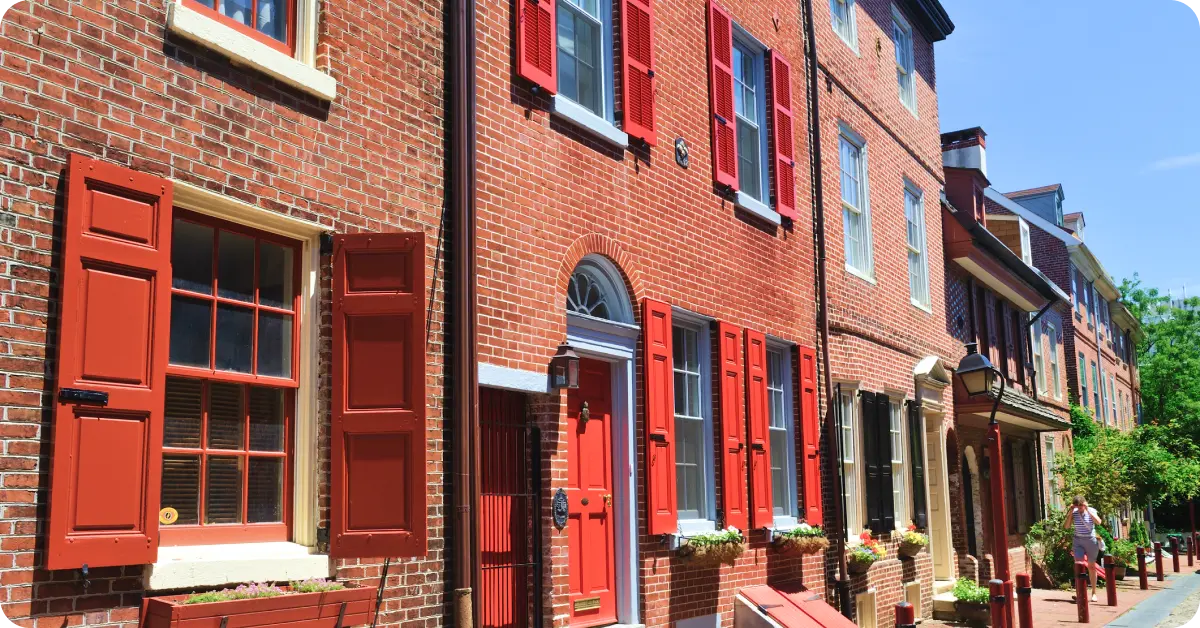
We’re not saying a time machine has been invented by someone somewhere. But if you want to feel like you’ve been transported back in time, check out Philadelphia’s Elfreth’s Alley. It’s one of the best places to visit in the US for history buffs.
The street is the oldest continuously inhabited residential street in the US. At the same time, the alley serves as a glimpse into 18th-century Philadelphia and how people of various trades lived and worked from their homes. Self-tours and guided tours of the street are available, and there’s also the Elfreth’s Alley Museum. A guided ticket that includes museum admission is US$10 for adults and US$5 for kids between seven and 12.
Our recommendation is to visit Elfreth’s Alley in early June. The Elfreth’s Alley Association has held the “A Neighborhood Fête” annual event to celebrate the neighborhood’s past and present during the month since 1934, providing an opportunity to go inside the homes lining the alley. The street’s residents let in visitors to see how the homes, built some 300 years ago, were adapted to accommodate modern lifestyles. In addition, music, reenactments, and other activities are plentiful throughout the street. Tickets are a must — you can either purchase them beforehand, which is our recommendation since you won’t have to wait in line, or you can buy them at the entrance to the alley. At the time of writing, the annual event’s date for 2027 is not set, but in 2026, the fête was held on June 6.
4. Visit the Museum of the American Revolution
With Philadelphia having been the hub of the American Revolution, it’s only natural that the city would have its own museum about the period. This museum is located just a few blocks south of Elfreth’s Alley.
The Museum of the American Revolution has both temporary and permanent exhibitions. Some of the more noteworthy exhibits include “The Road to Independence,” which centers around the journey of how multiple colonies began their revolutionary journey, or “A New Nation,” which focuses on the post-independence hardships of the revolutionaries.
While this museum does not have a dedicated parking site, you can easily navigate the Old City neighborhood, where it’s located, on foot. Your parking options around the museum include several garages, such as the Bourse Garage or Park America, that are also within walking distance of the Museum of the American Revolution.
The museum is open daily between 9:30 AM and 5 PM. To enter, you’ll have to purchase a ticket — US$27 for any day and any time tickets or for admission purchased at the counter, US$25 if you purchase a ticket online. Seniors, students, teachers, and military personnel can buy tickets for US$21. Tickets for youth between six and 17 are priced at US$14.
Top things to do in Center City
Philadelphia offers much more than its Old City neighborhood. The Center City area, which also encompasses the Old City, includes more than a handful of must-see sites.
5. Philadelphia City Hall and tower views
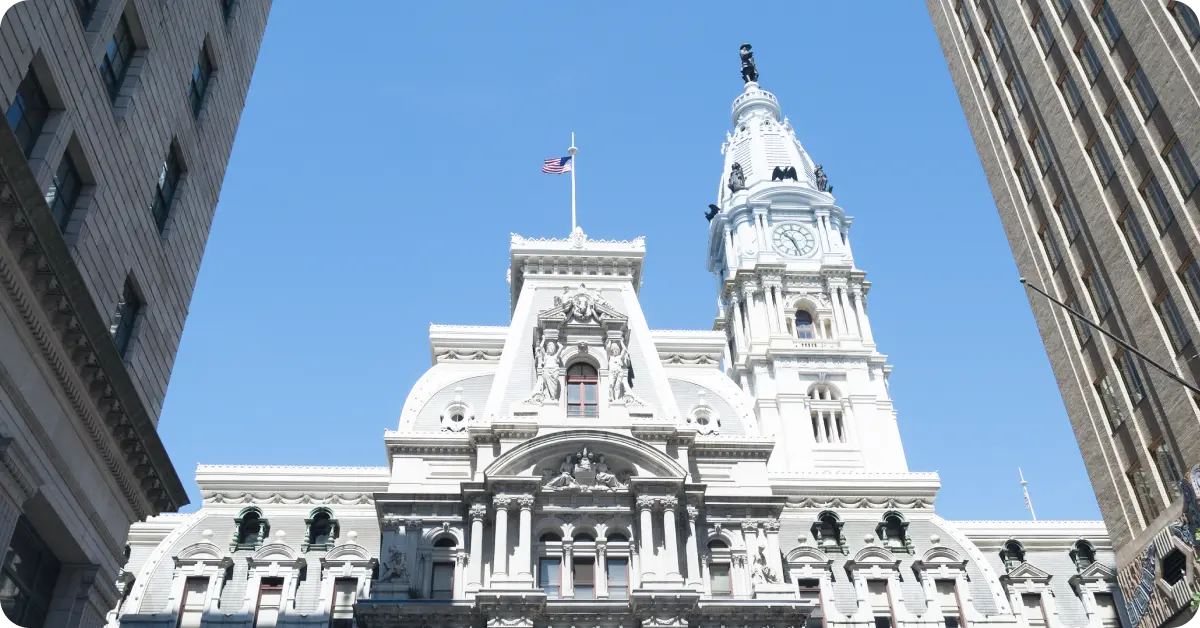
At the heart of Center City is Philadelphia City Hall, which, beyond more than 250 sculptures, statues, and other art pieces, was also at one point the tallest habitable building in the world. While it has lost that record to other buildings, Philadelphia City Hall still offers stunning views from its tower.
One of the first things you should do once you step out of the Old City is to look at the City Hall and the massive statue of William Penn, the founder of Philadelphia, on top of the building. The second item on your to-do list should be a ride on the 100-year-old elevator to the top of the City Hall for a Tower Tour to enjoy a 360-degree view of the city. The ride up to the tower is only available between 10 AM and 2:45 PM, and since the elevator can only accommodate up to four people, you should book tickets in advance.
Once you’re done with the Tower Tour, you can book the one-hour City Hall Building tour. During the tour of the building, you’ll learn more facts about City Hall, the more than 250 sculptures inside, and the rooms where lawmakers actually make decisions.
6. Snap a photo at the LOVE Park
A stone’s throw away from the Philadelphia City Hall is the LOVE Park, also known as John F. Kennedy Plaza. The small plaza has the iconic LOVE sculpture, under which you can even get married, but only on Wednesdays and between March and October.
Beyond that, there’s not much to do at LOVE Park, apart from grabbing a selfie next to or below the sculpture that reads out LOVE. You can visit the plaza’s visitor center, where you can buy souvenirs or tickets to local attractions and museums, or the Broad Street Beer Garden, which is open on Wednesdays, Thursdays, Fridays, Saturdays, and Sundays. The beer garden serves various beverages, and you can take a moment and reflect on your experience in Philadelphia so far over a drink or two.
7. Relax in Rittenhouse Square
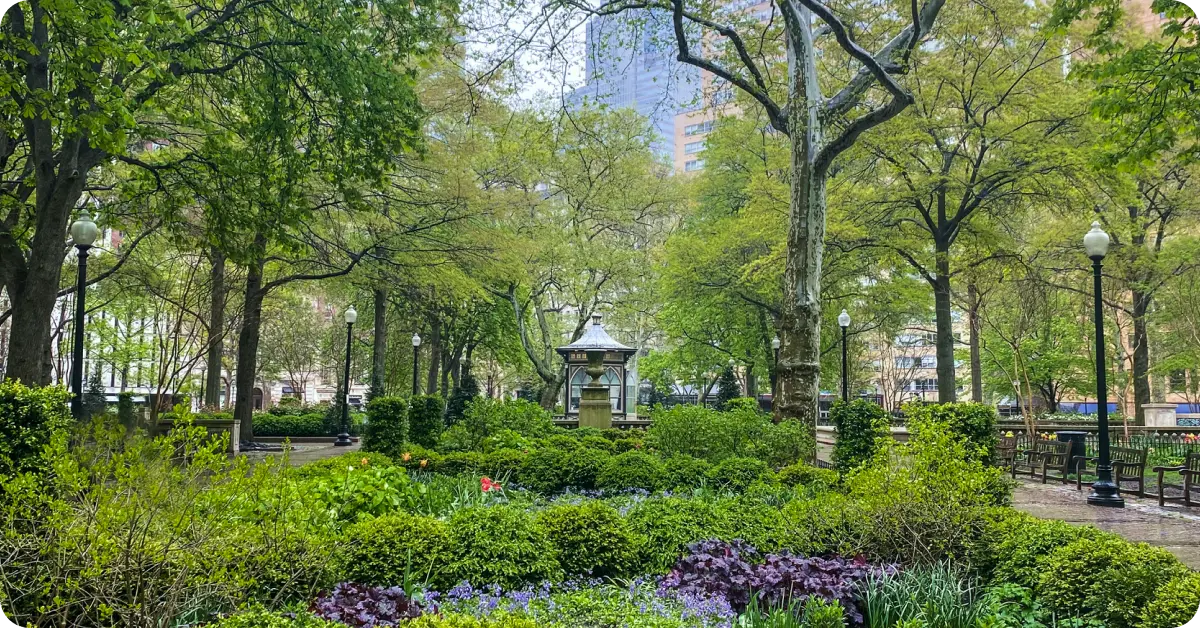
One of many of William Penn’s contributions to Philadelphia is Rittenhouse Square, or rather the designated location for the public park in the middle of Center City. When you’re going to look for a relaxing spot in the neighborhood, take a 15-minute walk from City Hall to Rittenhouse Square. The park is not something that you rush through on your visit to Philadelphia, so, spend your time and relax like a local, which is what Rittenhouse Square is used and widely known for!
Still, if you’re on a short weekend trip and want to quickly hop across Rittenhouse Square, be sure to check out the Lion Crushing a Serpent, Duck Girl, Billy, the Greyhound, and the Giant Frog statues. You can also visit the Rittenhouse Square Farmers’ Market. Hosted year-round on Tuesdays and Saturdays, it’s a great opportunity to buy local produce and arts and crafts as well as meet the locals.
Must-see art museums and the Rocky Steps
Beyond Philadelphia’s museums about the American Revolution, the city hosts several historically important art museums.
8. The Philadelphia Museum of Art and the Rocky Steps
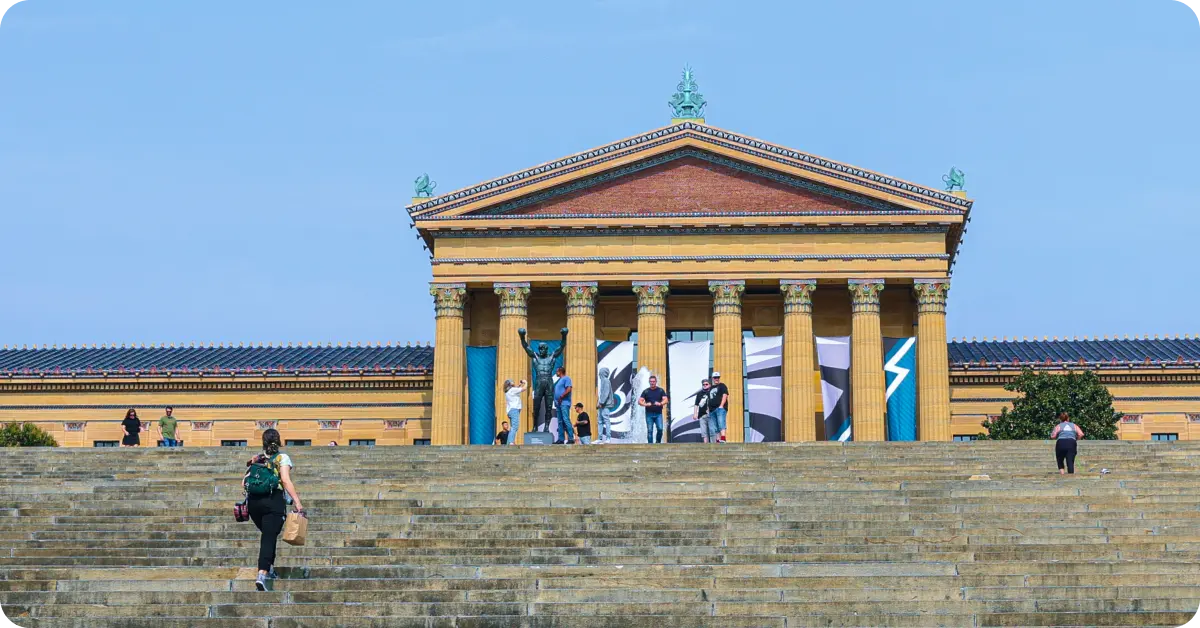
Your tour of the city’s museums should start with the Philadelphia Museum of Art. The museum’s main building is almost 100 years old and located relatively close to the Philadelphia City Hall — a 30-minute walk or a six-minute drive from the city’s civic focal point.
Listing all of the important pieces of art within the Philadelphia Museum of Art’s walls would result in a book-length article since 170,147 artworks make up the museum’s collection. However, some of the most noteworthy include Peter Paul Rubens’ “Prometheus Bound,” Charles Willson Peale’s “The Staircase Group,” Vincent Van Gogh’s “Sunflowers,” and Pablo Picasso’s “Three Musicians.” The paintings are just four of the thousands of pieces of art in the museum, with the Philadelphia Museum of Art displaying items from Asia, Africa, Europe, and North America from the middle ages to art from the 20th century.
Whether or not you’re interested in the museum itself, it’s still worth stopping by the premises. Here, the Rocky statue and the Rocky Steps draw plenty of fans of the movie franchise, and seeing the Philadelphia City Hall from the viewpoint of Rocky Balboa — preferably, with “Gonna Fly Now” playing in the background as you’re lifting your hands in the air — will be an experience of a lifetime, especially if you’re a big fan of the Rocky franchise.
9. The Barnes Foundation
When you’re driving or walking to the Philadelphia Museum of Art from City Hall along Benjamin Franklin Parkway, you might spot an odd-looking building. At first glance, it has an uneven limestone facade with massive gaps crowned by a luminous light box on its second floor. But behind that facade lies one of the most impressive art collections in the country.
Albert Barnes’ personal collection of fine art serves as the basis for The Barnes Foundation, which has the goal of educating people about fine art and horticulture. Now, the institution has over 4,000 artworks in its collection, including iconic impressionist, post-impressionist, and modern paintings, as well as antiques, jewelry, and other artifacts from various civilizations and periods of history.
Book one of the many guided tours to truly understand and appreciate some of the items in The Barnes Foundation collection. The site is open for visitors from Thursday to Monday, so plan accordingly.
10. Rodin Museum
The Rodin Museum is another art institution found along the Benjamin Franklin Parkway. The museum is dedicated to the works of French artist Auguste Rodin, often credited with being the founder of modern sculpture. Administered by the Philadelphia Museum of Art, the building houses the largest collection of Rodin’s works in the world apart from the Musée Rodin in Paris, France.
Since the Rodin Museum’s hours are a bit unusual as well, with the museum welcoming visitors from Thursday to Monday, you might want to decide whether to visit the Rodin Museum, The Barnes Foundation, and the Philadelphia Museum of Art, or at least two of them. Spreading out the visits to the three art museums through several days, as well as the city’s historical museums, will be a good way to avoid museum fatigue.
Where to eat in Philadelphia
With plenty of sights in Philadelphia on your bucket list, you might be wondering where you can refuel while you’re running around the city. Philadelphia has plenty of brilliant restaurants and two food markets that have plenty of options for every taste palate.
11. Make a stop at the Reading Terminal Market
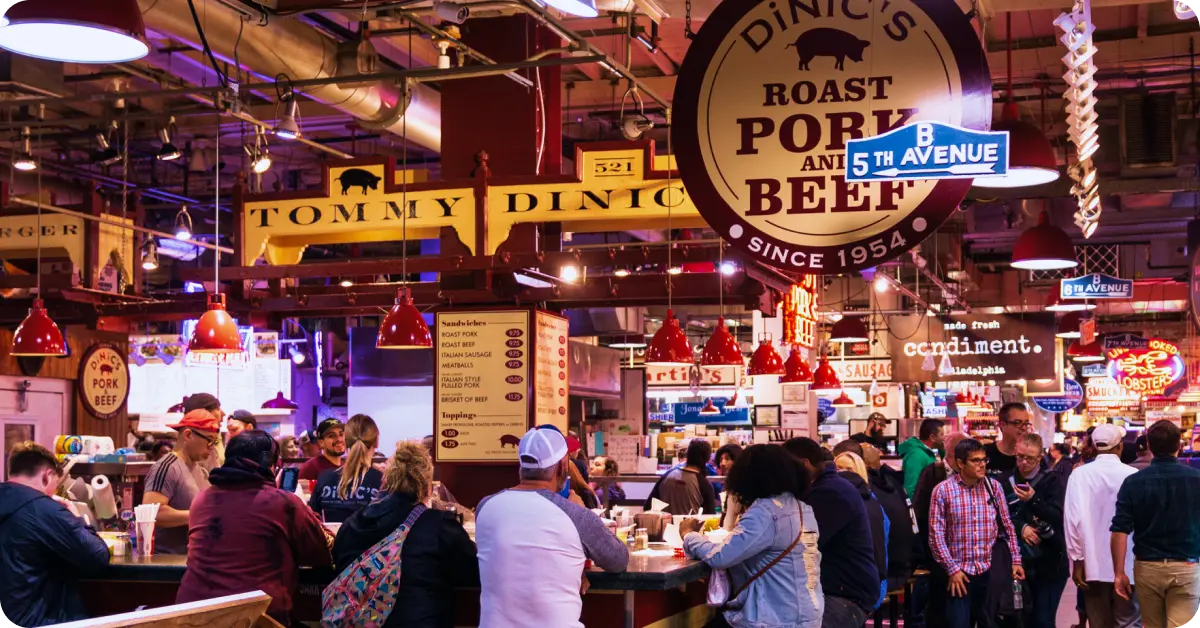
The Reading Terminal Market has been rated as one of the top public markets in the US for a number of years now. USA TODAY’s 10Best, for example, has listed the location as one of the best open markets in the past six years. So, what does the Reading Terminal Market actually offer?
It houses over 80 vendors, including Amish sellers who bring farm-fresh produce to the market four days out of the week. The Reading Terminal Market has a diverse range of sit-down eateries from various cuisines of the world.
And if there’s one place to eat a Philly cheesesteak, it’s the Reading Terminal Market. Beyond the traditional cheesesteaks served at Uncle Gus’ Steaks, you can try the Trainwreck — a Cajun-Philly cheesesteak spin that has steak, salami, andouille sausage, onions, and cheese, all in a single sandwich. Another must-try sandwich is Tommy DiNic’s roast pork, which is arguably as good as any cheesesteak you can get in Philadelphia. Entering the Reading Terminal Market is free.
12. Explore Italian Market Street
Philadelphia’s Italian Market Street, officially known as the South 9th Street Curb Market, is a bit different from the Reading Terminal Market. For starters, the Reading Terminal Market is an indoor space, while the Italian Market is an open-air affair, and vendors are lined up along or inside buildings across South 9th Street. Another key difference is that the Reading Terminal Market is mostly populated with eateries, while the Italian Market has plenty of shopping options for small gifts to bring back home.
Nevertheless, the Italian Market is, unsurprisingly, home to another pair of great options to grab a Philly cheesesteak — Geno’s Steaks and Pat’s King of Steaks. Other food options are plentiful as well, like Ralph’s, one of the oldest Italian restaurants in the US, Adelita, a spot for Mexican food, or Phở Skyline’s Vietnamese cuisine.
Besides nabbing a bite to eat at this market, you can shop for vintage books and vinyl records at Molly’s Books & Records, local artists’ pieces at Gleaners Cafe, or cookware at Fante’s Kitchen Shop. Our tip is to visit the Italian Market Visitor Center, where you can get more information and recommendations from local guides.
To experience the beauty of the market and the neighborhood itself, consider going to the South 9th Street Italian Market Festival. During the festival, you’ll be able to witness the Grease Pole Climb, hear live music performances, participate or spectate the halfball tournament, and visit many of the vendors who line the street during the festival. The Italian Market Festival will return for 2027. The festival’s date is yet to be finalized — but in 2026, the festival ran on May 16, 2026, and May 17, 2026.
Unique and cool things to do in Philadelphia
We understand that you could be eyeing unique and cool things to do in Philadelphia. The city is home to more than just traditional art or history museums or fun markets, and here are some of those sites.
13. Philadelphia’s Magic Gardens
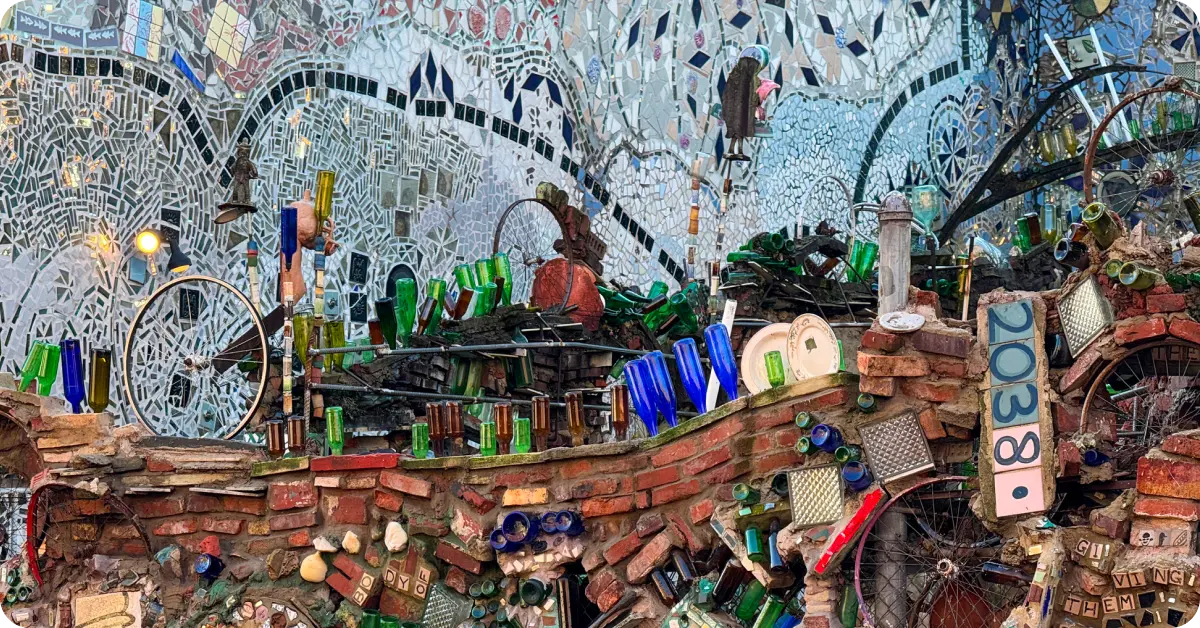
Philadelphia’s Magic Gardens is an enchanting landscape of mosaicked streets, all done and taken care of by Isaiah and Julia Zagar. The pair moved to South Philadelphia in the 1960s and began working on rejuvenating the derelict neighborhood, starting with Julia Zagar’s the Eyes Gallery, which is still open to this day.
The Magic Gardens officially traces its roots back to 1994, when Isaiah Zagar undertook the task of beautifying the space near his studio. Eventually, the space grew to cover an area of 3,000 square feet (280 square meters) in southern Philadelphia, creating artwork along the streets that were once scheduled for demolition to make way for an interstate highway, the I-695, which never saw the light of day. Using handmade tiles, bottles, bicycle wheels, mirrors, and other items, Zagar made a wonderful place full of mosaics to get lost in and forget your worries..
You can visit the Magic Gardens Museum on either a self-guided tour or a guided tour, both of which require a fee. Be mindful that the museum’s hours can vary if it’s hosting any events and that the Magic Gardens Studio cannot be visited unless you’re there for an event or a workshop organized by the Philadelphia Magic Gardens (PMG). PMG is the organization that oversees the preservation of Zagars’ work.
14. Eastern State Penitentiary
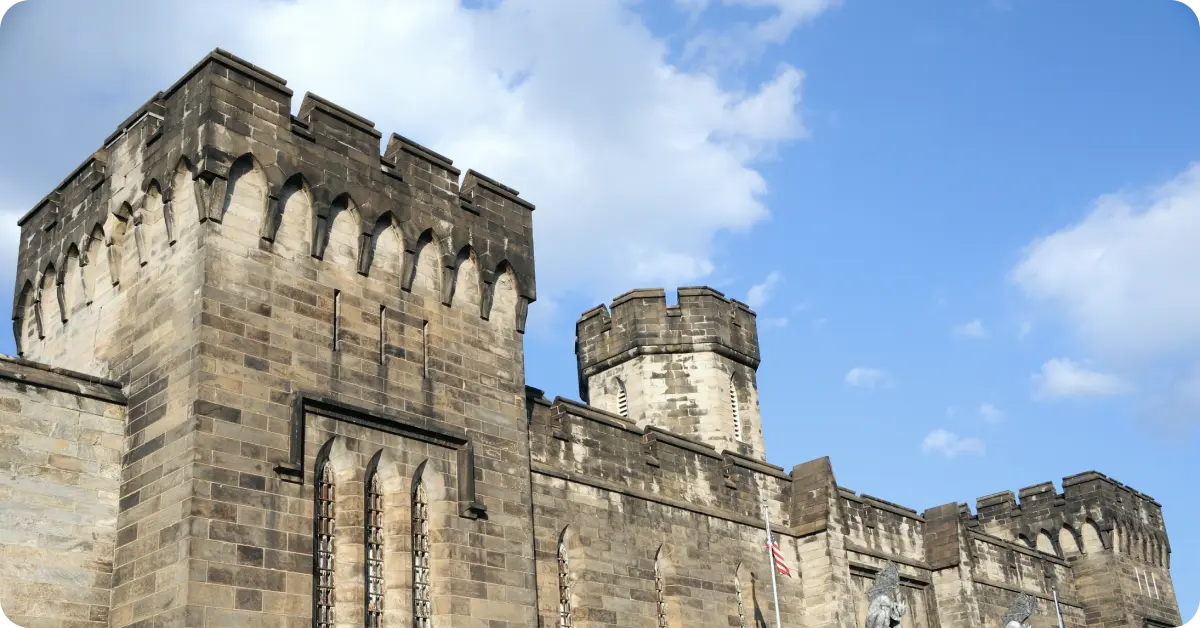
At the same time as the US was still forming its prison system, the Eastern State Penitentiary was built as a way to reform prisoners rather than punish them. The building continued the legacy of another Philadelphia prison — the Walnut Street Prison, demolished in 1838. Now, it’s a museum that invites everyone to learn more about the penitentiary and the prison system.
The design of the building epitomized the philosophy of reforming inmates. The heart of Eastern State Penitentiary was the central hub, granting guards sightlines of the corridors that branch out into several two-floor access hallways with multiple cells. Cells on the first floor had direct access to exercise yards.
Eastern State Penitentiary hosts many events and exhibitions that rotate throughout the year. If you’re interested in any particular event or exhibition, you should consult the site’s calendar for more information. But if you just want to tour the facility, you can go on a self-guided or a guided tour to find out more about the building itself.
Even if you’re not planning on touring the prison, you might still consider viewing the Eastern State Penitentiary from the outside. The prison’s design has two purposes — the facade is meant to intimidate anyone who sees it from afar, while the interior is akin to a church, and according to the organization that preserves the site, is “intended to instill reverence.”
15. The Mütter Museum
The Mütter Museum is one of the weirder museums in Philadelphia. It focuses on medical history and how societies have been affected by various diseases throughout history. One of the current special exhibitions is titled “The Philly Killer: Legionnaires’ Disease and the Past and Future of Infectious Disease,” focusing on a disease that killed 34 people during and after Philadelphia celebrated the 200th birthday of the US in 1976.
The Mütter Museum displays seven permanent exhibitions, some of which are simultaneously unusual and educational. For example, the Chevalier Jackson Collection displays the various foreign objects that Chevalier Jackson, an otolaryngologist, removed from people’s airways. The exhibit “Harry and Carol” displays the skeletons of Harry and Carol, two Philadelphia residents, who were diagnosed with fibrodysplasia ossificans progressiva (FOP). The disease transforms muscle, ligaments, and tendons into bone, fusing all of the joints in the skeletal system.
The Mütter Museum is open from Wednesday to Monday, and tickets range from US$20 for students and children between the ages of six and 17 to US$25 for adults. Children under five can enter the museum for free. The museum recommends that visitors pre-purchase their tickets for peak times, such as over the weekend or on federal holidays.
16. Free things to do in Philadelphia
Many of the attractions listed above include admission fees, but you can still find free things to do in Philadelphia. Our recommendations of sites to visit without breaking the bank are as follows:
The Liberty Bell. Visiting the Liberty Bell and its visitor center is free, and if you want to know more about the American Revolution and the Liberty Bell itself, this is the place to be.
Independence Hall. Independence Hall is not exactly free, but tickets for guided tours at the destination are only US$1. In January and February, as well as on specific dates in July and on select national holidays, entrance to the museum is free. Independence Hall is another must-visit site in Philadelphia to deepen your knowledge of how the US gained its independence.
Elfreth’s Alley. Elfreth’s Alley is the US’s oldest continuously inhabited residential street, but it still contains plenty of history. The alley’s museum has an admission fee of US$3 for adults and US$2 for kids aged seven to 12, while guided tours are US$10 for adults and US$5 for kids between the ages of seven and 12. But if you don’t want to pay the entrance fee or go through a guided tour, Elfreth’s Alley is free to roam around.
Mural Arts Philadelphia. Mural Arts Philadelphia is not a site to visit, but rather a public art program. It is behind some of the most vibrant and eye-catching murals that are scattered across Philadelphia. While the guided tours are paid, you can view the over 30 murals on your own, making it one of the best free things to do in Philadelphia to also get to know the city.
Spruce Street Harbor Park. Spruce Street Harbor Park is a free Philadelphia attraction perfect for enjoying a relaxing summer day by the water. On Fridays between May and September, the park hosts the Friday Night Jazz Series, combining music with views of the Delaware River and neighboring New Jersey.
Another tip to save money while you’re exploring Philadelphia is to look out for the Philadelphia Museum of Art’s Pay What You Wish Friday Nights. In 2026, the nights returned on April 10 and ran through September 4. After September 4, the museum will offer half-off discounted rates on Fridays, while admissions on the first Sunday of every month are part of Pay What You Wish.
17. Watch a Philadelphia sports teams play
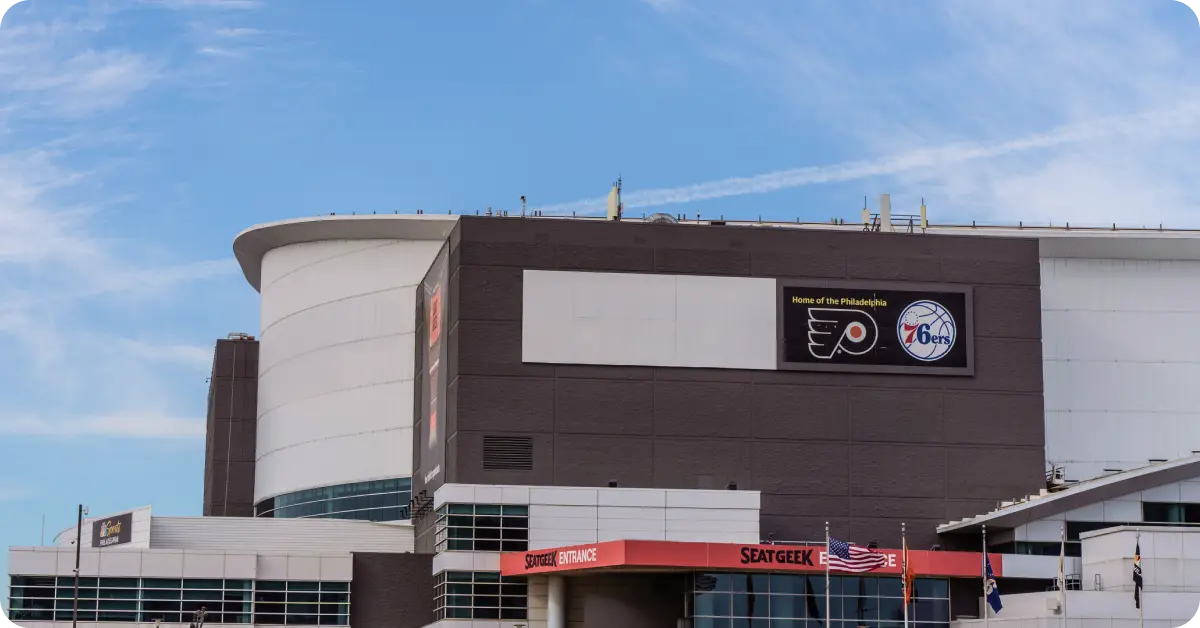
Philadelphia has some of the most passionate sports fans in the US, with fans supporting each of the major league teams with almost equal passion. Check out the table below to help you plan for the major leagues’ seasons:
Major league | Philadelphia team | Regular season dates |
|---|---|---|
Major League Baseball (MLB) | Philadelphia Phillies | March to September |
Major League Soccer (MLS) | Philadelphia Union | February to October |
National Basketball Association (NBA) | Philadelphia 76ers | October to April |
National Football League (NFL) | Philadelphia Eagles | September to January |
National Hockey League (NHL) | Philadelphia Flyers | October to April |
Unfortunately, these are all men’s leagues. Philadelphia has no women’s teams in the National Women’s Soccer League (NWSL), the Professional Women’s Hockey League (PWHL), the Women's National Basketball Association (WNBA), or the Women’s National Football Conference (WNFC). The Philly Phantomz once participated in the Women’s Pro Baseball League (WPBL), but recently switched its allegiances to the Women’s Football Alliance (WFA). A WNBA team is set to begin playing in Philadelphia in 2030, at least according to the league’s latest plans.
Remember to buy tickets only from the official sites of the leagues or teams, and use trusted third-party ticket resell services to avoid getting scammed. You should be especially careful with tickets to Philadelphia 76ers games since the high-profile signing of LeBron James could attract nefarious actors who will try to profit from the hype.
The only day in 2026 on which no major league game was scheduled was July 15, a day after the MLB held its yearly All-Star game. MLS resumed its post-World Cup play on July 16. So whenever you’re traveling to Philadelphia, you’ll most likely come across a league game in at least one the major leagues.
Things to do in Philadelphia on a night out
Philadelphia is one of the most walkable cities in the US. What does this have to do with its nightlife? It means that it’s easy to explore the many bars, clubs, and concert venues all over Center City and the nearby neighborhoods without having to take a car or rideshare.
18. Bars in Philadelphia’s Center City
You can find a wide variety of bars in Philadelphia, such as dive bars, pubs, and high-end cocktail places.
The neighborhood has plenty of bars to explore. The Franklin Mortgage & Investment Company throws you back to an era when certain substances were banned in the US and illegal bars cropped up all around the country. Right by Rittenhouse Square, a.bar welcomes you with its unassuming but slick interior, and there’s Philadelphia’s oldest pub, McGillin’s Olde Ale House, which serves dozens of local craft beers and even its own selection of ales. All three are worth a visit, even if you dive in only for a single drink.
If you’re after more bars to visit, Philadelphia’s Center City has a lot of options throughout — don’t be afraid to explore. You might just find one that becomes your favorite in Philly.
19. Fishtown
“It’s a Fishtown thing,” the locals say. You’ll know when you’re in Fishtown — the fish street signs, the fish heads painted on top of trash cans, or the many murals, some of which include depictions of fish. The former working-class neighborhood is the place to be for any foodie in Philadelphia.
The neighborhood has the local classics, including Philly cheesesteaks at Joe’s Steaks + Soda Shop. You can taste Corsican and Sardinian cuisine at Bastia or walk into a Thai restaurant called Kalaya, run by Nok Suntaranon, who won the 2023 James Beard Foundation Award for best chef in the Mid-Atlantic. The trio of restaurants is just some of the choices you have while in Fishtown. The area itself has dozens of places to sit down, have a beverage, and eat some of the best food that Philadelphia has to offer.
Things to do in Philadelphia with kids
When you’re looking for kid-friendly activities, two suggestions below offer a peek into what Philly has to offer families.
20. The Franklin Institute
Named after Benjamin Franklin, one of the Founding Fathers of the US, who spent the majority of his life in Philadelphia, the Franklin Institute is a science-focused museum. Since Franklin was also a scientist, this shouldn’t come as a surprise.
Located right next to Benjamin Franklin Parkway on the way to the Philadelphia Museum of Art, this interactive museum includes numerous exhibits and experiences. Right now, the museum hosts the “Universal Theme Parks: The Exhibition” experience, allowing everyone to learn how to build iconic attractions and rides using franchises like Minions, SUPER NINTENDO WORLD, or Universal Studios Monsters. In February 2027, the museum will welcome “Star Wars: The Experience — A Journey Through the Galaxy,” an exhibition that will include immersive environments, props, and original costumes from the Star Wars franchise.
Interactive and educational environments come together with the artifacts related to the exhibition to help you learn more about the subjects. Some of the exhibitions’ topics include the body’s biology, including in “The Giant Heart” exhibit, space exploration, and the connection between sports and the body. The museum offers many more exhibitions and events, so be sure to budget plenty of time to explore.
The Franklin Institute is open daily. The general admission plus access to “Universal Theme Parks: The Exhibition” will vary in price, depending on the day and time you’re planning to visit the museum. The general admission ticket, which excludes the Universal-themed exhibition, starts at US$23 for kids and US$29 for adults.
21. Philadelphia Zoo

If you’ve ever wondered who or where opened the first zoo in the US, your answer lies in Philadelphia. William Camac convinced the city’s legislators at the time to open the country’s first zoo in the 19th century, which eventually opened in 1874.
The site is home to over 1,900 animals. One of the zoo’s unique features is the Zoo360 mesh trail above the visitors’ walking paths, meaning that you can see a tiger, or any other animal, roaming above you as you’re walking to your next animal enclosure. In addition to seeing animals do their thing at their enclosures, the Philadelphia Zoo offers several up-close experiences.
You can feed hippos, giant tortoises, or penguins, brush a rhino, help a porcupine paint (yes, paint), or learn about the animals’ visits to the veterinary hospital inside the zoo. Unfortunately, to participate in these activities, you’ll have to pay an additional fee on top of your entrance fee, which is around US$30, depending on the day of the week visit.
Best day trips from Philadelphia
The outskirts of the city and the state of Pennsylvania have some great sites to visit in case you want to venture out of Philadelphia or if you’re on a longer road trip that includes stops in the city or the state.
22. Longwood Gardens
If you don’t want to get totally lost in nature but enjoy plants and flowers, Longwood Gardens is the place to go. The site, located around 30 miles (48.2 kilometers) from Philadelphia, is a public garden with over 10,000 plants across more than 1,100 acres (445 hectares).
The site itself has dozens of indoor and outdoor gardens with specific species, collections, or recreations of geographical areas. Visit the recently renovated Orchid House, which has 5,000 different orchids. Explore Cascade Garden, inspired by the native flora and landscapes of Brazil, where Roberto Burle Marx, a Brazilian landscape architect, recreated a tropical rainforest-like atmosphere. Longwood Gardens’ six districts have unique layouts and plants, and you’re bound to find something interesting in all of them, but because it’s so large, you may have to prioritize to make the most of your time.
While the gardens are open year-round, except for Tuesdays, hours differ depending on the time of the year. In addition, Longwood Gardens’ fine dining restaurant, called 1906, or the site’s Beer Garden, might not mirror the site’s working hours and not be open during your visit. To enter Longwood Gardens, you also have to purchase timed tickets, priced according to peak or non-peak times. Non-peak tickets will set you back US$35 in August, while peak-time tickets are US$38 for adults. Children under the age of four can enter for free, and youth and senior citizens (older than 65 years) get discounted tickets.
23. Gettysburg National Military Park
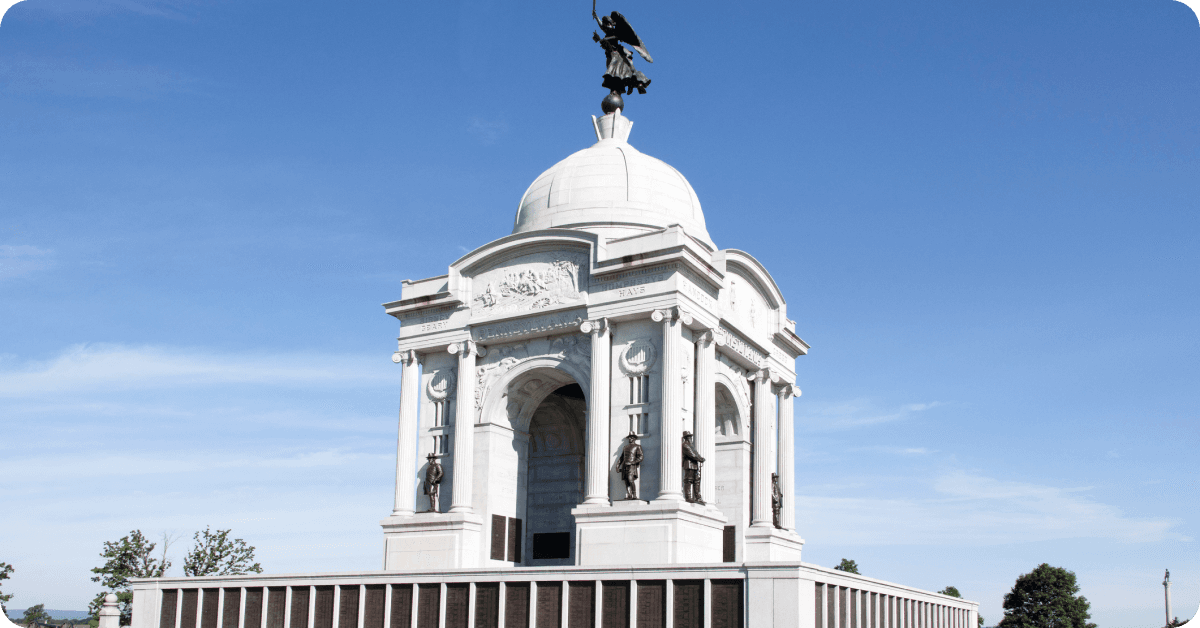
Gettysburg National Military Park is yet another site that affirms Pennsylvania’s importance to the history of the US. The site is located more than two hours away by car from Philadelphia, but the drive is worth it, especially if you want to know more about a pivotal moment in the American Civil War.
Plan to spend four to six hours there since the park is massive, covering 3,785 acres (1,532 hectares), or more than triple the size of Longwood Gardens. Our tip is to first visit the park’s visitor center, where you’ll get to know more about the park, its sites and attractions, and the museum that will provide more context about the American Civil War and its effect on US society. The park also hosts events for visitors, such as the Ranger Programs at Gettysburg — guided tours by park rangers to explore the key moments that defined the Battle of Gettysburg.
The park itself is free to enter, as is the visitor center. However, to see the Gettysburg National Military Park Museum, you’ll have to purchase tickets — US$20.75 for adults, US$19.75 for seniors and veterans, and US$15.75 for children between the ages of six and 12. Gettysburg National Military Park is open year-round.
24. Lancaster and Pennsylvania Dutch Country
Lancaster and the wider region known as Pennsylvania Dutch Country are another day trip idea from Philadelphia. A drive to Lancaster from Philadelphia is an hour-and-30-minute affair. The city has several places you can stay if you want to spend several days in Pennsylvania Dutch Country and explore more than just Lancaster.
Our suggestion is to read through Discover Lancaster’s official visitors guide for 2026. The guide has all of the events that are happening in the city and the region, places to stay, restaurants to dine at, and outdoor and indoor activities. A must-do activity is visiting Bird-in-Hand, a village just east of Lancaster, where local shops and markets allow you to indulge in local produce and Amish artisan goods. Just south of Bird-in-Hand is The Amish Village, a museum that offers paid tours around Amish country, which revolves around learning about the community’s lifestyle and how they co-exist with those who adhere to contemporary ways of living.
In addition to Amish-related activities, down the road from The Amish Village, the Strasburg Rail Road is an opportunity to experience early 20th-century train travel. The site is now home to the oldest short line railroad in the US, where you can ride on authentic passenger cars — well-maintained rolling stock that’s at least a century old. Even if you’re not a railroad enthusiast, the ride includes splendid views of Lancaster County’s farmland, some of which is farmed by the region’s Amish communities — a stress-free way to see the country’s landscapes without having to drive your own car.
Stay connected in Philadelphia with Saily
When you’re traveling internationally to the US, one of your options to stay connected is to use an eSIM. What is an eSIM? It works almost like a physical SIM card. The main difference is that while you can remove the SIM card from your phone, an eSIM module is embedded into the phone. That means you can switch between eSIM profiles on your phone without having to fiddle around with physical SIM cards at airports once you arrive at your destination.
Using a travel eSIM like Saily is easy. Purchase a mobile data plan for your destination or the region you’re traveling to, download the Saily eSIM app, and set it up before you leave on your trip. Once you land, the eSIM data plan will activate automatically, and you’ll be able to browse the web and message your friends without having to worry about excessive roaming fees. If you do run out of data, you can always top up using the Saily eSIM app.
Saily’s eSIM plans can also be used by those who live in the US. The eSIM service offers phone number plans, and for US$1.99 per month, you can get a secondary phone number to use to sign up for services that require you to provide one. In addition, if you do travel outside the US, the phone number can be complemented with voice call minutes and SMS messages so that you can still call or text your friends or family.
All in all, Saily is a great option when you’re traveling and need connectivity. If your trip is going to be more than just a visit to Philadelphia — perhaps a multiple-week trek across the US with many flights — consider getting the Saily Ultra plan, a subscription-based plan that, in addition to mobile data, provides travel benefits like fast-track services and lounge access.
Need data in USA? Get an eSIM!

1 GB
7 days
US$3.99
3 GB
30 days
US$8.99
5 GB
30 days
US$13.99
FAQ
For your trip to Philadelphia, do not miss the museums and centers dedicated to the American Revolution, including the Liberty Bell, Independence Hall, and the Museum of the American Revolution. You should also go up to the Philadelphia City Hall tower to see the panorama of the city.
Philadelphia offers plenty for a single-day itinerary. Tour one or more of the American Revolution-related sites and attractions, visit Fishtown to sample excellent food and beverages, or dedicate your day to one or two of the numerous art museums across the city.
While you’ll be able to visit the main sights of Philadelphia in two days, to truly experience the city, consider a longer stay. Alternatively, plan to come back to Philadelphia several times to explore what the city has to offer in its different neighborhoods.
In addition to being known as a city that played a vital role in the American Revolution, it has the world-renowned Philly cheesesteak, is home to passionate local sports fans, and is the city of firsts — Philadelphia is home to the US’s first library, hospital, medical school, zoo, central bank, and other important types of institutions.
Philadelphia is absolutely worth visiting, even if you’re not a major history buff. The city’s nightlife, art, and restaurant spots are some of the best in the US, rivaling those found in other major cities like New York or Los Angeles.

Always connected, always on course
Connect instantly with a Saily eSIM and enjoy effortless internet access.

Related articles