Tokyo to Kyoto bullet train (Shinkansen) options
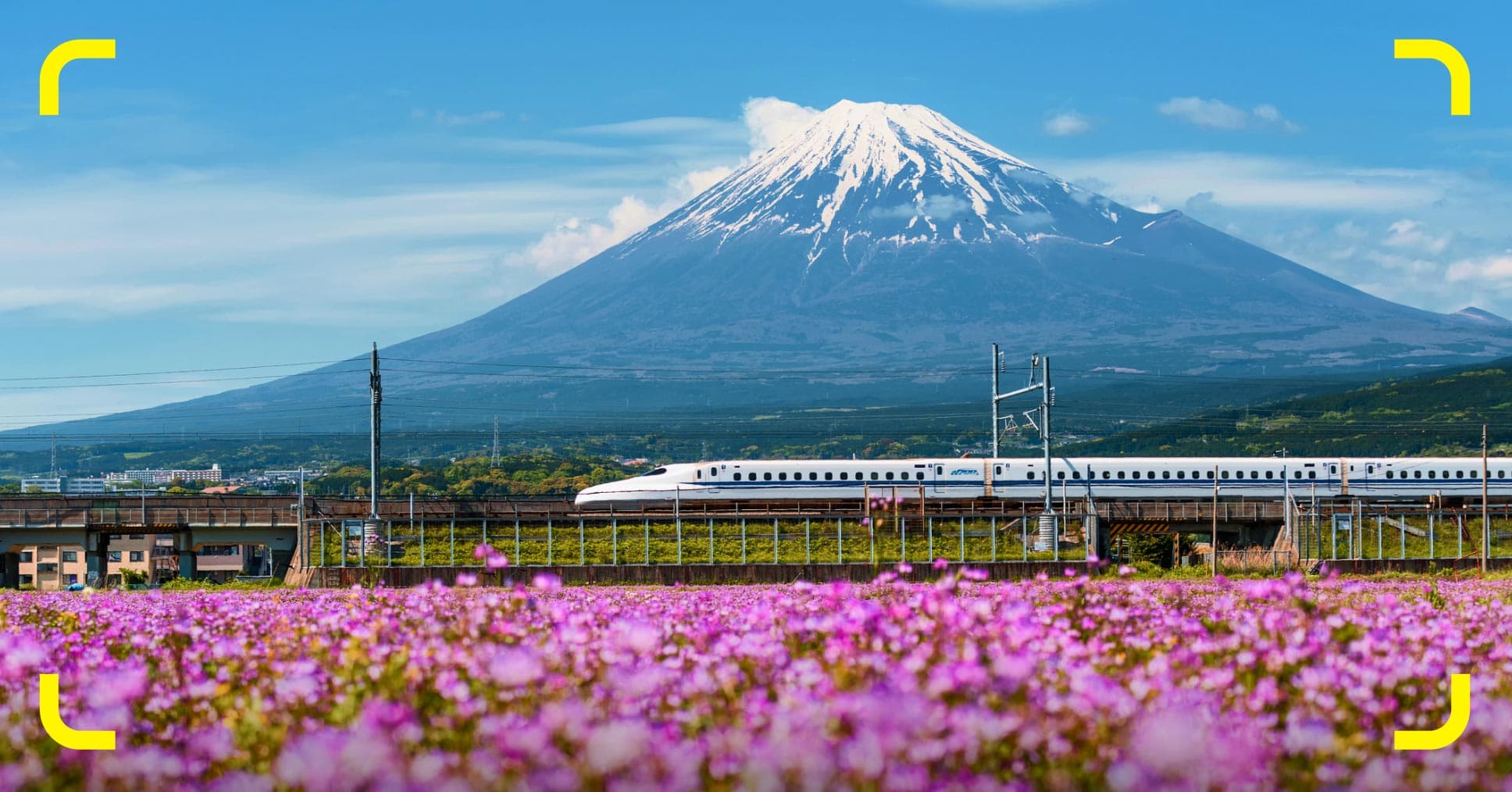
One of eight Shinkansen lines across Japan, trains from Tokyo to Kyoto operate on the Tokaido Shinkansen. With a maximum speed of 177 mph, the Tokyo to Kyoto bullet train is one of the fastest on the network.
All bullet trains from Tokyo to Kyoto depart from Tokyo’s main station in Chiyoda, which is connected to the Tokyo Metro as well as other Shinkansen lines and a number of JR Central and JR East regional trains.
The Tokaido line is made up of three different services. Whilst all Nozomi, Hikari, and Kodama services connect Tokyo and Kyoto, they operate at different speeds, with varying stopping patterns. Prices differ between trains too. To help you choose which is right for you, we’ve brought together all the finer details about each train type.
Nozomi
The fastest and most popular option for travelers taking the Shinkansen bullet train from Tokyo to Kyoto, Nozomi trains have just three intermediate stops. The trains are advanced 16-car N700 series Shinkansen, which tilt for added speed and comfort. Onboard, you’ll find reclining seats with power outlets and free Wi-Fi throughout.
The downside of taking the Nozomi train is that it’s the most expensive bullet train from Tokyo to Kyoto when it comes to reserved seats. The non-reserved fare is the same across all three services (Nozomi, Hikari, and Kodama), though. What’s also inconvenient is that Japan Rail passes (JR Pass) aren’t valid for Nozomi rides without paying for a supplementary ticket.
Important notes when taking the Nozomi:
Average journey time. It takes around 2 hours and 7 minutes to get from Tokyo to Kyoto.
Ticket prices. One-way adult fares start from ¥13,320.
JR Pass acceptance. Standard JR passes aren’t accepted, but you can purchase a Nozomi Mizuho add-on for around ¥4,960.
Seat reservations. Reservations are strongly encouraged at all times, and during peak travel dates, they are compulsory.
Luggage allowance. Bulky luggage, 160-250 cm in total dimensions (length + width + height combined), requires a separate reservation. You can’t travel with bags over 250 cm.
Hikari
If you’re searching for a balance of speed and value, the Hikari Shinkansen delivers exactly that. Running every 30 minutes in each direction, the Hikari Tokyo to Kyoto bullet train takes just 25 minutes longer than Nozomi trains, with the added benefit that the JR Pass is valid.
Just like all the other options for taking a bullet train from Tokyo to Kyoto, Hikari trains are cutting-edge, clean, and comfortable. Wi-Fi is free, although even with Japan’s excellent connectivity, it’s well worth downloading the Saily eSIM app to ensure you stay connected throughout your journey.
Important notes when taking the Hikari:
Average journey time. It takes around 2 hours and 34 minutes to get from Tokyo to Kyoto.
Ticket prices. One-way adult fares start from ¥13,320.
JR Pass acceptance. The pass is valid with no additional supplement payable, making the purchase of the Japan Rail Pass worth it.
Seat reservations. Seats are available on all services, but unreserved seating is also provided if your plans change at the last minute.
Kodama
The slowest of the three Tokyo to Kyoto bullet trains, Kodama services call at all 14 stations between the two cities. As you’d expect, these extra stops do add some time to the journey, but you’ll still reach Kyoto less than four hours after leaving the capital.
As the slower option, Kodama trains are often quieter than Nozomi and Hikari services, which can be particularly useful if you’re traveling without a reservation. Trains used on the route feature all the comforts of the higher classes of train, with relaxing, spacious seats and free Wi-Fi.
Important notes when taking the Kodama:
Average journey time. It takes around 3 hours and 28 minutes to get from Tokyo to Kyoto.
Ticket prices. One-way adult fares start from ¥13,320.
JR Pass acceptance. The pass is valid with no additional supplement payable.
Seat reservations. Seats are available on all services, but most trains have a couple of unreserved cars where you’ll generally find a seat without a reservation. It’s still worth booking a seat if you can, especially during the peak season.
Tokyo to Kyoto bullet train round trip
If you’re planning to return to Tokyo, or your journey starts in Kyoto, you’ll be pleased to know the journey works exactly the same way in the opposite direction. Travel times and train types are unchanged, and a one-way ticket from Kyoto to Tokyo costs the same as bullet train tickets from Tokyo to Kyoto.
Unlike many railway networks, Japan Railways (JR) doesn’t offer set discounts for return tickets. This means that Tokyo to Kyoto bullet train tickets, like all Shinkansen services, work on a one-way basis. You can buy your return ticket when you book the outward journey, but doing so won’t give you any savings. That said, if you book early, you may be able to secure “early bird” fares, which are cheaper than buying your ticket on the day of travel.
Thanks to the fast travel times offered by the Tokyo to Kyoto bullet train, it’s entirely possible to return on the same day. If your time in Japan is limited, this can be a great way to explore ancient Kyoto without losing a night in Tokyo. The first westbound train of the day is a Nozomi service, which leaves Tokyo at 6 am and arrives in Kyoto at 8:09 am, making it one of the fastest connections between the two cities. The last evening return from Kyoto is also a Nozomi, departing at 9:38 pm and arriving in Tokyo at 11:45 pm. This option gives you over 13 hours in Kyoto, but given the high frequency on the Tokaido Shinkansen, you can easily have a more leisurely start to the day and be back in Tokyo in time for dinner.
💡 Pro tip: Check out our guides with Japan travel tips and fun facts about Japan if you want to get more advice on visiting the country.
How long is the bullet train journey from Tokyo to Kyoto?
Travel times on Tokyo and Kyoto bullet trains vary depending on the type of service you use as well as the time of day and year you travel. As we’ve already discussed, each of the three train types on the route has slightly different journey times.
Nozomi is the fastest class of bullet train from Tokyo to Kyoto. The average journey time is 2 hours 20 minutes, but some trains cover the distance in as little as 2 hours 7 minutes.
Hikari trains are slightly slower than Nozomi, making the journey in 2 hours 40 minutes. Like Nozomi trains, the travel time does vary, with the current fastest connection being 2 hours 34 minutes.
Kodama is the lowest class of the Tokyo to Kyoto bullet train. The Kodama trains call at all intermediate stations, giving an average journey time of 3 hours 28 minutes.
How much is the bullet train from Tokyo to Kyoto?
As you’d expect, a number of factors affect the Tokyo to Kyoto bullet train price. Whilst unreserved base fares don’t change for all three types of bullet trains, the prices for reserved seats vary. And if you have a JR pass, you’ll only need to pay a supplement if traveling on Nozomi services because travel on Hikari and Kodama trains is included in your pass price.
The other factor influencing ticket price is the class of travel you choose. All three train types offer both Ordinary and Green cars.
Ordinary cars are the standard (second) class of service. These are set out in a two-by-three seating arrangement, so they can be a little tight when full, but the seats are still comfortable with plenty of luggage storage.
Green cars are akin to first class elsewhere. These come with roomier, more comfortable reclining seats with extra legroom and reading lights.
Tokyo to Kyoto bullet train prices:
Train type | Ordinary non-reserved adult single | Ordinary non-reserved child single | Ordinary reserved adult single | Ordinary reserved child single | Green car adult single | Green car child single |
|---|
Nozomi | ¥13,320 | ¥6,660 | ¥14,170 | ¥7,080 | ¥19,040 | ¥12,220 |
|---|
Hikari | ¥13,320 | ¥6,660 | ¥13,850 | ¥6,920 | ¥18,720 | ¥12,060 |
|---|
Kodama | ¥13,320 | ¥6,660 | ¥13,850 | ¥6,920 | ¥18,720 | ¥12,060 |
|---|
What are the Shinkansen schedules from Tokyo to Kyoto?
Shinkansen trains run frequently throughout the day from Tokyo to Kyoto and vice versa. At peak times, trains depart up to every three minutes. Even at quieter times of day, the gap between departures is never more than 15 minutes.
Direction of travel | First train | Last train |
|---|
Tokyo to Kyoto | 6:00 am | 9:24 pm |
|---|
Kyoto to Tokyo | 6:14 am | 9:38 pm |
|---|
Timetables change throughout the year, so it’s always worth checking up-to-date timetables when planning your journey. The most reliable source of information is the JR website.
How to buy and book bullet train tickets from Tokyo to Kyoto
Purchasing tickets for the Tokyo to Kyoto bullet train is easy once you’ve got your head around it, but for first-timers, Japan’s rail ticketing system can seem a little daunting. Shinkansen services are especially complex because you’ll be given two separate tickets. The first is a normal travel ticket which shows the route, date, and time of travel along with your carriage and seat number (if you’ve made a reservation). The other ticket is an express ticket supplement.
With the exception of Nozomi services during peak travel dates, reservations aren’t mandatory on Tokaido Shinkansen trains. It’s still worth reserving a seat, though, for your ease and comfort.
It generally isn’t necessary to book your Tokyo to Kyoto bullet train tickets far in advance. If you like planning your time at the last minute, you can even purchase tickets at the station on the day from ticket vending machines or counters at your departure station. Larger stations, including Tokyo and Kyoto, have dedicated counters for English speakers.
If you prefer to organize your trips well in advance, you can buy your bullet train tickets from Tokyo to Kyoto online. The official reservation platform for the Tokaido Shinkansen is SmartEx. The website and app are easy to use and available in English. Once you’ve purchased a ticket, you’ll be provided with a QR code, which is valid for travel. Alternatively, you can opt to collect a paper ticket at a ticket counter.
Alternative ways to travel from Tokyo to Kyoto
While bullet trains are the most popular way to travel from Tokyo to Kyoto, alternatives are on offer. It’s well worth familiarizing yourself with all these options because what’s best for you will depend on your preferred travel style, budget, and itinerary.
Domestic flights
The top alternative to riding the Tokyo to Kyoto bullet train is by plane. Tokyo is served by two airports — Haneda (HND) and Narita (NRT). Kyoto doesn’t have its own airport but is within easy reach of both Osaka Itami (ITM) and Kansai (KIX). You can fly from either Tokyo airport to both Osaka and Kansai. Haneda is the closest airport to downtown Tokyo, whilst Osaka Itami is slightly closer to Kyoto, although Kansai is more frequently served.
Flights are very frequent, with departures roughly every 30 minutes throughout the day. Japan Airlines, All Nippon Airways, Jetstar, Peach, and StarFlyer all serve Kansai, while All Nippon and Japan Airlines offer flights to both airports.
Long-distance night buses
Alternatively, you can take a night bus. The buses are cheaper than the bullet train or flying but offer less comfort and take significantly longer. For example, you can choose a bus that departs from Yaesu bus station in Tokyo at 10 pm and arrives in Kyoto at around 5:30 am the following morning.
Car rentals
The final alternative to taking a bullet train from Tokyo to Kyoto is to rent a car and drive yourself. The drive, once you’re out of Tokyo at least, is fairly easy and can be done in around five hours, traffic dependent. This option gives you the flexibility to go at your own pace and stop off along the way, but the costs of renting and using a car can add up pretty quickly.
Mode of transport | Journey time | Average cost |
|---|
Shinkansen bullet train | 2-3 hours | ¥13,320+ |
|---|
Domestic flight | 1-2 hours plus travel time between the airport and the | ¥6,850-15,000 plus travel |
|---|
Long-distance night bus | 7.5 hours | ¥2,000+ |
|---|
Car rental | 5+ hours | Rental car from ¥5,300, tolls (¥11,950), and fuel (around ¥2,300) |
|---|
Tips for traveling from Tokyo to Kyoto by bullet train
Taking the bullet train from Tokyo to Kyoto is a simple, comfortable way to travel, which is both fast and cost effective. However, as with any journey, a few small things can improve your travel experience:
Make seat reservations in advance when traveling at peak times, especially if using Nozomi trains.
Book window seats on the right side of the train (seat E in Ordinary cars and D in Green cars) for the best views of Mount Fuji. If you’re traveling from Kyoto, you’ll want the same seats, which are on the left for the return journey.
Arrive at your departure station in time. Japanese trains are known for their efficiency.
Be sure to check the departure screens for platform information, and if unsure, ask at the ticket office or information desk.
Most Tokyo to Kyoto bullet trains don’t offer catering onboard, so stock up on snacks and drinks before you board. If you’re traveling in a Green car, at-seat ordering service via the app is offered.
Be prepared for different weather upon your arrival. Kyoto can often be colder in winter and warmer in summer than Tokyo. Take a look at our packing tips for Japan before you go.
Free Wi-Fi is available on the bullet train from Tokyo to Kyoto, but the connection can drop in and out, and public networks leave your data exposed to snooping. With Saily, you get a private, encrypted connection you can actually count on, so you can double-check your itinerary or make last-minute changes to your plans without worrying about signal drops or security risks. And with eSIM plans for Japan that offer great value no matter how long your trip, staying connected from departure to arrival is easy.