







Es tut uns leid, aber dieser Artikel ist noch nicht in deiner gewünschten Sprache verfügbar.
Best pocket Wi-Fi in Japan: Providers, costs, and alternative internet options
When you’re traveling around Japan, a reliable internet connection means you can share videos of your conveyor belt sushi or search for the most tranquil onsen in the area. Unfortunately, Japan has a reputation for having limited free Wi-Fi networks and public networks with a tedious login process or spotty connection. As a result, carrying around a pocket Wi-Fi device (a portable Wi-Fi router) is a popular solution for international travelers visiting Japan. In this guide, we’ll cover how to get pocket Wi-Fi in Japan, compare the best pocket Wi-Fi rental options with prices in USD, and share the best alternatives for getting internet access in the country.

Inhaltsverzeichnis
- What is pocket Wi-Fi, and why use it in Japan?
- Best pocket Wi-Fi rental providers in Japan
- Ninja WiFi: Best for easy airport pickup
- Japan Wireless: Best for long stays
- Global Advanced Communications: Best for replacement flexibility
- Sakura Mobile: Best for big groups and battery life
- eConnect Japan: Best for budget
- How to rent wireless pocket Wi-Fi in Japan
- How much does portable Wi-Fi cost in Japan?
- Is pocket Wi-Fi worth it in Japan?
- Best alternatives to portable Wi-Fi in Japan
- eSIM for Japan (Best alternative)
- Prepaid SIM card
- Data roaming
- An eSIM for Japan: The best way to stay online while you travel
What is pocket Wi-Fi, and why use it in Japan?
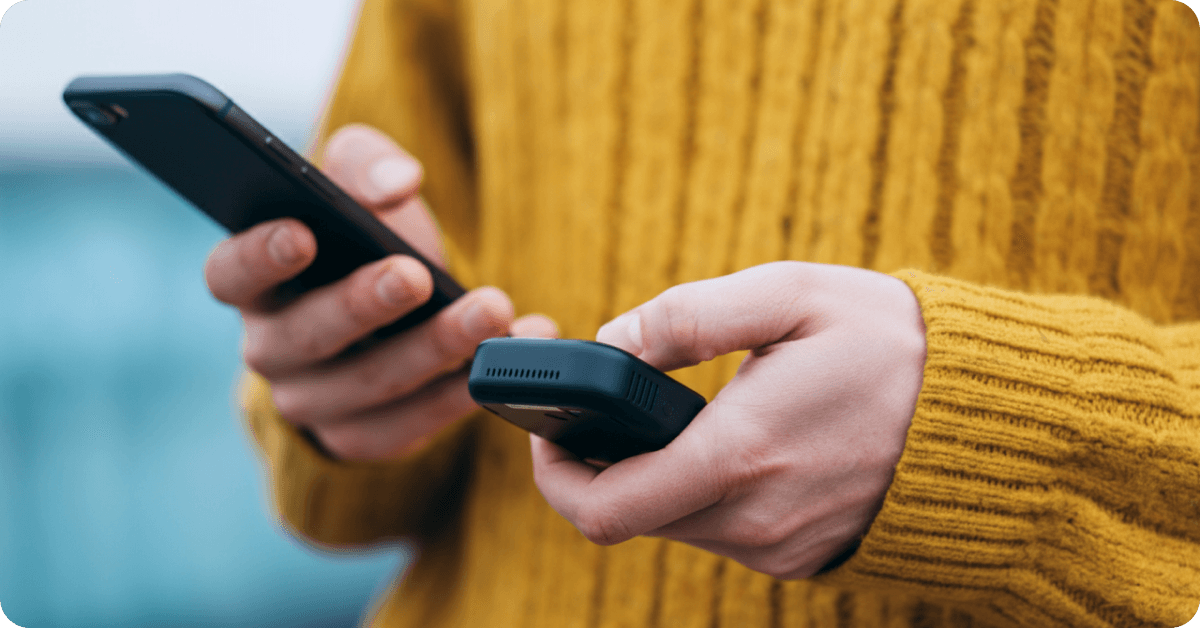
Pocket Wi-Fi (also known as mobile Wi-Fi) is a portable Wi-Fi router that you can use to connect multiple phones, tablets, and laptops to the internet. Renting a pocket Wi-Fi router is a good option for folks traveling in groups, families who want to keep their little ones entertained on the go, and business travelers who need to have internet access on multiple devices at once. Whether you can actually fit the router in your pocket will depend on its size, which varies according to how many devices it can connect to — the more connectable devices, the bigger the router. Depending on the rental company, you’ll also be able to choose routers with varying daily data allowances (e.g., 10 GB/day) and prices.
What makes pocket Wi-Fi a particularly popular internet option in Japan is the country’s limited and/or unreliable public Wi-Fi networks. We get it — it’s hard to believe that a country with 200 mp/h bullet trains, ramen vending machines, and robot waiters can’t manage nationwide, high-speed Wi-Fi. But such is the paradox of Japan’s technological landscape. Travelers have also reported that when free Wi-Fi is available, the login portals can be tedious, confusing, and downright slow.
Because of these challenges, visitors end up opting for pocket Wi-Fi in Japan to avoid the frustrations that come with public Wi-Fi. While portable Wi-Fi has its advantages, it also comes with a long list of disadvantages.
Advantages of using pocket Wi-Fi in Japan:

You can get an internet connection on multiple phones, laptops, and tablets at the same time. Depending on the portable Wi-Fi router, anywhere between 5 and 20 people can connect.
It’s more secure than connecting to public Wi-Fi networks. Since pocket Wi-Fi is password protected, it’s less likely for hackers to intercept and you’re less likely to fall victim to evil twin attacks.
You have internet access on the go. No need to duck into a mall, train station, or cafe to quickly search something up.
Disadvantages of using pocket Wi-Fi in Japan:

Pocket Wi-Fi is more expensive than a prepaid eSIM for Japan. You’ll be paying between US$1.56 and US$23 per day with pocket Wi-Fi rentals. With a Saily eSIM plan for Japan, you can get 20 GB of data over 30 days for US$24.99 (US$0.83/day).
You need to be within range of the router to stay connected. Most routers have a range of about 30 to 50 feet — walk any further and you’re offline.
You risk losing or damaging the router. An extra device to carry around means you’ll have an extra device to lose or damage. Lost or damaged router = extra fees owed to the rental company.
You might need a power bank to keep the battery alive. Pocket Wi-Fi devices will typically last you 6-8 hours when fully charged. If your itinerary is jam packed, you might need a power bank to keep it alive for the whole day. That’s two extra devices to carry!
You need to return the router before you leave Japan. Finding the rental counter is not ideal if you’re already rushing for your flight back home.
Even with these drawbacks, many travelers still consider pocket Wi-Fi a practical choice in Japan — so the real question becomes which rental provider to go with.
Best pocket Wi-Fi rental providers in Japan
Considering that you can rent a pocket Wi-Fi device from over 30 Japanese companies, it can feel overwhelming to find the best pocket Wi-Fi in Japan. We’ve narrowed it down to five of the best portable Wi-Fi rental providers in the country:
Provider | Cost per day | Data allowance per day | Available days | Pickup/return options |
|---|---|---|---|---|
Ninja WiFi | US$2.98-13.40 | 1 GB, 3 GB, 5 GB, 10 GB, or unlimited | Unlimited | Airport, hotel, or residential address |
Japan Wireless (Premium WiFi plan) | US$4.57-23 | Unlimited | Up to 30 days | Airport, hotel, or residential address |
Global Advanced Communications | US$3.25-17.68 | 3 GB or unlimited | Up to 93 days | Airport, hotel, or residential address |
Sakura Mobile | US$5.07 | Unlimited | Unlimited | Airport, hotel, residential address, or their office |
eConnect Japan (Premium Plan) | US$1.56-17.42 | 10 GB, 25 GB, or 50 GB | Up to 60 days | Airport, hotel, residential address, or post office |
Please note that currency conversion rates are subject to change.
Keep in mind that when a pocket Wi-Fi rental company claims that it offers unlimited data per day, it doesn’t mean unlimited high-speed internet — you’ll be subject to internet slowdowns due to something called the fair usage policy (FUP). The FUP is not decided by the rental companies themselves, but rather the Japanese network providers they work with.
One final caveat — for many rental companies, rates vary by the number of days you want to rent a router for, where the daily rate drops the longer you book for. For example, Japan Wireless pocket Wi-Fi costs US$19 for one (1) day of renting, whereas it costs US$129 for 30 days (that’s US$4.30/day). As such, pocket Wi-Fi can be a cost-effective option for long-term travelers but not short-term ones.
Ninja WiFi: Best for easy airport pickup
Pocket Wi-Fi routers from Ninja WiFi are widely available across most Japanese airports. You can choose between varying daily data allowances, including 1 GB, 3 GB, 5 GB, 10 GB, or unlimited data. Prices range from approximately US$2.98/day (for 1 GB plans) all the way up to US$13.40/day (for unlimited plans). The most popular pocket Wi-Fi devices Ninja WiFi offers support 4G internet speeds, but you could opt for a more expensive device that supports 5G speeds. Its 4G routers can support 10 devices. You can either pre-book a router through the company’s website and pick it up at the airport or try your luck at one of the Ninja WiFi rental counters. You can also drop off the router at the airport before departing for your trip back home.
Japan Wireless: Best for long stays
Japan Wireless offers both short-term plans and “super long” plans for its portable Wi-Fi rentals. Its most popular short-term plan is the “Premium WiFi,” where you can get unlimited data per day for up to 30 days. Renting a router for one (1) day starts at US$23 and the daily rate drops the more days you rent for. For example, renting the router for 10 days costs US$70 (US$7/day). If you’re staying in the country for a while, you can also choose from one of three long-term plans — 3 months, 6 months, and 12 months. You can connect 10 devices to Japan Wireless’ “Premium WiFi” routers, which support 4G internet speeds. You can pre-book a router online and either pick it up at the airport or have it shipped to your accommodation. Notably, the company offers same-day delivery.
Global Advanced Communications: Best for replacement flexibility
You can rent a router from Global Advanced Communications for up to 93 days at a time. The company’s website specifies that if you want to pick up the router from an airport, you need to place your online order at least two days before you arrive. If you want it delivered to your hotel, then next-day delivery is possible. Renting a router for one (1) day starts at US$17.68, and the daily rate drops the more days you rent for. If you rent the router for 10 days, the daily rate becomes US$5.87. You can connect 10 devices to the router, and it supports up to 4G internet speeds. The routers have approximately 8 hours of battery life, and you can get a same-day replacement if you lose it.
Sakura Mobile: Best for big groups and battery life
Sakura Mobile offers a range of pocket Wi-Fi devices at varying price points. For US$5.07/day, you can get a router with an unlimited data plan, but the router you get will also depend on availability. You can pre-order the router online and pick it up at the airport or the company’s office or have it shipped to your hotel or other accommodation. You can connect 15 devices to the router, and it supports up to 4G internet speeds. Notably, Sakura Mobile’s portable Wi-Fi routers have a long battery life compared to others — you’ll get to enjoy 20 hours of internet before having to recharge the router.
eConnect Japan: Best for budget
The most popular pocket Wi-Fi router you can get from eConnect Japan is its “Premium Plan,” which offers 25 GB of data. Like many other companies, the daily cost drops the more days you rent the pocket Wi-Fi router for. It advertises rates starting at US$1.56/day for its Premium Plan, but this rate only applies to its 60-day rental period. For example, a 12-day rental period comes out to US$44.99 (US$3.75/day). While eConnect Japan may be the most budget-friendly option for long-term pocket Wi-Fi rentals, its daily rates for short-term rentals are still rather steep compared to eSIM and SIM card plans. However, the company does include a free power bank with the router rental, which does cut back on costs. You can pre-order the router online and pick it up at the airport or the post office or have it shipped to your hotel or other accommodation.
Heading somewhere else in Asia? Check out Saily’s other pocket Wi-Fi guides: |
|---|
How to rent wireless pocket Wi-Fi in Japan
The cheapest way to rent a pocket Wi-Fi device in Japan is to pre-book with a rental company online. This way, you’re also guaranteed to get your hands on a router, which won’t always be the case if you try to rent one directly at the airport during high tourist season. You can pick up pocket Wi-Fi in Tokyo from Narita Airport (NRT) and Haneda Airport (HND). You can also pick up your online orders from rental counters at Kansai Airport (KIX), Chubu Airport (NGO), and Fukuoka Airport (FUK). Most rental companies also offer delivery to your hotel or other accommodation. You can either return the router at the airport rental counters or the company will give you a prepaid envelope to mail it back — just drop it in a post box.
How much does portable Wi-Fi cost in Japan?
The cost of renting portable Wi-Fi in Japan will depend on which company you’re renting from, how many days you need the router for, how much data you’re allotted, and whether you’ll need to pay for insurance, late fees, replacement costs, or a power bank. Keep in mind that many companies have a pricing scheme where the daily cost becomes lower the longer you rent the router for. We’ve taken both the upper and lower ranges of daily rental rates across five of the most popular pocket Wi-Fi companies in Japan to get the following estimates:
Average daily rental rate: ~US$9.40
Average rental rate for one week: ~US$60.97
Average rental rate for two weeks: ~US$93.52
Average rental rate for one month (30 days): ~US$177.97
Is pocket Wi-Fi worth it in Japan?
Whether renting portable Wi-Fi in Japan is worth it depends on a few factors, like how many people you’re traveling with, how many devices you plan on using simultaneously, how long you are going to stay in Japan, and how much mobile data you tend to use per day. Pocket Wi-Fi is a relatively cost-effective way for groups, families, and business travelers to get internet access on multiple laptops, phones, and tablets at once without relying on public Wi-Fi networks.
However, renting pocket Wi-Fi comes with a slew of cons. You’ll need to coordinate pickup and drop-off of the router, you’ll have to carry an extra device around with you (and some portable Wi-Fi routers are hefty!), you might also need a power bank to keep the router alive (yet another device to carry), and you run the risk of losing or damaging the router.
If you want to connect to multiple devices at once without having to carry a router around with you, it’s much better to get an eSIM for Japan and share your hotspot with your travel companions. For example, Saily offers unlimited hotspot sharing for all of its plans, meaning you can share as much of your mobile data plan with friends and family as you want!
Best alternatives to portable Wi-Fi in Japan
Renting a pocket Wi-Fi device for your Japan trip is far from the cheapest and most convenient way to get internet access on the go. Let’s take a look at alternative ways to stay online while you travel around Japan without having to carry around an extra device or coordinate pickup and drop-off for a router.
eSIM for Japan (Best alternative)
The easiest alternative to renting a pocket Wi-Fi device in Japan is to get an eSIM. The biggest difference between getting an eSIM vs. pocket Wi-Fi for Japan is that with an eSIM, you won’t have to carry around a router and risk losing or damaging it since an eSIM is embedded right into your device. You also won’t need to coordinate pickup and drop-off — just download an eSIM app, choose a data plan that works for your trip, install the eSIM, and you’ll have internet access the moment you land in Japan. If you’re traveling in a group or want to access mobile data on multiple phones, tablets, or laptops, just share your Japan eSIM data plan via hotspot. The Saily eSIM app lets you share as much of your data as you want with no limits!
Need data in Japan? Get an eSIM!

1 GB
7 Tage
US$3,99
3 GB
30 Tage
US$7,99
5 GB
30 Tage
US$10,99
Prepaid SIM card
Another way to get internet access instead of renting a portable Wi-Fi router is by getting a prepaid Japanese SIM card. You can find them at one of the country’s many konbinis (convenience stores) like 7-Eleven, FamilyMart, and Lawson. You’ll also find them at every airport and mobile store like Rakuten and SoftBank.
If you’re visiting a few more Asian countries on your trip, you might want to consider a travel SIM card for Asia that covers more than just Japan.
If you’re wondering, “Will my cell phone work in Japan?” the answer is almost certainly yes, but you’ll need to make sure it’s carrier unlocked (i.e., able to connect to networks outside of the one you use at home) and that it comes with a SIM slot.
Data roaming
Another alternative to renting a mobile Wi-Fi device in Japan is to enable your international roaming. However, we do not recommend this option unless you’ve purchased an international roaming pass beforehand. Popular US providers like AT&T, Verizon, and T-Mobile will charge you by the megabyte if you don’t purchase an add-on to your data package, which can quickly rack up a roaming bill to triple digits. Always check your mobile plan provider’s roaming rates for Japan before flipping that “On” switch.
An eSIM for Japan: The best way to stay online while you travel
When you’re figuring out how much it costs to go to Japan, you’re going to want to factor in the cost of staying online. And whether you’re taking a business trip to Japan or simply chasing majestic views of Mt. Fuji, the easiest way to stay connected is with a cheap, prepaid eSIM plan. Renting a pocket Wi-Fi device means that you’ll have to figure out how and when to pick up the router and you’ll be lugging around an extra device throughout your trip. Instead, just download an eSIM app, pick a data plan, install your eSIM, and you’ll have internet access throughout Japan. Saily eSIM plans for Japan start at just US$3.99 and come with free, built-in security features that add an extra layer of online privacy while you browse. If you want to share your data plan with your travel buddies, just enable your hotspot — Saily offers unlimited hotspot sharing for all of its plans.

Finding pocket Wi-Fi too complicated? Try a Saily eSIM plan instead
Saily: Affordable mobile data plans for every journey.
FAQ


Ähnliche Artikel
