Internet in Brazil
Brazil has one of the world’s largest online populations. By the end of 2025, around 185 million people were using the internet in Brazil, and the country had roughly 217 million active cellular connections — most of them on 3G, 4G, or 5G networks.
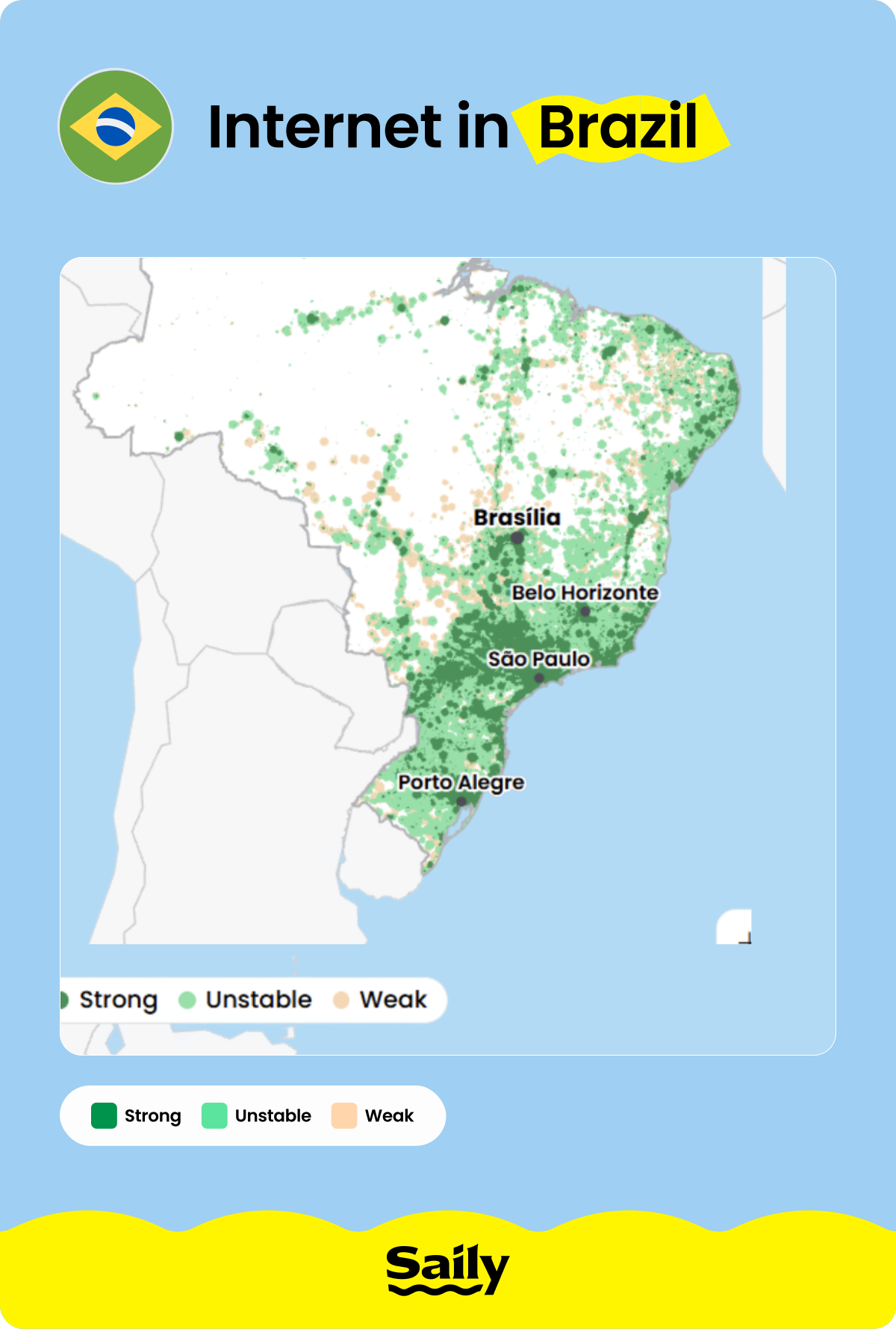
That said, the quality of access depends heavily on where you are. Coverage tends to be strongest in Brazil’s cities and densely populated coastal regions — large urban areas like São Paulo, Rio de Janeiro, Brasília, Salvador, and Recife generally have reliable 4G, with 5G expanding rapidly. Head into more remote territory — parts of the Amazon or sparsely populated inland regions — and mobile data coverage can get patchy. So when comparing internet options for Brazil, it’s worth weighing coverage alongside cost, convenience, and how much data you’ll actually need.
So how does Brazil stack up internationally? Saily’s Internet Connectivity 2026 Index ranks it 24th among 97 countries, with a score of 57.79. The index compares internet quality, affordability, internet freedom, and cyber safety when abroad.
On that last point — freedom — Brazil generally allows access to all the major websites, apps, and platforms travelers use, though courts can order services or specific content to be restricted. X, for instance, was temporarily suspended nationwide in 2024 during a legal dispute before access was later restored. Cases like this are rare, though, and right now travelers can use social media and messaging platforms as normal.
If you’d rather not think about any of this after landing, Saily offers prepaid mobile data for Brazil without requiring a physical SIM card — you can set everything up before leaving home. Saily partners with the best local network providers, so you’re connected to the strongest available signal wherever you go in Brazil. Want to see exactly where you’ll have coverage? Check Saily's coverage map for Brazil before you travel — it’ll show you which networks you’ll connect to and what speeds to expect in each region.
Mobile internet providers in Brazil
The main mobile internet providers in Brazil are Vivo, Claro, and TIM. All three offer prepaid SIM cards, although buying and activating a physical local SIM may involve more effort than using a travel eSIM. As a foreign visitor, you’ll typically need a passport and details of your accommodation in Brazil. Depending on the provider and the type of SIM, you may also need to visit a store or complete an activation process after purchase. Our guide to buying a Brazil SIM card explains the options in more detail.
Vivo
Vivo is Brazil’s largest mobile operator by market share, holding 37.9% of the market in the second quarter of 2026, according to Anatel.
Its Tourist Plan includes 25 GB of data, 300 domestic minutes, and 100 SMS for R$55 (about US$10.70), valid for 30 days. Travelers can buy the eSIM online by credit card and receive it by email, avoiding much of the paperwork associated with a physical Brazilian SIM, although your phone must support eSIM technology.
Claro
Claro operates one of Brazil’s largest mobile networks. According to its current coverage information, its network reaches almost 4,800 municipalities and more than 98% of the Brazilian population.
International visitors can use the Claro Flex Pass. You download the Claro Flex app, select “I’m an international visitor,” register with your passport number and a temporary Brazilian address, and choose a plan. Current data options include 20 GB, 30 GB, and 40 GB, with validity of up to 30 days. The service uses an eSIM and provides a Brazilian phone number.
TIM
TIM offers prepaid physical SIM cards for tourists, although the setup process is less streamlined. You can buy a TIM SIM at a store and activate the line by calling (*144) with your passport and Brazilian accommodation address ready. Technical support for activation is available in English, Spanish, and Portuguese.
TIM currently advertises a tourist internet pass with 1.5 GB of data for seven days for R$25 (about US$4.86). You can activate another data package by SMS if you run out.
The information about features and prices in this comparison was last verified on the providers’ official websites, specifically their English-language sites, on September 15, 2026, and is subject to change.
Best choice — an eSIM
For many visitors, an eSIM is one of the easiest ways to get a reliable internet connection and stay connected in Brazil. You can install one before departure and switch it on when you arrive, avoiding local SIM shops and in-store registration.
A Brazil eSIM from Saily provides prepaid data without replacing your physical SIM card. That means you can keep your usual SIM installed for calls or messages while using the eSIM for mobile data, provided your device supports dual-SIM functionality. For most users, this makes it easy to keep their usual phone number while using a separate plan for mobile data.
If you haven’t used one before, an eSIM is a digital SIM built into a compatible device. Instead of inserting a plastic card, you install the mobile plan digitally, often by scanning a QR code or by following in-app instructions.
Pros of eSIMs:

You can buy your data plan before traveling.
No physical SIM card or store visit is required.
You can keep your main SIM in your phone.
Prepaid plans make data spending easier to control.
Cons of eSIMs:

Your phone must support eSIM technology and be carrier unlocked.
Most travel eSIM plans focus primarily on mobile data rather than traditional calls and SMS.
Roaming costs and alternatives
Using your home carrier is often the simplest option because your existing SIM and phone number continue working when you arrive. However, international roaming can become expensive, particularly on plans that charge a daily fee.
Check whether Brazil is included in your plan before traveling.
Pros:
No new SIM or eSIM setup is required.
You keep your usual number.
Some premium plans include Brazil at no additional cost.
Cons:
Daily roaming charges can add up quickly during longer trips.
Included data depends heavily on your plan.
Out-of-plan usage can be expensive.
T-Mobile and AT&T
Both T-Mobile and AT&T work in Brazil through local partner networks, but pricing depends on your US plan.
Carrier | Brazil roaming options |
|---|
T-Mobile
| Eligible plans include up to 5 GB or 15 GB of high-speed international data in 215+ destinations, followed by slower unlimited data. International passes are also available. |
|---|
AT&T
| Several Unlimited Premium and Elite plans include unlimited talk, text, and data in Brazil at no extra roaming charge. Other plans may require International Day Pass. |
|---|
T-Mobile’s Experience More and several other eligible plans currently include up to 5 GB of high-speed international data, while Experience Beyond includes up to 15 GB. After the included high-speed allowance, data continues at reduced speeds. Travelers who need more can add an International Pass. Check the latest T-Mobile international roaming options before departure.
AT&T roaming in Brazil may already be included in your plan. Several eligible plans include unlimited talk, text, and data in Brazil and other destinations in South America and elsewhere in Latin America without an additional roaming fee.
The information about features and prices in this comparison was last verified on the providers’ official websites, specifically their English-language sites, on September 15, 2026, and is subject to change.
EE and O2
UK travelers should also check their tariff carefully because Brazil sits outside standard European roaming zones.
Carrier | Brazil roaming options |
|---|
EE
| Brazil falls within EE’s Rest of World Zone 3 on applicable plans. A 24-hour roaming pass currently costs £7.50 and includes unlimited minutes and SMS plus 500 MB of data. |
|---|
O2
| The O2 Travel Bolt On costs £7 a day and includes unlimited data, minutes, and texts in Brazil, with data speeds capped at 2 Mbps. |
|---|
Roaming benefits vary by tariff, so check what your plan includes before traveling. Some O2 Ultimate plans, for example, include roaming in Brazil without the daily Bolt On charge. You can also read our guide to EE roaming for more information on traveling with a UK SIM.
The information about features and prices in this comparison was last verified on the providers’ official websites, specifically their English-language sites, on September 15, 2026, and is subject to change.
Pocket Wi-Fi for groups
Pocket Wi-Fi in Brazil can connect several phones, tablets, or laptops to one portable hotspot, making it useful for families and groups traveling together.
MIOWIFI rents portable hotspots that connect up to five devices. Rental starts at US$8 a day, with an additional US$1 daily charge for use in Brazil, and shipping may cost extra. The device is sent before your trip and must be returned afterward. MIOWIFI advertises unlimited data, although only the first 500 MB of daily use runs at full speed before the connection slows.
My Webspot takes a different approach. Its Global pocket Wi-Fi device is purchased rather than rented, can connect up to five devices, and is delivered within 48 hours. Day passes activate automatically when the device starts using data and include 1 GB of high-speed data, followed by unlimited reduced-speed data until midnight local time. Pricing depends on the device and pass option selected.
Pros of pocket Wi-Fi:
Several people or devices can share one connection.
You don’t need to change SIM cards.
It can connect devices that don’t support eSIM technology.
Cons of pocket Wi-Fi:
You need to carry and charge another device.
Everyone needs to stay reasonably close to the hotspot.
Device, data, and shipping costs can make pocket Wi-Fi less convenient than an eSIM.
Our guide to the best pocket Wi-Fi for international travel compares this option in depth. Groups can also consider Saily’s shared plans feature, which lets friends or family manage shared mobile data without carrying a separate hotspot.
Free Wi-Fi: Where to find it and safety tips
Hotels, airports, restaurants, shopping malls, cafés, and other public places commonly provide Wi-Fi in Brazil, particularly in major cities and tourist destinations. It can save mobile data, but shouldn’t be your only connection.
For your safety, avoid accessing online banking or entering sensitive information on unfamiliar public networks. Check the network name with staff before connecting, disable automatic Wi-Fi connections, and use mobile data for activities that involve personal or financial information.
Digital security forms only one part of preparing for your trip, so check our guide to whether Brazil is safe to visit for broader travel precautions.