Getting around Japan by taxi: What to know before downloading an app
Taxis in Japan are clean, safe, and reliable — but they can be expensive. They make the most sense when you’re taking a shorter trip, traveling late at night, heading to the airport, carrying heavy luggage, or going to a place that’s hard to reach by public transportation. Our guide to getting around in Japan explains how taxis fit alongside trains, buses, and subways.
Taxi apps help make booking smooth, especially in Tokyo, Osaka, and Kyoto. You can simply set your pickup point and destination on a map — no knowledge of Japanese required. The same goes for payment — leading apps support cashless payment through options such as Visa, Mastercard, American Express, and Apple Pay, so using a foreign card is not a problem either. That said, coverage can be less consistent in rural areas, so check which services operate in your destination.
Most taxi apps in Japan connect you with licensed taxis and professional drivers. However, Japan introduced a tightly regulated form of ridesharing in 2024, allowing ordinary drivers to offer rides in designated areas and during times when taxis are in short supply. Uber is one of the platforms involved, so an Uber ride in Japan is no longer a conventional taxi service like it used to be.
Taxi apps only work if you’re connected to the internet, so you’ll need mobile data to book a ride and follow the driver’s progress. Setting up an eSIM for Japan before departure means you can connect as soon as you land rather than searching for airport Wi-Fi first. The Saily eSIM app — developed by NordVPN — offers prepaid mobile data in 200+ destinations and can be set up directly through the app.
Best taxi app in Japan: Top options compared
No single taxi app wins in every situation. GO has the broadest domestic reach, while Uber may feel more familiar if you already use it at home. S.RIDE is particularly strong in Tokyo, and DiDi can be a solid alternative when other apps fall short in areas where it operates.
App | Coverage | Payment options | English support | Best for |
|---|
GO | Available across all 47 prefectures, although local availability varies | International cards, Apple Pay, GO Pay, some in-car payments
| Yes
| Overall coverage
|
|---|
S.RIDE | Urban areas, particularly Tokyo | Cash and several cashless options, including S.RIDE WALLET
| Yes
| Fast taxi booking in Tokyo
|
|---|
Uber | Many major cities and tourist areas
| Existing Uber payment methods (options vary by ride)
| Yes
| Travelers who already use Uber
|
|---|
DiDi | 38 prefectures, including major destinations such as Tokyo, Kyoto, Osaka, and Fukuoka | Cash and cashless options depending on service
| Yes
| Useful backup in supported cities |
|---|
GO taxi app for Japan
For most visitors, the GO app is the best taxi app in Japan to download first. It offers some of the most extensive service coverage in the country, including Tokyo, Kyoto, Osaka, Hiroshima, Hokkaido, and Okinawa.
GO has an English interface, accepts international credit cards and Apple Pay, supports non-Japanese mobile numbers, and uses a confirmation number to help you identify the correct taxi. The GO taxi app in Japan is also widely popular, with more than 35 million cumulative app downloads reported as of January 2026.
S.RIDE taxi app for Japan
S.RIDE is especially useful in Tokyo. Open the app, set your pickup location, and swipe the large yellow arrow to request the nearest available taxi.
The app supports English and several payment methods, including S.RIDE WALLET. S.RIDE says around one in three taxis in Tokyo is connected to its network and reports a 95% dispatch success rate based on 2024 user data. It doesn’t have GO’s nationwide reach, but it’s a useful secondary taxi app for Tokyo.
Uber in Japan
Uber is an easy choice if you already have an account because you can use the same app and payment details in Japan as you do at home. Coverage is more limited than domestic apps in some regions, so you should check availability in your destination first.
Uber Taxi connects passengers with licensed local taxi drivers in many cities. It also operates in Japan’s limited private-car ridesharing system in some areas and time windows when taxi supply is insufficient. This is more tightly regulated than the private-driver Uber model that US users are familiar with.
In April 2026, Uber also introduced flight-linked advance reservations at Haneda, Itami, Chubu Centrair International, New Chitose, Naha, and Kobe airports.
DiDi in Japan
DiDi is another established taxi service, with more than 11 million downloads and coverage across 38 prefectures as of August 2026, including Tokyo, Kyoto, Osaka, Hiroshima, Fukuoka, Hokkaido, and Okinawa. Like Uber, its coverage can be patchier than GO’s in some regions, so it works best as a backup in supported cities. It accepts registered credit or debit cards, with pre-fixed fares available for some journeys.
Best taxi app in Japan for foreigners
For most international visitors and non-Japanese speakers, GO is probably the easiest taxi app to use in Japan thanks to its English interface, broad coverage, non-Japanese phone number support, international card payment options, and Apple Pay compatibility. Uber is another convenient choice if you already have an account, while S.RIDE and DiDi are worth having as a second option in supported areas.
Make sure to register your account and payment method before traveling to avoid verification or payment issues when booking. A working data connection matters a lot. You can stay connected in Japan by installing a prepaid eSIM before departure.
How to use a taxi app in Japan step by step
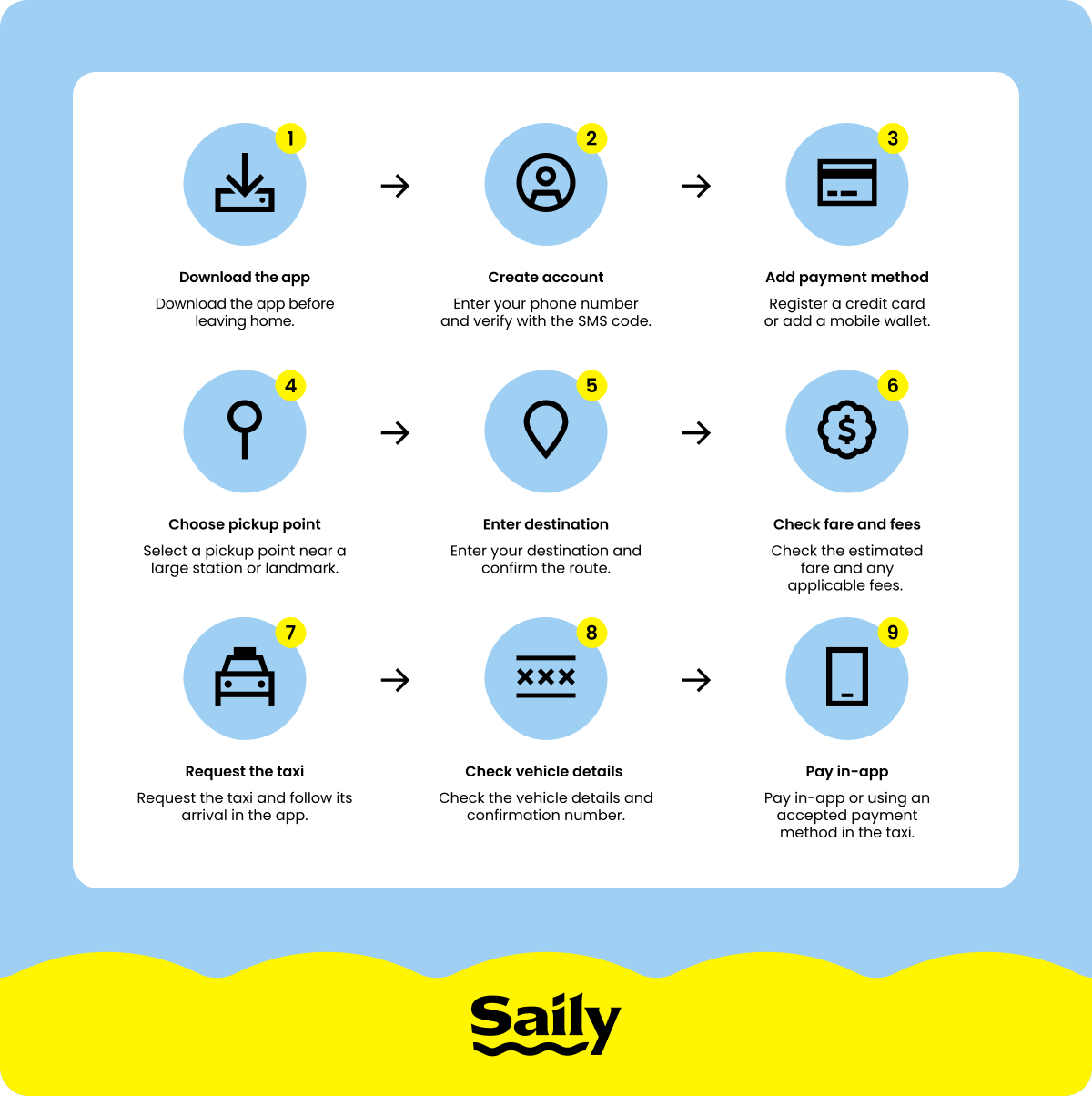
Most Japanese taxi apps follow the same basic process:
Download the app before leaving home.
Create your account and complete SMS verification if required.
Add a payment method, such as a card or supported mobile payment.
Choose your pickup point.
Enter your destination.
Check the fare and fees. You may see an estimated fare, metered fare, or pre-fixed price.
Request the taxi and follow its arrival in the app.
Check the vehicle details. GO, for example, provides a confirmation number.
Pay through the app or by an accepted payment method in the taxi.
At large stations or other locations with multiple exits, make sure to check the exit name or designated taxi pickup area before confirming the ride so you and your driver don’t end up on opposite sides of the building.
Japan taxi fares: Calculator, official rates, and app estimates
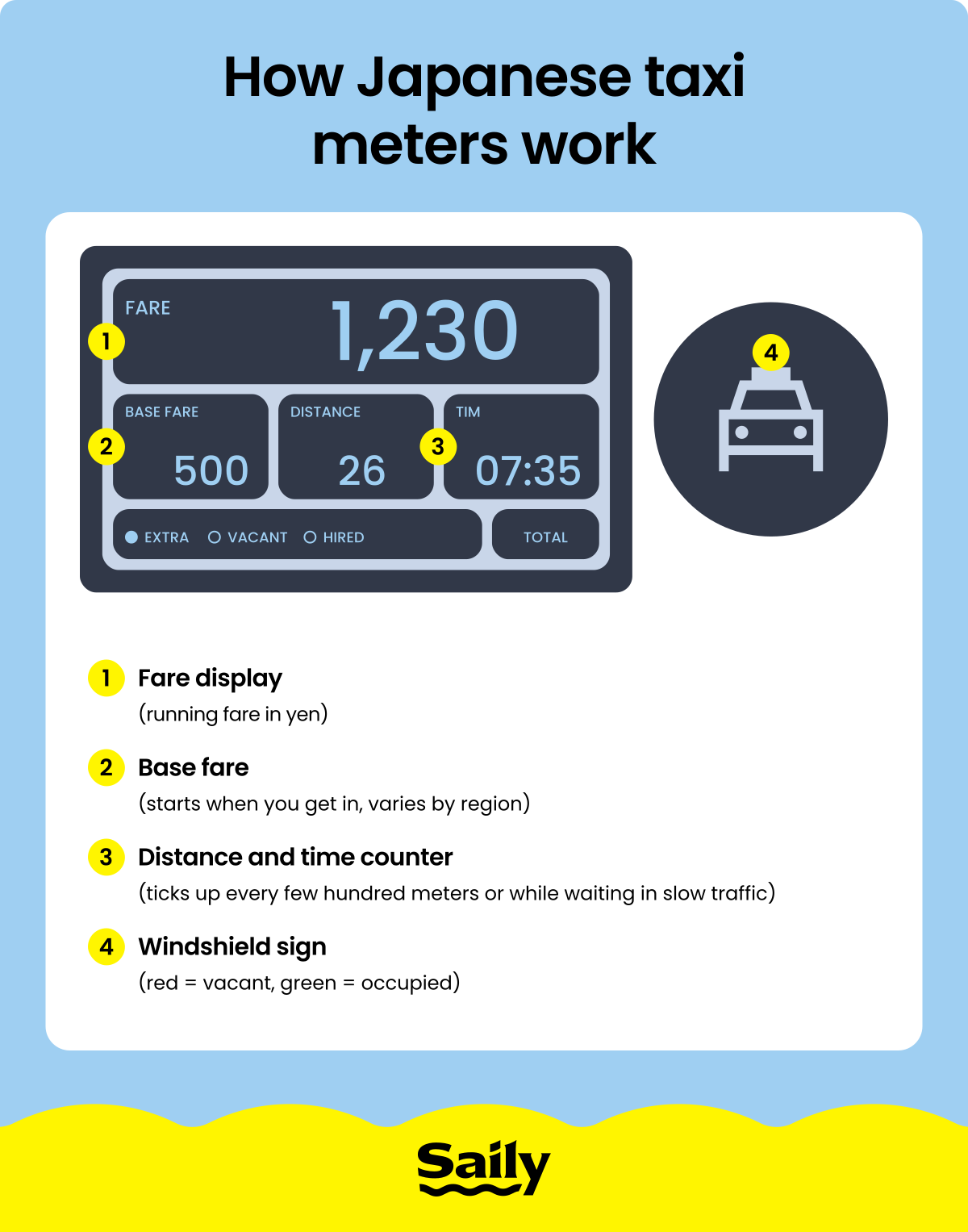
Japanese taxis generally use regulated regional fare structures, with a starting fare followed by distance and, when traffic is slow or the vehicle is waiting, time-based increments. Rates also vary by region. As a rough guide, a daytime taxi ride of around 7 km (4.3 miles) in Tokyo may cost about ¥2,500-3,000 (roughly US$16-19), according to the Japan National Tourism Organization.
Apps such as GO can show an approximate meter fare before booking and may also offer upfront pricing through a pre-fixed fare or airport flat rate on eligible routes. On top of the fare may be pickup charges, app service fees, reservation charges, expressway tolls, or peak-period fees. GO’s current pricing page, for example, lists several possible charges and makes it clear that the amount depends on the taxi company, area, and booking type.
Late-night surcharges are also common. In Osaka, for instance, NAVITIME, a Japanese travel and route-planning service with a taxi fare calculator, currently lists a 20% surcharge between 10 pm and 5 am.
For a Japanese taxi fare calculator, NAVITIME provides estimates based on current regional rates. Taxi apps also show estimates during booking, but neither should be treated as a guaranteed final fare because traffic, tolls, waiting time, and additional charges can affect the total amount.
If taxi costs will form a significant part of your budget, you should check out our guide to how much a trip to Japan costs before you go.
Tips for planning taxi travel in Japan
A little preparation can make using taxis in Japan considerably easier:
Set up your apps before you fly. Register your phone number and payment methods while you still have reliable internet access.
Save important destinations. Keep the name and address of your hotel or another major landmark in both English and Japanese, especially if you may need to take a taxi without an app.
Pay attention to station exits. At major stations, choose the correct taxi stand or pickup zone rather than simply dropping a pin somewhere near the station.
Keep a backup app. Not every taxi belongs to every platform, and coverage varies by city. Having both GO and Uber or S.RIDE gives you options when demand is high.
Check additional charges. Pickup, booking, reservation, late-night, toll, and other fees can affect the final price, so look at the fare breakdown before confirming.
Compare taxis with rail for longer journeys. A taxi may be convenient when you’re carrying luggage, but it can be expensive when you travel between cities. Japan’s extensive railway network can provide a better alternative at times, so before planning longer routes, see whether the Japan Rail Pass is worth it for your itinerary.
Sort out the practical details before departure. Japan is easier to navigate once you know the basics — like IC cards, cash vs. card, or train etiquette. Our Japan travel tips cover transport to everyday travel planning, while these fun facts about Japan offer a lighter introduction to the country.
Plan ahead in Tokyo. Getting around Tokyo is smoother with some preparation — the city’s stations alone can be a maze. Our tips for visiting Tokyo cover useful things to know when navigating the capital.
Stay connected. Taxi apps are only useful when your phone can get online. Install your eSIM for Japan ahead of time so you can connect as soon as you arrive. Saily supports direct installation through the app, so on compatible devices you don’t need to deal with QR or activation codes. You’ll also have access to 24/7 live chat support if you run into problems while traveling, along with built-in features such as an ad blocker, a virtual location changer, and web protection.
You can manage your plans through the Saily eSIM app, so your connection stays in the same place even if your itinerary doesn’t. If Japan is only one stop on a longer trip, you can also compare our Global eSIM plans.