

Best apps for Spain travel in 2026
Smartphones have made traveling easier than ever, helping tourists navigate public transportation, buy tickets, and follow locals’ recommendations. Paradoxically, it’s also become easier to get lost in a sea of apps that promise to help tourists get around. In this article, we’ll cover the best Spain travel apps so that you can have a stress-free holiday — whether you’ll be navigating Barcelona’s popular sights or exploring the beaches in and around Málaga.



目录
- Don’t get lost in Spain: The navigation apps you need
- Travel apps for using public transport in Spain
- Apps for trains in Spain
- Apps for regional buses in Spain
- Metro apps for Spain
- Ride-sharing and taxi apps
- Staying connected while exploring
- Best food and dining apps
- Book museum visits and guides
- Best hiking apps for Spain
- What is the best weather app for Spain?
- Apps for translating Spanish
- App for staying hydrated
- Currency conversion apps
- Tips for Spain travel
- Apps you should install while you’re traveling in Spain by category
Don’t get lost in Spain: The navigation apps you need
One of the main apps you should get — and probably already have on your phone — is Google Maps. Does Google Maps work in Spain? Yes, it does, providing more than just basic route information. The navigation app also shows public transportation options, and you can use it to discover restaurants, bars, or other attractions while you’re in Spain.
If you’re worried about Google Maps data usage, don’t be. The app doesn’t use that much data — live navigation with traffic updates consumes about 7 MB to 10 MB per hour. Mobile internet in Spain isn’t expensive, and with an eSIM app like Saily, you can get a 1 GB plan for seven days for US$3.99, which is the cheapest option, or get unlimited data for seven days for US$22.99. Whichever option you choose, Saily offers five other eSIM data plans for Spain that won’t put a huge dent in your budget and will keep you connected while you travel.
However, Google Maps has its limits in the country. The app doesn’t cover hiking or mountain biking routes, so if you’re looking to explore Spain’s backcountry, it’s no help. For those who will be renting a car or driving through Spain, Waze is a better option — it provides live updates about the road conditions, offers alternative routes when there’s traffic, and suggests parking available around your destination.
An alternative to Google Maps to navigate a city’s public transportation is Citymapper. The app offers coverage in nine cities and regions, including Madrid, Barcelona, and Valencia. Citymapper focuses on public transportation and walkable routes inside cities with a bit more depth than Google Maps. For example, Citymapper offers users a route only along main roads rather than just the fastest, most direct path to their destination.
Travel apps for using public transport in Spain
Public transportation in Spain is an inexpensive and stress-free way to move around in cities. Six Spanish cities — Barcelona, Bilbao, Madrid, Palma de Mallorca, Seville, and Valencia — have metro systems. Several others — including Alicante, Cádiz, Granada, Málaga, Palma de Mallorca, and Valencia — also have hybrid metro-tram or light rail systems. In major and smaller cities in Spain, you’ll also find local bus networks.
With the basics of Spain’s public transportation covered, the trickier part is knowing which app to use.
In some cities, trams, buses, or trains have ticket validators that accept direct card payments, but it isn’t a guarantee. The general rule of thumb is that each city you visit will require you to have either a physical card that you preload with single trips or multi-day passes, or a city-specific public transportation app. The right app will depend on the city or region you’re traveling to.
Barcelona’s official public transportation app is TMB App. In Madrid, the all-in-one app is Tarjeta Transporte (listed as “Mi Tarjeta Transporte” on Google Play). In Valencia, you will need several apps — EMT Valencia for buses and Metrovalencia for the metro — or a SUMA Card, which is a physical card you can preload with transit tickets. You can also get the Valencia Tourist Card, available at Valencia Airport (VLC) and tourist offices across the city. In addition to free public transportation in zones A and B, the card gives you free admission to municipal museums and discounts on other attractions throughout the city.
While buying the tickets can be messy due to the vast amount of apps you’ll have to get, organizing your journeys will be easier with either Google Maps or Citymapper. Remember that Citymapper only supports journey planning in nine Spanish cities and regions, leaving you with Google Maps as the best option when you’re outside the major metropolitan areas of Spain.
Apps for trains in Spain
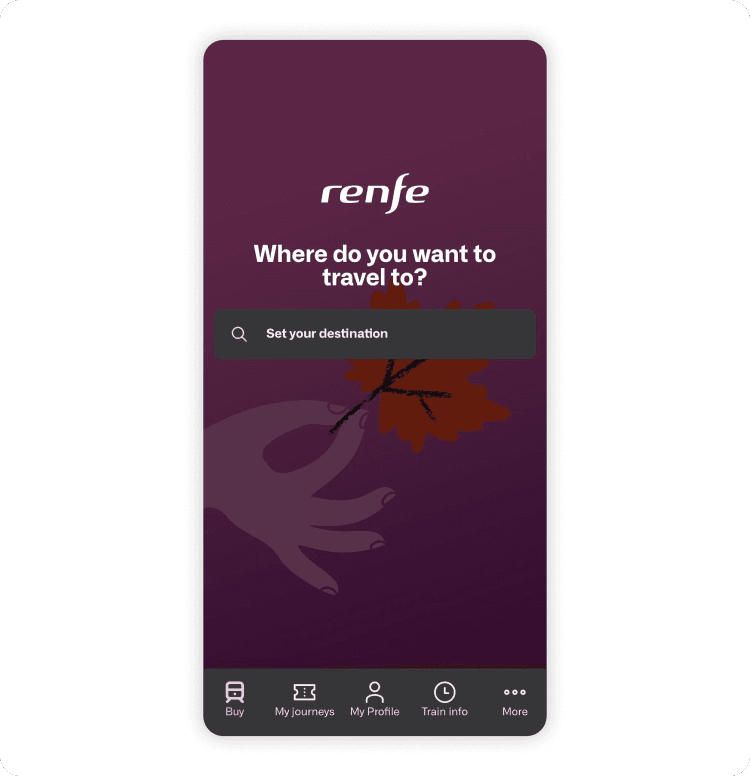
Traveling by train in Spain is refreshingly straightforward. Most of the country’s rail network is run by Renfe, a state-owned railway company. For high-speed travel, its main services are AVE, the low-cost Avlo, and Avant, which covers medium-distance routes. Larga Distancia and Media Distancia handle conventional long- and mid-distance services, respectively.
All of Renfe’s services can be booked in Renfe’s official app. Tickets for commuter trains, also operated by Renfe, are available through the Renfe Cercanías app.
In addition to Renfe, Spain’s high-speed rail network has two other operators — Ouigo España and Iryo. The two companies operate on a limited number of routes in Spain, but if you do want to explore your options beyond Renfe, you can find their apps — OUIGO Spain and Iryo — on the App Store and Google Play.
Omio is a third-party app that sells tickets from Renfe and its brands, Ouigo España, and Iryo, meaning you can compare prices across operators. Note that when you buy tickets through a third-party app, access to customer support and potential solutions in case of delays or cancellations can be patchy.
Apps for regional buses in Spain
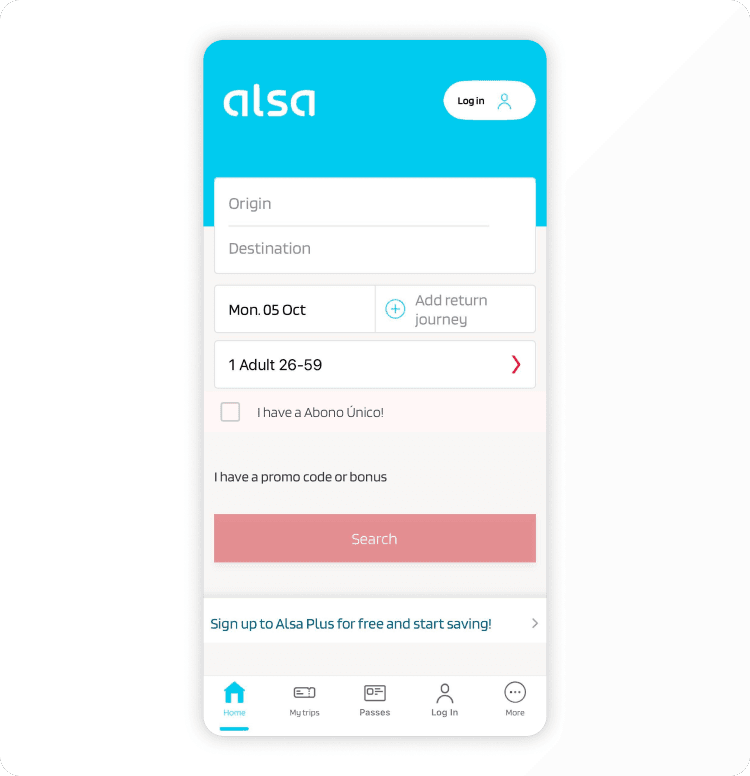
An alternative to high-speed trains is an intercity bus. The country’s largest operator is ALSA, which covers a vast network of destinations across Spain. A bus will be cheaper than a high-speed train, but the trade-off is a longer journey. Another benefit of buses in Spain is that they serve small towns that aren’t connected to the high-speed rail network — in some cases, buses are the only intercity transit option.
You can buy tickets for ALSA’s services in its app. FlixBus, one of the largest bus operators in Europe, also runs plenty of domestic bus routes in Spain, with tickets available in its own app.
Omio works for bus tickets as well, so you can compare prices between ALSA, FlixBus, and other operators on your route.
Metro apps for Spain
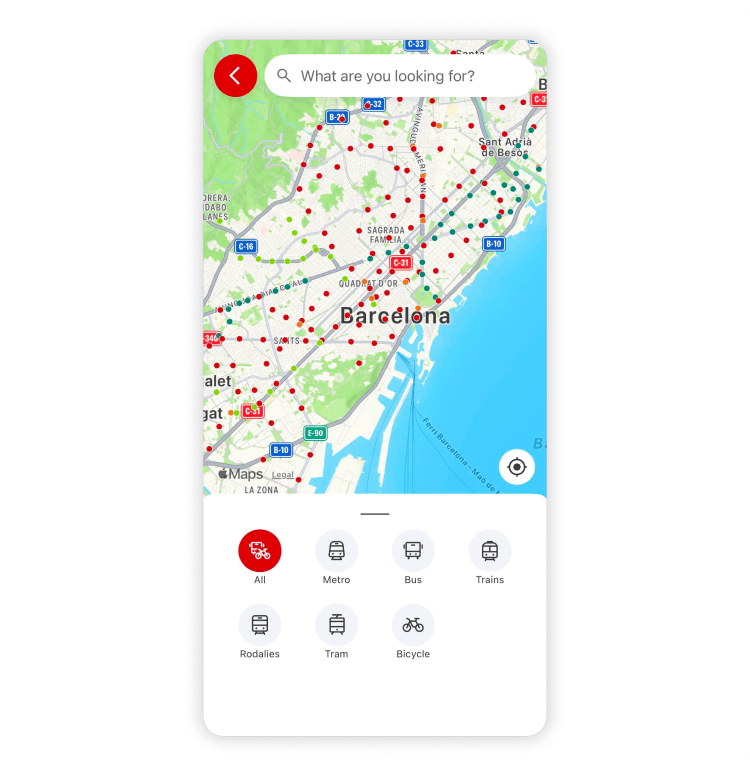
Spanish cities with metro systems have metro-specific apps that you can use either alongside their general public transportation apps or as the only app for getting around the city. The six cities with underground metros and their apps include:
Metro system | The city’s official app to buy metro tickets |
|---|---|
Barcelona | TMB App |
Bilbao | Barik |
Madrid | Metro de Madrid Oficial |
Palma de Mallorca | TIB Mallorca |
Seville | Metro de Sevilla |
Valencia | Metrovalencia |
Forgot to download an app before you went down to the metro station? Most stations have either turnstiles where you can tap your phone to pay for a journey or kiosks that sell physical tickets.
Stay safe while riding the metro. While Spain is generally safe, the country’s main attractions and metros can be hotspots for pickpockets. Stay vigilant when you’re within larger crowds, including at metro stations or inside the trains.
Ride-sharing and taxi apps
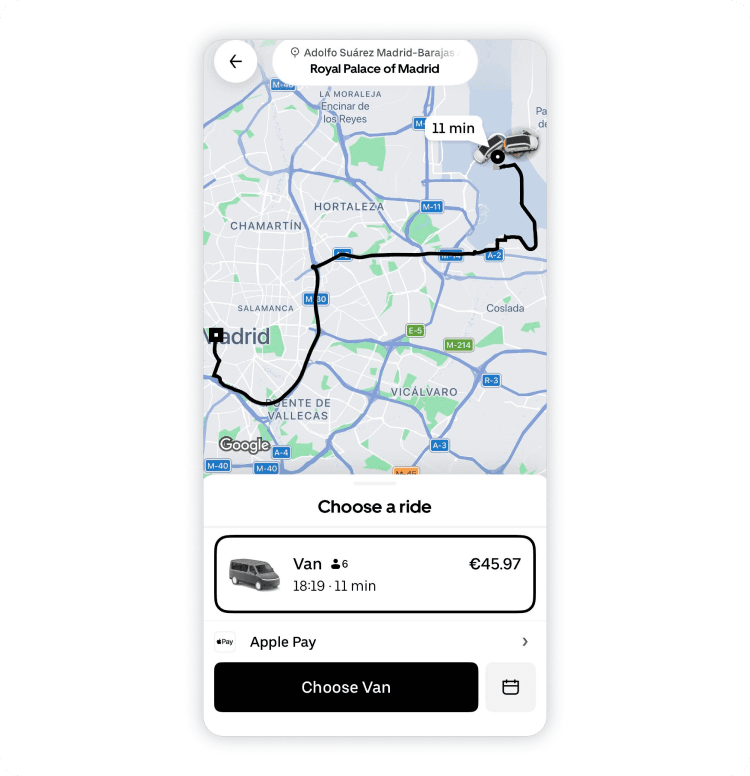
If you don’t want to rent a car on your trip, Spain has a few ride-sharing apps available — though not all of them will have coverage in smaller towns.
If you’re only traveling through the major cities, like Barcelona, Madrid, or Valencia, you have several options — Bolt, Cabify, FREENOW (a subsidiary of Lyft), and Uber. However, when you visit a smaller city — say, Vigo, to watch Celta Vigo play a LaLiga game — your only options are getting an Uber or calling a local taxi on your phone. If you don’t speak Spanish, that’s going to be problematic. Check in advance if the city you’re visiting has ride-sharing apps, and plan accordingly if it doesn’t.
Staying connected while exploring
Downloading or even using apps in a foreign country will require you to be connected to the internet. Should you buy a special SIM card for your Spain trip? Or should you go with a travel eSIM, perhaps even a Wi-Fi hotspot device?
Some newer phones — like the iPhone 18 or the Google Pixel 11 sold in specific locations, such as the United States — no longer support physical SIM cards. On those devices, your options to have mobile data while abroad are to purchase a travel eSIM, get a pocket Wi-Fi device in Spain, or pay for expensive roaming charges.
But which eSIM is best for use in Spain? One of the best options on the market is Saily, offering eSIM data plans ranging from 1 GB to unlimited data for up to 30 days. In addition to data plans, Saily’s eSIM app offers security features — an ad blocker, virtual location, and web protection — so your data stays safer while you’re traveling.

Stay connected with the Saily eSIM app
Affordable mobile data plans for every journey.
Best food and dining apps
One of the things that Spain is known for — beyond its artists, architects, festivals, sights, and winemaking — is the country’s food. But with so many tourists, not every restaurant will serve good food, instead targeting travelers for a quick buck.
While you can scour Google Maps to find the perfect place to eat, the Michelin Guide will provide you with curated options ranging from the fanciest Three-Star restaurants to Bib Gourmand spots, which serve great food and are still affordable. The Michelin Guide has its own app on both the App Store and Google Play.
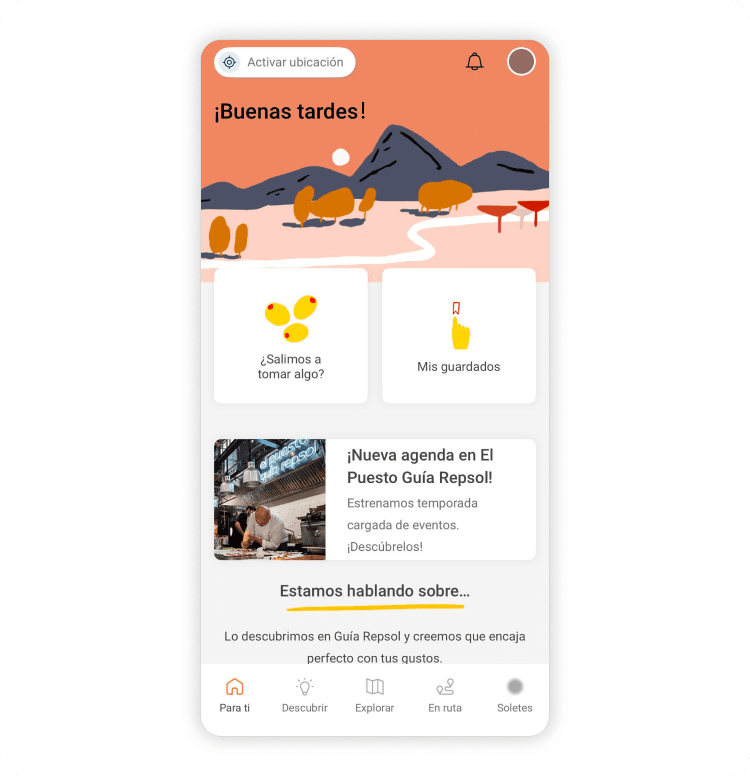
If you’re after traditional food in Spain, check out the Repsol Guide. Like the Michelin Guide, the Repsol Guide (Guía Repsol in Spanish) was started by a company not involved in the culinary arts or the restaurant industry. The guide has its own rating system — the Repsol Restaurant Guide includes restaurants that its inspectors found interesting, while other establishments within the guide are given one, two, or three Suns.
Keep in mind that the guide’s app (Guía Repsol: comer y viajar) is available only in Spanish. You’ll need someone who speaks the language — or treat it as an opportunity to brush up on your own language skills.
Book museum visits and guides
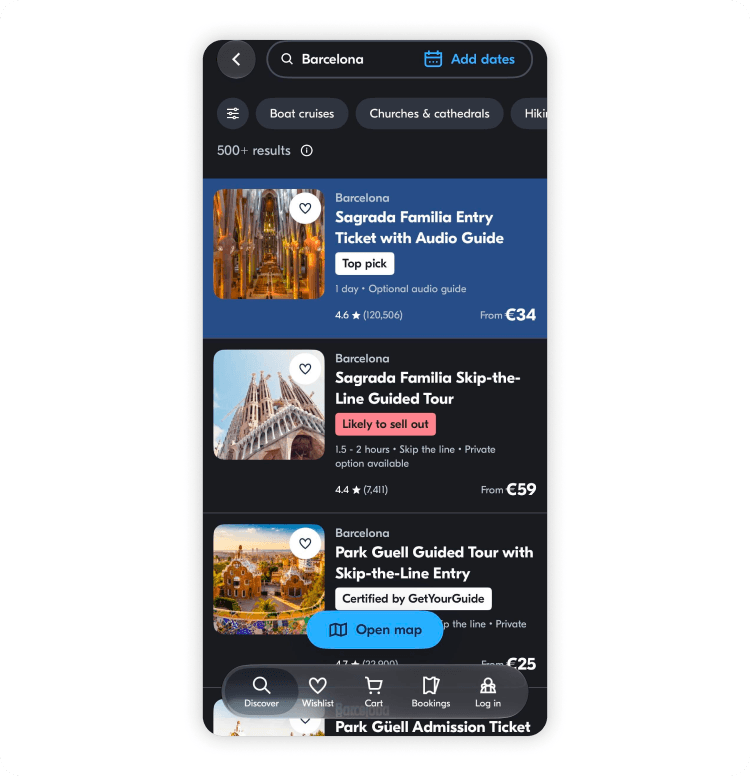
Whether you prefer to eat before or after you visit a museum, our advice is to book your tickets in advance and on official sites or apps. For example, the Sagrada Familia has its own Sagrada Familia Official app on both app stores, but you can also book guided tours via the GetYourGuide: Plan & Book app. The same can’t be said for one of the best things to do in Madrid, the Royal Palace of Madrid — downloading the Palacio Real de Madrid app will only give you access to the map of the place and an audio guide. You’ll have to purchase the tickets through Patrimonio Nacional, the government agency that manages various royal palaces throughout Spain, or use a service like GetYourGuide.
For tour guides, GetYourGuide is also an option, and so are apps made by FREETOUR (listed as “Freetour.com — travel app” on Google Play and “FREETOUR.com” on the App Store) and GuruWalk (listed as “GuruWalk — Free Tours” on Google Play and “GuruWalk” on the App Store). The services offer free or paid tours. The free tours aren’t really free — instead, you get to choose the amount you tip your guide after the tour. Still, free tours are a great way to get more historical context about the city you’re visiting from a local or someone who has lived there for a long time.
Best hiking apps for Spain
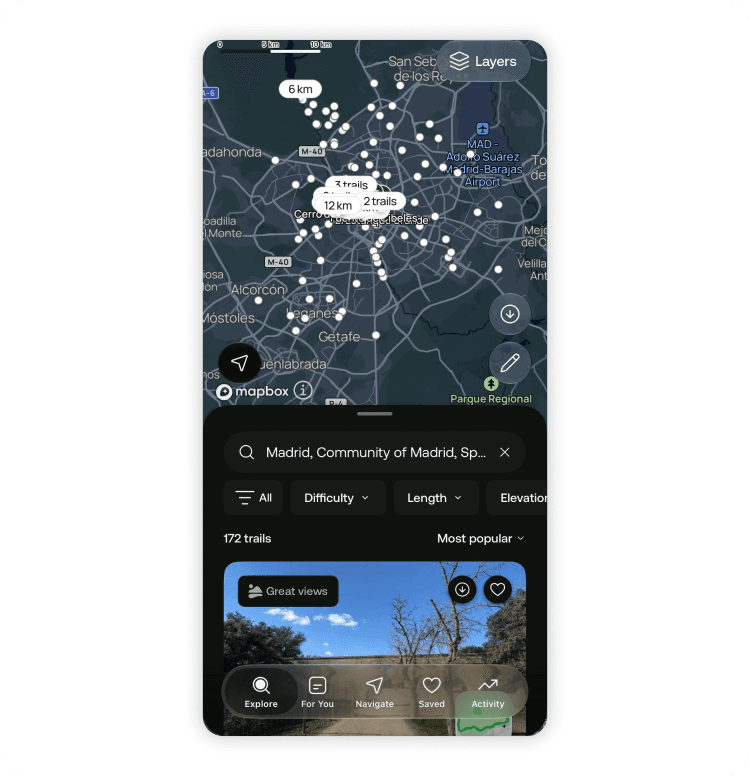
If your packing list for Spain includes hiking shoes, then you probably already know about the main hiking apps travelers use worldwide — AllTrails and komoot.
Both apps have free versions, but some of the features are locked behind a subscription. AllTrails has two tiers, Plus and Peak. Plus offers unlimited map downloads, live trail weather conditions, wrong-turn alerts, and the ability to sync your wearables (like a Garmin smartwatch) with the app to track your hike. In addition to the benefits of Plus, the AllTrails Peak subscription offers advanced map overlays, custom routes, and a route assistant.
The free version of komoot has the basics — route planning, GPS tracking, and trail recommendations — while the Premium version includes offline functionality, live sync with external devices (like a Garmin smartwatch), and a multi-day trip planner. You can also download offline maps for a single region, or get komoot’s global map pack for a one-time payment.
For someone who’s not an avid hiker, using the free version of either AllTrails or komoot will suffice. Our tip would be to download trail maps before you leave for your hike, because mobile data coverage in mountainous or remote regions can be patchy.
What is the best weather app for Spain?
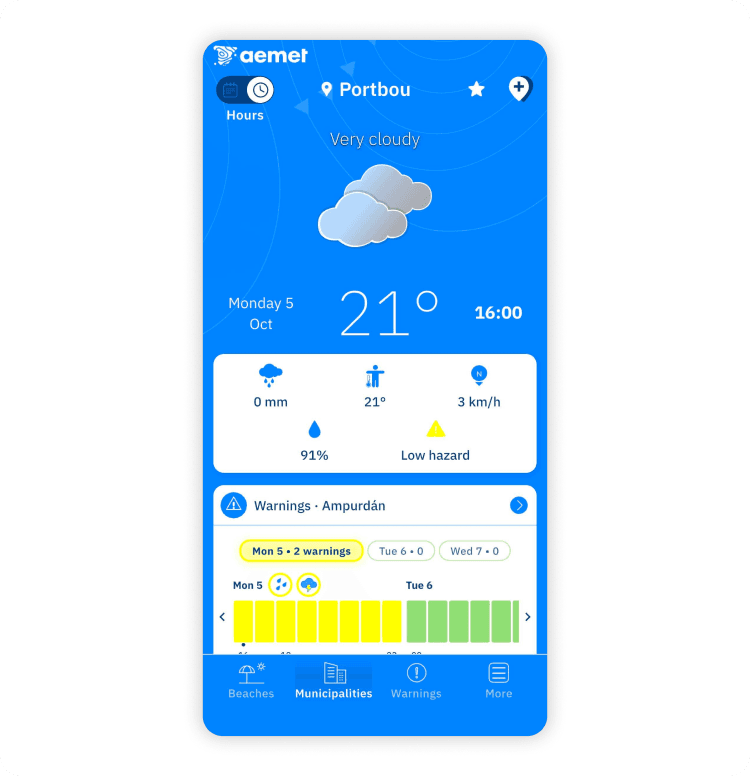
One of the best apps to get detailed weather reports in Spain is Aemet. Developed by Spain’s State Meteorological Agency (AEMET), the app has everything you might need, including live forecasts, radar, and extreme weather alerts.
The default weather apps — Weather on an iPhone, Samsung Weather on a Samsung, or Pixel Weather on a Google Pixel phone — will usually suffice if you only want to know whether it will rain today.
Apps for translating Spanish
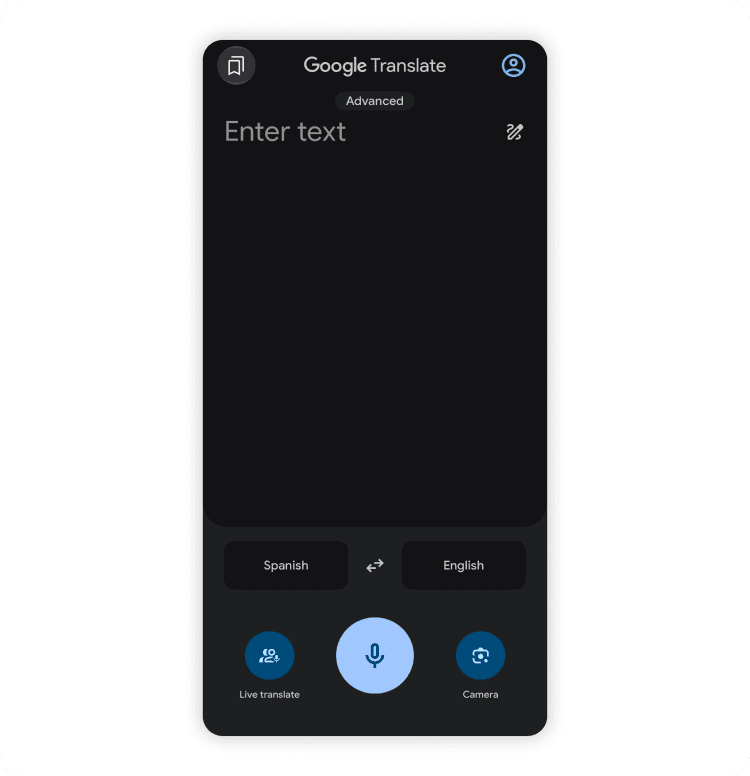
Not everyone in Spain will speak English, and at times, you’ll have to resort to using apps to translate what you have to say into Spanish. The default app for many is Google Translate, and it will do the job just fine. You can download the Spanish language pack for offline use to save data, even if Google Translate isn’t exactly a data hog.
As an alternative, you can use the voice function of large language models’ apps with a request to translate your conversation with someone who speaks Spanish in real time. This includes Claude, ChatGPT, or Gemini — all three apps will help you when you’re unable to find a common language to speak with someone.
App for staying hydrated
Summers in Spain are hot, and these past few years have been no exception. So drinking water when you’re in Spain, especially during the warmer months of the year, is a must.
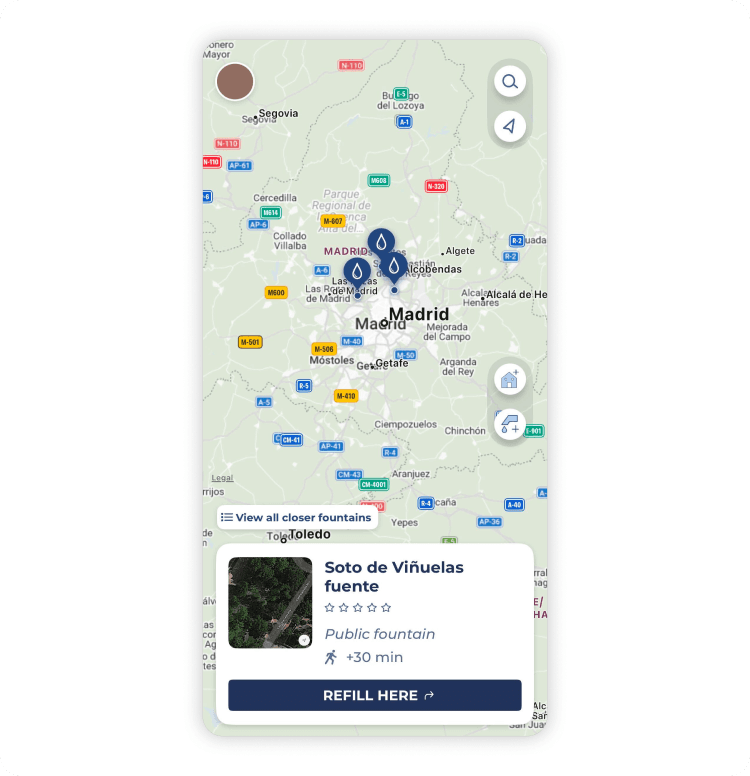
Tap water is safe to drink in Spain, which makes it easier to stay hydrated. Some Spanish cities, like Barcelona, have public water fountains. But if the city you’re going to doesn’t have one at every corner, you can use the Closca Water app to navigate to the nearest refill point.
Built by Closca, a Spain-based company that makes products from recycled plastic, the app aims to eliminate single-use plastics, including bottles, by gamifying the process and rewarding users if they refill their bottles while using the app’s dedicated spots.
Currency conversion apps
For iPhone users, currency conversion is available within the Calculator app:
Open “Calculator.”
Tap the calculator icon in the top-right corner.
Tap “Convert.”
Tap the unit label to the right of the amount, then scroll to "Currency."
Pick your currency — in Spain, that’s the euro.
Enter the sum you want to convert.
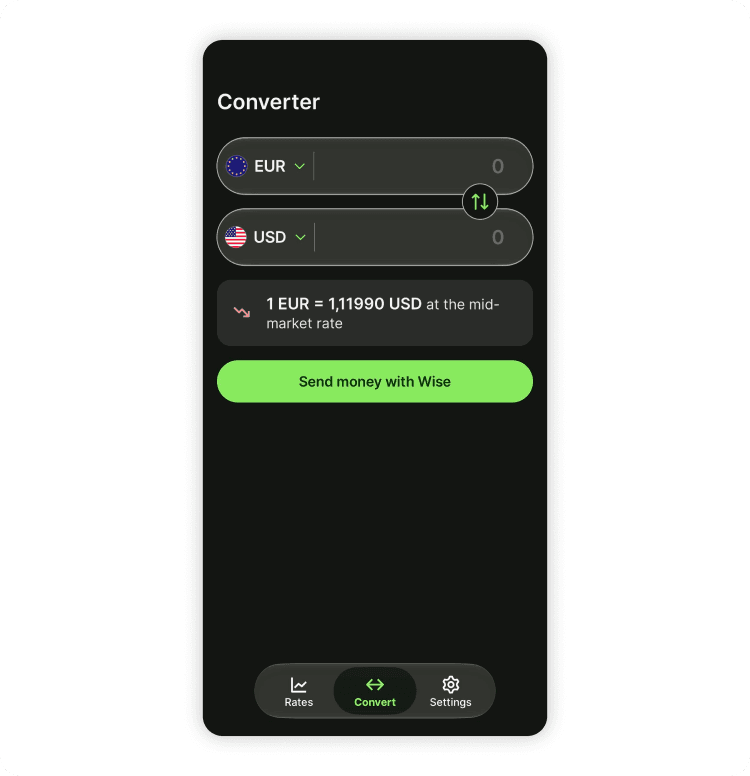
As an alternative — and one of the options for Android devices — you can download Currency Converter from Google Play or the App Store. The app was developed by the payment company Wise, and its only function is to show currency rates and convert amounts into your desired currency.
Tips for Spain travel
Apps can make your travels in Spain smoother, but keep these practical tips in mind:
Book tours and visits to attractions early during peak-season periods. It gets busy during the peak March-to-October travel period in Spain, so pre-booking any activity will ensure you’ll get to see the attraction.
Use public transportation. If you’re not planning to leave the city you’re going to be based in, Spain’s public transit will cover your needs. Plus, you won’t have to worry about parking in narrow streets in the cities.
Hydrate. During the summer, it will get hot in Spain, so remember to drink water regularly.
Be mindful of your surroundings. Spain is generally safe, but the crowded and touristy areas can be hotspots for pickpockets. Take care of your belongings, avoid carrying your valuables inside your pockets, and pay attention to what’s going on around you.
Avoid public and unsecured Wi-Fi networks. Wi-Fi networks that aren’t protected by passwords are vulnerable to cyberattacks. Use a travel eSIM app like Saily or stick to password-protected Wi-Fi networks during your trip so you don’t give your data away to cybercriminals.
Apps you should install while you’re traveling in Spain by category
We’ve listed quite a few handy apps you can use during your trip to Spain, but here are our top recommendations split by category:
Trip planning: Google Maps.
Driving: Waze.
Public transportation: Use the dedicated city apps for public transportation, which will differ by city or region.
Train tickets: Renfe.
Bus tickets: ALSA.
Ride sharing: Uber.
Guides: GetYourGuide.
Hiking: AllTrails.
Travel eSIM: Saily.

FAQ
A wide variety of apps will ease your travels throughout Spain, including Google Maps for navigation, Uber for rideshares, Waze for driving, Renfe for train tickets, GetYourGuide for tours and tickets to attractions, and Saily for your mobile data needs.
The best taxi or ride-sharing app for Spain is Uber, with the app being available in most cities when compared with apps like Bolt, Cabify, or FREENOW. If you’re in a big metro area like Barcelona or Madrid, use several ride-sharing apps to compare trip prices.
Yes, Google Maps works in Spain and is sufficient to navigate on foot, by car, or using other transportation methods. Citymapper is an alternative to Google Maps but is only supported in select cities or regions in Spain.