


Things to do in Tokyo: Top experiences, neighborhoods, and travel tips for 2026
Say the word “Tokyo” and a good number of us will flash right back to that slow-motion shot of cars drifting through the neon-lit Shibuya Crossing from that iconic movie that left its tire marks all over pop culture. That’s Tokyo for so many of us. Big and bright and sentimental — even if we’ve only seen it through a screen. But make no mistake, Tokyo is one of the most sprawling cities on earth, and if you’re not ready for it, you’re bound to run yourself ragged trying to see everything it has to offer. That’s what we’re here for — to tell you about all the best things to do in Tokyo and help you plan your time so you don’t find yourself lost in its giant maze.
Table of Contents
- When to visit Tokyo, and how to plan around it
- Spring, summer, fall, or winter: When should you go?
- What does a trip to Tokyo cost?
- Getting around Tokyo
- Why you need a stable internet connection in Tokyo
- What shouldn’t you miss in Tokyo? The essential sights
- Senso-ji temple and Asakusa
- Shibuya scramble crossing and Hachikō statue
- Meiji Jingu Shrine and Harajuku
- Tokyo Skytree and observation decks
- Best things to do in Tokyo by neighborhood
- Shinjuku after dark
- Ginza and Tsukiji outer market
- Akihabara Electric Town
- Ueno and Yanaka
- Fun and unique things to do in Tokyo
- TeamLab Borderless or TeamLab Planets
- Snap a photo in a purikura booth
- Watch a sumo match or training session
- Explore themed cafés and konbini culture
- Things to do in Tokyo with kids and families
- Tokyo Disneyland and DisneySea
- Ueno Zoo and parks
- Interactive museums and science spots
- Cheap and free things to do in Tokyo
- Free observation decks and gardens
- Budget eats: Ramen, conveyor sushi, and konbini
- Tips for planning your Tokyo trip
When to visit Tokyo, and how to plan around it
The best time to visit Tokyo depends on what you want to see and do — and, just as importantly, what version of the city you want to experience. So before you book your tickets, you should know how the seasons shape the city, what size budget you need, what getting around the city is like, and why a stable internet connection counts for more in Tokyo than it does in most places.
Spring, summer, fall, or winter: When should you go?
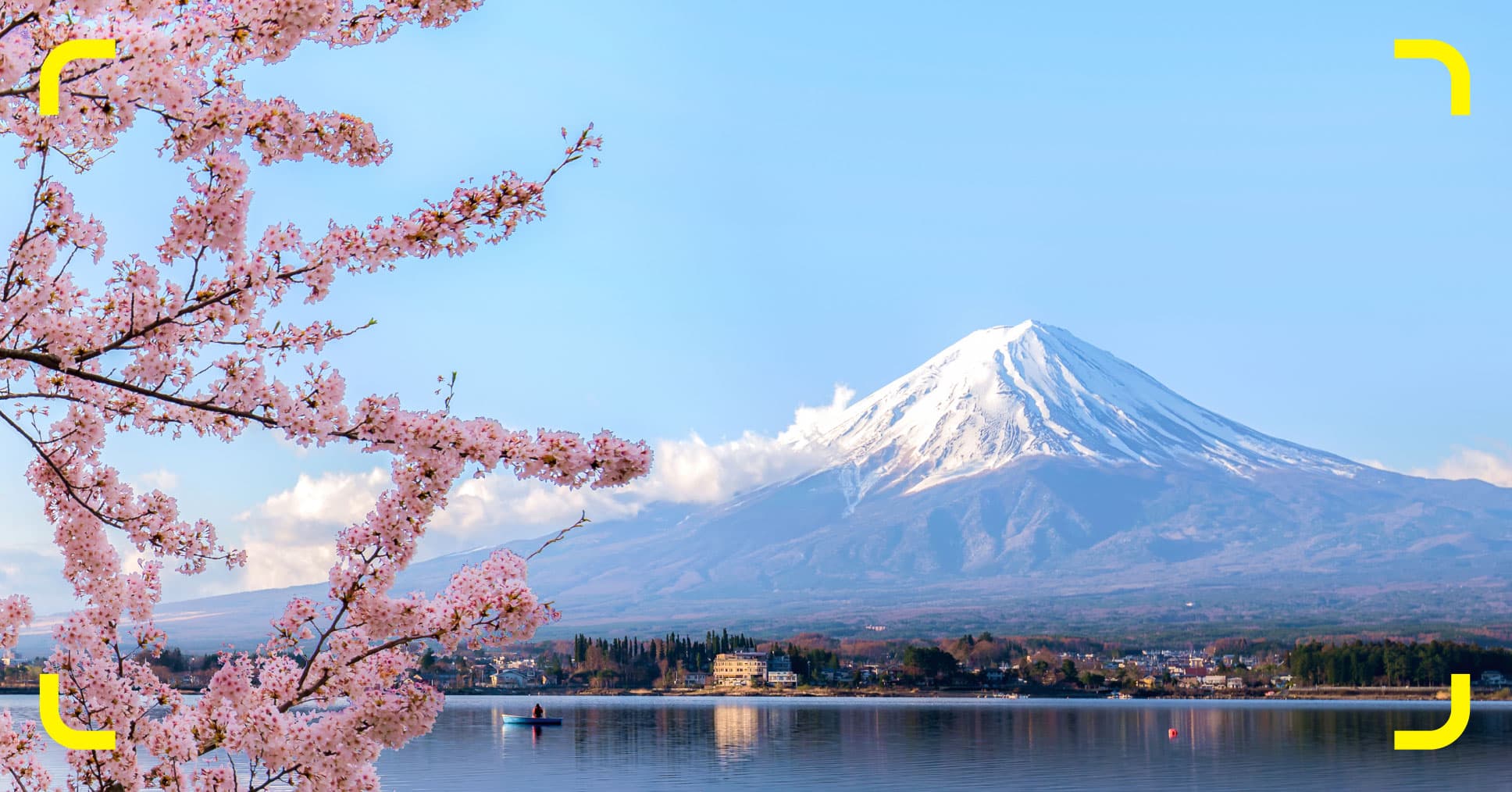
Japan’s iconic sakura trees (cherry blossoms) hit their peak in late March through early April, and for about two weeks the city’s parks turn a shade of pink that will make even the most jet-lagged tourists stop and stare. So spring is the time to go if you want Tokyo looking its absolute best. But it’s also when Tokyo is probably at its busiest.
Summer swaps easy weather for a wall of humidity that’ll have you ducking into any air-conditioned konbini you can find. It’s not a forgiving season to visit Tokyo if you’re not used to the heat, but it does come with a trade-off. Many of Tokyo’s biggest festivals take place during the summer months, fireworks and street parades included, which for some travelers may just make the heat worth putting up with.
Fall is spring’s mellower counterpart. The same parks that turned pink months earlier change to shades of red and gold, the air cools off, and the crowds thin out noticeably. So if you’d trade the “perfect” blossoms for thinner crowds, then fall is when you’ll be happiest.
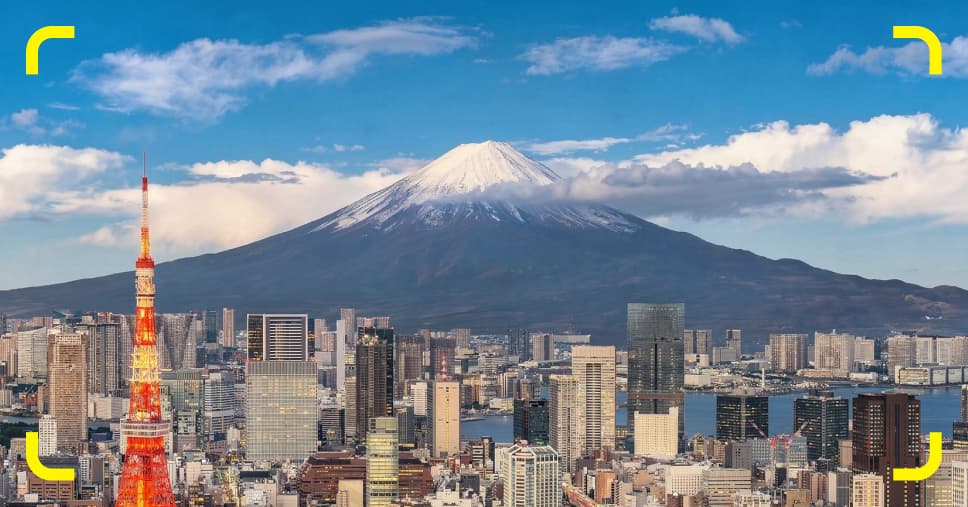
Winter isn’t usually the season people rush to Tokyo for, but there’s a lot to like about it. Days stay cooler, closer to sweater-and-jacket territory than bitter cold, and the payoff is clear skies that make for some of the best conditions all year to see Mount Fuji, which sits just over 60 miles (around 100 kilometers) southwest of the city.
Really, there isn’t a bad time to visit Japan’s capital. It just comes down to which version of the city — busy and blooming, hot and festive, calm and colorful, or quiet and clear — you want to see.
What does a trip to Tokyo cost?
The cost of a trip to Japan, Tokyo above all, varies wildly depending on how and where you travel, but however much you plan to spend, you should be able to find ways to make Tokyo work. Backpackers surviving on hostel bunks and konbini rice balls can get by on close to $1,000 for a week, while travelers booking sushi omakase every night and staying in nicer hotels might spend $5,000 or more — and both will have an authentic Tokyo experience. Tokyo doesn’t shut anyone out no matter their budget.
Getting around Tokyo
For a city its size, Tokyo is surprisingly easy to move through — a good sign for anyone still finding their footing with getting around Japan more broadly. Transportation in Tokyo runs on the Japan Railways (JR) lines and the metro, which blanket the city in a dense web, tying together massive hubs like Tokyo Station and Shinjuku Station with hundreds of smaller stops in between. An integrated circuit (IC) card, like Suica or Pasmo, lets you tap through gates and transfer without stopping to decode a fare chart every time. It’s about as close to foolproof as public transit gets.
Why you need a stable internet connection in Tokyo
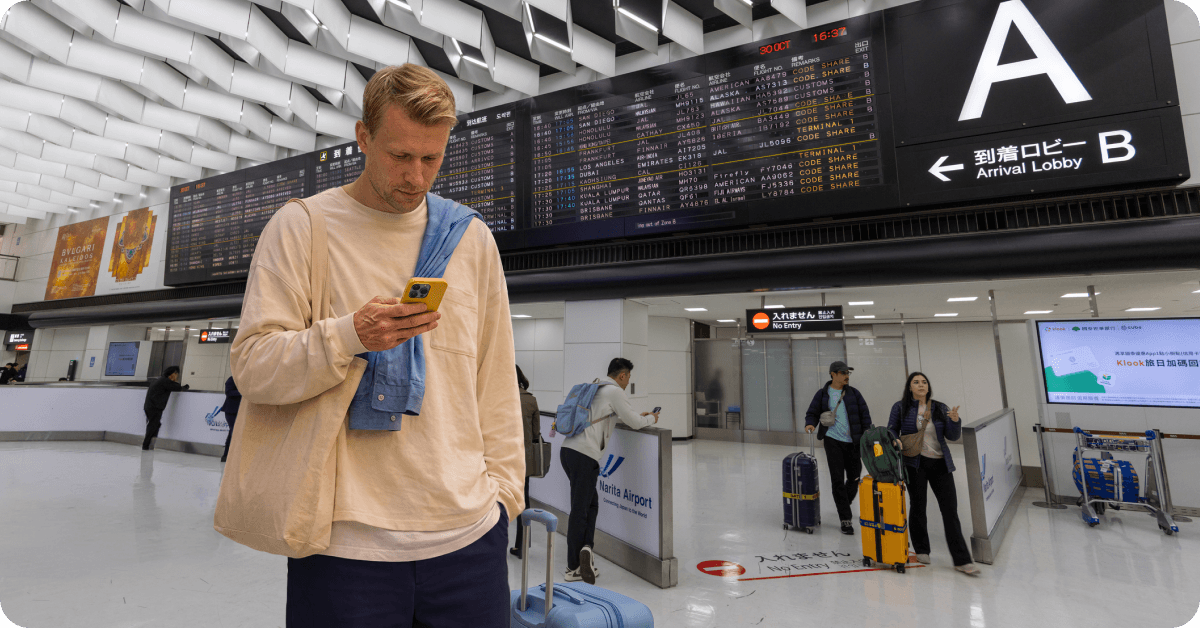
If there’s one thing you don’t want to be without in Tokyo, it’s a working internet connection. You’ll use it to run menus with zero English on them through Google Translate and to navigate the train network as well as to book tables at restaurants that don’t take walk-ins. Take our word for it — you’ll want to have internet access wherever you go.
And that brings us to Saily, which (as you may already know) is an eSIM service created by Nord Security, the parent company behind NordVPN. With Saily set up and an eSIM for Japan installed on your phone, you’ll have service the second you switch off airplane mode after touching down in Tokyo. That means you won’t have to search the airport for a SIM card kiosk and rack your brain over which one to buy. Because after, say, 12 hours in the air traveling from half a world away, imagine how much fun that would be.
Another advantage is that you don’t have to rely on the prepaid Tokyo SIM cards available at the airport, which aren’t always the most convenient or cost-effective choice for short trips. Saily offers global data at an affordable price point, and because the service is app-based, getting it set up requires just a few taps, and you won’t need to scan any QR codes or type in activation codes. Saily covers over 200 destinations, which is handy too if Tokyo is just the first of many stops. But that’s not everything. Saily also comes stocked with security extras such as a built-in ad blocker and web protection features, which will make browsing on public Wi-Fi in cafés and stations a little safer.
What shouldn’t you miss in Tokyo? The essential sights
If this is your first trip to Tokyo, don’t get so caught up trying to dodge the touristy places that you skip the landmarks that you just have to give their due. Sure, you won’t have them to yourself — not even close — but these are the places that put Tokyo on the map for generations of travelers, and seeing them in person is a must.
One piece of advice — don’t treat these places like boxes to tick but give them a proper go, and if you can, get to them before the crowds roll in. And when you’ve paid your respects to the must-sees, you can then let go and let the city lead.
Senso-ji temple and Asakusa
Senso-ji is Tokyo’s oldest temple, but what makes it special isn’t only the fact that it’s been standing for over a thousand years (which is pretty special). It’s seeing that history surrounded by the Tokyo of today. Just outside, Tokyo moves at full speed, but inside the temple grounds, the noise gives way to the sound of footsteps on stone.
When at Asakusa, where the Senso-ji stands, walk through the massive Kaminarimon gate, painted bright orange. You’ll come into Nakamise Shopping Street, which you’ll see is lined with stalls selling all kinds of souvenirs, including senbei crackers, folding fans, and even Godzilla keychains. It’s touristy, sure, but it’s been touristy for centuries. Some might say there’s something charming about that.
Inside, the bustle of Asakusa becomes more of a background hum. The streets outside seem to recede behind you and the sounds around you change. You can then stand still and soak it all in. Or you can make a small donation and go draw an omikuji, a traditional paper fortune. The fortunes are drawn at random. You shake a numbered stick out of a metal cylinder, then match its number to the corresponding drawer to find your reading. If it’s bad fortune that you find, tie the omikuji to the rack nearby and leave it there — one of the more charming fun facts about Japan is that doing so is believed to leave the misfortune behind at the shrine.
Shibuya scramble crossing and Hachikō statue
If Tokyo has a heartbeat, you’ll hear it in Shibuya, where thousands of people pour into the world’s most famous pedestrian crossing every time the lights turn green. For about 30 seconds, it’s chaos. Then red — and the crossing empties. But not more than a minute later, you see another wall of people lining the sidewalks, waiting to do it all over again. And they do. Again and again.
After you’ve had your fill of crossing back and forth with the crowds, don’t head off just yet. Just outside Shibuya Station (which is next to the crossing) stands the Hachikō statue. It’s a small bronze memorial that honors Hachikō, a loyal Akita dog who waited at the station every day for years after his owner passed away, never knowing his owner wouldn’t return. Today, the Hachikō statue is one of Tokyo’s most popular meeting spots. It’s a simple monument, but one that makes people stop and reflect. If nothing else, it’s a reminder of why we’ve long called dogs our best friends.
Come back after dark if you can too. The Shibuya crossing lit up in neon city lights is a different beast entirely, and it’s the shot most people picture when they imagine this city.
Meiji Jingu Shrine and Harajuku
Meiji Jingu Shrine (or just Meiji Shrine) is one of Tokyo’s top spiritual spots, tucked inside a 170-acre man-made forest. You’d hardly believe a busy city of 14 million people has room for a place like this. But it does, and that makes it worth seeing for yourself. The towering torii gate marks the entrance to the shrine. Pass beneath it, and it’ll seem as though someone turned the volume down on the entire city. Inside the shrine, the traffic noise dies out and leaves only the crunch of gravel beneath your feet because the path winds through towering trees planted when the shrine was established more than a century ago.
Then you step back out, cross a couple of streets, and the volume’s back up. Takeshita Street in Harajuku is loud, packed, and dressed head to toe in whatever’s trending that month — for example, punk boutiques. When you get there, just go ahead and grab a crepe stuffed with strawberries and whipped cream while you walk it because everyone (okay, almost everyone) else will have one too.
Few places in Tokyo let you swing this hard between two moods in the space of a 10-minute walk, and you’d be missing the point not to do both back to back.
Tokyo Skytree and observation decks
Tokyo Skytree will put you high enough that it looks like Tokyo has no end. Skytree is the tallest structure in Japan, and its two observation decks, one around 350 meters up and another closer to 450, put the entire city under your feet. On a clear day you can even pick out Mount Fuji sitting in the distance, so don’t book without checking the forecast first.
Skytree isn’t the only view in town, though. Tokyo Tower, its older and shorter cousin across the city, gives you a more old-school version of the same idea, red-and-white lattice and all, and it’s the one you’ll recognize if you’ve ever seen a movie or cartoon set in Tokyo. Shibuya Sky is the newer entry, and it trades height for atmosphere, with an open-air rooftop deck that puts you right in the middle of the neon instead of hovering above it.
If you’ve only got time for one, Skytree wins on sheer scale. But if you’d rather feel the city’s pulse than, so to speak, rise above it, then Shibuya Sky is worth the extra bit of walk. But whichever observation deck wins you over, don’t count on the timed entry slots waiting around for you — book ahead.
Best things to do in Tokyo by neighborhood
Tokyo isn’t really one city. It’s more like a dozen smaller cities stitched together, and each has its own rhythm, its own street food, its own reason to visit. Trying to see all of Tokyo in a single day isn’t really practical. You’ll end up zigzagging across the city on trains, seeing a lot, sure, but experiencing very little. The best way to explore Tokyo is to think in neighborhoods. Pick one, settle into it for a few hours, and leave the next for tomorrow.
Ahead are four Tokyo neighborhoods that are well worth giving a full day — or at least half of one.
Shinjuku after dark
By day, Shinjuku looks a lot like any other business district. You’ve got the office towers, the luxury hotels, the department stores, and, as you would expect, more commuters than you could count. But wait until the sun goes down. That’s when the neighborhood really wakes up.
Start in Omoide Yokocho (better known to many visitors as Piss Alley), which is a cramped alley of yakitori (Japanese dish of bite-sized chicken pieces) stalls so narrow you’ll bump elbows with the stranger next to you. Then work your way to Golden Gai, a maze of tiny bars, most seating fewer than 10 people. Some bars are welcoming to tourists, some less so. The only way to find out is to step inside.
Or if you’d rather trade a bar stool for a skyline, take the elevator to the free observation deck at the Tokyo Metropolitan Government Building. It’s one of the only high-rise views in the city that won’t cost you a ticket. Stick around after sunset and, with a little luck, you may even catch the nightly projection show lighting up the building. It’s a surprisingly memorable way to end an evening in one of Tokyo’s liveliest neighborhoods.
Ginza and Tsukiji outer market
If food lovers should make time for a single neighborhood, it’s Ginza. Ginza is Tokyo’s answer to Fifth Avenue — if Fifth Avenue also had flagship stores stacked six stories high and entire department store basements dedicated to food. The district is polished, it’s expensive, and even if you’re not there to splurge, the window shopping is worth the walk-around. Every weekend, the main strip closes to vehicle traffic and opens up to pedestrians, so for once, you get to walk right down the middle of the street.
Just a short walk away is the Tsukiji outer market, the retail side of what used to be the world’s largest fish market before the wholesale auctions moved to Toyosu. The auctions are gone, but the food stalls selling fresh sushi and grilled skewers as well as tamagoyaki off the griddle are very much still there, practically begging visitors to take an impromptu food tour. Get to the market in the morning, before the fish gets picked over.
Akihabara Electric Town
Pick a hobby, any hobby, and Akihabara’s Electric Town probably has a shop for it. Tokyo’s go-to neighborhood for electronics, anime, manga, and video games draws collectors and pop culture fans ready to blow an entire afternoon in it.
Turn one corner in the so-called Electric Town, and you’ll find a storefront stacked floor to ceiling with manga and video games. Then turn another and you’ll run into rows of vending machines and capsule toy (gachapon) machines daring you to spend “just one more coin.” So if you’re into any of that stuff (like anime, gaming, or collectibles), don’t be surprised if one shop visit turns into 10.
But even if you don’t game or watch anime, Akihabara is still worth visiting just for the atmosphere. It’s loud, colorful, and one of the few places where more really is more.
Ueno and Yanaka
Ueno Park anchors northeastern Tokyo. It’s one of the city’s largest green spaces and home to several of Tokyo’s best museums as well as Ueno Zoo. Ueno Park is a great spot to spend a slow morning, to just walk around it or to claim a shady bench and get lost in a good book.
A few minutes’ walk from Ueno Park is Yanaka, one of the rare Tokyo neighborhoods to survive the war largely intact. Yanaka is Tokyo before the skyline took over, with narrow streets, wooden houses, and family-run shops still defining the neighborhood. It’s also earned the nickname “cat town” for its cat-themed street art and, obviously, real cats darting around every other corner. Give it about an hour to wander before heading back.
Fun and unique things to do in Tokyo
After you’ve crossed the big sights off your list, loosen up a little. You came here for fun too, and for stories to tell when you get home. So if you’re looking for fun things to do in Tokyo, be curious, say yes a little more often, and don’t be afraid to look a little silly in the goofy photos. Do that, and the fun will find you. A few places to start:
TeamLab Borderless or TeamLab Planets
Tokyo has two versions of TeamLab’s immersive art experience. One is called Borderless, where rooms fill with shifting light and flowers that respond to your movement. The other is Planets, which has you walking through water and across uneven surfaces that react to every step. Both spaces are well worth setting aside at least a couple of hours for. Tickets are timed and do sell out, sometimes weeks in advance, so this is one attraction you’ll want to book before you even land in Tokyo.
Snap a photo in a purikura booth
Purikura booths are photo booths with the editing and customization cranked all the way up. The photos come out souped up with smoother skin and wider eyes as well as space to scribble hearts and captions all over the finished shot. You’ll find purikura booths clustered in arcades and shopping centers. Many are located around Shibuya and Harajuku. It’s usually a couple of hundred yen (roughly $2–4) for a strip of photos. It’s a cheap way to leave with a little piece of Tokyo in your pocket, and honestly, it’s so much fun you’ll probably end up doing it twice.
Watch a sumo match or training session
Sumo wrestling tournament tickets are the hardest tickets in Tokyo to get, but they’re worth chasing. Grand tournaments happen only a few times a year in the city, and watching two wrestlers collide in a ring the size of a kiddie pool is more intense in person than it can ever look on a screen. If the tournament dates don’t line up with your Japan trip, some sumo stables open their doors for early-morning training sessions and let you watch wrestlers practice up close for a small fee. Some may even let you give it a go — if you’re up for the challenge, of course.
Explore themed cafés and konbini culture
Curious foodies, this one’s for you. Tokyo’s themed cafés are something else. Owl cafés, hedgehog cafés, cat cafés — just pick your theme. At a cat café, for example, you pay for a drink and the privilege of being completely ignored by a dozen cats. You can also experience character cafés, where the entire menu and decor are themed around a particular anime or franchise for a limited time.
And for your everyday cravings, you have the option of going to a konbini (Japanese convenience store), which in Tokyo doubles as a genuine food destination. There, you’ll find fresh onigiri and fried chicken as well as seasonal snacks that rotate throughout the year — and they’re all worth trying because you can’t get them anywhere else in the world.
Things to do in Tokyo with kids and families
With kids in tow, Tokyo can be a playground as much as a city. But you’ll want to be a little more intentional with your plans because the itinerary that works for, say, two adults will fall apart fast with little angels voicing their discontent. The good news is that when it comes to things to do in Tokyo with kids, the city delivers. It has plenty to keep the children entertained without a fight. Just work around nap times and peak-crowd hours to save yourselves the stress.
Tokyo Disneyland and DisneySea
Tokyo actually has two Disney parks. Disneyland is the classic park, with the same castle-and-fairy-tale decor you’d find at other Disney parks, just filtered through Japanese hospitality and detail. DisneySea, on the other hand, doesn’t exist anywhere else in the world, and it’s themed entirely around the sea and exploration with rides and lands you won’t find at any other park. Families with younger kids usually make a beeline for Disneyland for the familiar characters and gentler rides, while families with older kids make their way to DisneySea more often.
Tickets are best booked online in advance because daily capacity is capped and popular days sell out at the snap of your fingers. Either park will easily eat a full day, so plan for one, unless you’ve got more than a week in Tokyo to spare.
Ueno Zoo and parks
Ueno Zoo is home to giant pandas, and it sits right inside Ueno Park, so children have plenty of green space to run around in before or after. The zoo is a manageable size so little legs should hold up just fine. Entry into the zoo is cheap by Tokyo standards, and it rarely calls for the kind of advance planning bigger attractions do.
If the weather turns, the museums bordering the park make for a solid backup plan. The Tokyo National Museum and the National Museum of Nature and Science both have plenty of exhibits to keep curious little minds busy.
Interactive museums and science spots
Kids usually remember the things they get to touch far longer than the things they read on a placard, and many of Tokyo’s museums are built around this very idea. The National Museum of Emerging Science and Innovation (Miraikan), for one, fills its galleries with robotics and interactive exhibits that bring out the curious kid in just about everyone. Parents typically end up doing more waiting than encouraging, so come with time to spare.
Cheap and free things to do in Tokyo
Tokyo isn’t exactly known for being cheap, and there’s some truth to that. But after sumo tickets and Disney park passes, not everything in Tokyo (accommodation aside) costs an arm and a leg. Plenty of cheap and free things to do in Tokyo are just as worth your time, and it takes just a handful of them to fill a day.
Free observation decks and gardens
You don’t need to pay for a ticket to see Tokyo from above. The Tokyo Metropolitan Government Building’s observation deck in Shinjuku is free and gives you a skyline view that rivals paid options at a fraction of the price — zero yen, to be exact.
Some gardens offer the same deal at ground level. The Shinjuku Gyoen National Garden has a small entry fee, but plenty of the city’s smaller parks and shrine grounds cost nothing at all, and wandering them at golden hour is its own kind of Tokyo experience.
Budget eats: Ramen, conveyor sushi, and konbini
You can spend an awful lot on food in Japan, especially in Tokyo, but you certainly don’t have to. A solid bowl of ramen at a neighborhood shop near where you’re staying typically runs less than you’d pay for a sandwich back home. Or you can always grab a seat at a conveyor belt sushi spot (kaiten-zushi), where you pull plates straight off the belt as they pass. Every plate is color-coded by price, so it’s easy to keep track of how much you’re spending.
Then are the konbinis, where you can grab a rice ball and a hot dish from the counter as well as a drink. That’s a full meal for just a few dollars. It’s Japan, so you know the quality of the food is high enough that nobody will judge you for eating dinner standing in a parking lot.
Tips for planning your Tokyo trip
Tokyo stretches the definition of a big city pretty far. Arrive there without a plan, and it will throw everything at you all at once, so it’s safe to say your first day or two might be a little rough. But come with a few Tokyo travel tips in your back pocket, and you’ll save yourself a headache or three.
Do get an IC card. A Suica or Pasmo card lets you tap through virtually every train and subway gate in Tokyo, so get one and forget about buying individual tickets. Most convenience stores and vending machines take it too.
Don’t buy a Japan Rail Pass if you’re staying in Tokyo. Most travelers doing their homework before heading to Japan usually arrive at the same question, “Is the Japan Rail Pass worth it?” To save you some time, unless you’re taking the Tokyo to Kyoto bullet train or heading further afield, an IC card is all you need in Tokyo. Skip the Rail Pass.
Carry some cash. Tokyo takes cards almost everywhere now, but smaller shops, temples, and some older restaurants still expect yen. Make a stop at the first 7-Eleven ATM you see and withdraw some just to have on hand.
Learn the unwritten rules. Keep quiet on trains, take your shoes off wherever you see a shoe rack at the entrance, don’t eat while walking through busy areas, and be mindful of the small formalities like not tipping and giving a slight bow when it feels natural. Consideration will be returned to you in kind.
Budget at least three days for Tokyo. Any less, and you’ll barely scratch past Shibuya and Shinjuku, and cramming a city this size into a day or two means you will spend more time on trains than making memories.
Purchase and install an eSIM. Internet cafes in Japan will get you online if you’re really stuck, but do yourself a favor and get an eSIM instead. Make it a Saily eSIM. You’ll have a reliable and working internet connection the moment you’re in the country. If you’re ever close to running out of data, you can top it up in a few taps on your phone. And just to remind you, Saily is stocked with security extras, including a virtual location, an ad blocker, and web protection. So with a Saily eSIM, you’re getting data and protection in one.

1 GB
7 days
US$3.993 GB
30 days
US$7.995 GB
30 days
US$10.99
Saily Ultra plan is Saily’s answer to stress-free travel. It includes unlimited eSIM data in over 121 destinations, airport lounge access in select airports, and — best of all — a free monthly NordVPN subscription, with NordPass, NordLocker, and Incogni thrown in too.
FAQ
If it’s your first time in Tokyo, don’t leave without seeing Senso-ji temple, the Shibuya crossing, and Meiji Jingu shrine — they’re the three sights that define the city for most first-time visitors. Try to pair one traditional stop with one modern district each day, so you’re not doing all your temple-hopping on one day and all your neon-chasing on another. It’s this mix that makes Tokyo feel like Tokyo.
It’s tight but doable if you’re traveling on a budget. Stick to hostels, konbini meals, and free sights like temples and parks, and $1000 can cover a week comfortably enough — just know that number likely doesn’t include your flights.
Yes, and comfortably. A $5000 budget should cover mid-range hotels, restaurant meals, most of the attractions you want to visit, and even a day trip or two out of the city, with room left over for shopping.
Three days in Tokyo can be enough, let’s put it that way. You should be able to hit most of the major landmarks if you group your sights by neighborhood and aren’t crisscrossing the city, but don’t expect to have time for day trips out of the city, like to Kyoto or even Mount Fuji. Better to leave yourself a reason to come back anyway. After all, seeing Tokyo is only one stop out of the many things to do in Japan.

Always connected, always on course
Connect instantly with a Saily eSIM and enjoy effortless internet access.

Related articles